
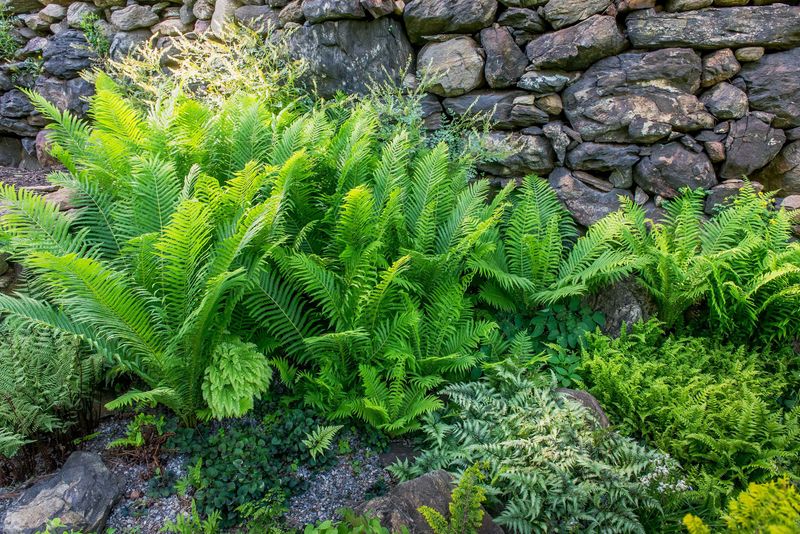
That shady, wet slope where nothing seems to grow but weeds and mud is actually prime real estate for native ferns. Unlike English ivy, which climbs into trees and takes over everything, these North Carolina natives spread politely, hold soil in place, and support local wildlife.
They ask for almost nothing once they settle in, and they choke out weeds simply by covering the ground so thickly. Here are eight native ferns that will turn that problem spot into the easiest, greenest corner of your yard.
1. Christmas Fern
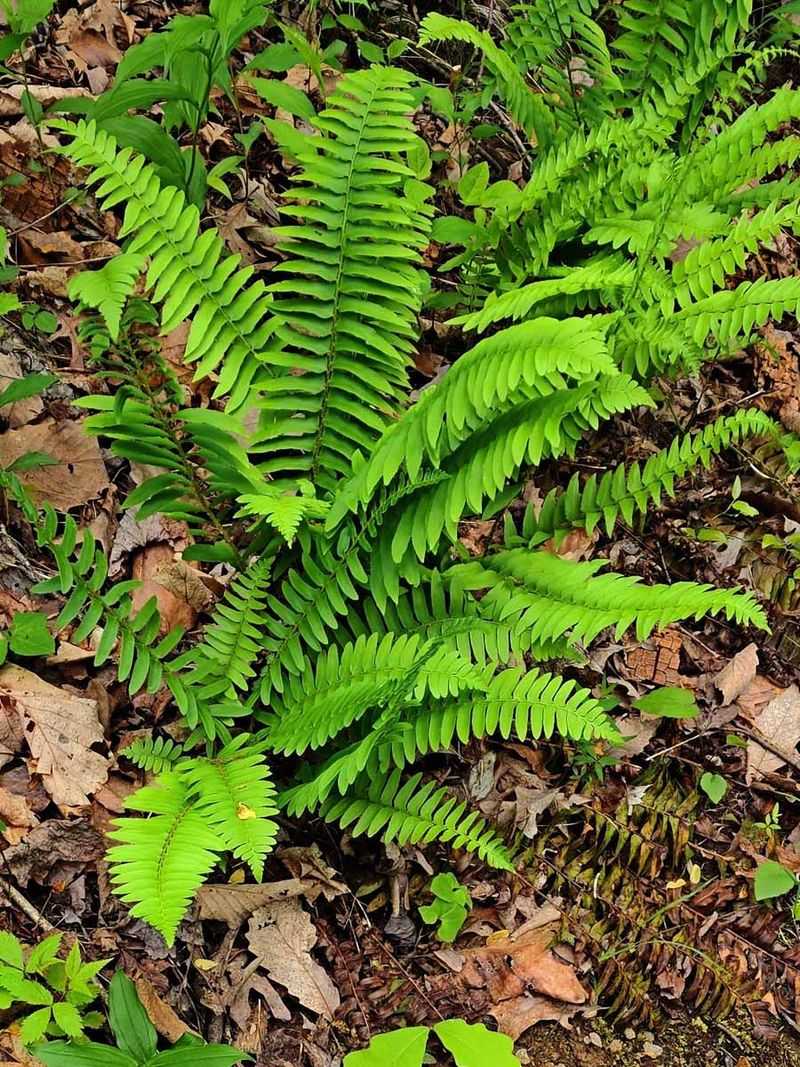
Named for the fact that its fronds stay green right through December, the Christmas fern is the workhorse of any shady NC slope. While other plants go bare and brown, this one keeps holding soil in place through the coldest months.
Its stiff, leathery fronds fan out in tidy clumps that gradually knit together to form a dense mat. That thick cover is what starves out weed seedlings before they ever get sunlight.
Piedmont gardeners love it because it tolerates dry spells once established, even though it prefers damp, rich ground. Tuck a few into a bank prone to erosion and watch it lock the hillside together over a couple of seasons.
2. Cinnamon Fern
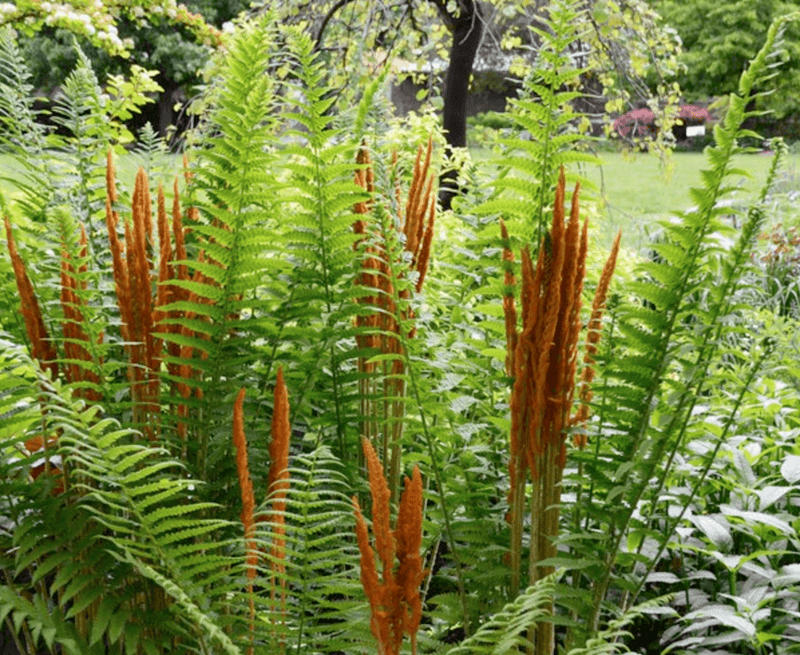
You cannot miss the cinnamon fern in spring, when rusty, spice-colored spikes shoot up from the center of each clump like little candles. Those fertile fronds give the plant its name and make it a standout on a wet slope.
Big, arching green fronds can reach four feet tall, casting enough shade beneath them to keep weeds discouraged. It genuinely loves soggy feet, so the boggy bottom of a slope where water pools is exactly where it thrives.
Songbirds pluck the fuzzy fibers from its stems to line their nests, which makes this fern a quiet gift to backyard wildlife. Plant it in a low, mucky corner and you have solved a drainage headache and a habitat need in one move.
3. Cinnamon Fern’s Cousin: The Netted Chain Fern
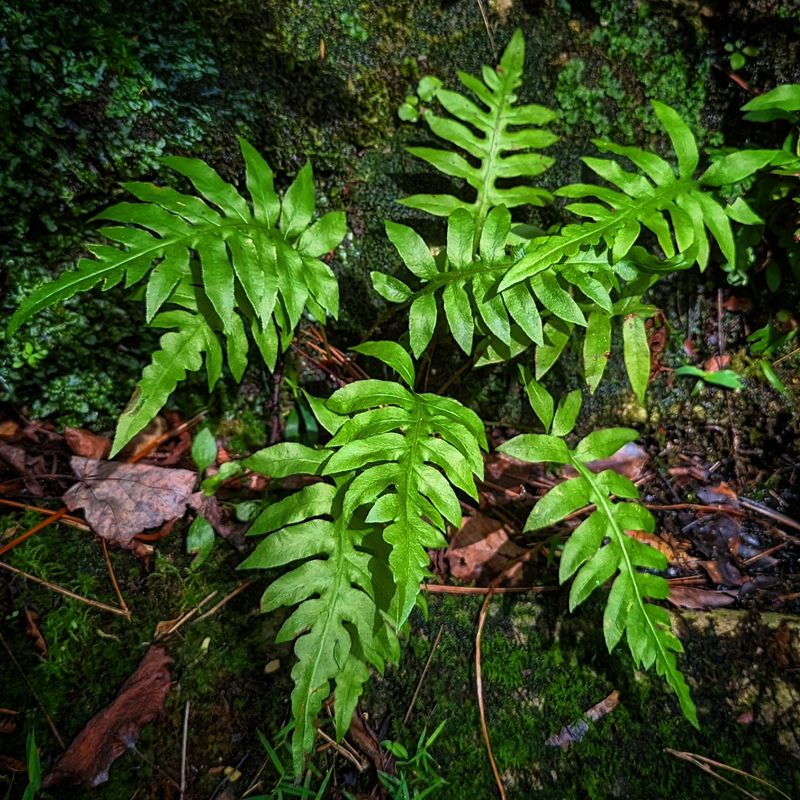
Spreading by underground runners, the netted chain fern acts more like a living carpet than a clump. It sends up single fronds here and there until the whole area fills in, which is exactly the behavior you want for smothering weeds across a wide slope.
The delicate net-like vein pattern on its leaves gives it a soft, almost lacy look up close. Coastal plain gardeners see it thrive naturally in swampy woods and along stream edges.
Because it runs rather than mounds, a small planting can cover a surprising amount of ground within a few years. Give it consistently moist, acidic soil and it will happily colonize the wettest, shadiest part of your yard.
4. Southern Lady Fern
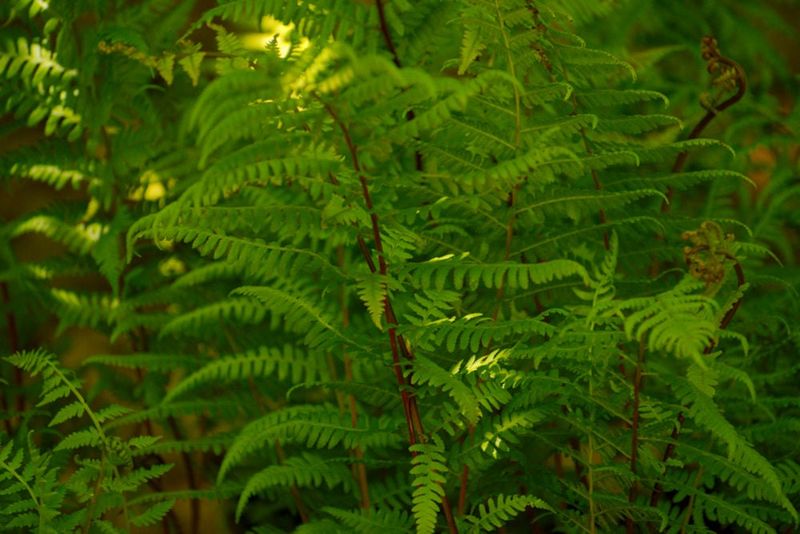
Graceful is the word gardeners reach for when they meet the southern lady fern. Its finely cut, lacy fronds arch outward in soft mounds that soften any hard edge or bare bank.
Do not let the delicate looks fool you, though. This is a tough spreader that fills gaps quickly and forms colonies dense enough to keep weeds from finding a foothold.
It greens up early in spring and keeps a fresh look right through summer heat, which is a rare trait in our humid stretches. Wet shade suits it best, and it pairs beautifully with coarser ferns for a layered woodland look on a slope.
5. New York Fern
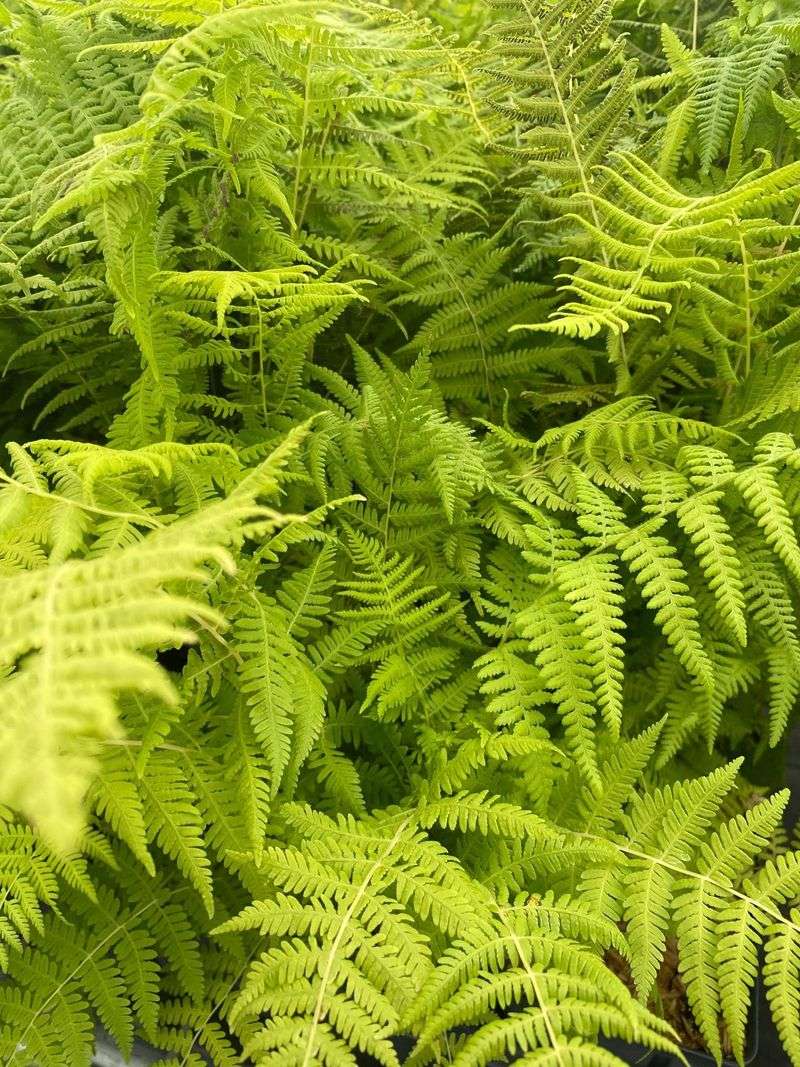
Here is an old field trick for identifying the New York fern: the fronds taper at both ends, so folks say it is like a New Yorker who burns the candle at both ends. That tapering shape makes it easy to spot once you know the joke.
What matters for your slope is how aggressively it spreads. Given moist ground, it forms broad colonies that blanket the floor and leave almost no open dirt for weeds to claim.
Mountain and Piedmont gardeners find it especially reliable in cool, damp hollows. Its pale, airy green brightens dim corners where darker ferns can look heavy, so it earns a spot for looks as much as for muscle.
6. Sensitive Fern

The odd name comes from how quickly this fern collapses at the first light frost, as if it is sensitive to any hint of cold. During the growing season, though, it is anything but fragile.
Broad, coarse fronds rise from creeping rhizomes and spread with real determination across wet ground. That vigorous runner habit is precisely why it out-competes weeds on soggy slopes and stream banks.
Its bead-like fertile fronds stand up through winter and offer a little architectural interest after the green has gone. If you have a spot that stays wet most of the year and want fast coverage, few natives fill in as quickly.
7. Ebony Spleenwort
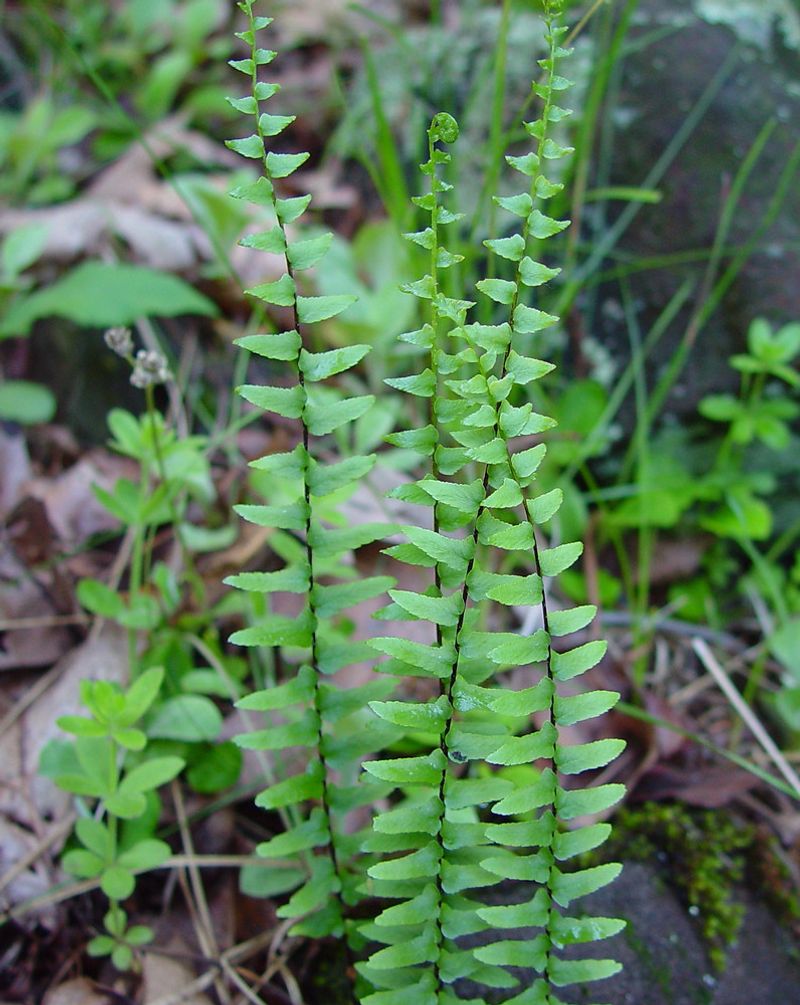
Small but mighty, the ebony spleenwort tucks itself into rocky nooks and shady crevices where bigger ferns cannot get a grip. Its dark, glossy stems give it the ebony in its name and a bit of quiet elegance.
Because it stays evergreen and low, it fills the little gaps between larger ferns and stones, sealing off the last spots where weeds might sneak in. Think of it as the grout between your tiles.
It handles drier, rockier ground better than most on this list, making it a smart choice for the upper, better-drained parts of a slope. A scattering of these ties the whole planting together into a seamless green cover.
8. Royal Fern
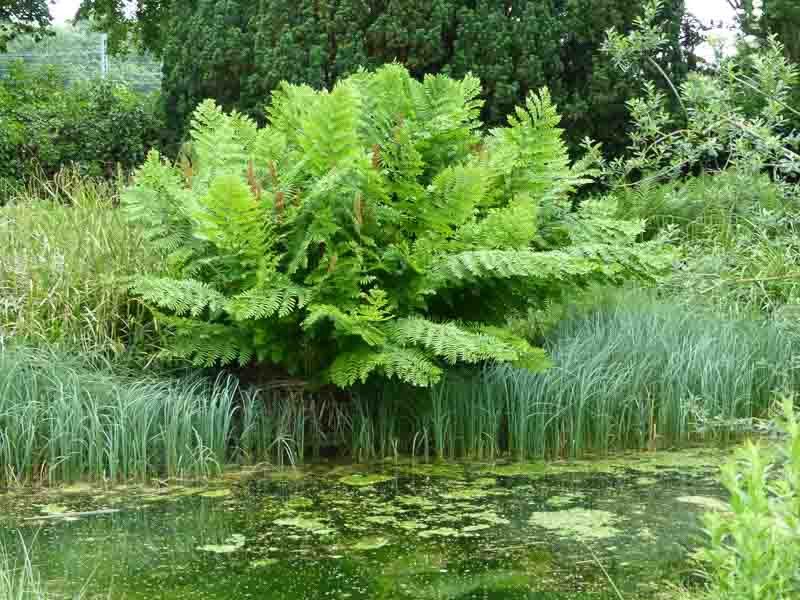
Regal by name and by nature, the royal fern crowns any wet slope with fronds that can climb toward five or six feet. From a distance its leaflets look more like a locust tree than a fern, which gives it a truly one-of-a-kind presence.
The tan, flower-like tips at the top of the fertile fronds add a striking flourish nothing else on this list can match. Plant one as a centerpiece and let the smaller ferns gather around its feet.
It craves the wettest, richest ground you can offer, thriving right at the edge of standing water. As a bonus, its large clumps shade out weeds beneath a canopy of foliage while giving frogs and other small critters welcome cover.
Put together with the others here, you get a slope that holds its soil, feeds NC wildlife, and never begs for the mowing or ivy-pulling that eats up a weekend.