
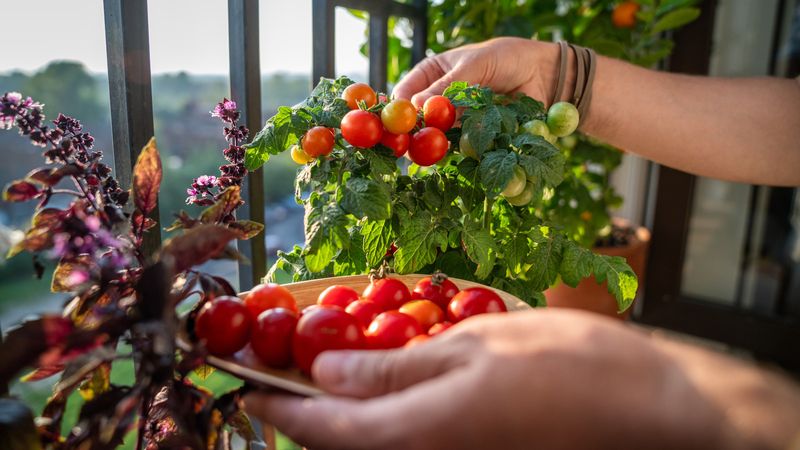
Watching tomato plants flower all summer without ever producing fruit is one of the most frustrating problems a Southern gardener faces. The flowers appear, then drop, and the plant just keeps growing without a single tomato to show for it.
There are real, fixable reasons this happens, and most of them have nothing to do with which plants are growing nearby. Basil is a practical herb worth planting alongside tomatoes, but getting fruit on the vine first requires understanding what is actually stopping those flowers from setting.
Basil is an optional companion, not a fruit-set cure
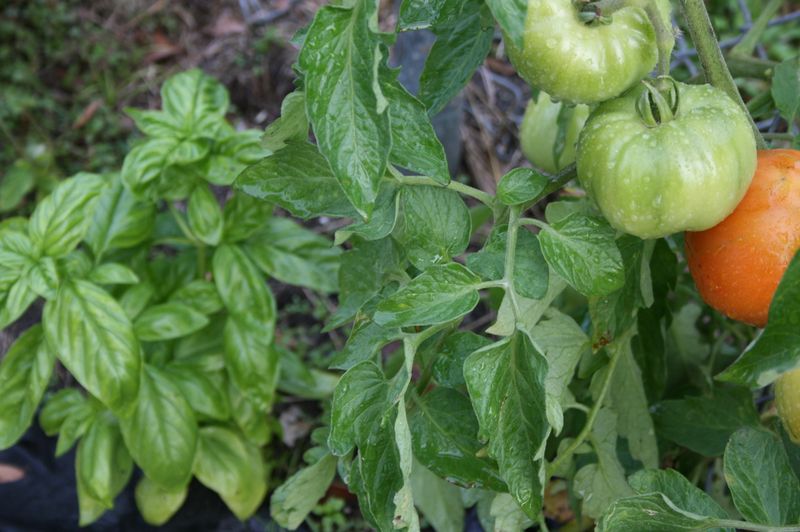
Basil gets recommended alongside tomatoes so often that many gardeners assume it must be doing something essential for fruit production. The truth is more complicated.
Basil is a practical, edible warm-season herb that can share a garden bed with tomatoes when conditions allow, but there is no solid evidence that it increases fruit set or rescues tomatoes from summer heat.
Research on tomato-basil intercropping has produced mixed results. A multi-year greenhouse study found that basil did not significantly reduce tomato productivity when the two were grown together, which is encouraging for gardeners who want to use the space efficiently.
However, a 2024 certified organic field study found that basil actually reduced tomato yield compared with the control in that particular system, while thyme increased it.
Extension programs also caution that companion-plant claims broadly need more research before they can be treated as reliable gardening rules. UGA Extension describes basil as a sun-loving, moderately moisture-needing herb well suited to Southern gardens, without crediting it with specific tomato-productivity benefits.
Plant basil because you enjoy cooking with it and because it can coexist with tomatoes under the right conditions, not because it will solve blossom drop.
Diagnose the tomato problem before adding a companion
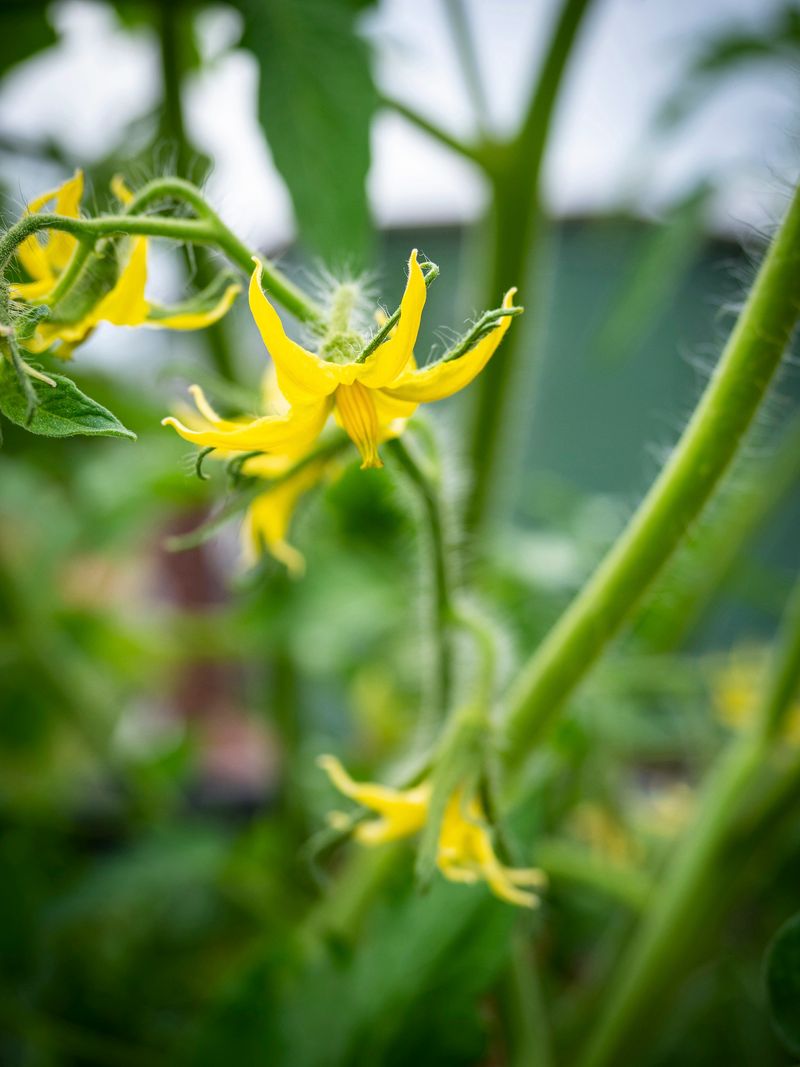
When tomatoes flower repeatedly but never set fruit, the instinct is to look for something missing from the garden. A companion plant, a new fertilizer, a different spray.
But failed fruit set is almost always a symptom of something happening in the growing environment, not a sign that the garden lacks basil or marigolds.
Virginia Tech Extension identifies several causes of poor tomato fruit set, including temperatures outside the plant’s preferred range, moisture stress, and nutritional imbalances. The UF/IFAS Florida Vegetable Gardening Guide lists blossom drop as commonly linked to excessively high or low temperatures and excessive nitrogen fertilization.
Texas A&M AgriLife Extension adds hot and dry periods, poor drainage, insect damage, and disease to the list of causes worth investigating.
The diagnostic categories to work through are: heat and humidity levels, soil moisture consistency, nitrogen load, cultivar suitability for the current season, planting timing relative to regional recommendations, pest or disease pressure, and whether pollen is moving effectively within the flowers. Each of those has a more direct connection to whether a tomato flower becomes fruit than the presence or absence of a nearby herb.
Fix the environment first, and then consider whether basil fits into the plan.
Heat and humidity can stop flowers from becoming fruit
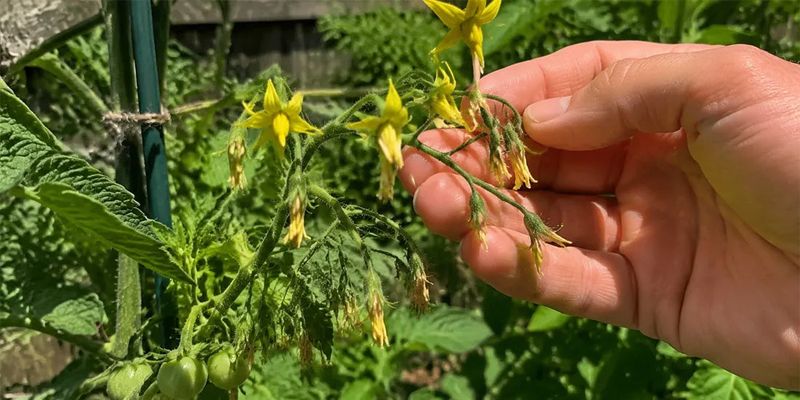
Tomato flowers are sensitive to temperature in ways that surprise a lot of gardeners. Virginia Tech Extension identifies nighttime temperatures of 59 to 68 degrees Fahrenheit as the favorable range for fruit set, with daytime temperatures above approximately 90 degrees and nighttime temperatures above approximately 70 degrees associated with reduced fruiting.
Once temperatures push past those thresholds, the plant’s ability to complete pollination and hold developing fruit is compromised.
The problem runs deeper than just flower drop. Peer-reviewed research examining tomato lines from Florida, Texas, North Carolina, and Louisiana found that chronic warm conditions reduce pollen production, pollen viability, and fruit set.
Pollen that has been damaged or rendered non-viable by heat cannot fertilize the flower, regardless of what is planted nearby.
Humidity adds another layer of difficulty. University of Alaska Cooperative Extension guidance on tomato pollination notes that approximately 70 percent relative humidity is favorable, and that very high humidity can make pollen damp and sticky, preventing it from releasing and moving within the flower properly.
Southern summers routinely combine high heat with high humidity, which is why fruit set can shut down almost completely during July and August in Florida and Texas. Basil planted nearby cannot reverse heat-damaged pollen or repair a flower that has already aborted.
Help tomato flowers pollinate under ordinary conditions
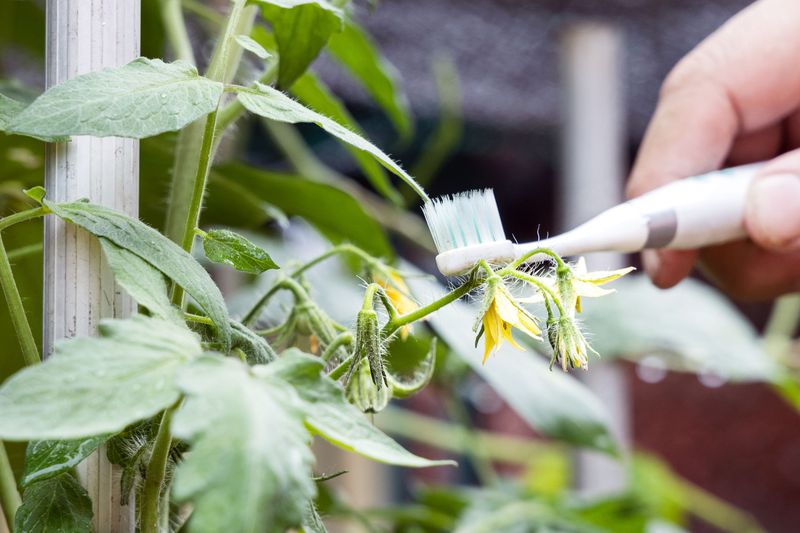
Many gardeners assume tomatoes need bees or a flowering companion plant to pollinate, the way squash or cucumbers do. Tomatoes work differently.
They are largely self-pollinating, meaning the pollen from a flower’s anthers can fertilize that same flower without a bee carrying it from plant to plant. University of Alaska Cooperative Extension explains that air movement, gravity, and vibration are what move pollen within the tomato flower under ordinary outdoor conditions.
On calm, still days when there is little breeze, gently shaking individual flower clusters every day or two can help move pollen to where it needs to go. This is a low-cost step worth trying when conditions are otherwise favorable.
That said, shaking flowers cannot compensate for pollen that has already been damaged by heat or made sticky by excessive humidity.
The UF/IFAS Florida Vegetable Gardening Guide reinforces that blossom drop is primarily an environmental and cultivar issue rather than a pollination-access problem. Adding flowering companion plants may support other beneficial insects in the broader garden, which is a worthwhile goal, but it is not a substitute for addressing the temperature and moisture conditions that determine whether a tomato flower completes pollination and holds its developing fruit.
Prioritize cultivar, timing, water, and balanced nutrition
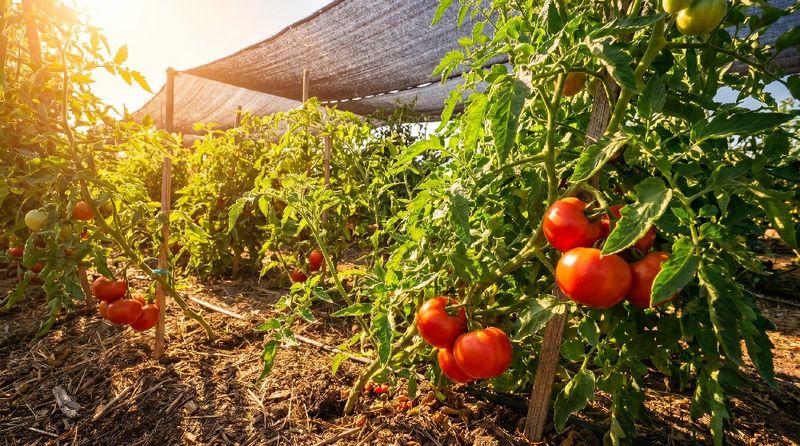
Choosing the right cultivar is one of the highest-value decisions a Southern tomato grower can make. UF/IFAS guidance for Florida notes that many heirloom tomatoes perform poorly during extreme heat and that cultivars vary substantially in their ability to set fruit under high temperatures.
Gardeners in Florida who need tomatoes to flower during the hottest months should look specifically for varieties labeled hot-set or heat tolerant. The UF/IFAS Florida Vegetable Gardening Guide also identifies cherry tomatoes as relatively heat resistant compared with larger slicing types, making them a practical choice for summer production.
Planting timing matters just as much as cultivar. Florida and Texas gardeners work with planting windows that differ significantly from the rest of the country, and following regional extension recommendations rather than a generic national calendar gives plants the best chance of fruiting before or after the most extreme heat.
Texas A&M AgriLife’s fall vegetable gardening guide outlines timing that lets tomatoes set fruit during the more moderate temperatures of early fall rather than fighting peak summer heat.
Consistent soil moisture protects fruit set and prevents blossom-end rot. Mulching around the base of plants helps hold moisture and moderate soil temperature.
Texas A&M AgriLife Extension warns that excessive nitrogen encourages heavy leafy growth at the expense of fruit production. Virginia Tech Extension similarly notes that nutrition should match crop needs rather than serve as a forced fruit-set remedy, with fertilizer applications guided by soil conditions and plant stage rather than by guesswork.
Place basil where it will not compete with tomatoes
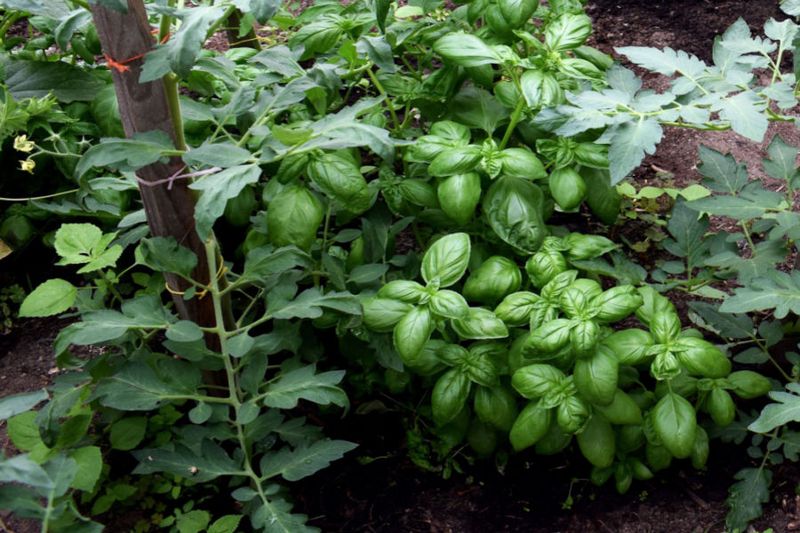
Basil and tomatoes can share garden space successfully, but placement matters more than most companion-planting advice acknowledges. Crowding basil tightly around tomato stems creates real competition for water, nutrients, light, and root space, especially in containers or narrow raised beds where resources are already limited.
The greenhouse research that found no significant productivity penalty from tomato-basil intercropping also noted that competition between the two plants is a real mechanism that can reduce yield under different conditions. The 2024 organic field study, which found reduced tomato yield with basil, is a reminder that outcomes depend heavily on spacing, density, climate, and how the two crops interact in a specific system.
That field study used a specific planting density that may not match every backyard setup, but the result is a reason to give each plant room to breathe.
UGA Extension recommends that basil receive full sun, moderate and consistent moisture, and adequate airflow around its foliage. In humid Southern climates, dense planting that restricts airflow around both tomatoes and basil can increase the risk of fungal problems for both crops.
Clipping basil flowers as they appear prolongs leafy, harvestable growth by keeping the plant from going to seed, but that practice benefits the basil harvest, not tomato fruit set.
Keep marigold and fertilizer claims specific
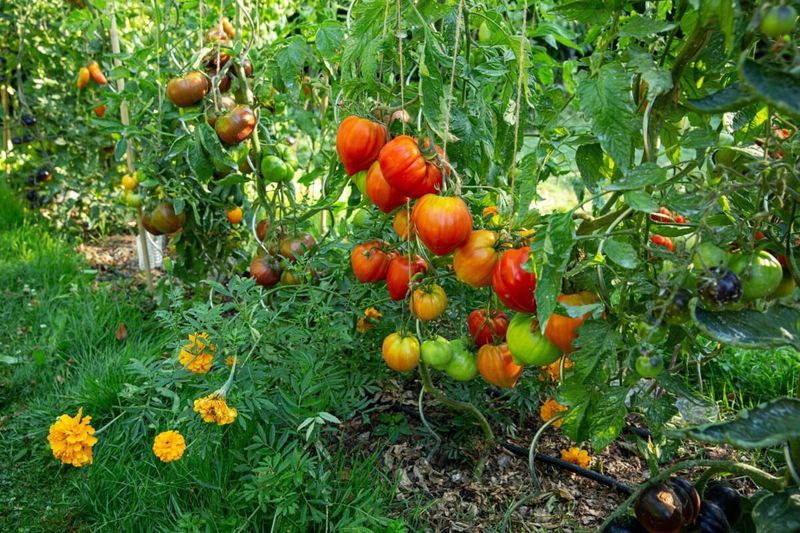
French marigolds show up in companion-planting discussions almost as often as basil, usually with broad claims about repelling pests and boosting tomato production. The evidence behind those claims is more specific than the general advice suggests.
A peer-reviewed PLOS ONE study found that French marigolds (Tagetes patula) reduced glasshouse whitefly pressure on tomatoes when the marigolds were established early in the growing period, with limonene identified as a likely repellent volatile. That result is meaningful, but it applies to a specific pest in a controlled growing environment, not to every tomato pest in an open Southern garden.
The same study noted that crowding or shading from marigolds could reduce tomato biomass and fruit weight, which is a reminder that any companion plant placed too close creates its own problems. Marigolds are not a fruit-set treatment, and there is no reviewed evidence that they help tomato flowers develop into fruit under summer heat.
Fertilizer shortcuts deserve the same scrutiny. High-phosphorus products marketed as bloom boosters and excess nitrogen both carry real risks for tomato productivity.
Texas A&M AgriLife Extension warns against excessive nitrogen, which pushes plants toward leaf production at the expense of fruit. Virginia Tech Extension reinforces that fertilizer should follow soil needs and crop stage.
Applying any spray during bloom also carries risk for beneficial insects and may violate pesticide label requirements, so following label directions exactly is non-negotiable.
Treat basil as a garden choice, then correct the real limits
Getting more tomatoes from a struggling summer garden starts with the growing environment, not with what is planted beside the tomatoes. Address heat exposure first by confirming that your chosen cultivar is rated for the temperatures your garden actually reaches.
If you are in Florida or Texas and planting during the hottest months, UF/IFAS guidance and Texas A&M AgriLife Extension resources can help you match cultivar and planting date to your specific region.
Even moisture, mulch, adequate spacing for airflow, and nutrition that matches the plant’s current stage matter more than companion selection when fruit set is the goal. University of Alaska Cooperative Extension’s tomato pollination guidance is a useful reminder that pollen movement under ordinary outdoor conditions depends on air and vibration, not on neighboring plants.
If blossom drop continues after you have addressed heat, moisture, nutrition, and cultivar fit, check for pest damage or disease before reaching for a companion-plant solution. The UF/IFAS Florida Vegetable Gardening Guide and Virginia Tech Extension both treat blossom drop as a diagnostic problem with multiple possible causes, which is the right way to approach it.
Basil earns its place in a Southern summer garden as an edible crop that tolerates heat and produces reliably when given sun, water, and room to grow. Plant it where it has space to breathe and will not crowd the tomato roots.
The tomatoes will set fruit or they will not based on temperature, moisture, cultivar, and timing – and a well-placed basil plant nearby means you will at least have something delicious to harvest while you work on the rest.