
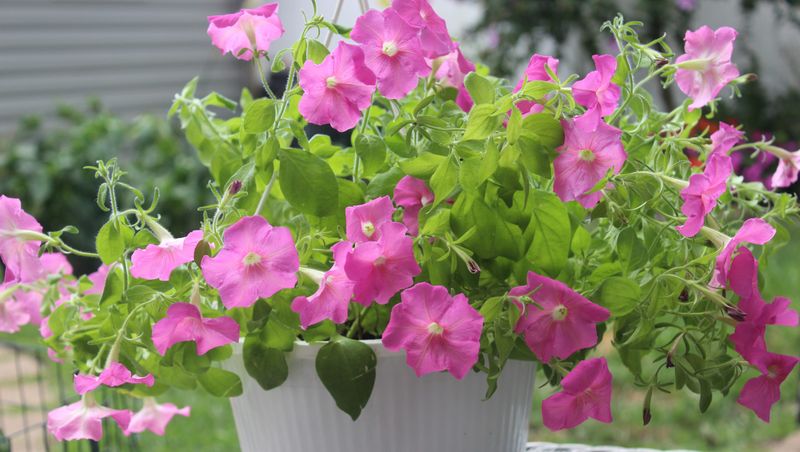
Watching your petunias turn into long, bare-stemmed stragglers in the middle of the growing season is genuinely frustrating, especially when you have been watering and feeding them faithfully. The good news is that a healthy but leggy petunia often responds well to a firm haircut that encourages fresh branching and renewed flowers.
Before you reach for the pruners, though, it helps to know whether your plant is simply overgrown or whether something bigger, like heat stress, disease, or the natural end of its season, is actually holding it back.
A slowing petunia may be leggy—or simply out of season
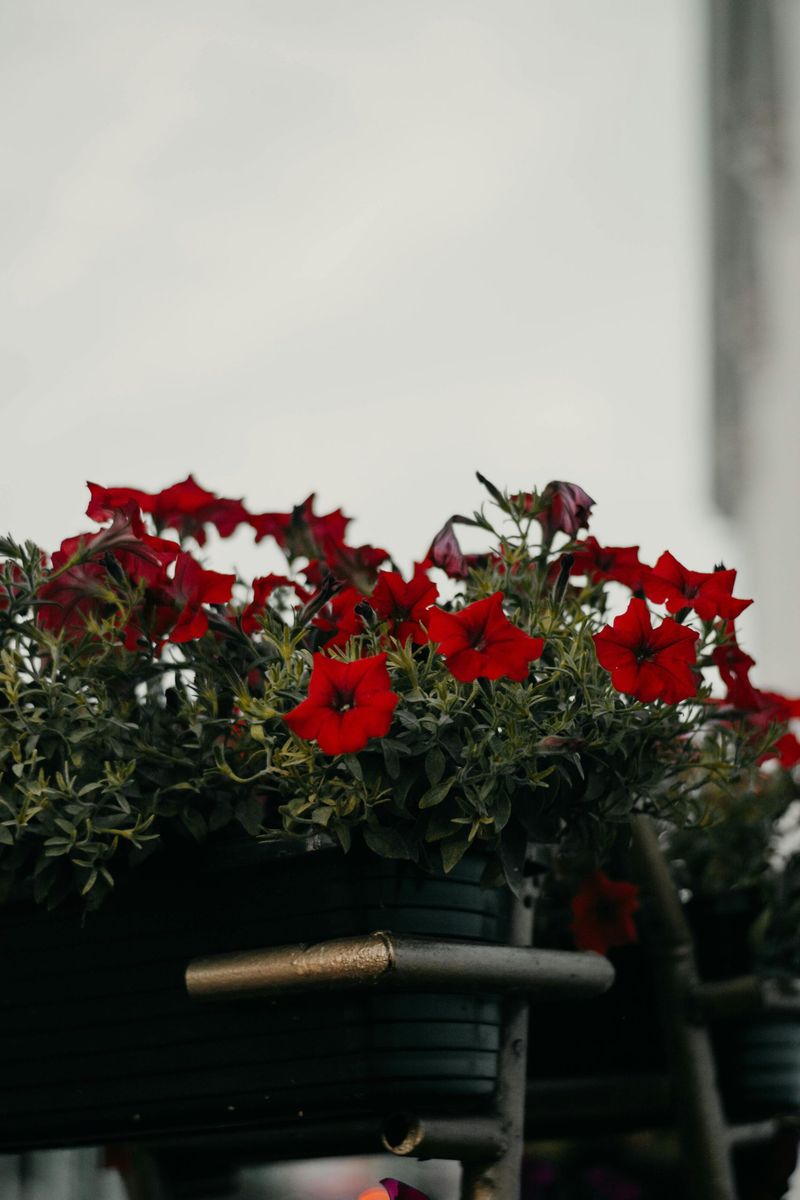
Petunias do not all slow down at the same point in the season, and the reasons behind sparse or faded blooms vary more than most gardeners expect. Long bare stems, fewer flowers, and tired-looking growth can each result from accumulated heat, cultivar differences, inconsistent watering, insufficient light, disease pressure, or the simple fact that the plant has reached the natural end of its useful season in your region.
Southern gardeners face a more complicated picture than the title of this article suggests. UF/IFAS extension guidance on petunias describes the plant as a popular winter annual in Florida, with October and November identified as the best planting months.
Summer heat and humidity in that state can bring a petunia’s performance to an end even when the gardener is doing everything right. Texas and other Gulf Coast regions face their own combination of intense heat, irrigation demands, and drainage challenges that affect timing differently.
For Georgia and similar climates, University of Georgia Extension notes that prolonged high temperatures can reduce petunia vigor, shorten flower life, and contribute to the leggy, flower-poor look that frustrates so many gardeners mid-season. The plant this article focuses on is one that is still green and actively growing but has become long, sparse, or thin.
Pruning is presented here as a conditional option for that specific plant, not as a guaranteed seasonal reset for every petunia in every yard.
Check the plant before reaching for pruners
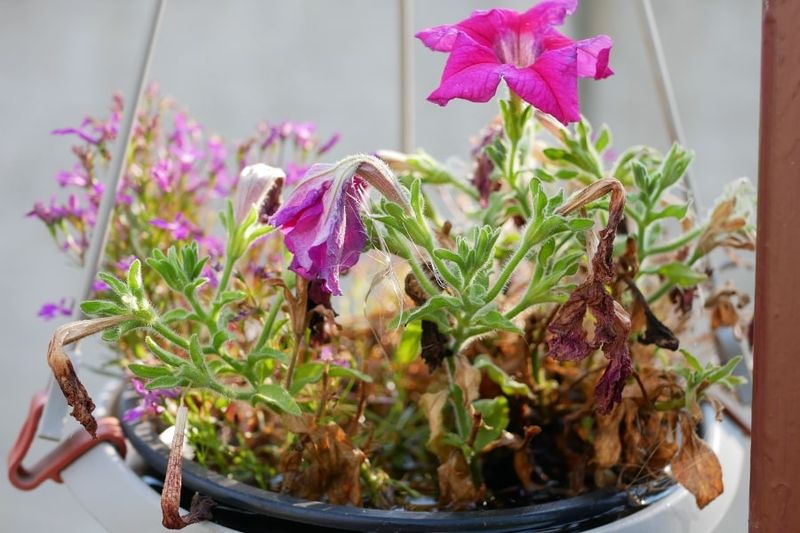
Before cutting anything back, take a few minutes to look the plant over honestly. A good candidate for rejuvenation pruning has living green stems, healthy-looking foliage, and visible leaf nodes along those stems, even if the tips are sparse and the plant looks tired.
The key requirement is that viable growing points remain lower on the stem, because new branches emerge from those nodes after cutting.
A different picture calls for a different response. Penn State Extension’s herbaceous pruning guidance makes clear that pruning works by stimulating growth from remaining healthy tissue.
A plant with very little healthy tissue left, whether from severe heat scorch, crown rot, root damage, or significant disease spread, may simply not have enough reserve to respond. Penn State’s petunia disease resource documents several fungal and crown problems that can mimic drought stress or general decline.
Look at the base of the plant and the soil surface. Mushy or discolored crown tissue, a foul smell near the roots, or foliage that has collapsed despite adequate soil moisture are all signs of a deeper problem that a haircut will not fix.
If the stems are still firm and the leaves are green, even if sparse, you likely have a plant worth trying to revive. If the damage is extensive, accept that pruning may not bring it back and plan for replacement rather than investing more time and water in a recovery that probably will not happen.
Cut leggy stems back above healthy nodes
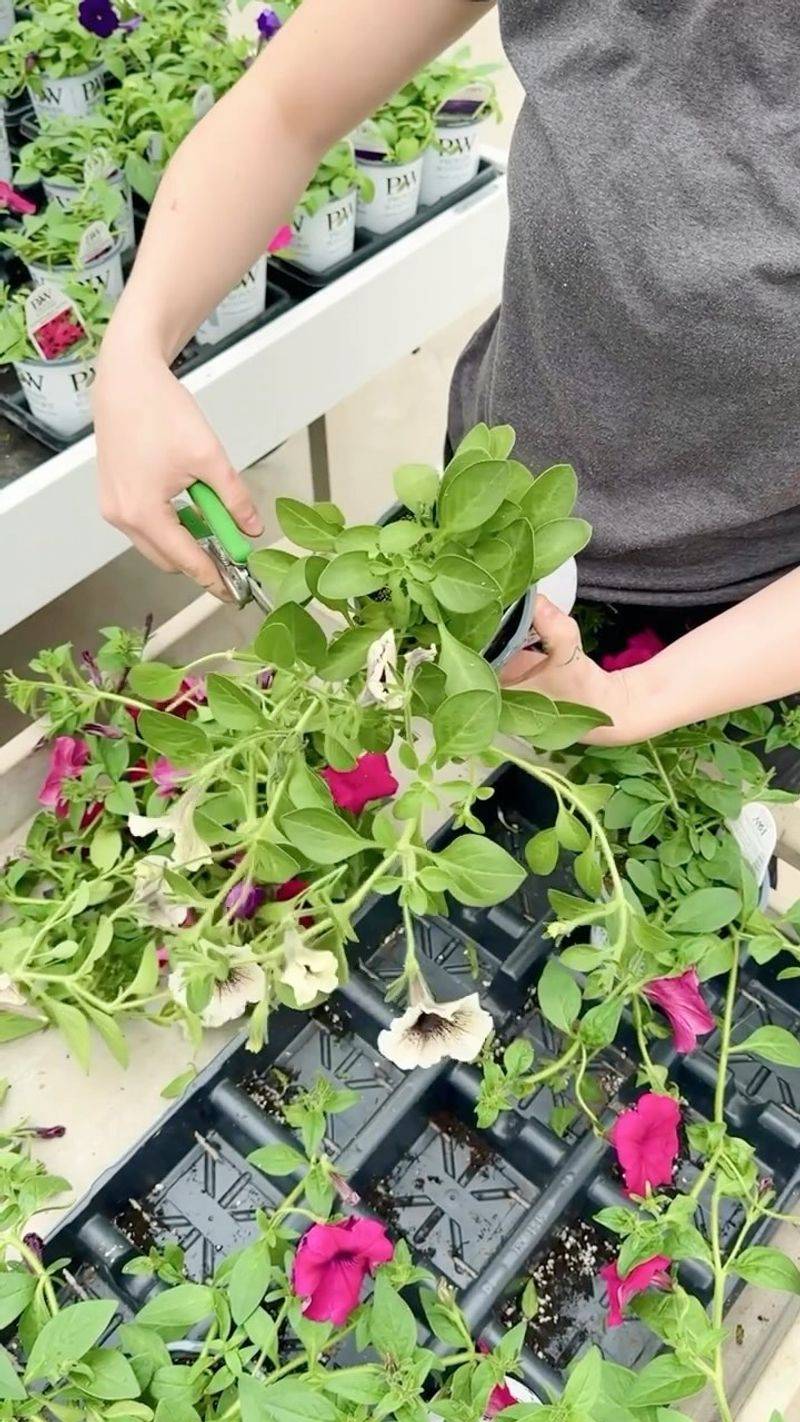
Once you have confirmed the plant is worth cutting back, gather a pair of clean, sharp scissors or bypass pruners. Dirty or dull blades can crush stem tissue and introduce pathogens, so wipe the blades with rubbing alcohol or a diluted bleach solution before you start.
Penn State Extension recommends cutting just above a healthy node, which is the point on the stem where a leaf or leaf pair attaches. That node is where new shoots will emerge after the cut.
Shorten the long stems by roughly one-third to one-half of their current length. For most leggy petunias, that means leaving approximately 3 to 5 inches of stem with several visible nodes or leaf axils intact.
Removing too little achieves little; removing every scrap of green tissue leaves the plant with nothing to work from. The goal is to rebuild the plant’s branching framework, not simply to tidy up the tips, which makes this cut substantially more effective than snipping off a few faded blooms.
Gardeners who want to preserve at least some color while the plant recovers have a gentler option. NC State Extension guidance from Richmond County suggests pruning selected long stems or removing roughly 20 percent of the plant at a time.
This slower approach keeps a few flowers in view and may feel less drastic, though the full recovery may take a bit longer than a single firm cutback. Either way, work stem by stem and make each cut cleanly above a node rather than slashing across the plant at a uniform height.
Support regrowth with steady water and restrained feeding
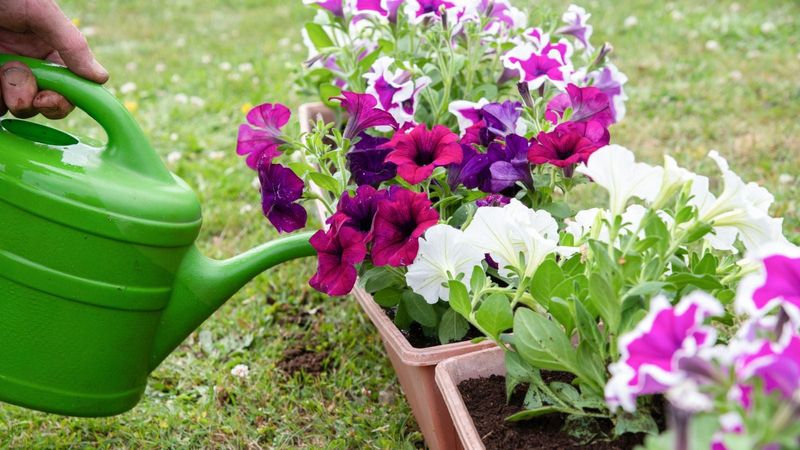
Right after pruning, water the plant thoroughly so the entire root zone is moistened. This helps reduce any transplant-style shock the plant experiences from losing a significant portion of its stems, and it gets moisture to the nodes that need to push new growth.
From that point forward, the goal is to keep the growing medium evenly moist without letting it become waterlogged. University of Illinois Extension’s container watering guidance notes that saturated soil deprives roots of oxygen and can lead to the same wilted appearance as drought stress.
Container petunias dry out faster than in-ground plants because the soil volume is limited and heat radiates from the pot walls. During hot Southern summers, you may need to check containers daily, but that check is about reading the soil, not about following a fixed schedule.
Stick a finger an inch into the potting mix; if it feels dry at that depth, water again. If it still feels moist, wait.
UF/IFAS also recommends watering at the soil level rather than overhead, particularly in humid conditions where wet foliage and crowded growth can encourage fungal disease.
Fertilizer plays a supporting role, but restraint matters. University of Georgia Extension pairs light fertilization with rejuvenation pruning as part of a recovery approach, and NC State horticulture research on petunia growth indicates that higher fertilizer rates can push leafy, weak growth while actually reducing flower production.
Apply fertilizer only according to the product label, only when the plant is actively growing, and resist the urge to add extra in hopes of speeding up the bloom cycle.
Deadheading, pinching, and pruning do different jobs
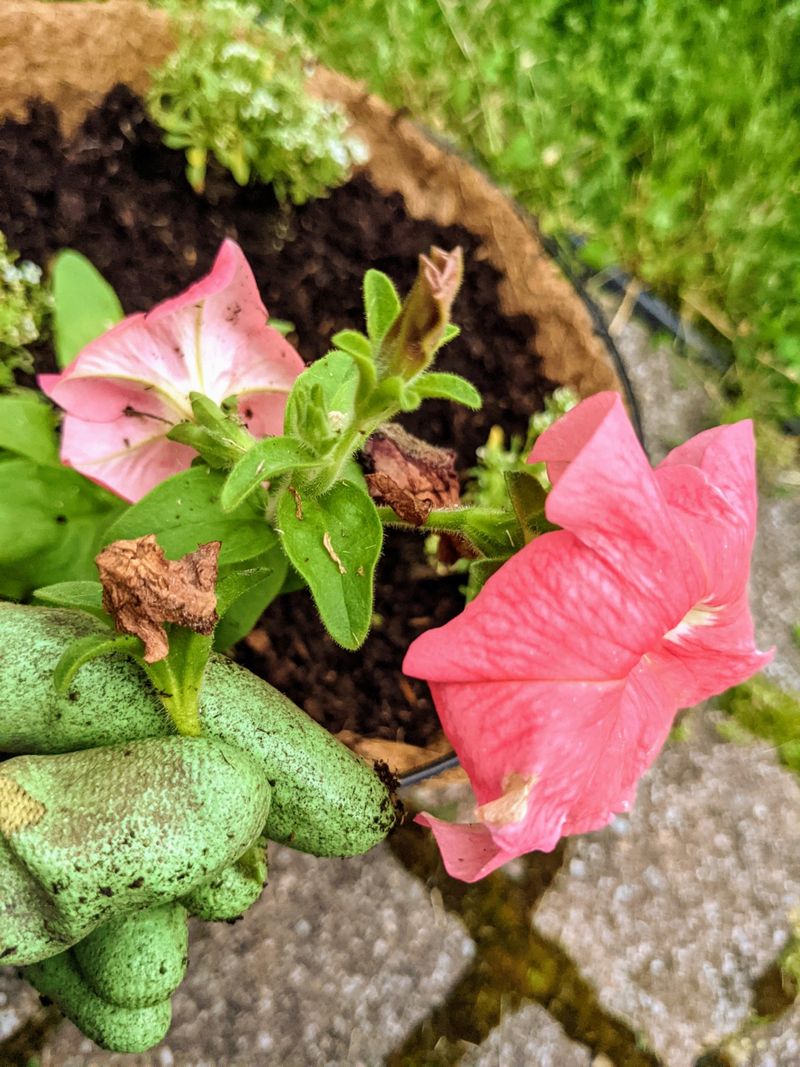
Not every petunia problem calls for the same tool or the same cut. Treating deadheading, pinching, and rejuvenation pruning as interchangeable is a common source of confusion, and matching the right practice to the plant’s actual condition saves both time and flowers.
Deadheading means removing faded or spent flowers, sometimes including the swollen green seed-forming structure just beneath the bloom. UF/IFAS notes that deadheading can improve appearance and may encourage continued flowering in varieties that tend to set seed and slow down.
Pinching is a lighter touch: you remove just the soft growing tip of a stem to prompt the plant to branch out from the nodes below, a technique often used on young plants to build a fuller shape from the start. Penn State Extension distinguishes these approaches clearly, describing rejuvenation pruning as the more substantial cut that shortens longer stems to rebuild a leggy plant’s branching framework.
Cultivar type also determines how much attention the plant actually needs. University of Illinois Extension points out that many spreading and small-flowered modern petunias, including many Wave-type varieties, are self-cleaning, meaning spent blooms drop away on their own without any deadheading from the gardener.
Grandiflora types and double-flowered varieties are the ones most likely to benefit from routine removal of faded blooms. Match the practice to the plant rather than applying every technique to every petunia in the yard.
Know when heat or disease—not legginess—is the problem
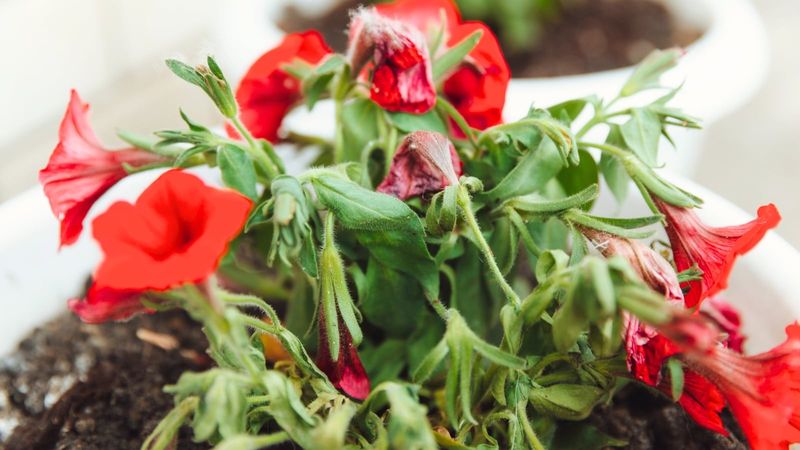
A haircut cannot fix every struggling petunia, and recognizing the difference between a leggy plant and a declining one is the most important diagnostic step in the whole process. Prolonged heat and high humidity can wear petunias down in ways that pruning simply cannot reverse.
In Florida especially, where UF/IFAS Charlotte County extension describes petunias as winter annuals, a plant struggling in July or August may have reached the natural end of its seasonal performance regardless of how well it has been cared for.
Before adding water or fertilizer to a plant that looks off, check the soil. University of Illinois Extension cautions that wilting can result from either too little or too much water, and saturated soil causes root oxygen deprivation that looks nearly identical to drought stress from the outside.
Check drainage as well. A container without adequate drain holes, or an in-ground bed with heavy clay, can keep roots sitting in water even after a normal amount of irrigation.
Disease is another factor to investigate before pruning. Penn State Extension’s petunia disease resource covers botrytis, crown rot, and other problems that can cause collapse, poor flowering, and tissue death.
Wet foliage, poor air circulation, and saturated soil all favor those conditions. If disease is present, cutting back spreads contaminated material and leaves fresh wounds exposed.
Pruning also creates a temporary flower gap. NC State Extension notes that recovery time varies depending on how heavily the plant was cut and the conditions it grows in.
Expect several weeks before new blooms appear, and understand that a plant dealing with heat stress, root problems, or disease may never close that gap.
Use the haircut as a chance to stimulate fuller growth
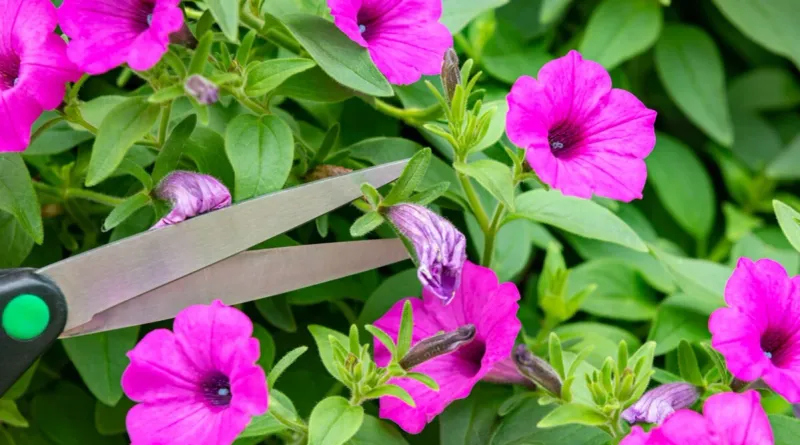
The practical decision sequence is straightforward. Confirm the petunia is still green and actively growing, with firm stems and visible nodes.
Shorten the leggy stems by roughly one-third to one-half, cutting just above healthy nodes with clean, sharp tools. Water thoroughly right after the cut, then maintain even soil moisture without saturating the root zone.
Apply fertilizer only according to the label if the plant is actively growing and feeding seems appropriate for the conditions.
Penn State Extension’s pruning guidance and University of Georgia Extension’s petunia recommendations both support this approach for healthy, leggy plants. Recovery may bring fuller branching and renewed blooms over the following weeks, though the timeline and the outcome depend on the plant’s health, the cultivar, local temperatures, light levels, and how much of the growing season remains.
For Florida gardeners in summer, or for any plant showing signs of serious disease or root trouble, replacement with a fresh transplant may be the more realistic path forward. A petunia that grows back fuller after a well-timed cut is a satisfying result, but the cut is a chance at recovery, not a guarantee of one.