
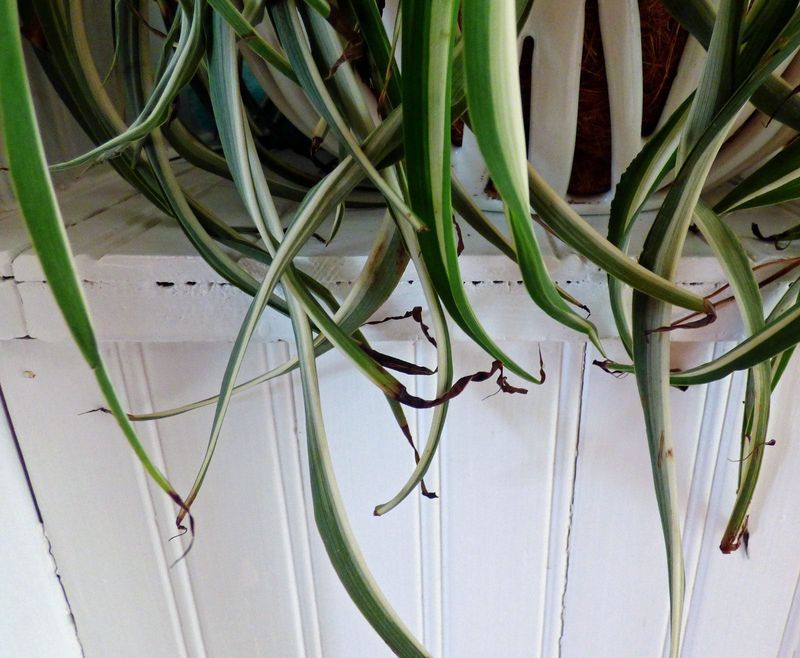
Spider plants are supposed to be the easy ones, so finding crispy brown tips and washed-out leaves on yours can feel like a personal failure. The good news is that most spider plant problems come down to a handful of fixable conditions, and a targeted first step can help you sort out what is actually going wrong.
That said, no single reset reliably rescues every fading plant, because brown tips show up for several different reasons. This article walks you through a conditional moisture-and-salt reset and the checks that tell you whether it applies to your situation.
Brown tips signal stress, not one single mistake
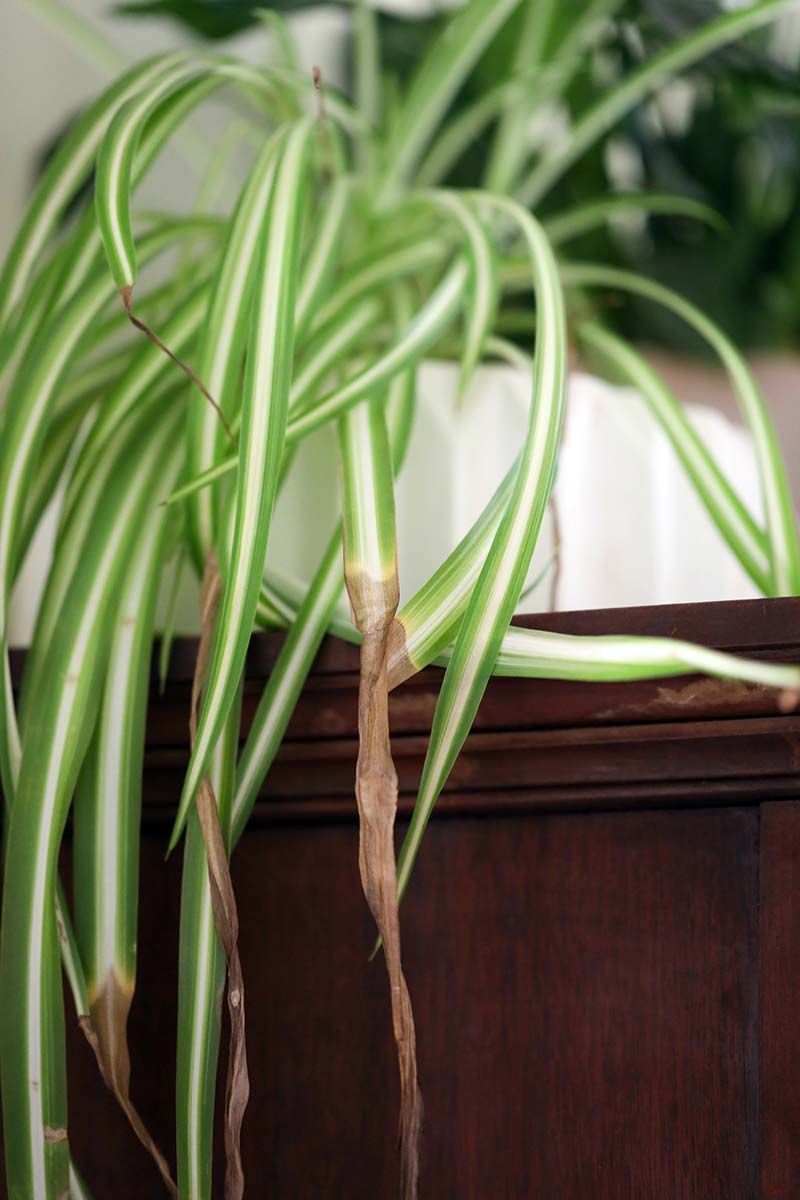
Crispy brown tips paired with pale, dull, or rapidly fading foliage are the combination that sends most spider-plant owners straight to a search bar. The instinct is understandable, but University of Wisconsin Extension describes tip burn as a nonspecific symptom rather than proof of any one cause, meaning the browning itself cannot tell you which problem you are dealing with.
The list of possible triggers is longer than most people expect. Dry soil, inconsistent watering, excess fertilizer, soluble-salt buildup, fluoride or chlorine in tap water, low humidity, harsh midday sun, and insufficient light can all produce brown tips.
Root damage and pest activity can do the same, and Clemson Extension notes that several of these causes can overlap in the same plant.
Fading foliage adds another layer of complexity. Pale, weak growth often points toward inadequate or excessive light, root stress, or general decline rather than tip burn alone.
Before you assume the worst, check whether your plant is a variegated cultivar: cream or white striping is completely normal for many spider-plant varieties and is not a sign of illness.
The reset described in this article is a reasonable first investigation when conditions fit, not a guaranteed fix for every scenario. UC ANR’s houseplant problem guide reinforces that identifying the actual cause before treating is what separates a recovery from a repeat of the same decline.
Check the root zone before you add more water
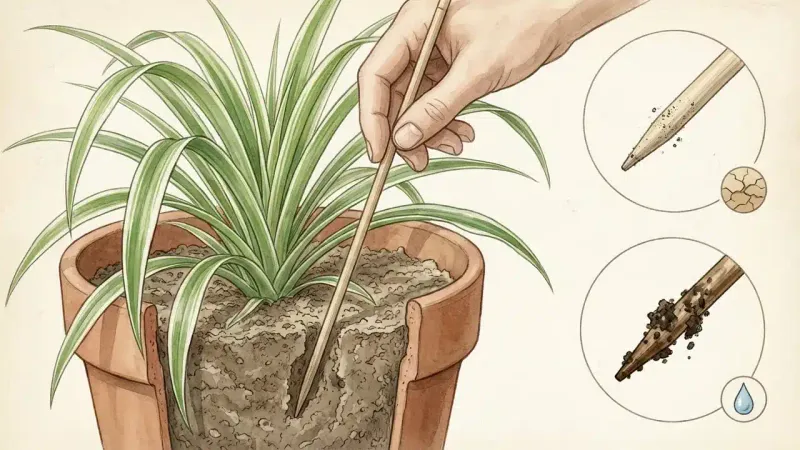
The first practical decision point is not at the watering can. Push your finger about one to two inches into the potting mix and feel what is actually there.
University of Arizona Cooperative Extension recommends checking soil moisture at depth rather than relying on a calendar or on how the foliage looks, because wilting and fading can appear whether the root zone is bone dry or soaking wet.
A dry root ball is a clear signal to water thoroughly. Persistently wet soil is a different situation entirely: when roots sit in saturated media for too long, they can break down and lose the ability to absorb water, which produces wilting and fading that looks almost identical to drought stress.
Adding more water to an already wet pot makes that situation worse.
If the mix has stayed wet for more than a week and the foliage is still declining, remove the plant from the pot and look at the roots. Iowa State University Extension explains that healthy roots are firm and light-colored, while roots that have begun to rot are typically brown, soft, or mushy.
Finding mushy roots means the reset procedure below will not be enough on its own, and correcting drainage and root health becomes the priority.
ISU Extension’s wilting FAQ makes the point plainly: do not water again simply because the leaves look limp. The soil moisture reading, not the appearance of the foliage, is the signal that tells you which direction to go.
Use a conditional moisture-and-salt reset
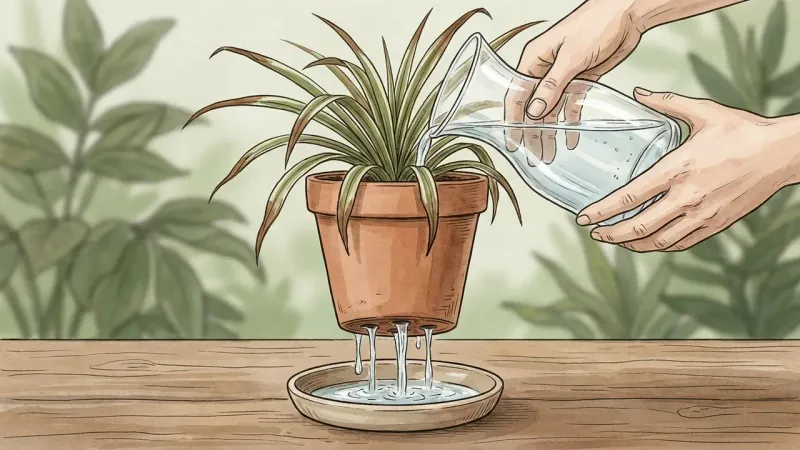
When the soil is dry and the container drains freely, a moisture-and-salt reset is a sensible first step. The procedure works in a specific order: pause fertilizer completely, confirm that the drainage hole is open and unobstructed, inspect the roots briefly, then water the dry root ball slowly and thoroughly until water runs steadily from the bottom of the pot.
UConn Extension’s fertilizing guidance notes that copious watering can help reduce excess fertilizer salts in the root zone. Add a leaching step only when there is a visible white crust on the soil surface, pot rim, or saucer, when fertilizer applications have been frequent or heavy, or when you have reason to suspect mineral-heavy water has been used consistently.
In those cases, use clean, low-mineral water, pour slowly until the pot drains completely, and then empty the saucer or outer pot so the roots are not sitting in runoff.
Illinois Extension’s houseplant troubleshooting guide also recommends flushing when fertilizer salts are suspected, with the same condition: drainage must be unobstructed. Repeatedly flooding soil that is already wet or that cannot drain creates more root damage, not less.
After the reset, move the plant to bright, indirect light and let the soil dry slightly before watering again. Arizona Cooperative Extension’s indoor plant care guide reinforces this sequence as a reasonable approach for stressed houseplants.
Even when applied correctly, the reset may reduce stress from dryness or salts, but it cannot guarantee recovery if root rot, pests, unsuitable light, or other causes are the real driver.
Adjust light and water quality to support new growth
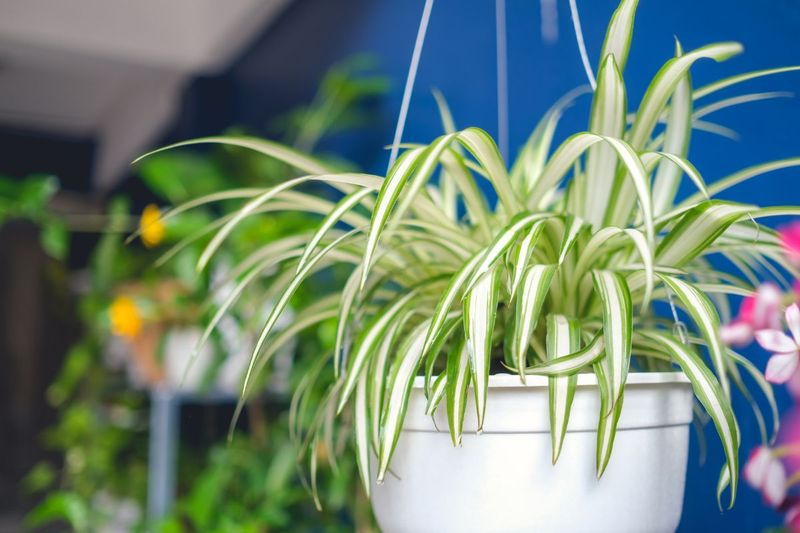
Where you place the pot after the reset matters more than most people realize. Illinois Extension’s houseplant lighting guide explains that low light tends to produce pale, weak, or elongated growth, while hot direct midday sun can scorch leaf tissue and worsen tip browning.
For spider plants, a spot with bright, indirect light is the practical target.
NC State Extension’s profile of variegated spider plant confirms that medium to bright indirect light supports the strongest growth, and that insufficient light can reduce overall vigor. Avoid south- or west-facing windows where the plant receives unfiltered afternoon sun for extended periods, especially in Florida and Texas where that light can be intense year-round.
Recurring tip burn that persists after fixing moisture and drainage often points toward water quality. Wisconsin Extension identifies spider plants as among the houseplants considered more sensitive to fluoride-related tip injury.
Rainwater or distilled water are the more reliable low-mineral options when fluoride or salt injury is suspected. Do not rely on leaving tap water out overnight as a substitute: standing water may reduce some chlorine, but it does not reliably remove fluoride.
Even with ideal light and clean water, new growth also depends on healthy roots, appropriate moisture levels, unobstructed drainage, and the absence of active pests. University of Georgia Extension notes that environmental adjustments support recovery but do not override root or pest problems that have not been addressed.
Make drainage part of the treatment
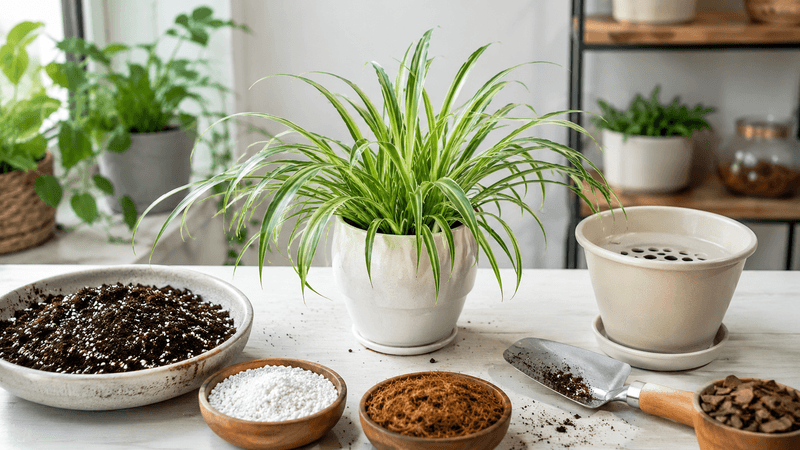
A thorough watering or a salt leach only helps if the water has somewhere to go. Every container used for a spider plant should have at least one open, unobstructed drainage hole.
Iowa State University Extension’s houseplant care guide is direct on this point: without drainage, excess water pools at the root zone and creates the saturated conditions that damage roots over time.
Adding a gravel layer at the bottom of a pot without a drainage hole does not solve the problem. Extension guidance makes clear that gravel shifts the water table upward rather than removing it, which can actually keep roots wetter than a uniform potting mix would.
Use a pot with a hole, not a workaround.
The potting mix itself matters too. Illinois Extension recommends a well-drained potting medium for houseplants, because heavy or compacted media holds moisture against roots far longer than a lighter, porous mix would.
If your current mix feels dense and slow to dry, repotting into a fresh, well-draining medium may be part of the fix.
After each watering, empty any water that collects in the saucer or decorative outer pot within about an hour. ISU’s cultural problem guide connects standing water in saucers with prolonged root wetness and the root injury that follows.
The reset works as intended only when excess water can leave the container completely.
Look for pests or root damage when symptoms do not fit
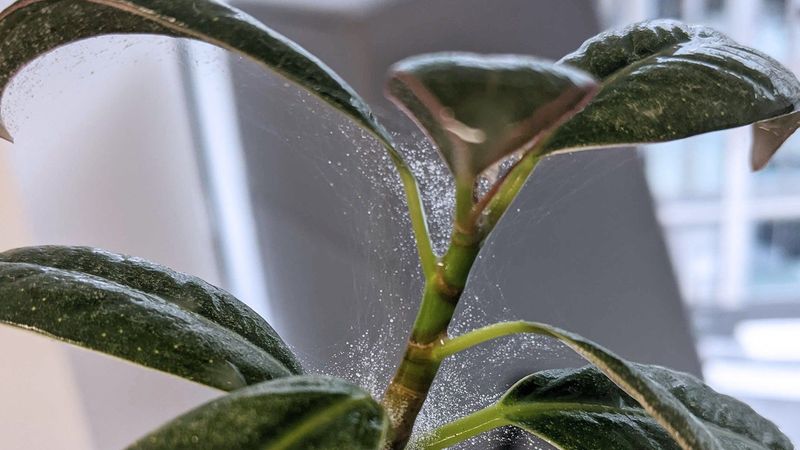
Not every fading spider plant fits the moisture-and-salt reset. When you have worked through the soil check, watered correctly, and adjusted the light but the plant keeps declining, a second look at the roots and foliage is the next move rather than repeating the same steps.
Root rot is worth reconsidering if the soil has stayed persistently wet and the roots you find are brown, soft, or mushy rather than firm and pale. In that case, removing the damaged roots, letting the remaining root system dry slightly, and repotting into fresh, well-drained mix gives the plant a better chance than continued watering.
Clemson Extension’s spider plant factsheet lists root rot as a recognized cause of decline that requires a different response than environmental adjustments alone.
Pests deserve a close look when the leaf surface looks stippled, grayish, bronzed, or dusty, or when you spot fine webbing between leaves or along stems. Utah State University Extension identifies spider mites as a common houseplant pest that causes stippling and bronzing.
University of Arizona’s houseplant insect reference also lists scale, mealybugs, aphids, and whiteflies as pests that affect indoor plants. Brown tips alone are not enough to diagnose any of these; look for the additional physical signs before drawing a conclusion.
Persistent pale foliage and weak growth without obvious pest evidence may reflect inadequate or excessive light, root stress, or ongoing cultural decline. Keep in mind that cream or white tissue is normal for variegated cultivars, so not every light-colored leaf is a warning sign.
Judge recovery by healthy new growth, not greened-up old leaves
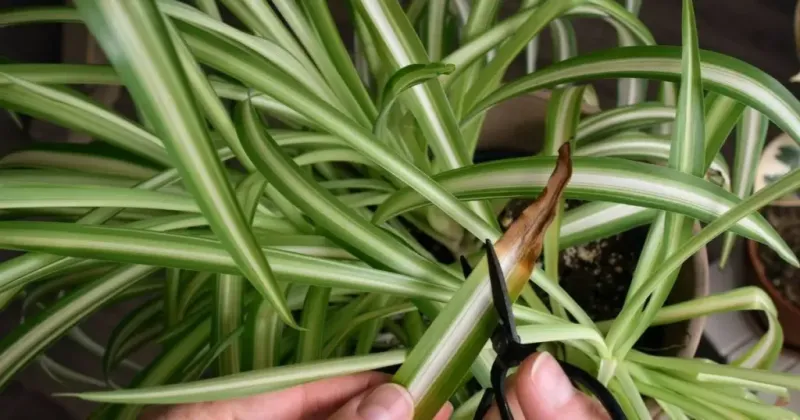
Once the reset is in place, the most reliable sign that things are moving in the right direction is healthy new growth from the center of the plant. Existing brown tissue will not turn green again regardless of what you do: the damage to those cells is permanent.
Iowa State University Extension confirms that trimming dead tips along the leaf’s natural tapered shape improves the plant’s appearance without reversing the underlying cause or stimulating recovery on its own.
Hold off on fertilizer until you see genuinely healthy new leaves. UConn Extension advises resuming feeding only after the plant shows signs of healthy growth, because applying fertilizer to a stressed root system can increase soluble salts and worsen the very browning you are trying to stop.
Water again only after the soil has dried slightly, not on a fixed schedule.
If new growth emerges but still develops brown tips, return to the checklist: moisture levels, drainage, light, water quality, roots, and pest activity. A plant that stabilizes and pushes out clean new leaves is telling you the reset addressed the main stressor.
University of Arizona Cooperative Extension notes that ongoing decline after correcting obvious cultural problems is the signal to investigate more carefully rather than repeat the same treatment. Recovery is measured one new leaf at a time, not by what the old ones do.