
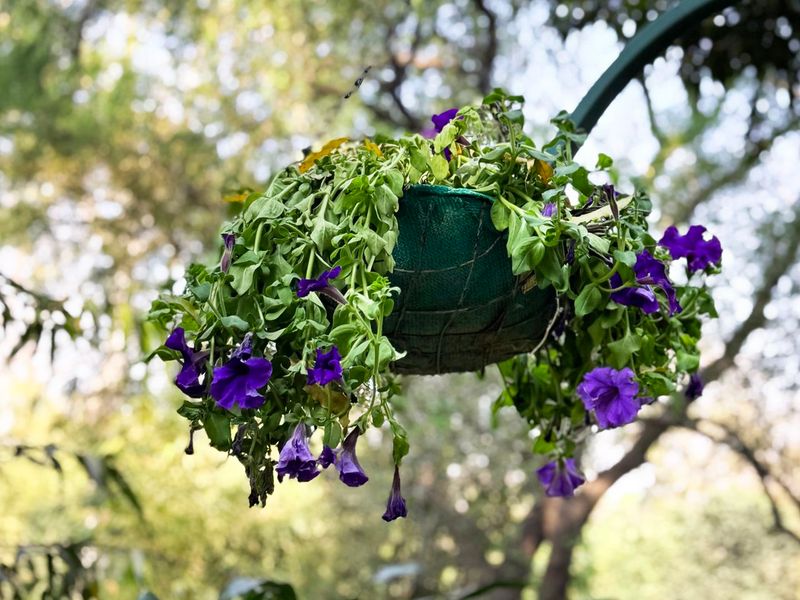
Petunias are one of the most cheerful plants you can grow in a Southern yard, but when the blooms start looking tired, faded, or just plain wrong, the instinct to water more can actually make things worse. A common watering habit may be quietly setting your flowers up for trouble, even when the plant looks desperate for a drink.
Before you reach for the hose again, a quick check of what is actually happening at the root zone and on those petals could save your blooms and your whole season.
A Limp Petunia Does Not Prove It Needs More Water
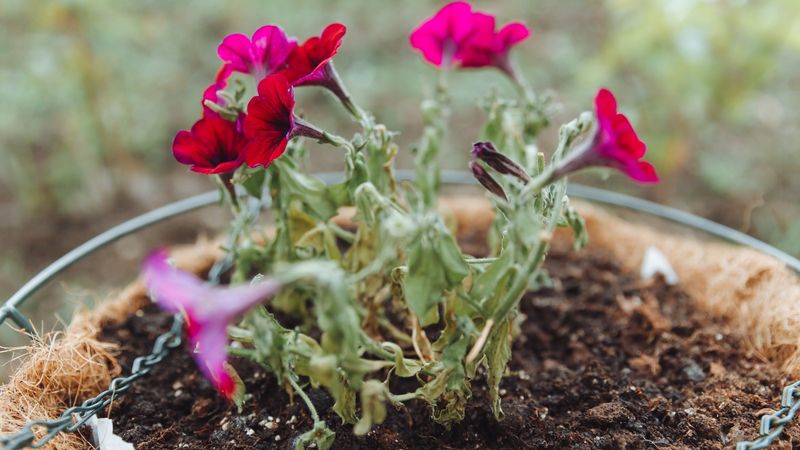
Afternoon limpness in petunias is one of the most misread signals in the garden. On a hot, windy day in Florida or Texas, a petunia can droop noticeably even when the root zone still has adequate moisture.
NC State Extension guidance on heat stress versus water needs explains that temporary afternoon wilting caused by heat and transpiration is common and does not automatically signal that the plant needs more water added to the soil.
What makes this trickier is that wilting in wet soil can also happen. When roots sit in waterlogged or poorly drained ground, they can become oxygen-starved or damaged, and a compromised root system cannot move water up the plant efficiently.
University of Wisconsin horticulture guidance on why plants wilt confirms that saturated soil can produce the same drooping appearance as drought, making it unsafe to assume that a limp plant simply needs more water poured on it.
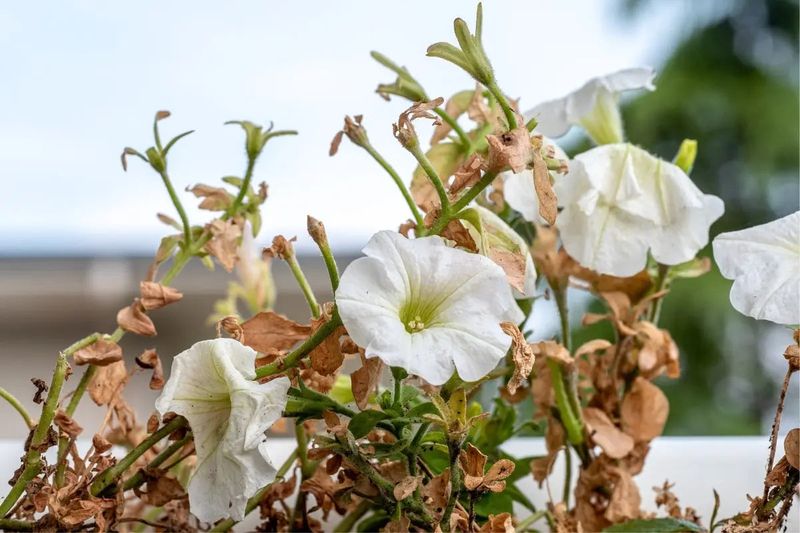
Flower symptoms deserve a separate look. Penn State Extension’s petunia disease reference and the University of Minnesota’s petunia diagnostic tool both note that browning, fading, and petal drop can come from natural aging, rain damage, heat, pests, nutrient shortfalls, light problems, or cultivar traits.
Botrytis gray mold becomes a more specific possibility when you see translucent or water-soaked petal spots, buds that fail to open, premature flower drop, or a gray fuzzy coating spreading from spent blooms. Not every brown or faded flower points to disease.
Repeated Overhead Wetting Can Keep Blooms Vulnerable
Grabbing the hose and spraying the whole plant from above is a natural habit, but doing it repeatedly can leave petunia flowers sitting wet for extended periods. That prolonged moisture is where the real risk builds.
UF/IFAS guidance on growing petunias specifically advises against wetting petunia leaves and flowers during irrigation, pointing to the disease pressure that wet foliage creates in Florida’s humid conditions.
The fungal disease most associated with this pattern is Botrytis gray mold. UC IPM’s overview of Botrytis blight describes how the pathogen thrives when flowers and foliage stay wet for extended periods or when humidity stays very high, and how overhead irrigation can spread spores through splash from infected petals to nearby healthy tissue.
Crowded plantings, shade, and poor air movement slow the drying process and give the fungus more time to take hold.
One clarification matters here: a single overhead watering does not automatically ruin your blooms. NC State’s Botrytis reference for ornamentals connects disease risk to repeated or prolonged wetness, not to occasional contact with water.
The concern is also not about water droplets acting like a magnifying glass on petals. The real issue is sustained moisture on flowers and leaves, especially when heat, crowding, or humidity prevent quick drying after each watering session.
Check the Root Zone Before You Reach for the Hose
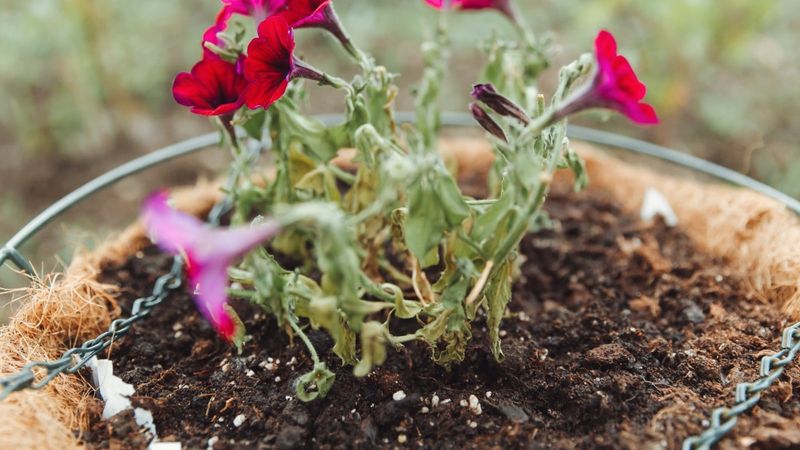
Before adding any water, push a finger or a wooden dowel about two inches into the soil near the plant’s roots. Dry soil at that depth is a clear sign the plant may genuinely need water.
Moist or wet soil at that depth means the drooping you see is more likely caused by heat, wind, or a root problem rather than thirst.
NC State’s heat-stress versus water-need guidance recommends this soil check as a first step before irrigating, particularly during hot afternoons when temporary wilting is common. A plant that perks back up in the evening after a hot day almost certainly does not need extra water.
One that stays limp even after the temperature drops warrants a closer look at the root zone and drainage.
Soil type plays a role too. University of Illinois Extension’s petunia care guide notes that petunias perform best in moist, well-drained soil, and UF/IFAS petunia guidance echoes that heavy or poorly drained soil can reduce plant performance and increase the risk of root problems over time.
If water pools near your petunias after rain or irrigation, that drainage issue is worth addressing before adjusting how often you water. Adding more water to a plant struggling in compacted or waterlogged soil will not fix the underlying problem.
Move Water to the Soil Line
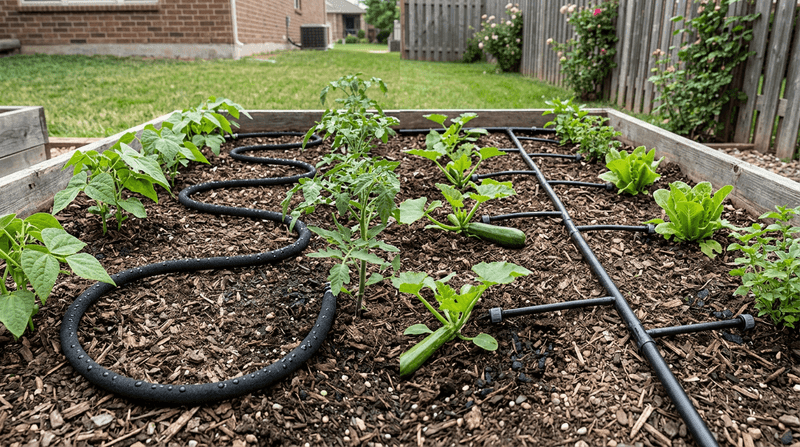
Switching how you deliver water is the most direct way to reduce prolonged flower and foliage wetness. Drip irrigation, a soaker hose, or slow and careful hand watering aimed at the soil surface can all hydrate the root zone without routinely soaking the petals and leaves above.
Mississippi State Extension’s plant disease and watering guidance identifies soil-line delivery as one of the practical ways gardeners can reduce leaf wetness and lower disease pressure across ornamental beds.
NC State’s Botrytis management reference and UC IPM’s gray mold overview both recommend drip or base irrigation specifically to reduce splash dispersal of Botrytis spores and to limit the time flowers and foliage spend wet. A soaker hose laid along the base of a bed is a low-cost option that works well for in-ground petunias and can run on a timer without wetting the canopy at all.
Timing still matters when a sprinkler or overhead hose is the only practical option. Iowa State Extension’s watering timing guidance identifies approximately 5 to 9 a.m. as a useful window because the plant has the rest of the day to dry before temperatures peak and before nighttime humidity settles in.
Evening watering through drip irrigation or a soaker hose is a different situation entirely, because those methods keep the foliage dry regardless of the hour. The concern with evening watering applies specifically to overhead methods that leave flowers and leaves wet through the night.
Set Frequency by Soil, Weather, and Container Size
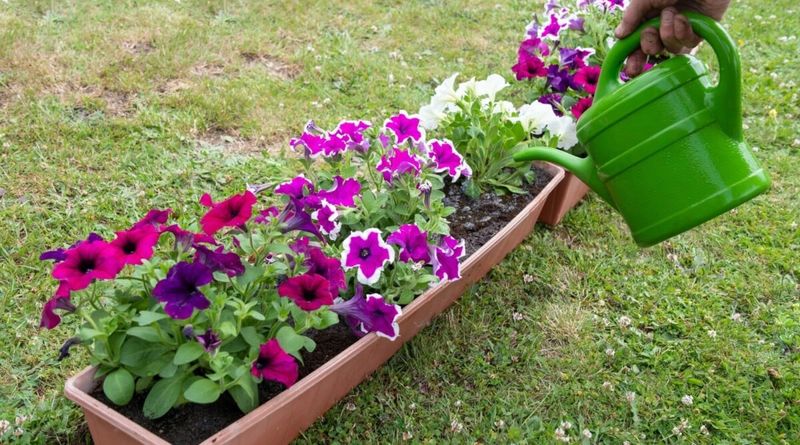
Swapping overhead watering for soil-line irrigation is only half the adjustment. How often you water matters just as much, and the right answer changes depending on where your petunias are growing.
UF/IFAS petunia guidance offers a useful starting point for established Florida bed petunias: roughly 1 to 2 inches of water every 7 to 10 days. That figure accounts for rainfall and is not a fixed calendar you should follow without checking actual soil conditions, because sandy soils, exposed beds, extreme heat, drought, and plant size can all shift the real need.
Texas gardeners face similar variability. Texas A&M AgriLife Extension’s Earth-Kind water efficiency guidance emphasizes deep soaking adjusted for soil type, rainfall, and season rather than any rigid watering calendar.
In both states, light automatic daily watering in established beds is generally undesirable because it tends to keep only the top inch of soil moist, which encourages shallow root growth without actually supporting the plant through drought or heat stress.
Containers and hanging baskets live by completely different rules. Iowa State Extension’s hanging basket care guide notes that baskets can dry out rapidly in hot, sunny weather and may need checking daily or even watering more than once on the hottest days.
The key rule for any container is to water thoroughly until water drains freely from the bottom, then allow the mix to approach dryness before watering again. Never leave a pot or basket sitting in a saucer of standing water, because saturated roots lose the oxygen they need to function, producing the same wilting symptoms as drought.
Remove Diseased Tissue and Improve Airflow
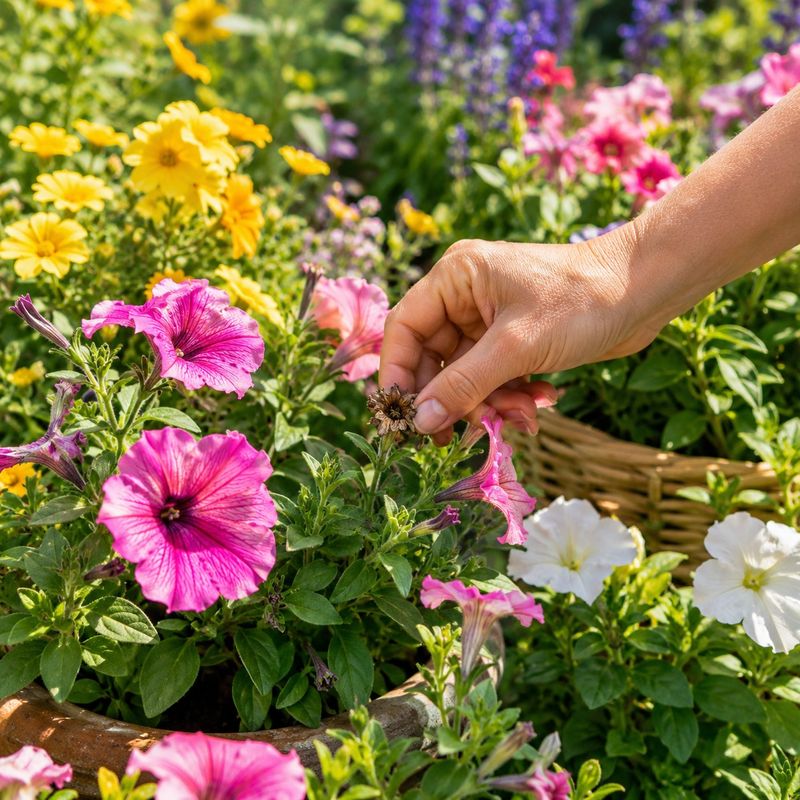
Changing the way you water helps prevent new moisture problems, but spent and infected flowers left on the plant continue to create risk. Botrytis commonly establishes itself in dead or dying petals first, then spreads from that infected tissue to nearby healthy flowers and stems.
UC IPM’s Botrytis management guidance recommends removing affected flowers and fallen plant debris promptly, because that organic material serves as a reservoir for spores even after the bloom has dropped.
NC State’s Botrytis reference also highlights air circulation as a meaningful factor. Crowded plantings trap humidity around foliage and slow the drying that limits fungal spread.
Improving spacing where plants are packed tightly together, or thinning stems in an overgrown bed, can make a practical difference in how quickly things dry after rain or irrigation.
Deadheading and trimming serve different purposes depending on the variety you are growing. UF/IFAS petunia guidance notes that large-flowered and double petunias benefit most from removing spent blooms, while many small-flowered modern cultivars are self-cleaning and shed their own spent flowers.
University of Illinois Extension’s annual care guidance supports trimming leggy growth as a way to encourage branching and improve the plant’s overall appearance. Neither practice is a guaranteed cure for disease, but both reduce the conditions that let problems persist.
Use a Short Rescue Checklist, Then Reassess
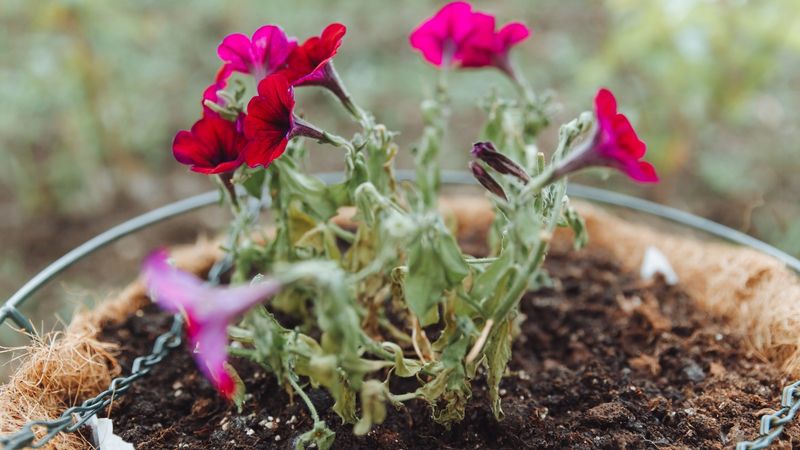
Working through a short, ordered checklist keeps the process manageable when your petunias are struggling. Start by pressing a finger into the root-zone soil before adding any water.
If the soil is already moist, skip watering and look for other causes. University of Wisconsin’s plant wilting reference reinforces that wet-soil wilting and drought wilting can look identical from above, so the soil check is the first step every time.
Once you have confirmed actual dryness, switch your delivery method to drip irrigation, a soaker hose, or careful hand watering at the soil line. When overhead watering cannot be avoided, work in the early morning window so the canopy has the full day to dry.
Remove any brown, spent, or visibly infected flowers and clean up fallen debris around the base of the plant. UC IPM notes that fungicides are generally preventative and work poorly in landscapes where wet conditions persist, so physical cleanup and moisture management are more reliable first responses than reaching for a spray bottle.
If the blooms remain poor after these corrections, broaden your investigation. UF/IFAS petunia guidance points to heat, inadequate light, nutrient imbalances, root problems, drainage failures, and cultivar limitations as additional contributors worth examining.
Moisture and airflow improvements can reduce disease pressure and support fresh growth, but they cannot bring back flowers that are already badly damaged. The goal is to give the next flush of blooms a better environment to open into.