
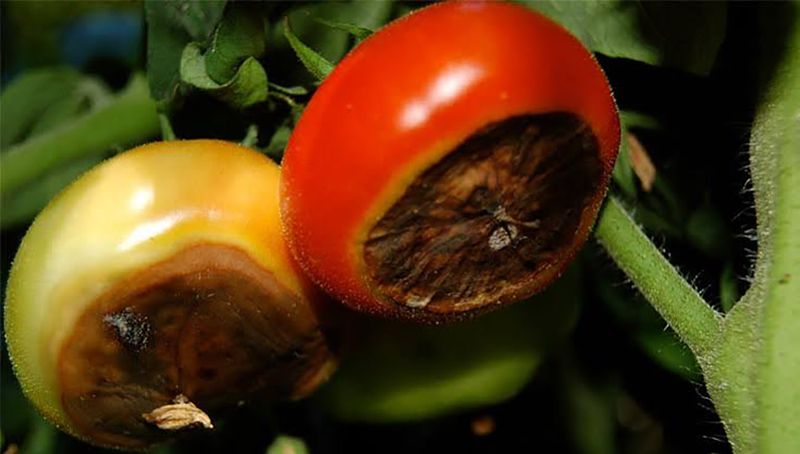
Flipping a nearly ripe tomato and finding a sunken, blackened patch on the bottom is one of the most discouraging moments in a summer garden. That damage is called blossom end rot, and it shows up more often than most gardeners expect, sometimes while the fruit is still small and green.
The good news is that the tomatoes still on the vine may be protected if you act on the right cause. Understanding what actually drives this problem makes all the difference between losing the rest of your crop and saving it.
The lesion can appear before harvest
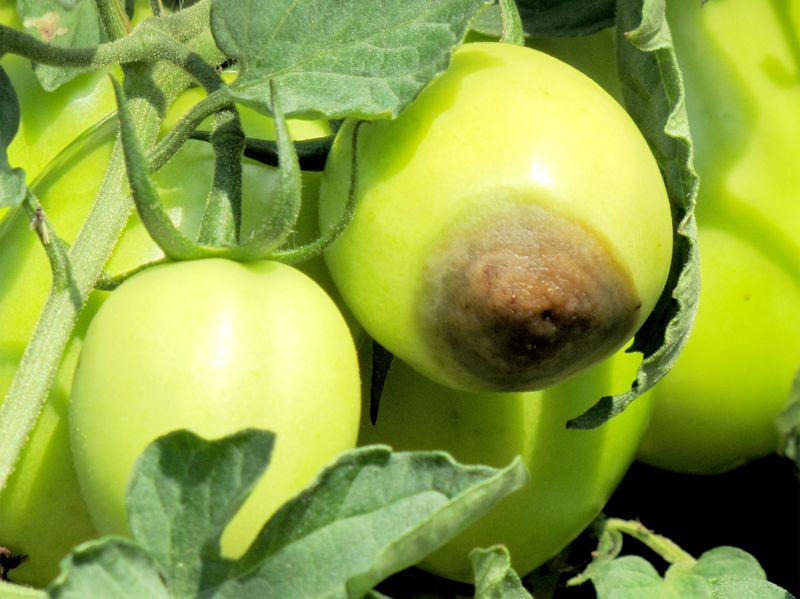
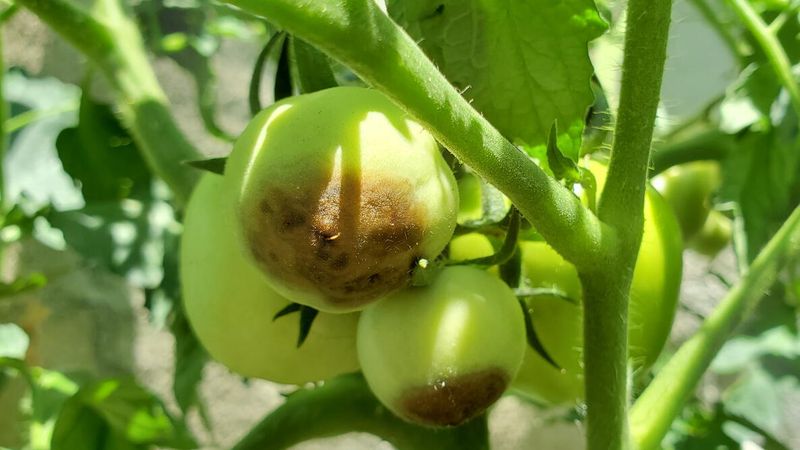
Blossom end rot does not wait until tomatoes are nearly ripe to make its move. The disorder can begin while fruit is still young, green, and actively enlarging, which means the damage is often already underway long before a gardener notices it at harvest time.
The spot starts at the blossom end, the rounded tip of the fruit directly opposite the stem attachment point. University of Minnesota Extension’s tomato fruit diagnosis guide describes the typical progression: a pale tan or water-soaked area appears first, then enlarges, darkens, and sinks inward, eventually becoming leathery or black as the tissue breaks down.
The lesion stays confined to the fruit itself and does not move to leaves, stems, or neighboring plants.
That last point matters for diagnosis. Blossom end rot is a physiological disorder, not a contagious disease, so a gardener will not spread it by touching affected fruit or working in the bed.
Secondary fungi or bacteria may colonize the darkened tissue later, making it softer and more extensively rotten, but the original problem comes from inside the plant, not from an outside pathogen or insect.
Damage that begins at the stem end or appears as round spots on the sides of ripe fruit points to a different problem entirely, such as anthracnose or sunscald. Blossom end rot is consistently located at the blossom tip and follows the darkening, sinking pattern described above, which is the clearest way to tell it apart from other disorders.
Remove fruit with established damage
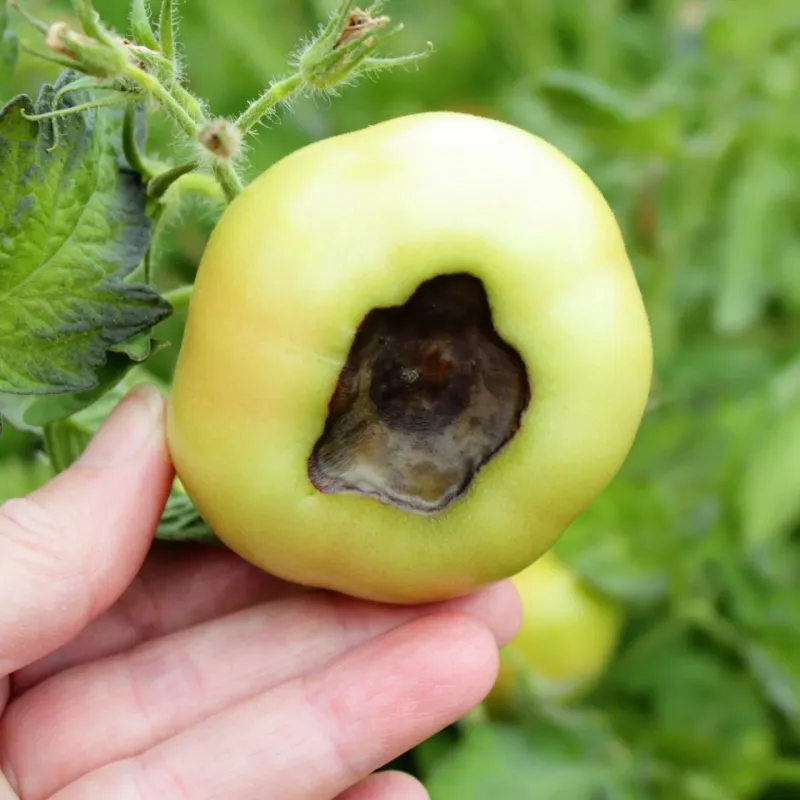
Once a tomato shows a sunken, darkened lesion at the blossom end, no amount of watering or fertilizer will reverse the damage. The collapsed tissue is gone for good, and the fruit will not ripen normally around it.
Penn State Extension’s home garden disease guide advises removing affected tomatoes from the plant. Doing so eliminates fruit with irreversible damage and lets you focus your attention and care on the tomatoes that are still developing normally.
Leaving heavily damaged fruit on the vine simply keeps a problem fruit in place without any benefit to the plant or the remaining crop.
Before tossing every affected tomato, check the size of the lesion. A small, dry, firm spot that covers only a limited area at the tip can sometimes be cut away, and the remaining flesh used if it looks and smells sound, according to guidance from University of Missouri Extension.
Any tomato that is soft, leaking juice, moldy, foul-smelling, or where the decay has spread well beyond the tip should go in the compost or trash rather than the kitchen.
After removing affected fruit, shift your energy toward the tomatoes that have not yet shown symptoms. Those developing fruits are the ones that may still benefit from corrected watering and care, which is where the real opportunity lies.
Keep the root zone evenly moist
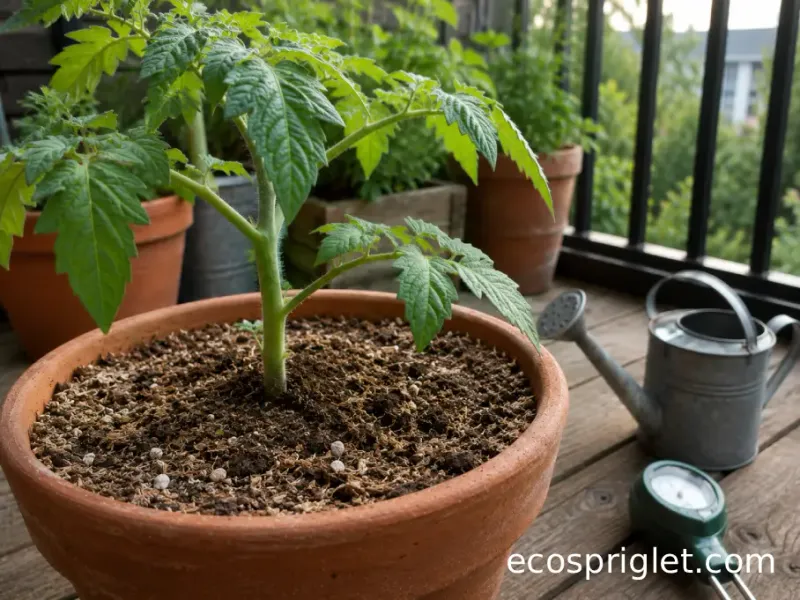
Steady root-zone moisture is the single most practical step for protecting tomatoes that are still developing. The goal is to water deeply enough to reach the roots, then maintain relatively even moisture from one watering to the next, avoiding the swing from bone-dry soil to sudden heavy soaking.
Blossom end rot is associated with inadequate calcium delivery to rapidly developing fruit tissue. Calcium moves through a plant primarily in water, carried upward from the roots through the stem and into the fruit.
When the root zone dries out severely and then receives a sudden flood of water, that cycle of stress and surge can disrupt how efficiently roots absorb and move calcium, even when the soil itself contains plenty of calcium. University of Georgia Extension’s tomato production guide identifies inconsistent soil moisture as a primary contributing factor, and University of Maryland Extension reinforces that the problem is often about calcium movement rather than calcium absence.
Rapid fruit growth during hot weather puts extra demand on that calcium supply. If water delivery to the roots cannot keep pace, young fruit cells at the blossom end are among the first to suffer because calcium moves slowly and does not redistribute from older tissue to new growth.
Correcting moisture now may reduce blossom end rot in fruit that has not yet shown symptoms. An existing lesion, however, will not heal.
The practical payoff is protecting what is still on the vine, not reversing damage that has already occurred.
Water according to soil conditions
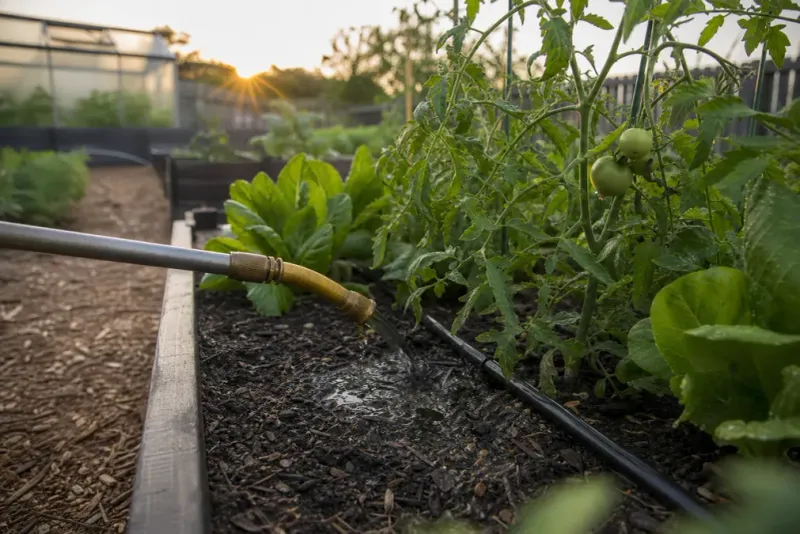
Knowing that even moisture matters is only part of the picture. Putting it into practice requires adjusting to your specific soil, climate, and planting setup rather than following a fixed schedule.
Start by checking moisture several inches below the surface before each watering. Soil that feels moist at that depth probably does not need water yet, even if the top inch looks dry.
Texas A&M AgriLife Extension’s vegetable gardening guide emphasizes adjusting irrigation to actual soil and weather conditions rather than relying on a fixed calendar schedule, a point that applies across the Southern region.
Containers and small raised beds dry out much faster than in-ground beds, especially during hot, windy Southern summers. A container on a sunny patio may need checking every day in July, while an in-ground bed with heavier clay soil might hold moisture for several days after a good rain.
Florida gardeners face a different challenge: sandy soils drain quickly and can dry fast between rains, but periods of heavy rainfall or poor drainage can leave roots sitting in water. University of Florida IFAS guidance cautions that high-volume overhead irrigation is generally not the preferred method for edible plantings, partly because it wets foliage and does not deliver water directly to the root zone.
Drip irrigation lines, soaker hoses, or slow hand-watering at the base of the plant all deliver moisture more evenly and efficiently than brief surface sprinkling. Any method that keeps water at root level and allows it to soak in gradually will serve the plant better than a quick spray across the top of the bed.
Use mulch without creating soggy roots
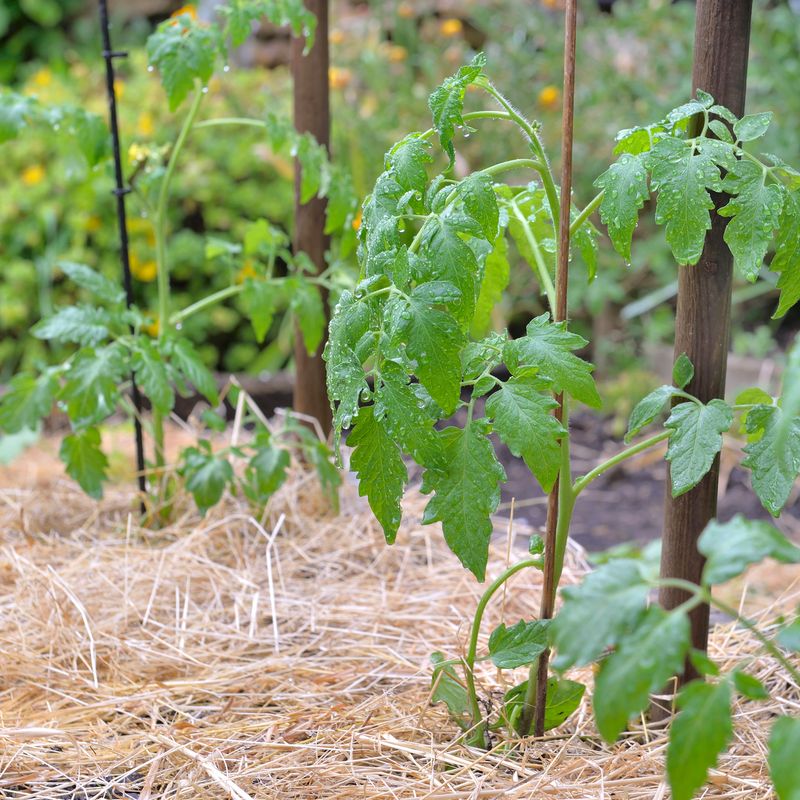
Mulch is one of the simplest tools for maintaining the kind of steady soil moisture that developing tomatoes need. A two- to three-inch layer of straw, wood chips, or shredded leaves over the soil surface slows evaporation, which means the root zone holds onto moisture longer between waterings and does not swing as sharply between wet and dry.
UGA Extension’s home vegetable garden disease management guide includes mulching as a recommended cultural practice for reducing moisture stress on vegetable crops. Keep the mulch pulled back a few inches from the main stem of each plant so the base stays dry and air can circulate, which reduces the chance of stem rot at the soil line.
Mulch helps with drought stress, but it cannot fix a drainage problem. Roots sitting in waterlogged soil are just as compromised as roots in dry soil.
When soil stays saturated, roots lose the ability to absorb water and nutrients efficiently, which can contribute to the same kind of calcium delivery problem that leads to blossom end rot. If your bed or container holds standing water after rain, improving drainage is a more urgent priority than adding mulch.
The broader goal is a root environment that stays consistently moist, drains well, and does not fluctuate between extremes. Mulch is one piece of that system, not a standalone remedy.
Used alongside proper watering and drainage, it makes the whole root zone easier to manage through a Southern summer.
Let a soil test guide calcium decisions
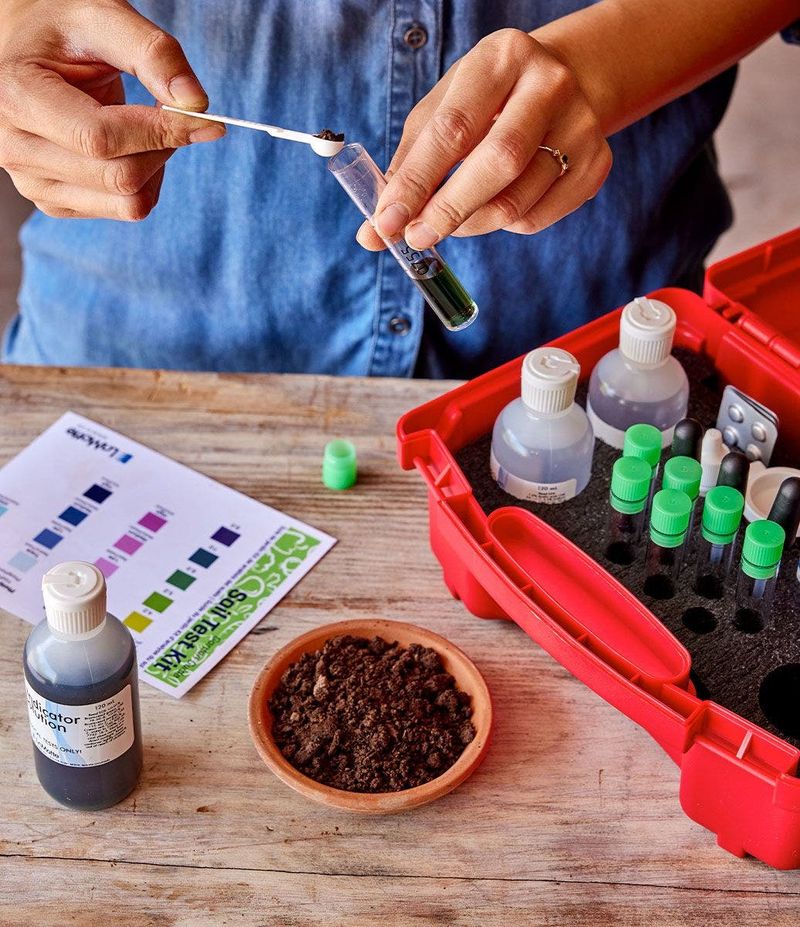
When blossom end rot appears, the instinct to add calcium immediately is understandable, but reaching for lime, gypsum, or calcium nitrate before knowing your soil’s actual status can create new problems without solving the one in front of you.
A soil test is the right first step. UGA Extension’s tomato production guide is clear that calcium amendments help when a soil test identifies a genuine deficiency or unsuitable pH, not as a general response to blossom end rot symptoms.
If your soil already has adequate calcium at a suitable pH, adding more calcium will not correct a problem rooted in moisture stress or root damage.
If a test does show low calcium or a pH problem, the type of amendment matters. Lime raises soil pH and supplies calcium slowly over time, which makes it the right choice when pH is too low.
Gypsum supplies calcium without significantly changing pH, which makes it more appropriate when calcium is low but pH is already in the right range. University of Florida IFAS guidance on vegetable soil fertility notes that soil pH and calcium status vary considerably across Florida, making a test especially valuable before applying any amendment.
Several popular home remedies do not hold up under scrutiny. Crushed eggshells break down far too slowly to address an active moisture or uptake problem, as Colorado State University Extension notes.
Epsom salts supply magnesium, not calcium, and applying unnecessary magnesium can contribute to nutrient imbalances, according to University of Arizona Extension’s tomato challenges guide.
Foliar calcium sprays are sometimes mentioned as a short-term option, but the evidence is inconsistent. Calcium moves poorly through leaf tissue and may not reach developing fruit in useful amounts.
A controlled study published in PMC found several calcium spray treatments ineffective under its greenhouse conditions. Foliar applications are not a dependable rescue and should not replace the moisture management and soil-test steps that address the actual cause.
Reduce other stresses on developing fruit
Moisture management is the foundation of blossom end rot prevention, but several other stressors can undermine root function and calcium delivery even when watering is on track.
Fertilizer type and amount deserve a close look. Excess nitrogen, particularly from ammonium-based fertilizers, pushes rapid leafy growth that can outpace the plant’s ability to supply calcium to developing fruit.
UGA Extension’s tomato nutrition guide identifies excessive ammonium nitrogen as a factor that can increase susceptibility to blossom end rot. Follow label rates and avoid the temptation to push growth with extra fertilizer mid-season.
Root damage is another underappreciated contributor. Hoeing or cultivating aggressively close to the base of a tomato plant can sever shallow feeder roots, reducing the plant’s ability to absorb water and nutrients.
University of Missouri Extension notes that root injury from cultivation is a recognized risk factor. Weed by hand close to the stem or use mulch to suppress weeds without disturbing the root zone.
Heat stress and rapid fruit growth during peak summer temperatures also increase demand on calcium supply. University of Maryland Extension points out that large, elongated, or paste-type tomatoes and early fruit clusters tend to be more susceptible, likely because of their rapid growth rate and high calcium demand.
That said, no variety is immune. Penn State Extension confirms that environmental stress can produce symptoms in any cultivar under the right conditions.
Choosing a less susceptible variety may reduce risk, but it does not replace good watering and root care.
Protect the next tomatoes with steady care
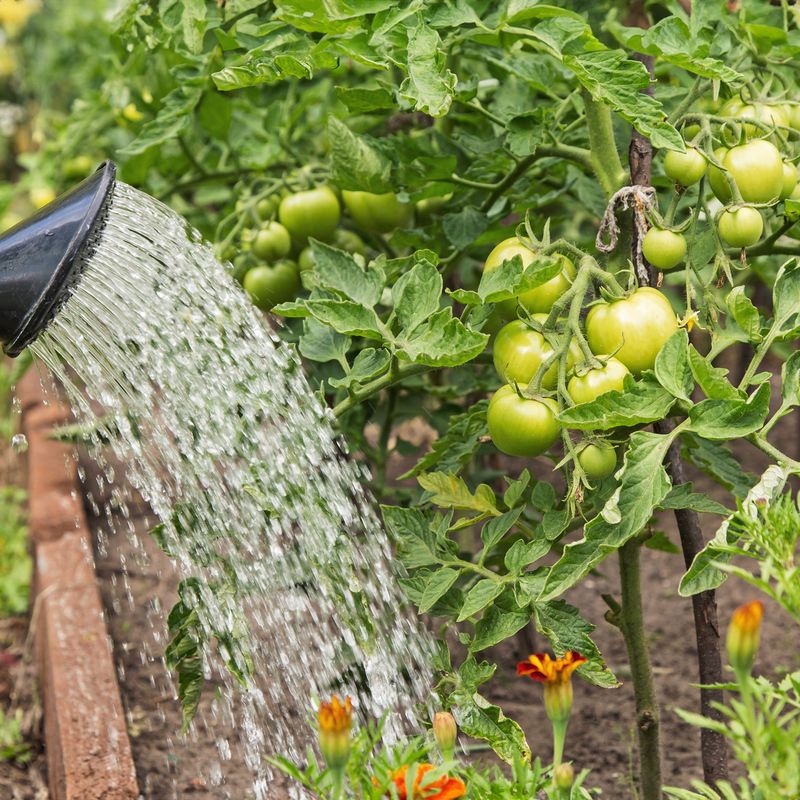
Start by confirming that the lesion sits at the blossom end, opposite the stem. Remove tomatoes with established damage, check soil moisture several inches below the surface, and water deeply enough to keep the root zone consistently moist without letting it become saturated.
Mulch helps hold that moisture steady, and good drainage keeps roots from sitting in water between rains.
The tomato already showing a sunken lesion will not recover. UGA Extension and Penn State Extension both note that corrected care protects developing fruit rather than healing what is already damaged.
Soil-test before adding any calcium amendment, skip the eggshells and Epsom salts, and avoid heavy nitrogen fertilizer for the rest of the season.
The most reliable thing you can do for the fruit still on the vine is straightforward: keep the root zone evenly moist, not occasionally drenched and not allowed to go dry.