
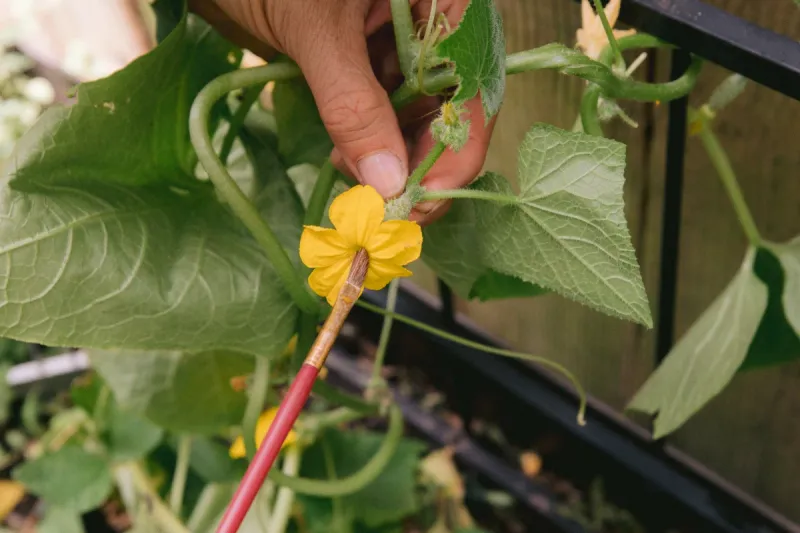
Watching a cucumber vine explode with flowers while your kitchen stays empty of cucumbers is one of the most frustrating moments in a summer garden. The good news is that this problem has a real, fixable cause in many cases, and understanding it starts with knowing what those flowers actually are.
Hand-pollination can rescue a vine that is not getting enough bee help, but it works only under the right conditions, so the fix is more targeted than a one-size-fits-all solution.
Start with the flower, not the fix
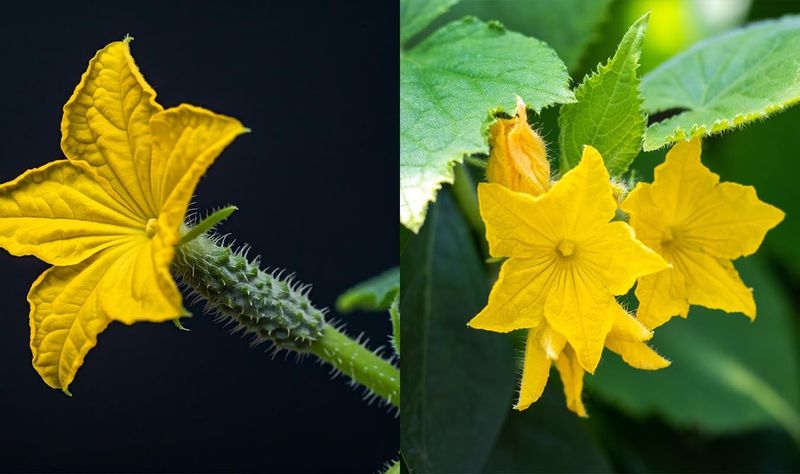
Before reaching for a paintbrush or picking a bloom, take a close look at what is actually growing on the vine. Standard cucumbers are monoecious, meaning they produce separate male and female flowers on the same plant, and only the female flowers can become cucumbers.
University of Maryland Extension guidance on growing cucumbers explains that male flowers appear first on most standard varieties, often showing up 10 to 20 blooms before a single female opens.
Telling them apart is straightforward once you know what to look for. A female flower carries a tiny, swollen, miniature cucumber right behind the petals at its base.
A male flower sits on a plain, straight stem with no developing fruit behind it.
When those early male flowers drop off the vine, that is completely normal, not a sign that something is wrong. The vine is not failing; it is just running through its natural sequence.
A vine covered in bright yellow blossoms may still have very few potential cucumbers on it if most of those flowers are male. Counting flowers is far less useful than identifying which type you have, because hand-pollination, extra watering, or any other intervention will not produce fruit from a flower that was never capable of making one.
Hand-pollinate a female flower step by step
Once you have confirmed that female flowers are present and you suspect bees are not visiting them often enough, hand-pollination is a practical option worth trying. Texas A&M AgriLife Extension’s cucumber guide supports transferring pollen by hand when natural pollination is inadequate, and the procedure itself is simple enough to do in a few minutes each morning.
Start by selecting a freshly opened male flower. The pollen is most viable when the flower has just opened, so do not use a bloom from the day before.
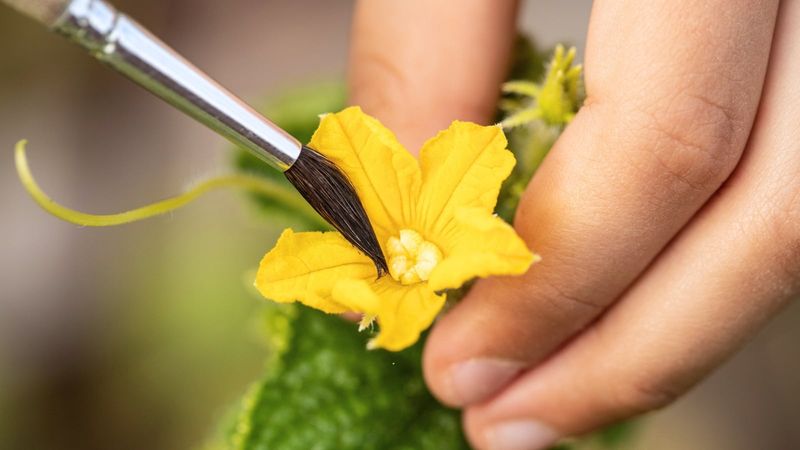
Gently pull or peel away the petals to expose the central structure, which will be coated in yellow pollen. Then hold that exposed center lightly against the stigma, the small raised structure at the center of a female flower, and rotate it gently to transfer the pollen.
A soft artist’s brush or a cotton swab works as an alternative if you prefer not to use the whole flower. Collect pollen by brushing the male center first, then carry it to the female.
Pueblo County Extension’s hand-pollination guidance notes that this approach can help when pollinator service is inadequate, but it is a targeted rescue, not a cure for every vine that flowers without fruiting. The procedure only pays off when the vine has receptive female flowers and usable pollen available at the same time.
Check new blossoms in the morning when possible
Cucumber flowers do not stay open all day, and that short availability window shapes when your hand-pollination effort is most likely to pay off. University of Georgia Cooperative Extension guidance on vegetable crop pollination describes how cucurbit flowers are receptive for a limited time, and morning is generally when both freshly opened blooms and active pollinators overlap.
A practical routine is to walk the vine shortly after sunrise, identify any newly opened female flowers, and pollinate them before the heat of the day sets in. This is not a rigid rule where a midday attempt is guaranteed to fail, but fresher flowers and fresher pollen give you the best odds.
The stigma inside a female flower and the pollen on a male flower both degrade as the day warms up and the bloom ages.
Because new female flowers open on different days as the vine continues growing, a single morning check is rarely enough. University of Maryland Extension notes that cucumbers continue producing new flowers throughout the season, so repeat your morning checks every day or two and treat each newly opened female flower as a fresh opportunity.
Consistency across multiple mornings will give you a much clearer picture of whether your vine is setting fruit or consistently aborting its ovaries.
Read the developing ovary without overpromising
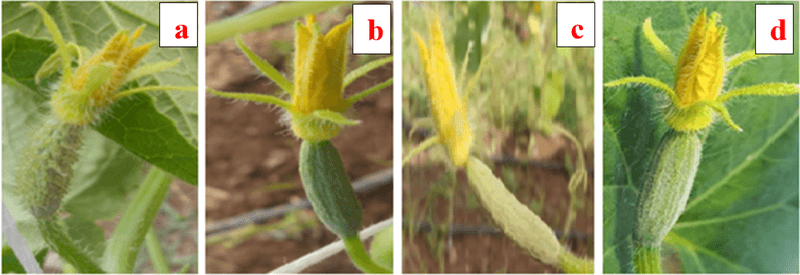
After you hand-pollinate a female flower, the next few days tell you whether it worked. A successfully pollinated ovary on a standard cucumber variety will begin to enlarge steadily, and the petals will wither and fall away as the tiny fruit takes over.
Penn State Extension’s cucumber pollination resource explains that complete pollination failure typically causes the small ovary to yellow, shrivel, and drop from the vine within a day or two.
Incomplete or poor pollination tells a slightly different story. Instead of a clean abort, the fruit may begin to develop but end up misshapen, curved unevenly, undersized, or noticeably lighter than expected.
Low seed development inside the fruit is another sign that pollen transfer was partial rather than thorough.
One important qualifier: enlargement alone does not always confirm that pollination occurred. Parthenocarpic cucumber varieties are bred to produce fruit without any pollen transfer, so their ovaries can swell and develop even when no bee or gardener has touched them.
University of Minnesota Extension’s pollination requirements guide notes that parthenocarpic types are common in greenhouse and protected growing situations. If your seed packet says parthenocarpic, enlarging fruit is expected behavior, and deliberately transferring pollen to some of these varieties can actually cause seeded, bitter, or misshapen results.
Check the label before you intervene.
Make natural pollination easier
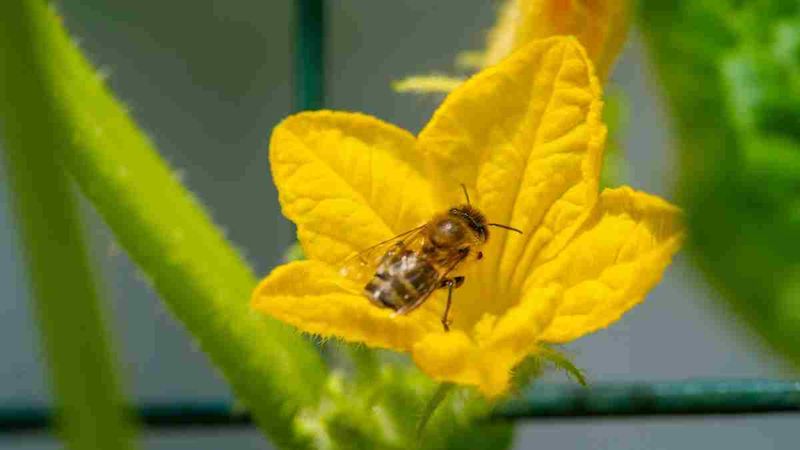
Hand-pollination is a useful backup, but a garden that naturally attracts bees will serve your cucumber vines far better over an entire season than daily manual intervention. Penn State Extension identifies bees, including both wild species and honey bees, as the primary pollinators of field-grown cucumbers, and a yard with diverse flowering plants nearby tends to support steadier bee traffic.
Weather complicates the picture in ways that are easy to overlook. Rain, high winds, extreme heat, and low insect activity on cool mornings can all reduce the number of bee visits a cucumber flower receives during its short open period.
Seeing bees working your tomatoes or zinnias across the yard does not confirm that your cucumber flowers are getting enough attention. University of Florida IFAS Extension research on cucurbit pollination makes clear that competing blooms and weather conditions can divert pollinators away from cucumbers even when insect activity looks healthy overall.
Row covers deserve special attention here. Pollinator-excluding floating row covers and conventional insect-excluding covers are effective at keeping cucumber beetles off young plants, but they block bees just as thoroughly as they block pests.
University of Minnesota Extension guidance on cucumber beetles advises removing these covers once plants begin flowering so pollinators can reach the blooms. Covers designed to allow insect access do not need to come off for this reason.
If you want to leave an excluding cover in place, plan to hand-pollinate beneath it daily.
On insecticides, EPA pesticide applicator guidance emphasizes avoiding applications when pollinators are active and during bloom periods. Always follow product label directions, which may restrict or prohibit use while flowers are open.
Rule out heat, water, fertilizer, and variety problems
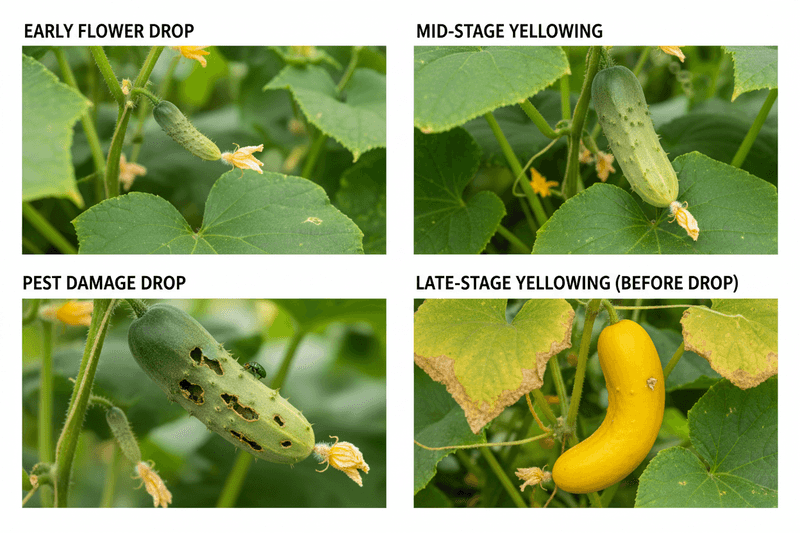
Hand-pollination only helps when inadequate pollen transfer is the actual problem. When female flowers are scarce, absent, or consistently aborting despite your best efforts, the cause is more likely rooted in plant stress or variety selection than in a lack of bee visits.
Start with the seed packet. Gynoecious varieties produce mostly female flowers and generally require a separate pollenizer plant to supply pollen, unless they are also parthenocarpic.
Parthenocarpic types set fruit without any pollination at all, and transferring pollen to some of them can trigger seeded, bitter, or malformed cucumbers. University of Maryland Extension and University of Minnesota Extension both address these variety distinctions, and knowing which type you planted shapes every decision that follows.
Heat is a major factor in Southern gardens. Temperatures hovering around 90 degrees Fahrenheit during the day and 70 degrees at night are associated with a shift toward more male flowers and reduced fruit set in cucumbers, though these figures are warning conditions rather than hard on-off switches.
University of Maryland IPM scouting guidance notes that cultivar, humidity, and local conditions all affect how a plant responds to heat.
Water consistency matters just as much. Utah State University Extension recommends roughly 1 to 2 inches of water per week, adjusted for soil type, plant size, and rainfall, and notes that drought stress during flowering and fruit development can reduce yield and produce bitter or misshapen cucumbers.
Excess nitrogen is another common culprit in gardens that look lush but produce little fruit. Oklahoma State University Extension’s cucumber production fact sheet cautions that high nitrogen encourages leafy growth at the expense of flowering and fruit set.
Base any fertilizer decisions on your soil’s actual needs rather than adding more as a rescue measure.
Finally, Colorado State University Extension notes that harvesting mature cucumbers regularly can encourage the vine to continue setting new fruit, since fruit left on the vine may signal the plant to slow down production. Inspect plants for pest damage and disease as well, since stressed vines often drop flowers or fail to develop fruit regardless of how much pollen reaches them.
Use the one fix only when the diagnosis fits
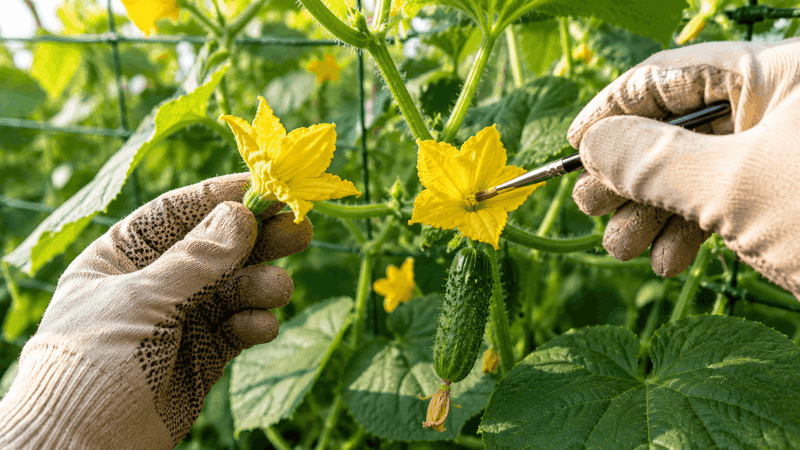
The path forward is short once you know what you are actually dealing with. Find a female flower, the one with the tiny immature cucumber behind it, and confirm your variety is a standard or gynoecious type that actually needs pollen before transferring anything.
Texas A&M AgriLife Extension and Penn State Extension both support hand-pollination as a practical response to insufficient bee activity when female flowers are present and receptive.
Pollinate gently in the morning when possible, then watch the ovary over the following several days for signs of steady growth or abortion. If the fruit develops, keep harvesting regularly to encourage the vine to keep producing.
If female flowers remain scarce or abort despite your efforts, shift your attention to heat, watering, nitrogen levels, pests, or disease as the more likely culprits. University of Maryland Extension and University of Minnesota Extension both emphasize that variety, environment, and plant health shape the outcome as much as pollen transfer does.
Hand-pollination is a real tool, but it is a targeted one, and the gardeners who get the most out of it are the ones who confirm the diagnosis before reaching for a male flower.