
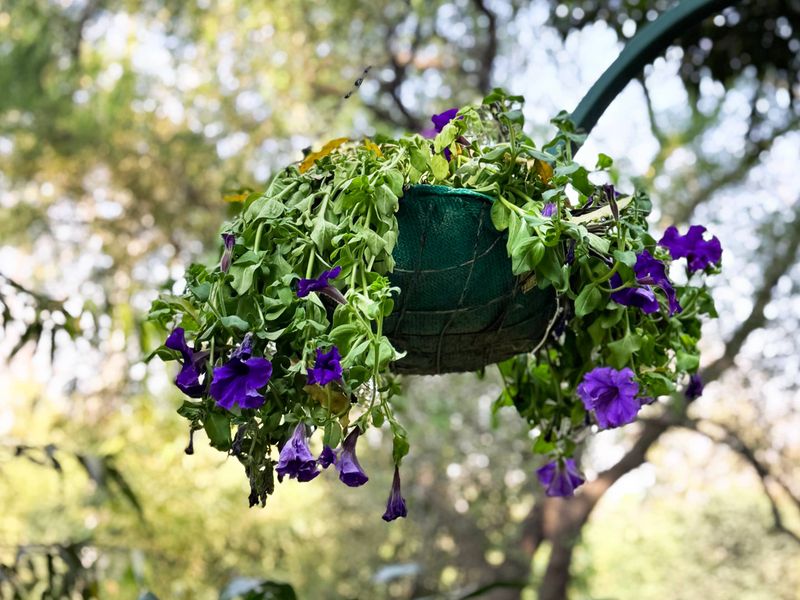
Petunias are one of the most popular flowering plants in Southern gardens, but many gardeners watch helplessly as their colorful containers and beds go quiet by July. The good news is that a regular grooming check can often help get flowers going again, though the right action depends on what your plant actually needs.
Some petunias need spent flowers removed, others need a firm cutback, and some are struggling for reasons that have nothing to do with grooming at all. Knowing which situation you are dealing with makes all the difference.
Start with a grooming check, not a single-cause diagnosis
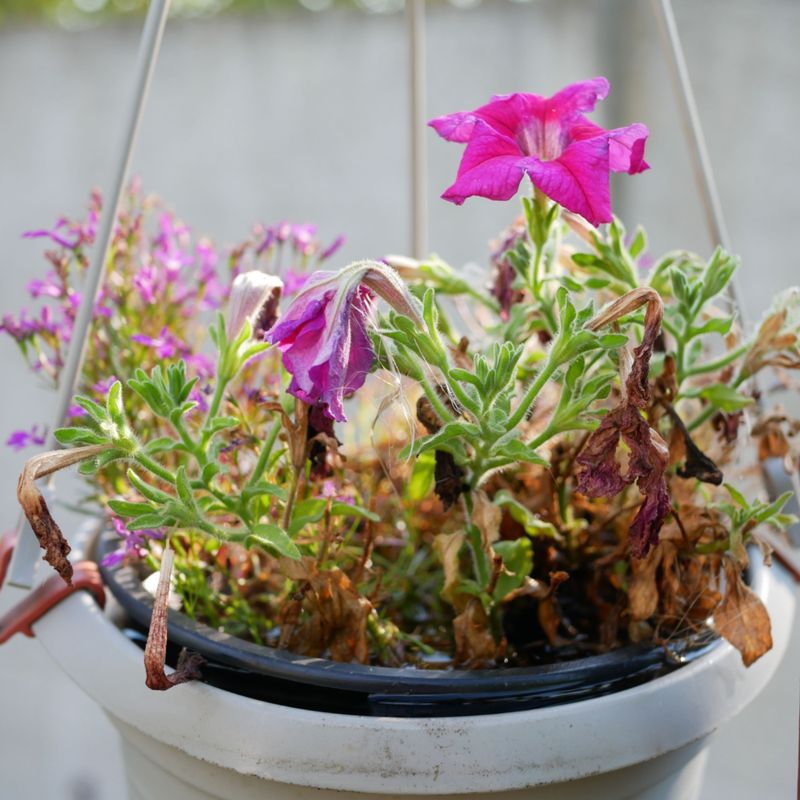
Petunia bloom decline has more than one cause, so the most useful first step is a quick visual inspection rather than jumping straight to pruning or fertilizing. Walk up to the plant and look at what you actually see.
A compact plant with a few faded individual flowers is a different situation from one with long, bare stems and almost no color.
According to UF/IFAS guidance on petunias, these plants need full sun, consistent moisture, good drainage, and regular feeding to perform well – meaning any one of those factors can slow flowering when it slips. Skipped grooming is one possible reason for fewer blooms, but heat, moisture stress, depleted nutrients, poor drainage, low light, disease, and cultivar genetics can all play a role too.
A simple decision rule helps narrow things down fast. If you see faded individual blooms on an otherwise compact, leafy plant, deadheading is worth trying.
If stems are long, sparse, and producing very few flowers, a measured cutback is likely a better move than picking off single blooms one by one. If the plant is wilting, browning, or showing signs of stress across most of its growth, Penn State Extension’s pruning guidance makes clear that cutting back a stressed plant without addressing the underlying condition rarely produces the hoped-for recovery.
Diagnose before you prune.
The petunia type determines whether deadheading matters
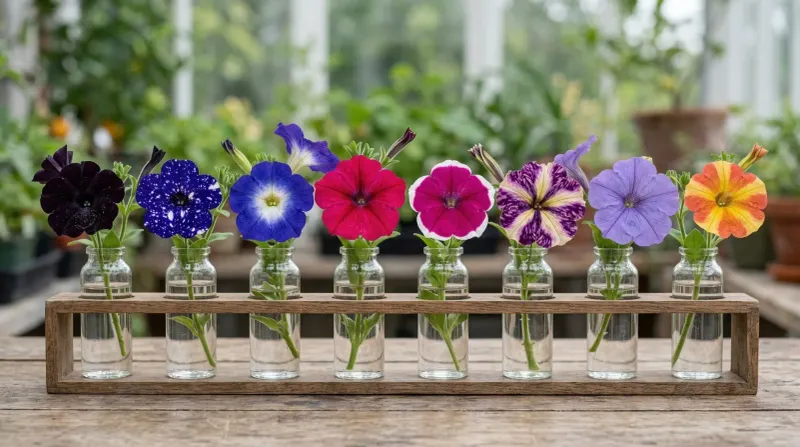
Not every petunia on the market works the same way, and that difference matters a lot before you commit to a weekly deadheading routine. Older large-flowered, grandiflora, and double-flowered types – along with most seeded varieties sold as standard bedding plants – are the ones most likely to slow down when spent flowers are left to set seed.
These traditional types tend to put energy into seed production once a bloom fades, which can reduce the number of new buds the plant pushes out.
Many modern cultivars behave quite differently. Spreading types like Wave petunias, and vegetatively propagated series such as Supertunia, are bred to shed spent flowers on their own.
Illinois Extension lists petunias among self-cleaning annuals that can continue blooming without routine deadheading, and UF/IFAS notes that deadheading is most important for large-flowered types rather than smaller-flowered cultivars.
If you are not sure which type you have, check the tag that came with the plant or look up the variety name online. Deadheading a self-cleaning petunia will not hurt it, and it can tidy up the appearance a bit, but it is not a weekly requirement the way it is for a classic grandiflora.
Matching your maintenance approach to the actual cultivar saves time and sets realistic expectations for what grooming can accomplish. NC Cooperative Extension confirms that many modern spreading and vegetatively propagated petunias are self-cleaning and do not require routine flower removal.
Remove the spent flower and the seed structure beneath it
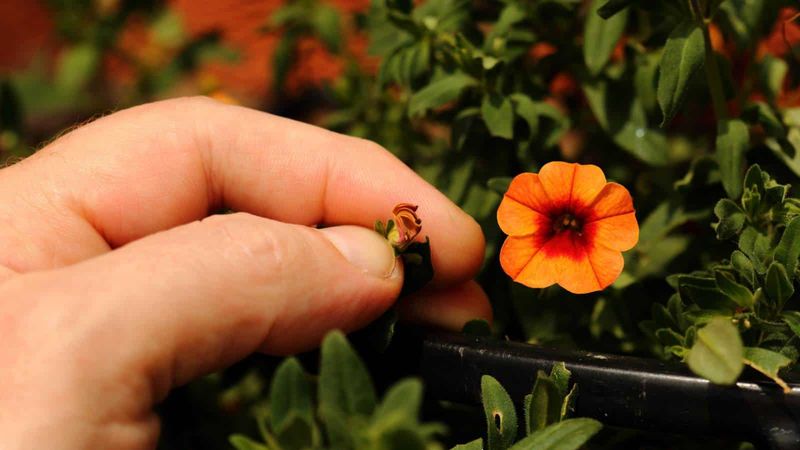
For traditional petunias that do benefit from deadheading, technique matters more than most gardeners realize. Pulling off just the faded petals is not enough.
The part that drives seed development is the small swollen or narrow green structure sitting directly beneath the old flower – and leaving that behind lets seed formation continue even after the petals are gone.
Mississippi State University Extension recommends removing the spent bloom together with that green seed-producing structure beneath it, using your fingers or small scissors to pinch or snip just below it. Checking traditional petunias about once a week gives you a practical maintenance rhythm that keeps up with the plant’s natural pace of flowering and fading without letting seed structures build up across the whole plant.
Keep the goal in mind as you work. Deadheading limits seed development and keeps the plant looking tidy, but it is a maintenance step rather than a cure for heat stress, poor drainage, or other growing-condition problems.
A well-groomed plant that is also getting the right moisture, light, and nutrition will respond better than one where grooming is the only thing being managed. NC Cooperative Extension guidance reinforces that consistent grooming works best as part of a broader care routine rather than as a standalone fix.
Leggy, flower-poor plants need a measured cutback
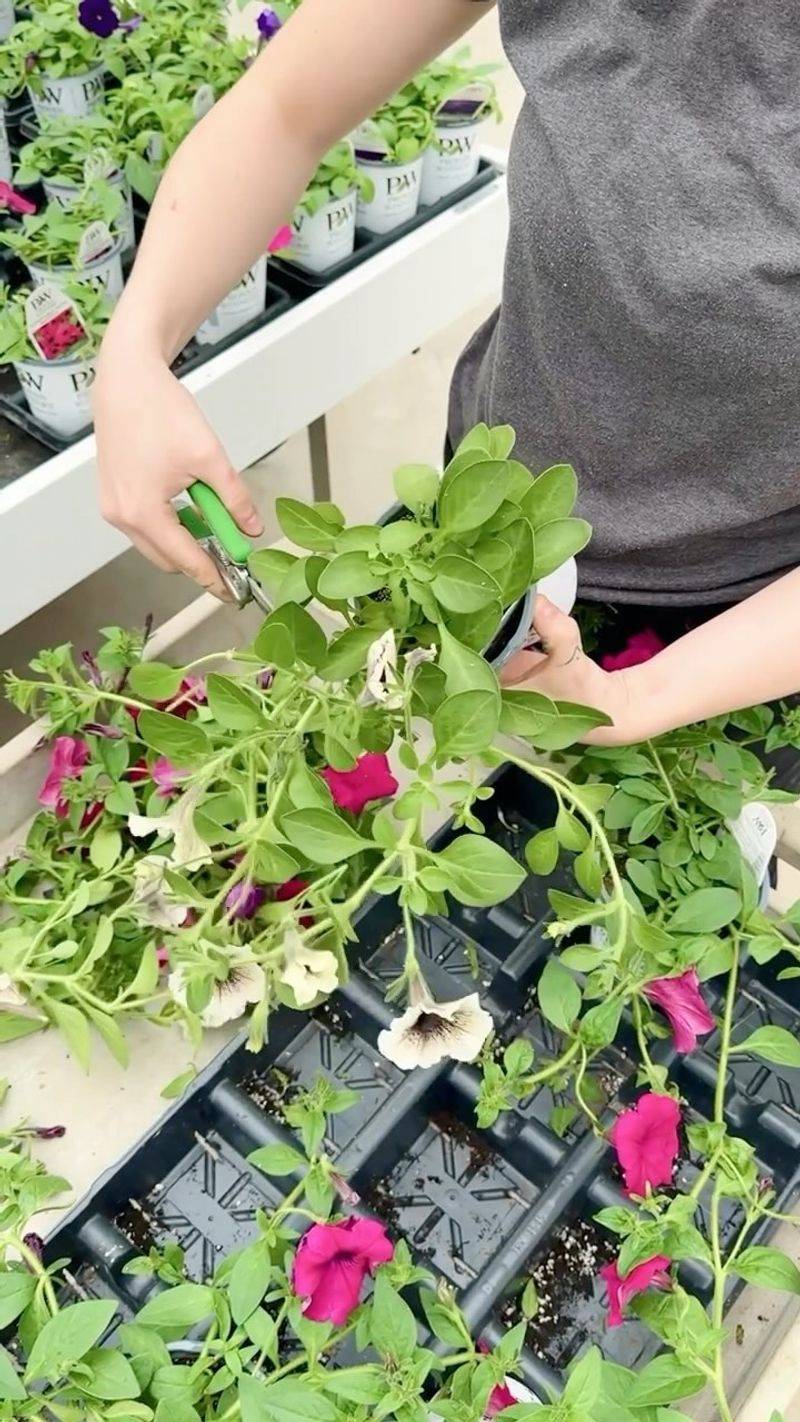
A plant that has grown long, sparse, and mostly green with very few flowers has moved past the point where picking off individual spent blooms will help much. At that stage, what the plant actually needs is a more decisive intervention: a cutback that removes the stretched growth and gives the plant a reason to branch and push new shoots.
Penn State Extension recommends cutting back midsummer petunias to roughly 3 to 5 inches from the base, or within a few inches of the soil, while making sure to leave some foliage and several nodes or leaf axils on the remaining stems. Those nodes are where new side branches are most likely to emerge.
Shearing the whole plant back to that range is more effective than selectively trimming a few long stems while leaving others untouched, because uneven pruning tends to produce uneven regrowth.
Recovery from a cutback is possible but not guaranteed, and the timeline can stretch to several weeks depending on the plant’s health and the conditions it is growing in. A plant that was otherwise well-watered, well-fed, and not severely stressed by disease or root damage before the cutback has a better chance of bouncing back with new branches and fresh flowers.
One that was already struggling with heat, drought, or root problems may respond more slowly or incompletely. Treat the cutback as a recovery opportunity rather than a certain reset, and follow it with attentive care rather than assuming the work is done once the pruning is finished.
Support recovery with careful watering and label-directed feeding
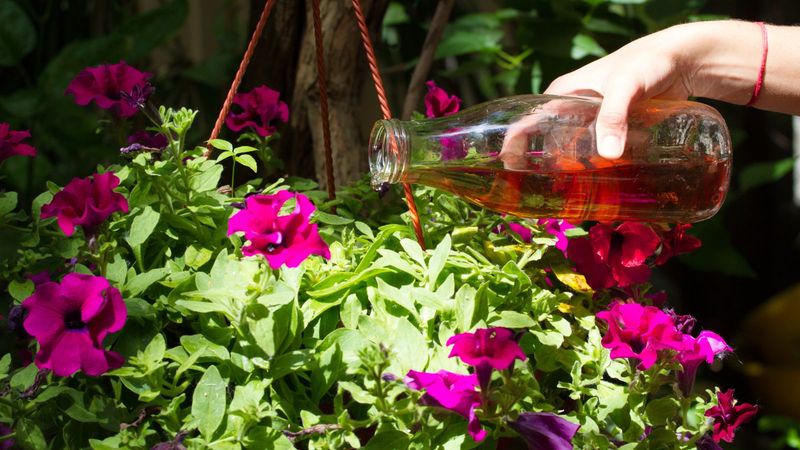
After cutting a petunia back substantially, the plant’s root system still needs to support whatever regrowth is coming, so how you water and feed in the following weeks matters. Start with a thorough watering that moistens the entire root ball, then allow excess water to drain freely.
Sitting in waterlogged soil after a cutback can set the plant back further rather than helping it recover.
UGA Cooperative Extension notes that midsummer pruning followed by fertilizer and consistent watering can help petunias recover within several weeks when growing conditions are otherwise suitable. For containers specifically, University of Wisconsin Extension Master Gardener guidance points out that pots dry out faster than in-ground beds and that nutrients leach out through repeated watering, which means container petunias may need periodic dilute fertilizer or a controlled-release product to stay well-fed.
Whatever fertilizer you use, follow the product label for rate and frequency rather than assuming more will speed recovery. Excess fertilizer – especially products high in nitrogen – can push leafy growth at the expense of flowers and may damage roots if applied too heavily.
UF/IFAS advises checking soil moisture before each watering rather than sticking to a fixed schedule, because rainfall, container size, wind, and drainage all affect how quickly a plant dries out. Fertilizer supports recovery when the plant is otherwise healthy; it cannot compensate for root damage, heat stress, disease, or poor light on its own.
Heat, light, and moisture can override good grooming
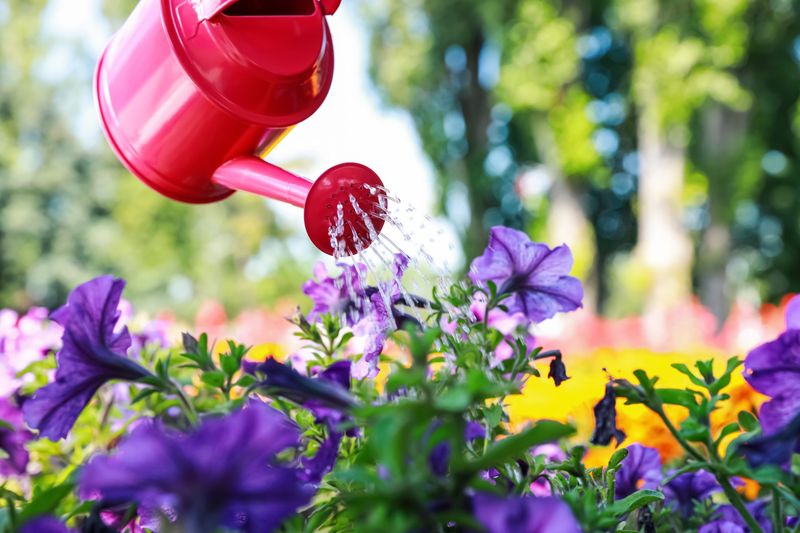
Even a well-groomed petunia can slow down or stop flowering when growing conditions work against it, and that is especially true in the Deep South during the height of summer. Prolonged heat, drought, inconsistent moisture, poor drainage, and low light can all reduce flower production – sometimes more dramatically than any missed deadheading session.
Research published in 2024 found that petunia growth and flower quality can decline under elevated temperatures, with responses varying by cultivar, moisture availability, and exposure. That finding means prolonged temperatures around or above 30 degrees Celsius may be a contributing factor under some conditions, but it does not represent a hard cutoff that applies equally to every cultivar or every garden situation.
Some varieties handle heat better than others, and moisture management plays a significant role in how a plant copes.
Strong light generally supports flowering, but extreme Southern afternoon heat can push containers past the point where full sun helps. Moving a pot to a spot that avoids the harshest afternoon exposure during a heat wave – while still receiving good morning light – can reduce stress without tipping the plant into shade-related decline.
UF/IFAS recommends checking moisture according to actual soil conditions, rainfall, container size, wind, and drainage rather than following a fixed watering calendar. Underwatering suppresses growth, but saturated soil introduces its own set of problems, particularly root damage.
UF/IFAS Panhandle Horticulture commentary notes that ordinary petunias can struggle during Florida’s hottest months even with good care, reinforcing that grooming alone cannot override severe environmental stress.
Warning signs point beyond routine grooming
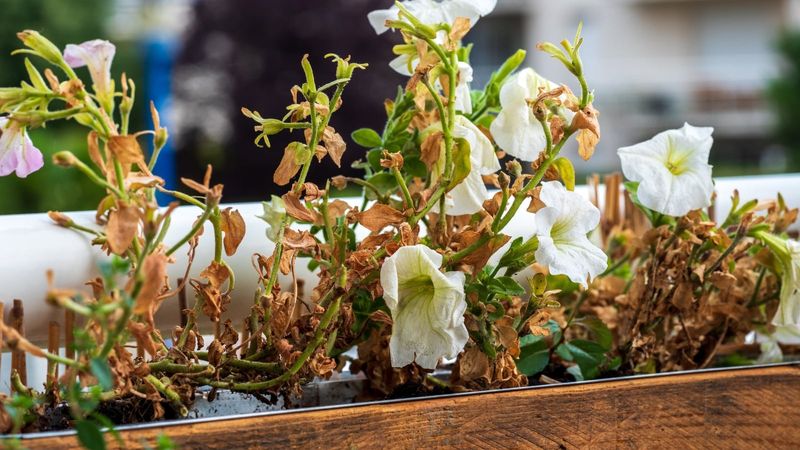
Some bloom problems have nothing to do with grooming habits and everything to do with what is happening at the root level or in the plant’s tissue. Wilting that does not improve after watering, yellowing leaves, browning stems, or a plant that looks generally sick rather than just stretched and flower-poor are signs worth investigating before reaching for pruners or fertilizer.
Saturated soil and poor drainage are common culprits in Southern container and bed gardens, particularly during rainy stretches. University of Minnesota Extension’s petunia troubleshooting resource notes that wilting and browning can result from root problems linked to waterlogged conditions, which can look similar to drought stress on the surface.
Overwatering and underwatering can produce overlapping symptoms, so checking the soil rather than assuming which problem you have is always the right first move.
Gray mold and other fungal issues can also develop when foliage stays wet for extended periods. UGA Cooperative Extension’s landscape disease guide recommends removing diseased plant debris and improving air movement as basic management steps.
If you suspect disease, do not apply a fungicide or insecticide before identifying the specific problem, as UF/IFAS guidance on fungicides makes clear that product selection depends on the diagnosis, and no single product covers every disease. Florida gardeners should also keep seasonal timing in mind: UF/IFAS identifies October and November as prime petunia planting months in Florida, meaning a plant that went in the ground in fall may simply be reaching the natural end of its best performance by midsummer rather than failing due to poor care.
One more note for Florida readers: Mexican petunia (Ruellia simplex) is a separate plant with documented invasive behavior in Florida; it is not a bedding petunia, and advice for hybrid petunias does not apply to it.
Use the plant’s condition to choose the next step
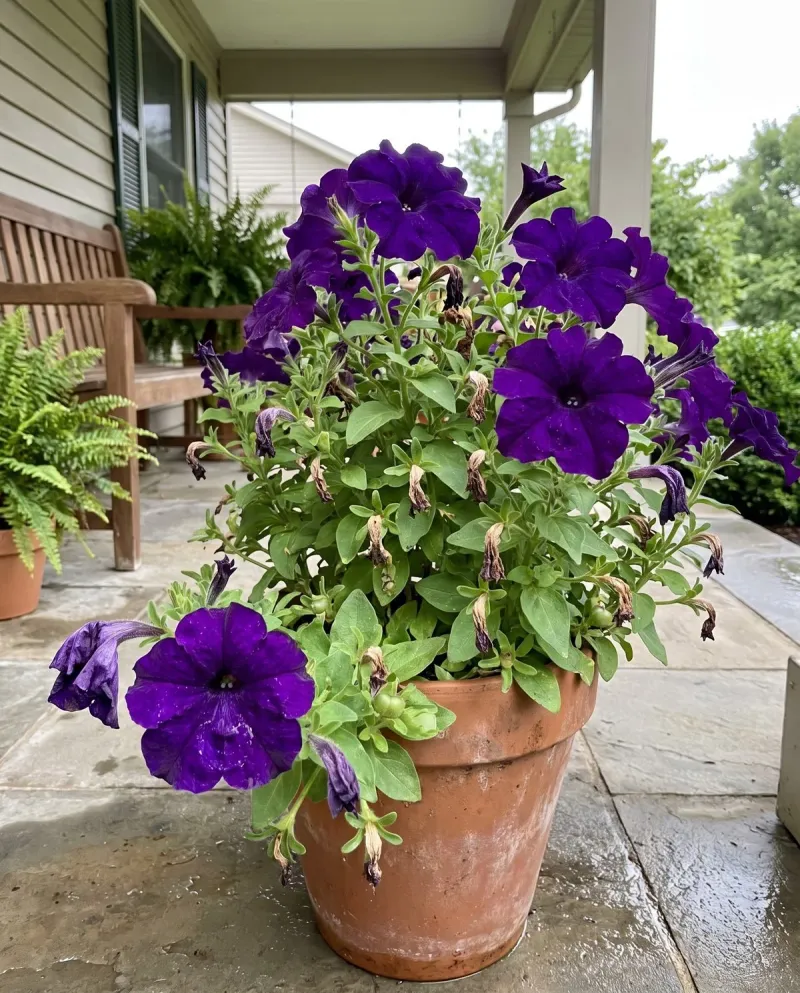
Putting all of this together means looking at your specific plant before deciding what to do. Start by identifying the cultivar type if you can.
Large-flowered, grandiflora, double, or standard seeded petunias are the ones most likely to respond to regular deadheading; many spreading and modern vegetatively propagated types handle that job themselves. NC Cooperative Extension confirms that cultivar type is the right starting point for any grooming decision.
From there, match the action to what you see. Compact plants with faded blooms and intact seed structures below them are candidates for deadheading.
Plants that are healthy but long, sparse, and mostly green benefit more from a cutback to roughly 3 to 5 inches, leaving nodes for new growth, as Penn State Extension outlines. After either action, check watering, drainage, light, and feeding before assuming the plant will rebound on its own.
A cultivar-aware grooming check can genuinely help extend flowering when the plant is otherwise in good shape, but it cannot guarantee color through late summer or push past severe heat, root damage, disease, or the natural seasonal limits that apply to petunias in Florida and other hot Southern locations. UF/IFAS and recent heat-stress research both point to the same honest conclusion: good maintenance raises the ceiling, but the ceiling itself is set by the season, the cultivar, and the conditions your garden can actually provide.
A plant that gets the right check at the right time has a better chance of giving you a few more weeks of color – and sometimes, a few more weeks is exactly enough.