
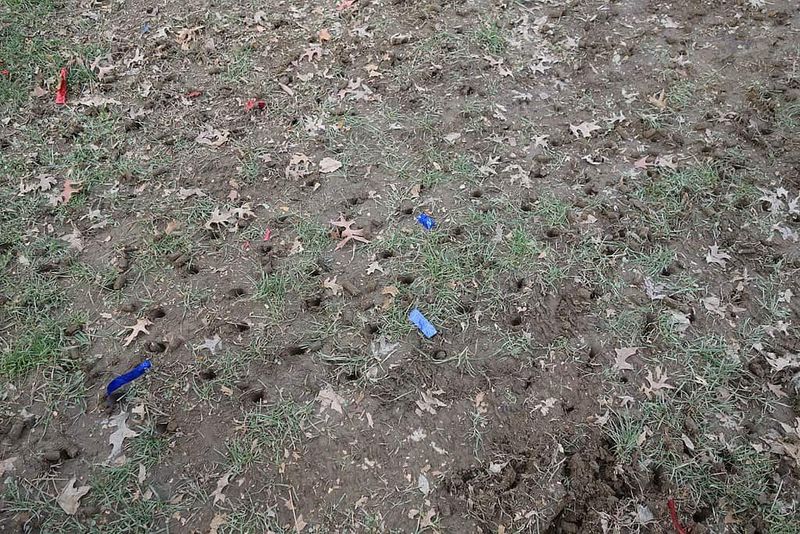
Waking up to a yard full of small, scattered holes can feel like a puzzle with no obvious answer. In Southern states like Florida and Texas, warm nights bring out a surprising variety of animals and insects that forage through lawns in search of food, leaving behind the evidence by morning.
Figuring out what made those holes matters, because the wrong fix can waste money, harm wildlife, or leave the real problem untouched. A careful look at the hole pattern, timing, and a few other clues will point you toward the right response.
The leading suspect is a night-foraging armadillo
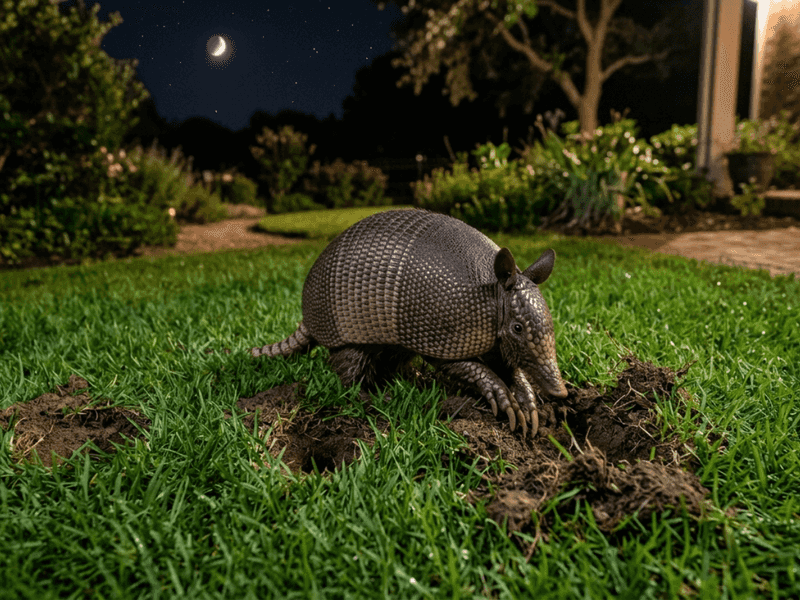
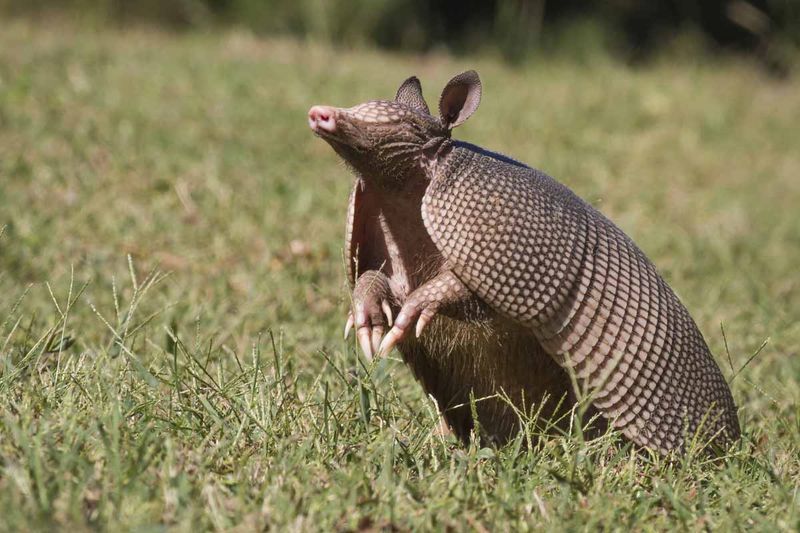
Armadillos rank as the most likely culprit when Southern homeowners find numerous shallow, scattered holes appearing overnight, particularly across Florida and Texas lawns. The nine-banded armadillo is almost entirely nocturnal in warm weather, relying heavily on its keen sense of smell to locate food just below the soil surface.
According to UF/IFAS Extension on armadillo digging behavior, these animals feed on insects, grubs, earthworms, and other invertebrates, punching into the ground wherever they detect activity.
The resulting damage looks like a collection of shallow, often cone-shaped openings a few inches across, scattered irregularly across the turf rather than arranged in a neat line or grid. The holes can appear in one section of the yard one night and shift to a completely different area the next, following the animal’s foraging path rather than any obvious pattern homeowners might predict.
That said, overnight timing and hole shape alone are not enough to confirm the cause. Skunks, raccoons, and opossums are also nocturnal and can leave similar-looking disturbances, and several other animals and insects create lawn openings under different circumstances.
Treating armadillo as the leading possibility in a Southern yard is reasonable, but UF/IFAS wildlife identification guidance makes clear that secondary evidence is needed before settling on any single species.
Read the pattern before treating the lawn
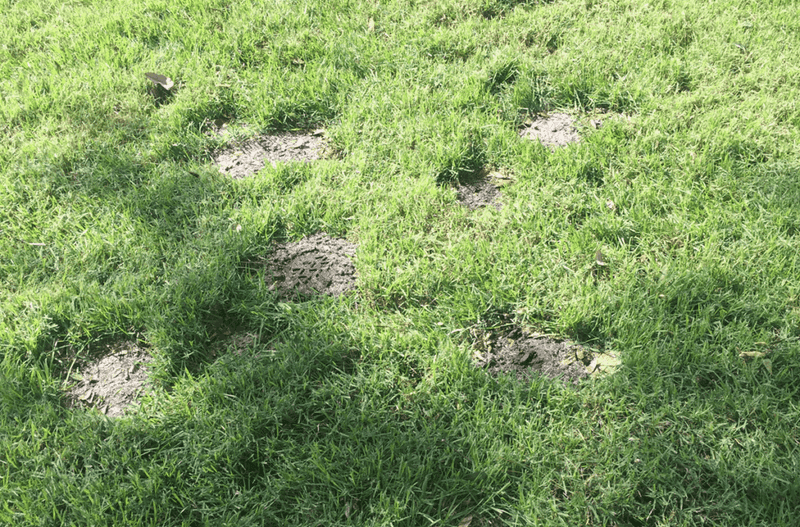
Before buying a product or setting a trap, spend a few minutes reading what the lawn is actually telling you. Hole shape, distribution, and location each carry useful information, and rushing past this step often leads to treating the wrong problem entirely.
Many shallow, scattered, cone-shaped holes that appear without any raised ridges or mounded soil are most consistent with armadillo or skunk foraging. Golf-divot-style openings, where a small plug of turf is flipped or peeled back, can also point to raccoons, skunks, or gray squirrels working through the surface layer.
Raised ridges running beneath the turf, or symmetrical volcano-shaped mounds with a central opening, suggest mole activity rather than surface foraging. Large, irregular patches where turf has been rooted up and shredded in place point more strongly toward wild pigs than toward an individual armadillo.
Holes smaller than roughly three inches may belong to insects, small rodents, snakes, or other animals that rarely get blamed for lawn damage.
Timing helps narrow the list but does not prove a species. Armadillos, skunks, raccoons, and opossums are all primarily active after dark, so nighttime damage alone does not separate them.
Warm, rainy, or recently irrigated conditions can bring earthworms and other invertebrates closer to the surface, increasing the reward for any animal that forages there, as noted in UGA Cooperative Extension guidance on resolving wildlife conflicts.
Look for secondary clues before drawing a conclusion. Tracks pressed into soft soil near the holes, scat left nearby, a distinctive musky odor, or a travel route running along a fence line or wall can all help separate species.
Check whether holes cluster near tree roots, concrete edges, or other structures, since armadillos and skunks often work along these borders. When signs still overlap and you cannot identify the animal confidently, a trail camera placed near active holes for a night or two is one of the most reliable ways to get a clear answer, as confirmed by UF/IFAS wildlife damage identification resources.
Some lawn openings come from insects or other animals
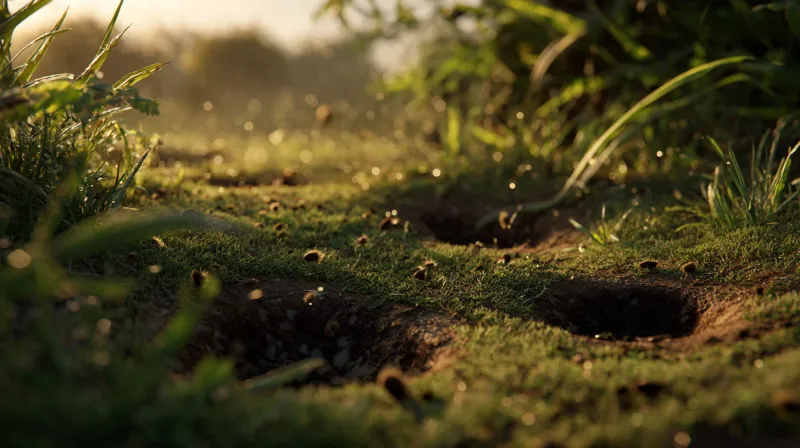
Not every hole in a Southern lawn belongs to a mammal. A surprising number of openings are created by insects or other small animals, and misidentifying them can lead to unnecessary pesticide applications or wasted effort targeting the wrong species entirely.
Mining bees and digger bees create small, clean-edged holes in thin or bare patches of turf. These solitary bees are generally nonaggressive, and UF/IFAS Extension guidance on ground-nesting bees does not recommend chemical control for ordinary mining-bee activity in lawns.
Cicada killers, which are large solitary wasps, also excavate soil and are usually far less aggressive than yellowjackets, though any ground nest deserves caution around children and pets. Yellowjackets and ants can produce openings as well, particularly in dry or sandy soil.
Small rodents, snakes, and other animals that rarely draw attention can account for openings that seem to appear randomly and do not match the scattered, multi-hole pattern typical of armadillo foraging. Moles are frequently blamed for all underground lawn damage, but their signature is surface tunnels that push up the soil into raised ridges, or volcano-shaped mounds with a central hole, not scattered shallow divots.
Pocket gophers, which are a separate animal, create larger asymmetrical mounds and feed on plant roots rather than soil invertebrates.
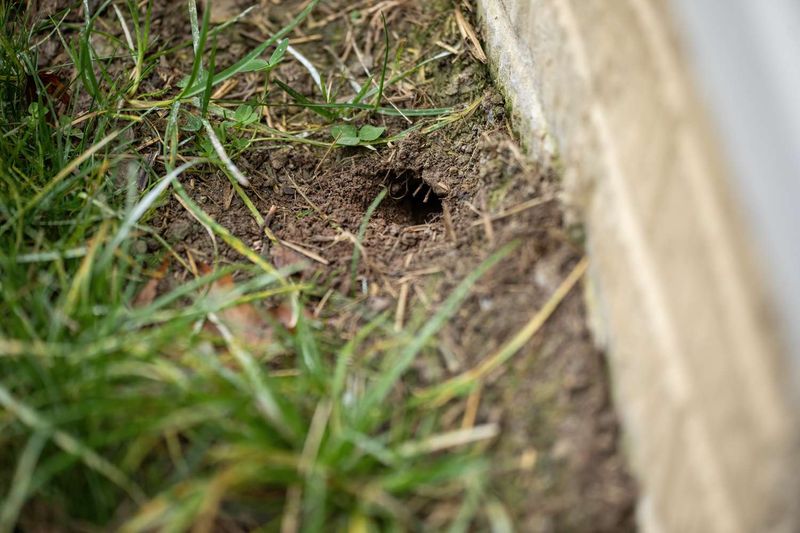
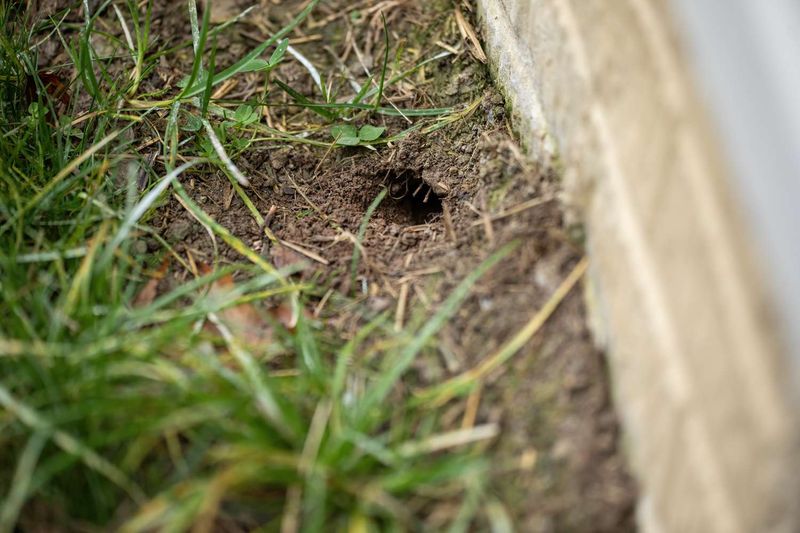
Armadillo burrow entrances are a different situation from foraging holes and should not be treated the same way. A foraging hole is shallow and a few inches across, while a burrow entrance is substantially larger, roughly 7 to 8 inches across according to UF/IFAS Extension on armadillo burrow characteristics.
When a large opening appears near a foundation, slab, patio, or driveway, a professional assessment is more appropriate than simply filling it, since burrowing near structures can create concerns that go beyond lawn aesthetics.
Check for grubs before reaching for insecticide
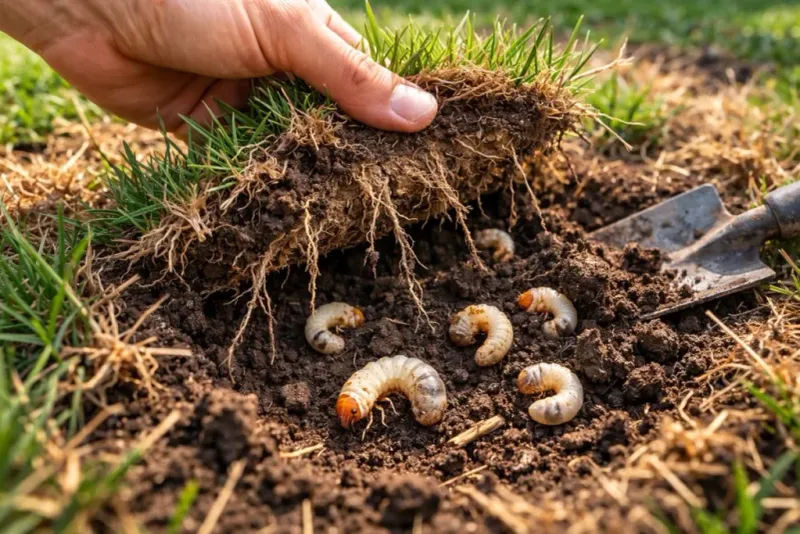
White grubs are a legitimate concern in Southern lawns, and they can attract several digging animals including skunks, raccoons, moles, birds, and armadillos. The key word is “can” – grubs are one possible factor, not an automatic explanation for every hole that appears overnight.
Before applying any insecticide, confirm that grubs are actually present and causing meaningful turf damage. The sampling method is straightforward: cut back a small square of sod in several locations across the lawn and examine the root zone beneath each one.
What you find matters more than the presence of any single grub. Penn State Extension guidance on white grubs explains that treatment thresholds depend on grub numbers, turf species, irrigation practices, and the level of visible injury.
A general reference point often cited is roughly five or more white grubs per square foot, but UGA Extension’s turfgrass white grub resources make clear that thresholds vary by region, grass type, and conditions, so regional guidance should inform any treatment decision.
Armadillos eat a broad range of soil invertebrates well beyond grubs, including earthworms, beetles, and other insects. UF/IFAS research on armadillo baiting and control states that reducing insects with insecticides has not been proven to stop armadillo digging.
Some Extension guidance goes further, noting that removing one food source may cause the animal to search more aggressively through the lawn rather than move on.
Insecticides belong in a confirmed pest-control plan directed at a specific, verified target, applied according to the current product label and applicable state law. Reaching for a grub product before confirming grubs are present, or expecting it to drive away a mammal, is unlikely to solve the problem and adds unnecessary chemical use to the yard.
Remove conditions that invite nighttime digging
Once you have a reasonable idea of what is visiting the yard, the next practical step is making that yard less rewarding to visit. Habitat modification will not instantly remove an animal that has already learned to forage in your lawn, but it can reduce how often the visits happen and how much damage each visit causes.
Evening irrigation is one of the most overlooked attractants. Watering at night moistens the soil and brings earthworms and other invertebrates closer to the surface, which is exactly what nocturnal foragers are looking for.
If armadillos or skunks are actively digging, shifting irrigation to early morning when practical allows the soil surface to dry before nighttime activity begins. UF/IFAS habitat modification guidance recommends avoiding unnecessary evening watering as one of the first adjustments homeowners can make.
Food sources beyond soil invertebrates also matter. Fallen fruit left on the ground, unsecured garbage, accessible pet food left outside after dark, and open compost bins can all draw wildlife into the yard and encourage repeat visits.
Clearing these attractants does not guarantee an animal will stop coming, but it removes easy rewards that extend a foraging visit or bring other species into the area.
Brush piles, dense debris, and accessible spaces under decks or sheds near the yard can serve as resting or denning cover for armadillos and other wildlife, as noted in UGA Extension’s nuisance wildlife conflict guidance. Reducing that cover near the lawn does not eliminate the animal, but it makes the immediate area less comfortable as a base of operations.
Use deterrents for temporary help and barriers for defined areas
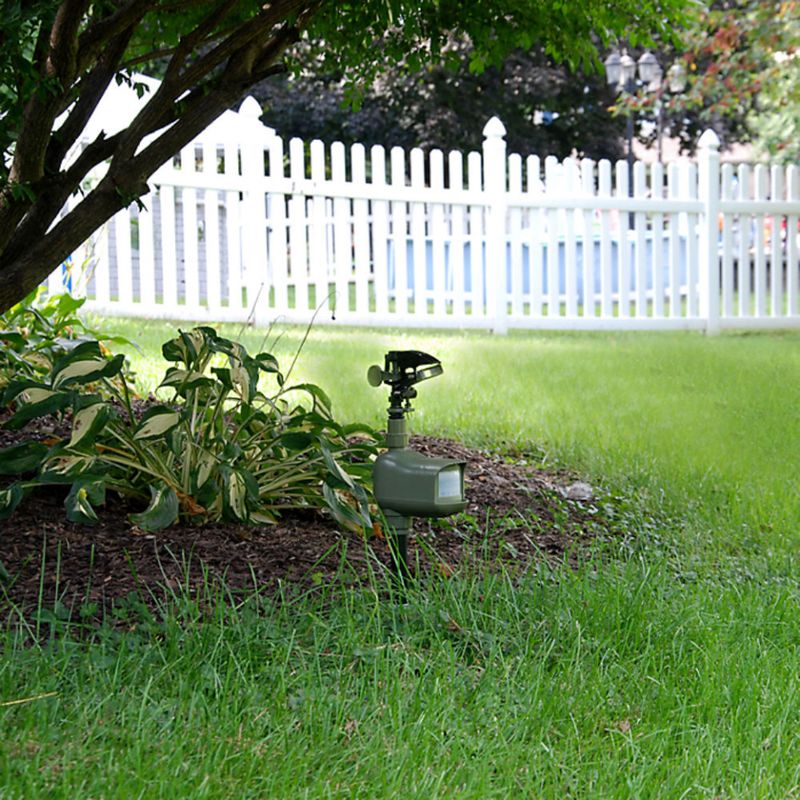
Nonlethal deterrents can be a useful first line of response, especially while you are still working on identifying the animal or adjusting attractants. The important thing is to go in with realistic expectations about what these tools can and cannot do.
Motion-sensitive sprinklers can startle nocturnal animals and may interrupt foraging visits when they are working well. UF/IFAS guidance on yard habitat modification cautions that effectiveness can be short-lived, and that moving the device periodically may help prevent animals from learning to work around it.
Motion-sensitive lights follow a similar pattern, potentially discouraging some nighttime activity without any guarantee of lasting results. Neither option should be treated as a permanent solution, and results will vary by animal, yard layout, and how long the device stays in one location.
Physical exclusion is a more dependable approach for protecting a specific, defined area. Buried fencing or wire barriers can keep armadillos and other digging animals out of a garden bed, a newly repaired turf section, or another high-value spot in the yard.
Florida Fish and Wildlife Conservation Commission guidance on armadillos recommends fencing buried roughly two feet into the ground with an above-ground section to prevent armadillos from digging under or climbing over. This approach works well for a defined perimeter but is generally impractical for securing an entire lawn.
The practical takeaway is to use motion deterrents as a short-term tool that may reduce visits, and reserve physical barriers for the areas where consistent protection matters most. Neither method replaces addressing the underlying attractants.
Escalate persistent damage through legal, safe channels
When habitat changes and deterrents have not slowed the damage, a large burrow appears near a structure, or an animal keeps returning despite repeated disturbance, it is time to consider escalating. That escalation needs to happen through legal and safe channels, not improvised methods.
Armadillo trapping is genuinely difficult. UF/IFAS research on armadillo baiting and trapping explains that no bait or attractant has been proven broadly effective for drawing armadillos into a trap.
Placement matters far more than bait. A cage trap set along a confirmed travel route, against a wall or fence the animal follows, or near an active burrow entrance has a better chance of success than one placed randomly in the middle of the lawn.
Wing boards or funneling guides placed on each side of the trap entrance can help direct the animal in.
Florida and Texas handle nuisance wildlife differently, and the rules matter. In Florida, armadillo trapping and removal are governed by Florida Fish and Wildlife Conservation Commission regulations.
FWC nuisance wildlife FAQs and FWC trap-type rules cover current requirements, but specific details including inspection intervals, relocation restrictions, and any scheduled rule changes should be verified directly on the FWC website before acting, since those details can change. Texas readers should consult Texas Parks and Wildlife guidance on armadillos or contact a licensed wildlife professional in their county, since Florida-specific instructions do not apply across state lines.
Avoid handling any wild mammal casually. CDC information on Hansen’s disease characterizes the risk to most people who simply encounter an armadillo as very low, but direct prolonged contact, hunting, or handling presents greater concern.
Any bite or scratch from a wild mammal warrants prompt contact with a medical provider or local public health authority.
Restore the turf after the cause is addressed
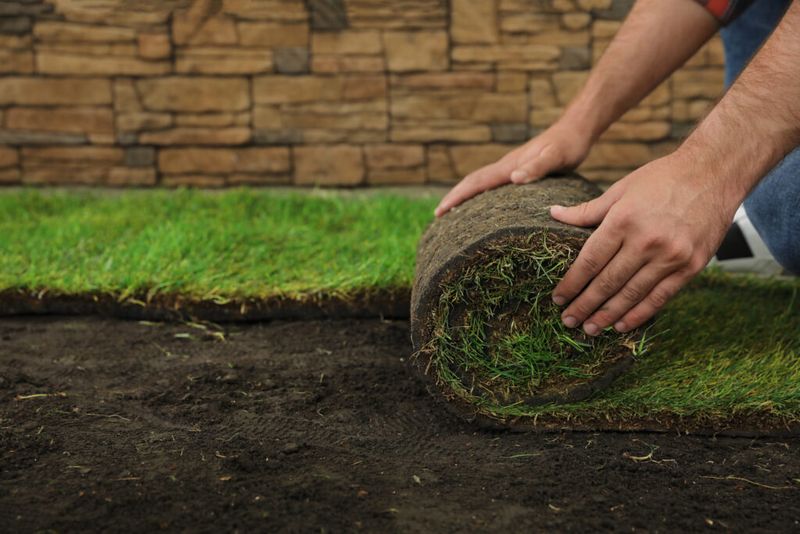
Lawn repair is the final step, not the first one. Patching holes before the animal or insect problem is under control means the same damage is likely to reappear within days, making the repair effort pointless.
Confirm that active digging has stopped and that any underlying cause, whether a foraging animal, a confirmed grub problem, or a drainage issue encouraging surface invertebrate activity, has been addressed before starting cosmetic work.
The physical repair process is straightforward. Replace any displaced soil that was scattered by foraging, pressing it back into the low spots and smoothing the surface level with the surrounding turf.
Loosened sod sections that were rooted up but not removed should be pressed firmly back into contact with the soil beneath them and watered in to help roots re-establish. Bare or heavily damaged patches will need reseeding or sodding with a warm-season grass suited to your specific region and conditions.
Extension guidance on yard digging damage and recovery supports a diagnosis-first approach before any repair work begins.
Correct irrigation timing or grub management only when inspection confirms those factors contributed to the problem. Applying grub treatments or changing your watering schedule as a precaution, without confirmation, adds cost and chemical exposure without a clear benefit.
As reinforced by UF/IFAS wildlife damage resources, accurate identification is the foundation that keeps every subsequent step, repair included, from being wasted effort.
Use a diagnosis-first decision path
Pulling together everything above into a working decision path keeps the response proportionate and effective. Start by reading the hole pattern carefully, comparing shape, size, distribution, and location against the options covered here.
Gather secondary evidence, including tracks, odor, scat, and travel routes, before drawing any conclusion, and consider a trail camera when signs remain ambiguous.
Confirm white grubs through physical sampling before applying any insecticide, and treat only when grub numbers and turf injury justify it under regional guidelines. Remove attractants, adjust irrigation timing, and reduce nearby cover as a first practical response.
Protect high-value areas with physical barriers and use motion deterrents as a short-term supplement rather than a permanent fix.
When damage persists, escalate through licensed wildlife professionals or verified current state rules, keeping Florida and Texas requirements separate. Armadillo remains a strong possibility in a Southern lawn, but accurate identification can reduce the risk of unnecessary pesticides, unsafe wildlife handling, and ineffective repairs, provided readers still follow current treatment, safety, and wildlife-control guidance from UF/IFAS wildlife identification resources and UF/IFAS habitat modification guidance.
The holes may be mysterious at first, but a methodical look at the evidence almost always points toward a workable answer.