
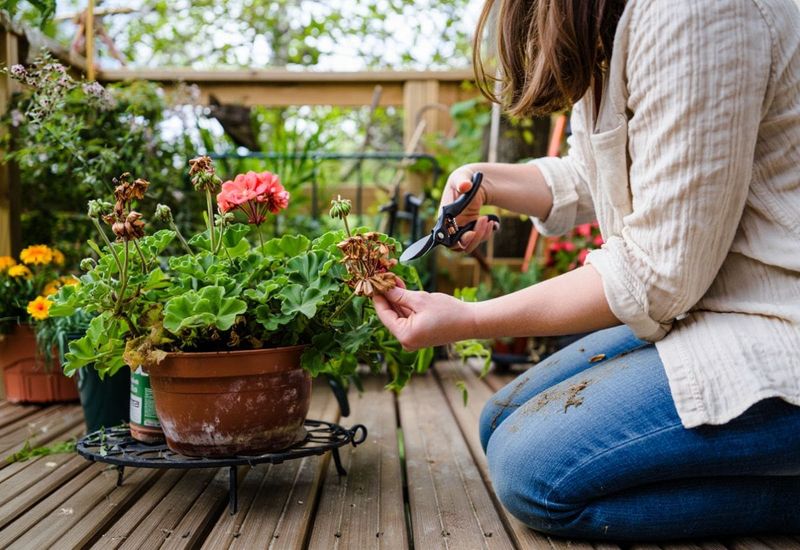
Watching your geraniums go quiet in the middle of summer is frustrating, especially when the plants look otherwise healthy. Before you overhaul the whole care routine, one simple check can tell you a lot: are there faded flower clusters still attached to the plant?
Removing those spent blooms, correctly and regularly, may help support continued flowering in common bedding Pelargonium. That said, deadheading is just the starting point, because Southern heat, plant type, and a handful of other factors can all play a role in a midsummer slowdown.
Check for spent flower clusters before changing the whole routine
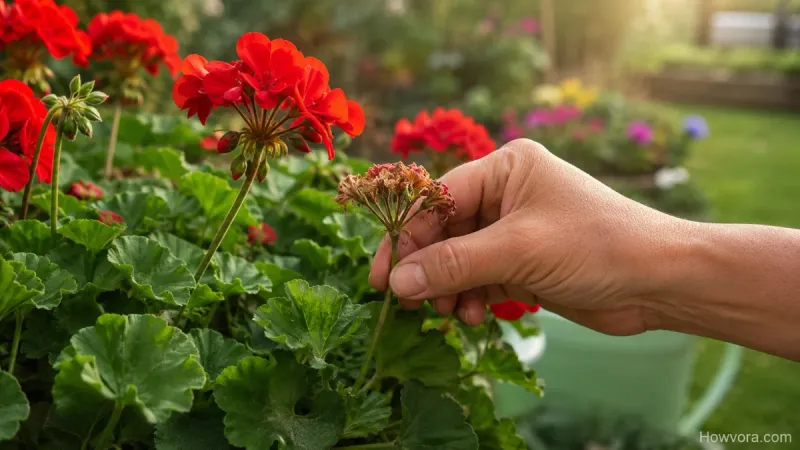
Faded flower clusters clinging to an otherwise healthy Pelargonium are a clear sign to start with deadheading before adjusting anything else. Removing those spent clusters, along with the full flower stalk, can prevent the plant from directing energy into seed production, improve the plant’s appearance, and may encourage additional blooms.
UF/IFAS extension guidance on Pelargonium lists deadheading among the basic maintenance steps that help keep these plants productive during their active season.
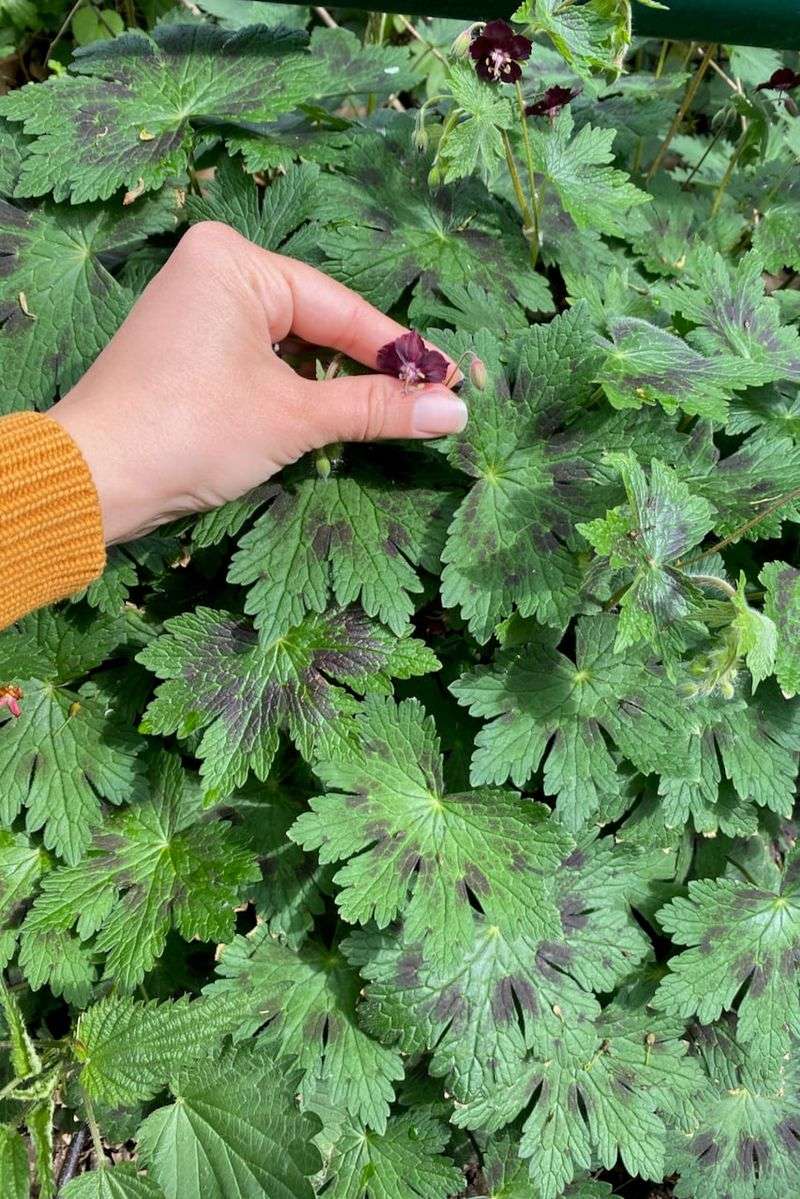
Before going further, a quick clarification matters for Southern gardeners: the colorful bedding plants most people call geraniums are usually Pelargonium, specifically zonal or ivy-leaf types, not true Geraniums or cranesbill. Clemson Extension’s geranium factsheet makes this distinction clearly, and it matters because regal or Martha Washington geraniums behave differently and have separate temperature requirements.
Deadheading deserves the first check when spent blooms are present on a plant with healthy foliage, but it is not the sole explanation for every midsummer slowdown. Iowa State University Extension’s annual geranium guide and University of Illinois Extension both support deadheading as a useful maintenance habit, while also noting that light, water, nutrition, and growing conditions all contribute to flowering performance.
Treat this first step as a diagnostic check, not a guaranteed fix.
Remove the entire flower stalk, not only the petals
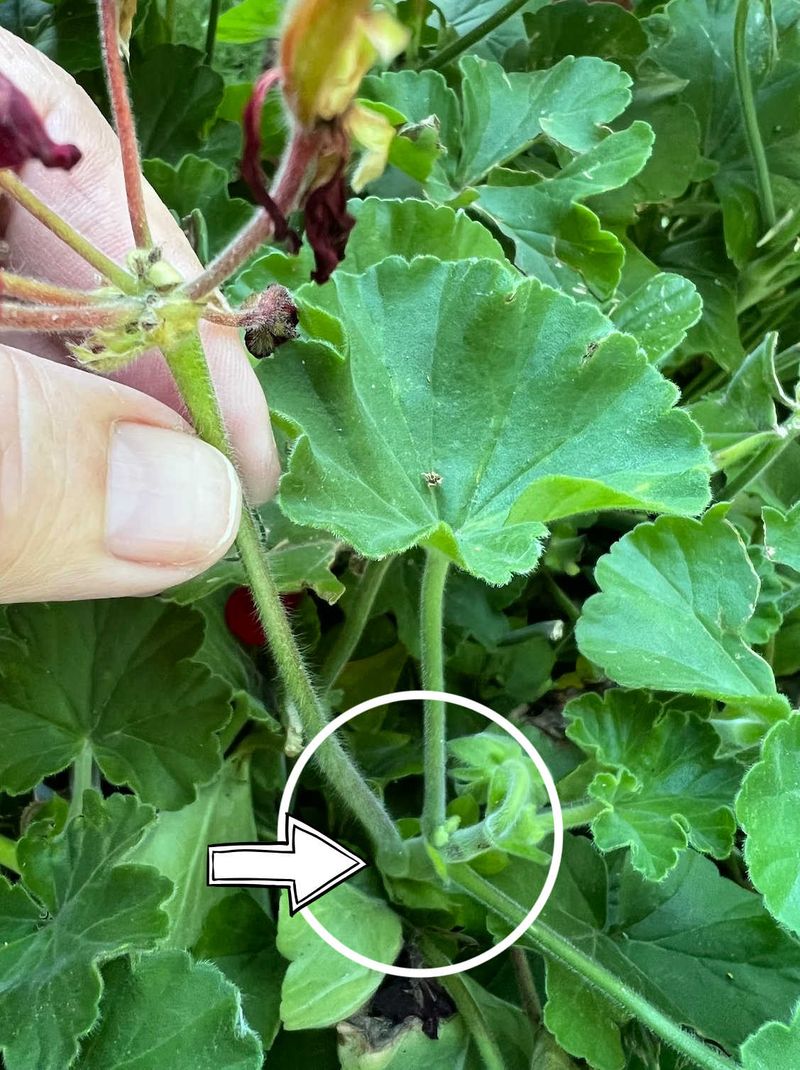
Picking off loose petals from a faded geranium bloom feels tidy, but it leaves behind the seed-forming structure attached to the stalk. That developing seed head can still draw resources from the plant, which is exactly what you want to avoid.
The correct approach is to follow each faded flower cluster down its individual stem until you reach the point where it meets the main plant, then remove the entire flower stalk cleanly at that junction.
Colorado State University’s growing geraniums guide describes this technique specifically: remove the full stalk rather than just stripping petals. A clean cut or snap at the base of the flower stalk is the goal.
Using clean, sharp scissors or pruners reduces the risk of tearing the stem and leaving ragged tissue behind.
University of Illinois Extension’s deadheading post reinforces that leaving seed structures in place can redirect the plant’s energy away from producing new flower buds. A UF/IFAS publication on geranium care similarly supports removing the complete flower stalk as part of routine maintenance.
Keep in mind that proper removal may support future blooms, but it does not guarantee an immediate flush of new color, especially if heat or other stressors are already limiting the plant.
Inspect regularly and clear damaged plant material
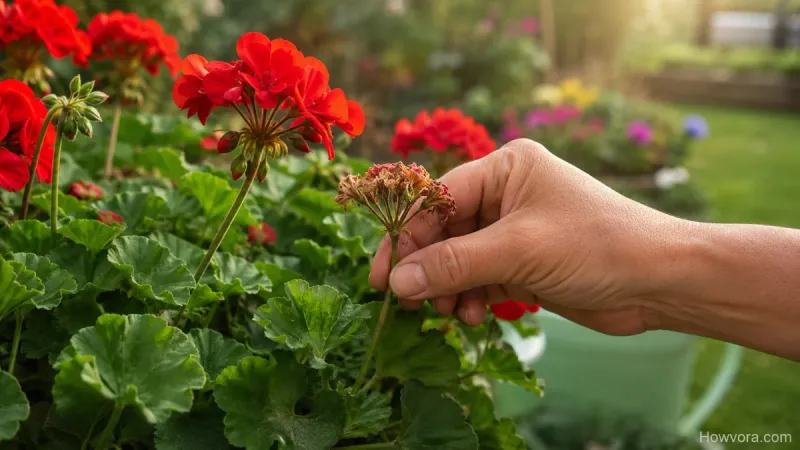
Rather than deadheading on a fixed schedule, the more practical approach is to make it part of a regular visual check during active flowering. Every time you water or walk past your containers and beds, take a moment to look for faded flower clusters, yellow leaves, and any stems that look soft or discolored.
Kansas State University Extension’s deadheading guidance supports treating this as an ongoing habit rather than a one-time task, since new flower stalks finish at different rates.
Clearing away old flower stalks, damaged leaves, and yellowed foliage does more than improve the plant’s appearance. University of Illinois Extension notes that removing decaying material can improve air circulation around the plant, which is particularly useful in the humid conditions common across Florida and coastal Texas.
Reduced debris also means fewer places for fungal spores to take hold.
When removing material that looks diseased, spotted, or unusually discolored, handle it carefully and keep it separate from healthy garden waste. Penn State Extension’s geranium disease resource emphasizes sanitation as a key first-line measure for managing common geranium problems.
Dropping infected leaves back into the pot or bed can spread trouble quickly, so bag suspicious material and dispose of it rather than composting it. Cleanup supports plant health, but it is not a guaranteed trigger for a second bloom wave.
Heat and plant type can explain a midsummer pause
Even a perfectly deadheaded geranium can stop flowering when temperatures climb into the upper 80s and beyond, especially when nighttime lows stay warm. High heat is one of the primary reasons common bedding Pelargonium slow down in Southern summers, and it is a growing-condition reality rather than a sign of neglect.
UF/IFAS Gardening Solutions notes that geraniums perform best during cooler weather and that flowering tends to fade by mid- to late summer in Florida’s heat and humidity.
For Florida gardeners specifically, standard bedding Pelargonium are often treated as cool-season plants. UF/IFAS extension guidance recommends fall-through-spring planting in South and Central Florida because the hottest, most humid months are simply unfavorable for consistent bloom.
A plant that has gone quiet in July or August may be responding to its environment on schedule, not failing due to missed care.
Plant type adds another layer. Zonal geraniums are the most common bedding variety and handle moderate heat reasonably well, while ivy-leaf types are generally less heat tolerant and benefit from afternoon shade.
Iowa State’s ivy geranium article highlights their preference for cooler growing conditions. Regal and Martha Washington geraniums are a different matter entirely.
Iowa State Extension explains that Martha Washington types require cool nights to set flower buds, making them poor candidates for a hot Southern summer display. University of Georgia Extension’s geranium publication also confirms that high temperatures can naturally reduce flowering across several geranium types.
Recognizing your plant’s type and its seasonal limits is as important as any maintenance task.
Adjust light, water, and drainage to match the conditions
Bright light is a genuine requirement for strong geranium flowering, but full afternoon sun in a Texas or Florida summer is a different animal than bright light in a milder climate. UC IPM’s geranium care page supports providing good light while also acknowledging that extreme heat can stress the plant.
Afternoon shade, especially during the hottest hours, can help heat-stressed plants recover without pushing them into the reduced-bloom territory that full shade creates. Moving a struggling ivy geranium out of full afternoon sun is a reasonable adjustment; moving any geranium into deep shade is likely to reduce flowering further.
Iowa State’s ivy geranium guidance specifically notes that ivy types benefit from some protection during very hot weather. Texas A&M AgriLife’s geranium reference also points to light as a key factor in flowering performance for Southern growers.
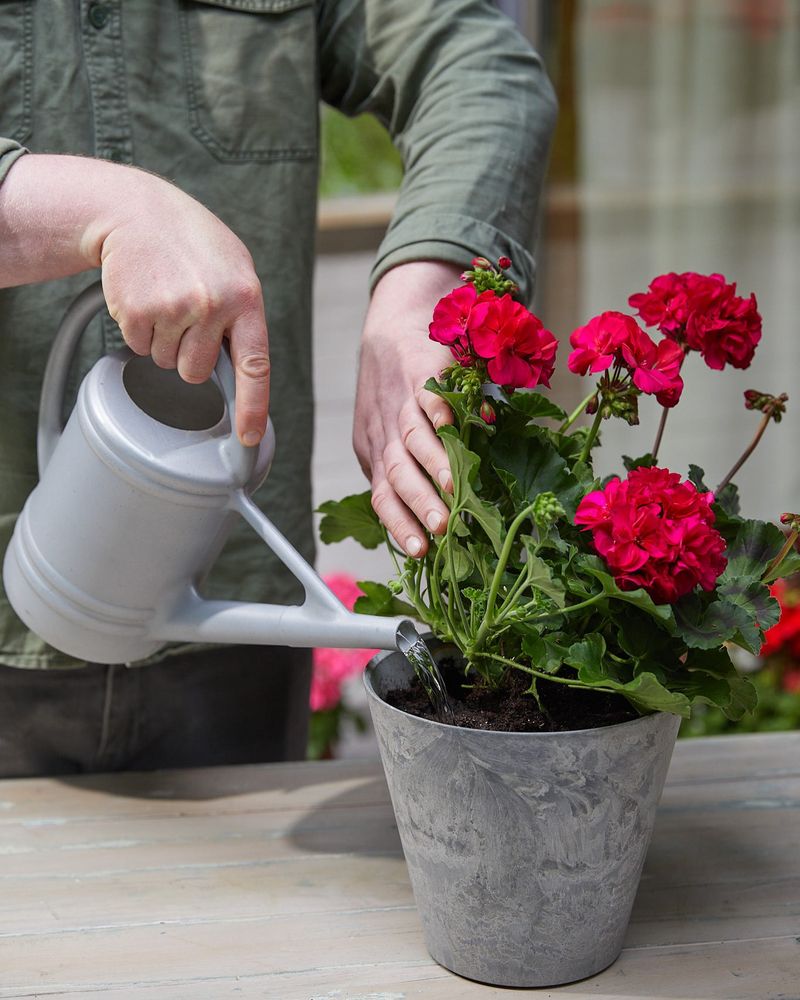
Watering practices matter just as much as light placement. Use a well-drained soil or potting mix, and water when the top of the soil begins to dry rather than on a rigid daily schedule.
Clemson Extension cautions against keeping the root zone waterlogged, and Texas Plant Disease Handbook ties poor drainage to root rot problems that can suppress plant health. Containers should never sit in standing water, and directing water at the soil line rather than over the foliage can reduce leaf and stem disease pressure.
These adjustments support overall plant health, which creates better conditions for flowering, but they are not instant bloom triggers.
Treat fertilizer as a possible factor, not an automatic remedy
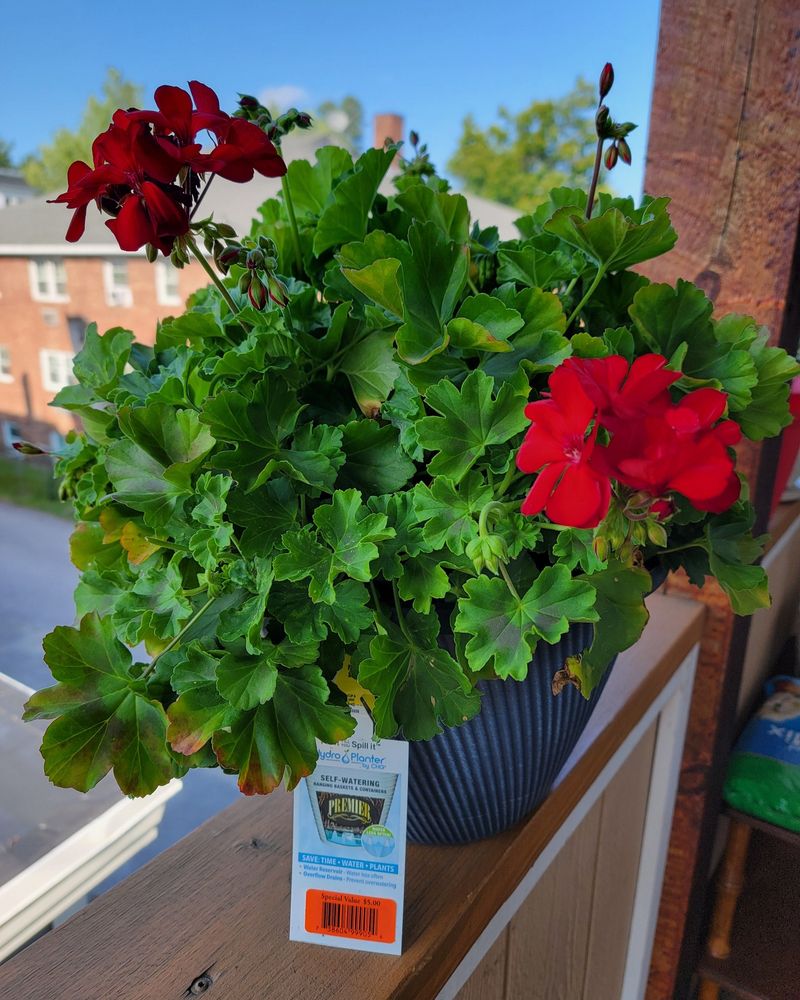
Container geraniums lose nutrients faster than in-ground plants because repeated watering gradually flushes minerals out of the potting mix. That means nutrient replenishment can be a legitimate part of keeping container plants healthy and flowering.
University of Illinois Extension’s container fertilizing guide confirms that containers generally need more frequent feeding than garden beds for this reason.
A diluted liquid fertilizer applied every two to four weeks is a commonly cited range for actively growing geraniums, but this is a general reference point, not a universal prescription. Always follow the product label, since formulations vary widely.
Iowa State University Extension and University of Georgia Extension both support regular feeding for container Pelargonium, while recommending that product instructions guide the actual rate and timing.
Adding more fertilizer is not the right first move when flowering slows. UMass Extension’s geranium production factsheet warns that excess nitrogen pushes leafy growth at the expense of flowers, and that fertilizer salt buildup can injure roots and suppress overall plant performance.
Iowa State’s container care guidance echoes the caution against overfertilizing. Before reaching for the fertilizer, assess whether heat, insufficient light, watering stress, or disease is the more likely cause of the slowdown.
Fertilizer works best as part of a balanced routine, not as a reaction to a problem that may have a different root cause.
Recognize when fading points to disease or root trouble
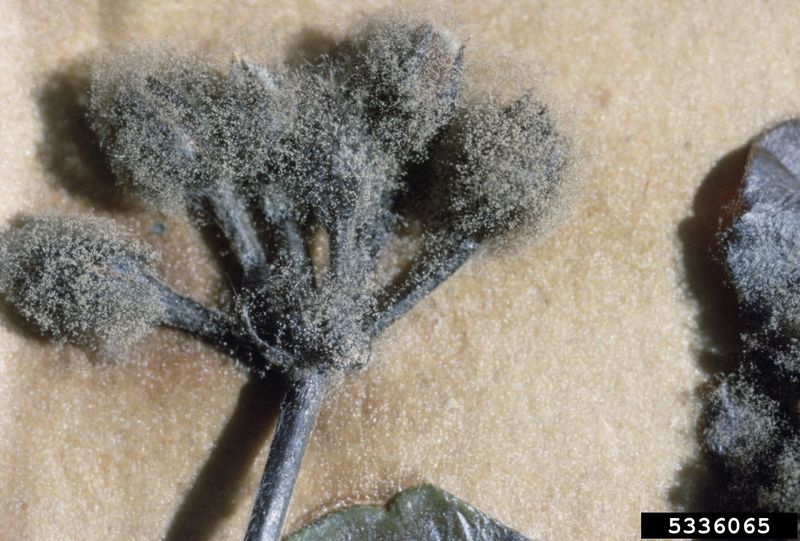
Spent flower clusters are normal. What is not normal is flower drop where blooms fall before they fully open, brown or water-soaked petals, gray fuzzy growth on stems or faded flowers, blackened stem bases, widespread yellowing across healthy-looking foliage, or a plant that wilts and does not recover after watering.
These symptoms point toward disease, root damage, or drainage failure rather than a simple deadheading issue. Penn State Extension’s geranium disease guide documents Botrytis blight, bacterial blight, and several root rots as documented problems in Pelargonium, each with distinct symptoms.
Texas Plant Disease Handbook’s geranium section and Clemson Extension both connect poor drainage and overhead watering to increased disease risk. When disease symptoms appear, sanitation comes first: remove and dispose of affected tissue, avoid wetting foliage, improve air circulation, and check that drainage is adequate.
UC IPM’s floriculture geranium resource notes that fungicide choices depend on the specific disease diagnosed and must follow product label directions, so reaching for a spray before identifying the actual problem is not a reliable first step.
A major stem cutback is also a separate tool from deadheading. UGA Extension describes cutting back leggy or neglected plants by half to three-quarters of long stem growth in late summer, followed by fertilization and renewed care.
That approach suits a plant that has become overgrown, not a healthy plant whose only issue is faded blooms. Pruning back healthy flowering stems temporarily removes the growth that would have produced new buds, so reserve major cutbacks for plants that genuinely need a reset.
Use a conditional bloom-recovery checklist
When your geraniums slow down mid-season, work through the basics in order rather than making several changes at once. Start by checking for faded flower clusters and removing each one with its complete flower stalk.
Then look the plant over for yellow leaves, old stalks, or damaged material and clear those away during the same inspection. Iowa State University Extension and UF/IFAS both support this kind of regular maintenance as a foundation for keeping Pelargonium productive.
After cleanup, evaluate the growing conditions. Consider whether the plant is getting appropriate light with afternoon shade if needed, whether watering and drainage are adequate, and whether the current heat levels are simply beyond what the plant type can tolerate in bloom.
Check fertilizer needs against the product label rather than adding more automatically. If symptoms go beyond faded blooms, consult a disease guide before treating.
UF/IFAS Gardening Solutions and UGA Extension both remind gardeners that standard bedding Pelargonium have real seasonal limits in Southern climates, and that a midsummer lull may be the plant performing exactly as expected. A healthy plant in a hot Southern July is doing its best; your job is to keep conditions as supportive as possible and let cooler weather do the rest.