
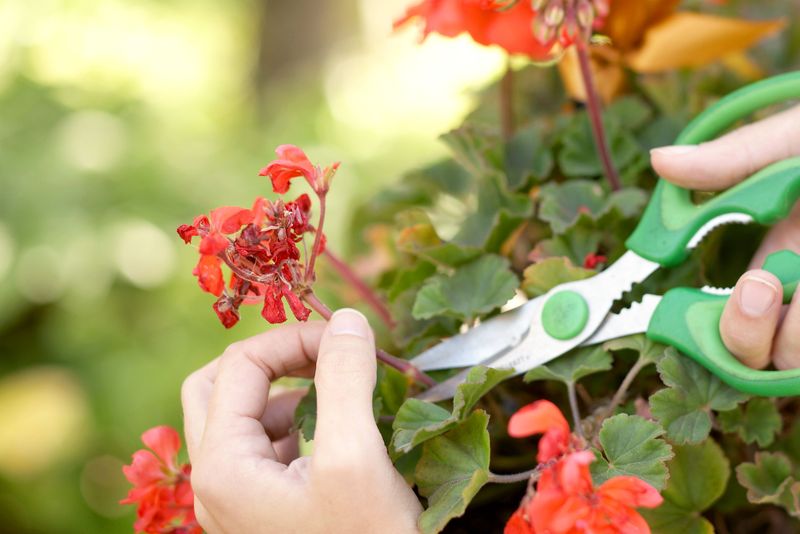
Geraniums put on a show in spring, then seem to give up right when summer gets going. If you grow the common bedding geraniums on a porch, patio, or sunny bed in Florida or Texas, you have probably watched the flowers slow down and wondered what went wrong.
The answer is not always one thing, but there is a simple routine habit that can help keep flowers coming when conditions cooperate. Understanding what that habit does, and what it cannot do, makes the difference between a plant that rebounds and one that just sits there looking tired.
Late-summer fading has more than one cause
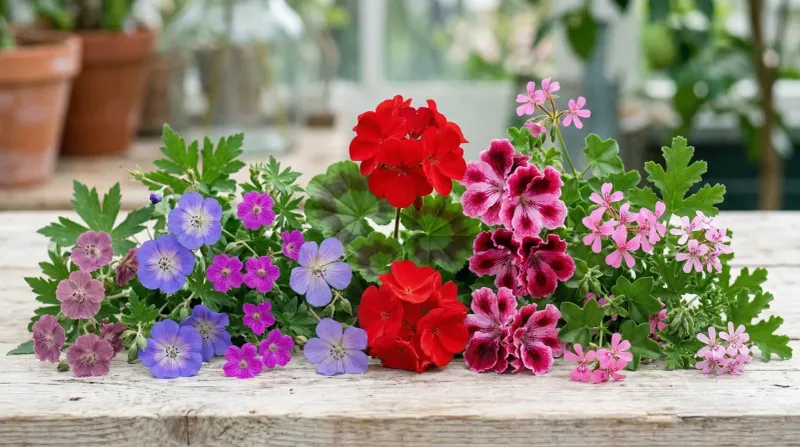
The plant most Southern gardeners call a geranium is actually a tender bedding plant known botanically as Pelargonium, typically a zonal or ivy geranium. That matters because hardy cranesbill geraniums are an entirely different group with different heat tolerance and bloom behavior.
The advice in this article applies to the common tender Pelargonium bedding types sold at garden centers every spring, not to perennial cranesbills.
Strong flowering in April and May followed by a noticeable slowdown by July or August is a familiar pattern across the South. Skipping deadheading is one reason that can happen, but it is far from the only one.
Southern heat, warm nighttime temperatures, drought, poor drainage, low soil fertility, insufficient light, pests, and disease can all reduce or stop flowering, sometimes all at once.
UF/IFAS reports that flowering often fades by mid- to late summer in Florida, and that common geraniums generally perform best during cooler weather in central and southern parts of the state. Florida gardeners in particular should not interpret a summer bloom pause as a maintenance failure.
University of Georgia Extension also notes that flowering slows considerably during hot weather and high nighttime temperatures, which describes most of the South from June through September. Setting realistic expectations from the start saves a lot of frustration.
The routine habit that supports reblooming
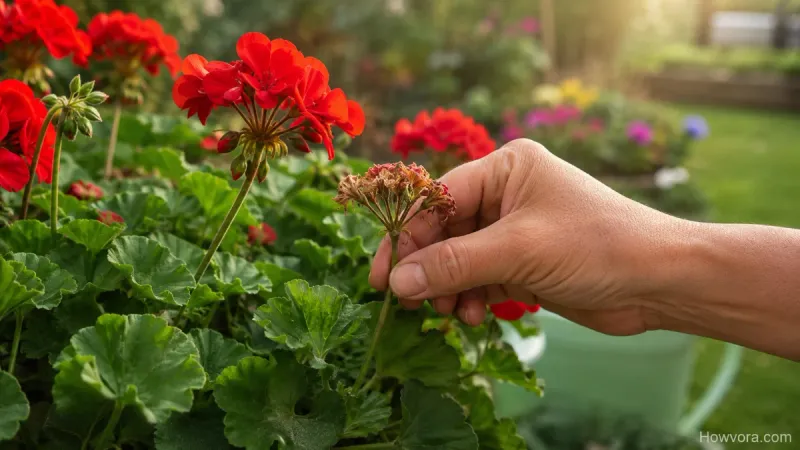
Regular deadheading is the single most useful routine habit for keeping common bedding geraniums producing flowers. Removing each fading flower cluster before it fully develops seeds can encourage the plant to push out additional blooms, keeps the plant looking tidy, and eliminates deteriorating tissue that would otherwise sit on the plant collecting moisture.
Iowa State University Extension recommends deadheading geraniums regularly to promote continued flowering, and similar guidance appears from University of Illinois Extension and Texas A&M AgriLife Extension.
The key is acting early and often. Do not wait until the entire plant looks ragged.
As individual clusters begin dropping petals or turning soft and papery, that is the right moment to remove them. Catching each cluster while it is still in early decline, rather than after it has dried completely or begun forming a seed head, gives the plant a better opportunity to redirect its energy toward new growth.
Even with consistent deadheading, results depend heavily on conditions. Temperature, soil moisture, light levels, and overall plant health all play a role.
Deadheading can support reblooming when the environment is favorable, but it cannot override extreme heat, a root problem, or a nutrient-depleted plant. Treat it as a foundational habit rather than a guaranteed fix, and pair it with the other care steps covered in the sections below.
Remove the whole spent flower stalk
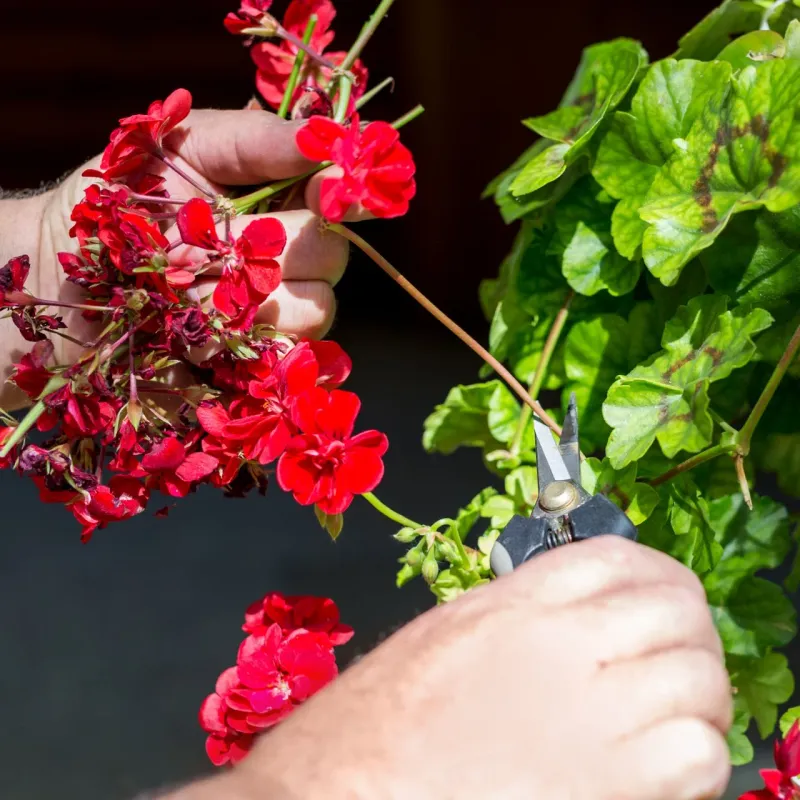
Pulling off loose petals is not enough. When a geranium flower cluster fades, the stalk holding it up remains attached to the plant, and if left in place, it can develop a seed structure that signals the plant to slow flower production.
The correct technique is to follow that stalk all the way down through the foliage and remove the entire thing, not just the flower head at the top.
University of Illinois Extension guidance on container garden maintenance supports removing spent growth back to healthy tissue rather than leaving stubs or partial stalks behind. Trace each spent flower stalk with your fingers until you reach the point where it meets the main stem or a set of healthy leaves, then pinch or cut it cleanly at that junction.
Iowa State University Extension similarly recommends removing the whole stalk when deadheading annual geraniums.
Clean hands work fine for most soft, fresh stalks. For thicker or woodier stems, a pair of clean, sharp pruning shears makes a cleaner cut and reduces the chance of tearing the plant tissue.
Handle the plant gently throughout the process. Rough handling can bruise stems and leave entry points for disease, so a light, deliberate touch is better than quick yanking, especially on older plants with brittle stems.
Use deadheading to check plant health
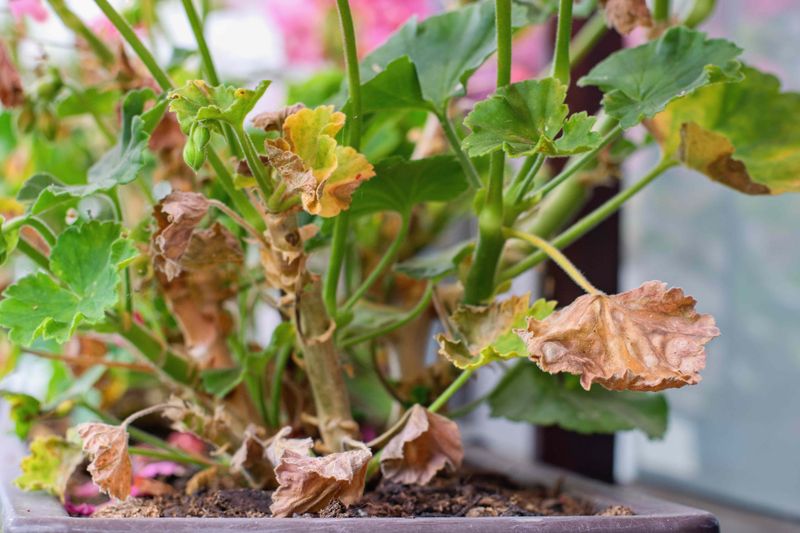
Every deadheading session is also a chance to look the plant over carefully. While working through the spent flower clusters, check the leaves and stems for anything that looks off: yellowing, soft brown patches, fuzzy gray growth, or leaves that feel papery and dry.
Catching a problem early, while the plant still has healthy tissue, gives you a much better chance of correcting it before it spreads.
Spent flowers and dead tissue left on the plant can create conditions that favor Botrytis gray mold, a fungal disease that thrives on decaying plant material, especially in humid or poorly ventilated spots. University of Minnesota Extension’s guidance on gray mold connects spent and dead tissue with favorable conditions for the pathogen.
University of Illinois Extension also recommends removing dead and diseased material during routine maintenance.
Any leaves or flower stalks that show signs of disease should go directly into the trash, not the compost pile. Composting visibly diseased material can spread the problem to other parts of the garden.
Beyond cleanup, good airflow around the plant, soil that drains reliably, and keeping foliage and flowers from staying wet for extended periods are your first-line defenses against disease. University of Georgia Extension recommends avoiding routinely wet foliage and flowers as part of sound geranium care.
Recognize when heat has paused flowering
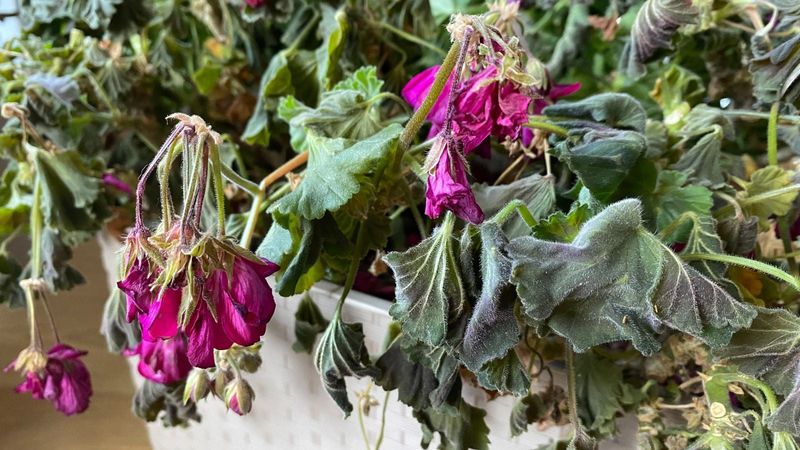
A plant that receives regular deadheading but still refuses to produce new flowers is often telling you something deadheading alone cannot fix. Extreme daytime heat and persistently warm nights are among the most common reasons geraniums slow or stop blooming in the South, and no amount of pinching spent clusters will change that while the heat remains intense.
University of Arkansas Cooperative Extension notes that zonal geraniums may stop flowering when temperatures climb above roughly 95 degrees Fahrenheit. That figure reflects observations for zonal geraniums under specific conditions, so treat it as a useful reference point rather than a hard cutoff that applies equally to every cultivar or every location.
University of Georgia Extension adds that flowering slows considerably during hot weather and high nighttime temperatures, which is a pattern most Southern gardeners will recognize from July and August.
During a heat pause, focus on supporting the plant rather than pushing it to perform. Water deeply when the soil becomes dry, but make sure the container or bed drains freely so roots are never sitting in standing water.
Avoid routinely wetting foliage and flowers, since prolonged moisture on plant surfaces encourages disease. UF/IFAS Gardening Solutions and UF/IFAS Charlotte County Extension both emphasize good drainage and careful watering as part of summer geranium care.
Light or moderate afternoon shade can help zonal and ivy geraniums through the hottest weeks. Moving a container to a spot that gets morning sun but afternoon protection is one of the simplest adjustments you can make.
Iowa State University Extension’s guidance on managing gardens during extreme heat is clear that fertilizing during an extreme heat wave is not advisable, since a stressed plant cannot use nutrients effectively and feeding can add to the plant’s burden. Wait until the worst heat passes before resuming any regular feeding schedule.
Give a leggy plant a separate reset
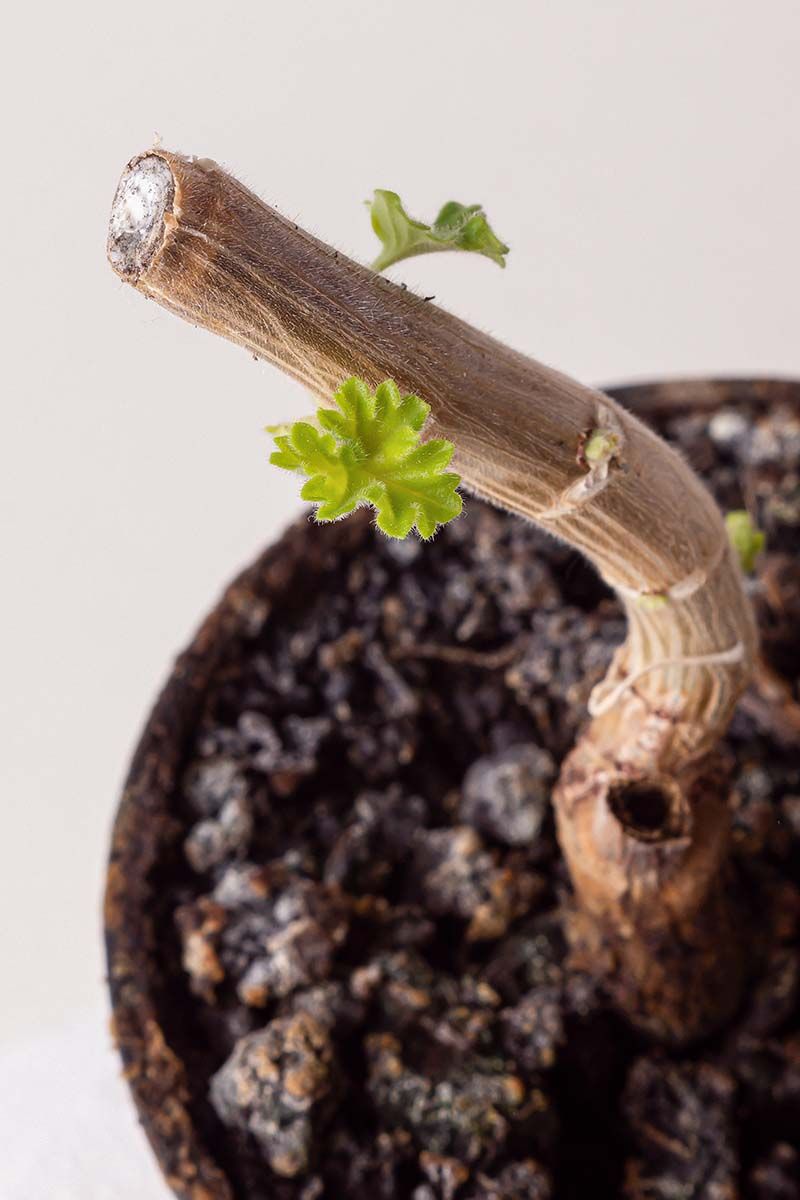
A plant that has grown tall, sparse, and woody-looking has a different problem than a plant that simply missed a few rounds of deadheading. At that point, removing spent flower clusters is not going to restore the shape or push meaningful new growth from the bare lower stems.
A more substantial intervention, called rejuvenation pruning, is what that kind of plant actually needs.
University of Georgia Extension describes a late-summer revival approach for neglected geraniums that involves cutting back roughly one-half to three-quarters of the long stem growth, making cuts above a node where new growth can emerge. This is a meaningful pruning step, not a light trim, and it is intended specifically for plants that have become tall, sparse, or otherwise neglected over the season.
It is not the right response to every plant that slows down in summer heat.
Timing matters considerably here. Cutting back a plant that is already struggling through peak heat or severe drought stress adds another demand on a system that is already taxed.
Iowa State University Extension advises against stressful pruning, transplanting, and fertilizing during extreme heat. Wait until the worst of the heat has eased, the plant has had consistent water, and it looks stable before making significant cuts.
After a cutback, pair the trimmed plant with appropriate light, consistent deep watering when the soil is dry, and label-directed fertilizer once conditions improve. New growth and eventual flowering are possible, but they depend on the plant having viable stems, adequate moisture, recovered roots, and temperatures that are no longer punishing.
Think of rejuvenation pruning as giving the plant a fresh start, with the understanding that recovery is conditional rather than automatic.
Match expectations to the geranium and the season
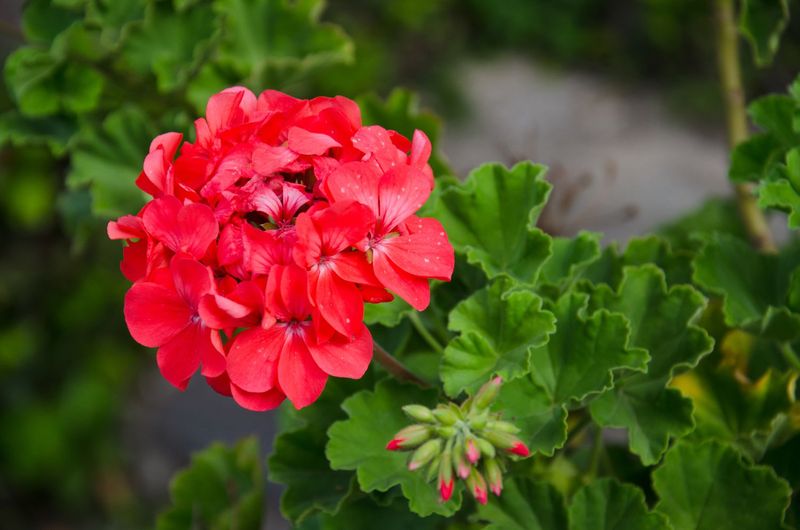
Building a practical routine around deadheading is genuinely worthwhile. Check the plant regularly, remove each complete spent flower stalk as clusters begin to fade, clear away yellowing or diseased leaves, and adjust water, light, and feeding to match current conditions rather than a fixed schedule.
That sequence covers the most controllable factors in keeping a common bedding geranium productive.
Still, deadheading cannot override a heat pause, a root problem, a disease outbreak, or drought damage. UF/IFAS Gardening Solutions notes that geraniums perform best during cooler weather, and UF/IFAS extension guidance on Pelargonium confirms that Florida gardeners in central and southern parts of the state often treat common geraniums as cooler-season plants, planting them from roughly October through March and expecting them to decline in summer.
Recognizing that pattern as normal rather than a failure changes how you care for the plant and when you replace it.
Not all geraniums behave alike, either. Martha Washington or regal geraniums are less heat-tolerant than common zonal and ivy types, and a failure to bloom through summer is often simply their nature rather than a sign of poor care, as University of Georgia Extension acknowledges.
Deadheading is the right starting habit, but when it does not restore flowers, the next step is diagnosis, not more pinching.