
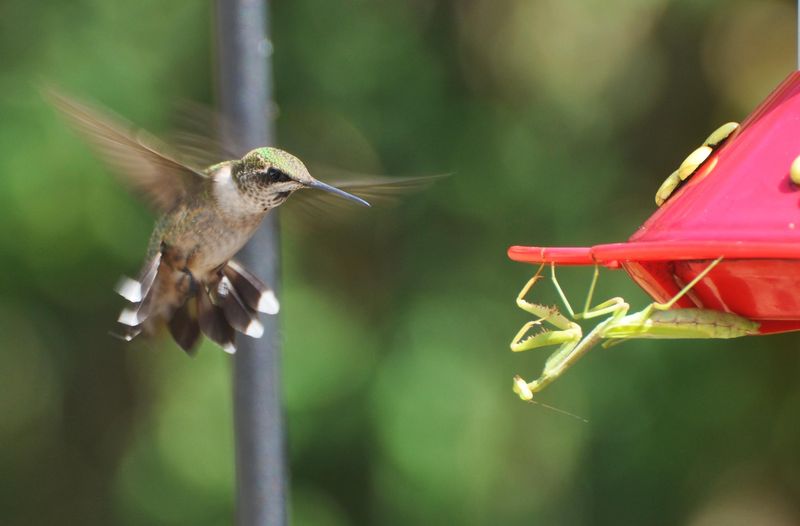
Those tiny hummingbirds zipping around your feeder look quick enough to dodge almost anything, but plenty of backyard predators have figured out how to catch them anyway. From your Southern porch to a shady Texas or Florida garden, danger can lurk in places you would never expect.
Knowing who to watch for is the first step to keeping your smallest visitors safe. Here is a rundown of the sneakiest threats and simple ways to protect your feeders.
1. Domestic Cats
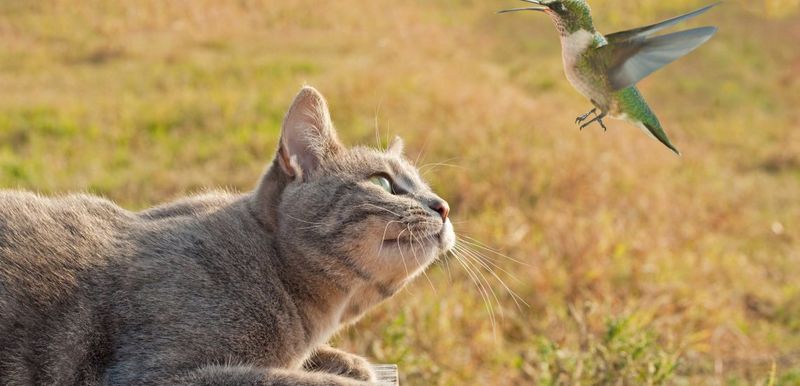
Nothing ruins a peaceful morning faster than spotting a neighbor’s cat crouched under your feeder like a furry little assassin. Cats top this list because they are the single biggest killer of small birds in North America, taking hundreds of millions each year.
Hummingbirds often hover low or perch to rest, which puts them right in pounce range. A cat hidden in shrubs or tall grass can strike before the bird ever sees it coming.
To reduce the risk, mount feeders at least five feet off the ground and keep them several feet away from fences, low branches, or dense cover where a cat could hide and wait. Trimming back bushes near feeding spots removes those ambush points.
If you own the cat, a breakaway collar with a bell may help warn birds, though it is not a guaranteed fix. Keeping cats indoors, especially during peak feeding hours at dawn and dusk, is the most reliable protection.
A little planning around placement can turn your yard from a hunting ground into a safe rest stop for your hummingbirds.
2. Praying Mantises
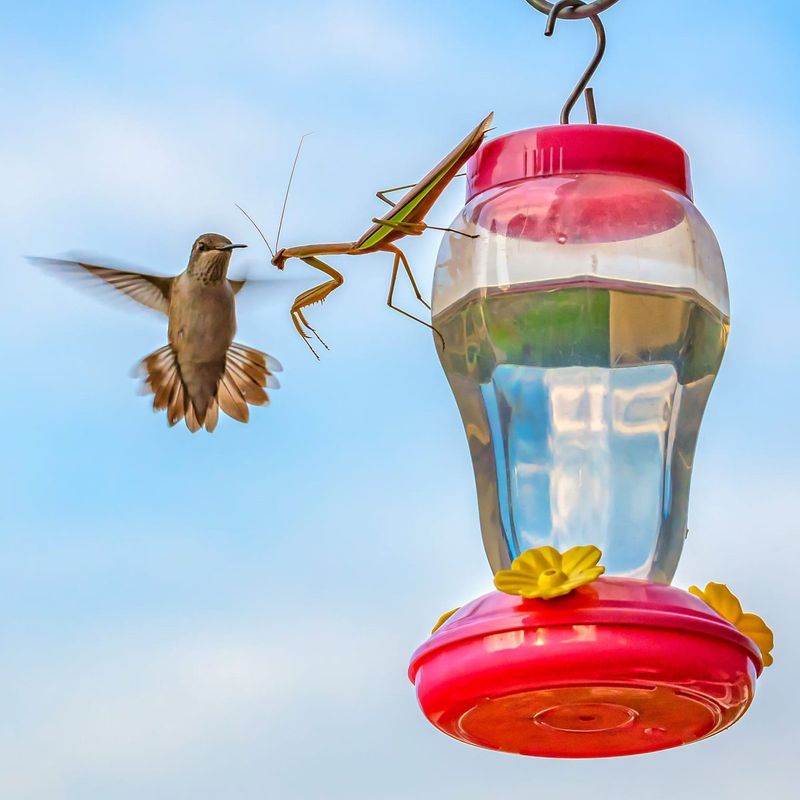
It sounds like something out of a nightmare, but a praying mantis really can ambush and kill a hummingbird. These patient hunters sit perfectly still on or near feeders, blending into the color of the plastic flowers until a bird comes close.
Large species, including the non-native Chinese mantis common in Southern gardens, are strong enough to grab a hovering hummingbird and hold on. Once caught, the tiny bird rarely escapes.
The good news is that stopping mantis attacks is easy and requires no chemicals. Simply check your feeder each morning and gently relocate any mantis you find to a plant far from the feeding area.
You can also skip planting big flowering shrubs directly against the feeder pole, since those spots give mantises a launch pad. Choosing feeders in colors mantises struggle to match can make them easier to spot too.
Mantises are helpful in the garden overall, chewing through aphids and other pests, so there is no need to kill them. Moving them a few feet away keeps everyone in the yard doing their job.
3. Hawks and Falcons
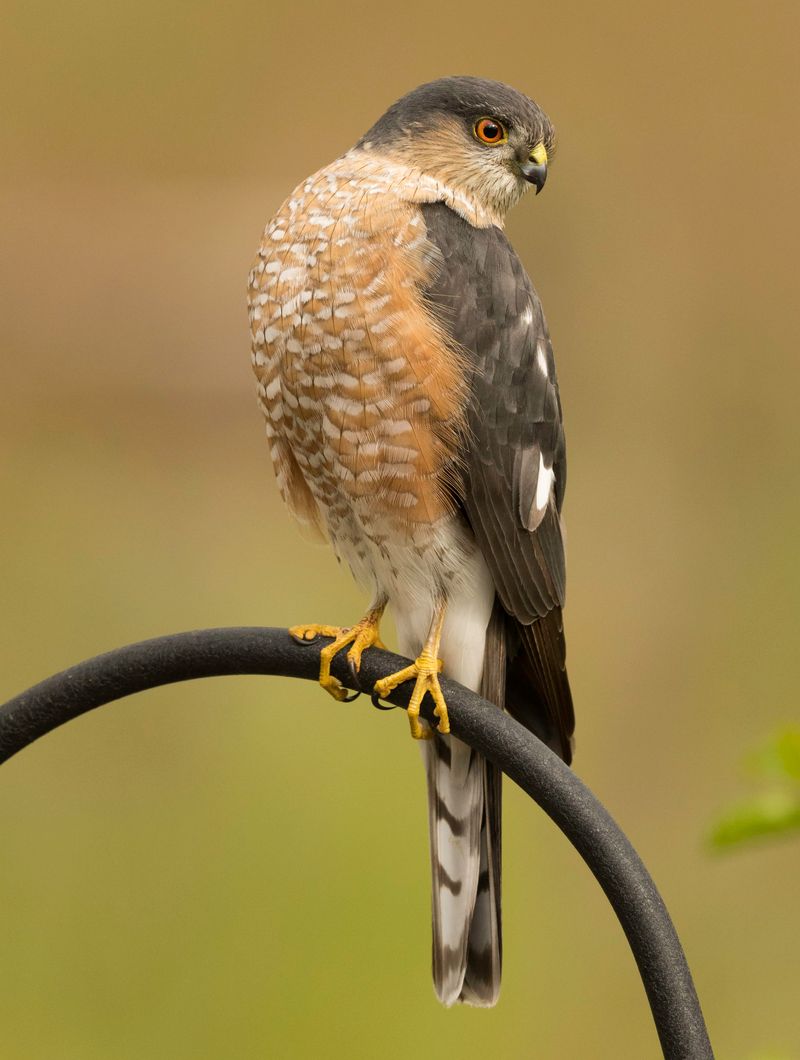
A blur of feathers and a puff of down is sometimes all you see when a hawk raids your feeder. Small, fast raptors like the sharp-shinned hawk and the merlin actually specialize in hunting other birds, and a busy hummingbird feeder is basically a buffet to them.
Unlike ground predators, these hunters strike from the air, so height and open placement will not protect your visitors. They learn the layout of a yard and return again and again once they find an easy meal.
You cannot legally harm hawks, and honestly you would not want to since they play an important role in the ecosystem. Instead, break up the pattern that draws them in.
Placing feeders near sheltering shrubs gives hummingbirds an escape route to dart into when a hawk appears. Adding a couple of feeders in different spots also spreads out the activity so no single station becomes a reliable hunting ground.
If a hawk keeps circling, taking your feeders down for a few days can encourage it to move along and hunt elsewhere.
4. Snakes
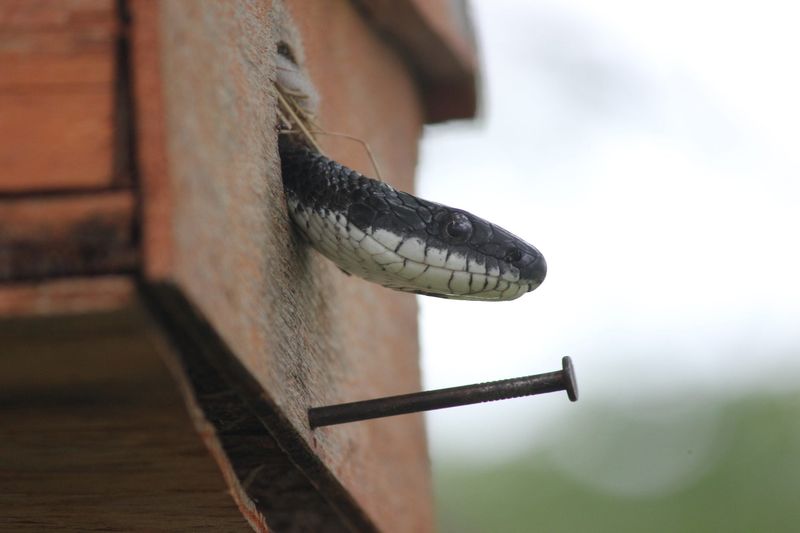
Climbing a smooth pole is no trouble for a hungry rat snake, and that is exactly how many Southern gardeners discover one draped around their feeder. In warm states like Florida and Texas, snakes stay active for much of the year and quickly learn where birds gather.
They usually target hummingbirds that perch to feed or rest, striking from a coiled position on the pole or a nearby branch. Nesting females and their eggs are also at risk when feeders sit close to shrubs.
A pole-mounted baffle, the same cone-shaped guard used against squirrels, can make climbing much harder for a snake. Keeping the feeder pole out in the open, away from fences and overhanging limbs, removes the bridges snakes use to reach it.
Regularly clearing leaf litter, wood piles, and tall grass near the feeding area gives snakes fewer places to hide and wait. Most snakes you find are harmless and helpful with rodents, so relocating rather than harming them is usually the smart call.
A few placement tweaks can keep these climbers from turning your feeder into a snack stop.
5. Larger Birds Like Jays and Grackles
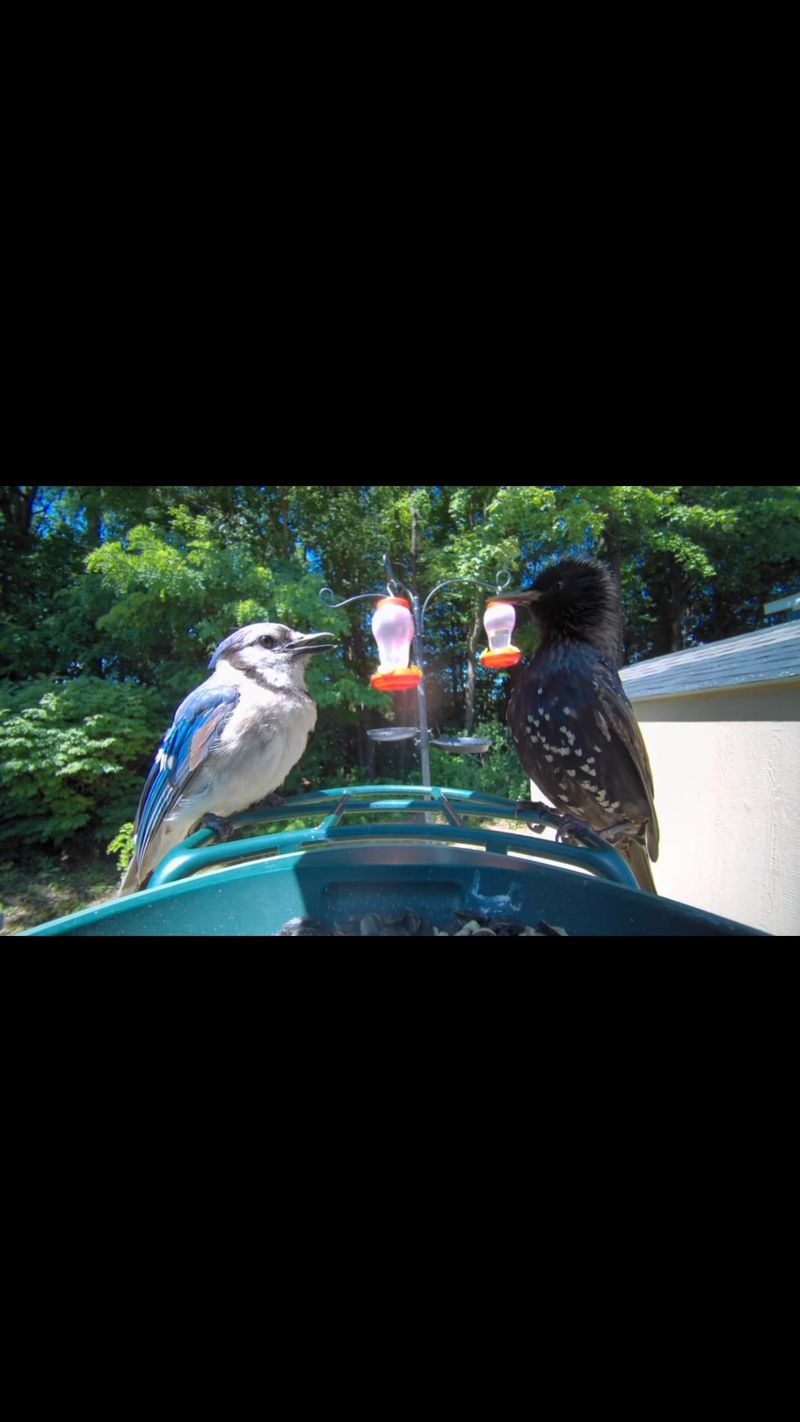
Bullies come in feathered forms too, and blue jays, grackles, and even orioles will happily crash a hummingbird party. While they do not always hunt the tiny birds outright, larger species harass them, hog the sugar water, and occasionally snatch a hummingbird or raid a nearby nest.
Grackles are especially pushy in Texas yards, arriving in noisy flocks that scare hummingbirds off entirely. The constant stress and competition can drive your smallest visitors away for good.
Choosing feeders designed only for hummingbirds helps a lot here. Models without perches force birds to hover, which bigger species cannot do comfortably, and small feeding ports keep larger beaks out.
Skipping any tray or platform attachment also removes the standing spot that jays and grackles love. Placing hummingbird feeders apart from your seed feeders reduces the crowd of big birds hanging around the area.
If aggressive birds still dominate, try tucking a feeder among flowering vines or hanging baskets where hummingbirds feel more sheltered.
Giving your tiny guests a spot that is awkward for larger birds keeps the peace and the sugar water flowing.
6. Bass and Frogs in Garden Ponds
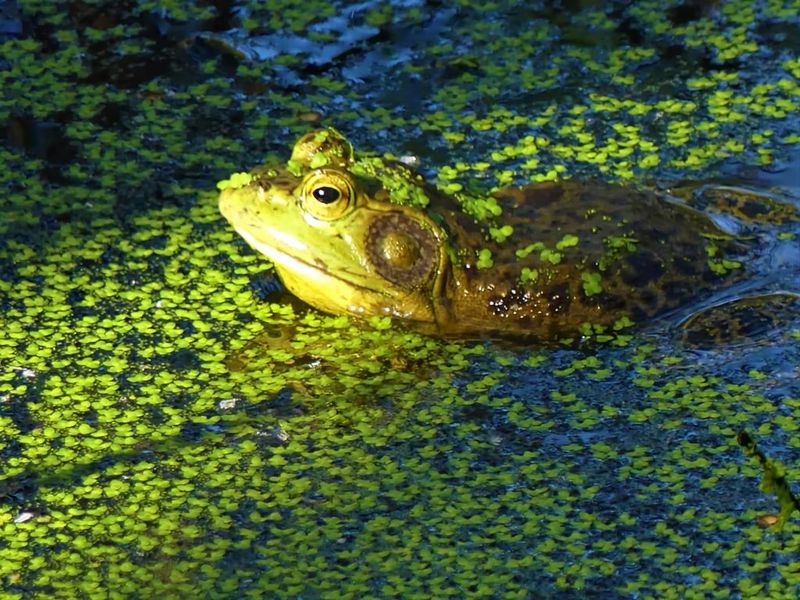
Here is a threat almost nobody expects: the water feature you added for beauty. Large frogs and even bass in backyard ponds have been documented grabbing hummingbirds that fly low to drink or bathe at the surface.
Hummingbirds love a quick dip and often skim across shallow water, which puts them within reach of a big bullfrog waiting at the edge. It happens fast and usually goes unnoticed until you spot the aftermath.
If you keep a pond near your feeders, adding a gentle mister or a shallow bubbling fountain gives hummingbirds a safer way to bathe. The moving water on a rock surface lets them drink without dropping down to a frog’s strike zone.
Keeping the pond edges trimmed and open also makes it harder for frogs to lurk right where birds land. Positioning your feeders and water sources a bit away from the deepest parts of the pond reduces the overlap.
A few smart touches let you enjoy both your pond and your hummingbirds without the two colliding in an unfortunate way.
7. Spiders and Their Webs
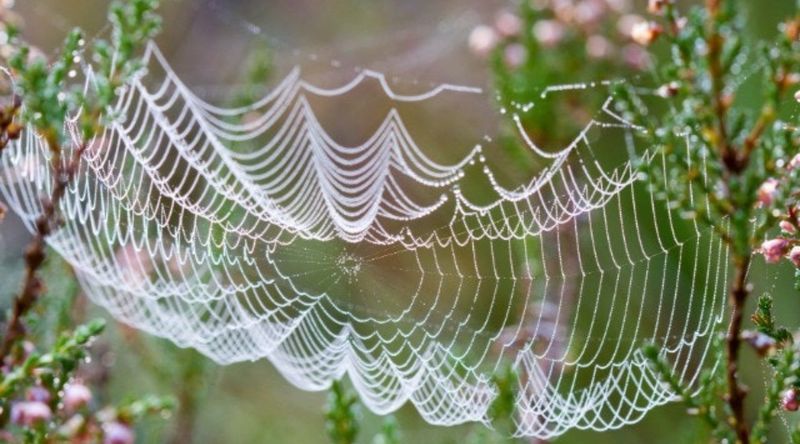
A spider web glistening in the morning sun looks harmless, but it can spell trouble for a hummingbird. Big orb-weavers common in Southern gardens build webs strong enough to tangle a small bird, and once caught, a hummingbird can become the spider’s meal or simply die trapped.
Hummingbirds actually collect spider silk to build their nests, so they naturally hang around webs, which raises the risk of an accidental snare. The tiniest hatchlings are especially vulnerable.
Walking your feeding area each morning and clearing away large webs near feeders and flowering plants makes a real difference. You are not wiping out every spider, just removing the ones strung directly in flight paths.
Pay close attention to webs built between shrubs, porch railings, and hanging baskets where hummingbirds zip through at high speed. A long-handled brush or broom makes quick work of the job.
Spiders still earn their keep by eating garden pests, so there is no reason to fear them overall. Keeping their webs out of your birds’ regular routes is a simple habit that protects your fastest little fliers.
8. Insects Like Bees, Wasps, and Ants
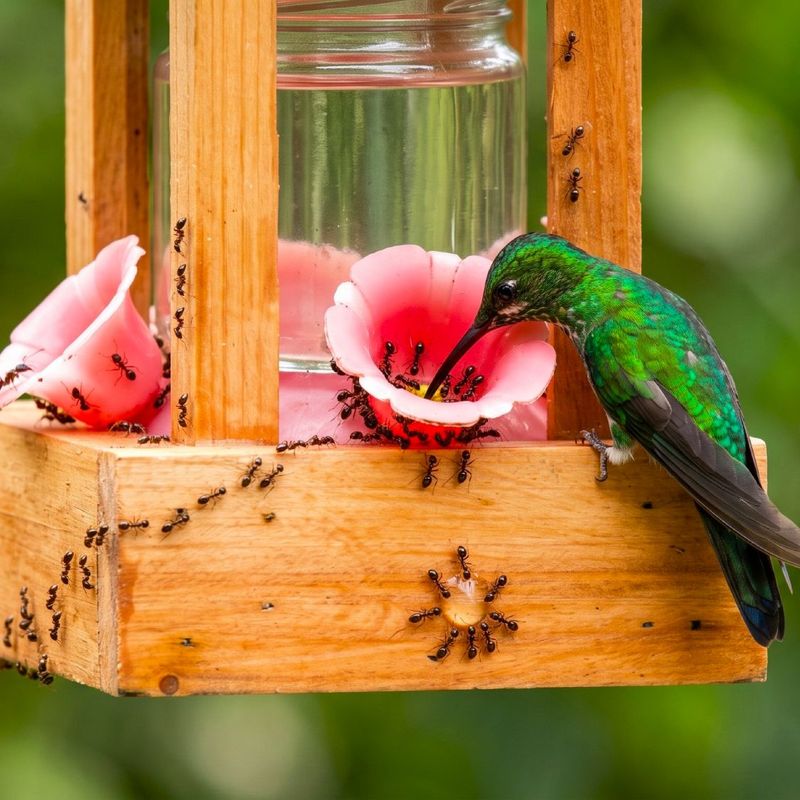
Not every threat wants to eat your hummingbirds, but swarms of insects can still push them away and even hurt them. Bees, wasps, and ants flock to sugar water, and in the Southern heat they can overrun a feeder within hours.
Aggressive wasps sometimes sting hummingbirds that try to feed, while a solid mass of ants can foul the nectar and block the ports entirely. A crowded, sticky feeder quickly becomes useless to the birds it was meant for.
Fighting back is refreshingly simple. An ant moat, which is a little water-filled cup that hangs above the feeder, stops crawling ants from ever reaching the nectar.
For flying insects, choose feeders with built-in bee guards and avoid yellow accents, since that color tends to attract wasps. Wiping up drips and keeping the outside of the feeder clean removes the sweet scent that draws the crowd.
Moving the feeder a few feet every so often can also throw insects off their trail. With these small fixes, your hummingbirds get their meal in peace instead of battling a buzzing swarm.