
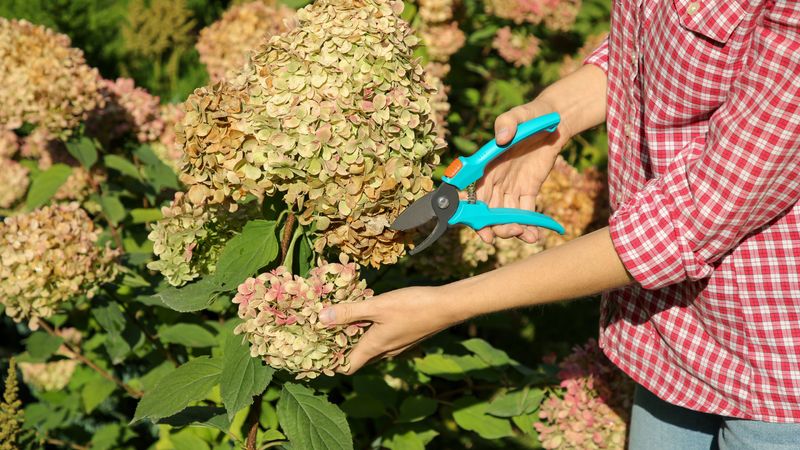
Staring at a hydrangea full of faded, papery flower heads in late summer is one of those garden moments that feels like a quiet failure. The good news is that for certain hydrangeas, one straightforward habit – careful deadheading – may encourage another round of blooms before the season ends.
Whether that works for your shrub depends almost entirely on what type of hydrangea you have. Getting that identification right is the first and most important step.
First confirm that your hydrangea can rebloom
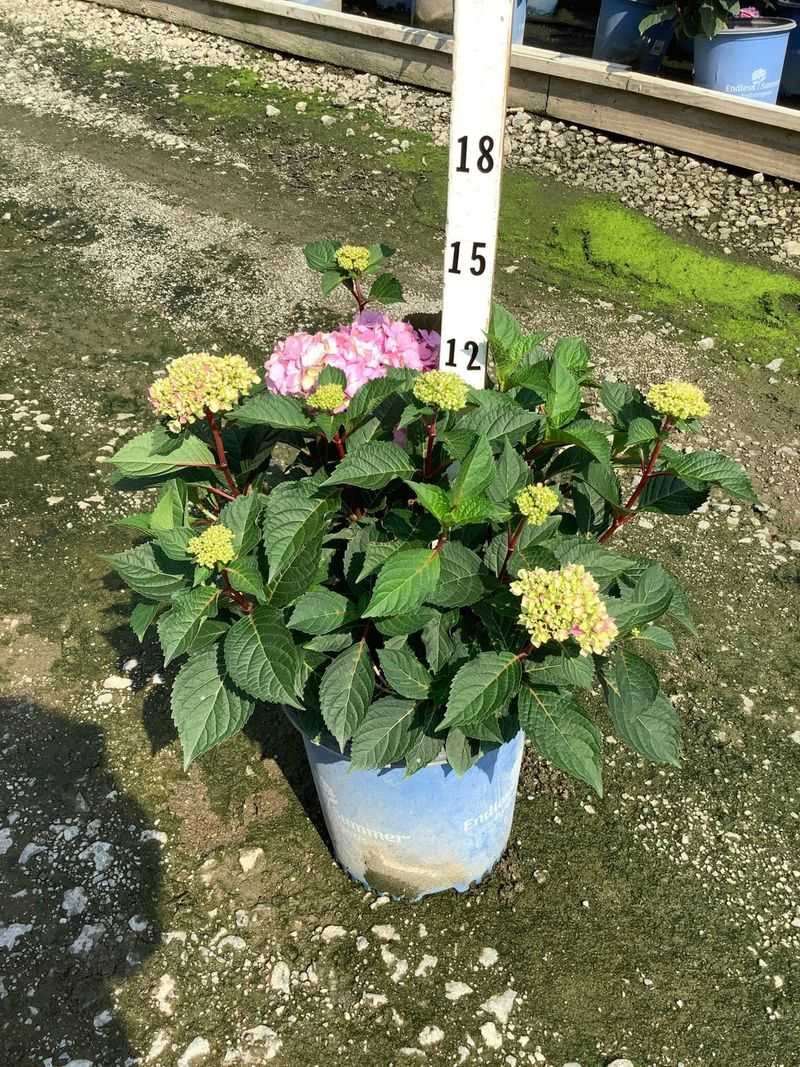
Before reaching for the pruners, spend a few minutes tracking down your hydrangea’s cultivar name. The plant tag, a photo from when you bought it, or the name written on a stake in the pot can tell you more than the flower color ever will.
Flower color alone is not a reliable way to identify whether a hydrangea can rebloom – soil pH shifts the color of many bigleaf and mountain types without changing their blooming behavior at all.
The hydrangeas most likely to produce a second flush are reblooming bigleaf cultivars, sometimes called remontant types, that can form flower buds on both old wood and current-season growth. Well-known examples include Endless Summer, BloomStruck, Summer Crush, Twist-n-Shout, and the Let’s Dance series.
University of Maryland Extension notes that these repeat-flowering varieties are the ones most likely to benefit from deadheading, while the practice offers little to no performance advantage on non-reblooming plants.
Traditional bigleaf and oakleaf hydrangeas generally flower once on old wood and then set next year’s buds on those same stems through late summer and fall. Cutting into that growth at the wrong time can cost you next season’s flowers.
Penn State Extension and University of Illinois Extension both emphasize that timing and cultivar knowledge go hand in hand – confirm what you have before making any cuts.
Late-summer fading can be completely normal
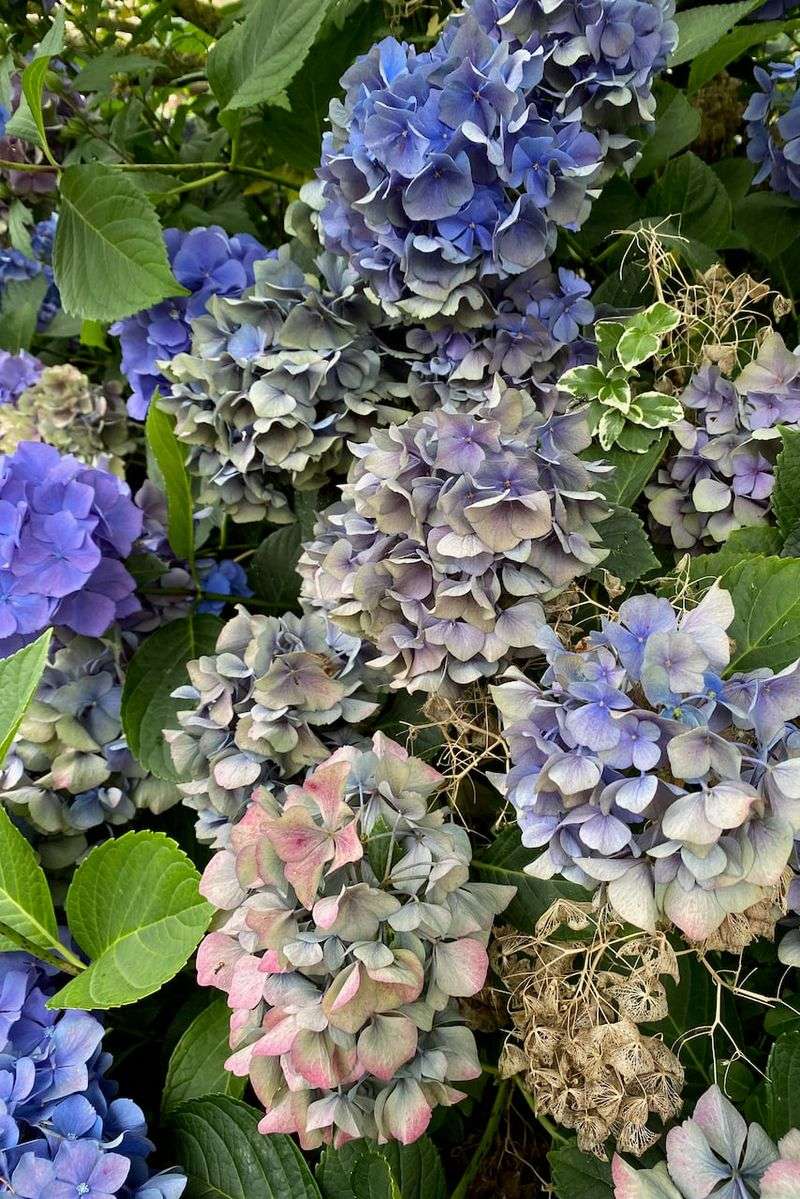
A hydrangea covered in papery, faded clusters by August is not necessarily a plant in trouble. Many cultivars complete their first – and only – flowering cycle by midsummer, and those spent heads are simply the natural end of that period.
University of Maryland Extension specifically notes that deadheading is not required for plant health and may offer no performance benefit on varieties that do not naturally rebloom.
For a genuine reblooming cultivar, though, removing a clearly spent first flush may help the plant produce another round of flowers later in the season. University of Georgia Extension’s guide to growing bigleaf hydrangeas notes that removing spent blooms may result in additional flowers on suitable types.
The key word is “may” – the outcome is possible, not guaranteed, and it depends on cultivar, plant maturity, remaining warm weather, and growing conditions.
Deadheading also cannot undo damage that already happened earlier in the season. Buds lost to a late spring freeze, winter dieback, drought, deer browsing, excessive shade, or a poorly timed pruning cut earlier in the year are gone.
University of Maryland’s problem management resource lists several of these factors as common reasons hydrangeas fail to bloom, and no amount of deadheading reverses any of them.
Remove the spent cluster, not the whole stem
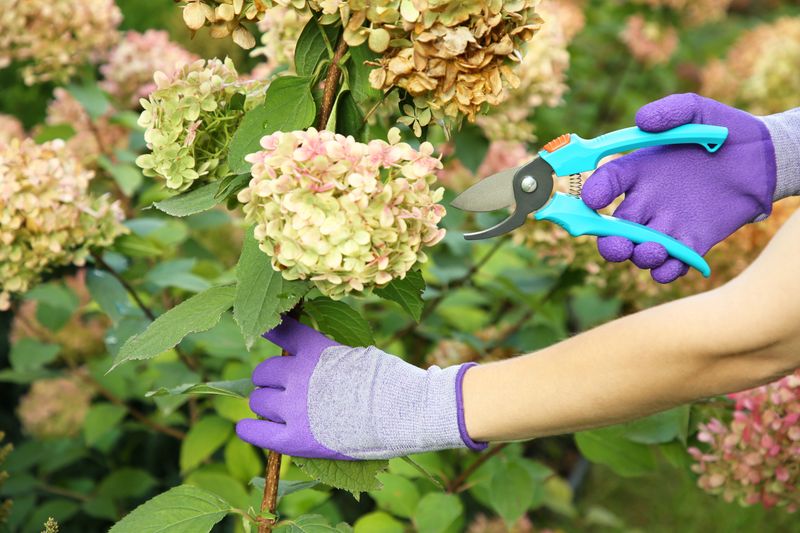
The actual cut is simpler than most gardeners expect, but precision matters here. Wait until the flower cluster has clearly faded – petals papery, color gone, no new bud activity visible on that stem – then remove just the flower head along with a short section of stem directly below it.
University of Maryland Extension and UC Agriculture and Natural Resources pruning guidance both describe this as a light, targeted removal rather than a structural cut.
Place the cut just above a healthy pair of leaves or a visible set of buds. That node is where new growth is most likely to emerge.
Avoid cutting far down the stem, especially as late summer advances, because old-wood hydrangeas may already be quietly forming next year’s flower buds on those lower portions of the cane. Cutting below that point on the wrong type of plant can eliminate blooms you would have seen the following spring.
Think of this step as cosmetic with a possible bonus, not as a hard pruning session. UGA Extension’s bigleaf hydrangea guide draws a clear line between removing a spent head and reshaping or cutting back the shrub.
One is a targeted snip above a healthy node; the other is a structural change that carries real risk when done at the wrong time of year. Keep the cut short, keep it above healthy growth, and leave the rest of the plant alone.
Make the cut while a rebloom still has time to develop
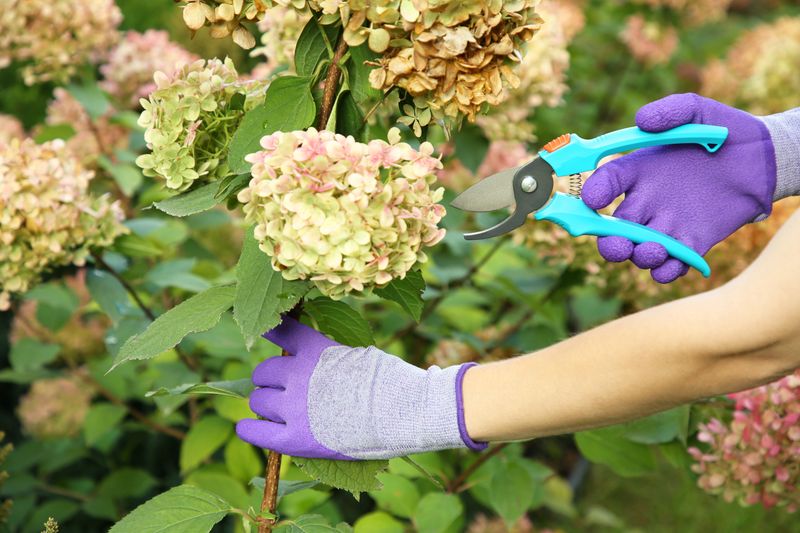
Timing a deadheading cut is less about hitting a specific date on the calendar and more about reading the plant and the season together. The goal is to remove the first clearly faded flush while enough warm weather remains for the shrub to push new growth and possibly set another round of flower buds.
Cut too late, and the window for a second flush may already be closed even before the pruners come out.
University of Maryland Extension and the UGA Fulton County comprehensive pruning guide both treat mid-season deadheading as a light intervention that works best when done promptly after the first flush fades. Waiting until the shrub looks completely exhausted, or delaying into the later weeks of summer, can mean the plant simply does not have enough time or energy reserves to follow through with new flowers.
Removing too much stem in a single cut can also shorten the reblooming window by forcing the plant to spend time regrowing structure rather than forming buds. University of Illinois Extension reinforces that pruning timing directly affects whether a hydrangea will flower at all.
A light, well-timed snip above a healthy node gives a reblooming cultivar the best reasonable chance – a heavy late-season cut mostly just sets the plant back.
Support the plant with steady moisture and suitable light
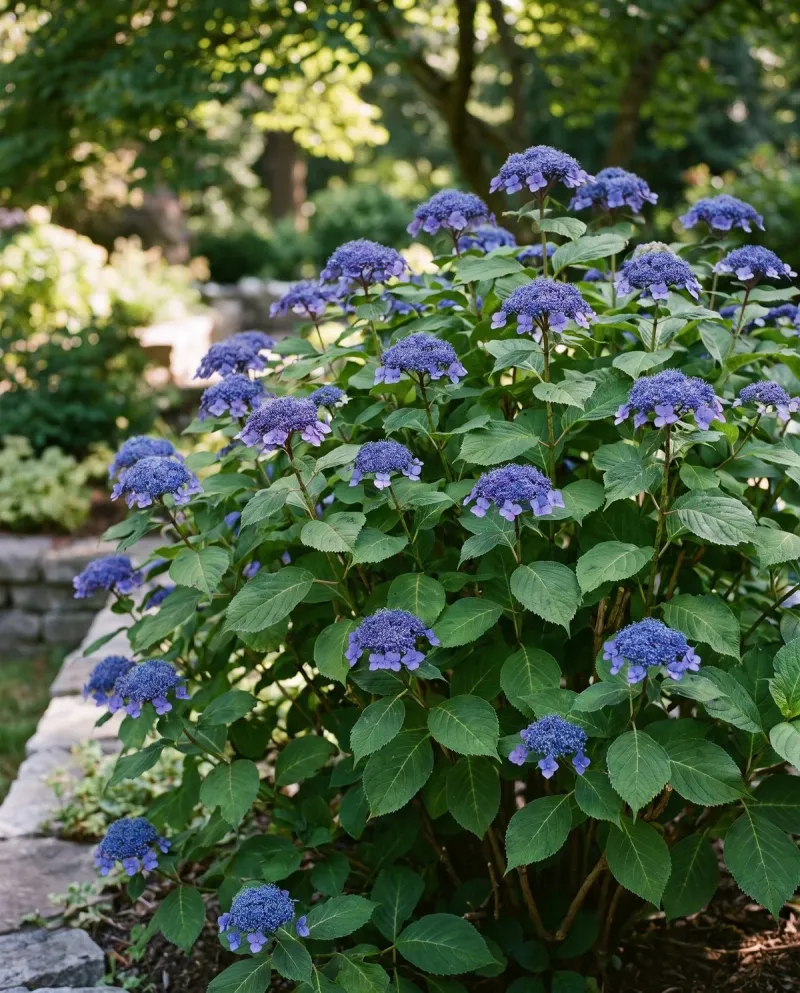
A reblooming hydrangea asked to push a second flush in late summer is working harder than usual, and the surrounding conditions either help or hinder that effort. UGA Extension’s bigleaf hydrangea guide recommends consistently moist but well-drained soil, a layer of mulch to moderate soil temperature and retain moisture, and a site that offers morning sun with protection from intense afternoon heat.
These are general principles for hot-climate growing rather than a prescription that fits every Southern garden equally – microclimate, soil type, and cultivar all shift what actually works at a given site.
One common mistake is watering automatically whenever the leaves droop in the afternoon. Bigleaf hydrangeas can wilt in high heat even when the soil still holds adequate moisture, so University of Maryland Extension advises checking soil moisture first before adding more water.
Overwatering a plant that is just heat-stressed can cause more harm than the temporary wilt itself.
Mississippi State University Extension and their current publication on hydrangeas for Mississippi gardens favor soaker hoses or drip irrigation over overhead watering, because wet foliage in hot, humid conditions invites leaf-spot disease. Keep water at the root zone, not on the leaves.
On fertilizer, resist the urge to add a heavy nitrogen dose as an emergency bloom treatment – excess nitrogen tends to push leafy growth at the expense of flowers, and late-season fertilization can do more harm than good. UF/IFAS landscape guidance also notes that shade-appropriate siting matters considerably in Florida conditions, though performance varies by cultivar and specific location.
Match pruning to the hydrangea type
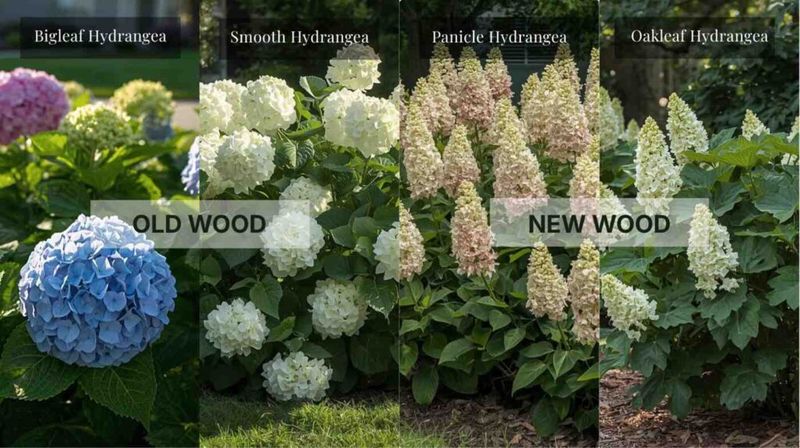
Applying reblooming-bigleaf deadheading advice to every hydrangea in the yard is one of the most common ways gardeners accidentally reduce next year’s flowers. Each major type follows its own flowering and pruning rhythm, and those rhythms are not interchangeable.
University of Maryland Extension and UGA Extension’s cultivar identification guide both make the point that getting the type right is the foundation of any pruning decision.
Traditional bigleaf hydrangeas – the non-reblooming kind – and oakleaf hydrangeas generally bloom on old wood. They set next year’s flower buds on existing stems, often starting in late summer.
Hard pruning or even aggressive deadheading on these types after midsummer can remove those developing buds and leave you with a green but flowerless shrub the following spring. Mississippi State University Extension is direct about this risk, recommending that old-wood types be pruned only right after flowering ends, not later in the season.
Smooth hydrangeas such as Annabelle and panicle hydrangeas such as Limelight bloom on new wood produced in the current season. These types generally receive their structural pruning in late winter or early spring.
Late-summer deadheading on a panicle or smooth hydrangea is mostly cosmetic – it tidies the plant without meaningfully affecting the following year’s bloom. Mississippi State’s current hydrangea publication does note that some Southern guidance suggests post-flowering pruning can occasionally stimulate additional flowers on new-wood types, but that outcome is not consistent enough to count on as a strategy.
Expect a possible second flush, not nonstop flowers
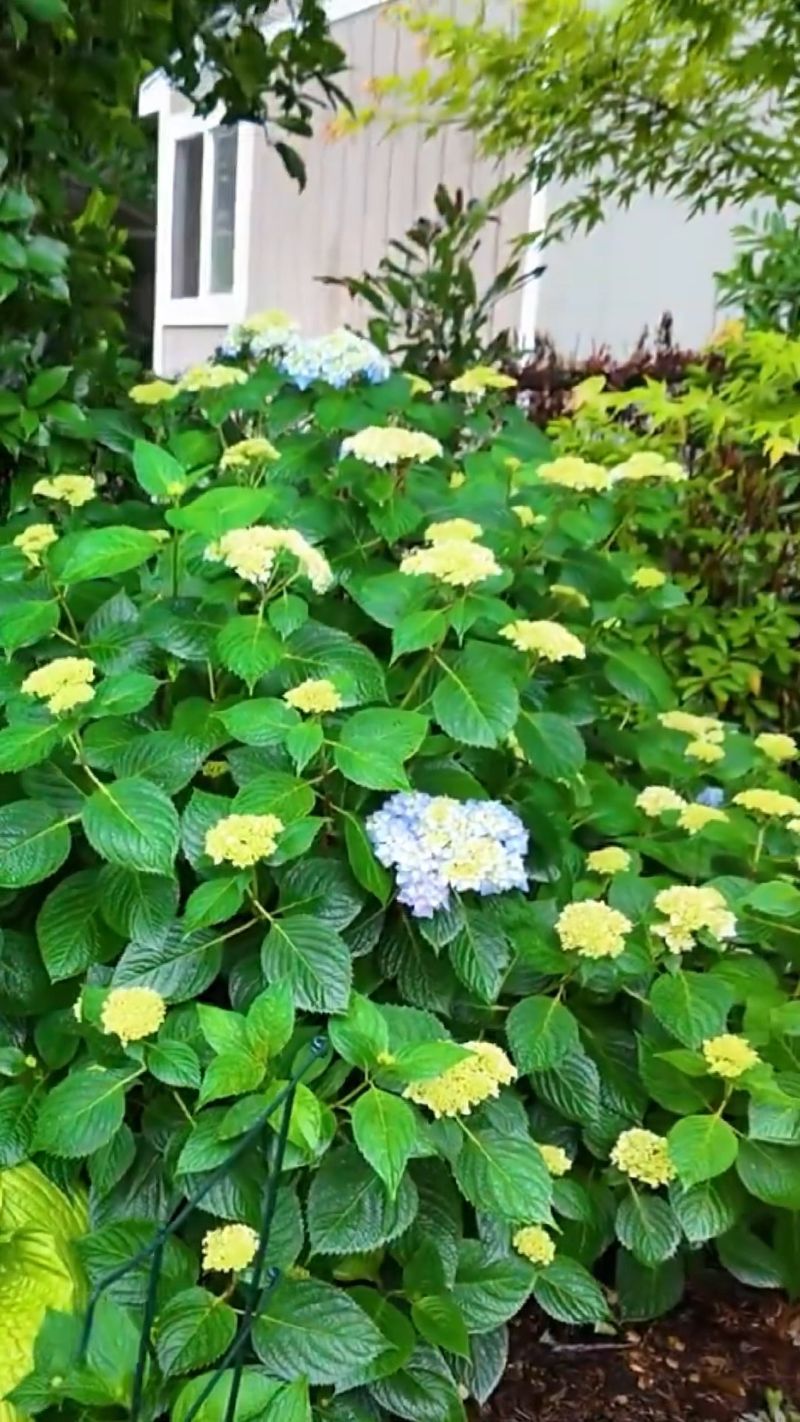
Pulling all of this together into a clear decision comes down to three questions: Is the plant a confirmed reblooming cultivar? Are the spent clusters clearly faded with healthy leaves or buds below them?
And does the site provide the moisture and light the plant needs to follow through? If all three answers are yes, a careful deadhead above a healthy node is a reasonable, extension-supported step that may encourage another round of flowers.
Careful deadheading cannot replace buds that were already lost to freezes, drought, or earlier pruning mistakes, and it cannot fix a site that is too hot, too dry, or too shaded for the plant to perform well. University of Maryland Extension is clear that the practice offers no performance benefit on non-reblooming types, and additional UMD guidance on hydrangea performance reinforces that cultivar selection, plant maturity, and site conditions all shape what a shrub can realistically do.
Names like Endless Summer describe a marketed reblooming trait, not a promise of flowers from June through frost. A shrub that blooms twice in a good season is doing exactly what it was bred to do.
One that never gets a second flush may simply need a better site, a more patient timeline as it matures, or a different long-term pruning strategy – not just a snip and a wish.