
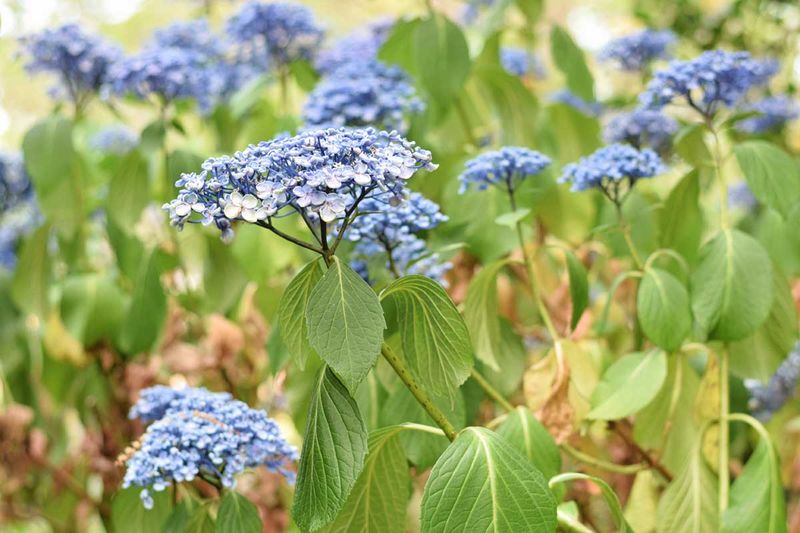
Hydrangeas are one of the most rewarding shrubs you can grow in a Southern yard, but when they stop producing flowers, it can feel like a mystery with no obvious answer. The frustrating truth is that poor blooming rarely has one single cause, and the fix depends heavily on which type of hydrangea you have and what your specific site conditions look like.
A few common care habits, such as pruning at the wrong time or planting in the wrong spot, can quietly cost you a whole season of flowers. Understanding what your plant actually needs is the fastest way to turn things around.
Identify the hydrangea before changing its care
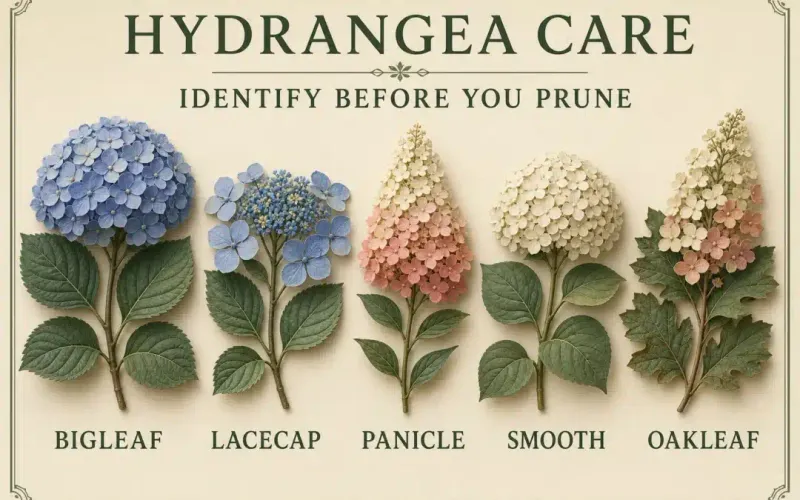
Before adjusting anything about how you water, prune, or feed your hydrangea, the most useful first step is knowing exactly what type you have. Hydrangeas are not one plant with one set of rules.
University of Georgia Extension guidance on identifying hydrangeas makes clear that species and cultivar determine when and how to prune, and getting that wrong is one of the most common reasons a healthy-looking shrub produces few or no flowers.
Bigleaf or French hydrangeas (Hydrangea macrophylla) are the classic mophead and lacecap types with large, rounded flower clusters and glossy leaves. Oakleaf hydrangeas (H. quercifolia) have distinctive lobed leaves that resemble oak foliage and cone-shaped flower clusters.
Both of these typically bloom on old wood, meaning the buds for next year’s flowers form on this year’s stems before the plant goes dormant.
Panicle hydrangeas (H. paniculata), including popular cultivars like Limelight, produce elongated flower clusters and bloom on new wood grown in the current season. Smooth hydrangeas (H. arborescens), which include many Annabelle-type plants, also bloom on new wood.
Reblooming or remontant bigleaf cultivars can flower on both old and new wood, but Penn State Extension’s species-by-species pruning guide notes that even those plants can lose their first flush to winter damage or mistimed pruning.
A plant with no flowers at all and one with noticeably fewer flowers than last year may have completely different problems. Identification, recent weather, site history, and care habits together should guide your diagnosis, not a single calendar date or a one-size rule.
Prune according to the plant’s flowering wood
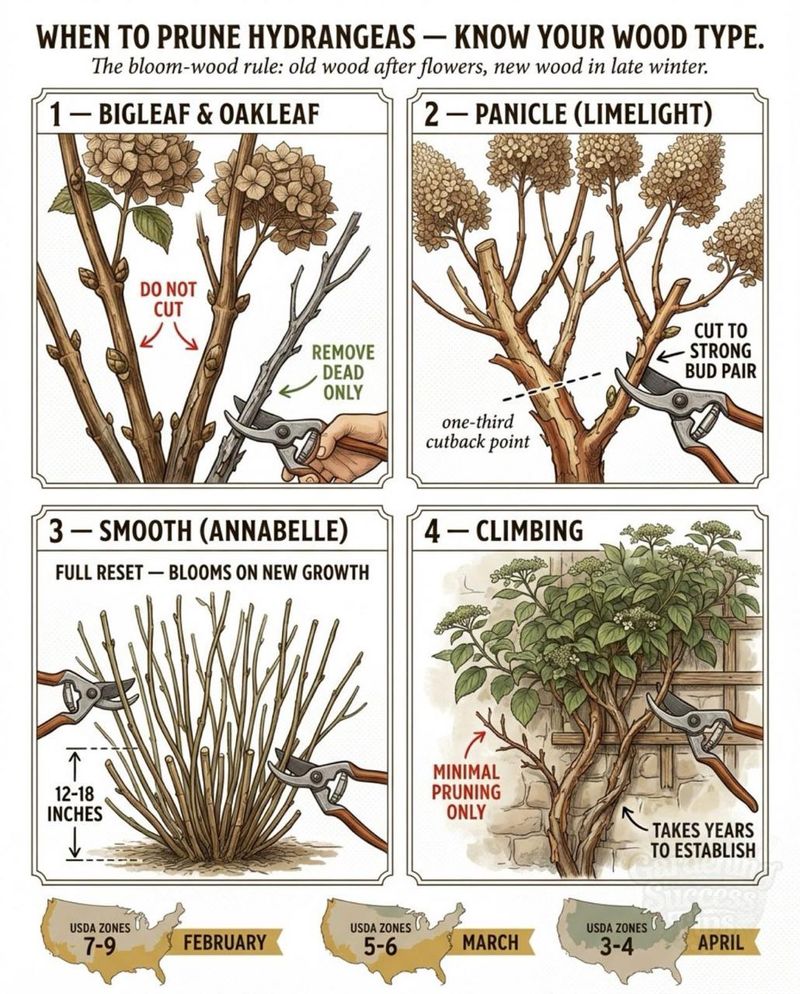
Pruning at the wrong time of year is one of the most reliable ways to lose a full season of hydrangea blooms, and it happens more often than most gardeners realize. The timing that works for one type can completely eliminate the buds on another.
For bigleaf and oakleaf hydrangeas, which bloom on old wood, the window for pruning is narrow. Clemson Extension’s pruning guide recommends pruning these types soon after flowering, generally finishing by late summer, so the plant has enough time to develop buds for the following year.
Cutting healthy bare-looking stems in fall, winter, or early spring removes those buds before they ever open. The stems may look dead or messy during dormancy, but that does not mean they should come off.
If you have a dormant old-wood plant and feel the urge to tidy it up, limit yourself to removing stems that are clearly dead, broken, or diseased. University of Illinois Extension hydrangea care guidance specifically warns against routine winter cleanup that cuts into healthy wood on these types.
Panicle and smooth hydrangeas follow a different schedule. Because they bloom on new wood produced each spring, pruning in late winter or early spring before growth begins is generally safe for their flowers.
Illinois Extension’s timing-focused pruning release clarifies that new-wood types can tolerate this approach, but that does not mean cutting them to the ground every year is necessary or always beneficial. Repeated severe cutbacks can weaken the shrub over time.
Texas Master Gardeners also caution against January pruning of old-wood types, a reminder that regional timing matters as much as species identity.
Match light exposure to the species and climate
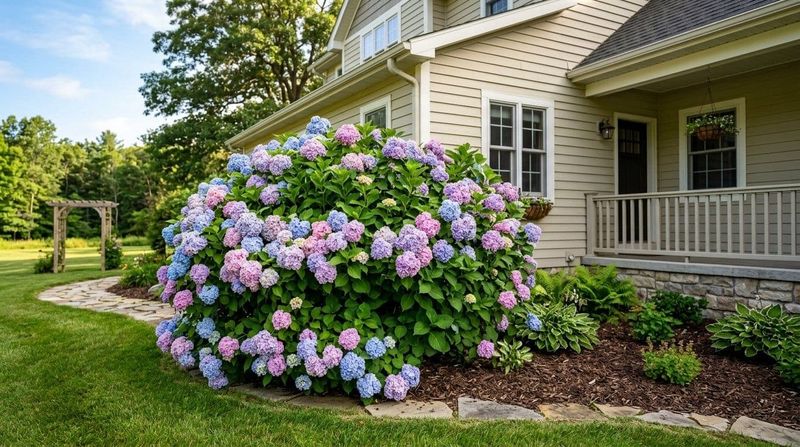
Planting location can quietly undercut a hydrangea’s ability to flower even when everything else looks right. The relationship between light and blooming varies by species and gets more complicated in Southern heat.
Bigleaf hydrangeas tend to perform best with morning sun and afternoon shade in hot Southern sites. Full afternoon sun in Florida or Texas can scorch leaves, stress the plant, and reduce flower production.
Clemson Extension’s hydrangea care factsheet supports morning sun with afternoon protection as a general guideline for bigleaf types in warm climates.
Dense shade, however, is not the solution. A hydrangea tucked under a heavy tree canopy or against a north-facing wall with very little light may produce lush foliage but very few flowers.
The plant needs adequate light for strong bud development, and deep shade can limit that just as effectively as too much direct sun.
Florida gardeners face an especially specific challenge. UF/IFAS guidance on hydrangeas indicates that French hydrangeas are best suited to North and Central Florida, where shade, moisture, and cooler winter conditions are more reliably available.
Oakleaf hydrangeas also benefit from some shade in Florida’s heat, as noted in UF/IFAS’s oakleaf hydrangea profile. Panicle hydrangeas are a different story.
They generally tolerate more sun than bigleaf or oakleaf types, making them a more flexible option for sunnier Southern sites. Matching the plant to the site, rather than assuming all hydrangeas want the same light, is the practical fix here.
Keep the soil moist without keeping it waterlogged
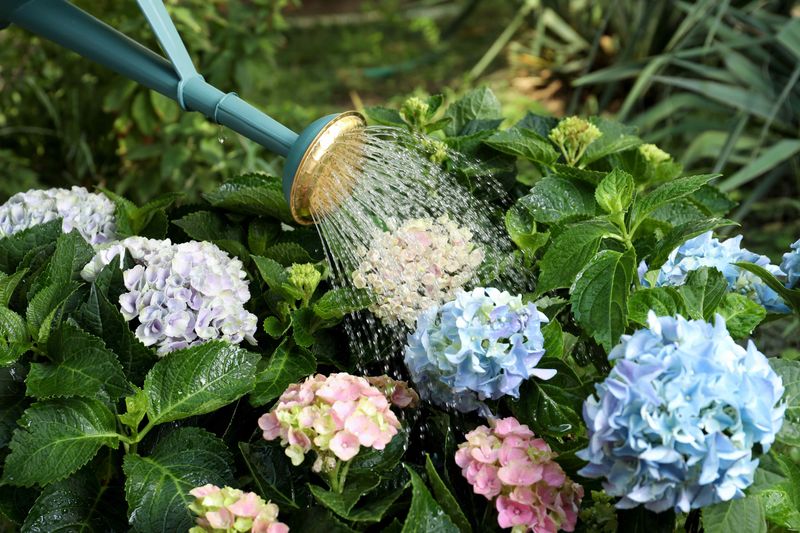
Water management sits at the center of hydrangea health, and getting it wrong in either direction can stress the plant enough to affect flowering. Bigleaf hydrangeas in particular are sensitive to soil moisture and show it quickly.
The goal is soil that stays consistently moist but drains well between waterings. Clemson Extension recommends this balance for hydrangeas in warm Southern climates, especially for new plantings that have not yet developed deep root systems.
During extended dry periods, supplemental watering can help reduce stress that might otherwise weaken bud development.
Wilting leaves do not automatically mean the plant is thirsty. Saturated soil can damage roots and produce wilting symptoms that look almost identical to drought stress.
UF/IFAS guidance on plants and drought notes that overwatering and poor drainage can be just as damaging as a dry spell. If the soil feels wet and the plant is still wilting, drainage may be the actual problem rather than too little water.
Mulch can be a practical tool for managing both moisture and soil temperature, particularly in hot Southern summers. A 2-3 inch layer helps slow evaporation and moderate root zone temperatures, but keeping mulch pulled back from the stems reduces the risk of rot and disease.
Texas Master Gardeners’ oakleaf hydrangea guidance and UF/IFAS’s oakleaf profile both mention mulching as a helpful moisture-retention practice in Southern gardens. Fixed watering schedules that ignore recent rainfall, soil type, plant age, and drainage conditions are worth reconsidering in favor of checking the soil directly before watering.
Avoid excess nitrogen and unnecessary feeding
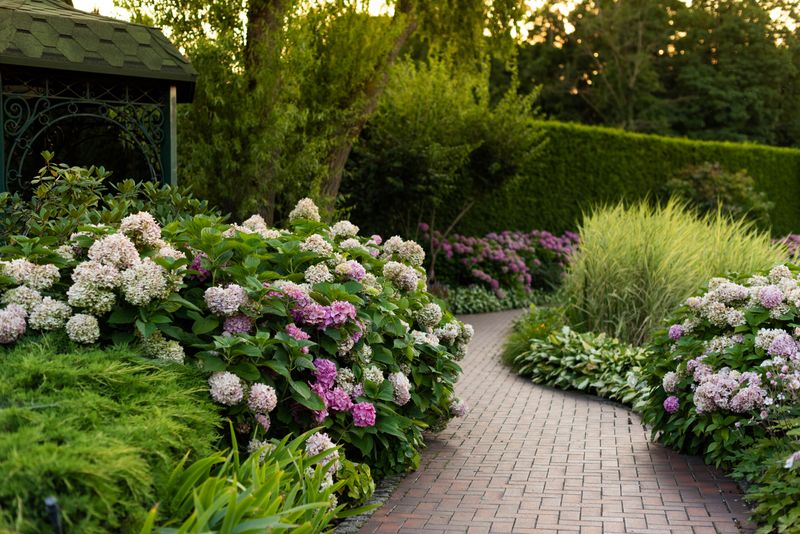
Fertilizer is not automatically the answer when a hydrangea is not blooming, and in some cases it can make the problem worse. The specific concern is excess nitrogen, which can push the plant toward producing more leaves and stems at the expense of flowers.
Repeated applications of high-nitrogen lawn fertilizer near hydrangeas, or aggressive feeding routines that go beyond what the plant actually needs, are the situations most likely to cause this imbalance. Clemson Extension lists excess nitrogen as a possible cause of poor flowering in bigleaf hydrangeas and recommends light, balanced applications when feeding is appropriate.
The key word is balanced: a fertilizer heavy in nitrogen relative to phosphorus and potassium is the type most likely to shift growth away from blooms.
A soil test is the most reliable way to know whether feeding is even necessary. Without one, the safest approach is to follow the product label and avoid applying more than directed.
UGA Extension’s comprehensive hydrangea guide also reinforces that feeding decisions should be based on what the plant and soil actually need, not a routine schedule.
One point worth understanding clearly: no fertilizer, including products marketed as bloom boosters, can restore buds that pruning already removed or that a freeze already killed. Feeding may support a healthier plant going forward, but it cannot reverse what happened earlier in the season.
Check for winter injury and late-freeze damage
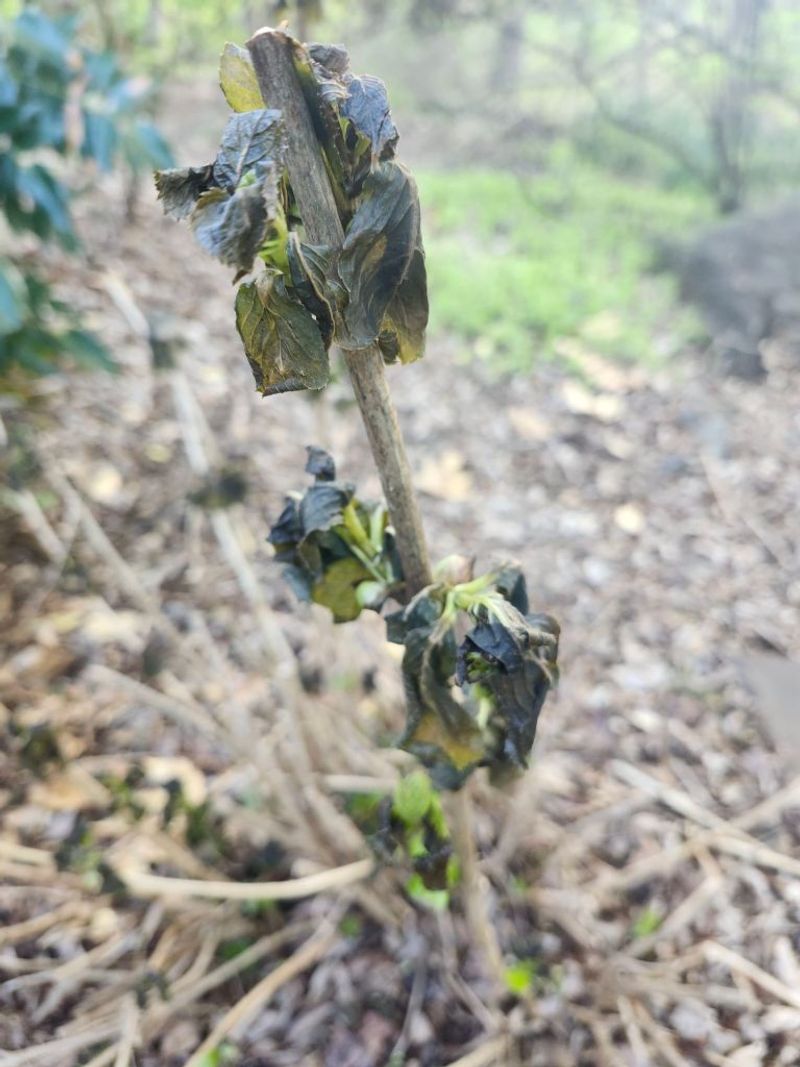
A hydrangea that leafs out normally in spring but produces almost no flowers can be a confusing sight, especially when the rest of the plant looks healthy. In many cases, the explanation is cold damage to the buds rather than a current-season care mistake.
Winter injury and late spring freezes can kill the flower buds on old-wood types, particularly bigleaf and oakleaf hydrangeas, while leaving the roots and much of the foliage alive and apparently unaffected. Penn State Extension identifies winter injury as a common cause of bloom failure in bigleaf hydrangeas, and Clemson Extension echoes this, noting that bud damage from cold is especially significant in exposed or low-lying sites.
The pattern of a shrub that pushes out leaves but shows few or no flower buds is a useful diagnostic clue, though not definitive proof of freeze damage on its own. Other explanations, including wrong-season pruning, can produce a similar result.
If you are confident the plant was not pruned at the wrong time, cold injury deserves serious consideration.
Fertilizer and pruning cannot restore buds that cold already destroyed. The practical response is to protect future bloom cycles.
Illinois Extension’s winter protection guidance for woody ornamentals suggests that burlap wraps, frost cloth, or sheltered planting sites can help protect vulnerable old-wood types in areas with unpredictable late freezes. The right approach depends on your specific climate, exposure, and the hydrangea type you are growing.
Treat color problems and bloom problems separately
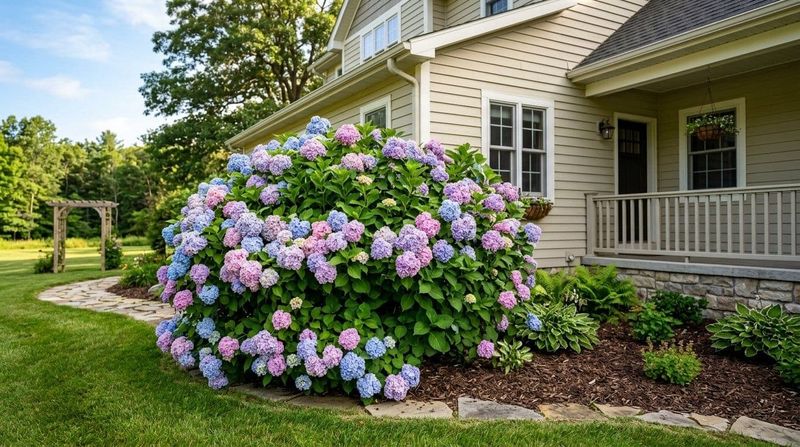
Soil pH comes up often in hydrangea conversations, but it is frequently misapplied as a solution to the wrong problem. Adjusting pH can change the color of susceptible bigleaf and mountain hydrangea flowers, but it does not cause a non-blooming plant to suddenly start producing flowers.
University of Tennessee Extension’s guide to bigleaf hydrangea flower color explains that flower color in pH-sensitive cultivars depends on aluminum availability in the soil, which is influenced by pH. Lower pH tends to produce blue flowers; higher pH tends toward pink.
But this color shift only applies to certain bigleaf and mountain hydrangea cultivars. White-flowered types and most panicle and smooth hydrangeas do not respond to pH in the same way.
Panicle hydrangeas also naturally change flower color as the blooms age, shifting from white or cream toward pink or tan late in the season. That color change is normal and should not be read as evidence of a pH problem.
University of Maryland Extension’s hydrangea problem guide cautions against casual amendments without a soil test. Aluminum sulfate applied without testing can alter soil chemistry in ways that damage roots, and it is irrelevant to most bloom failures caused by pruning, cold, light, or water.
Coffee grounds, eggshells, banana peels, and vinegar are sometimes recommended online as bloom fixes, but none of these has reliable support as a practical general solution. A soil test, matched to your specific plant type, is the more dependable starting point if pH genuinely seems to be an issue.
Build a realistic plan for the next bloom cycle
Working through a hydrangea bloom problem is most productive when you follow a logical sequence rather than making several changes at once. Start by identifying the plant species or cultivar, since that determines almost every other decision.
Once you know the type, check whether pruning happened at the wrong time of year for that plant’s flowering habit. Then assess the light: too much harsh afternoon sun or too much dense shade can both reduce flowers depending on the species.
Soil moisture and drainage come next, followed by a review of recent fertilizer use and whether excess nitrogen may have been a factor. Penn State Extension’s bloom troubleshooting guide walks through this kind of step-by-step diagnostic approach and is worth bookmarking for future reference.
Florida and Texas gardeners should factor in local heat, winter exposure, and cultivar adaptation before assuming a standard care fix will apply. UF/IFAS notes that French hydrangeas are best suited to North and Central Florida, and Texas Master Gardeners emphasize cultivar selection and site conditions as key variables for Texas growers.
A nursery plant in full bloom at purchase may be a cultivar that is not well adapted to your specific location.
If routine corrections do not explain the symptoms, plant age, transplant stress, disease, or genetics may be contributing factors worth considering. Gardeners can protect future buds and improve growing conditions, but the current season’s flowers cannot be recovered once buds have been removed or frozen.
That is not a failure; it is just how these plants work.