
Petunias are one of the most rewarding flowers you can grow on a Southern porch or border, but watching the blooms shrink and thin out while the plant looks perfectly healthy is genuinely puzzling. The instinct is to grab more fertilizer, yet that move can sometimes make the problem worse rather than better.
Before you reach for another product, the plant itself is already giving you clues worth reading.
A fading bloom does not prove a fertilizer mistake
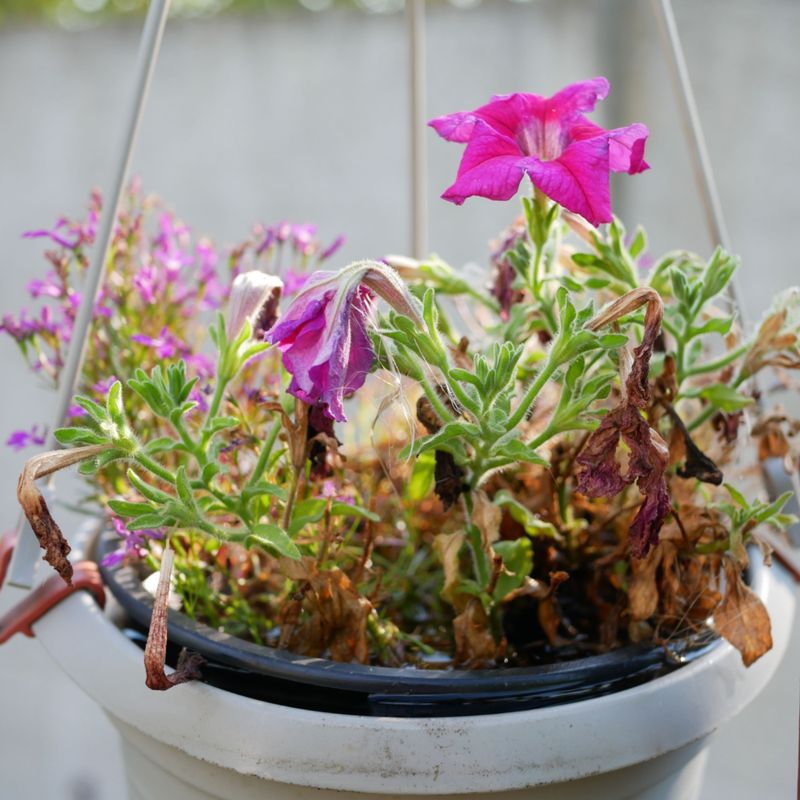
Petunia blooms thinning out while the rest of the plant looks full and green can send a gardener straight to the fertilizer shelf. That reaction is understandable, but the symptom alone does not tell you which direction the problem runs.
Controlled greenhouse research supports the idea that excess or nitrogen-heavy feeding can push petunias toward more leaf and stem growth at the expense of flowers. One NC State petunia growth study found that higher fertility increased vegetative growth while reducing flowering under experimental conditions, and a USDA summary on petunia growth partitioning found that excessive fertilizer combined with high moisture produced abundant foliage and poor flowering.
Those findings make excess or nitrogen-heavy feeding a plausible explanation when a plant is lush and leggy but producing fewer blooms.
What those studies do not establish is that overfertilization is the most common reason petunias fade in a home garden. A pale, weak, steadily declining plant tells a different story entirely.
That kind of decline can reflect low fertility, nutrients leaching out of a container with every watering, root stress, poor drainage, or another cultural problem altogether.
Recent petunia nitrogen research found that low-nitrogen plants showed noticeably poorer growth and, in one Wave cultivar, did not flower at all, while moderate-to-high fertility rates performed better. The symptom pattern is what guides your next step, not the assumption that more fertilizer or less fertilizer is automatically the answer.
Read the plant before you reach for fertilizer
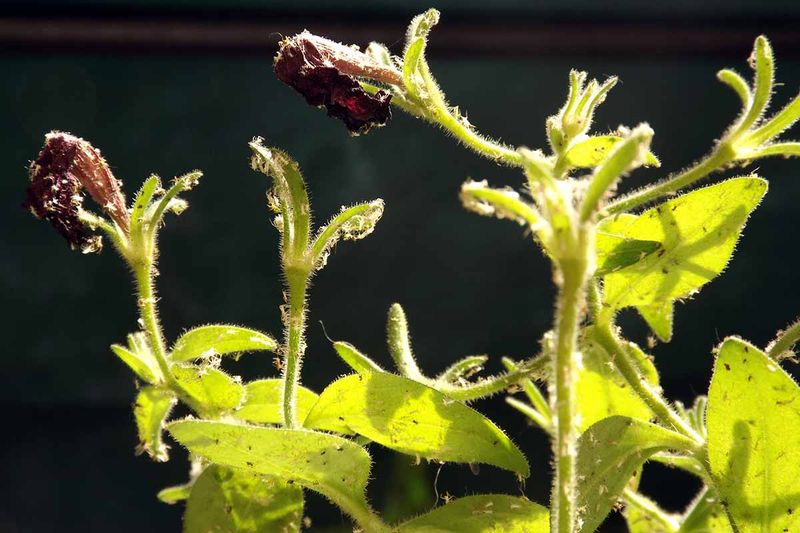
Lush, stretched stems and noticeably fewer or smaller flowers together form a pattern worth paying attention to. When the foliage is thick and green but the bloom count keeps dropping, excess fertility or a nitrogen-heavy product becomes a more plausible explanation than a nutrient shortage.
A pale, weak plant that is steadily losing color and vigor points somewhere else entirely. Low fertility, nutrient leaching from a container, root stress from overwatering or compaction, or another cultural problem can all produce that kind of slow decline.
Adding more fertilizer to a plant in that condition without knowing the cause is a guess, not a fix.
Flowers that are simply spent but surrounded by new buds forming at the stem tips are a different situation again. That is a normal replacement cycle, and UF/IFAS guidance on petunias notes that some types need deadheading to keep the cycle moving while others handle it on their own.
A healthy-looking plant that suddenly loses buds or open flowers with no other obvious explanation deserves a close look at those buds before anything else. UMass Extension identifies tobacco budworm as a common culprit that attacks buds and developing flowers while leaving foliage intact, making a fertilizer explanation easy to miss.
Flower size is also worth checking against the cultivar: grandiflora, multiflora, milliflora, and spreading types naturally produce blooms in very different size ranges, and Penn State Extension notes that cultivar characteristics shape what normal looks like for any given plant.
The fertilizer label gives you the first useful clue
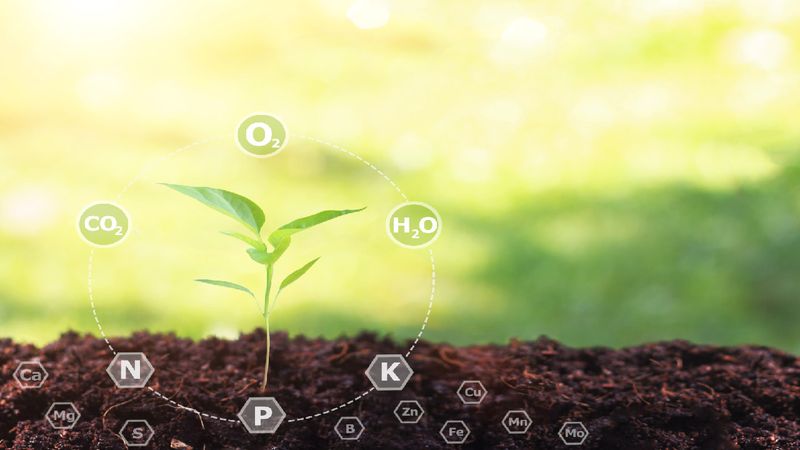
Before adding any product to a petunia that is not blooming well, pick up the fertilizer you have been using and look at the three numbers on the label. Those numbers are the N-P-K analysis, listed in order as nitrogen, phosphate, and potash.
The phosphate figure is conventionally expressed as P2O5 and the potash figure as K2O, so the numbers represent weight equivalents rather than the pure element itself.
A product labeled 20-10-10 supplies proportionally more nitrogen per unit of product than one labeled 10-10-10. Iowa State Extension explains that the first number always represents nitrogen, and that difference in the analysis matters when you are trying to figure out whether a plant has been getting more nitrogen than it needs.
What the concentration alone cannot tell you is how much of any nutrient actually reached the plant, because that depends on how much product you applied and what the label directions say about rate and frequency.
Reaching for a high-phosphorus bloom booster when flowers are declining seems logical, but NDSU Extension specifically addresses the myth of high-phosphorus fertilizers, pointing out that extra phosphorus does not necessarily increase flower production when phosphorus is already adequate in the soil or potting mix. Stacking a bloom booster on top of a product you are already using can create unintended nutrient and salt levels without solving the underlying problem.
Match the feeding plan to the growing site
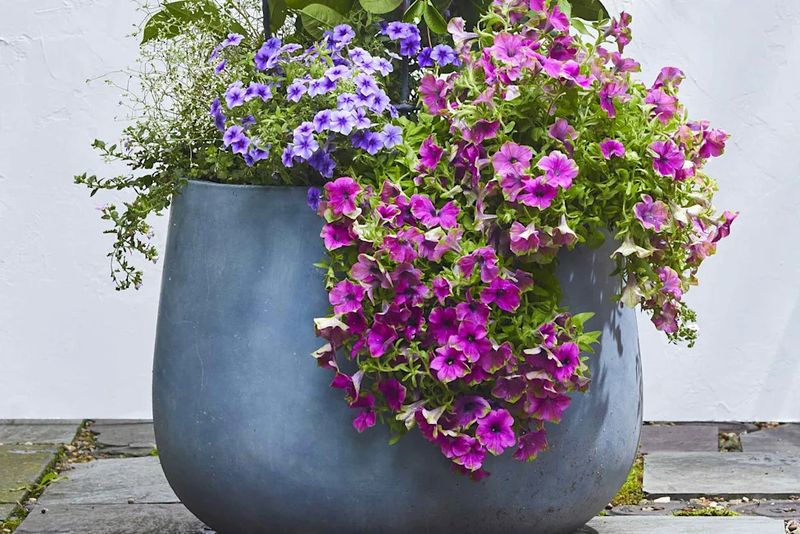
Container petunias and in-ground petunias live in very different nutrient environments, and treating them the same way can lead to either overfeeding one or underfeeding the other. Every time you water a container, some nutrients move through the potting mix and drain away.
That leaching means a container plant may genuinely need more frequent feeding than a plant growing in garden soil with organic matter and a stable nutrient reserve.
NC State Extension’s container gardening guidance offers half-strength liquid fertilizer applied weekly or full-strength applied every two weeks as a general starting point for container plants. That is useful context, not a universal prescription.
The right schedule still depends on which fertilizer you are using, its release type, the size of the container, how often you water, and how the plant is responding.
Garden-bed petunias benefit from a different first step. UGA Extension recommends a soil test before adding fertilizer to landscape beds, because the results tell you whether phosphorus or potassium is actually needed or already sufficient.
Guessing at the analysis and rate without that information can easily result in adding nutrients the soil does not need.
For Florida gardeners, UF/IFAS recommends monthly fertilization with a balanced fertilizer or a controlled-release product applied at planting as a starting point for in-ground and container petunias. That recommendation still needs to be adjusted for the specific product’s label directions, the release duration of any controlled-release formulation, local rainfall, irrigation frequency, and how the individual plant responds over time.
Pause feeding when the plant shows salt stress
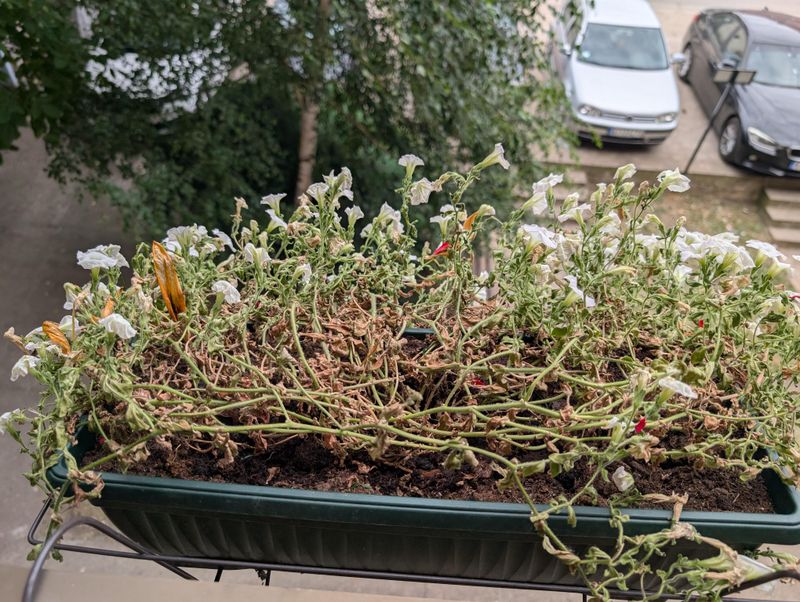
White crust forming on the rim or surface of a container, browning at the leaf margins, yellowing foliage, wilting that does not improve after watering, or roots that look damaged and discolored are all warning signs worth taking seriously before adding more fertilizer. These symptoms can point to soluble-salt buildup, which often develops when fertilizer accumulates faster than it leaches out or when a controlled-release product is combined with frequent liquid feeding.
WSU Extension’s fertilizer burn guidance warns against fertilizing plants that are already stressed by heat or drought, because fertilizer salts can intensify root injury rather than help recovery. Stop adding fertilizer first.
Then correct any heat or drought stress by moving the container to a shaded spot temporarily and watering carefully before attempting any further treatment.
When salt buildup is suspected, the container needs unrestricted drainage and a thorough leaching procedure. Texas A&M AgriLife’s guidance on managing soluble salts describes flushing the growing medium slowly with clear water and allowing it to drain freely, repeating the process to move accumulated salts out of the root zone.
Free drainage alone is not proof that salts have been removed. Iowa State Extension also identifies salt buildup as a common container problem that requires genuine leaching, not just a single pass with the hose.
If root damage is severe, repotting into fresh potting mix may be necessary before the plant can recover well enough to resume a normal feeding program.
Check light, water, flowers, and pests before changing nutrients
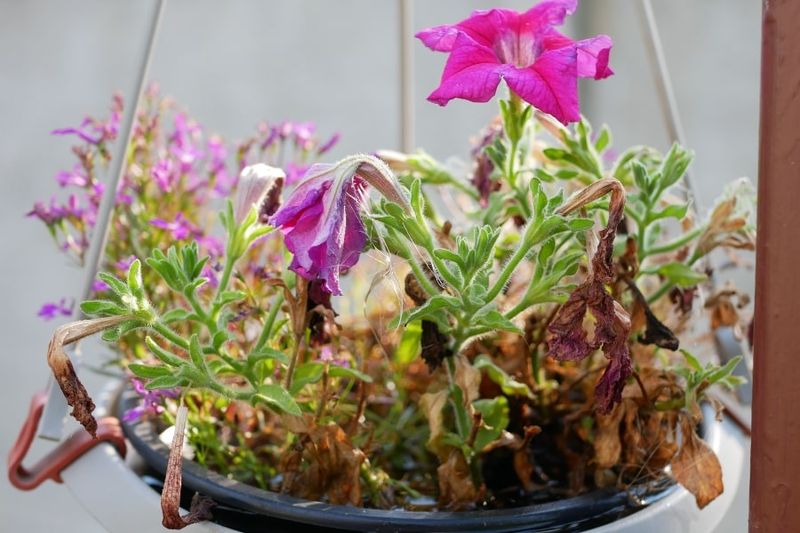
Fertilizer cannot compensate for a spot that does not get enough sun. Petunias perform best with around six hours of direct sunlight where possible, and a plant growing in too much shade will produce fewer blooms regardless of what the feeding program looks like.
Iowa State Extension recommends full sun placement for petunias, and NC State Extension’s petunia season guidance ties consistent moisture and good drainage to sustained flowering. Both are worth confirming before adjusting the fertilizer program.
After checking light and water, look closely at the buds and developing flowers rather than just the open blooms. Tobacco budworm can hollow out buds and destroy flowers while leaving the foliage completely intact, which makes the plant look healthy from a distance while the bloom count drops steadily.
Misreading that as a nutrition problem leads to fertilizer applications that do nothing to address the actual cause.
Deadheading spent flowers and seed capsules can help large-flowered and double petunia types keep producing new blooms, particularly when spent blooms are allowed to form seed capsules that shift the plant’s energy toward seed production. UF/IFAS notes that many milliflora, spreading, and newer vegetative cultivars are self-cleaning and require little or no deadheading.
Knowing which type you are growing saves time and sets realistic expectations. None of these practices can compensate for inadequate light, persistent heat, drought stress, root disease, or active pest pressure on their own.
Southern weather can shorten the season
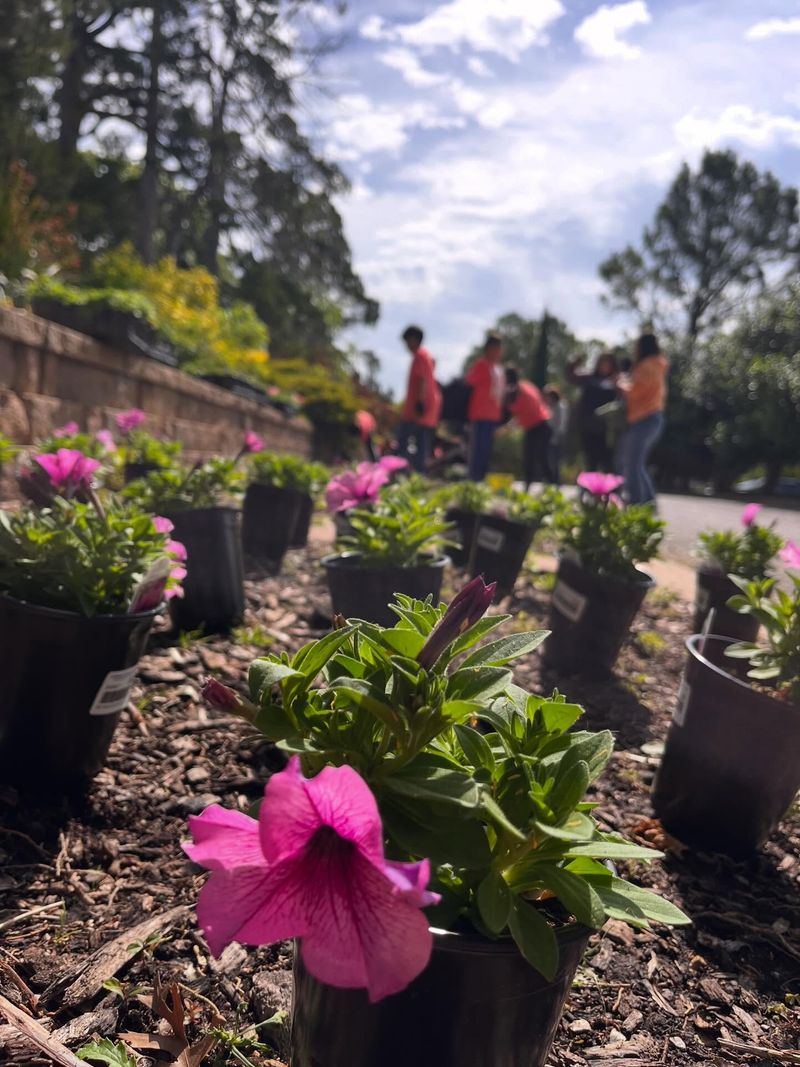
Nutrition questions look different depending on where in the South you garden and what time of year it is. Florida treats petunias almost entirely as cool-season annuals.
UF/IFAS Extension in Charlotte County identifies October and November as good planting months for Florida petunias, timing the growing season to avoid the heat and humidity that can reduce performance or shorten the flowering window even when fertilization is entirely appropriate.
UF/IFAS notes that some modern cultivars, including Wave types, show improved heat tolerance compared to older varieties, which matters for gardeners trying to extend the season. That improved tolerance does not make them immune to summer decline, and Florida heat and humidity can still cause a plant to fade or stop blooming even when the feeding program is well managed.
Blaming the fertilizer in that situation misses the real cause.
Texas conditions vary considerably by region, and the advice that applies in the Florida panhandle may not translate to Central Texas or the Hill Country. Cultivar selection and full-sun placement carry significant weight in Texas performance.
Texas A&M AgriLife Extension in Travis County lists cultivars including Laura Bush and Tidal Wave types as options suited to Austin-area full-sun seasonal color, which reflects local selection rather than a universal Southern recommendation.
Use the symptom pattern to choose the next step
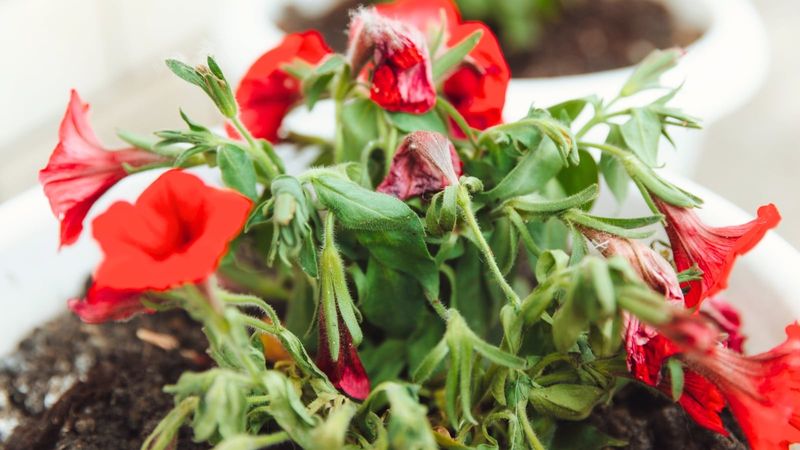
Lush, leggy growth alongside declining bloom count is the pattern most consistent with excess or nitrogen-heavy feeding. When you see that combination, pause the current program, check the fertilizer analysis, and avoid adding a bloom booster on top of what you are already using.
Petunia nitrogen research confirms that cultivar responses vary, so the right adjustment depends on the specific plant and product rather than a fixed rule.
A pale, weak container plant with declining vigor points toward leaching, low fertility, root stress, or a watering problem. Check drainage, inspect the roots, and review how often and how much you have been watering before reaching for more fertilizer.
A wilted or scorched plant should never receive fertilizer immediately. WSU Extension warns that fertilizer salts can worsen root injury in heat- or drought-stressed plants, so correct the stress condition first.
Buds disappearing from an otherwise healthy plant means inspect for tobacco budworm before changing anything about the nutrition program. Spent flowers with new buds forming nearby mean deadhead if the cultivar needs it, then wait.
Reading the fertilizer label and following its directions, avoiding stacked products, correcting site conditions, and feeding only when the symptom pattern actually supports it are the steps that matter most. A well-fed petunia in the right spot, at the right time of year, rarely needs guesswork.