
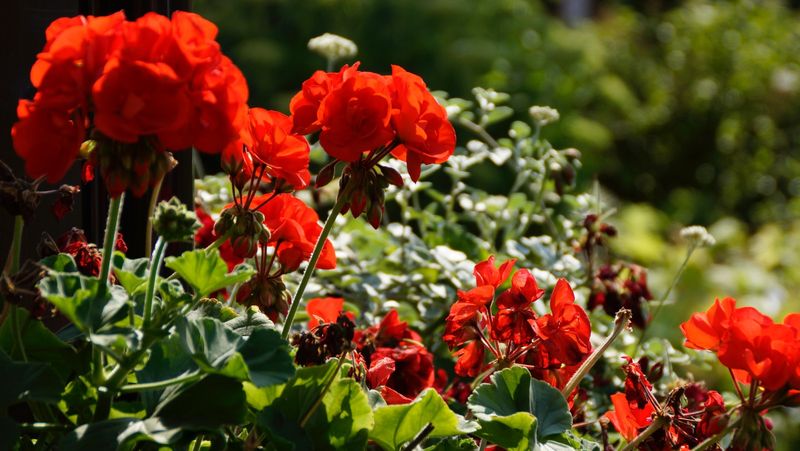
When the red and pink clusters on your porch pots start looking thin and faded by midsummer, it’s easy to assume the plants are giving up. For common tender geraniums, though, one simple maintenance habit can help keep the color coming longer than you might expect.
That habit is deadheading, and most gardeners who do it are only doing it halfway. Getting the technique right, and understanding what it can and cannot fix, makes all the difference in how your plants perform heading into fall.
First identify the geranium and the actual problem
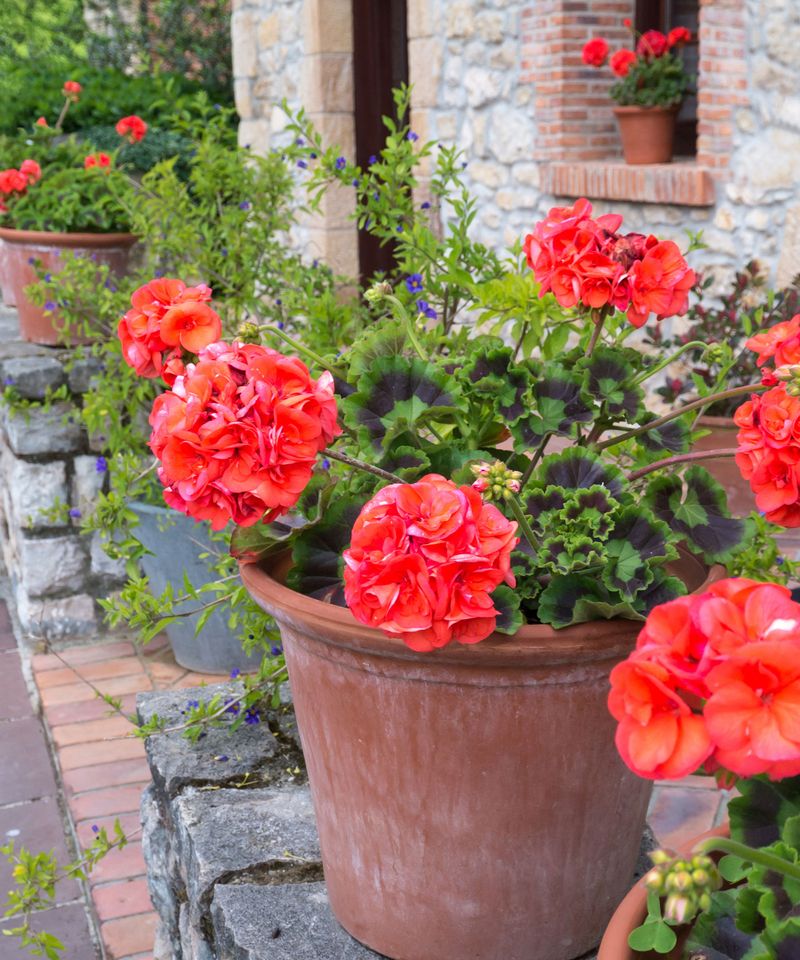
Not every plant sold under the name “geranium” behaves the same way, and the advice in this article applies specifically to tender Pelargonium types: common garden or zonal geraniums (Pelargonium x hortorum), ivy geraniums, and closely related tender varieties. These are the familiar porch-pot and container plants with rounded leaves, bold flower clusters, and a preference for warm, sunny spots.
They are not the same as hardy cranesbill geraniums, which are perennial border plants with a different growth habit and different care needs. RHS guidance on hardy Geranium species notes that deadheading is not normally required for most of those plants, so the routine described here does not automatically transfer.
For tender Pelargoniums, the symptom worth paying attention to is fewer blooms or slower flowering, not necessarily a sharp universal decline right before fall. Heat plays a major role.
NC State Extension classifies geraniums as cool-season annuals whose flowering commonly declines during hot midsummer conditions. In the Southern U.S., that pressure arrives early and stays long.
Florida gardeners face an added challenge. UF/IFAS reports that common garden geraniums often fade by mid- to late summer in Florida’s heat and humidity, performing better during the cooler fall-to-spring window.
Meanwhile, UGA Cooperative Extension notes that growth and flowering slow considerably during hot weather, particularly when nights stay warm. Deadheading can still help a plant that is otherwise healthy, but it works within those real climatic limits, not around them.
Deadhead regularly to support another flush of flowers
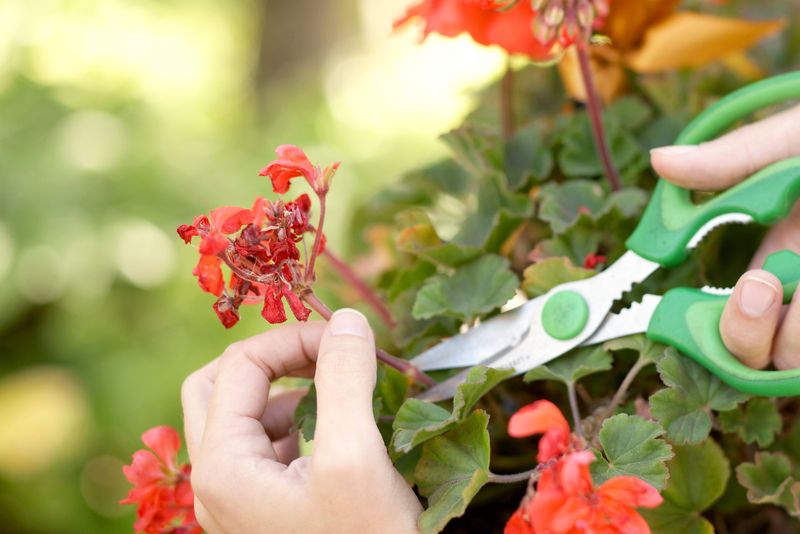
Regular deadheading is the single most practical maintenance step you can take to help a healthy tender geranium keep flowering. When you remove spent flower clusters consistently, you clear away decaying material, improve the plant’s appearance, and limit the formation of seeds.
Preventing seed set matters because a plant that has moved into seed production tends to put less effort toward making new flowers. Iowa State University Extension recommends deadheading geraniums to encourage additional blooms, improve appearance, and remove material that can harbor rot.
Keep the claim honest, though: deadheading gives a still-healthy plant a better chance to continue flowering. It does not guarantee continuous color, and it cannot counteract severe heat stress, poor drainage, nutrient depletion, or disease.
A plant struggling under 95-degree afternoons and warm Southern nights will still slow down, even if you deadhead perfectly.
The practical takeaway is to deadhead often enough that spent clusters never sit on the plant for long. Checking your pots every few days during the growing season is a reasonable habit.
Each pass should be thorough rather than a quick glance at the most visible flowers. Clusters at the back of the pot, lower on the stem, or partly hidden by foliage matter just as much as the ones front and center.
Consistency is what makes the difference, not a single heroic session once a month.
Remove the entire spent flower stalk
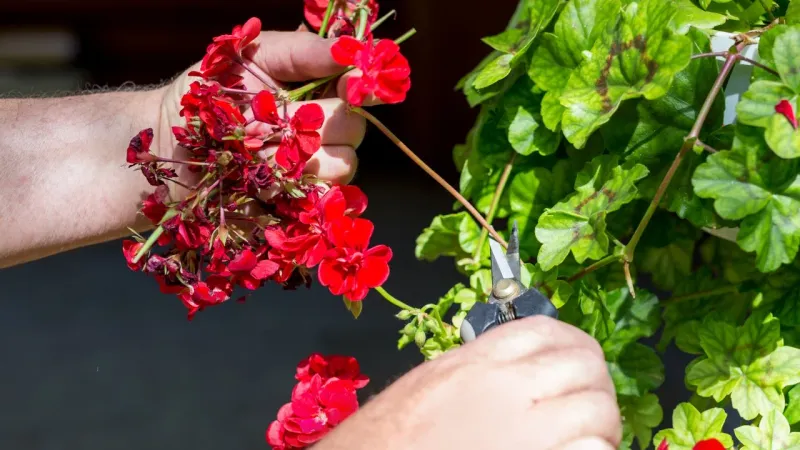
Where most gardeners fall short is in how they deadhead, not whether they do it. Pulling off only the faded petals or pinching the top of a spent bloom leaves the flower stalk and any developing seed structure still attached to the plant.
That leftover tissue can continue drawing resources, may rot in humid Southern weather, and does nothing to encourage the plant toward new buds.
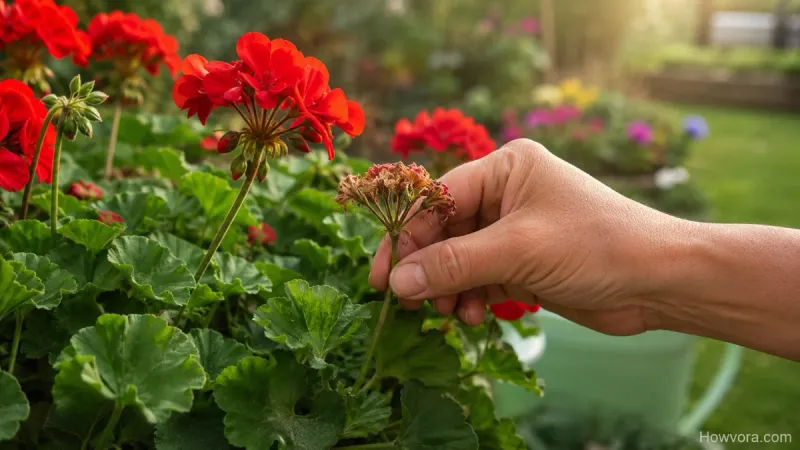
The correct technique is to trace each finished flower stalk all the way down to its base, or to the next healthy leaf node if the base is not accessible, and snap or cut it cleanly there. Mississippi State University Extension advises removing the entire spent stalk rather than just the visible faded portion, and Iowa State’s growing guide reinforces the same complete-removal approach.
Most geranium stalks snap off easily with a firm downward motion, so scissors or pruners are optional for routine deadheading, though they work well for thicker stems or tighter spaces.
A thorough inspection matters as much as the technique itself. Work your way around the entire plant, checking beneath the canopy and along the lower stems where older flower stalks can hide.
Tilt pots slightly if needed to see the back side. Missing even a cluster of old stalks in a shaded spot means that section of the plant may stall while the rest keeps going.
Take an extra minute to look carefully, and the whole plant tends to respond more evenly.
Inspect for rot and gray mold while you work
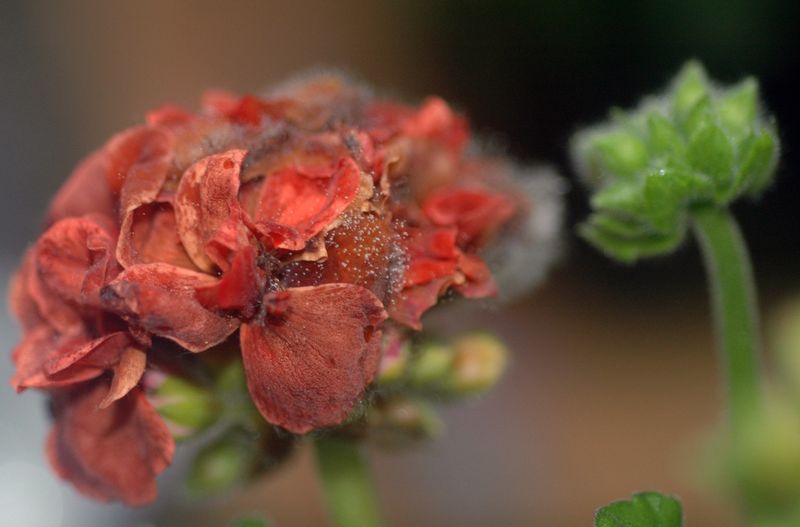
Each deadheading session is a built-in opportunity to look for trouble before it spreads. Botrytis, commonly called gray mold, is one of the most frequent disease problems on tender geraniums, and it thrives in exactly the conditions that Southern summers provide: warmth, humidity, crowded plants, and wet foliage.
Penn State Extension describes Botrytis on geraniums as causing brown blossoms, premature flower drop, and a distinctive gray, fuzzy growth on affected tissue. Once you know what to look for, it is usually recognizable at a glance.
As you deadhead, pull off any faded leaves, yellowing foliage, or flower material that shows soft rot or fuzzy gray patches. Do not leave that material on the soil surface or in the pot.
UGA Extension recommends removing and discarding diseased plant material rather than letting it accumulate. Composting infected material is risky because home compost piles may not reach temperatures high enough to kill fungal spores, so bag it and put it in the trash instead.
Healthy trimmings from a clean plant are fine to compost.
After sanitation, focus on conditions. Improving airflow around your pots, spacing plants so leaves are not constantly touching, and avoiding overhead watering all reduce the humidity that Botrytis needs.
Routine pesticide spraying is not a first response and is only appropriate after you have identified a specific problem and selected a product labeled for that use on geraniums. Good hygiene and dry foliage go a long way before any spray becomes necessary.
Protect the roots with measured watering and good drainage
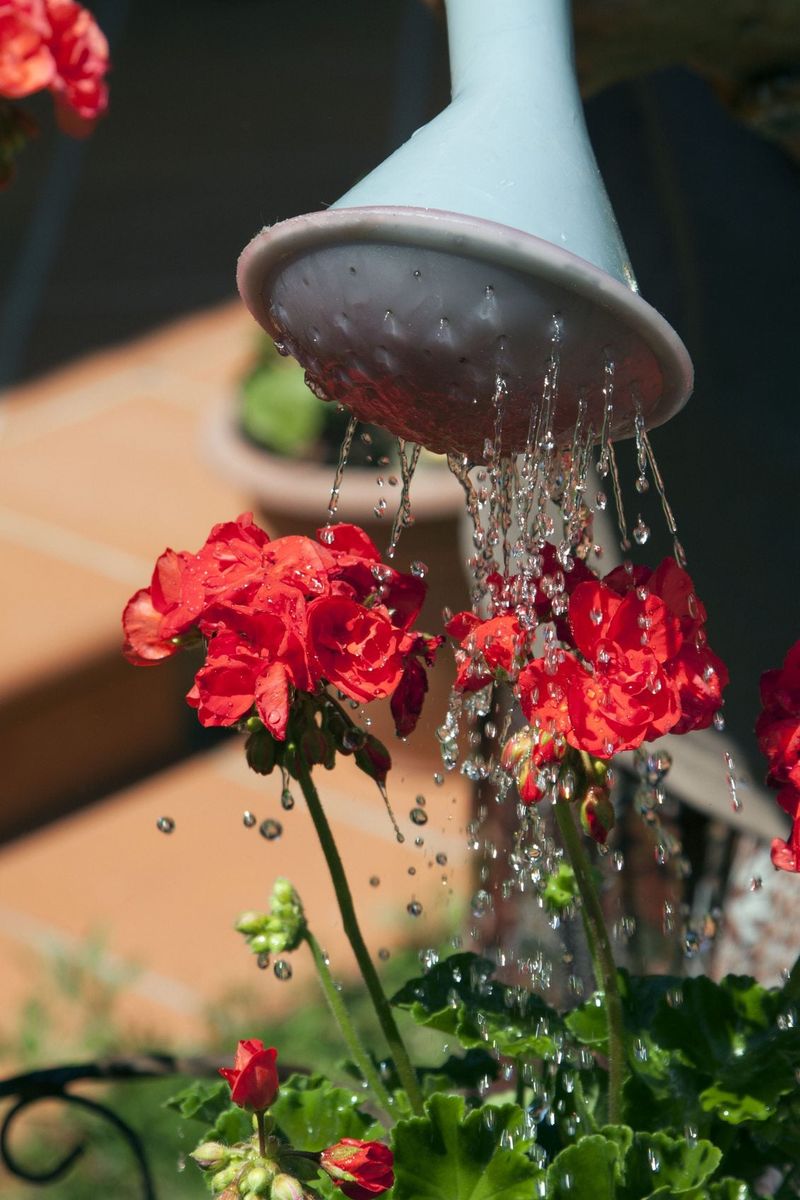
Deadheading can only help a plant that has healthy roots, and roots stay healthy when water is managed carefully. Tender geraniums need freely draining soil and containers with drainage holes that actually work.
UGA Cooperative Extension warns that standing water in saucers can lead to waterlogged soil and root damage, which cuts off the plant’s ability to take up water and nutrients no matter how well you deadhead or feed.
Rather than watering on a fixed daily schedule, check the soil first. Push a finger an inch into the mix.
If it still feels moist, wait. If it feels dry at the surface, water thoroughly, soaking the root zone completely and allowing excess water to drain freely from the bottom of the pot.
Iowa State Extension recommends watering containers when the soil surface becomes dry and soaking thoroughly each time, rather than giving frequent shallow drinks that wet only the top layer.
Hot Southern summers create a real tradeoff. A container sitting in full afternoon sun can dry out within a day or two, so you may find yourself watering several times a week during a heat wave.
That frequency is fine as long as drainage is working and you are checking the soil rather than watering by the calendar. Water at the soil line, preferably in the morning, so foliage can dry before evening.
Routinely wet leaves invite the same fungal problems described in the previous section, and they are easy to avoid with a simple change in aim.
Feed according to the plant’s growing conditions
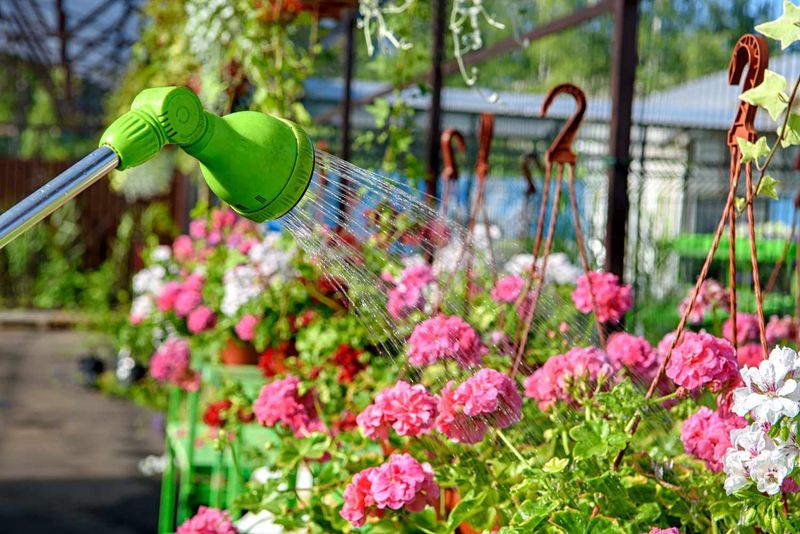
Container geraniums are particularly prone to nutrient loss because frequent watering flushes soluble minerals out through the drainage holes over time. A plant that was well fed at planting may be running low on key nutrients by midsummer, which can contribute to reduced flowering on top of whatever heat stress it is already managing.
Regular, label-directed feeding during active growth helps keep the plant in a condition where deadheading can actually do some good.
UGA Extension recommends fertilizing garden geraniums about every four to six weeks, while Iowa State suggests a dilute fertilizer applied every two to four weeks for container plants. Those ranges differ because container plants in hot climates lose nutrients faster.
The right frequency for your situation depends on your container size, watering habits, rainfall, and the fertilizer formulation you are using, so the product label is your most reliable guide.
A few practical rules apply regardless of product. Apply fertilizer to moist soil, not dry roots, and water it in after application.
Keep fertilizer granules and liquid solutions off foliage and stems to avoid salt injury, which shows up as brown leaf edges. Avoid mixing multiple full-strength products or exceeding label rates in hopes of forcing more flowers.
High-phosphorus fertilizers are sometimes marketed as bloom boosters, but the evidence from university extension sources points to adequate, regular, balanced feeding rather than any specific formula as the key to consistent performance. Heavy applications can damage roots and build up salts in the container, leaving the plant worse off than before.
Check heat, light, and cultivar before expecting more blooms
Sometimes a geranium slows down not because of anything you are missing in your routine but because the conditions around it have crossed a threshold the plant cannot work past. Heat is the most common ceiling in the Southern U.S.
NC State Extension classifies geraniums as cool-season annuals whose flowering declines in hot midsummer conditions, and deadheading cannot fully overcome sustained heat stress when temperatures stay high day and night.
Florida gardeners face a particularly clear example of this limit. UF/IFAS recommends fall-to-spring planting for central and southern Florida and notes that flowering commonly fades by mid- to late summer.
A Florida gardener who deadheads faithfully through August may still see limited results, and that is the plant responding to climate, not a failure of technique.
Cultivar differences matter too. Martha Washington or regal geraniums (Pelargonium x domesticum) are a distinct type that behaves very differently from common zonal geraniums.
Iowa State Extension explains that Martha Washington geraniums require cool nights, around 50 to 60 degrees Fahrenheit, for flower formation. In most Southern summers, those temperatures simply do not arrive until fall, so the plant may produce few or no flowers through the hottest months regardless of care.
Light is a third variable. Iowa State recommends at least six hours of direct sun for optimum flowering in common geraniums, but in very hot Southern locations, some afternoon shade can reduce heat stress without significantly hurting bloom production.
There is no single sun prescription that fits every Southern microclimate, so observe how your specific site performs and adjust placement if the plant looks scorched rather than simply slow.
Reserve a hard cutback for leggy, exhausted plants
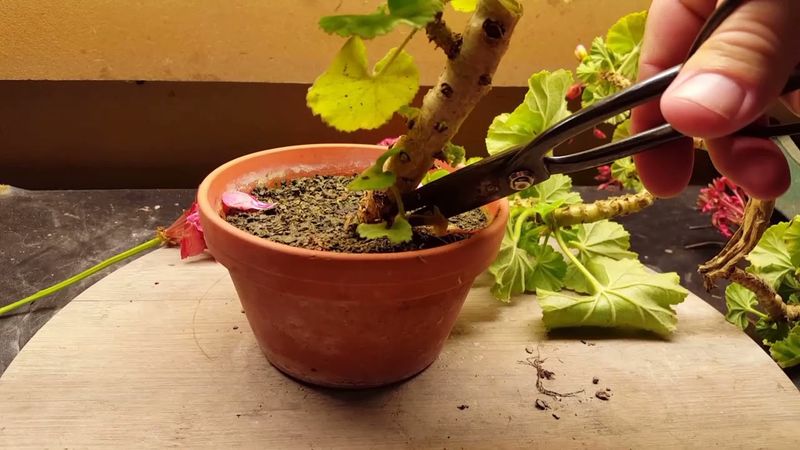
Ordinary deadheading handles spent flower stalks on a plant that is still growing reasonably well. A different problem calls for a different response.
When a geranium has become long, sparse, and genuinely exhausted, with bare woody stems, few leaves, and little sign of new growth, removing spent blooms alone will not fix the underlying structure. That situation calls for a harder cutback, sometimes called rejuvenation pruning.
UGA Cooperative Extension recommends cutting long, exhausted geranium stems back by roughly one-half to three-quarters above a node, then following up with appropriate care and label-directed fertilization to encourage fresh growth. The goal is to stimulate new stems from lower on the plant rather than continuing to coax reluctant growth from stretched, tired tissue.
This is a stronger intervention than routine deadheading, and it comes with a temporary cost: you will remove whatever stems and flower buds are currently on the plant, so flowering pauses for a period while the plant regrows. That tradeoff is worth it for a plant that has clearly run out of productive growth, but it makes no sense for a plant that is simply carrying a batch of spent flower heads.
Use it as a targeted tool for a specific condition, not as a regular substitute for consistent deadheading through the season. After cutting back, keep the plant well watered, give it appropriate light, and apply fertilizer according to the product label once new growth begins to show.
Start with a complete deadheading pass and realistic expectations
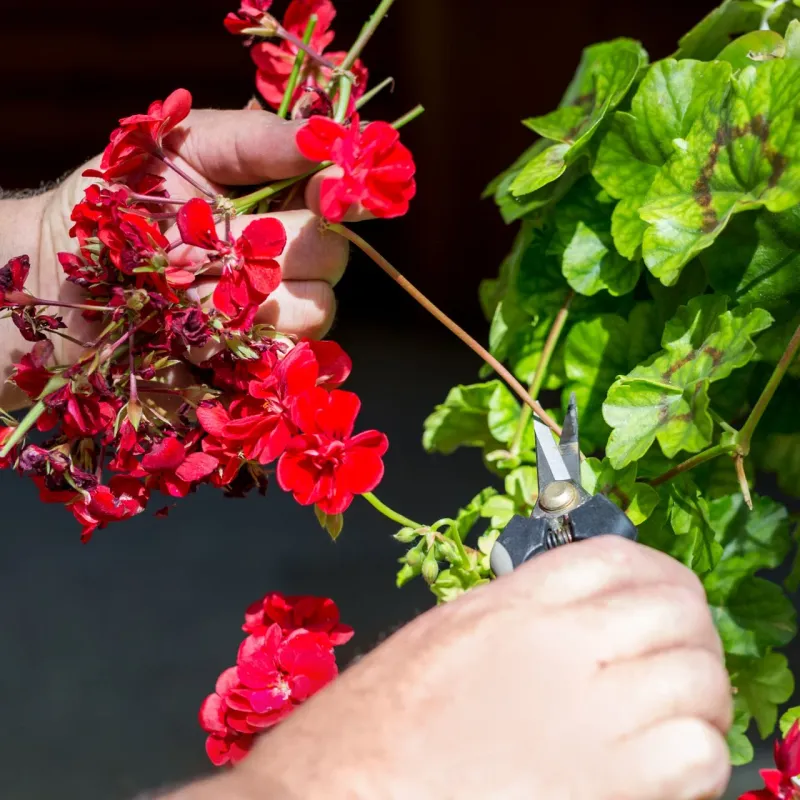
Before reaching for fertilizer or pruning shears, confirm you are working with a tender Pelargonium, the common zonal or ivy type, rather than a hardy cranesbill or a Martha Washington variety with different needs. Then do a complete deadheading pass: trace every spent flower stalk to its base or a healthy leaf node and remove it fully, not just the faded petals.
While you work, pull off any soft, rotting, or mold-covered tissue and discard it in the trash rather than the compost pile.
After that, step back and review the basics: drainage, soil moisture, light exposure, and whether the plant has been fed recently according to the label. Iowa State Extension’s guidance on growing annual geraniums and UF/IFAS regional guidance for Florida both point to the same conclusion: thorough, consistent care gives the plant its best chance, but regional heat, warm nights, and the plant’s own cultivar will still set the ceiling on how much color you see before fall.
UGA Extension’s comprehensive geranium guide reinforces that expectation across Southern growing conditions. A well-deadheaded, well-tended geranium will almost always outperform a neglected one, even if summer heat means neither one blooms at its spring peak.