
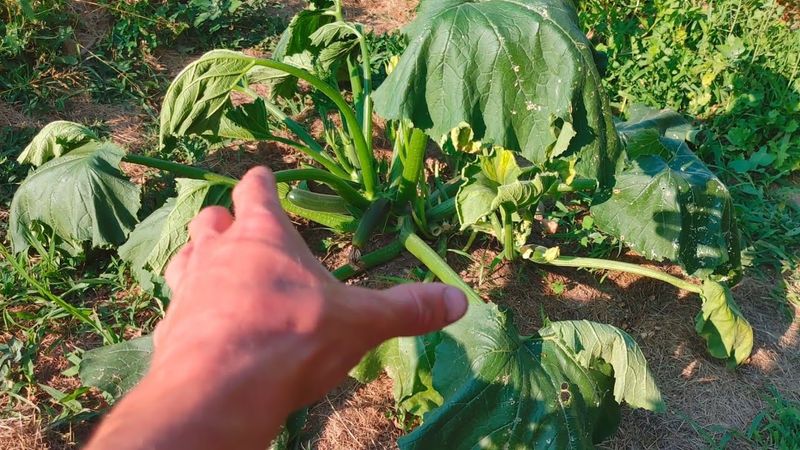
Walking out to the garden and finding a zucchini plant slumped over in the summer heat is one of those moments that stops you cold. Before you grab the hose or reach for a spray bottle, the plant is telling you something specific – and the clue is in whether it bounces back by morning.
Southern gardeners in Florida and Texas face a longer, hotter growing season where heat stress, pest pressure, and root trouble can all look the same at first glance. Knowing which one you are actually dealing with changes everything about what you do next.
First, compare the afternoon wilt with the next morning
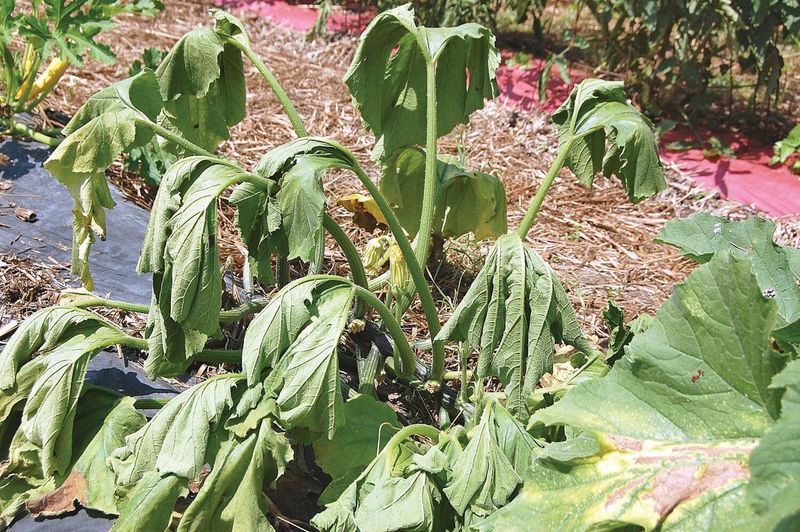
Go outside during the hottest part of the day and take a good look at your zucchini. Large cucurbit leaves naturally lose stiffness when temperatures peak, and University of Georgia Extension guidance on vegetable-garden water use notes that wilting during the heat of the day does not automatically signal a crisis.
The key question is what the plant looks like the following morning.
Walk back out early, before the day heats up, and compare the plant to others in the same bed. If the leaves have perked up overnight and nearby zucchini look healthy, the most likely explanation is temporary heat or water stress rather than a pest or disease.
Several plants drooping together in dry soil also point toward moisture stress rather than a localized problem in one vine.
Persistent wilt that is still visible the next morning, especially in just one plant while its neighbors look fine, is a different situation entirely. At that point, University of Minnesota Extension research on bacterial wilt of cucurbits and other extension sources agree that a closer inspection for pests, disease, root damage, or drainage problems is the logical next step.
Before you water, push a finger or a stick several inches into the soil near the root zone to check whether the ground is actually dry – surface soil can feel dry even when moisture remains below.
Inspect the lower stem for squash vine borer evidence
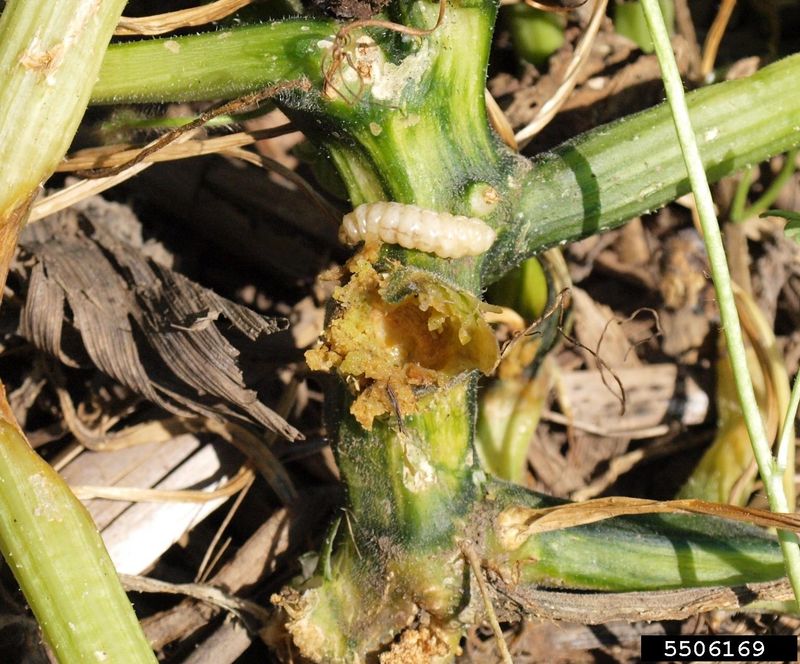
When a single zucchini collapses overnight and nearby plants remain upright, the lower stem deserves a close look before anything else. Squash vine borer (Melittia cucurbitae) is a key cause to check in this scenario – the larva hatches from an egg laid on the stem and tunnels inside, disrupting the plant’s ability to move water and nutrients upward.
The result can be sudden, localized wilting that looks dramatic even when the rest of the garden appears untouched.
Get down close to where the vine emerges from the soil and examine the crown and the first several inches of stem. According to UF/IFAS research on squash vine borer, the signs to look for are a small entry hole in the stem, moist sawdust-like frass near the hole, visible swelling or a soft section of stem, or a portion of the vine that has partly collapsed from the inside out.
You may need to part any leaves or mulch at the base to see the stem clearly.
For Florida gardeners, late-season activity is plausible. UF/IFAS reports that squash vine borer adults can be active from approximately mid-May through late October in Florida, and southern populations can have two overlapping generations.
University of Minnesota Extension guidance on squash vine borers confirms that the pest is a major problem for summer squash across the country, though timing varies by location and weather. Texas gardeners should check local extension resources rather than assuming Florida timing applies to their region.
Rule out squash bugs, disease, and root trouble
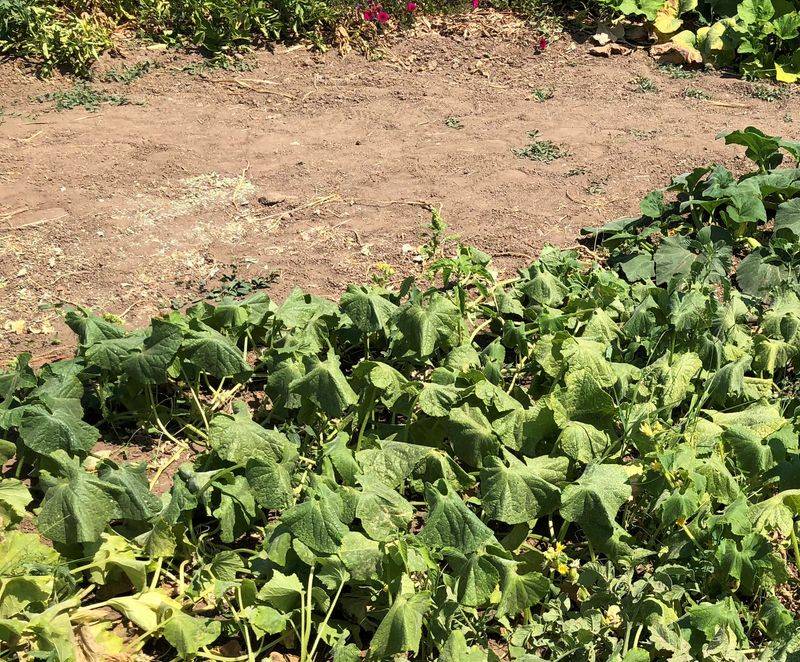
No entry hole, no frass, no swelling at the stem base – now the investigation widens. Squash bugs are a separate pest that can produce wilt symptoms of their own.
UF/IFAS documentation on the squash bug explains that heavy feeding by adults and nymphs can cause leaves to yellow, blacken, wither, and die, and a severe infestation may kill an entire plant or a section of vine. Flip leaves over and check stems and the crown area for bronze-brown adults, small gray or green nymphs clustered together, or neat rows of bronze egg masses on the underside of leaves.
Bacterial wilt is another possibility worth considering, particularly if cucumber beetles have been active in the garden. The disease often begins with daytime wilt that eases at night before eventually progressing to permanent collapse.
Infected plants cannot be cured with pesticides, and University of Minnesota Extension guidance on bacterial wilt of cucurbits notes it is generally less severe in squash than in cucumbers or muskmelons, though it does occur.
Root rot, Phytophthora, poor drainage, overwatering, and viral diseases can also produce wilt or sudden collapse. University of Minnesota’s vegetable diagnostic tool for wilting squash and the UGA Extension guide to troubleshooting vegetable production problems in the Southeast both make clear that the visible symptom of wilt alone is not enough to assign a single cause.
Use what you find during the inspection – stem condition, bug presence, soil drainage, and the pattern of which plants are affected – to guide your next decision.
Try a careful rescue only while the vine remains green
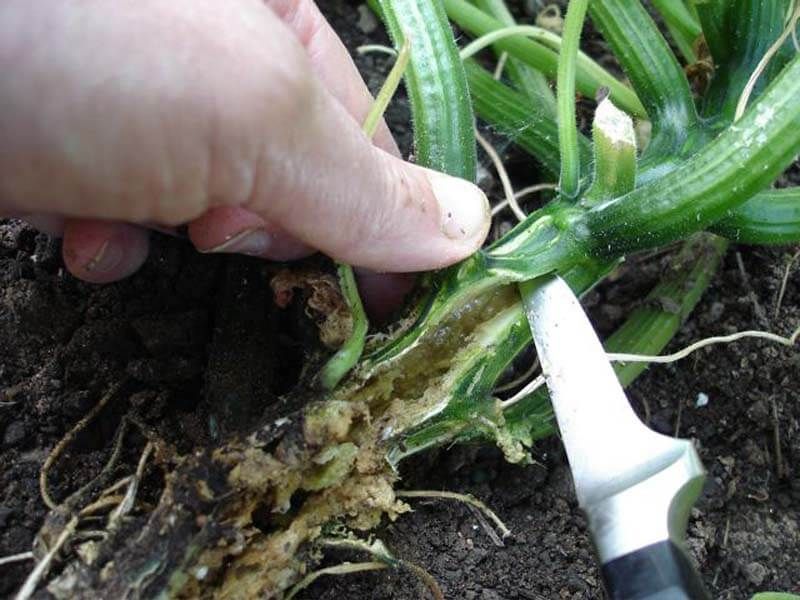
A plant that has partly collapsed but still shows green growth on any part of the vine may be worth attempting to save – but only if the inspection in the previous step pointed clearly toward a localized squash vine borer infestation. Randomly cutting into a stem that is stressed by heat, disease, or root problems will not help and could cause additional damage.
Confirm the borer signs first.
If the evidence supports a borer and the plant has green tissue remaining, University of Minnesota Extension guidance on squash vine borers describes the procedure: use a small, clean blade to make a careful lengthwise slit in the damaged section of stem, locate the larva inside the tunnel, and remove or kill it. Work slowly to avoid slicing through more stem tissue than necessary.
Once the larva is out, pack moist soil firmly over the wound and keep that section of stem consistently watered so the buried vine has a chance to form new roots along the covered area.
The University of Illinois Extension article on managing squash vine borer in the garden and a related Illinois Extension post on dealing with squash vine borer both frame this as a possible rescue, not a guaranteed one. Some plants survive, resume growth, and continue producing after the procedure.
Others die from the internal damage already done, develop secondary infections at the wound site, or produce poorly even if they stay alive. Go in with realistic expectations and watch the plant over the following week for any sign of recovery.
Remove plants that have passed the point of recovery
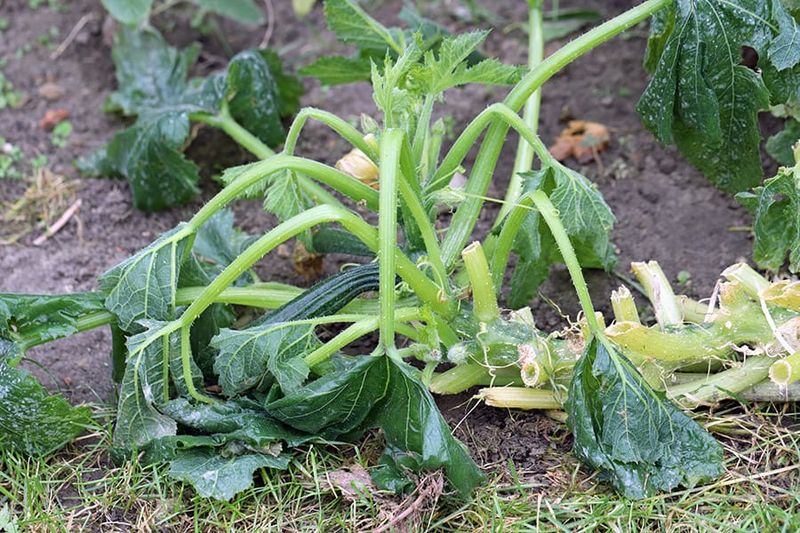
Some plants are simply past saving, and recognizing that point quickly protects the rest of the garden. A zucchini that has completely collapsed, turned brown throughout, or suffered extensive crown damage at soil level is unlikely to recover regardless of what treatment is applied.
University of Minnesota Extension and Penn State Extension’s guide to insect pests affecting squash both recommend removing and destroying dead or infested vines rather than leaving them in the garden, where larvae can complete development and emerge as adults to lay more eggs.
Bacterial wilt follows a different but equally final path. There is no pesticide that cures an infected plant, so removal is also the correct response once wilt has progressed to the point of collapse.
Some gardeners try the bacterial-streaming test – cutting through the stem and slowly pulling the two cut ends apart to look for a thin, thread-like strand of bacterial ooze. A visible strand can support a bacterial wilt diagnosis, but research published in Plant Disease on bacterial wilt of cucurbits cautions that the streaming sign does not appear consistently in squash.
A negative result does not rule out the disease, and laboratory diagnosis may be necessary for a reliable answer.
When you pull the plant, bag it or take it well away from the garden rather than composting it. Leaving infested material on the soil surface or in an open compost pile can allow pests or pathogens to persist and affect future plantings.
University of Minnesota Extension guidance on bacterial wilt reinforces that prompt removal is the most practical response once recovery is no longer realistic.
Water according to the soil, not the heat alone
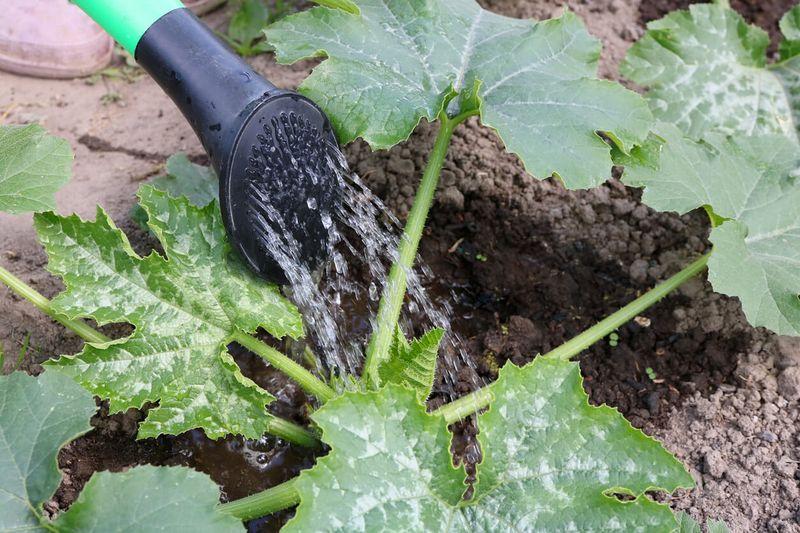
Reaching for the hose the moment a zucchini droops is a natural reaction, but watering without checking the soil first can cause more harm than good. Push a finger or a wooden dowel several inches into the ground near the root zone before adding any water.
University of Georgia Extension guidance on conserving water in the vegetable garden recommends checking moisture below the surface rather than relying on how the soil looks or feels at the top, because surface drying can be misleading on hot days.
When the soil is genuinely dry several inches down, water slowly and thoroughly at the root zone so moisture reaches where the roots are. University of Minnesota Extension advice on growing summer squash and zucchini cautions against frequent, shallow sprinkling, which trains roots to stay close to the surface and leaves plants more vulnerable when temperatures spike.
Deep, infrequent watering encourages roots to grow downward where the soil stays cooler and holds moisture longer.
Drip or soaker irrigation is worth considering for zucchini beds in hot Southern climates. Texas A&M AgriLife Extension’s guidance on efficient water use in the garden and landscape notes that drip systems reduce evaporation and keep foliage dry, which limits the conditions that foliar diseases favor.
On the other side of the equation, UGA Extension advice on avoiding overwatering during a heat wave warns that heavy automatic watering in poorly drained beds can deprive roots of oxygen and make root rot worse rather than better.
Protect the next zucchini before flowering
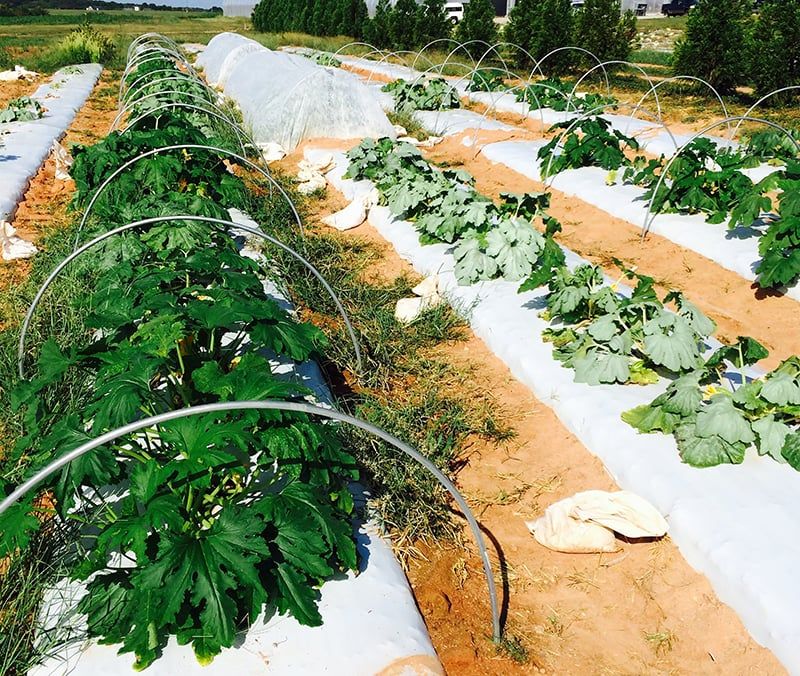
Prevention starts well before any pest or disease shows up, and the single most useful window is the period between transplanting and first bloom. Floating row covers placed over young zucchini plants create a physical barrier that keeps squash vine borer moths and squash bugs from reaching the stems and leaves.
University of Minnesota Extension guidance on squash vine borers recommends using row covers early in the season and securing the edges so pests cannot crawl underneath.
The critical limitation is pollination. Zucchini requires bee visits to set fruit, so covers must come off once flowers open – or gardeners need to hand-pollinate by transferring pollen from male to female flowers with a small brush or cotton swab.
Leaving covers in place through flowering means no fruit, which defeats the purpose of growing the crop. University of Illinois Extension’s article on managing squash vine borer in the garden emphasizes that timing the removal correctly is as important as putting the covers on in the first place.
Rotating cucurbit crops to a different bed each season and removing old vines promptly after harvest reduces the number of overwintering pupae in the soil near future plantings. On the pesticide side, preventive or early-season treatments must carry a label that specifically lists the crop and the target pest.
UF/IFAS guidance on insect management for cucurbits requires strict attention to application rates, preharvest intervals, and pollinator precautions – spraying during bloom can harm bees. Once a larva is already tunneling inside the stem, foliar sprays generally cannot reach it.
UF/IFAS research on natural pest-management products confirms that Bt-k is not a reliable treatment for an established squash vine borer inside the stem, making early prevention a far better investment than any late-season chemical rescue. The most durable defense is a combination of physical barriers, timely removal of spent plants, and crop rotation – none of them foolproof, but together they give the next planting a meaningful head start.