
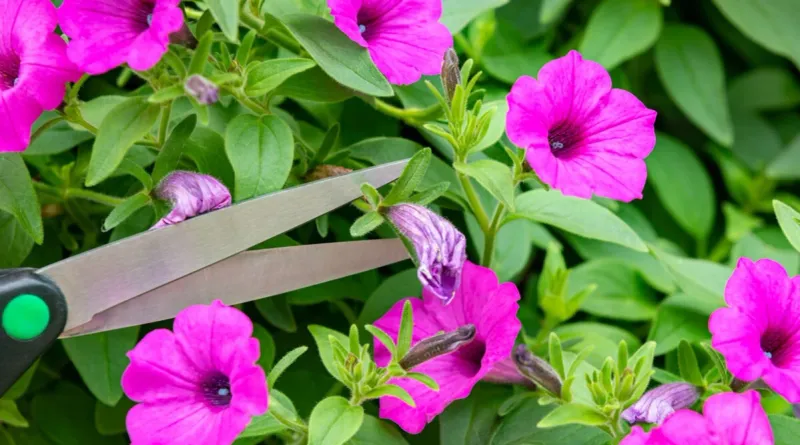
By late summer, a petunia that looked full and bright in June can turn into a tangle of long bare stems with just a few blooms clinging on. Most Southern gardeners assume the plant is done for the season, but a healthy petunia with stretched stems is often a good candidate for a straightforward cutback that can encourage fresh branching and new flowers.
The reset is not a magic fix for every struggling plant, so knowing what you are actually looking at before you reach for the pruners makes all the difference.
Check whether the plant is leggy or actually failing
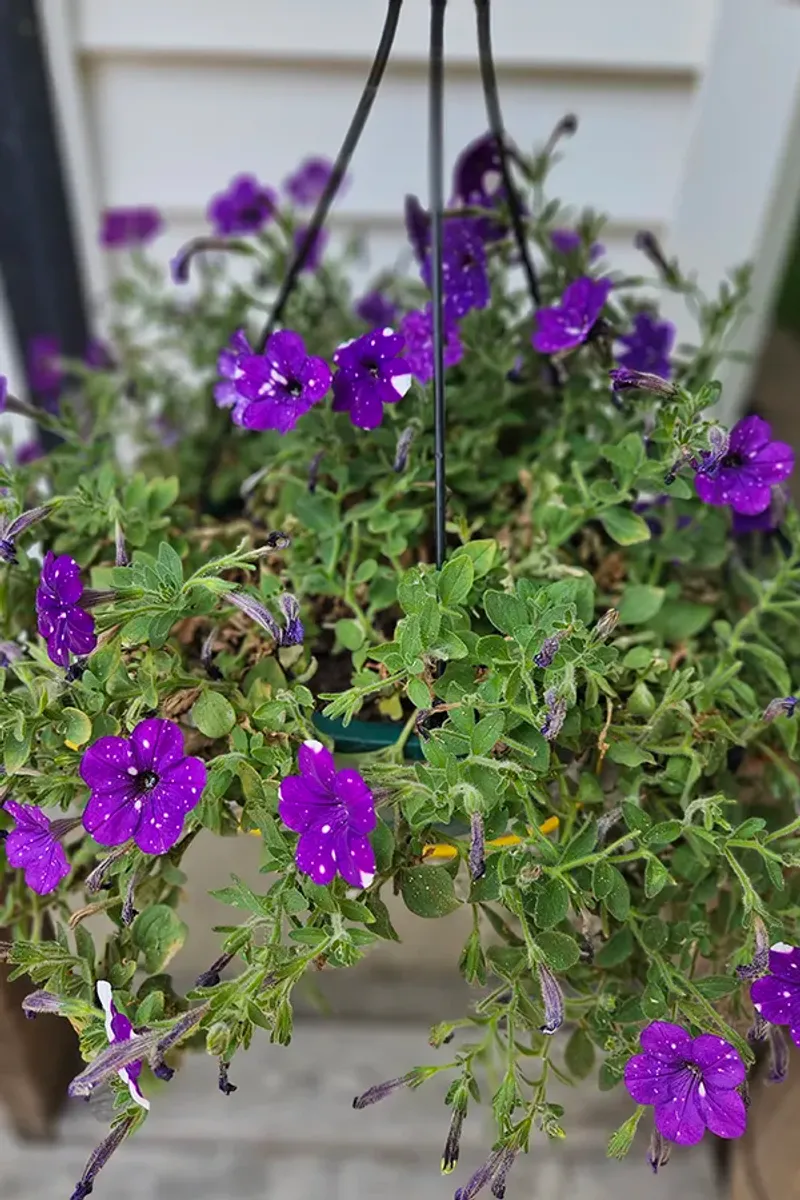
Long bare stems, sparse leaves, and a noticeable drop in flower count are the signs you want to see before attempting a cutback. A plant with those characteristics but still sporting healthy green tissue at the base or along the stems is the right candidate for a rejuvenation reset.
A petunia that is rapidly turning brown, collapsing from the crown outward, or wilting despite sitting in wet soil is telling a different story entirely.
Wilting is a symptom, not a diagnosis. Heat stress, saturated soil, root injury, and underwatering can all make a petunia look limp and tired, and University of Minnesota Extension guidance on heat-stressed gardens notes that overwatering and underwatering can produce nearly identical aboveground symptoms.
Checking the root zone before adding more water or picking up your pruners is a necessary first step, not an optional one.
Stick a finger two inches into the soil or potting mix near the roots. If the soil is soggy or the container is sitting in standing water, drainage is the issue, not drought.
University of Illinois Extension’s petunia guidance confirms that petunias prefer moist, well-drained soil, and heavy or waterlogged conditions reduce performance. A plant wilting in saturated soil may have crown or root damage that a simple pruning cannot address, so inspect the lower stems and crown for soft, dark, or mushy tissue before proceeding.
If the plant looks like it is dying from the base up, the reset described in this article is not the right move.
Why pruning is the central reset
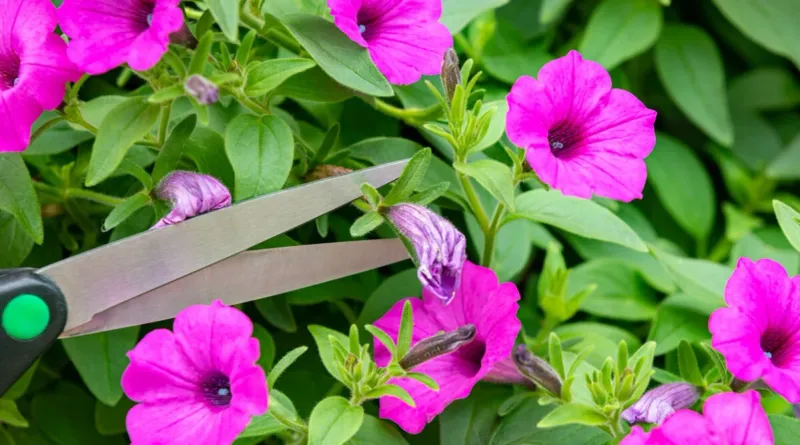
Fertilizer can support a petunia’s recovery, but it cannot fix the stretched, sparse shape that develops when stems grow long between leaf sets. Pruning is the action that actually addresses the plant’s architecture.
Ask Extension guidance on petunia care pairs pruning with feeding and watering as a combined approach, reinforcing that the cutback itself is the corrective step rather than simply adding more nutrients to a leggy plant.
What a cutback does, practically speaking, is remove the elongated portions of the stems while leaving behind healthy leaves and nodes closer to the base. New shoots can develop from those remaining nodes, and a healthy plant often responds with denser branching over the following weeks.
Renewed fullness and a return to flowering are a realistic possibility for a petunia in decent condition, though cultivar, remaining heat, and overall plant health all affect how well and how quickly that response happens.
The distinction matters because gardeners sometimes try to push a stretched petunia back into shape by feeding it more heavily, hoping the extra nutrients will trigger bushy new growth. University of Georgia Extension’s guide to flowering annuals pairs cutting back with fertilizing and watering as a sequence, not as interchangeable options.
Feeding alone will not restore compact shape; pruning removes the problem growth and creates the conditions where fresh branching can begin.
Make the measured cutback
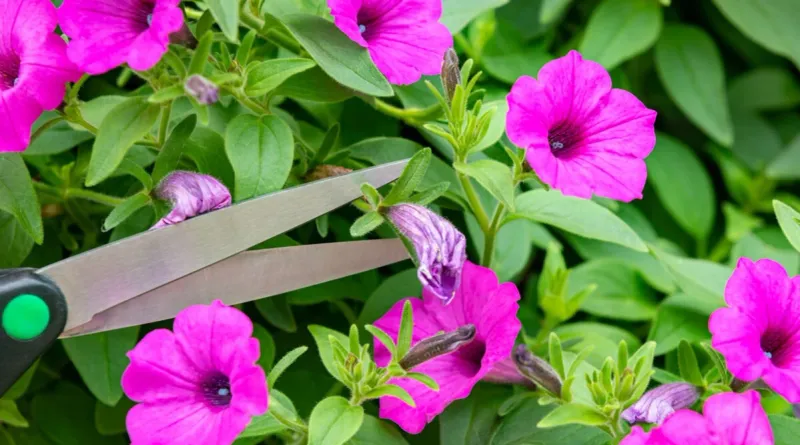
For an ordinary leggy petunia, removing roughly one-third to one-half of the stem length is the starting point. Ask Extension’s petunia pruning FAQ supports this moderate approach, and the key detail is where you make each cut: just above a healthy leaf node or a set of leaves where new growth can emerge.
Cutting in the middle of a bare section of stem leaves nothing useful behind, so work your way down each stem until you find a point with visible green tissue, then cut just above it.
A more severe option is available for a petunia that is vigorous but badly overgrown, with stems sprawling in every direction and very little flower production left anywhere on the plant. Georgia Extension’s flowering annuals guide notes that petunias can be cut back to within a few inches of the ground, then fertilized and watered to encourage recovery.
Reserve that level of severity for plants that genuinely call for it, specifically those that are still healthy and vigorous but have become so stretched that a moderate trim would leave little structure behind.
Either way, do not remove every living leaf from the plant. Maryland Extension petunia guidance specifically advises retaining some foliage after a severe cutback, and that recommendation holds for moderate trims as well.
Green leaves are what allow the plant to continue functioning while new growth develops. Shape the plant so it looks tidy and reduced, not stripped bare, and let the diagnostic check you did in the first step guide how aggressively you cut.
Water and feed only after checking conditions
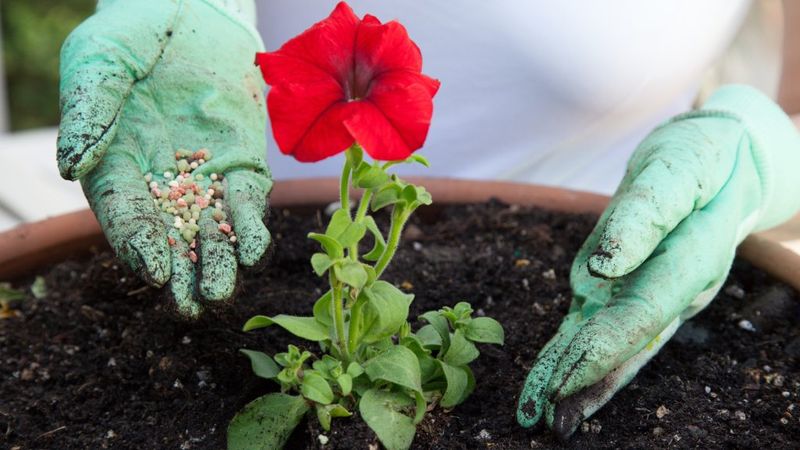
After pruning, the temptation is to water immediately and give the plant a generous dose of fertilizer to jumpstart recovery. Hold off on both until you have confirmed what the root zone actually needs.
Soggy soil does not need more water, and a stressed plant does not need a heavy fertilizer application on top of a fresh cutback.
If the soil is dry a couple of inches down, water deeply so that moisture reaches the root zone rather than just wetting the surface. Container plants generally need more frequent checks than in-ground beds because University of Illinois Extension’s container gardening guide notes that pots in summer heat can dry out quickly and may need daily attention.
At the same time, repeated watering through a container leaches nutrients from the potting mix over time, which is why supplemental feeding matters more for pots than for beds.
When it comes to fertilizer, follow the product label rather than applying more than directed in hopes of speeding recovery. University of Minnesota Extension’s petunia growing guide supports label-directed feeding for container annuals, and Ask Extension’s fertilizer guidance cautions that excess fertilizer can injure already-stressed plants.
A controlled-release fertilizer worked into the potting mix can reduce the need for repeated applications and lower the risk of overapplication. Feeding supports the new growth that pruning makes possible, but it is not a shortcut around the cutback itself.
Give the pruned plant a fair chance in Southern heat
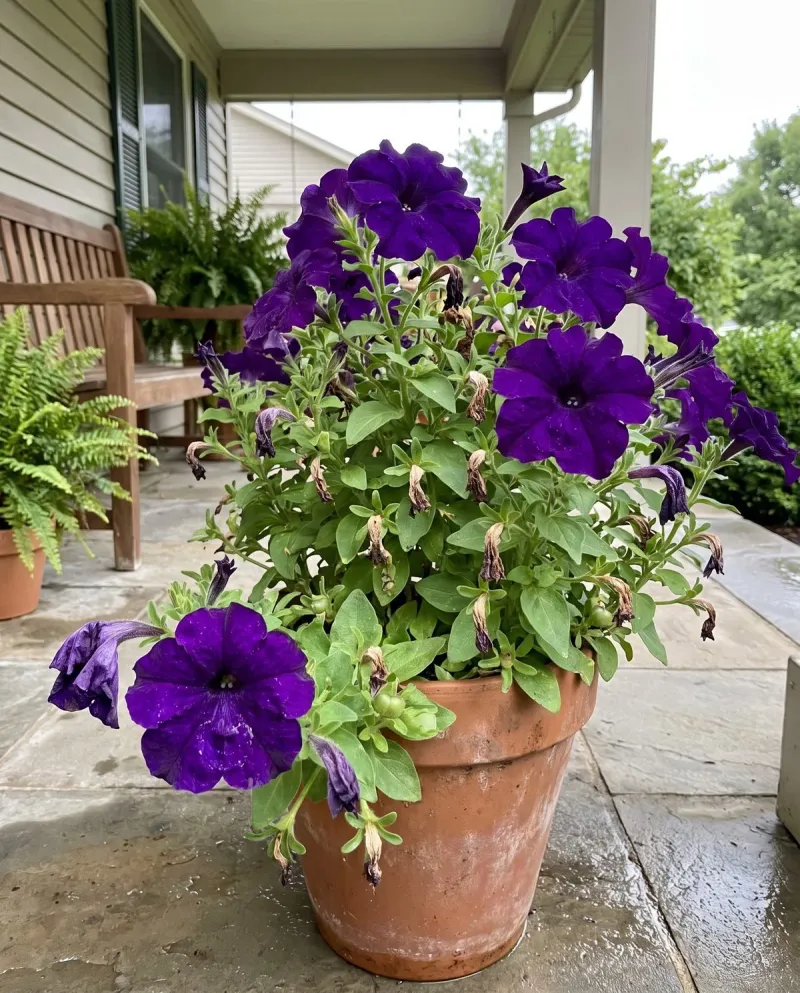
A petunia that has just been cut back is working with reduced foliage and limited resources while new shoots develop. Placing a freshly pruned container in the most intense afternoon sun during a heat wave adds unnecessary stress at exactly the wrong moment.
Georgia Extension’s mixed container guide notes that morning sun with afternoon shade can be useful for containers under hot conditions, and moving a pot to a somewhat sheltered spot for a week or two after a heavy cutback is a reasonable precaution.
For Texas gardeners, the timing question deserves honest consideration. Texas A&M AgriLife Extension’s seasonal color guidance describes late-summer color change-outs as a common practice, with heat-tolerant annuals such as periwinkle, verbena, and portulaca carrying beds through the hottest months.
A still-healthy petunia with good root structure may rebound after a cutback, but a heat-weakened plant that has been struggling for weeks may be better replaced with something better suited to the remaining summer conditions.
Florida is its own case. UF/IFAS South Florida gardening calendar guidance identifies petunias primarily as fall and winter color in South Florida, and the hottest part of summer is a period when heat-tolerant plant choices are limited.
An August cutback on an established petunia may extend its bloom into the cooler months ahead, but during peak summer heat, replacing a struggling plant with a more heat-adapted annual is often the more realistic path forward.
Know when pruning will not solve the problem
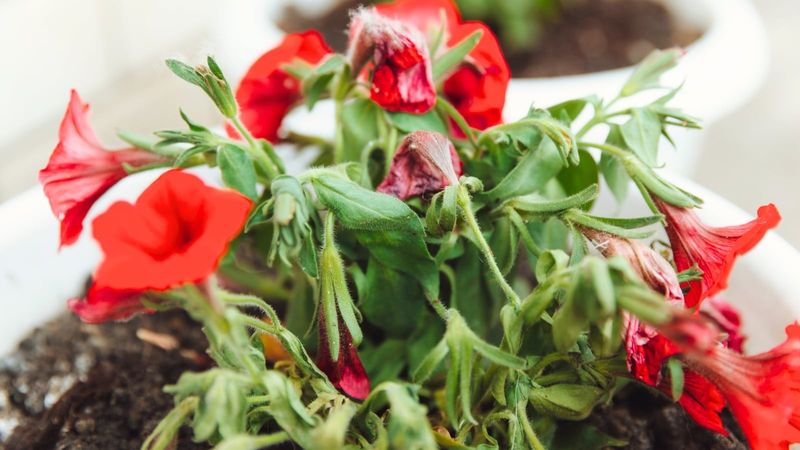
Some plants signal clearly that a reset cutback is not the right response. A petunia that is rapidly collapsing, wilting despite wet soil, or showing soft dark tissue at the crown or stem base may be dealing with Phytophthora crown rot.
Penn State Extension’s petunia disease guide lists crown rot among the conditions that cause branches to wilt and plants to die quickly from the crown outward, with wet, slow-draining soil creating favorable conditions for the pathogen.
Feeding and watering more will not help a plant with crown or root disease; in wet conditions, it can make things worse. Ask Extension guidance on crown rot in container plants supports removing the affected plant and the surrounding growing medium rather than attempting to rehabilitate it in place.
If you suspect disease, replacing the plant and improving drainage before replanting is the more practical course.
Cultivar differences also matter when deciding how much shaping a petunia needs beyond the main cutback. Traditional grandiflora and multiflora types can accumulate spent blooms and developing seed capsules that slow flower production, so removing those can help.
Newer self-cleaning trailing types, including many branded series, are bred to drop spent flowers on their own and often need only light shaping rather than regular deadheading. Oklahoma State Extension’s profile of Supertunia Vista Bubblegum and Texas A&M’s seasonal color guidance both reflect that modern trailing petunias behave differently from older standard types, so the right aftercare depends on what you are growing.
Use the reset as a conditional second chance
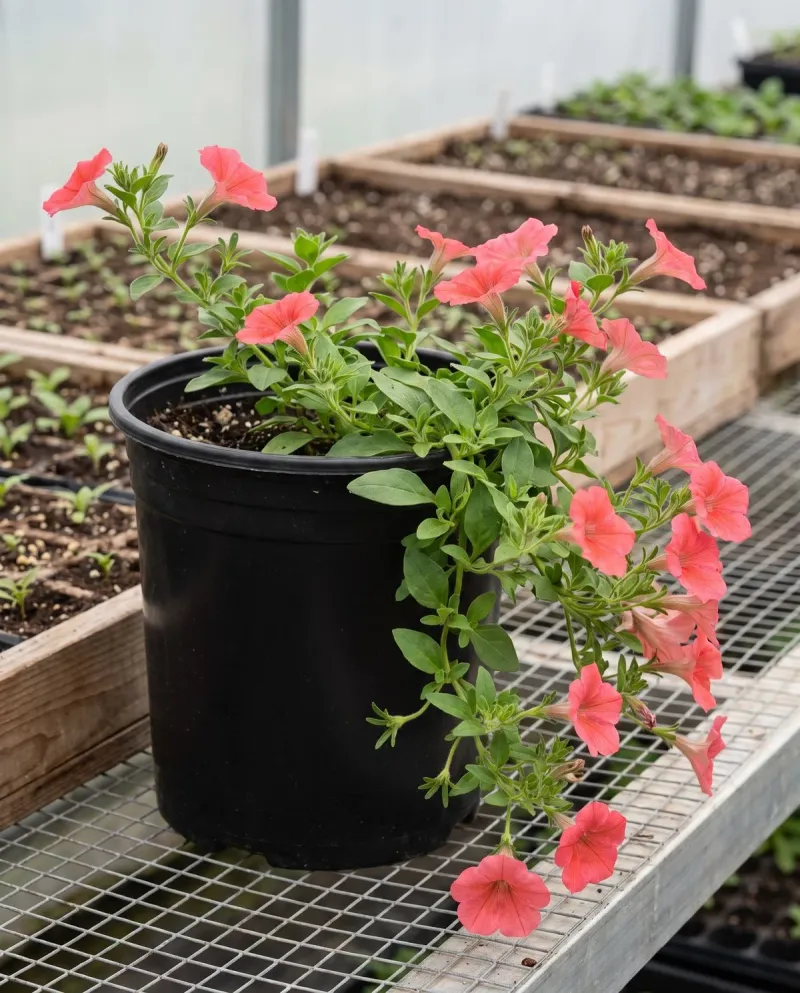
The sequence is straightforward: check the plant first, confirm it is healthy but leggy rather than diseased or heat-damaged, then make the cutback at the appropriate severity. A moderate one-third-to-one-half trim suits most cases, while a more severe reduction to a few inches suits a vigorous but badly overgrown plant that still retains some green foliage.
After pruning, verify soil moisture and drainage before watering, and apply fertilizer only as directed on the label.
Fresh branching and renewed flowering may appear within several weeks under suitable conditions, though the timeline varies with cultivar, remaining heat, and how healthy the plant was going in. Georgia Extension’s flowering annuals guide and Maryland Extension petunia guidance both frame recovery as possible rather than guaranteed, which is the right expectation to carry into this process.
A worn-out but otherwise healthy petunia is worth the attempt. One showing signs of crown or root disease, suffering from extreme heat damage, or simply past its seasonal window in South Florida or central Texas may be better replaced than reset.
Knowing which situation you are in is what turns a simple pruning decision into a genuinely useful one.