
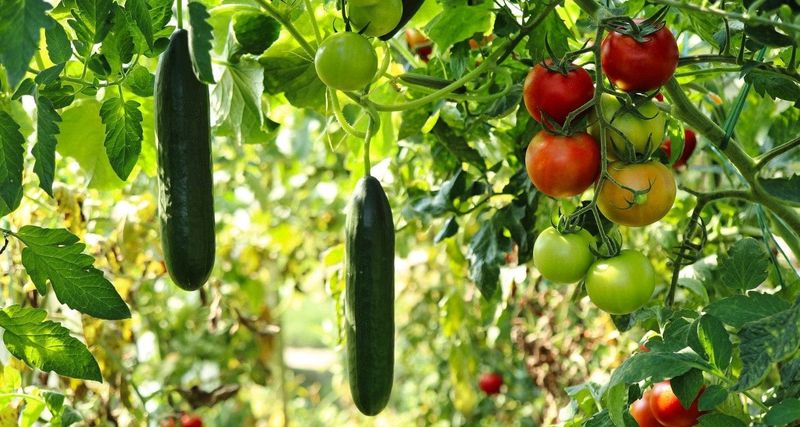
Watching your tomato and cucumber plants slow down in midsummer is one of the most frustrating moments in a Southern garden. Fewer flowers, fruit that won’t set, and vines that just seem to stall can make you wonder if you missed something at planting.
The good news is that feeding strategy can sometimes play a role, but it works only when nutrients are the actual problem, and that is not always the case.
A Slower Harvest Does Not Automatically Mean Hungry Plants
Reduced fruit production can feel alarming, but fewer tomatoes or cucumbers on the vine does not automatically point to a fertilizer shortage. Several different problems wear the same disguise, and reaching for a fertilizer bag before diagnosing the real cause can make things worse, not better.
Pay attention to what you actually see on the plant. Flowers that form and then drop before any fruit develops often signal heat, humidity, or pollination trouble rather than a missing nutrient.
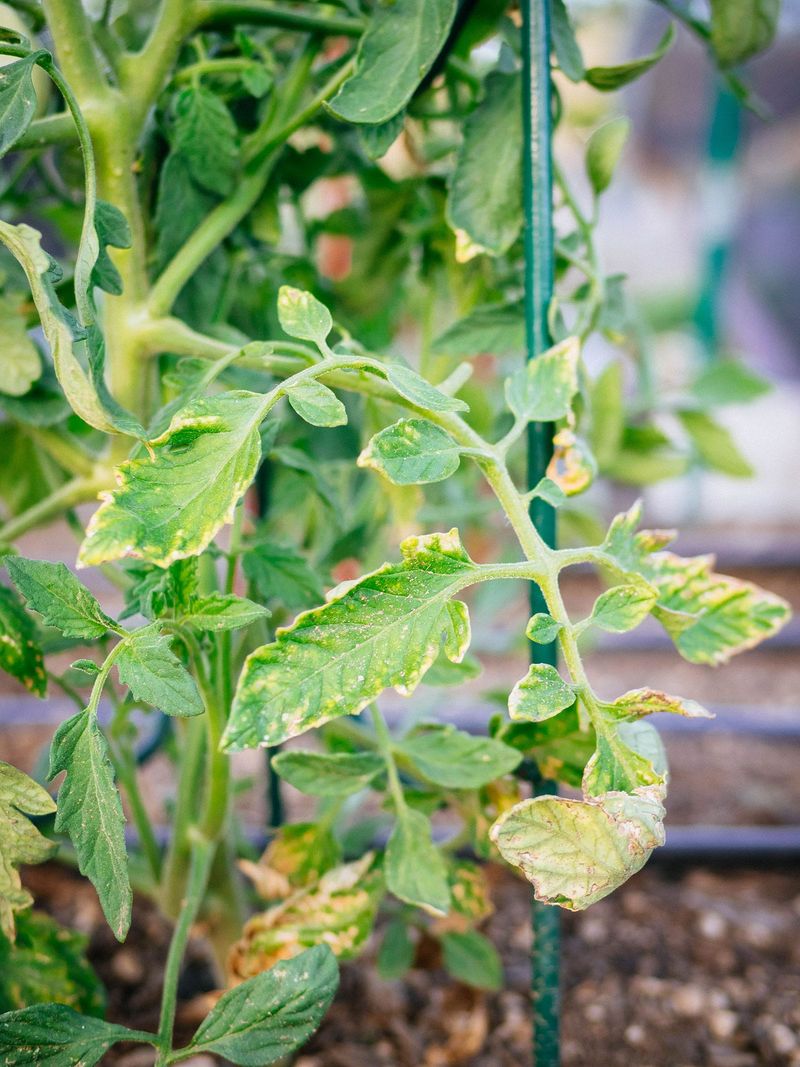
Pale or yellowing foliage, especially on older leaves lower on the plant, is a more plausible sign that nitrogen or another nutrient may be running low. Lush, dark-green growth with very few flowers can actually point to too much nitrogen already in the soil.
Misshapen or dropping fruit, meanwhile, calls for a closer look at moisture consistency, disease pressure, and insect activity before any feeding decision is made.
Extension guidance on late-season cucumber and tomato slowdowns consistently points to heat, moisture stress, and pollination failure as leading causes that fertilizer cannot fix. Before adding anything to the soil, walk through a quick checklist: check whether the plant is still healthy enough to respond, look for signs of disease or pest damage, and make sure irrigation is consistent.
UGA Cooperative Extension home gardening guidance recommends addressing water stress and soil conditions before adjusting fertilizer programs. The goal of this article is not to promise a doubled harvest but to help you decide whether a feeding change is even warranted in the first place.
Heat Can Stop Fruit Set Even When Nutrition Is Adequate
Southern summers can push garden temperatures well past what tomatoes and cucumbers are built to handle during flowering. When daytime temperatures climb above roughly 90 degrees Fahrenheit or nighttime temperatures stay near 70 degrees or higher, tomato pollen can lose viability before it reaches the stigma, causing blossoms to drop without ever setting fruit.
No amount of fertilizer restores pollen that heat has already damaged.
Tomatoes are self-pollinating, but that process still depends on viable pollen being released and transferred within the flower. Extension advice on tomato blossom drop confirms that high temperatures are among the most common reasons flowers fall without fruiting, and that the fix is not more fertilizer.
Cucumbers face a different but related challenge: they depend on pollinators to carry pollen from male to female flowers, and heat can push plants to produce more male flowers while reducing pollinator activity during the hottest hours of the day.
Ask Extension guidance on late-season cucumber flower and fruit problems notes that a flush of blossoms with little fruit often reflects pollination failure tied to heat and humidity rather than a nutrient gap. Adding nitrogen or potassium to a heat-stalled plant will not restart fruit set and may encourage leafy growth that makes conditions worse.
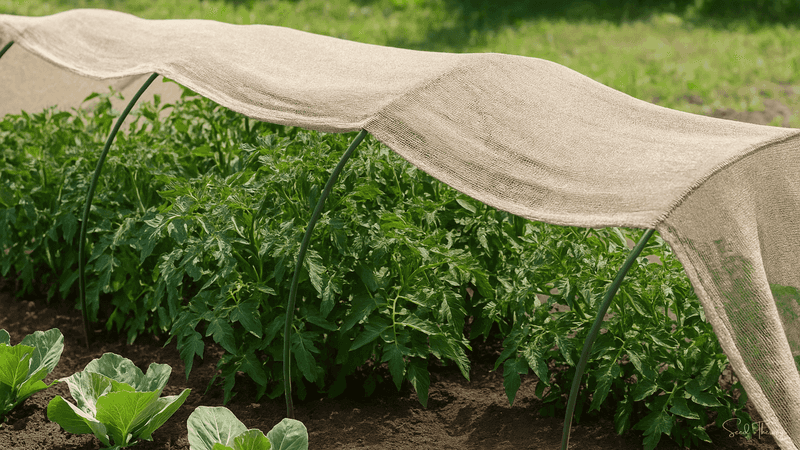
The more useful responses are consistent irrigation, shade cloth during peak afternoon heat, and patience for temperatures to moderate before expecting new fruit to form.
The Useful Feeding Change Is Measured Split Application
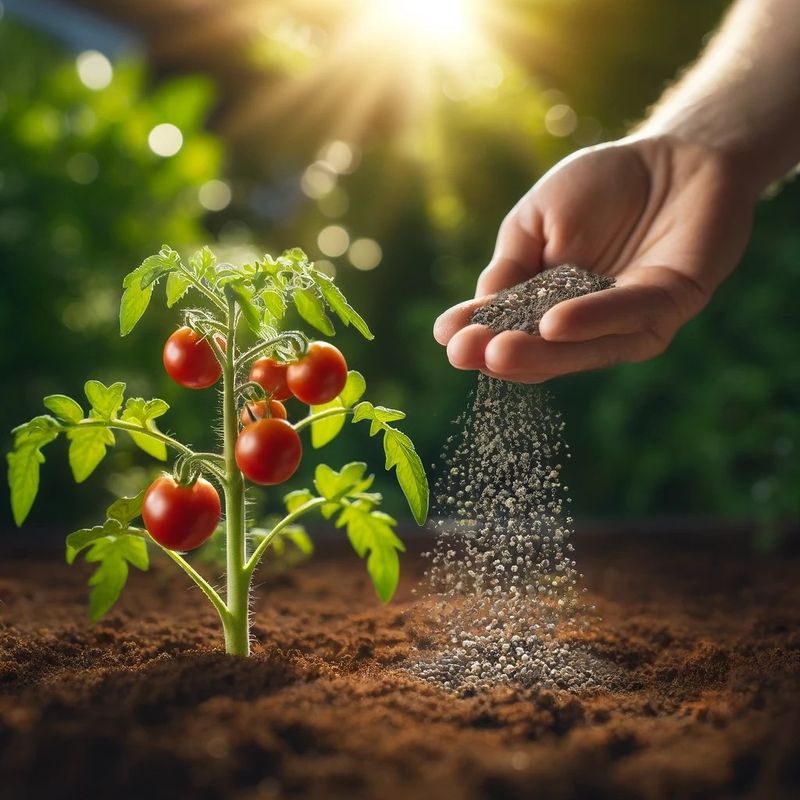
The feeding adjustment that extension research actually supports is simpler than most gardeners expect. Rather than applying all of a season’s fertilizer at planting and walking away, spreading those nutrients across several smaller applications during active growth gives plants a steadier supply and reduces the risk of losing nitrogen before roots can use it.
Sandy soils, common across much of Florida and parts of Texas, are particularly prone to nitrogen leaching when heavy rain or irrigation pushes water through the profile quickly. UF/IFAS research summarizing nitrogen, phosphorus, and potassium trials with cucumbers in Florida found that cucumbers receiving more of their nitrogen later in the season had higher late-season soil nitrate levels, fewer cull fruits, and higher total yields compared with crops that received most of their fertilizer before planting.
Those experiments were conducted at commercial scale under controlled conditions, and they do not prove that a backyard planting will double its harvest. What they do suggest is that timing matters, and that front-loading all nutrients at the start of the season can leave plants short later when they need support most.
Texas A&M AgriLife guidance on vegetable soils and fertilizers supports split applications of nitrogen and, where a soil test justifies it, potassium. The Texas cultural practices chapter recommends supplemental nitrogen through sidedressing or irrigation rather than a single large pre-plant dose.
Splitting the application is the practical change worth making, and it works best when the plant is healthy, actively growing, and showing signs that nutrients may actually be limiting production.
Tomatoes and Cucumbers Need Different Timing Decisions
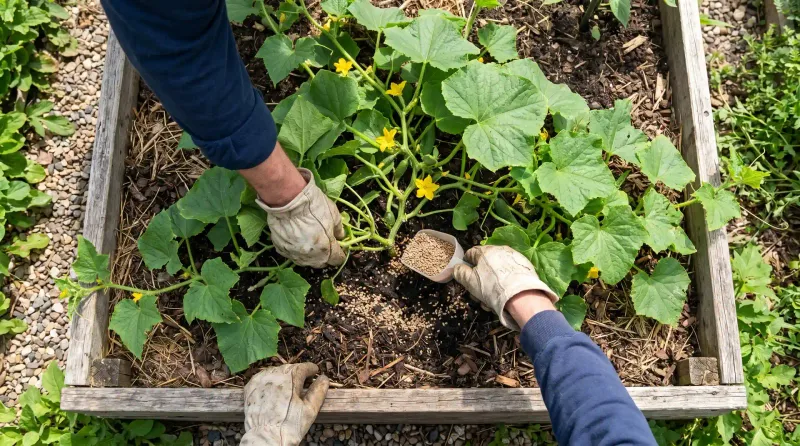
Treating tomatoes and cucumbers as a single crop when planning a feeding schedule leads to timing mistakes that can shortchange one or both plants. Their fruit development cycles, root systems, and responses to nutrient timing differ enough to deserve separate decisions.
For tomatoes, the standard extension recommendation is to wait until the first fruits are roughly quarter-sized before applying a sidedress of fertilizer. UGA Cooperative Extension tomato guidance uses a 10-10-10 sidedress at that stage as an example, with repeat applications every three to four weeks until harvest.
That schedule is an example tied to a specific product and soil context, not a universal rule that applies to every garden. Your product label, local extension recommendation, and soil-test results should determine what rate and timing actually fit your situation.
Cucumbers present a different case because they produce fruit continuously over a long harvest window rather than in a single flush. Texas AgriLife cultural practice guidance notes that cucumbers on light or sandy soils can benefit from supplemental nitrogen during the harvest period, supplied through sidedressing or irrigation.
The UF/IFAS cucumber fertilizer summary supports this approach for Florida conditions. In either crop, the decision to feed should be conditional on plant health, soil type, prior amendments, and whether a plausible nutrient shortage exists.
UGA home gardening guidance emphasizes keeping soil moisture consistent alongside any feeding program, since roots cannot take up nutrients well when the soil swings between wet and dry.
A Soil Test Helps Show Whether Potassium Belongs in the Plan
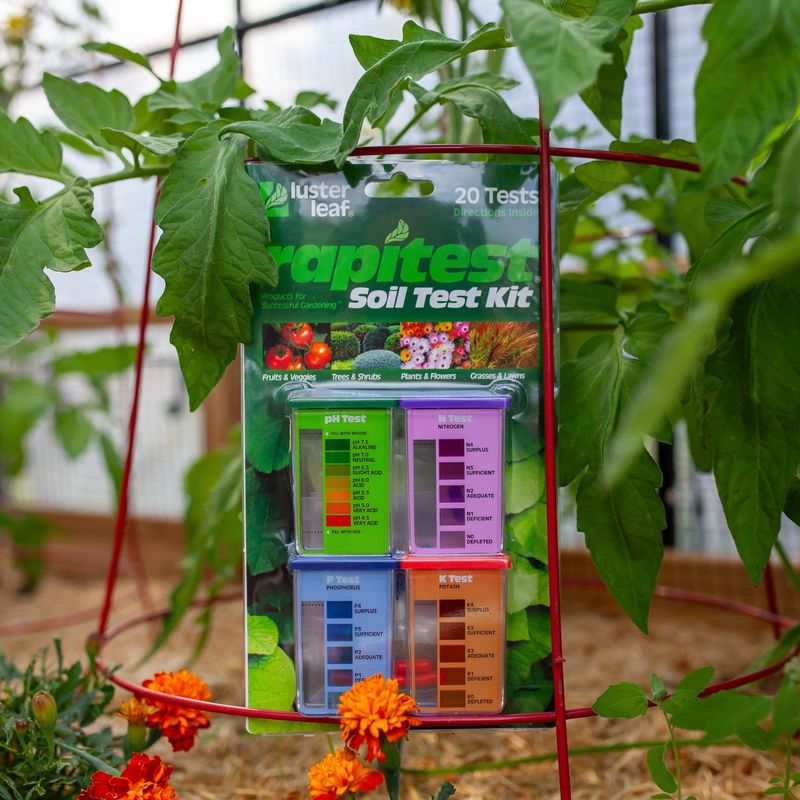
Picking up a high-potassium bloom booster at the garden center feels like a logical response when fruit production slows, but potassium helps only when the soil is actually short on it. Applying extra potassium to soil that already has adequate levels is unlikely to increase yields and can create nutrient imbalances that make things worse.
UF/IFAS tomato fertilizer research in Florida found that tomato yields generally did not improve beyond recommended potassium rates, and that excessive applications sometimes reduced yields rather than boosting them. The same logic applies to phosphorus.
Home gardens that have received repeated applications of compost, manure, bone meal, or bloom-booster products often already carry more phosphorus in the soil than any vegetable crop can use. Oregon State Extension guidance on fertilizer basics warns that excess phosphorus accumulates in the soil and can move into waterways through runoff, making over-application both wasteful and environmentally harmful.
Nitrogen deserves the same careful approach. Excess nitrogen pushes plants toward vigorous leafy growth while slowing flower formation and reducing fruiting in tomatoes and other vegetables.
Texas A&M AgriLife soils and fertilizers guidance explains that nitrogen, phosphate, and potash appear on fertilizer labels in that order, with phosphate reported as P2O5 and potash as K2O rather than as elemental phosphorus and potassium. A 10-10-10 product, for example, contains 10 percent of each by weight in those forms.
The 2024 Southeastern Vegetable Crop Handbook advises basing potassium and phosphorus applications on soil-test results, noting that when soil levels already exceed crop needs, withholding those nutrients saves money and protects water quality. Running a soil test before making any large fertilizer adjustment is the most reliable way to avoid adding something the soil does not need.
Apply a Sidedress Without Creating a New Plant Problem
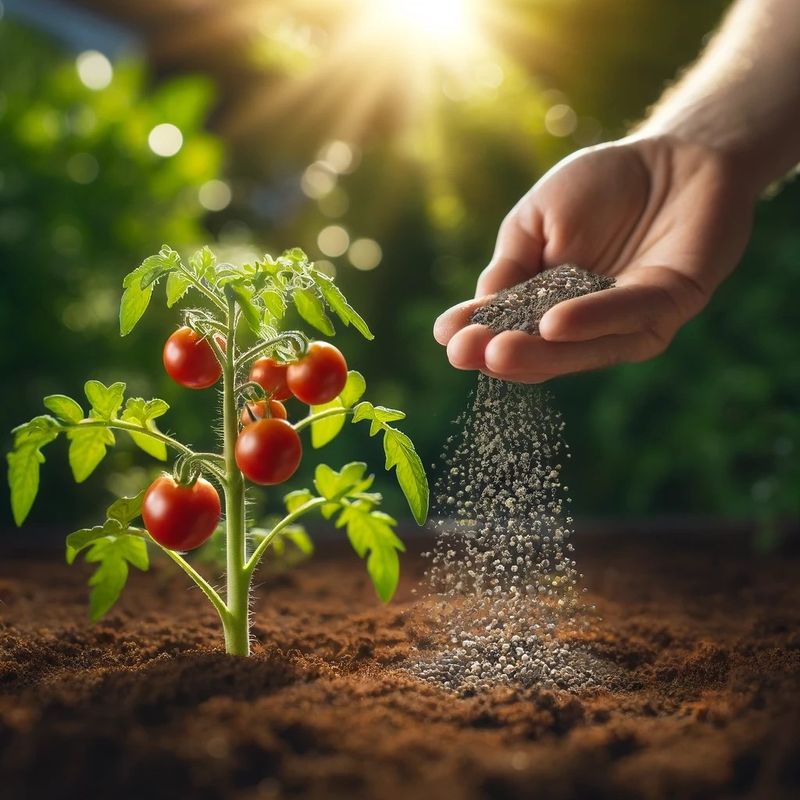
Even a well-timed sidedress can injure plants if it is applied carelessly. Concentrated granular fertilizer placed against plant stems, spread onto foliage, or worked into dry soil can burn roots and leaves through salt damage, setting the plant back rather than helping it recover.
A safe application sequence starts with confirming that the plant is still healthy enough to benefit. If disease, severe pest damage, or advanced age has already compromised the plant, adding fertilizer will not restore production.
When feeding is justified, use a measured amount of a complete vegetable fertilizer according to its label. Keep granular fertilizer at least a few inches away from stems, incorporate it lightly into the soil surface where appropriate, and water it in as the label directs.
Never apply granular fertilizer to drought-stressed soil or immediately before a heavy rain is expected, since either situation reduces nutrient uptake and increases the risk of runoff. UGA Cooperative Extension home gardening guidance and Texas A&M AgriLife fertilizing guidance both emphasize proper placement and watering-in as essential steps.
Foliar feeding comes up often as a faster alternative, but it is not a general solution for late-season slowdowns. The Southeastern Vegetable Crop Handbook notes that foliar feeding is usually unnecessary when soil fertility is managed properly and is more appropriate for specific micronutrient problems or emergency situations where labeled products are used as directed.
Spraying concentrated fertilizer onto leaves can cause burn and should be avoided. Pair any sidedress application with consistent deep irrigation and a layer of mulch to help roots take up nutrients steadily and to reduce the moisture swings that trigger blossom-end rot.
UGA tomato growing tips connect consistent moisture directly to calcium delivery and blossom-end rot prevention.
Heat-Stressed Crops May Need Relief More Than Another Feeding
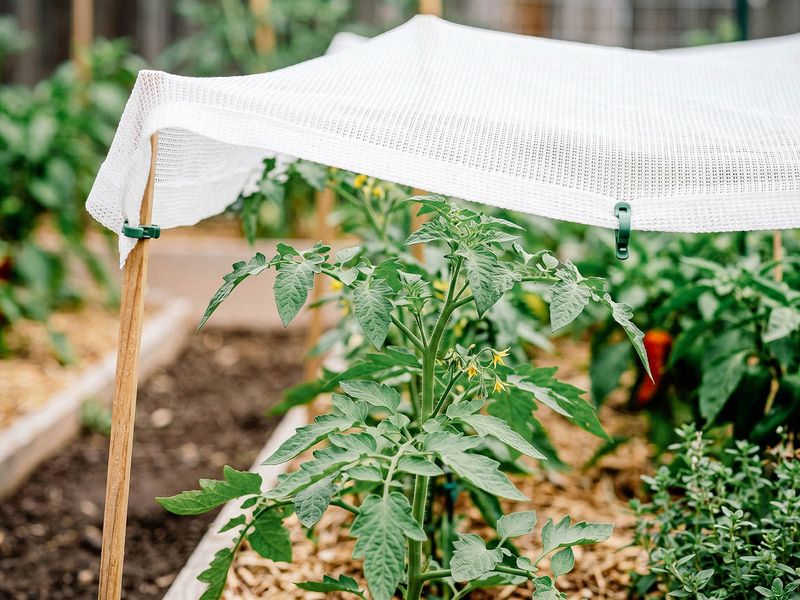
Fertilizer works best as a support for healthy, actively growing plants, not as a rescue for crops that are struggling because of heat, disease, water stress, or age. When the real problem is a Southern summer that will not let up, the most effective responses have nothing to do with the fertilizer bag.
Consistent soil moisture matters more during peak heat than almost any other management decision. Mulch slows evaporation, moderates soil temperature, and reduces the moisture swings that contribute to blossom-end rot and poor fruit quality.
Shade cloth or temporary structures that block afternoon sun can help tomatoes hold onto blossoms when temperatures are at their worst. Extension guidance on tomato blossom drop points to shade and consistent irrigation as more reliable tools than extra fertilizer when heat is the primary stressor.
Choosing heat-tolerant tomato varieties suited to Southern conditions also gives plants a better chance of setting fruit through a long, hot season.
Older plants carrying disease pressure or severe pest damage are unlikely to respond to any feeding change. When a plant has declined past the point of recovery, the more practical decision is to remove it, address the underlying problem, and plan for a fall planting when temperatures ease.
The split-feeding approach described in this article is worth trying only on a healthy, actively growing crop where a plausible nutrient shortage exists and other stressors have been ruled out or managed. No fertilizer program carries a guarantee of a doubled harvest, and chasing that promise while ignoring heat or disease is the most common way Southern gardeners lose the rest of their season.