
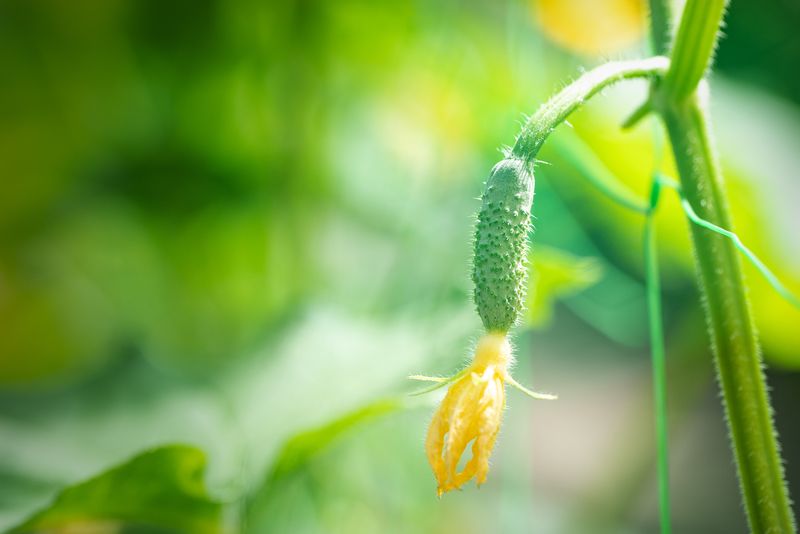
Watching cucumber vines fill up with yellow flowers is exciting, but it can be confusing when those flowers fade and no cucumbers seem to follow. The truth is, you cannot tell just by watching a flower open or close whether pollen actually moved where it needed to go.
What you can do is look at the right part of the plant, track what happens over the next few days, and use what you see to figure out whether fruit is forming or something is getting in the way.
Start at the flower’s base, not its petals
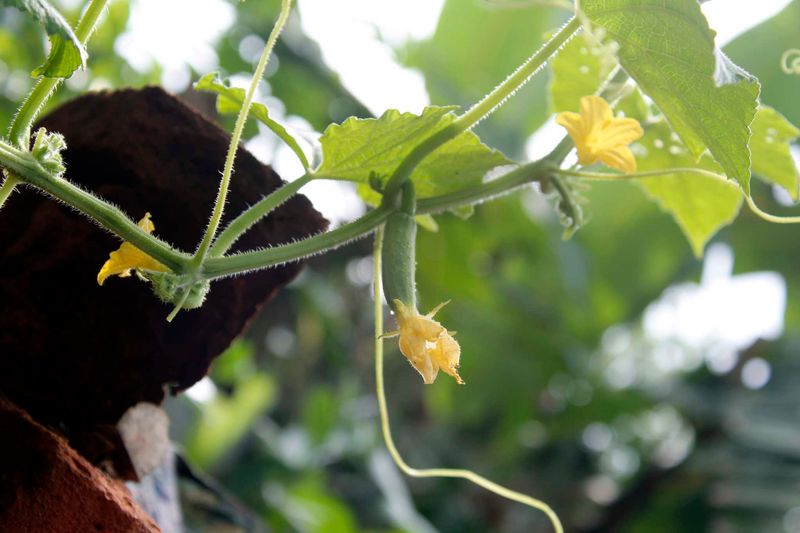
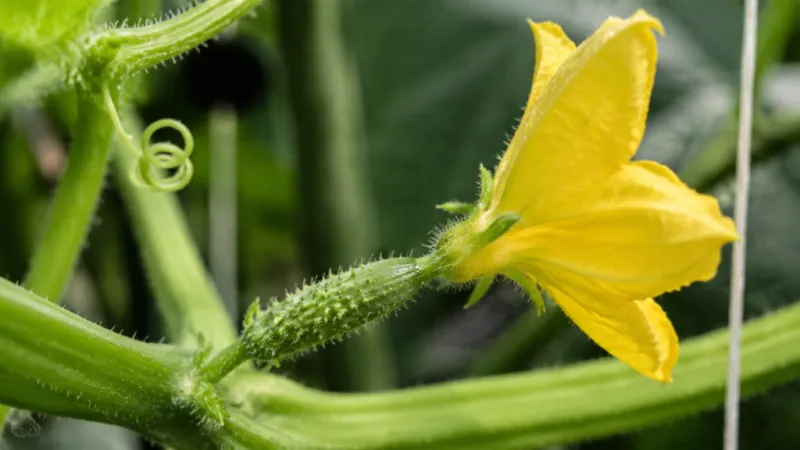
Grab a look at the bottom of the flower before you worry about anything else. A female cucumber flower has a miniature cucumber-shaped swelling right where the bloom meets the stem, and that tiny green nub is the only part that can grow into a cucumber.
A male flower, by contrast, sits on a plain slender stem with no swelling at all beneath the yellow petals.
Knowing which type you are looking at matters before any diagnosis begins. Mississippi State University Extension notes that only the female flower develops into fruit, and that male flowers naturally drop from the vine after they bloom, which is completely normal behavior and not a sign of trouble on its own.
Early in the season, vines commonly push out a wave of male flowers before female flowers appear. Washington State University Extension’s home garden guide points out that this male-first pattern is typical rather than alarming.
Check flowers in the morning when blooms are open, since that is when pollinators tend to be most active, but keep in mind that morning inspection does not confirm that pollen transfer happened.
Watch the tiny ovary for fruit-set progress
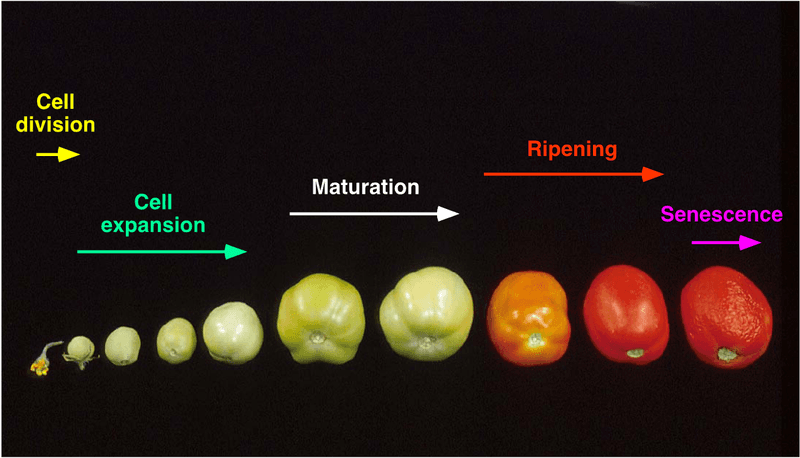
Once you have found a female flower, the miniature cucumber beneath it becomes your best ongoing clue. Mark the stem near it with a piece of tape or a twist tie so you can return to the same flower each day and track what happens to that small green bump over the next several days.
Even, continued enlargement of the ovary is the most useful visible sign that fruit set is progressing. Penn State Extension’s cucumber pollination guide explains that this kind of growth indicates the flower has set fruit, while a tiny ovary that stays the same size, shrivels, or browns at the blossom end signals that something interrupted the process.
A critical point worth stating plainly: the initial swelling you see on a female flower shows that the plant has fruit-producing potential at that location, not that pollen successfully transferred. University of Minnesota Extension also clarifies that fruit growth on parthenocarpic cultivars does not demonstrate that pollination occurred at all, since those types can form cucumbers without pollen.
Flower opening, closing, fading, or wilting are not reliable ways to tell whether pollination happened; the ovary’s growth over time is the practical test.
Read stalled and misshapen fruit as warning signs
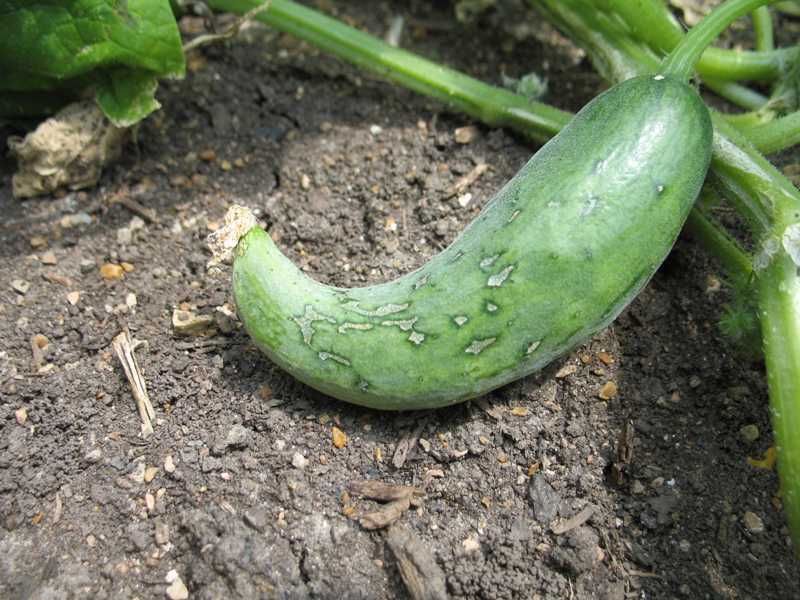
A female ovary that stays tiny for several days and then shrivels, browns at the tip, or drops from the vine entirely is telling you something went wrong, but it is not telling you exactly what. That same outcome can come from incomplete pollen transfer, high heat, drought, too much water, insect feeding, disease pressure, or a combination of stresses happening at the same time.
WSU’s Hortsense fact sheet on cucurbit pollination failure lists both pollination problems and environmental stress as recognized causes of small-fruit abortion, and the visible result often looks identical regardless of the cause. Fruit that begins to grow but ends up crooked, pinched in the middle, narrow at one end, or undersized adds another layer to the investigation, since incomplete pollen coverage across the ovary can produce uneven seed development and irregular shape, though poor watering, low fertility, and heat can create the same distorted results.
The University of Maryland Extension’s key to cucumber problems treats misshapen fruit as a nonspecific symptom requiring a broader look at growing conditions rather than an automatic diagnosis of pollination failure. Treat stalled, dropped, or deformed fruit as a warning flag that prompts investigation, not as proof that bees were absent or that pollen never reached the stigma.
Check heat, water, and other stresses before blaming pollinators
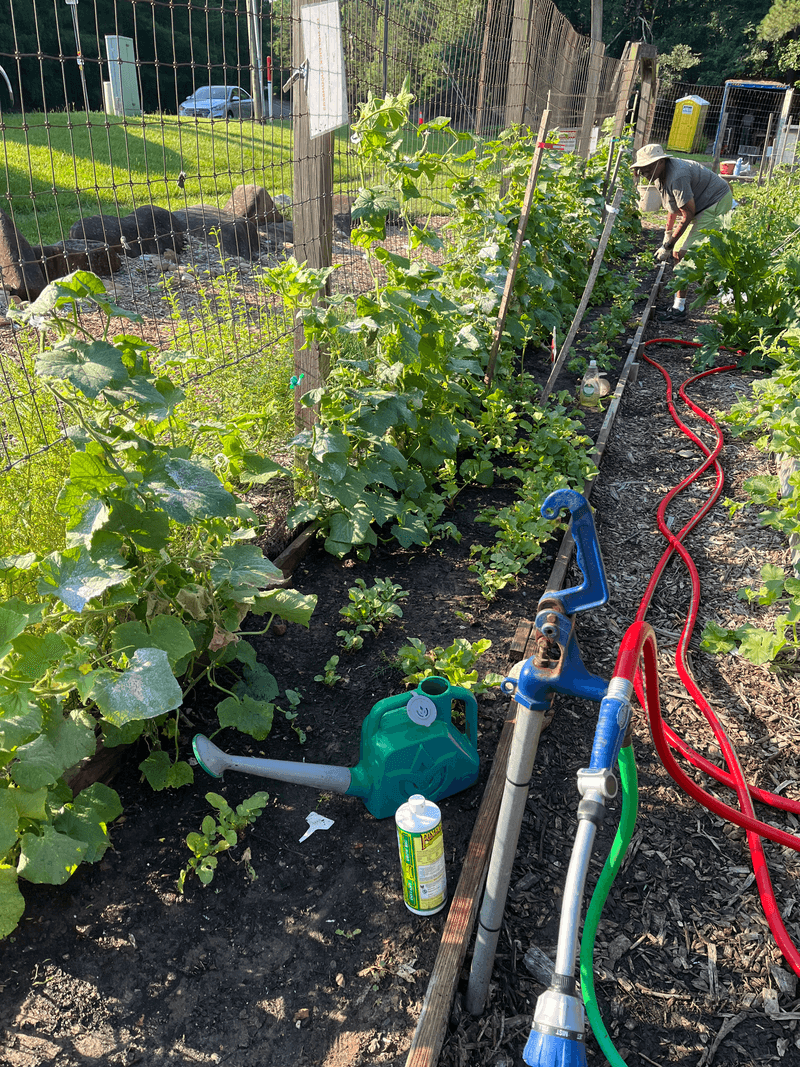
Before concluding that pollinators failed your cucumbers, run through the growing conditions your plants have experienced recently. Southern gardens face a particular challenge because heat does not just slow bees down; it can directly cause flowers and small fruit to abort even when pollen transfer occurred normally.
University of Minnesota Extension’s vining vegetable guide notes that daytime temperatures in the high 80s and 90s Fahrenheit, combined with warm nights, can increase flower and small-fruit abortion in cucurbits. Florida and Texas gardeners dealing with extended heat waves should treat temperature as a strong competing explanation before assuming pollination is the problem.
No single temperature cutoff applies to every cultivar and every garden, so watch trends rather than chasing one number.
Water consistency matters just as much. Both drought stress and excessive soil moisture can trigger flower drop or small-fruit abortion, and inconsistent watering that swings between wet and dry is especially disruptive.
Penn State Extension’s high-tunnel cucumber guide also flags low light, overcrowding, pest feeding, disease, and nutrient imbalances as additional causes of poor fruit set. Check recent rainfall, your irrigation schedule, foliage for pest or disease damage, and overall vine health alongside any flower evidence before settling on a single explanation.
Let the cultivar determine whether pollination is necessary
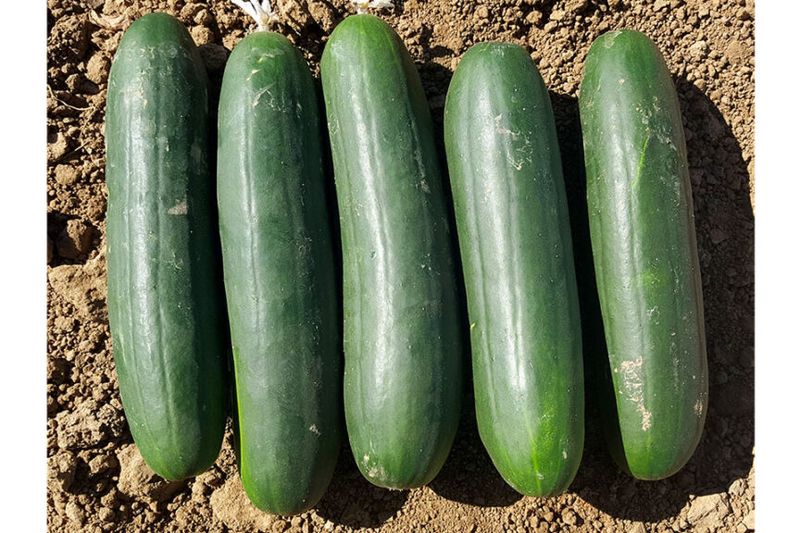
Reading the seed packet before diagnosing a pollination problem can save a lot of unnecessary worry. Cucumber cultivars fall into a few distinct categories, and which one you are growing changes what the flowers, fruit set, and any failures actually mean.
Conventional cucumbers produce both male and female flowers on the same vine, but pollen still must travel from one flower to the other, usually carried by bees or other insects. Penn State Extension is clear that these plants are not truly self-pollinating in the way that tomatoes are, because separate male and female flowers mean pollen has to move between them rather than within a single bloom.
Calling standard cucumbers self-pollinating can lead gardeners to underestimate how much insect activity matters.
Parthenocarpic cultivars are a separate case entirely. University of Minnesota Extension explains that parthenocarpic types can produce fruit without any pollination, which makes them well suited for greenhouses, high tunnels, or situations where pollinators are excluded.
Gynoecious varieties add another layer of nuance: those plants produce mostly or entirely female flowers, but many gynoecious cultivars still require pollen from a male-flowering pollenizer plant to set fruit. Oklahoma State University Extension’s cucumber production guide points out that seed companies often include pollenizer seeds in gynoecious packets for exactly this reason.
Gynoecious is a flower-sex description, not a pollination-free guarantee.
Use hand pollination only as a targeted backup
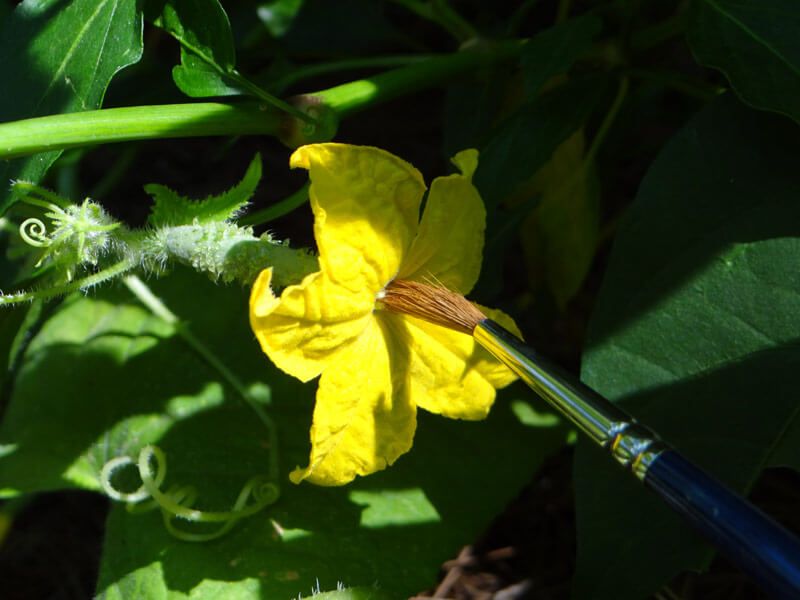
Hand pollination is a practical option for gardeners growing conventional cucumbers who notice that female flowers are opening and dropping without setting fruit, and that very few bees or other pollinators seem to be visiting. Treating it as a targeted response to a specific problem, rather than a routine step for every flower, keeps the effort reasonable and avoids unnecessary disturbance to the plant.
The procedure itself is straightforward. Find a freshly opened male flower in the morning when pollen is available, use a soft artist’s brush or a clean cotton swab to collect pollen from the center of the male flower, and then transfer that pollen directly to the stigma inside an open female flower.
Penn State Extension describes this approach as a useful home-garden response when natural pollinator activity is limited and female flowers are not progressing to fruit. Focus on flowers that opened that morning, since cucumber blooms remain receptive for only a short window.
One firm rule applies regardless of how frustrated you are with pollinator activity: do not spray insecticides on open flowers or use chemicals in an attempt to attract bees. University of Maryland Extension’s pollinator-protection guidance is explicit that insecticide applications can harm pollinators, and any product must be used strictly according to label directions.
If you do need to treat a pest problem, apply in the evening after flowers have closed and bees have stopped foraging, and avoid treating blooming plants unless the label specifically permits it.
Follow a three-step diagnosis
When a cucumber vine is blooming but fruit is not appearing, the most useful thing you can do is work through three questions in order rather than jumping straight to a pollination conclusion. Penn State Extension and University of Maryland Extension both support a systematic approach that starts with flower identification, moves to ovary monitoring, and then expands to cultivar and environmental investigation when something stalls.
First, confirm you are watching a female flower by checking for the tiny cucumber-shaped ovary at the base. Second, track that ovary for several days – even enlargement is your best visible evidence that fruit set is progressing, though it does not directly prove pollen transferred.
Third, if the ovary stalls, shrivels, or the fruit grows poorly, check your cultivar type and then review heat, watering, light, pests, and disease before assuming pollination failed. University of Minnesota Extension reinforces that parthenocarpic types require no pollination at all, so knowing what you planted changes every step of the diagnosis.
Keep soil moisture consistent, pay attention to heat patterns during bloom, and reserve hand pollination for situations where the cultivar and the symptoms together point to limited pollinator activity as a likely cause. A cucumber vine that is cared for well and watched closely gives you far more useful information than any single flower can.