
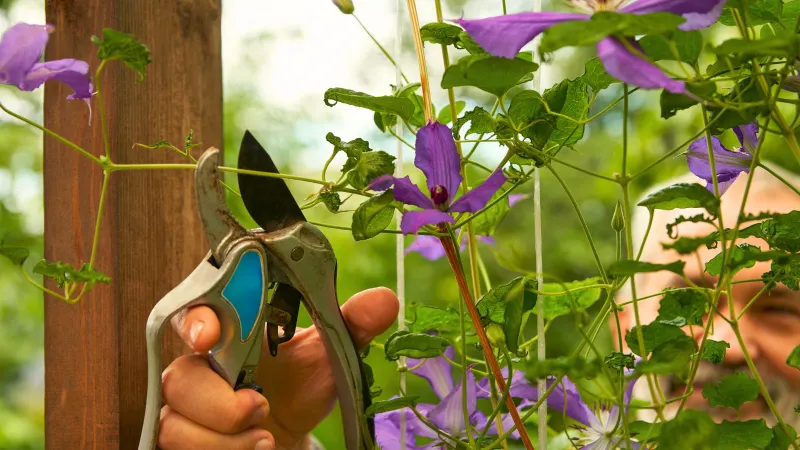
Few gardening frustrations match watching a clematis vine shoot out armfuls of healthy green growth while producing zero flowers. The most common culprit worth checking first is pruning at the wrong time for that plant’s flowering group, which can strip away the very stems or buds the vine was counting on for its seasonal display.
That said, pruning history is a starting point, not a guaranteed answer, because low light, too much nitrogen, drought, young plant age, and disease can all lead to the same leafy-but-bloomless result. Working through a short checklist will help you figure out what actually happened and what to do before you reach for the shears again.
Mistimed pruning is one important clue, not the whole diagnosis
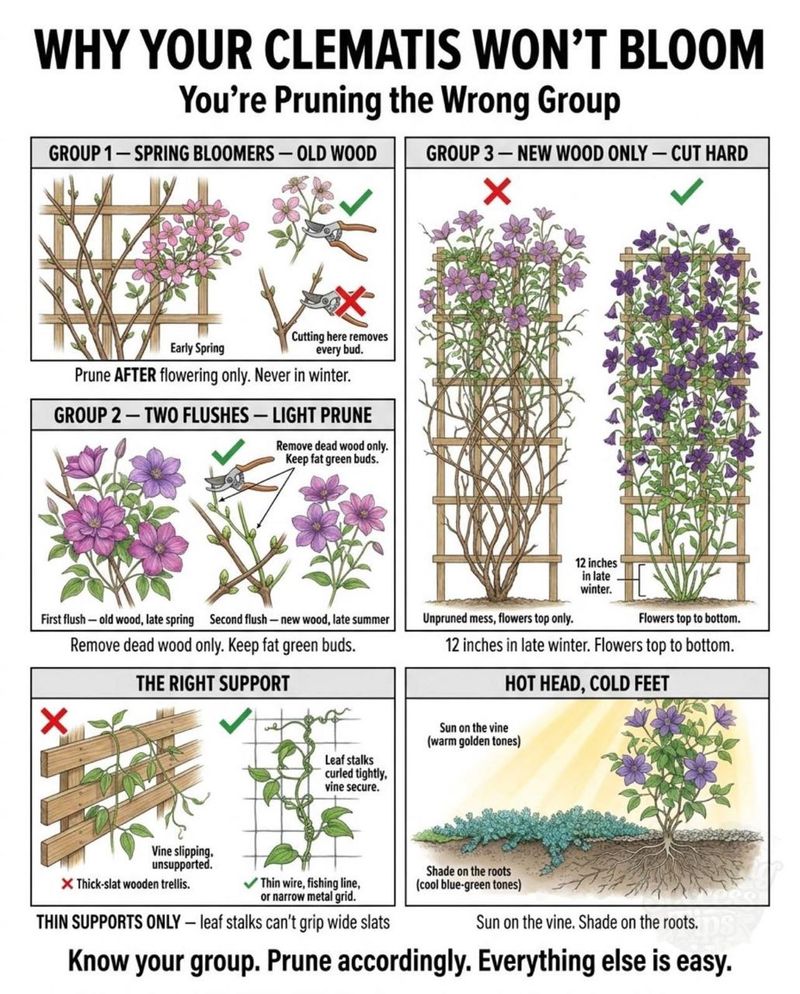
A leafy, vigorous clematis can lose its flowers when a pruning cut removes the stems or buds the plant had already set aside for the current season. The risk is highest for types that form their flower buds on wood grown the previous year.
Cut those stems in late winter or early spring, and the vine grows back enthusiastically while its expected bloom simply never arrives.
Pruning history is a worthwhile first check, but the symptom on its own cannot tell you pruning was the cause. Iowa State Extension’s clematis growing guide lists several competing explanations for poor flowering, including inadequate light, excess nitrogen, drought, winter damage, plant immaturity, and disease.
Any one of those can produce a vine that looks perfectly healthy while putting out few or no blooms.
What pruning timing does is give you a concrete, correctable starting point. The Royal Horticultural Society’s clematis FAQ and Iowa State’s pruning FAQ both identify wrong-timed cuts as a leading explanation for a healthy-looking vine that suddenly stops flowering.
Start there, then move through the other possibilities if pruning does not explain what you are seeing.
Identify the pruning group before using the shears
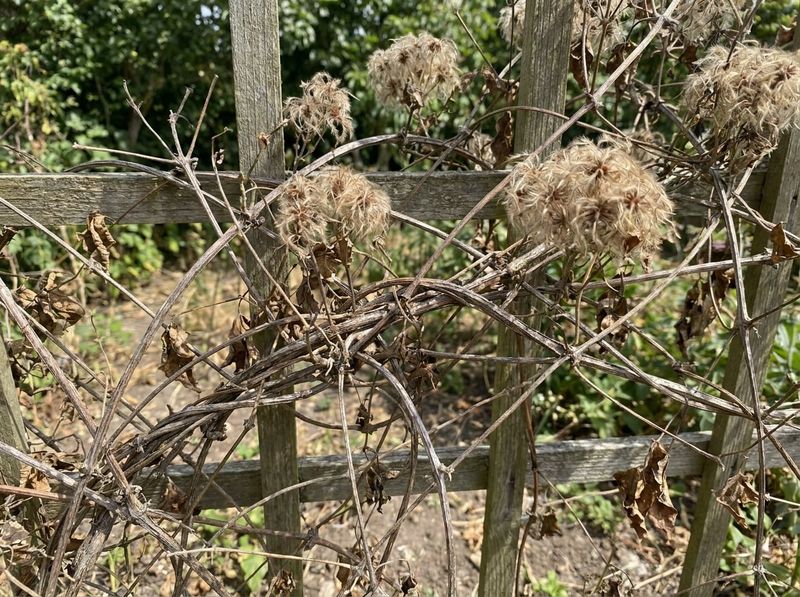
Before any cut makes sense, you need to know which pruning group your clematis belongs to. Check the plant tag first.
If you still have the nursery label or receipt, the cultivar name will usually point you to the right group. A quick search of the cultivar name on a reliable extension or botanical garden site will confirm it.
University of Illinois Extension and Clemson’s clematis factsheet both explain the three groups in plain terms. Group 1 plants bloom primarily on stems produced the prior year, so they flower on old wood.
Group 2 plants are the mixed case, blooming on both older stems and new growth. Group 3 plants flower entirely on the current season’s new growth, making them the most forgiving of hard pruning.
If you genuinely do not know which type you have, the safest move is to watch the vine through one full season before making any major cut. The RHS clematis growing guide notes that bloom timing varies widely, from early spring through fall depending on species and cultivar, so observing when and where flowers appear will tell you far more than guessing.
Mississippi State Extension echoes this point for Southern gardeners choosing among the many available types.
Let Group 1 bloom before you shape it
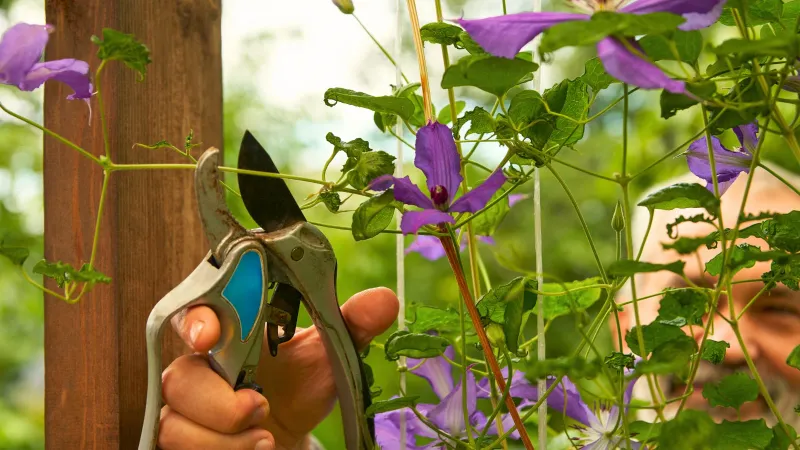
Group 1 clematis carry their flowers on stems that grew the season before. That means the vine spends the summer and fall building the wood it will bloom on the following spring.
Any major pruning done before that display plays out removes exactly the stems the plant prepared.
RHS guidance on clematis is clear on this point: do not carry out substantial shaping before a Group 1 plant flowers. You can remove stems that are clearly dead or badly damaged at any time, but hold off on anything more aggressive until after the plant finishes blooming.
Clemson Extension reinforces this, recommending that significant pruning happen immediately after flowering so the vine has the longest possible window to develop new wood before the next season.
Pruning right after bloom accomplishes two things at once. You get to tidy the plant and manage its size while still preserving the older stems that will carry flowers the following year.
Waiting even a few weeks past that post-bloom window is not catastrophic, but the sooner after flowering you work, the more time the vine has to mature the wood it needs.
Give Group 2 a light, selective trim
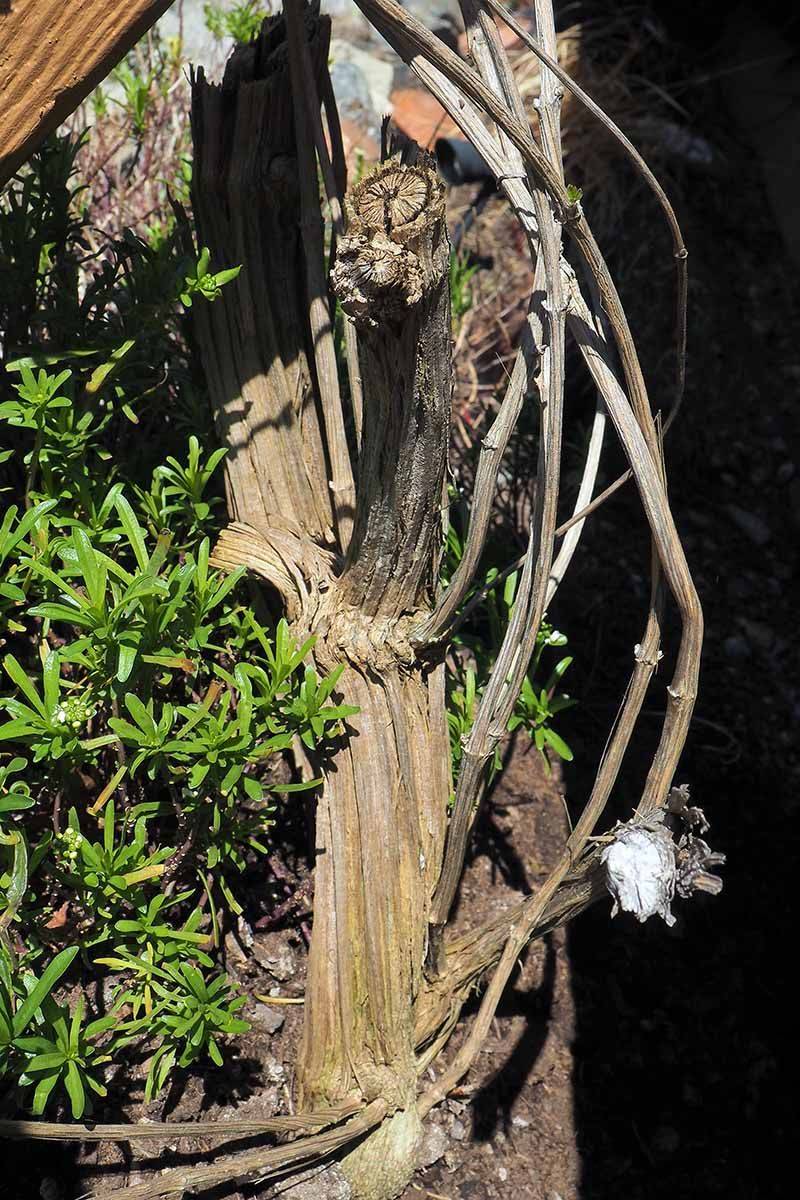
Group 2 clematis occupy a middle ground that trips up a lot of gardeners. These plants bloom on both older wood and new growth, which means they typically produce a first flush of flowers on mature stems in late spring, then a second round on new growth later in the season.
That two-flush habit is the reason they require a more careful, selective approach rather than an aggressive annual cut.
Iowa State Extension’s pruning FAQ advises removing dead or weak stems while leaving the mature stems that carry the first round of flowers. Missouri Botanical Garden’s plant records note that hard pruning can reduce or delay flowering in Group 2 types, which explains why a well-intentioned late-winter cleanup can leave a vigorous vine with only its second, lighter flush rather than the full two-part display.
The practical rule is restraint. Work stem by stem rather than cutting across the whole plant at once.
Remove anything clearly dead, thin out weak or tangled growth, and leave the rest. A Group 2 clematis that looks a little overgrown going into spring will almost always reward that patience with a stronger first bloom than one that was cut back hard.
Reserve hard pruning for Group 3 types
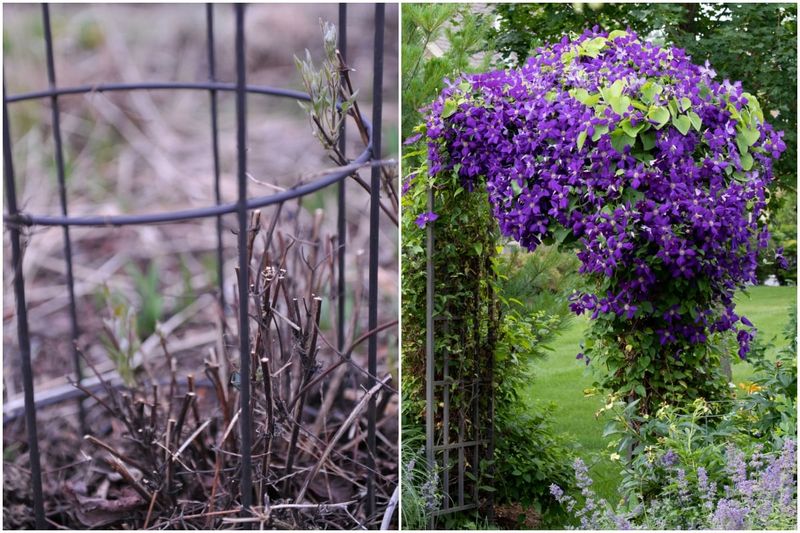
Group 3 clematis are built differently from the first two groups. Every season’s flowers emerge on stems that grew during the current year, so the plant does not need any of its older wood to produce a bloom.
Hard pruning in late winter or very early spring simply clears out the previous year’s spent stems and gives the new growth a clean start.
Published recommendations on how low to cut vary by cultivar and pruning system. University of Illinois Extension, Clemson Extension, and Iowa State Extension collectively describe a range of roughly 6 to 12 inches up to 2 to 3 feet above the ground.
That range exists because cultivars differ. The plant tag or nursery listing for your specific variety should take priority over any generic height you read online.
The important warning here is about misidentification. Applying Group 3’s hard-pruning routine to a Group 1 or Group 2 clematis removes the older wood those plants depend on for flowers.
If you are not certain of the group, err on the side of a lighter cut and use one season of observation to confirm the plant’s blooming behavior before you commit to cutting it back hard. A year of patience protects wood that could take another full season to regrow.
A bad cut usually costs flowers, not the whole vine
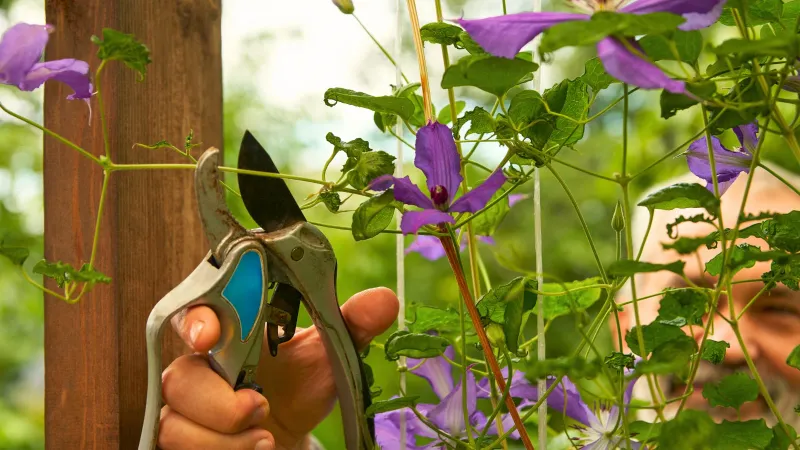
Discovering that you pruned at the wrong time is frustrating, but it is rarely a plant-ending mistake. The RHS notes that an established clematis generally survives incorrect pruning.
The plant may push out vigorous new growth and look perfectly healthy while the expected flowers simply do not materialize for that season.
What cannot be undone is the flowering wood that was already removed. Washington State University’s clematis guide makes clear that once those stems are gone, they cannot return in time to bloom the same year.
The practical response is to stop making additional major cuts, maintain appropriate moisture and light, and wait for the next correct pruning window before trying again.
Adding extra fertilizer or cutting the vine back again will not force flowers to appear ahead of schedule. The best thing you can do after a mistimed cut is give the plant stable growing conditions and let it spend the rest of the season rebuilding.
Most established clematis will return to normal flowering the following year once the pruning is aligned to the correct group and timing.
Check light, water, nutrition, age, and disease
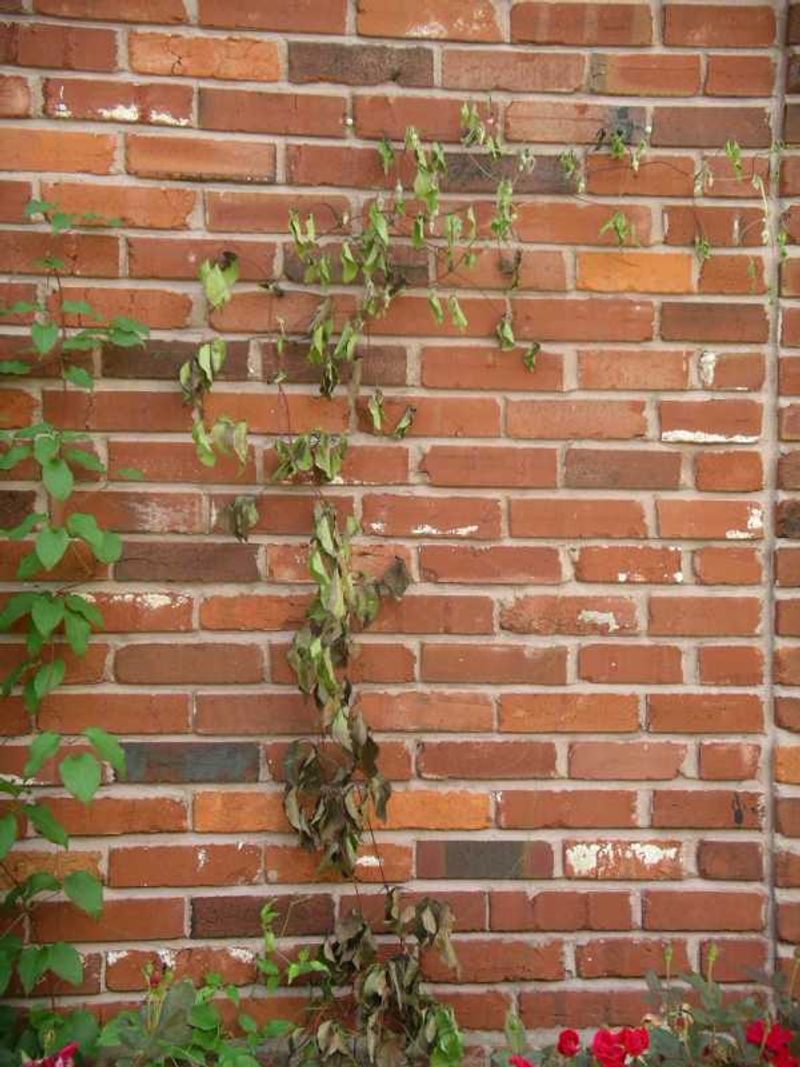
Once you have reviewed pruning history and it does not explain the missing flowers, work through the other common causes in a logical order. Start with light.
UC ANR’s clematis resource and Clemson Extension both indicate that most clematis flower best with approximately six or more hours of sunlight per day. A vine growing in deep shade may produce plenty of foliage while never developing enough energy to set flowers.
Next, look at the foliage itself. Unusually lush, dark-green, fast-growing leaves can signal excess nitrogen.
Iowa State Extension’s growing guide identifies high nitrogen as a credible reason a clematis pushes vegetative growth at the expense of blooms. University of Maryland Extension and NC State’s fertilizing guide reinforce that more fertilizer is not a default fix; soil fertility and plant needs should guide any application.
Also check whether the root zone stays evenly moist but well drained, since drought stress can suppress flowering even when the vine appears outwardly healthy.
Age matters too. UC Master Gardeners’ clematis material notes that newly planted clematis may take two or three years to establish and flower heavily, so a first-season failure is not automatically a pruning problem.
Finally, separate a stable flowerless vine from clematis wilt. Missouri Botanical Garden’s wilt page describes that disease as more associated with sudden wilting, blackening, and dieback rather than a vine that simply grows well without blooming.
NC State’s plant profile also notes that clematis can cause severe mouth pain if ingested, so wear gloves when handling stems and keep plant material away from children and pets.
Use Southern conditions to support the next bloom
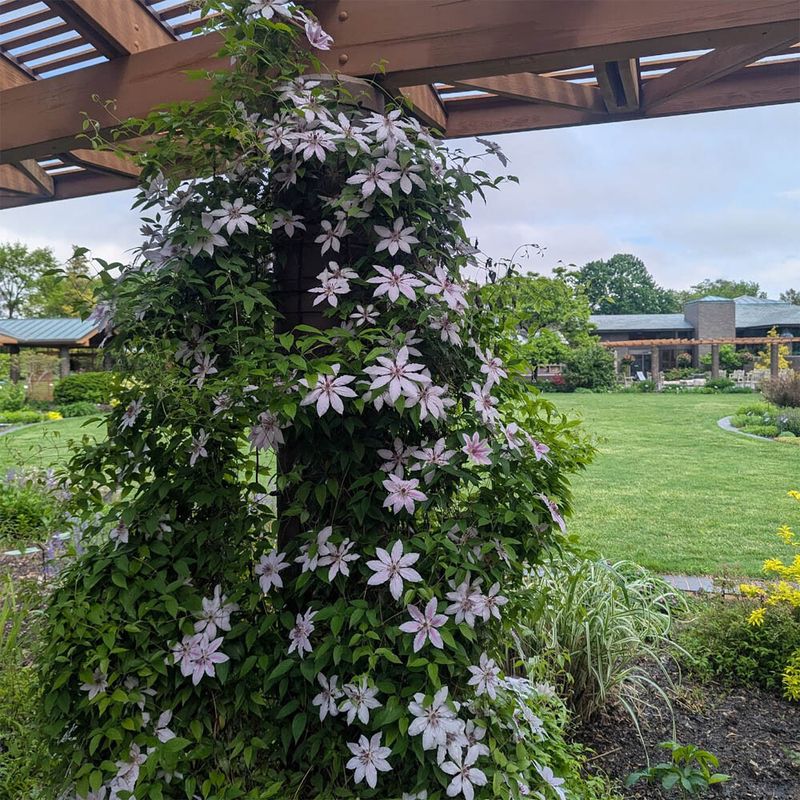
Southern gardens give clematis a long growing season but also bring heat, humidity, and intense afternoon sun that can stress plants not positioned well. Substantial light remains the most important condition for flowering.
Clemson Extension identifies Texas clematis, Clematis texensis, as adapted to hot, dry summers, and Italian clematis, Clematis viticella, as warm-climate tolerant, making cultivar selection a practical first step for gardeners in hotter parts of the region.
Root-zone care matters just as much as sun exposure. A roughly 2-inch layer of mulch can help keep the soil cool and hold moisture without creating the wet conditions clematis dislike.
Keep mulch away from the stems to reduce disease risk. Afternoon shade can protect roots and prevent flower color from fading in the hottest locations, but too much shade across the whole plant will reduce flowering, so the goal is shading the soil rather than blocking light from the vine itself.
UC ANR’s guidance and NC State’s clematis profile both support keeping the root zone evenly moist and well drained as a baseline care practice.
Florida gardeners face one additional consideration. UF/IFAS warns that sweet autumn clematis, Clematis terniflora, is invasive or not recommended in Florida, and the UF/IFAS plant directory advises using native alternatives such as Clematis virginiana or Clematis catesbyana where appropriate.
Choosing the right species from the start avoids both invasiveness concerns and the frustration of a plant poorly suited to your local conditions.
Match the next cut to the plant’s flowering wood
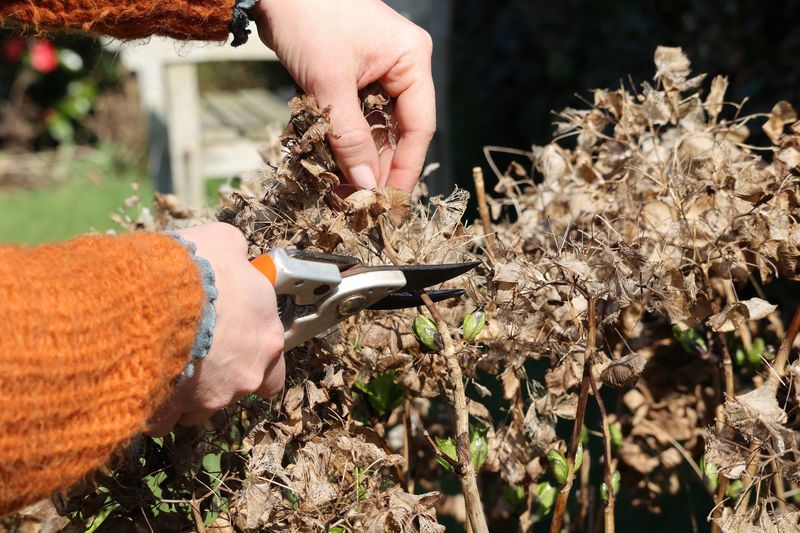
The clearest path forward is also the most straightforward one. Confirm your clematis’s pruning group using the plant tag, cultivar name, or a reliable extension source.
Once you know whether the plant flowers on old wood, new wood, or both, you can match your pruning timing and intensity to that group rather than applying a one-size-fits-all approach.
The RHS, University of Illinois Extension, and Iowa State Extension all point to group-appropriate pruning as a high-value troubleshooting step, while making clear that the symptom of lush growth with no blooms can have more than one cause. Pruning is worth checking first, not because it is always the answer, but because it is one of the easiest variables to identify and correct.
Keep a simple note of when your clematis blooms, where the flowers appear on the vine, and what pruning you did and when. That record will be more useful than any generic advice the next time the plant surprises you.
A clematis that is understood tends to reward the gardener who pays attention.