
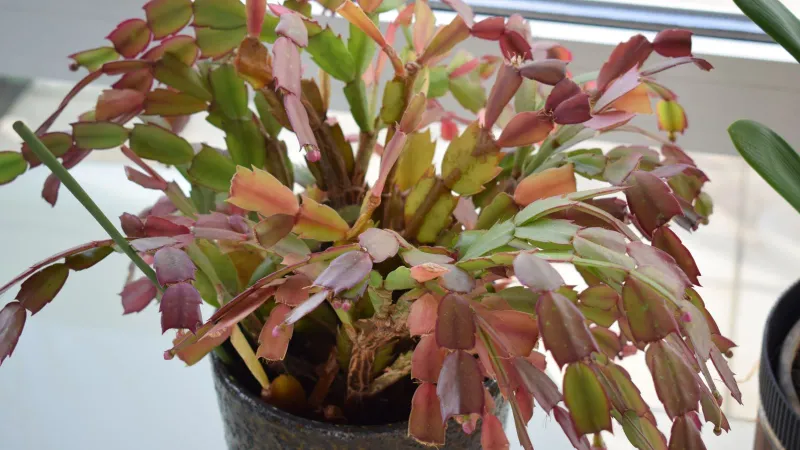
Spotting purple or reddish patches on your Christmas cactus can send any plant lover into a quiet panic, especially when the plant looked perfectly green just a few weeks ago. The good news is that this color shift does not automatically mean your plant is in serious trouble.
Purple segments can reflect a range of situations, from strong light exposure to cultivar traits to actual growing-condition problems, and sorting out which one applies to your plant is easier than you might think. A quick, methodical look at light, temperature, moisture, and the plant itself will tell you far more than the color alone ever could.
Purple Segments May Mean Several Things
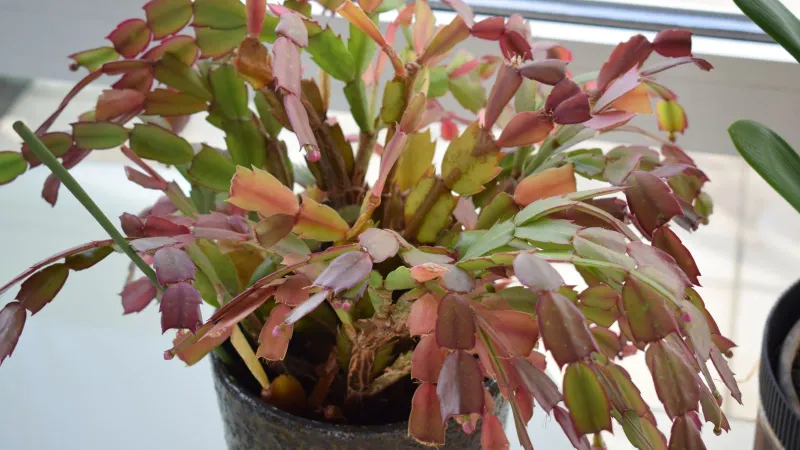
Purple or reddish coloring on a holiday cactus is one of those symptoms that looks alarming but carries a surprisingly wide range of possible meanings. University extension guidance lists excessive light, heat, drought, cold, root problems, and possible nutrient deficiencies as situations that can trigger this color shift, but it also makes clear that the color alone cannot tell you which of those is responsible.
The purple pigment, known as anthocyanin, is something plants can produce under a variety of stresses, and it does not by itself prove that the plant is failing.
Cultivar variation adds another layer of complexity. Wisconsin Horticulture extension notes that holiday cactus hybrids vary substantially in how they respond to light and environmental conditions, and a small amount of red or purple tint may simply be a characteristic of your particular plant rather than a sign of distress.
Flower color, which can naturally include purple, lavender, and pink, is completely unrelated to purple stem segments, so there is no need to confuse the two.
A practical way to frame the situation: a plant with firm, plump segments and no visible lesions is far less concerning than one that is shriveled, soft, dropping segments, persistently wet, or declining quickly. Use that contrast as your first triage step, and hold off on changing care or adding products until you have looked at the plant and its growing conditions more closely.
Inspect Stem Segments on a Rainforest Cactus
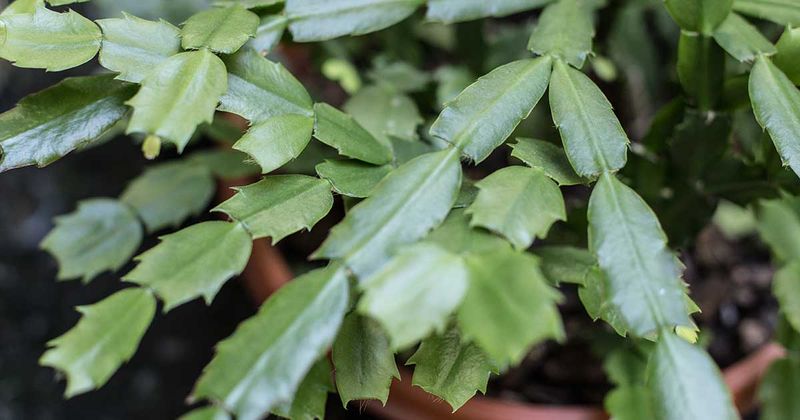
Before working through possible causes, a quick correction on the plant’s anatomy helps. What most people call the leaves on a Christmas cactus are actually flattened photosynthetic stem segments, referred to in plant science as cladodes or phylloclades.
Illinois Extension points out that many plants sold under the name Christmas cactus are actually Thanksgiving cactus or hybrids, which you can usually distinguish by the shape of the segment edges. For the purposes of figuring out why your plant has turned purple, though, that distinction rarely changes what you should do next, since the cultural needs of these plants are very similar.
The cultural framework matters here because holiday cacti are rainforest epiphytes, not desert plants. University of Minnesota Extension describes their natural habitat as the forest canopy, where they grow in organic debris, receive bright but filtered light, and experience regular moisture without sitting in waterlogged soil.
That origin story is the reason they need a well-drained, airy growing mix and consistent but controlled watering rather than the prolonged dry spells that suit true desert cacti.
Keeping a holiday cactus bone-dry for extended periods is a mistake rooted in the assumption that all cacti want desert conditions. Allowing the mix to become parched stresses the plant, can contribute to discoloration, and does not reflect how these plants actually live in the wild.
Knowing what kind of plant you have makes every care decision that follows easier to calibrate.
Check Light and Heat Before Reaching for Fertilizer
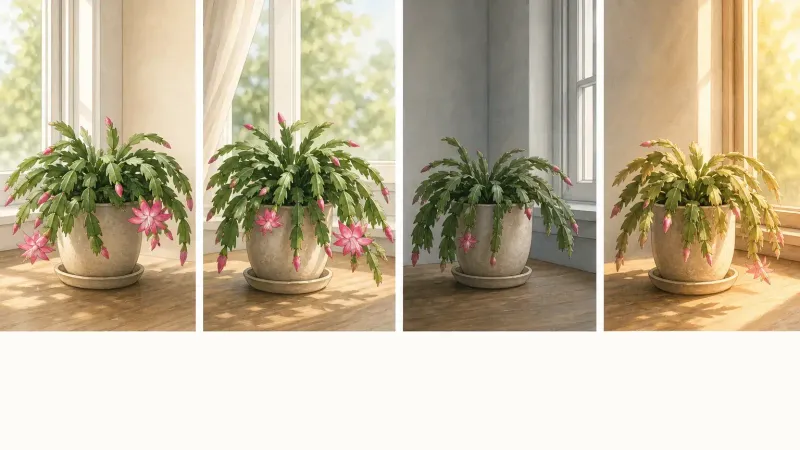
Light and temperature are the most practical places to start your investigation, especially for growers in Florida and Texas where summer sun is intense and south- or west-facing windows can turn a sunny spot into something closer to a furnace. UF/IFAS Gardening Solutions recommends bright indirect light and specifically warns that strong direct sunlight can scorch and stress holiday cactus stems.
If your plant has been sitting in unfiltered afternoon sun through a south- or west-facing window, that exposure is worth addressing before you consider any other change.
Moving the plant to a spot with bright filtered light, adding a sheer curtain between the plant and the glass, or relocating it to a shaded porch can reduce light-related stress without requiring any products. Outdoor summer placement in the South should always be shaded or filtered rather than exposed to harsh full sun.
Texas A&M AgriLife Extension advises bringing outdoor plants back inside before frost and, as a conservative threshold, when temperatures approach or fall below 50 degrees F.
Temperature nuance matters on the cool end as well. University of Minnesota Extension notes that cool nights can actually help initiate flowering, so a protected, cool location is appropriate and even beneficial.
A sudden cold snap or frost exposure, however, is a different situation and can injure the plant. The goal is cool and sheltered, not cold and unprotected.
Read the Soil Before You Water Again
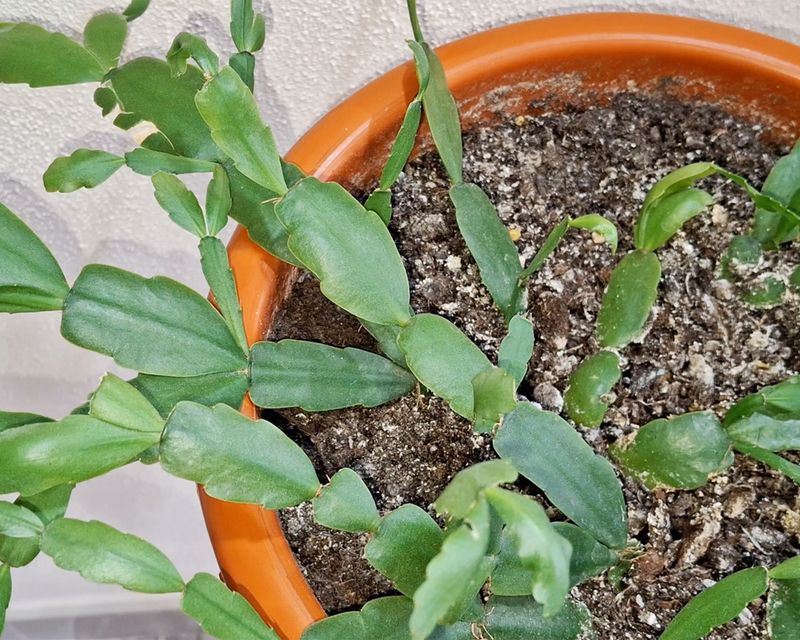
Watering decisions should always start with what the soil is actually doing, not with a calendar or a general schedule. N.C.
Cooperative Extension recommends watering a holiday cactus thoroughly when the top inch of the potting mix feels dry, then allowing all excess water to drain completely before emptying any saucer or decorative cachepot underneath. Standing water left in a saucer keeps the root zone wetter than it should be and raises the risk of root damage over time.
Both extremes create problems. Letting the mix dry out too completely can stress the plant and may contribute to discoloration, while keeping it consistently waterlogged creates conditions where roots struggle to function.
University of Minnesota Extension connects slow-drying or persistently wet soil to root damage risk, and notes that the right watering frequency depends on pot size, mix composition, temperature, and light level rather than any fixed interval.
If the mix compacts easily, drains slowly, or smells stale, those are signs that the growing medium itself may be contributing to moisture problems. UF/IFAS suggests a mix of two parts peat to one part perlite as an example of an airy, well-drained formula.
Heavy garden soil, compacted commercial potting mix, or blocked drainage holes all point toward a broader container and root assessment rather than simply watering more or repotting immediately based on color alone.
Pair Limp Stems With Wet Soil to Assess Root Trouble
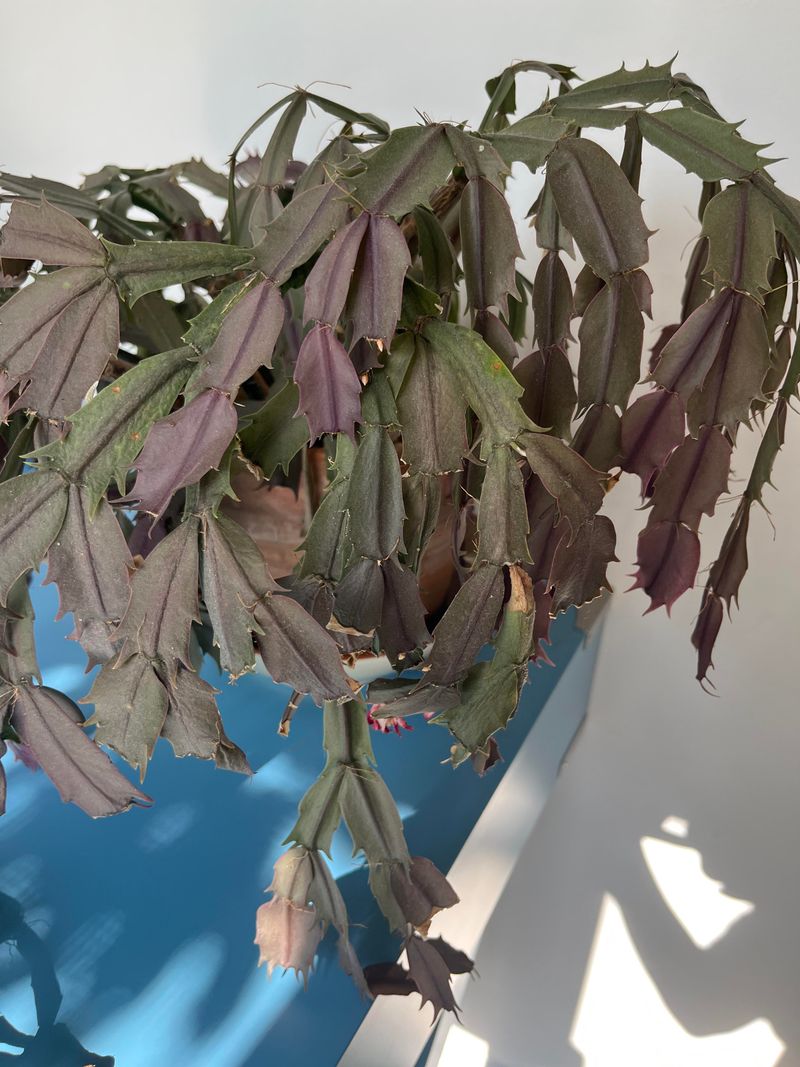
Limp or wrinkled stem segments are not always a watering shortage. When those soft or shriveled segments appear while the potting mix still feels wet or heavy, the more likely explanation is that the roots are damaged and cannot move water into the plant effectively.
University of Minnesota Extension describes wilting, gray-green foliage, branch drop, and collapse as signs that root rot may be involved, with dark, mushy roots as a key physical indicator when you actually examine the root system.
Reaching for the watering can when segments look limp is a natural instinct, but adding more water to an already wet root zone that is already struggling can accelerate the damage. The more useful diagnostic step is to match what you see in the stems against what you feel in the soil.
Firm segments with dry soil point toward underwatering. Limp or soft segments with wet soil point toward root trouble and warrant a closer look at drainage and root condition.
Penn State Extension notes that seriously damaged roots may require removing affected material and correcting the drainage situation before the plant can recover. That kind of inspection and intervention makes sense when the wet-soil history and physical symptoms justify it.
Purple segments by themselves, without any of those accompanying signs, do not warrant pulling the plant from its pot for an emergency root check.
Consider Nutrients Only After Environmental Checks
Nutrient questions come up often when a holiday cactus turns purple, and the instinct to reach for fertilizer is understandable. University extension guidance does list phosphorus, nitrogen, and magnesium deficiencies among the possible contributors to purple coloring, but it stops well short of treating visual color as a reliable diagnosis for any specific deficiency.
The symptom overlaps considerably with stress responses from light, heat, drought, and root damage, so color alone cannot confirm a nutrient problem.
Cornell’s soil and plant nutrition guidance explains that nutrient availability also depends on moisture levels, temperature, soil pH, and root health, meaning that fixing drainage or light may restore the plant’s ability to absorb nutrients it already has access to. When deficiency still seems plausible after those environmental checks, look for supporting patterns: stunted growth, generally dull or faded foliage across the plant, or symptoms concentrated on older segments rather than new growth.
Those patterns make deficiency more plausible, though not certain.
Soil or tissue testing is the most reliable way to confirm a nutrient problem when you have the option. If testing is not practical and deficiency still seems likely, a balanced houseplant fertilizer applied at label dilution or half strength during active growth is a reasonable step.
Penn State Plant Science research on phosphorus deficiency illustrates how visual symptoms alone can mislead, reinforcing the value of testing before treating.
Two common remedies worth skipping: automatic Epsom salt applications and high-phosphorus fertilizers applied specifically to address purple color. UC Master Gardener Program guidance cautions that Epsom salt is not a general fertilizer and that unnecessary applications can add salts and interfere with nutrient balance.
High-phosphorus fertilizer will not correct purple coloring caused by light stress, temperature, drought, or root damage, and excess fertilizer salts can injure roots further.
Escalate When Color Comes With Tissue Damage
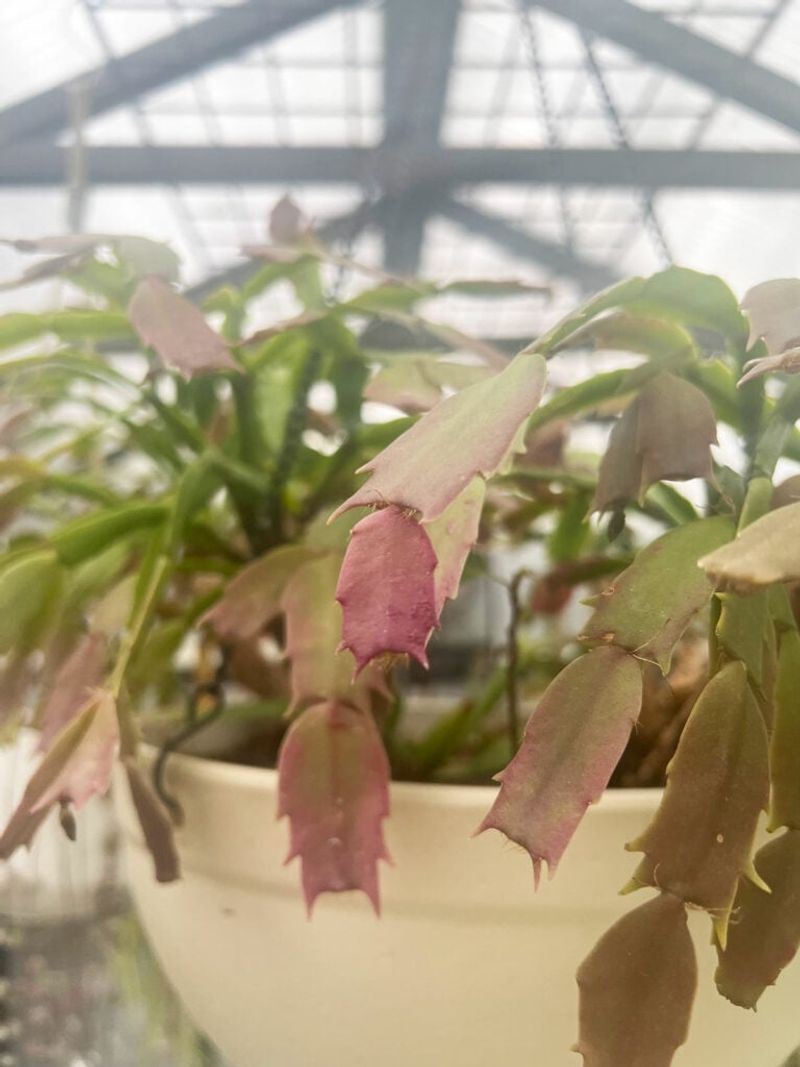
Purple coloring paired with brown or black lesions, wet or slimy tissue, stem collapse, branch drop, or a plant that is visibly worsening by the day is a different situation from purple coloring alone. Those combinations are the ones that should prompt concern about disease rather than a routine cultural adjustment.
Penn State Extension documents fungal, bacterial, and viral diseases that can affect holiday cacti, and notes that some cases are severe enough to require removing and disposing of affected plants or plant parts rather than treating with standard fertilizer or watering changes.
Fungal problems such as Botrytis blight or Pythium root rot, bacterial soft rot, and certain viral infections can all produce symptoms that go well beyond simple discoloration. Wet, collapsed, or rapidly deteriorating tissue signals that the plant’s cells are being damaged or destroyed, not just that it is responding to environmental stress.
At that stage, adjusting light or watering may help slow the problem, but it is unlikely to reverse significant tissue damage on its own.
The key distinction to hold onto is that purple segments without any of those accompanying symptoms do not establish disease. Many holiday cacti show some degree of red or purple tinting under normal growing conditions, particularly during cooler months or after light exposure, and that color by itself does not mean the plant needs to be quarantined or discarded.
Reserve the escalated response for plants that show actual tissue damage alongside the color change.
Correct the Growing Conditions in Order
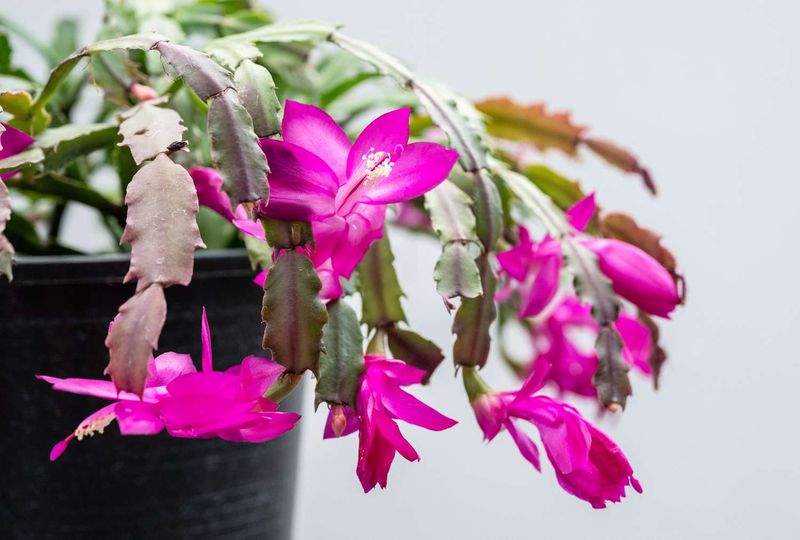
Working through the possible causes in a consistent order prevents the common mistake of jumping straight to fertilizer or repotting before simpler problems have been ruled out. Start by moving the plant away from harsh direct sun, particularly through south- or west-facing windows during the Southern summer.
Assess temperature next, making sure the plant is not near a heat vent, a cold draft, or an outdoor location where temperatures regularly approach 50 degrees F or below.
After light and temperature, check soil moisture using the top-inch method and correct the watering approach if the mix is either bone-dry or consistently soggy. If stems are limp while the soil remains wet, assess drainage and root condition before adding water.
Only after those environmental and structural checks have been completed does it make sense to consider whether a balanced fertilizer at half strength might address a remaining nutrient concern during active growth.
Penn State Extension explains that holiday cacti often bloom well when somewhat pot-bound, so repotting is not something to rush into based on purple color. Spring or early summer, when the plant is not blooming, is generally the right window unless poor drainage or root rot creates an urgent need.
When repotting does become necessary, UF/IFAS recommends a light, well-drained, organic-rich mix rather than heavy garden soil.
Once conditions are corrected, monitor new growth, segment firmness, how quickly the mix dries between waterings, and whether any new lesions or tissue changes appear. UC Master Gardeners of Sacramento County note that existing purple segments may not revert to green, so the measure of progress is healthy new growth and stable plant condition rather than a color change in segments already affected.
A plant that holds firm, puts out new growth, and stops declining is recovering, even if some segments stay purple for the season.