
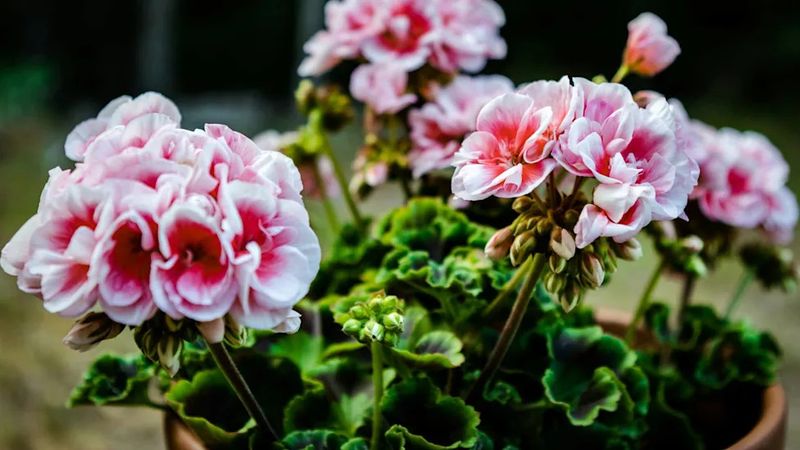
When your geraniums go quiet in the thick of a Southern summer, it can feel like something went badly wrong. Most of the time, the plant is reacting to heat the way it always has – by slowing down and waiting for better conditions.
Knowing what is actually happening, and what to do next, gives you a real shot at seeing those blooms return as the season shifts.
Identify the geranium before diagnosing the stall
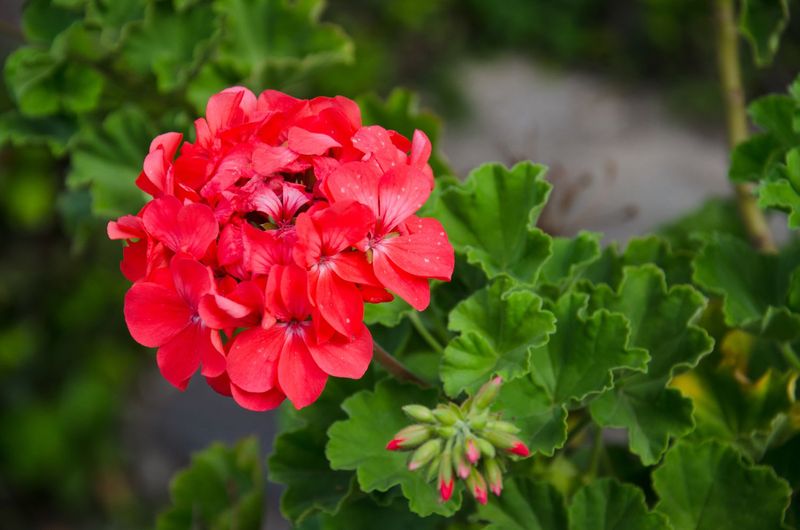
Before reaching for the pruning shears, take a moment to confirm which plant you are actually working with. This guide focuses on common garden or zonal geraniums, Pelargonium x hortorum, the familiar round-leafed plants with bold flower clusters that fill Southern beds and porch containers every season.
North Carolina Extension’s plant toolbox notes that the common name “geranium” covers several distinct plants, and treating them as interchangeable can lead to the wrong response.
Hardy geraniums, sometimes called cranesbills, belong to the genus GeraniumPelargonium rather than . They are a different group of plants with different habits, and the late-summer reset described here was not developed with them in mind.
Regal or Martha Washington geraniums, Pelargonium x domesticum, present an even clearer case for separate treatment. Iowa State University Extension explains that Martha Washington geraniums require cool nights in the 50 to 60 degree Fahrenheit range to form flower buds.
A simple fall cutback while nights remain warm will not address their core requirement.
Ivy geraniums, another Pelargonium type, are closer relatives of zonal geraniums and share some care principles, but even they differ in heat response and growth habit. Confirming that you have a common garden or zonal geranium is the first and most important step, because the recovery strategy that follows is built specifically around that plant.
Heat can reduce flowering without explaining every symptom
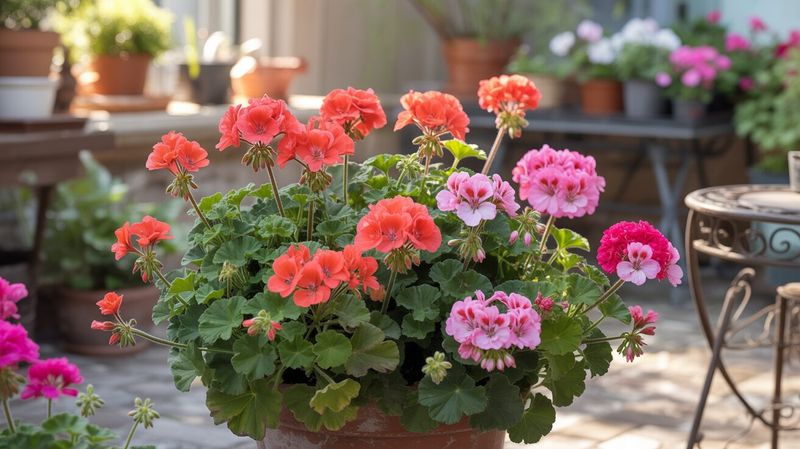
High temperatures can slow or stop flower-bud formation in common garden geraniums long before the plant looks visibly sick. University of Arkansas Extension reports that zonal geraniums may stop flowering when temperatures exceed 95 degrees Fahrenheit, a useful reference point even though heat tolerance varies by cultivar and growing conditions.
That 95-degree figure is not a universal biological cutoff that applies to every variety or every garden, but it gives a reasonable sense of the threshold where heat begins to work against the plant.
Controlled research adds texture to the picture. Published research on seasonal flowering characteristics in geraniums shows that high summer temperatures can reduce peduncle length, floret count, and overall flowering performance in ways that go beyond what a gardener might notice at a glance.
In Florida, the pattern is especially consistent. UF/IFAS guidance on Pelargonium x hortorum describes flowering as commonly fading by mid- to late summer, which aligns with the state’s long stretch of intense heat and humidity.
Texas and other Southern regions follow a similar general principle – heat can suppress flowering – but the specific timing depends on local temperatures, the cultivar in the ground, sun exposure, and the weather patterns of that particular year. Legginess, meaning stems that have grown long and bare with few leaves, is worth noting separately.
University of Georgia Extension guidance addresses leggy annuals as a candidate for cutback, but legginess itself can result from insufficient light or other growing conditions rather than heat alone. Attributing every symptom to heat risks missing what is actually driving the plant’s appearance.
Time the reset for moderating weather
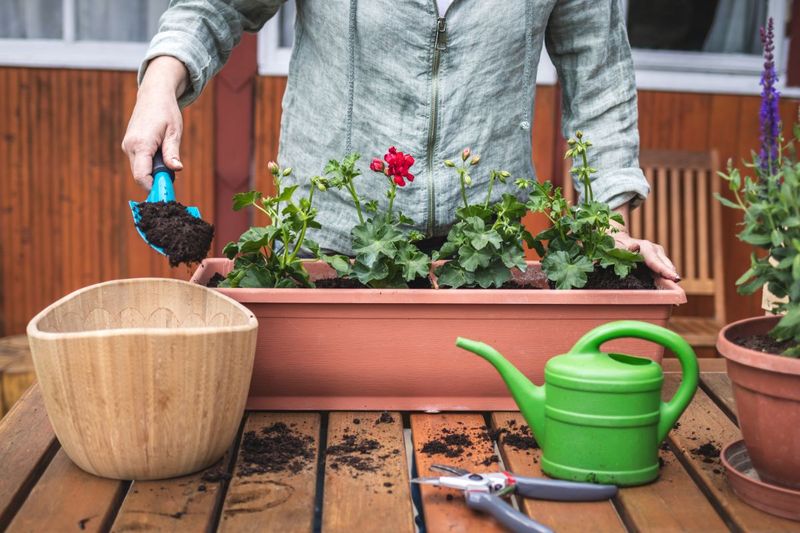
Pruning a heat-stressed plant during the hottest stretch of summer asks it to push new growth when conditions are still working against it. The more productive approach is to wait until peak heat begins to ease and the plant can resume active growth on its own terms.
Cutting back a zonal geranium in the middle of an extreme heat event may remove tired tissue without giving the plant any real recovery advantage.
UF/IFAS recommends cutting geraniums back in early fall and fertilizing to stimulate new growth and improve appearance, particularly for north Florida gardeners aiming for fall and winter performance. That timing reflects Florida’s warm-season pattern, where early fall still carries significant heat in many areas but represents a meaningful improvement over August conditions.
Central and southern Florida operate on a different calendar. UF/IFAS Gardening Solutions notes that geraniums perform best in cooler weather in those regions, which can shift the window for effective recovery care.
Texas adds another layer of variation. Conditions differ substantially between the Gulf Coast, the Hill Country, and West Texas, and cultivar selection also plays a role, since some varieties handle Southern heat better than others.
The right moment to act is when your local daytime highs are trending down and nights are becoming more comfortable, not when the calendar says September regardless of what the thermometer reads.
Prune tired stems and remove spent flower heads
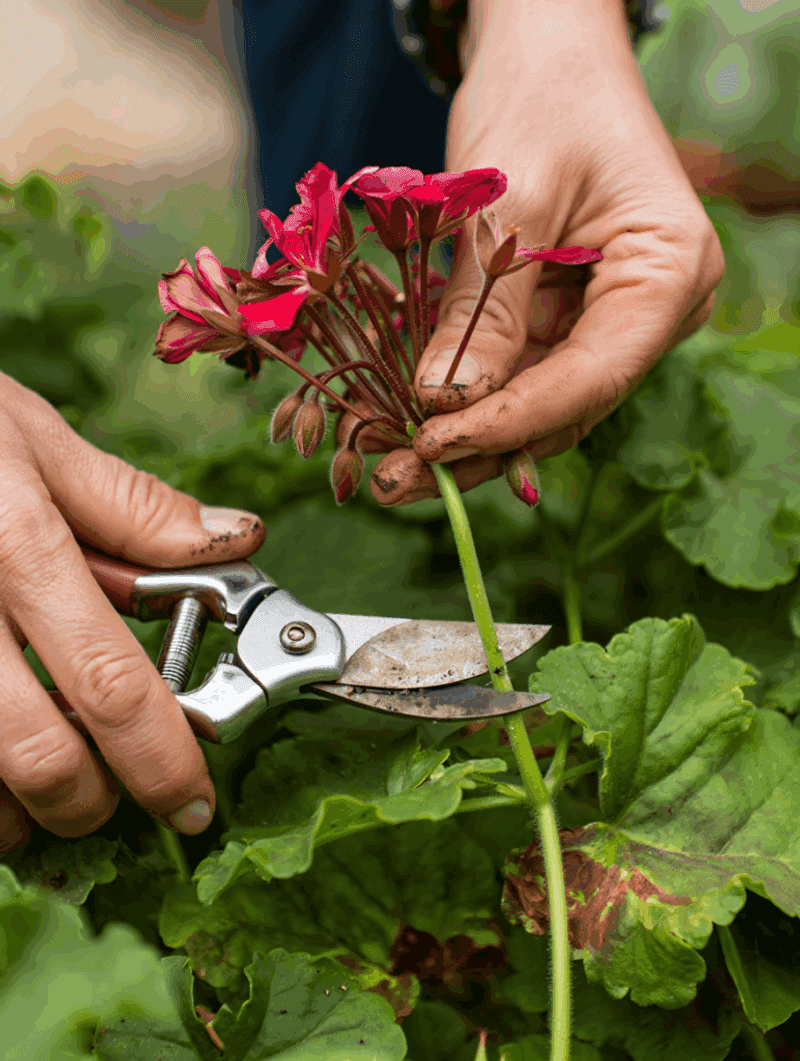
Once conditions begin to moderate, the physical reset can begin. Start with the spent flower heads.
Removing faded or dried flower clusters – a practice called deadheading – tidies the plant, prevents seed development, and reduces the chance that decaying flower material will become a site for disease. UF/IFAS guidance on zonal geraniums supports regular deadheading as part of routine care, and a weekly check during the period when flowers are fading quickly is a reasonable habit to build.
After deadheading, look at the overall shape of the plant. Stems that are long, bare at the base, or visibly exhausted can be shortened to a point where healthy green tissue is still present.
The goal is to encourage the plant to put energy into compact new growth rather than maintaining stretched-out stems that are unlikely to bloom well. Retain any growth that looks healthy and green, and avoid cutting into bare woody sections from which the plant may struggle to regenerate.
University of Georgia Extension recommends cutting back leggy annuals, watering well, and lightly fertilizing, noting this approach can encourage compact growth and more blooms in roughly three weeks – though that timeline is an optimistic estimate rather than a guarantee. The cutback restores the plant’s shape and stimulates new shoot development, but it cannot independently force flowers.
Renewed blooming depends on what happens next: temperature, light, moisture, and root health all have to cooperate.
Support new growth with balanced aftercare
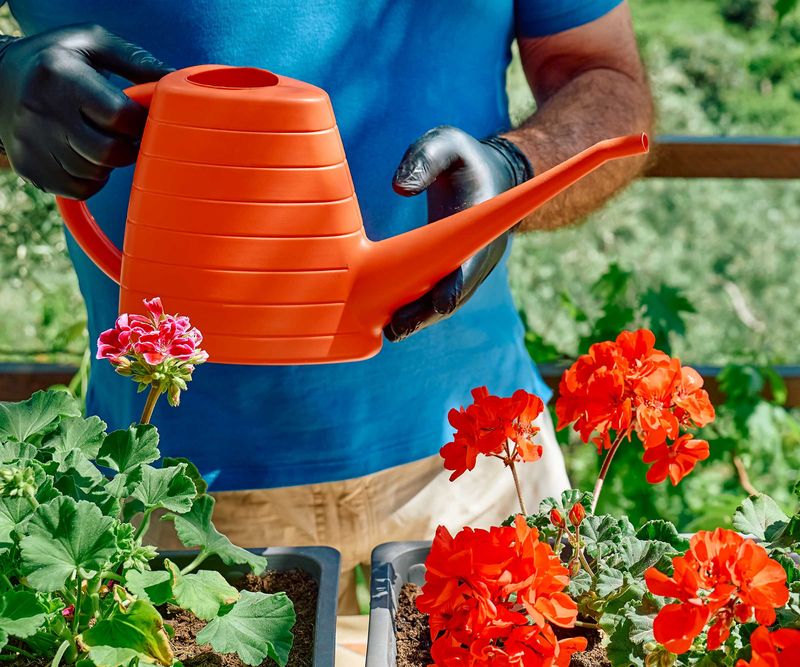
A freshly pruned geranium needs consistent support to make the most of its new growth. Watering is the first priority.
Moisten the root zone thoroughly so that water reaches the bottom of the container or the full depth of the bed, then allow the soil or potting mix to dry somewhat before watering again. Clemson Cooperative Extension notes that geraniums need consistent moisture but that poorly drained or constantly wet soil raises the risk of root problems and a condition called edema, where cells absorb more water than they can release.
Container plants may need checking every day during hot weather, but the check should inform whether you water – not replace the check itself.
Light management matters just as much. Zonal geraniums need several hours of direct sun to flower well, and moving a plant into deep shade to protect it from heat can worsen legginess and reduce blooming over time.
Clemson’s guidance suggests that midday shade may be useful in very hot areas, and UF/IFAS notes that reducing summer sun exposure can help some Florida geraniums continue flowering. The practical target is bright light with temporary relief from the harshest afternoon exposure when temperatures are severe, not a permanent move to a shaded corner.
Fertilizer comes last, and only when the plant is actively producing new growth. A light application following the product label is appropriate; heavy feeding is not.
Research on geranium nutrition supports the principle that excess nitrogen can push leafy growth at the expense of flowers. Florida gardeners have an additional consideration: UF/IFAS reports that many Florida counties and municipalities restrict landscape fertilizer applications during parts of the summer rainy season.
Checking local ordinances before applying any nitrogen- or phosphorus-containing product is a practical step, not a formality.
Recognize problems the reset cannot solve
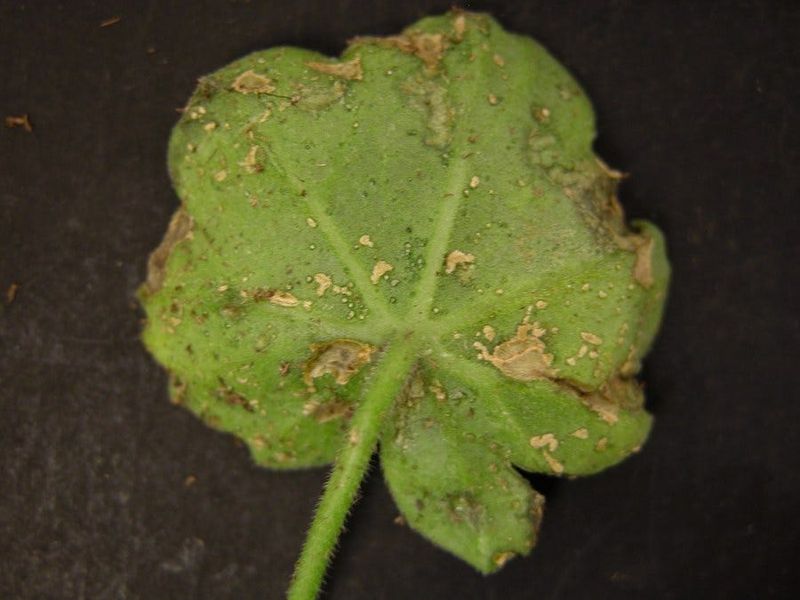
A late-summer cutback and careful aftercare work well when the underlying problem is heat-related flowering decline in an otherwise healthy plant. Several other conditions can produce similar symptoms, and applying the same reset to a plant that has a different problem can delay the right response or make things worse.
Yellow leaves are a common source of confusion. Drought stress, overwatering, root rot, edema, and bacterial disease can all cause yellowing or wilting that looks like a nutrient problem at first glance.
Treating yellow leaves as automatic evidence of fertilizer deficiency risks adding nitrogen to a plant that is already struggling with root damage or excess moisture. The appearance of the leaves matters: uniform pale yellowing across older leaves can suggest a different issue than scattered spots or tissue that collapses quickly.
More specific warning signs call for closer investigation. University of Illinois Extension’s overview of bacterial diseases of geranium describes symptoms including water-soaked lesions, wedge-shaped yellow areas bounded by leaf veins, and blackened stems as indicators of bacterial infection rather than ordinary heat stress.
Cornell Greenhouse Horticulture’s bacterial blight factsheet notes that splashing water can spread bacterial pathogens and that wet foliage creates conditions favorable to several geranium diseases – a reminder to water at the soil level rather than overhead.
Clemson Extension also points to poor drainage and root problems as factors that can prevent recovery regardless of how carefully you prune and feed. Spreading spots, rapid collapse, or persistent decline that does not respond to improved care are all reasons to pause the reset and investigate whether disease, drainage failure, or damaged roots are the real obstacle.
Treat the cutback as a chance to recover, not a promise
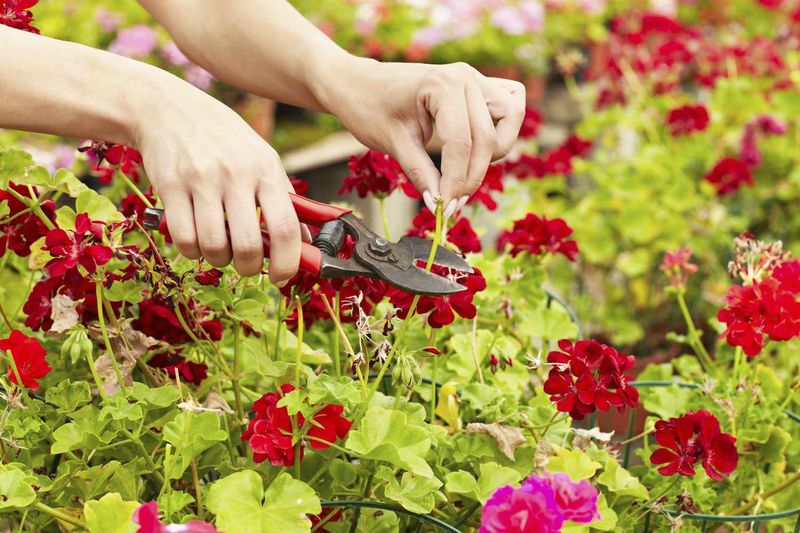
The recovery plan for a heat-stalled common garden or zonal geranium follows a clear sequence: confirm the plant is Pelargonium x hortorum, wait for temperatures to moderate, remove spent flower heads, cut back tired or leggy stems while preserving healthy green tissue, then provide consistent moisture, adequate bright light, and restrained nutrition where local rules allow it. UF/IFAS guidance on zonal geraniums supports this coordinated approach as a way to stimulate new growth and improve the plant’s appearance heading into fall.
What the cutback cannot do is guarantee flowers. Arkansas Extension’s summary of zonal geranium performance makes clear that temperature is a key driver of flowering, which means cooler conditions and healthy roots ultimately determine whether renewed blooming occurs – not the pruning alone.
Florida’s early-fall timing should not be transferred automatically to Texas or every Southern region, because local temperatures, cultivar differences, and current weather shift the window for each garden. UF/IFAS Gardening Solutions emphasizes that geraniums perform best in cooler weather, a principle that holds across the South even when the calendar date varies.
A plant that has been cared for honestly through the heat has a real chance – and that is a reasonable thing to work toward.