
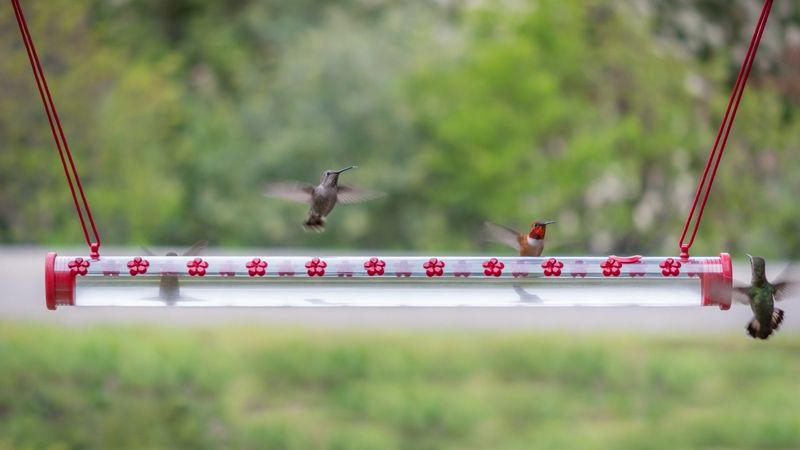
You fill the hummingbird feeder at dusk, and by morning it is bone dry. Before you blame any single creature, know that several different things can drain a feeder after dark, from leaky hardware to backyard raccoons to, in certain corners of the Southwest, a nectar-feeding bat.
Working through the possibilities in order will get your birds fed again faster than guessing ever will.
A bat may visit—but that does not identify the culprit
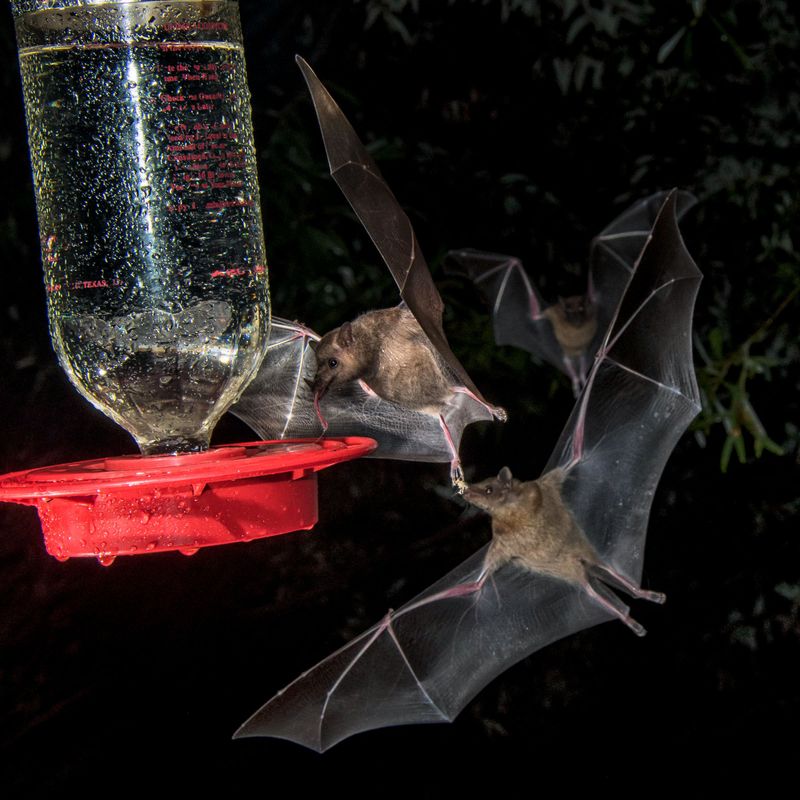
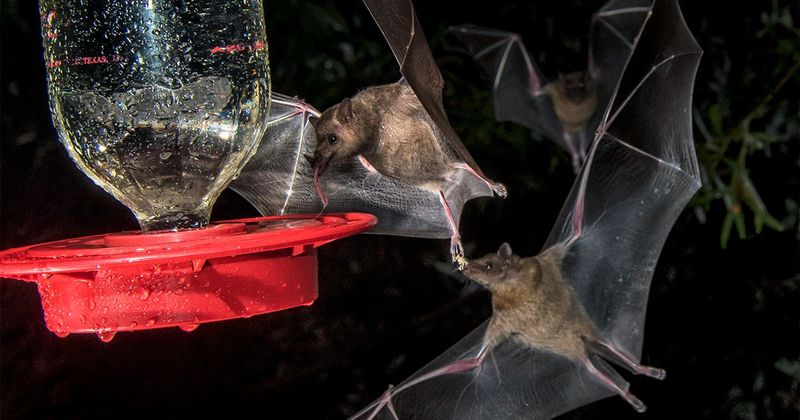
Nectar-feeding bats are real, and a few species have been documented visiting hummingbird feeders after dark. The lesser long-nosed bat and the Mexican long-tongued bat are the two most relevant species in the United States.
Both have long tongues designed for lapping nectar, both are active at night, and both have been recorded using feeders in the Southwest. The U.S.
Fish and Wildlife Service documents lesser long-nosed bats at a feeder in Tucson, Arizona, and the Arizona Game and Fish Department runs a citizen science program that specifically tracks feeder use by these bats.
Geography matters here. The strongest evidence for nighttime bat activity at hummingbird feeders comes from southern Arizona and neighboring parts of the Southwest.
The Mexican long-tongued bat’s confirmed U.S. range covers southern Arizona, southwestern New Mexico, southern California, and the southern tip of Texas, but Texas Parks and Wildlife notes that only a handful of specimens have been recorded in the state, so routine feeder draining is not an established pattern across Texas as a whole. Mexican long-nosed bats do appear in parts of West Texas including Big Bend, where they feed on agave flowers at night, but again the sources do not show typical Texas homeowners regularly losing nectar to them.
Florida and most of the broader South have no comparable documented pattern of nectar-feeding bats visiting household feeders. If your feeder empties overnight in those regions, something else deserves a closer look first.
The right starting point is not picking a culprit but running a simple test to find out what actually happened.
Measure the feeder before guessing
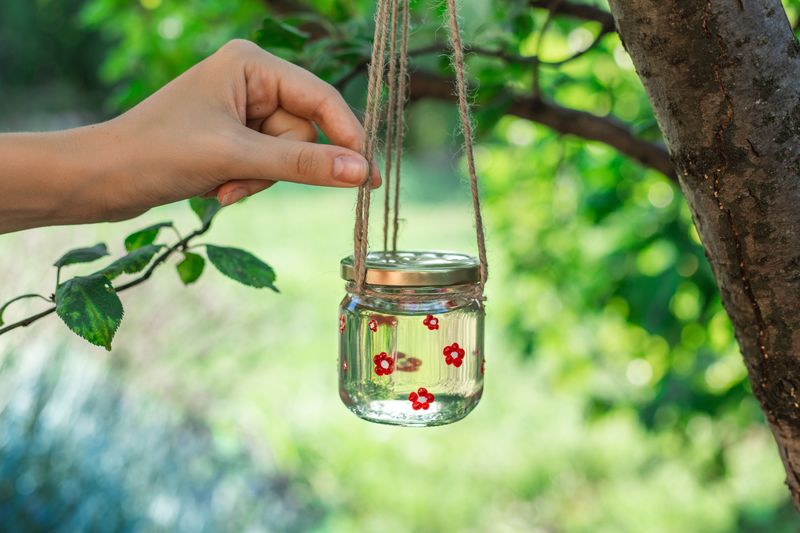
The most reliable first move is also the simplest: mark or measure the nectar level just before dark, then check it again first thing in the morning. Use a permanent marker on a strip of tape, or note the level against a measuring line on the feeder.
Write down the number both times so you have a real figure to work with rather than an impression.
A measured drop tells you loss occurred, but it does not tell you how. That distinction matters.
Arizona Game and Fish instructs feeder-monitoring volunteers to record nectar levels just before dark and again in the early morning precisely because the measured difference is the starting point, not the conclusion. After you note the level, walk underneath the feeder and press your hand to the soil or pavement.
Wet or sticky ground is a strong sign the nectar left through a leak or spill rather than through a mouth.
A motion-activated camera aimed at the feeder overnight can show you what visited and when. Treat that footage as evidence of activity, not automatic proof of cause.
A bat, a raccoon, or a large bird caught on camera confirms a visit, but you still need to ask whether the animal’s behavior plausibly accounts for the full measured loss. Audubon advises checking feeder assembly and placement as part of any pest investigation, because a disturbed or tipped feeder can lose nectar through mechanical failure rather than direct consumption.
Repeat the dusk-to-dawn check on several nights before drawing any conclusion; a one-night drop could be a spill, while a consistent pattern points to something more reliable.
Look for leaks, spills, and loose hardware
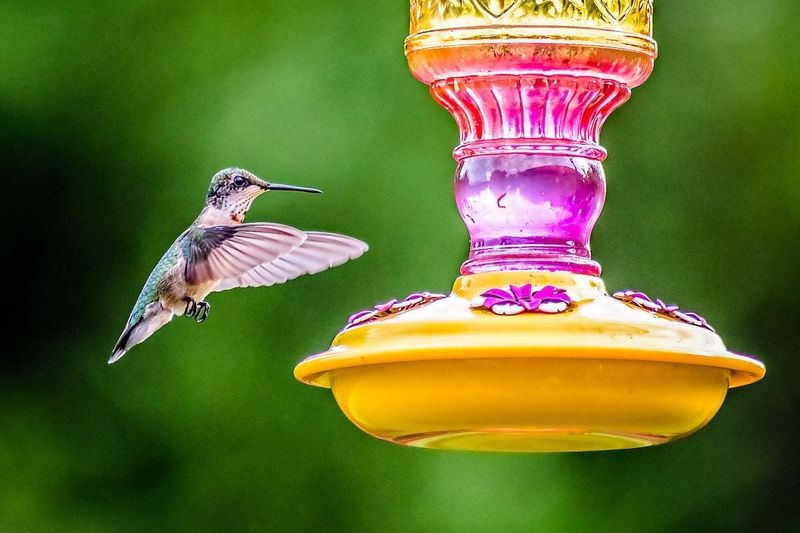
Before wildlife enters the picture, check the feeder itself. Pick it up and look at every seal, port, and connection point.
A loose bottle top, a cracked reservoir, a worn gasket, or a port that no longer fits snugly can all bleed nectar steadily through the night without any animal involved. Sticky residue on the outside of the feeder, or a ring of dried sugar on the hook or pole, is a reliable sign that nectar has been running out rather than being drunk.
Bottle-style feeders are especially prone to pressure-related dripping in warm weather. University of Arkansas Cooperative Extension explains that temperature and pressure changes in bottle feeders can push nectar out through the ports, leaving a wet patch on the ground that looks like overnight consumption.
Direct afternoon sun heats the air inside the bottle, and as the temperature drops overnight the pressure shifts again, sometimes pulling nectar back up and sometimes forcing it out.
Moving the feeder to a shadier, more sheltered spot can reduce pressure-driven dripping. Audubon recommends securing the feeder’s assembly and choosing a less-windy location to cut down on motion-related spills.
A saucer-style feeder, or any model where the feeding ports sit above the liquid rather than below it, tends to drip less because gravity works in your favor. Texas Audubon’s hummingbird feeding guide also points to saucer designs as a practical option for reducing mess and pest access.
No feeder design eliminates every possible leak or animal visit, but ruling out mechanical causes first saves a lot of guesswork.
Consider raccoons when the feeder is within reach
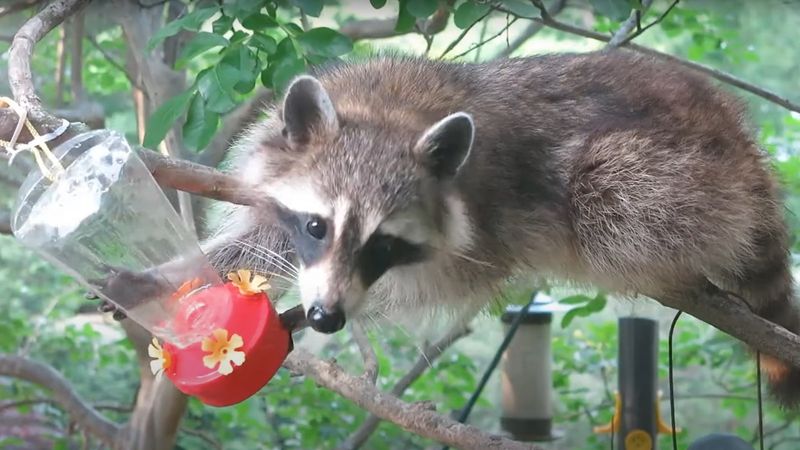
Raccoons are opportunistic and persistent. Once one discovers that a hummingbird feeder holds something sweet, it will return every night that the feeder stays accessible.
Virginia Cooperative Extension notes that bird feeders within a raccoon’s reach can become important, reliable supplemental food sources for the animal, which is exactly the kind of consistent overnight loss that puzzles homeowners.
Raccoons climb well and can jump from nearby fences, tree branches, porch railings, and roof edges. Simply raising the feeder a few inches rarely solves the problem.
The more dependable fix is to remove the food source at dusk and restore it before local hummingbirds normally begin feeding in the morning. If bringing the feeder indoors is not practical, try repositioning it on a smooth metal pole with a baffle, well away from anything the animal can use as a launch point.
Florida Fish and Wildlife Conservation Commission recommends securing all food attractants and warns that wildlife habituated to easy food sources become harder to discourage over time.
Raccoon-proofing works best as part of a broader yard cleanup. Remove pet food bowls before dark, secure trash lids, pick up fallen fruit, and clean any spilled nectar from the pole or hook.
Arkansas Extension also flags larger birds, insects, and wind as contributors to overnight nectar loss, so even after addressing raccoon access it is worth continuing the dusk-to-dawn measurement for a few nights to confirm the fix worked.
If a camera shows bat activity, respond cautiously
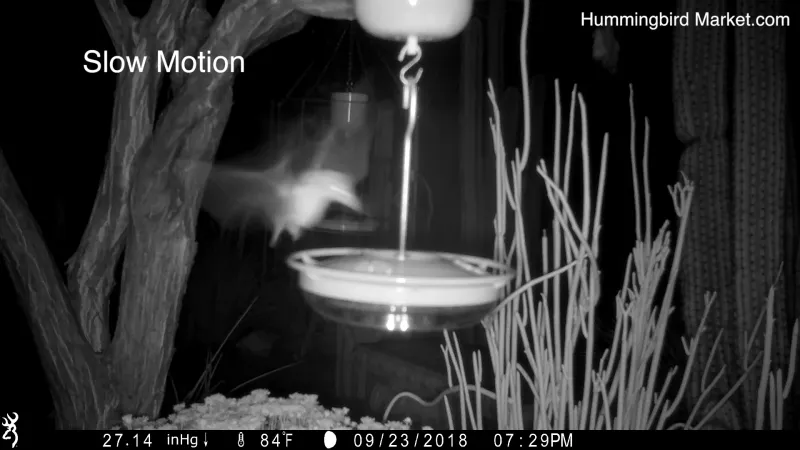
Camera footage of a bat at the feeder is genuinely useful information, but it answers only part of the question. Confirmed bat activity tells you a bat visited; it does not automatically tell you that the bat consumed the full measured loss, especially if the feeder also has loose hardware, a pressure-related drip, or other overnight visitors.
Compare the timing shown in the footage with your nectar measurements and continue inspecting for leaks or additional causes before drawing a firm conclusion.
If the footage and measurements together make a strong case for bat use, temporary overnight removal is a reasonable exclusion test. Bat Conservation International notes that the health and migration effects of artificial sugar water on bats remain unclear, so there is no conservation reason to keep the feeder out specifically for bat access.
That said, removal should not become a blanket overnight rule. In areas with resident or overwintering hummingbirds, or when nighttime temperatures approach freezing, birds may need access to unfrozen nectar in the early morning hours.
Oregon State University Extension addresses the importance of available nectar for hummingbirds in cold conditions, and the same logic applies to any region with year-round or overwintering birds. If you do bring the feeder in, rehang it before dawn.
Nectar-feeding bats are native pollinators, and the U.S. Fish and Wildlife Service credits community feeder monitoring with helping researchers track lesser long-nosed bat migration.
The goal is not to eliminate bat activity but to protect your nectar supply so morning hummingbirds are not left with an empty feeder. Do not add extra feeders to attract bats; artificial sugar water is supplemental at best, and natural nectar and pollen sources such as agave and cacti are far more nutritious for them.
Keep nectar fresh while you investigate
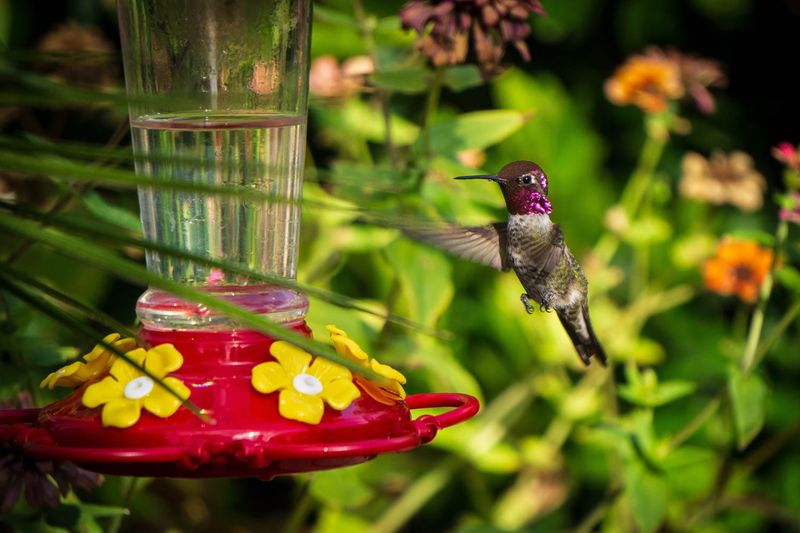
While you track down the overnight drain, keep the nectar itself in good shape. The correct ratio is four parts plain water to one part white granulated sugar, stirred or shaken until the sugar fully dissolves.
Audubon’s hummingbird feeding FAQs confirm this ratio and list honey, artificial sweeteners, brown sugar, fruit juice, and red food coloring as ingredients to avoid. Honey ferments quickly and can cause a fatal fungal infection in hummingbirds.
Red dye is unnecessary and potentially harmful. Plain white sugar in the right proportion is all the birds need.
Sugar water supplements a hummingbird’s diet rather than replacing it. NC State Extension notes that hummingbirds also depend on insects for protein, so a feeder alone does not meet all their nutritional needs.
Keeping the yard insect-friendly, by avoiding broad pesticide use near the feeder, supports the birds’ full diet.
Southern heat accelerates nectar spoilage faster than most feeders’ labels suggest. University of Florida IFAS recommends changing the nectar solution and cleaning the feeder every four to five days as a general baseline, with more frequent changes whenever the nectar looks cloudy, smells off, shows any mold, or feels warmer than expected.
During peak summer heat in Florida, Texas, or other Deep South states, checking the nectar daily is a practical habit. Cleaning the feeder thoroughly each time, with hot water and a bottle brush, and rinsing it well before refilling keeps it safe without requiring sterilization or boiling every single time.
Use humane fixes instead of risky repellents
When you have identified or strongly suspect the overnight raider, the most reliable response is removing access to the food rather than trying to drive the animal away with smell or taste. Virginia Cooperative Extension specifically advises against mothballs and ammonia-soaked rags as raccoon deterrents, and the same caution applies to chili powder, essential oils, and improvised chemical treatments near a hummingbird feeder.
Those substances can contaminate the nectar, harm visiting birds, and deter pollinators without reliably stopping a determined animal.
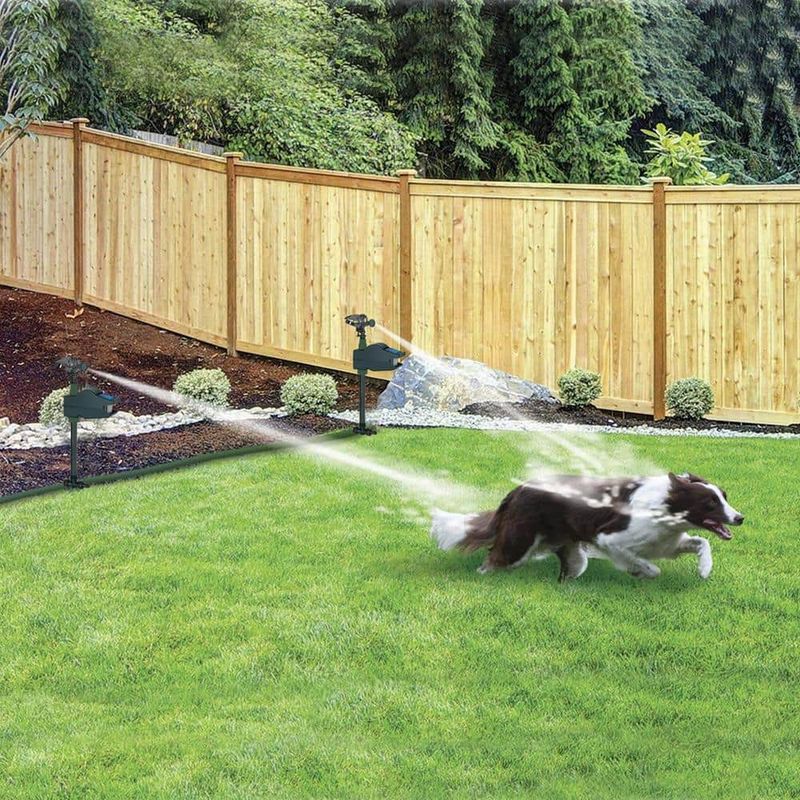
A motion-activated sprinkler can discourage raccoons from approaching the feeder area, and Florida Fish and Wildlife Conservation Commission lists motion-activated deterrents among its recommended tools for securing outdoor attractants. No single deterrent is guaranteed, so combining access removal with yard cleanup gives you the best chance of consistent results.
Pesticides and insect sprays around the feeder are off the table entirely; NC State Extension warns that pesticide use near feeders and flowering plants can harm hummingbirds, bees, and other beneficial wildlife.
If your camera confirmed bat activity, protect the bats as well as the feeder. Bat Conservation International flags patio fans, outdoor cats, and some feeder designs as hazards to bats that visit human-occupied areas.
A native pollinator visiting your yard is not a problem to eliminate; the goal is simply to make sure your morning hummingbirds still have nectar waiting for them.
Let the evidence determine the next step
Run the dusk-to-dawn measurement for at least three nights in a row. Check the ground beneath the feeder each morning for wetness, inspect every seal and port for loose hardware, and review any camera footage against the measured loss before deciding what changed overnight.
Arizona Game and Fish uses exactly this repeated-measurement approach in its feeder-monitoring program because a single night’s data rarely tells the full story.
If the evidence points to a raccoon, remove the feeder at dusk and restore it before your local hummingbirds normally begin feeding. Virginia Cooperative Extension confirms that removing food access is the most consistently effective raccoon deterrent, more reliable than any odor or spray remedy.
If camera footage shows bat activity, weigh that against your geographic location and the remaining possibilities – leaks, spills, and other visitors may still account for part of the loss. Audubon’s pest guidance and Arkansas Extension’s feeder advice both treat mechanical inspection and wildlife observation as parallel steps, not a sequence where one cancels the other.
Fresh nectar and reliable morning access matter more than any single overnight strategy. The feeder that greets your hummingbirds at sunrise, full and clean, is the one doing its job.