
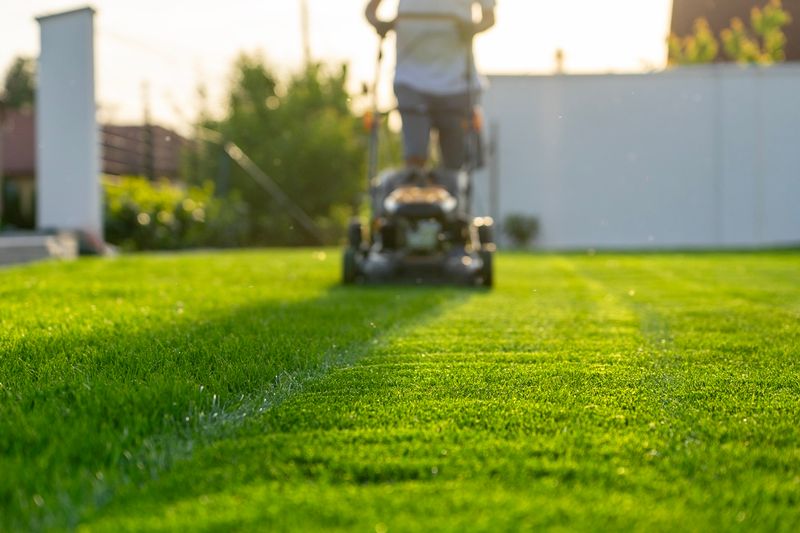
Plenty of Southern homeowners mow their lawns short thinking it saves time or keeps things neat, but repeated low cuts can quietly wear turf down over weeks. The damage shows up as thin patches, browning, and weeds creeping into spots where healthy grass should be.
Getting the mowing height right for your specific grass type is one of the most practical steps you can take toward a stronger, better-looking lawn. No single number works for every yard, but understanding the right range for your grass makes a real difference.
Repeated low mowing can reduce turf strength
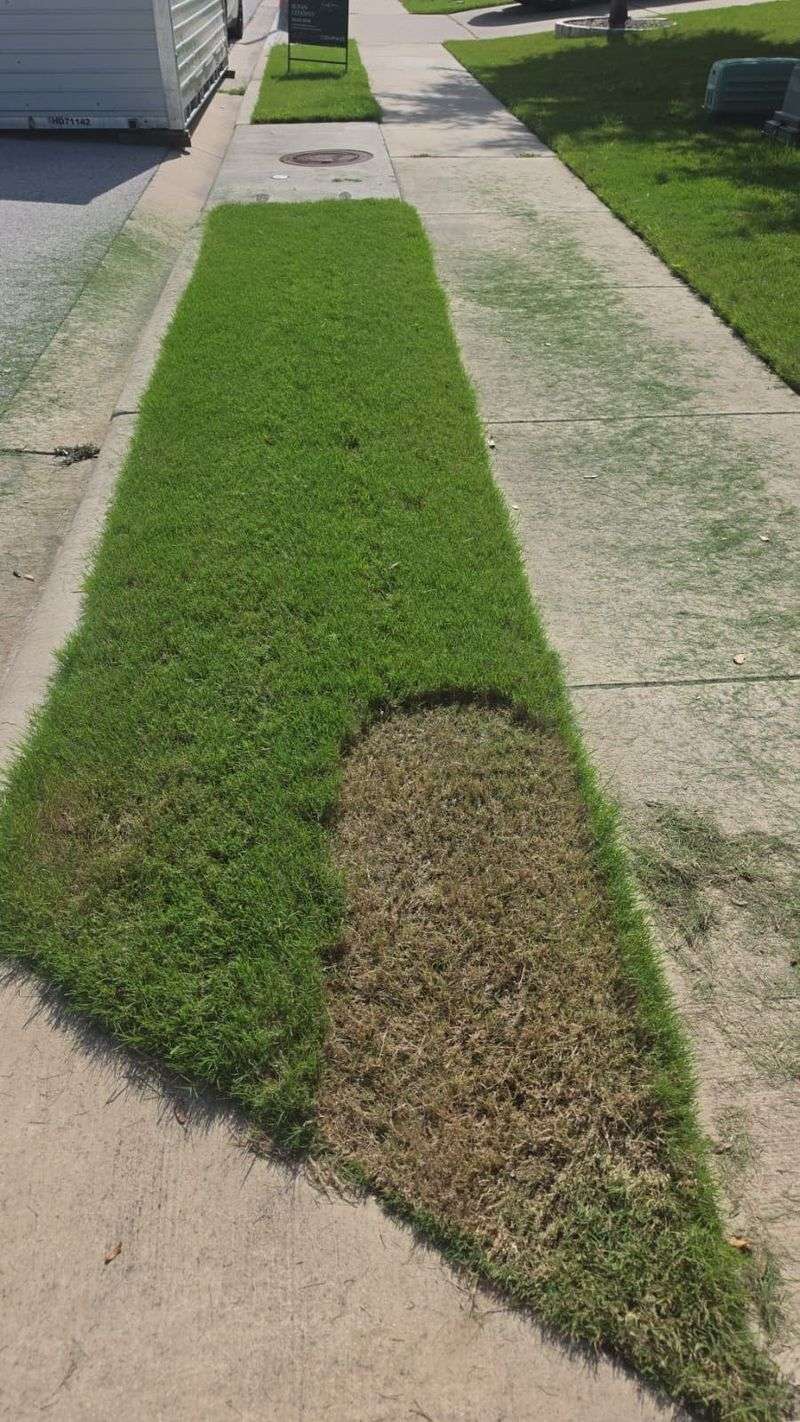
Grass draws its energy from its leaves. When mowing repeatedly removes too much of that leaf tissue, the plant has less surface area to capture sunlight and produce the food it needs to sustain roots and recover from stress.
Over time, turf mowed consistently below its suitable range can develop shallower root systems, lose density, and become noticeably less resilient.
University of Florida IFAS guidance on lawn mowing links repeated cutting below the recommended height range to thinning, reduced stress tolerance, and greater vulnerability to weeds, insects, disease, drought, and heat. Research from UC Riverside turfgrass scientists also connects excessive leaf removal with less-developed root systems that struggle to support the plant during difficult growing conditions.
That said, a single low cut does not automatically ruin a lawn. How much damage occurs depends on how far below the recommended range the mower is set, how often it happens, the grass species and cultivar, the weather, irrigation, shade, and whether the cut removes excessive tissue in one pass.
The evidence points most strongly to harm from repeated mowing below the species-appropriate range, not necessarily from one occasional close trim.
Mowing height also cannot explain every struggling lawn on its own. Shade, compaction, poor irrigation, fertility gaps, pests, and disease can all produce thin or stressed turf even when the mower is set correctly.
Recognizing the pattern of repeated low cuts is a useful first diagnostic step, not the final answer.
Define “too short” by grass species and cultivar
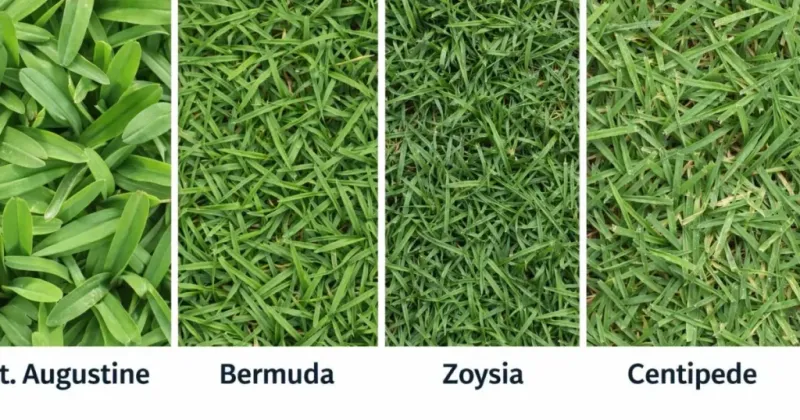
There is no single scientifically defensible mowing height that works for every Southern lawn. What counts as dangerously short for one grass type may fall well within the normal, healthy range for another.
Getting this right starts with knowing which grass you actually grow.
According to University of Florida IFAS mowing recommendations and Texas A&M AgriLife cutting height guidance, practical mowing ranges for common Southern grasses are roughly as follows. St. Augustinegrass is generally maintained between 2.5 and 4 inches, with standard cultivars in Florida often kept closer to 3.5 to 4 inches and some dwarf or semi-dwarf cultivars manageable near 2.5 inches.
Bermudagrass for typical home lawns falls around 1 to 2 inches. Centipedegrass is usually kept between 1.5 and 2 inches.
Coarse-textured zoysiagrass generally fits a range of 1 to 2.5 inches. Bahiagrass is commonly maintained between 3 and 4 inches.
A height of 1.5 inches would be stressful for St. Augustinegrass but perfectly normal for centipedegrass. Fine hybrid bermudagrass can sometimes be maintained below 1 inch, but that requires a reel mower, much more frequent mowing, appropriate cultivars, and a higher level of management than most homeowners want to commit to.
That approach is not routine advice for a typical home lawn.
Texas A&M mowing management guidance also notes that cultivar, mower type, season, and intended lawn quality all shift the recommendation within a species range. Florida guidance, for example, distinguishes standard St. Augustinegrass from dwarf and semi-dwarf types because they respond differently to the same height setting.
Knowing your cultivar, not just your species, helps you land on the right part of the range.
Set the mower toward the appropriate upper range
Once you know your grass type, the practical adjustment is straightforward: move the mower toward the upper half of the recommended range for that species, especially when the lawn is dealing with heat, drought, or reduced light. This does not mean letting the grass grow indefinitely.
Mowing above the appropriate range can reduce turf quality, create a stemmy appearance, and increase the risk of scalping on the next cut. The goal is the upper portion of the correct range, not beyond it.
For a St. Augustinegrass lawn under summer stress, that might mean setting the mower closer to 3.5 to 4 inches rather than 2.5 inches. For a home bermudagrass lawn, it might mean 1.75 to 2 inches rather than 1 inch.
The exact number depends on your specific grass, cultivar, and conditions, as covered in the previous section.
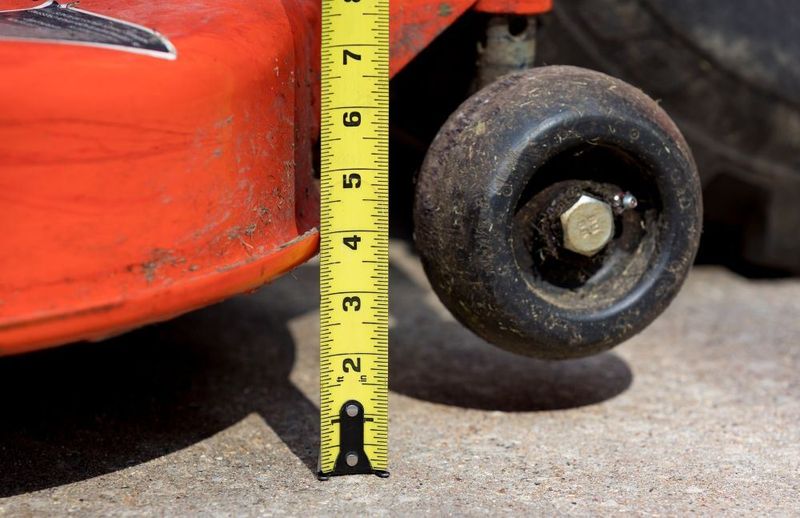
One step most homeowners skip is measuring the actual cutting height. The numbered dial on a mower is not a universal measurement.
The same setting on two different machines can produce noticeably different blade heights depending on the mower’s design and age. To get an accurate reading, park the mower on a flat driveway or sidewalk and use a ruler to measure from the hard surface up to the lowest point of the blade.
University of Florida IFAS lawn care guidance and Texas A&M cutting height recommendations both suggest this method for confirming the real cut before heading out to mow. Taking two minutes to check can prevent weeks of unintended stress on your lawn.
Use the one-third rule to reduce added stress
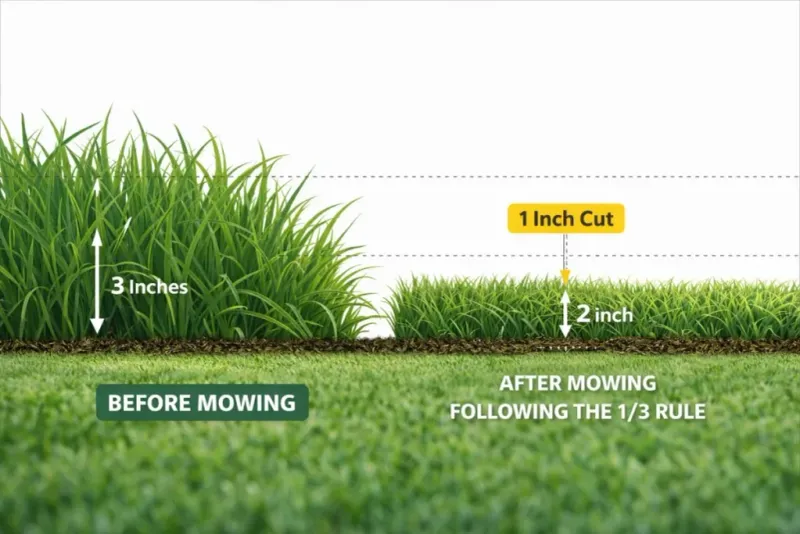
Raising the mower height is only half the adjustment. How much you remove in a single pass matters just as much as where the final height lands.
The one-third rule is the standard guidance here: remove no more than one-third of the leaf blade in any single mowing. Cutting off more than that in one pass removes too much photosynthetic tissue at once, even if the resulting height is technically within the recommended range.
UC IPM turfgrass mowing guidance explains that following this rule helps reduce scalping and unnecessary stress on the plant. If your lawn has been allowed to grow well above the target height, do not try to correct it in a single mowing.
Instead, make the first cut to remove about one-third, wait a few days, then cut again. Bring the grass down gradually over two or three mowings until it reaches the intended height.
This rule also has an important implication for mowing frequency. Lower mowing heights require more frequent mowing, not less.
A bermudagrass lawn kept at 1.5 inches will reach the one-third limit faster than one kept at 2 inches, meaning you need to mow more often to stay within the guideline. Texas A&M St. Augustinegrass management guidance reinforces this point, noting that lower settings demand more frequent attention.
The one-third rule reduces additional stress and helps avoid scalping, but it cannot fix unrelated problems like compaction, drought damage, pests, or disease. Think of it as a discipline that protects the grass while other cultural practices handle the rest.
Adjust within the range for heat and shade
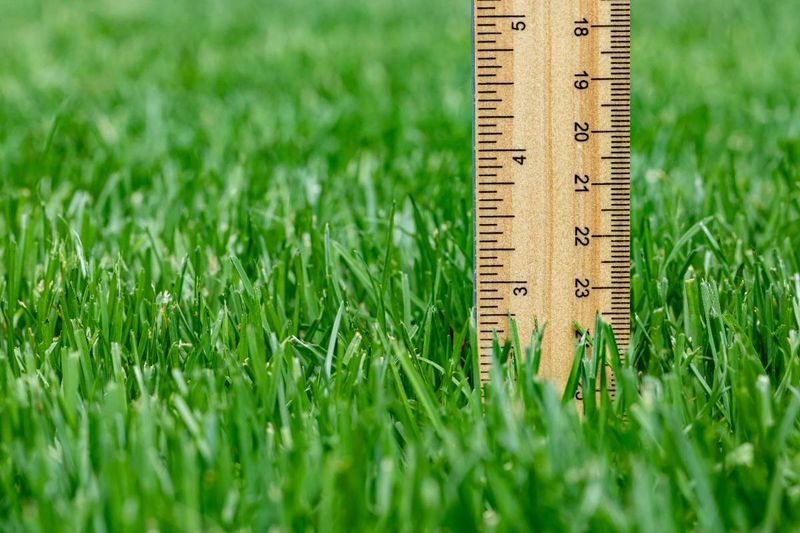
The right mowing height for your grass is not a fixed number you set once and forget. Growing conditions change through the season, and two factors in particular call for a modest upward adjustment within the species-appropriate range: intense heat and reduced light.
During hot, dry weather, a little extra leaf area helps the plant shade its own soil, slow moisture loss, and manage heat stress. University of Georgia Extension lawn care guidance and Oklahoma State turfgrass management recommendations commonly suggest raising the mowing height by roughly half an inch during hot conditions, provided the result stays within the appropriate range for the grass.
For a St. Augustinegrass lawn already near 3 inches, that might mean moving toward 3.5 inches through the hottest summer weeks. This is a conditional example, not a universal prescription.
The adjustment only makes sense if there is still room within the species range to move up.
Shade calls for a similar approach. Grass growing under trees or near structures receives less light for photosynthesis, so preserving more leaf area helps compensate.
Oklahoma State shade management guidance and Texas A&M cutting height recommendations both support keeping shaded turf at the higher end of its recommended range for this reason.
Severe shade, however, is a different problem. When a spot receives very little sunlight throughout the day, no mowing height adjustment will fully compensate.
That situation may call for a shade-tolerant grass cultivar, limbing up trees to let in more light, or replacing the turf with a ground cover that performs better in low light.
Protect the cut with sharp blades and safe mowing
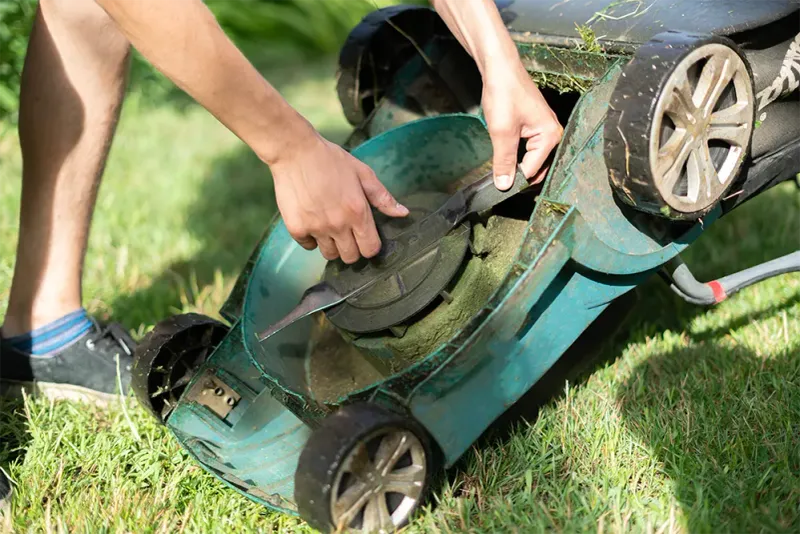
Setting the right height is only as effective as the quality of the cut itself. A dull mower blade does not slice cleanly through grass.
Instead, it tears and shreds the leaf tips, leaving ragged brown ends that make the lawn look stressed even when the height is correct. Texas A&M cutting height guidance and University of Georgia turfgrass management recommendations both emphasize that sharp blades produce a clean cut with less injury to the plant.
Sharpening or replacing the blade at least once per season, or more often with heavy use, is a simple maintenance step that pays off in the appearance and health of the turf.
Mowing wet grass creates a separate set of problems. Wet clippings clump together instead of distributing evenly, which can smother the turf beneath them.
Wet conditions also increase the risk of soil compaction under the mower’s weight, and there is some evidence that mowing during active disease can spread fungal spores through wet clippings. University of Florida IFAS lawn management guidance and Texas A&M mowing recommendations advise avoiding wet mowing when possible for these reasons.
Before adjusting the mower deck, clearing a clog, or inspecting the blade, safety cannot be skipped. Shut off the mower completely and wait for the blade to come to a full stop before reaching near the deck or blade.
Wear sturdy closed-toe footwear and eye protection every time you mow. Clear the lawn of rocks, toys, and debris before starting.
Keep children and bystanders well away from the mowing area. CPSC rotary mower safety guidance and CDC lawn mower injury data both document serious injuries from mowers, and the blade-stop step is consistently listed as one of the most critical precautions.
Treat persistent lawn problems as a diagnosis, not a height setting
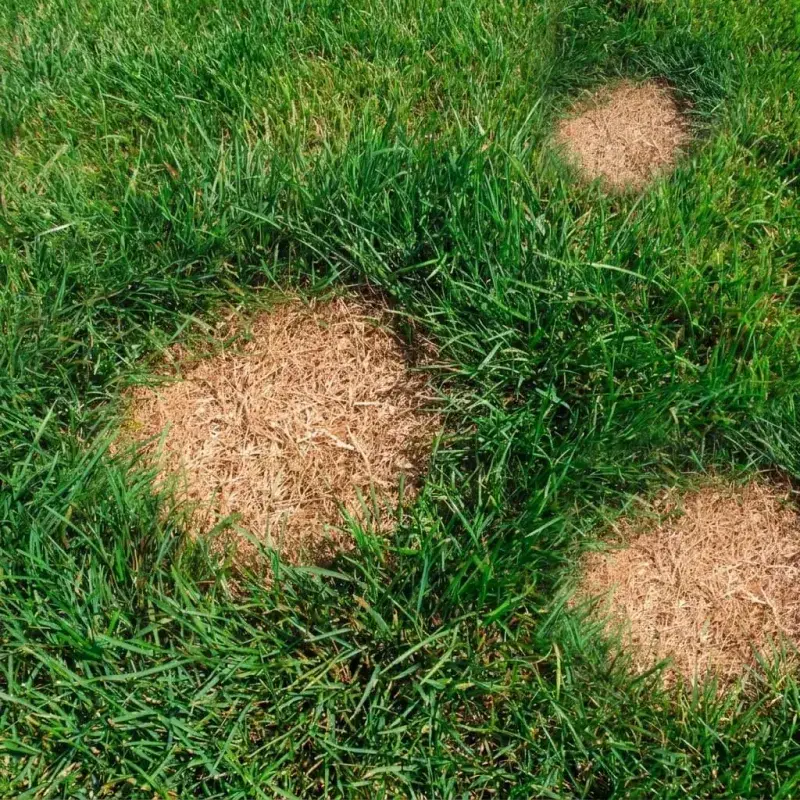
Raising the mowing height to the upper portion of the species-appropriate range is a meaningful improvement for many stressed Southern lawns. But when thin patches, browning, or weed pressure persist after several weeks of correct mowing, the problem likely runs deeper than the deck setting.
Soil compaction restricts root growth and water movement, leaving turf unable to access what it needs even when mowing is perfect. Poor or inconsistent irrigation produces drought stress that looks similar to mowing damage.
Fertility imbalances, particularly nitrogen deficiency, can cause yellowing and thin coverage. Pests such as chinch bugs or grubs damage turf from below, and fungal diseases create patterns of decline that no mowing adjustment will reverse.
University of Florida IFAS lawn care guidance and Clemson Extension weed management information both note that weed pressure often reflects underlying turf stress from these additional factors rather than mowing height alone.
Heavy shade is another condition that mowing cannot fully correct. As noted earlier, Oklahoma State shade turf management guidance acknowledges that severely shaded sites may need a different grass or a non-turf solution altogether.
Newly established turf also needs special consideration. Mississippi State Extension establishment guidance recommends leaving more leaf area during establishment so young grass can build the root system it needs before being managed like mature turf.
The actionable summary is this: identify your grass, set the mower toward the upper half of its appropriate range when conditions call for it, measure the actual blade height on a flat surface, and follow the one-third rule on every mow. A lawn that still struggles after those adjustments is telling you something else needs attention.
The mower is one tool in a larger diagnostic kit.