
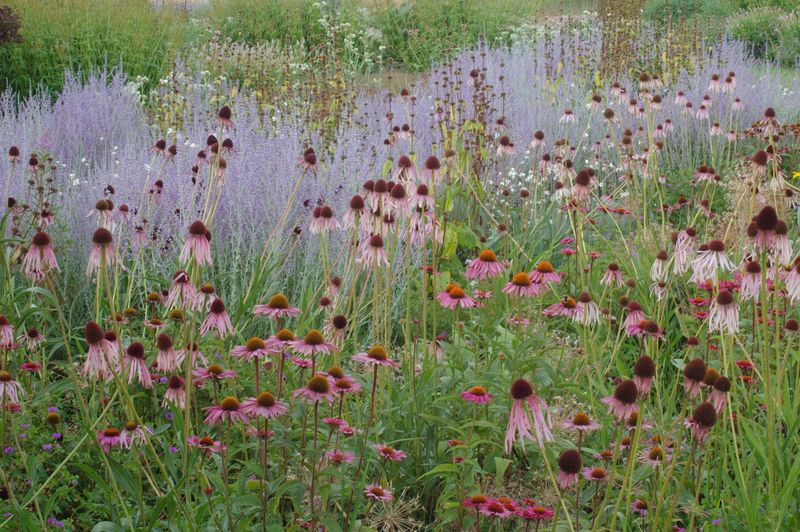
Most gardening advice tells you to deadhead spent flowers to keep the garden looking sharp, but purple coneflowers are worth a second look before you reach for the shears this fall. Those drying, spiky seed heads are not just garden clutter.
Depending on what you want from your plants, leaving them standing or cutting them down can both be the right call.
The fall decision depends on what you want from the plant
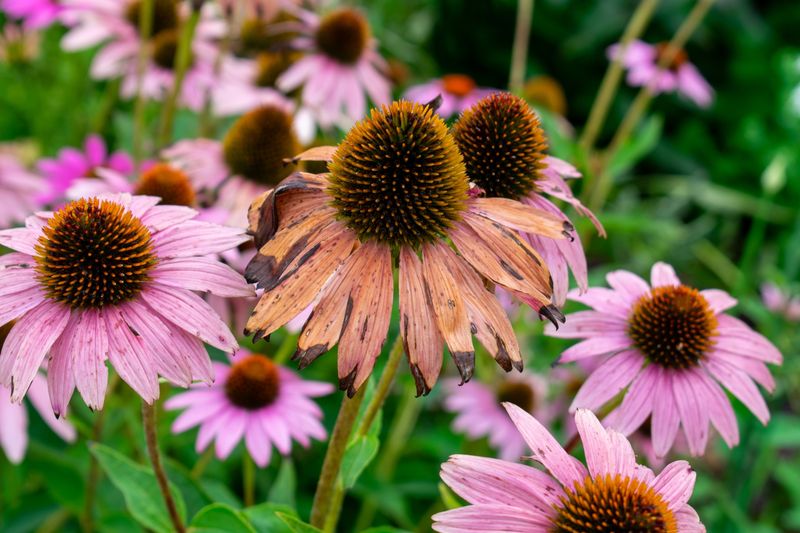
Purple coneflower, Echinacea purpureaRudbeckia, is the plant most home gardeners mean when they talk about coneflowers, but the name covers more ground than that. NC State Extension identifies eastern purple coneflower as a distinct species with its own care needs, and species, sometimes sold as yellow coneflowers, follow different guidance.
Before applying any advice, confirm which plant you actually have growing in your bed.
Penn State Extension explains that deadheading and seed-head retention serve opposite goals: removing fading flowers can push the plant toward additional blooms, while leaving healthy mature heads standing can preserve seed, offer potential food for birds, and add visual structure through the colder months. Neither choice harms the plant.
The tradeoff is simply between more flowers now and more seed later.
Illinois Extension notes that the best approach depends on your specific goals for the season. Gardeners in North Florida may find Echinacea purpurea well suited to their conditions, as UF/IFAS lists it as a Florida-friendly perennial for North Florida, though the same source does not extend that recommendation to South Florida or make a statewide promise.
Summer deadheading can encourage more flowers
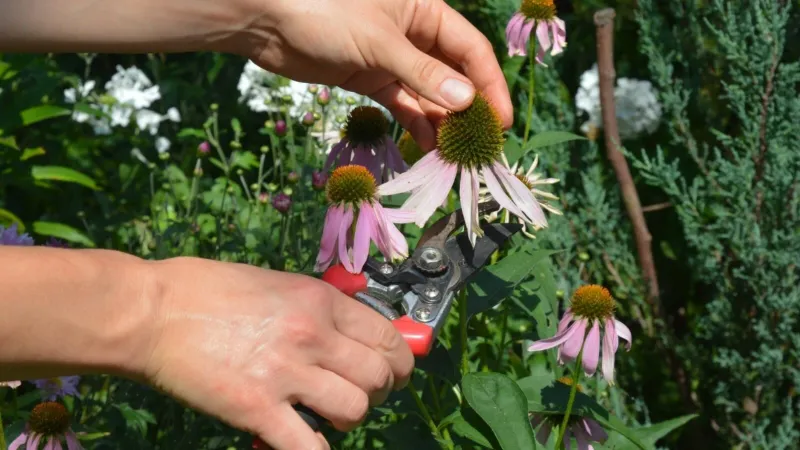
Cutting off a fading coneflower head during the active flowering season is not a punishment for the plant. Deadheading is a routine practice that redirects the plant’s energy away from seed development and toward producing new flower buds.
The result can be additional blooms later in the season, though the number and timing will vary by plant, growing conditions, and how much of the season remains.
UF/IFAS Washington County Extension explains that deadheading summer perennials, including coneflowers, keeps them blooming longer when done consistently during the flowering period. The key qualifier is timing: this approach pays off most when flowers are still actively opening and the season has room left to run.
Deadheading a plant in midsummer is a different calculation than deadheading in late September.
What deadheading does not do is protect the plant from harm. Illinois Extension is clear that the tradeoff is between continued flowering and seed production, not between health and injury.
A coneflower left to go to seed is not struggling; it is simply done blooming for the year and moving on to the next stage of its life cycle. Choosing to deadhead is a gardener’s preference, not a rescue operation.
Healthy fading heads can support birds and winter structure
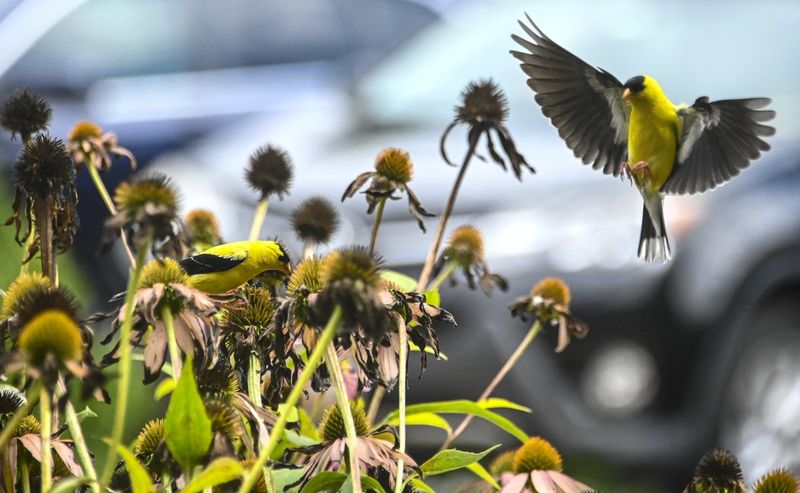
Once the last blooms of the season have faded, the spiny brown cones that remain are doing more than marking where flowers used to be. Penn State Extension lists coneflower seed heads as a winter food source for birds, and Illinois Extension reports goldfinches visiting coneflower seed heads in late fall and winter.
The Missouri Department of Conservation also identifies coneflowers among native plants that support wildlife through seed production.
That said, bird use is not guaranteed for every garden or every plant. How much activity you see will depend on which bird species live near you, how much seed a particular plant or cultivar actually produces, what other food sources are available nearby, and the surrounding habitat.
An Ohio State Echinacea cultivar trial found substantial differences among varieties, with some producing little to no viable seed. A pompom-type cultivar with a dense, altered flower form may not offer the same seed value as a straight species or open-pollinated variety.
Beyond food, the dried cones and upright stems add texture and height to a bed that might otherwise look flat after a hard frost. Iowa State Extension highlights purple coneflower among perennials whose persistent seed heads contribute to winter garden interest while continuing to offer food for birds through the season.
Choose between reseeding, seed collection, and fewer volunteers
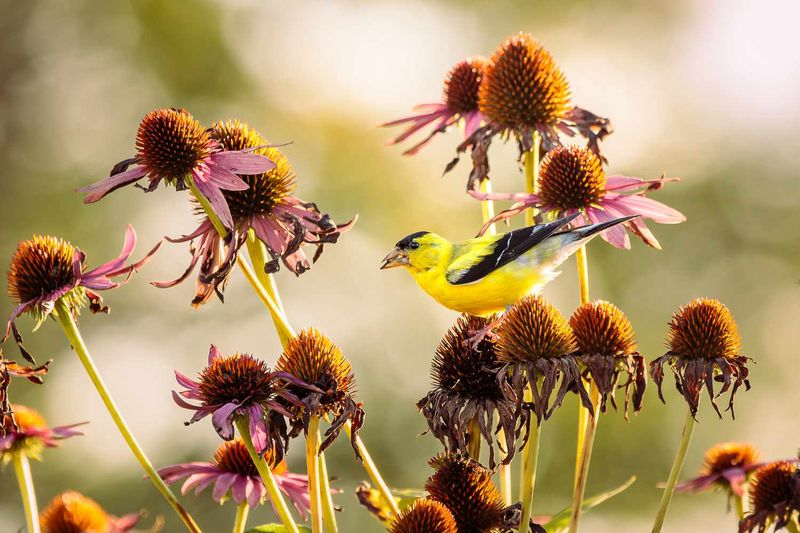
Leaving healthy seed heads standing through fall opens the door to volunteer seedlings the following spring. For some gardeners, that free spread is welcome.
For others managing a tidy bed or a specific planting scheme, unexpected seedlings in the wrong spots are a problem worth preventing. Illinois Extension recommends removing seed heads when new volunteers are not wanted, making late-season deadheading a reasonable choice for that goal.
One thing worth knowing before assuming those seedlings will look like the parent plant: coneflowers can hybridize, and offspring may show noticeably different traits. Illinois Extension notes that variation in seedlings is normal and should not be mistaken for a simple reversion.
If you are growing a named cultivar with a specific flower color or form, seeds from that plant may not reproduce it faithfully.
Collecting seed yourself is another option, and the timing matters. Harvest heads after they have dried fully on the plant but before birds have had time to strip them.
USDA harvesting guidance for narrow-leaved purple coneflower, Echinacea angustifolia, describes stiff, pointed seed heads and recommends heavy gloves for hand harvesting. That guidance is species-specific, so treat it as a useful precaution for Echinacea purpurea rather than a confirmed requirement.
UC ANR seed-saving guidance also advises selecting filled, undamaged seed for the best germination results. As the Ohio State cultivar trial found, some ornamental selections may produce little viable seed regardless of how carefully you harvest.
Use selective cleanup instead of stripping the bed bare
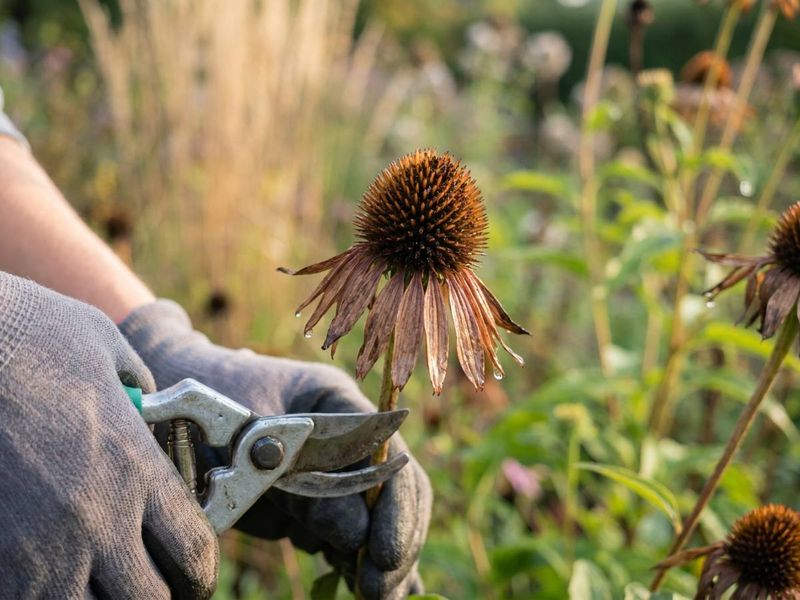
Pulling every stem and seed head out of the bed in one sweep is rarely the best approach for a coneflower planting. A middle path works better: keep the sound, upright seed heads and some standing stems, and pull only the material that has collapsed, looks diseased, or is blocking a path.
NC State Extension notes that purple coneflower stems can be left through winter and cut back in early spring as new growth emerges, which fits naturally with Southern gardening timing rather than forcing a rigid fall deadline.
Hollow or pithy stems can provide nesting or overwintering sites for some native insects, though not every coneflower stem will be suitable, and the benefit varies. The Xerces Society identifies standing stems as potential habitat for cavity-nesting bees and other insects.
Their overwintering habitat guidance recommends leaving stems through winter rather than cutting everything to the ground at once.
When spring arrives and new basal growth begins pushing up, that is the practical signal to do the main cutback. Xerces recommends cutting stems at varied heights in early spring rather than leveling the whole bed, which preserves some structure for any insects still using the stems while tidying the garden for the new season.
Front-yard or high-visibility beds may benefit from slightly more cleanup in fall, while back beds or naturalized areas can stay fuller through winter without any real downside.
An abnormal flower head may signal disease or mite damage
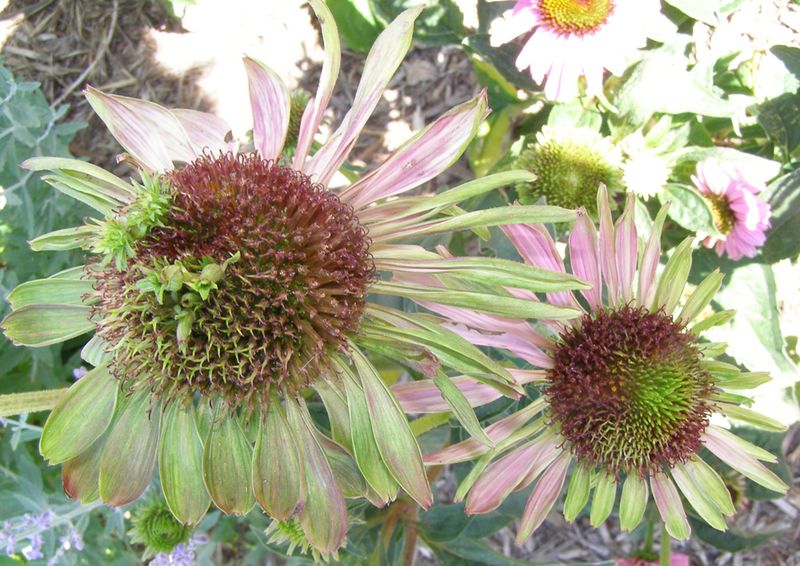
Before deciding to leave an unusual-looking coneflower head standing for winter, take a closer look at what you are actually preserving. Not every strange flower is a spent bloom on its way to becoming a seed head.
University of Maryland Extension describes aster yellows as a disease that can cause green or distorted petals, abnormal leafy growth from the cone, witches’-broom branching, and overall stunting in coneflowers. Plants showing those symptoms are not healthy candidates for fall retention.
Clemson Extension explains that aster yellows is a systemic disease spread by leafhoppers, meaning it runs through the whole plant, not just one affected flower. Cutting off the abnormal flower head does not cure an infected plant.
If you suspect aster yellows, the recommended response is to remove the entire plant and dispose of it in the trash rather than the compost pile.
Coneflower rosette mites can produce similar-looking distortion, including puckered or deformed growth around the cone. Clemson’s Echinacea care guide and Illinois Extension’s aster yellows resource both note that mite damage and aster yellows can look alike, so a visual inspection alone is not always a definitive diagnosis.
When growth looks clearly abnormal, treat it as a warning sign and remove the suspect plant rather than preserving it as fall structure.
Match the cleanup choice to your garden’s priorities
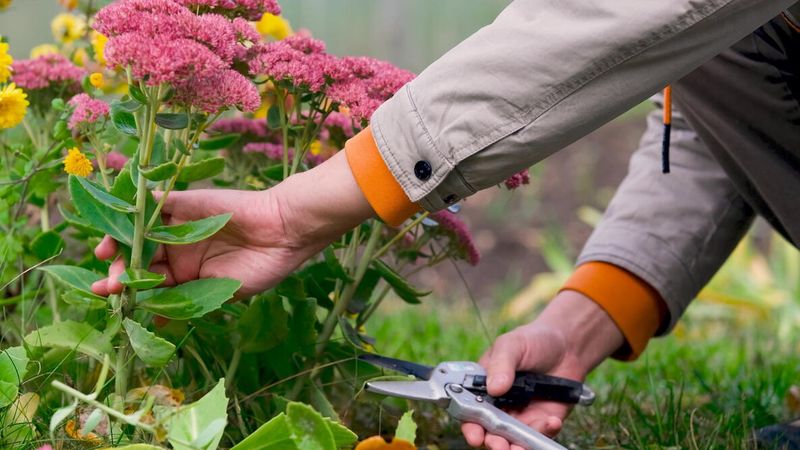
Pulling together a sensible fall plan for coneflowers comes down to a short set of questions: What do you want from this plant right now, and what does the plant actually look like? Penn State Extension frames deadheading as a goal-dependent decision rather than a universal rule, and that framing holds through every stage of the season.
During active flowering, deadhead fading heads if more blooms are the priority. As the season winds down, leave healthy, mature heads standing if you want potential bird forage, winter structure, or the chance for volunteer seedlings.
Remove those heads if you want to limit spread, collect seed for storage, or simply prefer a cleaner bed. UF/IFAS Extension confirms that gardeners hoping for reseeding should hold off on late-season deadheading, while Illinois Extension supports removal when volunteers are unwelcome.
Any plant showing deformed flowers, green petals, or witches’-broom growth should come out entirely rather than stay in the bed, as University of Maryland Extension notes for aster yellows. For everything that looks healthy, let spring’s new growth guide the final cutback rather than a fixed fall date.
Xerces recommends varied stem heights at spring cleanup rather than a clean sweep, leaving the bed ready for a new season without erasing every trace of the one before it.