
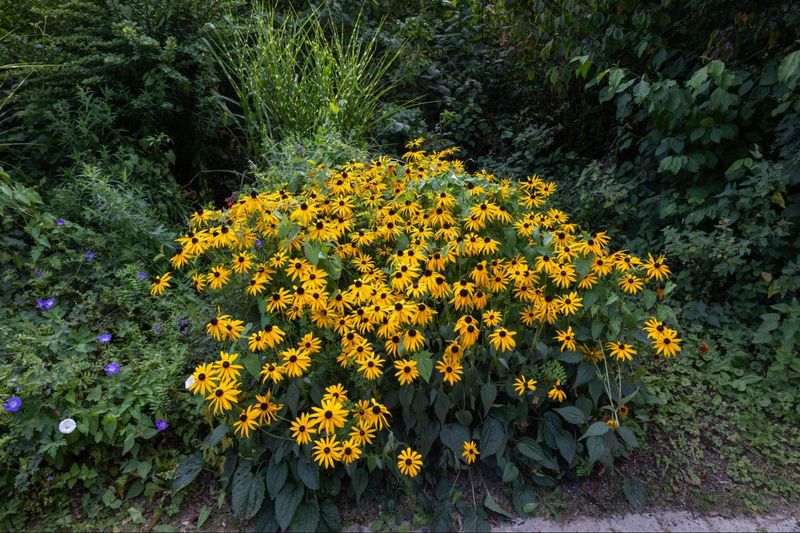
If your black-eyed Susans seem a little less impressive every summer, you are not alone. Many Southern gardeners watch these cheerful yellow flowers slowly fade, shrink, or spread thin without understanding why.
The good news is that one targeted task, dividing an overcrowded perennial clump, can help reverse that decline, but only when you first confirm that overcrowding is actually the problem.
A thinner plant needs a diagnosis before a shovel
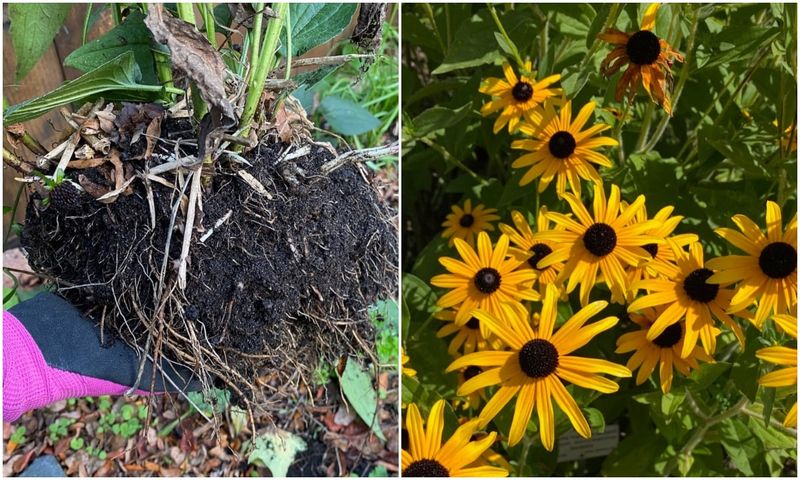
Reaching for a shovel the moment your black-eyed Susans look thin is a reasonable instinct, but it skips a step that matters. Thinning alone does not prove that your plant is overcrowded.
Before you do anything else, take a closer look at what the clump is actually telling you.
Certain symptoms make division a reasonable next move. Oregon State Extension guidance on dividing perennials identifies a dead or hollow center, noticeably fewer flowers than in previous years, and weak or floppy growth as recognized signs that a crowded perennial may benefit from being split apart.
A clump that has pushed outward and left bare ground in the middle is showing you the same thing in a different way.
When those signals line up, division can genuinely help. Clemson Extension’s perennial division factsheet notes that dividing an established perennial can reduce overcrowding, rejuvenate older plants, restore vigor, and produce additional plants for other spots in the garden.
Black-eyed Susan is specifically included among perennials suited to this technique.
What division cannot do is fix a plant that is thinning for a different reason entirely. Shade, drought, poor drainage, disease, or nearby root competition can all produce the same tired look.
University of Maryland Extension’s perennial care resource reinforces that overcrowding is just one of several reasons a perennial may decline. Treat division as a conditional renovation step, not an automatic fall chore.
Identify the Rudbeckia before deciding to divide
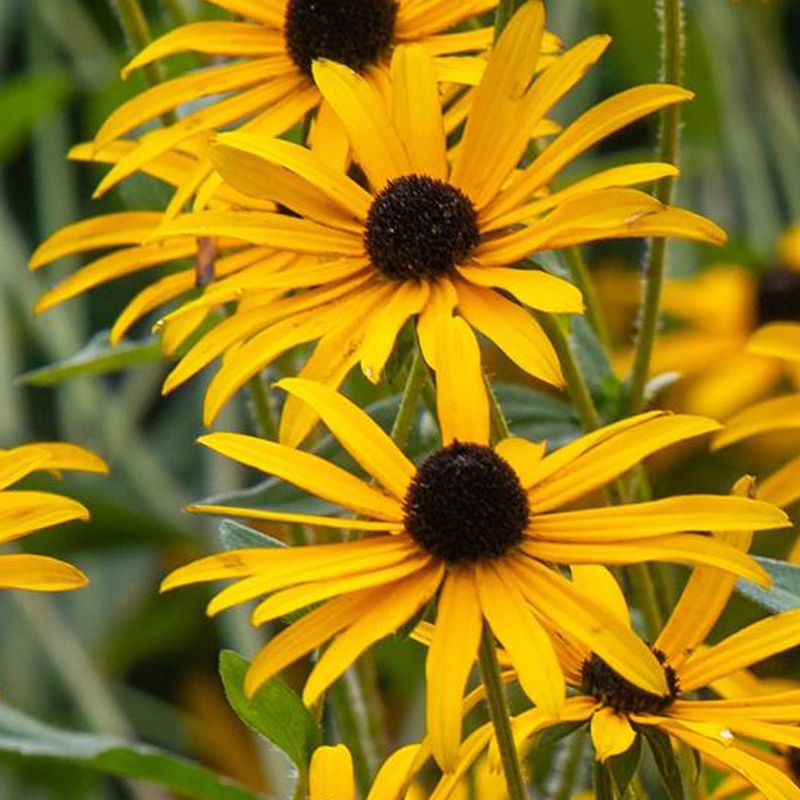
Not every plant sold as a black-eyed Susan behaves the same way underground, and that difference changes everything about whether division makes sense. The name covers several Rudbeckia species, and two of them respond to thinning in completely different ways.
NC State Extension’s profile of Rudbeckia fulgida describes it as a long-lived, rhizomatous, clump-forming perennial. Cultivars like ‘Goldsturm’ fall into this group.
Because R. fulgida spreads by rhizomes and builds a dense root mass over time, an established planting can genuinely become congested, and dividing it is a logical way to renew the crown and restore flowering.
Rudbeckia hirta is a different story. NC State’s profile of Rudbeckia hirta describes it as commonly annual, biennial, or short-lived perennial.
This species often sustains itself by reseeding rather than by building a persistent clump. The USDA plant guide for Rudbeckia hirta similarly notes its tendency toward reseeding as a primary means of persistence.
A sparse patch of R. hirta may simply reflect natural turnover at the end of its life cycle, not a congested crown waiting to be split. Digging and dividing those plants will not give you a renewed clump; you may need to let seedlings fill in or introduce new transplants instead.
If you are unsure which species you have, check the plant tag, ask a local extension office, or look at the root structure after digging.
Choose a workable seasonal window for your region
Fall gets recommended most often for dividing spring- and summer-blooming perennials, and for good reason. Cooler air temperatures reduce stress on freshly dug roots, and the plant has time to settle in before winter.
However, fall is not a single moment on the calendar, and it does not mean the same thing from Georgia to Florida.
Clemson Extension’s division guidance recommends allowing approximately four to six weeks before the ground freezes so divisions can establish a working root system. UGA’s flowering perennials publication for Georgia gardens also identifies fall as a practical division period for many perennials in the Southeast.
In Georgia and similar climates, early to mid-fall often provides a useful window while the soil is still warm enough to encourage root growth before temperatures drop.
Florida gardeners face a different situation. Frost may be minimal or absent, so a fixed frost-countdown rule does not apply.
UF/IFAS guidance on perennial Rudbeckia notes that division can occur in spring or fall, which gives Florida gardeners flexibility to follow the plant’s actual growth cycle rather than a calendar date. Avoid dividing during a heat wave, a drought, or any stretch of weather that will stress new roots before they can recover.
One more exception: if you are growing a fall-blooming Rudbeckia type, University of Maryland Extension notes that fall-blooming perennials are often better divided in spring. Match the timing to your specific plant, your local climate, and the conditions on the ground that day.
Lift and separate the clump carefully
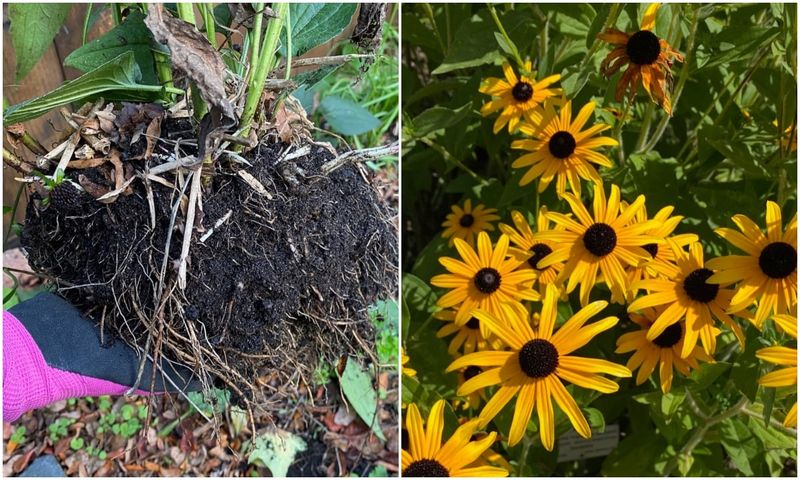
Preparation before you dig makes a real difference. If the soil around the clump is dry, water it thoroughly the day before you plan to divide.
Moist soil holds together better around the roots, which means less damage when you lift the clump and better survival odds for each division.
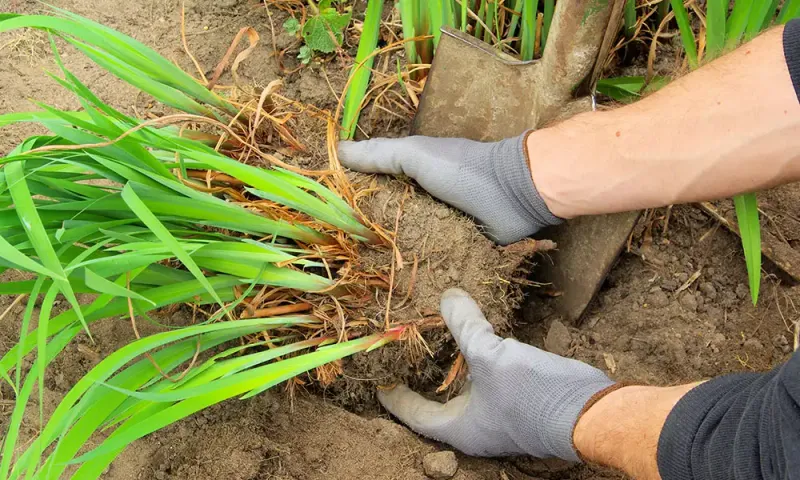
When you are ready, use a sharp spade or garden fork to cut straight down around the entire perimeter of the clump, working several inches out from the visible stems. Slide the tool underneath and lift as much of the root mass as possible in one piece.
Clemson Extension’s perennial division factsheet emphasizes getting the clump out with roots as intact as you can manage. Once the clump is out of the ground, move it to a shaded spot and keep the roots covered or misted so they do not dry out while you work.
Separating the clump depends on how tightly it has grown together. Some sections will pull apart by hand with gentle pressure.
When the root mass is dense and fibrous, a sharp spade, a sturdy knife, or two garden forks placed back-to-back and levered apart will do the job without tearing roots unnecessarily. University of Maryland Extension recommends this back-to-back fork technique for tough, fibrous clumps.
UGA’s flowering perennials guide generally recommends that each division carry three to five healthy shoots or growing points, along with a good portion of roots. Paulding County UGA Extension reinforces the same standard.
Discard any sections with dead crowns, rotted roots, or signs of disease. Those pieces will not recover, and replanting them wastes the effort you just put in.
Replant healthy sections and support establishment

Speed matters once the clump is out of the ground. Roots exposed to air and sun lose moisture quickly, so move healthy divisions into their new spots without delay.
Prepare the planting holes ahead of time if possible so you are not leaving roots sitting on the surface longer than necessary.
Set each division so the crown sits at roughly the same depth it occupied in the original planting. Planting too deep can smother the crown and invite rot; planting too shallow leaves roots exposed and vulnerable to drying out.
Clemson Extension’s division guidance and University of Maryland Extension both recommend firming the soil gently around the roots to eliminate air pockets, then watering thoroughly right away.
Newly divided plants need more consistent moisture than established perennials do. Their reduced root systems cannot yet pull water from a wide area of soil, so check the soil regularly during the first several weeks and water before it dries out completely.
Penn State Extension’s perennial care guidance supports consistent moisture as a key factor in establishment success.
A light layer of mulch helps retain that moisture and, in areas where the ground freezes, reduces the heaving that can push shallow roots out of the soil over winter. Newton County UGA Extension’s fall planting advice recommends keeping mulch away from the crown itself to prevent rot.
Skip the heavy fertilizer. Pushing rapid, soft growth on a stressed root system can increase vulnerability rather than speed recovery; let the plant settle in on its own terms first.
Fix the growing conditions that division cannot solve
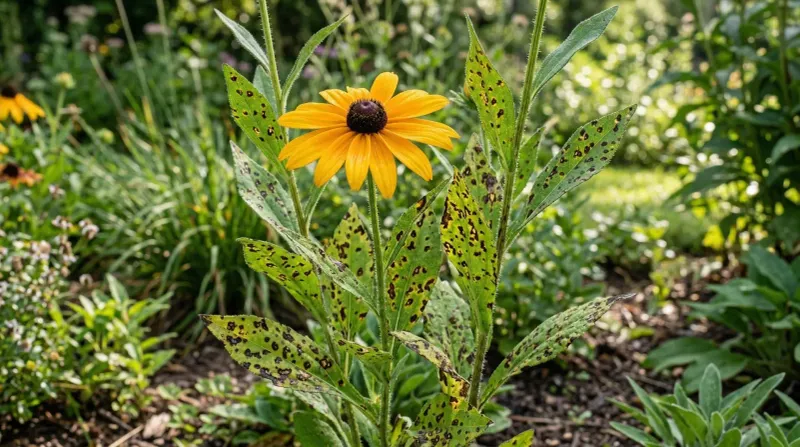
Division addresses one specific problem: a crowded, exhausted root mass that has run out of room. When something else is causing the decline, dividing the plant moves the problem rather than solving it.
Getting the site conditions right is what determines whether your Rudbeckia thrives long-term.
NC State Extension’s profile of Rudbeckia fulgida confirms that this species performs best in full sun with well-drained soil. Missouri Botanical Garden’s Rudbeckia profile similarly lists full sun as the primary requirement, noting that too much shade leads to reduced flowering and weaker stems.
If your plant sits where it receives fewer than six hours of direct sun daily, no amount of dividing will restore full bloom production.
Arkansas Cooperative Extension specifically attributes reduced black-eyed Susan flowering partly to excessive crowding, which also restricts the airflow that helps prevent fungal disease. Soggy soil and poor drainage are equally damaging; roots sitting in waterlogged ground are prone to rot even when the top of the plant looks fine.
If drainage is the issue, amending the planting area or relocating the plant will do more good than division.
Disease is worth checking carefully before you replant anything. University of Minnesota Extension’s Rudbeckia disease diagnostic tool lists Septoria leaf spot, powdery mildew, and other fungal problems as common culprits behind spotted or deteriorating foliage.
University of Illinois Extension notes that Septoria leaf spot can spread quickly in wet conditions. Fungicide does not repair leaves that are already spotted; the practical response is to remove diseased foliage and debris, water at the base rather than overhead, and improve airflow through better spacing or pruning of surrounding plants.
Use division as a targeted renewal step
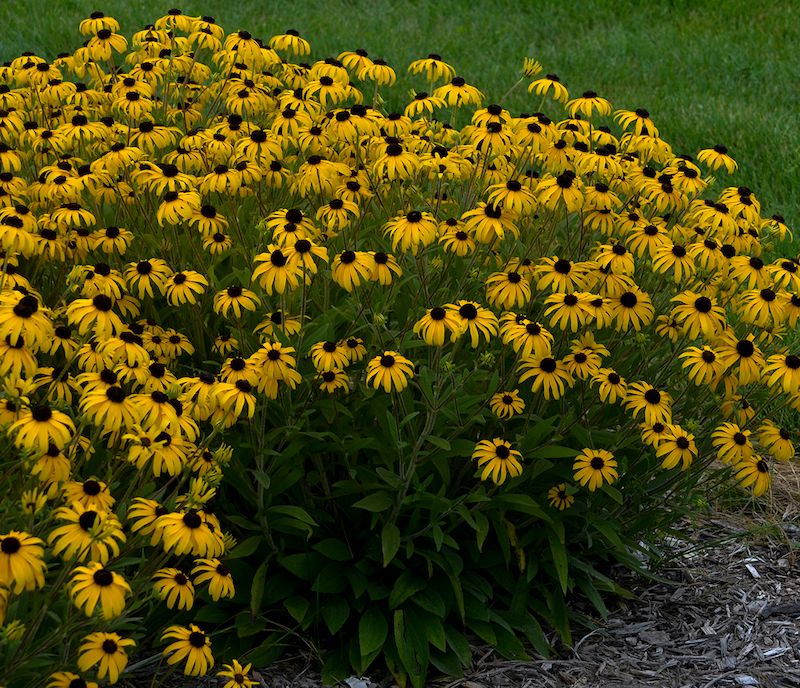
Pulling all of this together comes down to a straightforward decision path. Start by confirming what species you actually have.
If the plant is R. fulgida or another long-lived clump-forming type, and if you can see a dead center, crowded stems, noticeably fewer flowers, or weak floppy growth, then division is worth attempting. If you are looking at R. hirta or a similar short-lived type, or if the site has shade, drainage, or disease problems, address those issues first.
Oregon State Extension places division at roughly three- to five-year intervals or whenever overcrowding symptoms appear, not every fall. Penn State Extension’s perennial care guidance reinforces that division is a periodic renovation tool rather than an annual routine.
Treating it as an occasional, deliberate response to a real problem gives each division the best chance of actually recovering.
On the question of fall cleanup, healthy seedheads can stay on the plant through winter. NC State’s profiles for both R. hirta and R. fulgida note that mature seedheads support birds and allow natural reseeding.
Remove diseased foliage and debris separately, but leave healthy stems standing if they are doing no harm.
Division can genuinely renew the right perennial clump when performed in a locally appropriate window with healthy material and attentive aftercare. A plant that gets the right site, the right timing, and a well-rooted division has every reason to come back stronger – but results depend on the conditions you give it, not just the act of dividing.