
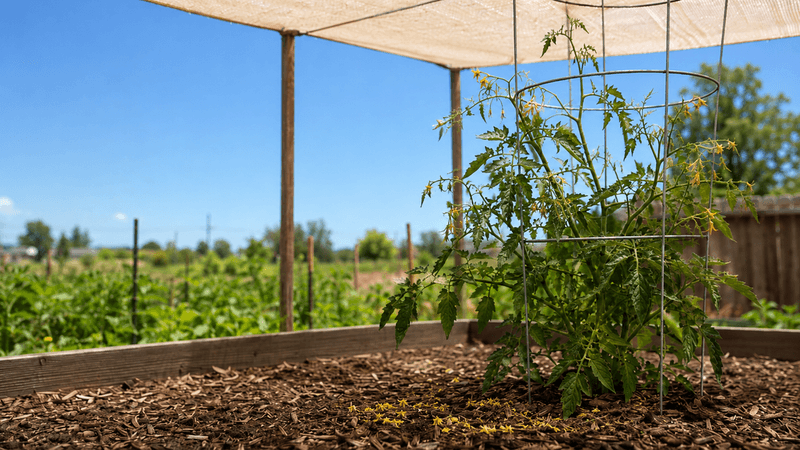
Every Southern gardener knows the frustration: your tomato plant looks healthy, covered in yellow blossoms, yet the fruit bowl stays empty. When early-fall heat lingers, flowers often dry up and fall off before they ever become tomatoes.
Heat-related blossom drop is one of the most common reasons this happens, but it is not the only one. Understanding what is actually going on inside those flowers can help you decide what to do next and set realistic expectations for what any single practice can fix.
When tomato flowers fail before fruit forms
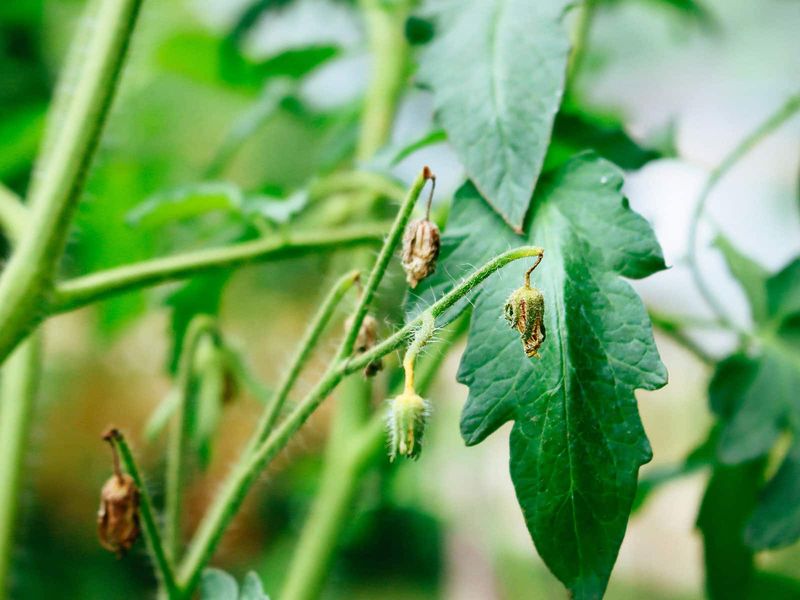
A tomato plant that keeps flowering but produces almost no fruit is one of the more confusing problems a Southern gardener can face. The plant looks fine from a distance, the blossoms open on schedule, and then they simply disappear without leaving a tiny green fruit behind.
When this pattern shows up during a stretch of hot late-season weather, heat-related blossom drop and poor fruit set are plausible explanations worth examining first.
Tomatoes run into reproductive trouble when daytime temperatures climb above roughly 85 to 92 degrees Fahrenheit or when nighttime temperatures stay above about 70 to 75 degrees Fahrenheit. Penn State Extension notes that these approximate ranges can reduce pollen viability and fruit set, though the precise threshold shifts depending on the cultivar and local conditions.
Heat is a plausible leading cause when flowers dry and drop during a hot spell, but it is not the only possibility.
Excess nitrogen, uneven watering, disease pressure, poor root health, and inadequate light can all reduce flowering or fruit set as well. University of Minnesota Extension points out that “no fruit” can describe more than one problem.
Flowers that drop before forming fruit are different from small or misshapen fruits that stay attached, and both are different from green fruits that remain on the plant but refuse to ripen. Sorting out which pattern you are actually seeing is the first step toward choosing the right response.
Why tomatoes can bloom without setting fruit
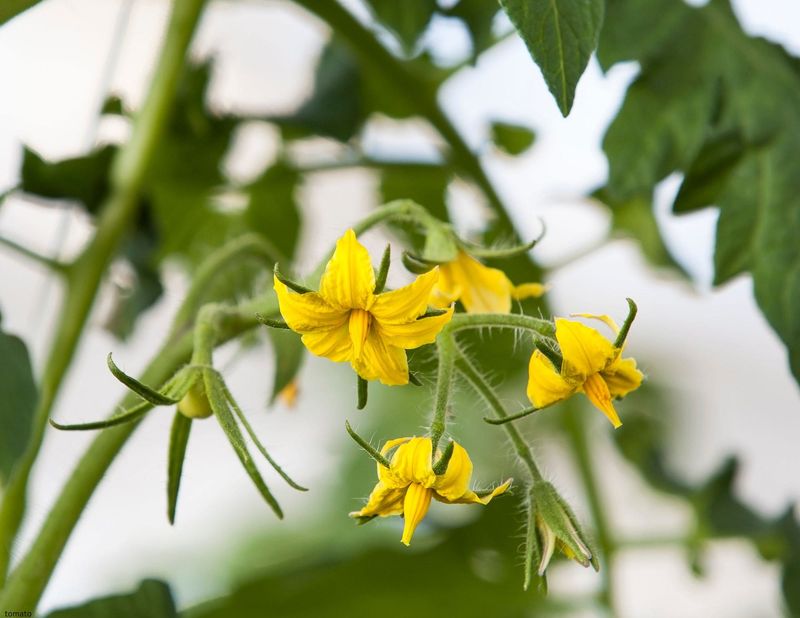
Tomato flowers are self-fertile, meaning each blossom carries both male and female parts. The plant does not need a second tomato nearby, and it does not require honeybees for cross-pollination.
What it does need is movement. Pollen has to travel from the anthers to the stigma inside the same flower, and that transfer depends on vibration from wind, insects, or a gardener’s hand.
Under normal conditions, a passing breeze or a bumblebee’s buzz is enough to shake pollen loose. Illinois Extension’s Midwest Vegetable Guide describes tomato pollination as requiring movement or vibration of the flower for reliable pollen release.
When gardens are sheltered from wind and insect activity slows in the heat, that natural vibration disappears, and fewer flowers set fruit even when pollen is perfectly healthy.
Heat adds a deeper complication. Research by Sato et al. published in Plant, Cell and Environment found that high temperatures during pollen development can reduce pollen release, viability, and germination before a flower ever opens.
A plant can look healthy and produce blossoms steadily while setting almost no fruit because the pollen inside those flowers was damaged days earlier during a heat event. Manual vibration can help when viable pollen is present, but it cannot repair pollen that heat has already rendered sterile or revive a blossom that the plant has already aborted.
Try gentle flower vibration when blossoms are open
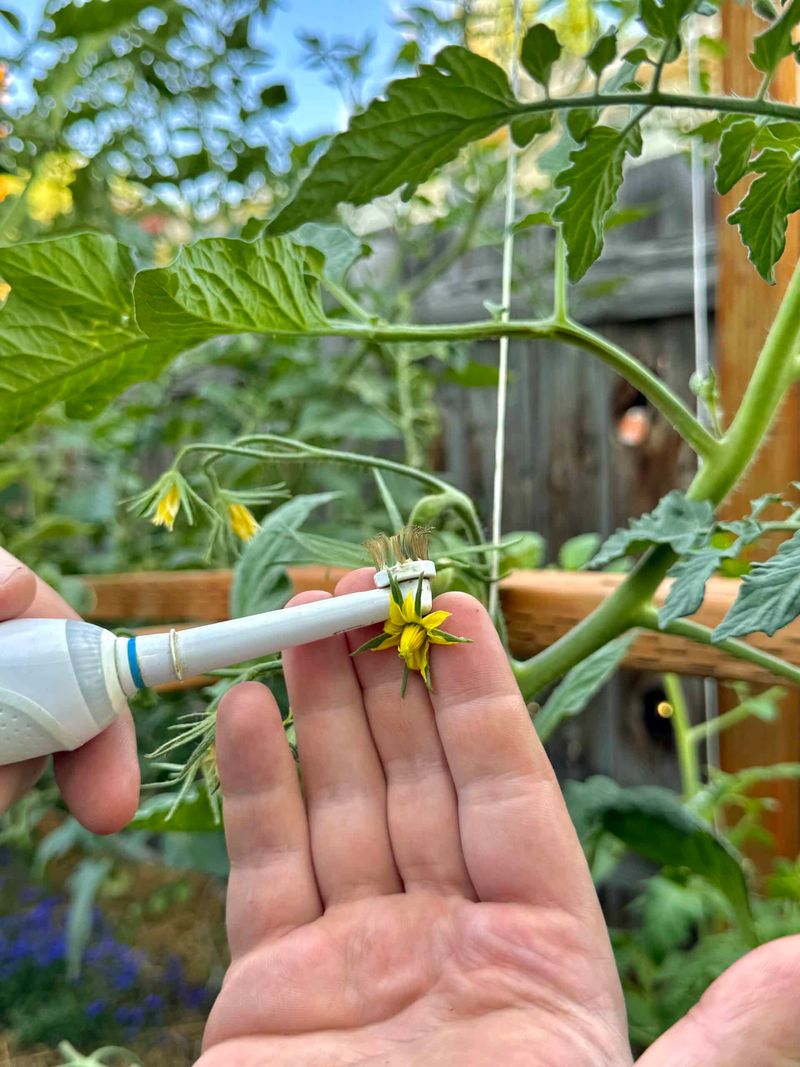
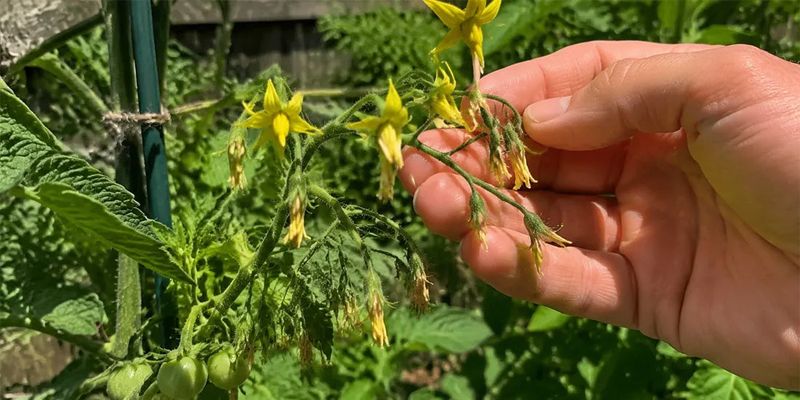
Gently vibrating open tomato blossoms is a low-risk practice that may improve pollination when flowers contain viable pollen. The idea is straightforward: lightly tap a flower cluster or give the stake supporting it a brief, gentle shake so pollen moves within the flower rather than staying locked in the anthers.
A soft touch is all that is needed. Rough handling can bruise flowers or stems and is counterproductive.
Morning is a convenient time for this because flowers tend to be open and dry before afternoon heat sets in, but there is no established requirement to do it at a specific hour every single day. Treating every cluster on a rigid daily schedule is not supported by extension guidance as a necessary routine.
If you have a few clusters with open, dry blossoms and you are already in the garden, a gentle tap takes seconds and carries essentially no downside risk.
UF/IFAS Extension warns that in some cultivars, pollen can become sterile under North Florida’s fall heat, meaning vibration alone cannot guarantee fruit set. The practice is most useful when the plant still has viable pollen and the main barrier is incomplete transfer.
Think of it as giving a healthy blossom a better opportunity, not as a reliable override for heat stress. Pair it with the other supportive steps in this guide rather than treating it as a standalone fix.
Keep root-zone moisture steady through the heat
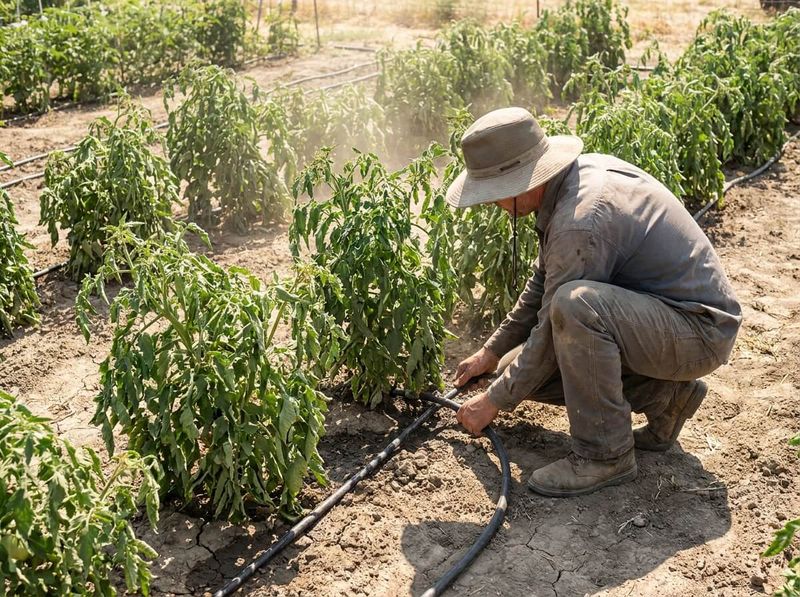
While you cannot undo heat damage to pollen, you can avoid piling additional stress onto a plant that is already struggling. Consistent soil moisture at the root zone is one of the most practical things you can do during a hot stretch.
Tomatoes that swing between dry soil and heavy watering are under physiological stress that compounds whatever the heat is already doing to their flowers.
University of Minnesota Extension recommends deep watering at the root zone rather than frequent shallow sprinkling, which wets the surface without reaching where roots can actually use the moisture. Drip irrigation, soaker hoses, or slow watering at the base of the plant are preferable to overhead sprinklers.
Wet foliage and soil splash from overhead watering can encourage fungal disease and bacterial leaf spot, problems that are especially relevant for Florida fall gardens.
Mulch is a practical partner to consistent watering. Roughly 2 to 3 inches of organic mulch over the root zone helps slow moisture evaporation and moderates soil temperature on hot days, according to UMN Extension’s tomato growing guidance.
Keep mulch pulled slightly away from the main stem to avoid rot. Steady moisture also helps prevent blossom-end rot, a separate disorder involving calcium movement within the plant, though consistent watering does not guarantee fruit set when pollen viability is already compromised by heat.
Use temporary shade only when it preserves enough light
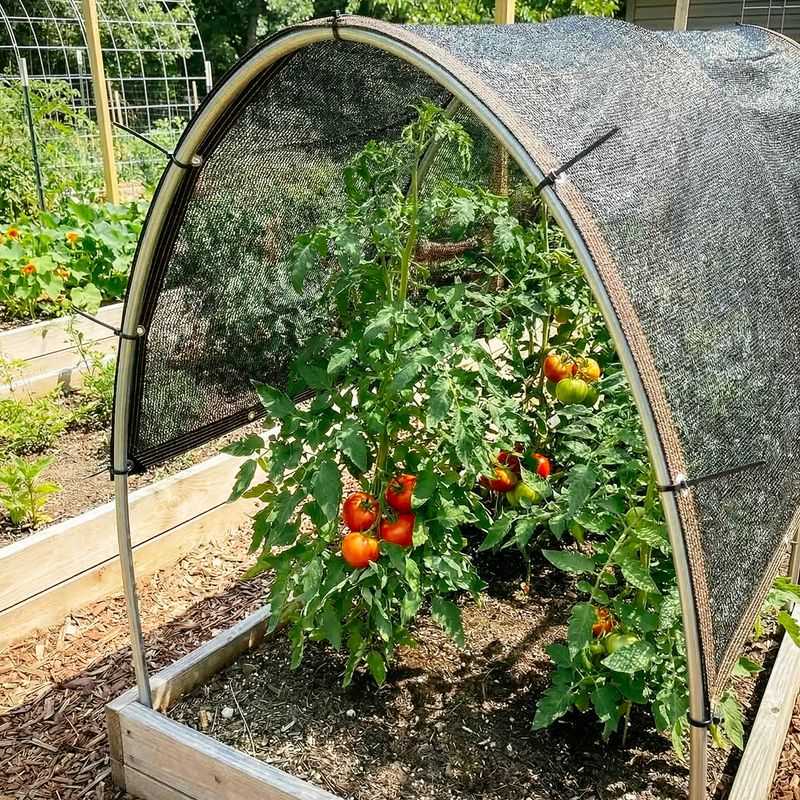
Shade cloth can reduce heat load on tomato plants and lower the risk of sunscald on exposed fruit, but it comes with real tradeoffs that make it worth using carefully rather than automatically. Tomatoes are high-light crops.
A plant left under heavy shade all day will produce fewer flowers, grow less vigorously, and ultimately yield less fruit than one receiving adequate direct sun.
University of Arizona Cooperative Extension suggests approximately 20 to 40 percent shade for tomatoes in very hot conditions, with some situations calling for up to 40 to 60 percent. Those figures are situational guidance, not a universal prescription.
A plant with sparse foliage and exposed fruit clusters on a 100-degree afternoon is a reasonable candidate for temporary midday shade. A plant with dense, healthy canopy may not need it at all.
The practical approach is to use shade cloth during the hottest part of the day, roughly late morning through mid-afternoon, and remove or roll it back when temperatures drop. Targeting exposed fruit clusters rather than blanketing the whole plant is another option that reduces sunscald risk without sacrificing the light the rest of the plant needs.
Shade may protect developing flowers as temperatures begin to moderate, but it cannot undo heat damage that already occurred, and excessive or permanent shade is likely to make fruit set worse rather than better.
Match the remedy to the symptom
Before reaching for any product or repeating the vibration practice, take a few minutes to look at what is actually happening on your plant. The symptom pattern tells you a great deal about the likely cause, and treating the wrong problem wastes time and can create new ones.
Flowers that dry and fall off without leaving any fruit suggest heat-related blossom abortion or pollination failure. Flowers that stay attached while the resulting fruit remains tiny, misshapen, or fails to enlarge may indicate heat, water stress, nutrient imbalance, root problems, or cultivar sensitivity.
A dark, sunken lesion on the blossom end of a developing fruit is blossom-end rot, a disorder involving inconsistent calcium movement within the plant. UGA Extension explains that blossom-end rot does not automatically mean the soil lacks calcium; it is often tied to uneven watering, root damage, or nutrient competition rather than a simple soil deficiency.
Calcium sprays are not a universal fix.
Green fruit that stays attached but refuses to turn red is a ripening delay, which is different from a failure to set fruit at all. University of Minnesota Extension notes that excessive heat can slow normal pigment development in tomatoes that are otherwise healthy and attached to the vine.
Walk your plants and check stems and leaves as well. Spotting, curling, yellowing, stunting, or widespread decline are reasons to suspect disease or another stress rather than assuming heat is the whole story.
Penn State Extension cautions against adding high-nitrogen fertilizer in response to poor fruit set, because excess nitrogen tends to push leafy growth at the expense of flowering and fruiting. Base any fertilization on visible symptoms, soil testing, and product directions rather than a reflexive response to empty vines.
Let cooler weather guide the next step
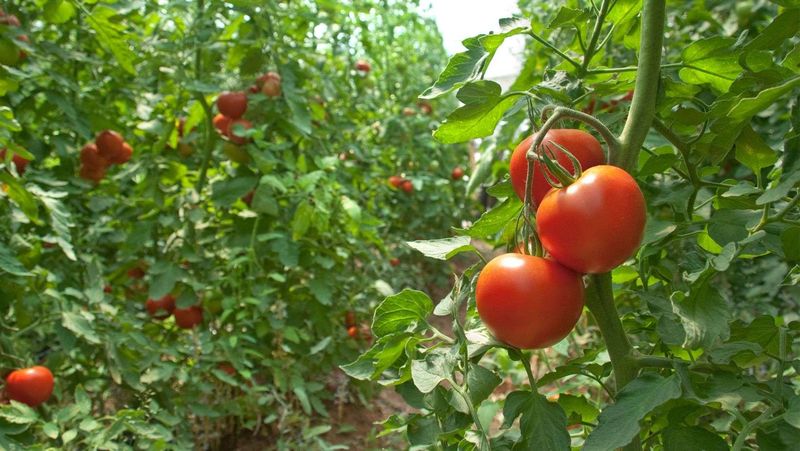
Patience is genuinely part of the strategy here. Flowers that developed and opened during the hottest period may never set fruit, and no amount of vibration, watering, or shade will change that for blossoms whose pollen was already damaged.
New flowers that form as nighttime temperatures begin to drop have a meaningfully better opportunity to set fruit because cooler nights reduce the reproductive stress that heat creates.
Sato et al.’s research supports the observation that heat-related reproductive problems can be temporary, with fruit set improving on flowers that develop after temperatures moderate. Recovery is not guaranteed and depends on the plant’s overall health, disease status, water supply, and root condition.
A plant weakened by disease or severe drought stress may not rebound even when the weather cooperates.
For future seasons, heat-tolerant or hot-set cultivars offer a practical advantage. UF/IFAS Extension specifically recommends cultivar selection as a key tool for North Florida fall tomatoes, noting that some standard varieties produce sterile pollen under regional heat.
These cultivars are not immune to extreme conditions, but they handle moderate heat better than many common varieties. Timing also matters enormously.
Florida’s fall production windows differ by region, and Texas A&M’s fall vegetable gardening guide recommends transplanting fall tomatoes roughly 100 days before the expected first frost in your area. Florida and Texas follow different planting calendars, and local extension guidance is the most reliable source for your specific region.
The combination of optional gentle vibration, steady root-zone moisture, targeted temporary shade, honest symptom diagnosis, and a cultivar matched to your climate gives new flowers the best realistic chance as temperatures ease. The plants that make it through are often the ones whose gardeners kept showing up without expecting miracles.