
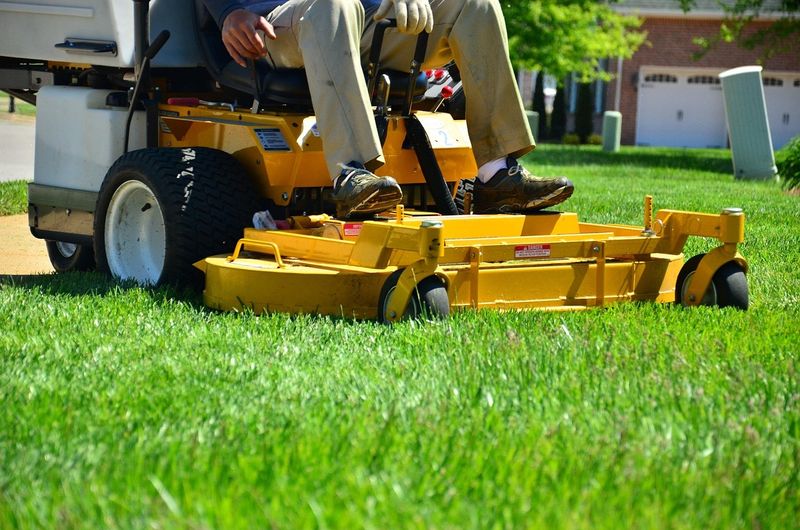
Crabgrass has a way of showing up every summer no matter how much effort you put into your lawn. Most homeowners blame the heat, the rain, or bad luck, but the real opening often comes from a mowing habit that weakens the turf before crabgrass even arrives.
Cutting too short or waiting too long between mows can thin your grass, expose bare soil, and hand crabgrass exactly the foothold it needs. Understanding what is actually happening, and making a simple adjustment at the next mow, can give your desirable turf a much better chance to compete.
The mowing habit that weakens turf instead of feeding crabgrass
Mowing does not feed crabgrass. Grass clippings do not nourish it either.
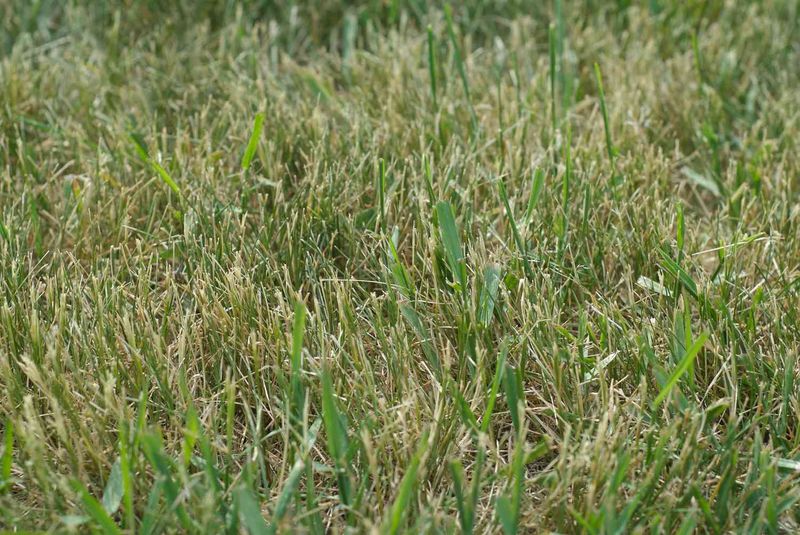
What actually creates an opportunity for crabgrass is a pattern of cutting the lawn too short, or waiting so long between mows that the mower ends up removing a large portion of the leaf blade in a single pass. Both habits can weaken and thin desirable turf, expose soil, and reduce the lawn’s ability to compete with weeds that are ready to fill any gap.
When a lawn is buzz-cut close to the ground on a regular basis, the grass loses the leaf tissue it needs to capture sunlight and sustain root growth. Texas A&M AgriLife Extension guidance on turf cutting height notes that mowing too low can reduce turf density, root development, and overall health, placing the lawn at a competitive disadvantage where weeds can establish.
The result is not an infestation caused by the mower itself, but a weakened canopy that leaves the door open.
A quick diagnostic clue is worth remembering: if the lawn turns noticeably brown within a day or two after mowing, the mower likely removed too much photosynthetic leaf tissue in one pass. Sparse patches and thin areas near the edges of beds or along fence lines often tell the same story.
The correction is not complicated, but it does require knowing the right height for the specific grass growing in your yard before touching the deck adjustment lever.
Why a healthy canopy reduces crabgrass opportunities
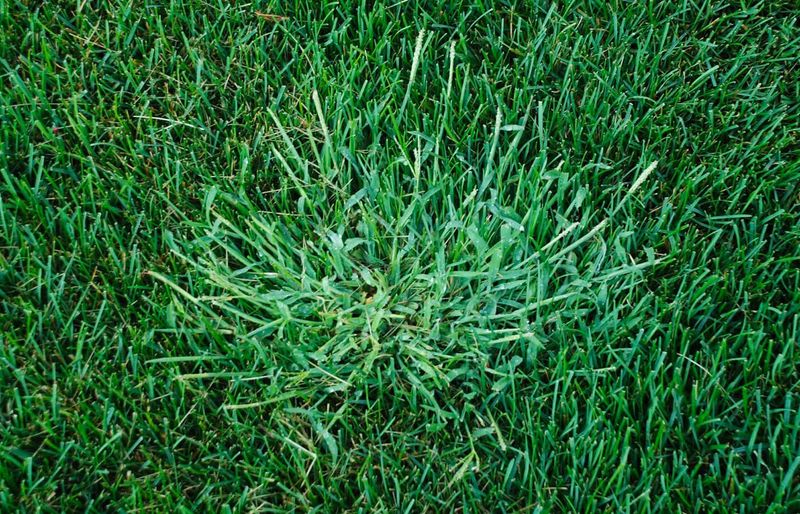
Crabgrass seedlings need light to germinate and get established. A dense, healthy lawn canopy shades the soil surface and physically limits how much light reaches the ground, which reduces the window of opportunity for new crabgrass plants to take hold.
Retaining adequate leaf area through proper mowing supports stronger root systems and a tighter canopy that makes it harder for weeds to compete.
Texas A&M Cooperative Extension’s mowing guide describes a dense, healthy turf as the best defense against weeds because a full canopy shades the soil and suppresses germination opportunities. Research on tall fescue lawns adds useful context: a University of Kentucky study on seasonal mowing heights found that consistently higher mowing heights reduced crabgrass pressure more reliably than varying the height by season.
That finding comes from a cool-season turf system, so it does not guarantee the same result in every Southern warm-season lawn, but the underlying principle applies broadly: a taller, healthier canopy gives desirable grass more surface area to capture light and crowd out competitors.
The goal is not to mow as high as possible. Mowing above the appropriate range for a given species can create its own problems, including thatch accumulation and scalping when the lawn is eventually cut back.
The target is a species-appropriate height toward the upper part of the recommended range, maintained consistently, so the turf stays dense enough to shade the soil and slow crabgrass establishment.
Identify the grass before you raise the mower
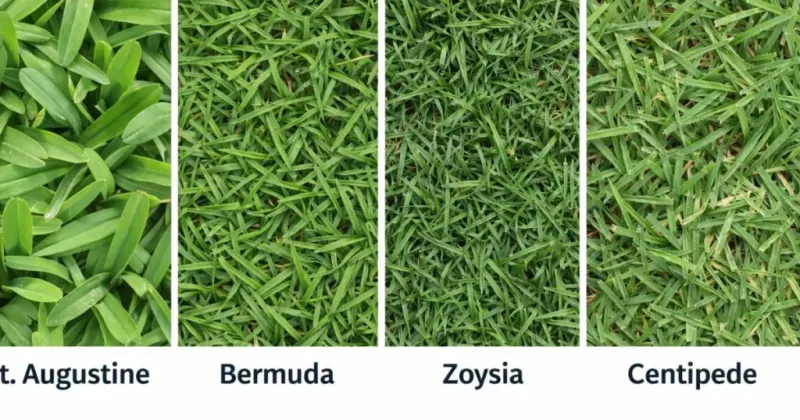
Raising the mower deck without knowing the grass species is one of the most common overcorrections homeowners make. A height that protects St. Augustinegrass can seriously injure common bermudagrass, and a low setting suited to hybrid bermudagrass would damage standard St. Augustinegrass in a single mow.
The first step is identifying what is actually growing in the yard.
UF/IFAS Florida-friendly landscaping guidelines list these home-lawn mowing ranges for Florida: bahiagrass at 3 to 4 inches, bermudagrass at 0.5 to 1.5 inches, centipedegrass at 1.5 to 2 inches, standard St. Augustinegrass generally at 3.5 to 4 inches, and coarse zoysiagrass at 2 to 2.5 inches. Dwarf and semidwarf St. Augustinegrass cultivars such as Seville or Captiva are the exception; those can be cut around 2.5 inches, but applying that lower setting to a standard variety like Floratam would strip away too much leaf tissue.
Texas A&M’s mowing recommendations offer slightly different figures for Texas conditions: approximately 1.5 inches for common bermudagrass, 1 inch for hybrid bermudagrass, 2 inches for centipedegrass, 2.5 inches for St. Augustinegrass, and 1.5 inches for coarse zoysiagrass. Cultivar, mower type, shade level, and regional climate can all shift the ideal setting within those ranges.
Rather than chasing a single number, aim for the upper portion of the correct range for the specific grass in the yard and adjust from there based on how the lawn responds.
Replace the weekly schedule with the one-third rule
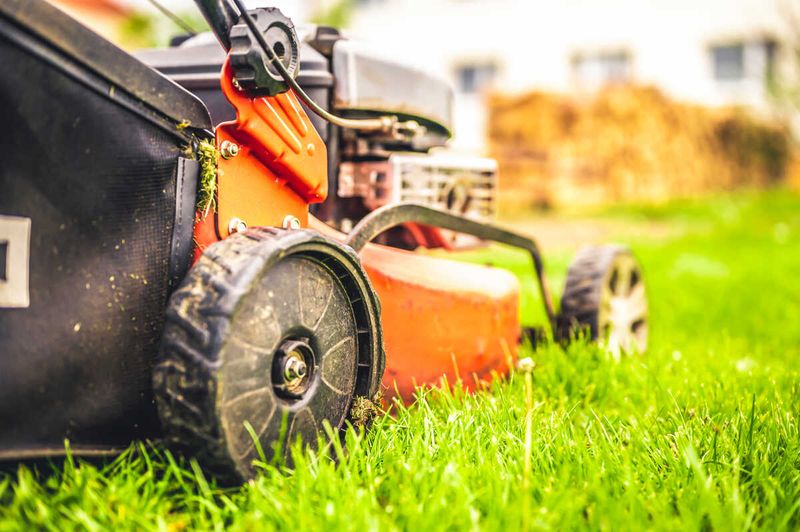
A fixed weekly mowing schedule sounds organized, but it does not account for how grass actually grows. During a hot, rainy stretch in July, bermudagrass in Texas can put on enough growth in five days to require a cut.
After a dry spell or during cooler fall temperatures, that same lawn might go ten or twelve days without needing attention. Mowing on a calendar rather than in response to actual growth is how the one-third rule gets broken most often.
The rule itself is straightforward: remove no more than one-third of the grass blade’s height in a single mowing. Texas A&M’s bermudagrass management calendar gives a practical example: a lawn maintained at 1 inch should be cut when it reaches roughly 1.5 inches.
Rainfall, irrigation frequency, temperature, sunlight exposure, and recent fertilizer applications all affect how fast the grass grows and therefore how often it needs to be cut.
An overgrown lawn, one that has gone too long between mows, should never be cut back to the target height in a single pass. That kind of sudden removal strips away most of the leaf tissue at once and can leave the turf brown, stressed, and more vulnerable than before.
Instead, make several gradual cuts over consecutive mowing sessions, lowering the deck a little at a time until the lawn reaches its proper height. Browning immediately after a mow is a reliable signal that too much was removed in one session.
Build a dense lawn by fixing the conditions that thin it
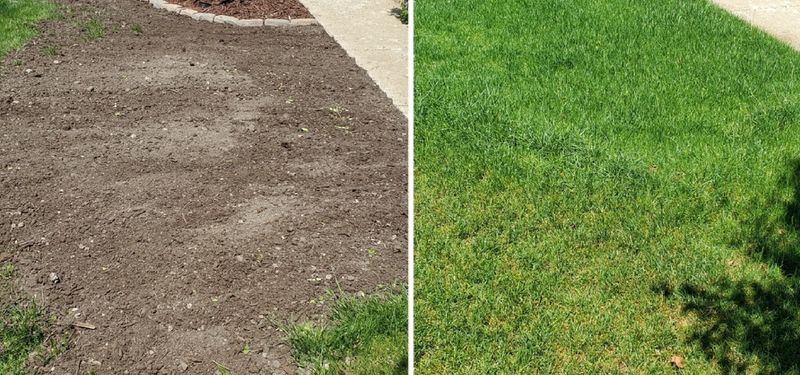
Raising the mower deck helps most when the turf is healthy enough to fill in and stay dense. Bare patches, compacted soil, poor drainage, and shade-related thinning all limit how well even a properly mowed lawn can compete with crabgrass.
A quick walk around the yard before the next mow can reveal which of these conditions might be undermining the turf from below.
Compacted soil reduces root penetration and water infiltration, which stresses turf and opens gaps where weeds establish. Drought stress and excessive irrigation can have opposite but equally damaging effects on turf density.
Shade from trees or structures can thin grass species that require full sun, and planting a shade-intolerant grass in a shaded area is a problem no mowing adjustment can fix. Fertility imbalances, whether from too little or too much nitrogen, also affect how vigorously the turf fills in.
Texas A&M extension guidance points to proper mowing height, suitable turf selection, adequate irrigation, and correcting compaction as all contributing to a lawn dense enough to shade and suppress weeds.
Grass clippings left on the lawn after a properly timed mow are not the problem they are often assumed to be. Oklahoma State University’s thatch management guidance notes that finely chopped clippings from regular mowing generally decompose quickly and do not contribute significantly to thatch buildup.
Clipping removal makes sense when heavy clumps are smothering the turf or when seed-bearing weed material, including mature crabgrass heads, is being deliberately managed to reduce next season’s seed pressure.
Mowing reduces pressure but does not remove established crabgrass
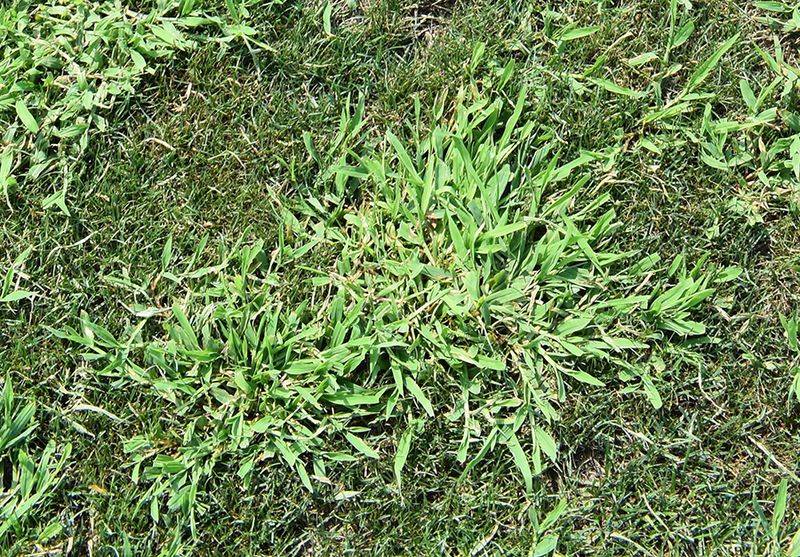
Better mowing habits can reduce the conditions that help crabgrass get started, but they will not remove plants that are already established. Crabgrass is a summer annual, meaning it germinates, grows, produces seed, and dies within a single growing season.
Mature plants often spread low and close to the soil, growing below the mower’s cutting height and regrowing after each pass. By the time crabgrass is visible and spreading in mid-summer, mowing alone is not a reliable control method.
Preventing seed production matters because each plant can generate thousands of seeds that persist in the soil and germinate in future seasons. Removing or bagging clippings when crabgrass has already developed seed heads can slow the accumulation of that seedbank.
Pre-emergence herbicide treatment, applied before crabgrass germinates in spring, generally offers more consistent results than trying to control mature plants. Texas A&M’s management calendar notes that post-emergence control of established crabgrass can be inconsistent, while pre-emergence timing is critical for reliable results.
Florida timing benchmarks from UF/IFAS weed management guidance for Florida lawns suggest pre-emergence applications around February 1 in south Florida, February 15 in central Florida, and March 1 in north Florida, though local weather and product labels take priority over any general date. Always identify the turf species before selecting a product.
Quinclorac, for example, can cause significant injury to St. Augustinegrass and should not be used where that grass is present. Pre-emergence herbicides can also injure newly seeded or incompletely established turf, so timing and label compliance matter.
EPA pesticide labeling requirements make the label the legally binding document for any product, and following it is not optional.
Use the next mowing to protect the canopy

Start with the grass, not the mower. Confirm the species growing in the yard, look up the recommended height range for that grass in your region, and set the deck toward the upper portion of that range.
Texas A&M AgriLife Extension’s turf cutting height resource and the UF/IFAS guidelines referenced earlier both provide species-specific ranges that give a reliable starting point.
From there, let growth drive the schedule. Mow when the grass reaches the one-third threshold above the target height, remove no more than one-third of the blade in a single pass, and take note of any thin or bare areas that might signal compaction, shade, or irrigation problems worth addressing separately.
Texas A&M’s bermudagrass calendar reinforces that mowing frequency should follow growth, not a fixed date on the calendar.
This routine will not erase a mature crabgrass infestation or eliminate seeds already in the soil. What it can do is give desirable turf a consistently better chance to stay dense, shade the soil, and crowd out seedlings before they establish.
A healthier canopy is not a guarantee against crabgrass, but it is the foundation that every other control measure depends on to work.