
Running your hand along a petunia stem and feeling that telltale stickiness can send a gardener straight to worry mode. Before you reach for the hose or a bottle of spray, though, that tackiness may be completely normal for your plant.
Petunias naturally produce sticky surfaces, and learning to tell the difference between ordinary texture and a new, syrupy coating can save you a lot of unnecessary effort. Knowing what to look for puts you back in control of your garden.
Sticky Petunia Foliage Can Be Normal
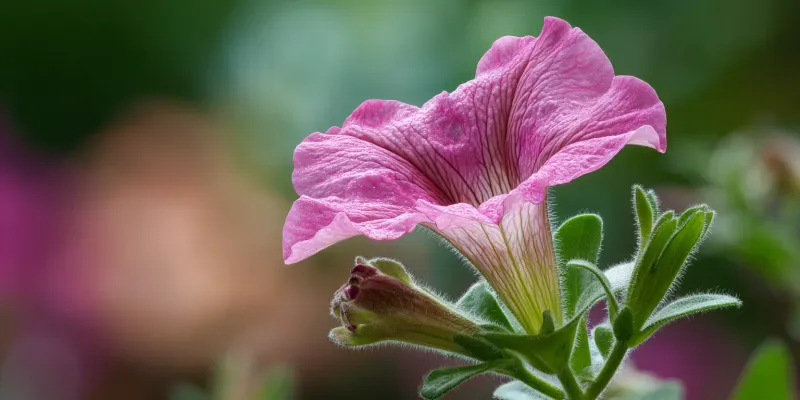
Healthy petunia foliage often feels tacky to the touch, and that stickiness is not automatically a sign of dirt, disease, or trouble. Petunias belong to the Solanaceae family and naturally produce sticky surface compounds through tiny glandular hairs.
UC IPM’s petunia guidance confirms that this tackiness is a recognized characteristic of the plant, and cultivars differ noticeably in how pronounced it feels.
Some older hybrid types are quite sticky across their leaves and stems, while certain newer varieties were bred with a less tacky surface. That variation is worth keeping in mind if you grow more than one type or if you switch cultivars from season to season.
The stickiness you feel on one plant may be genuinely different from what you remember on last year’s petunias, and neither reading is automatically wrong.
Research on petunia glandular trichomes shows that these surface structures produce acylsugars that create a sticky exudate, which is a normal botanical trait rather than a sign of stress. The practical takeaway is to compare how the plant feels now with how it has felt in recent weeks, rather than judging it against a generic standard.
A uniform, familiar tackiness across leaves and stems without any other warning signs is usually nothing to treat. The meaningful signal is a change: a new, unusually shiny, or syrup-like coating that feels different from the plant’s typical texture is worth investigating further.
A New Syrupy Coating May Be Honeydew
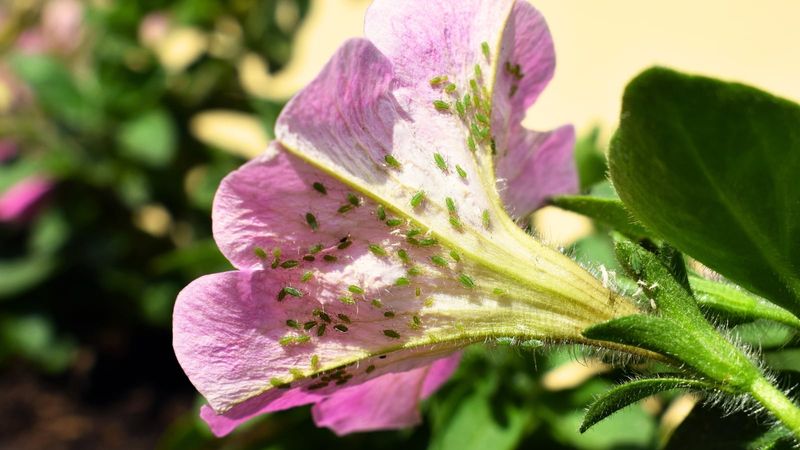
When a petunia’s stickiness changes character and takes on a shiny, almost syrup-like quality, the likely explanation is honeydew. Honeydew is a sugary liquid excreted by sap-feeding insects as they feed, and it coats whatever surfaces lie below the colony.
Aphids are a common culprit on petunias, but whiteflies, soft scale, mealybugs, and other sap-feeders can produce it just as readily, so UC IPM’s aphid resource recommends inspecting the plant rather than naming a pest before you look.
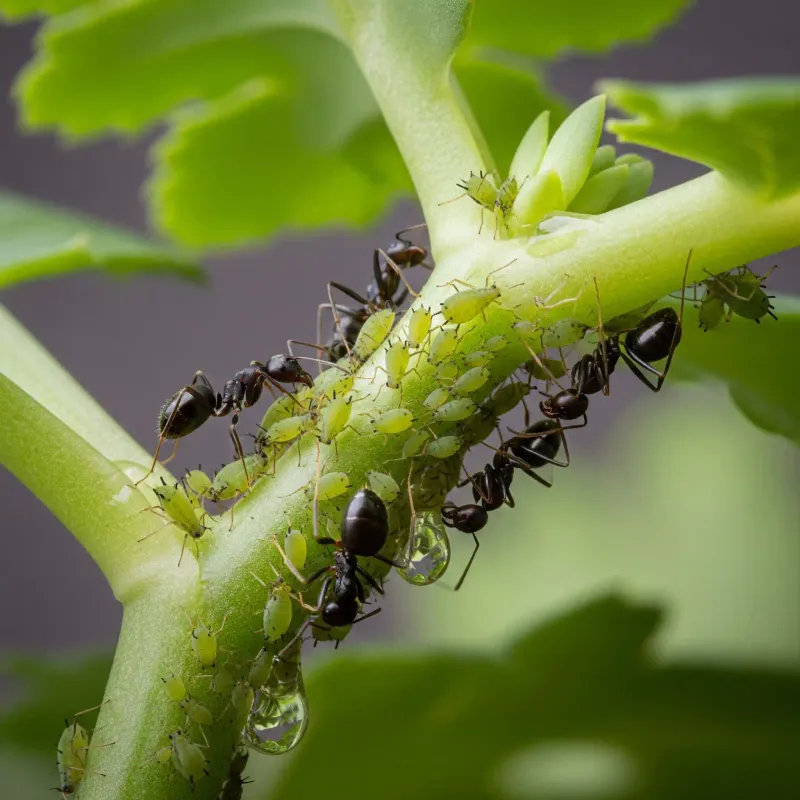
Several supporting clues can help you read the situation more accurately. Ants moving purposefully up and down stems are a strong hint because they actively seek out honeydew as a food source.
Black sooty mold, which appears as a dark powdery or crusty layer on leaf surfaces, generally grows on deposited honeydew rather than infecting the leaf tissue directly. LA County IPM notes that sooty mold is primarily a cosmetic issue, though heavy deposits can reduce the light reaching the leaf surface and point to an infestation that deserves attention.
Other clues worth noting include curled or yellowing leaves, distorted new growth, and stunted shoot tips. No single clue is conclusive on its own, and a combination of honeydew, ants, mold, and visible plant decline together tells a more reliable story than any one sign alone.
The next step after noticing a syrupy coating is a close inspection rather than an immediate spray.
Inspect Hidden Growth Before You Treat
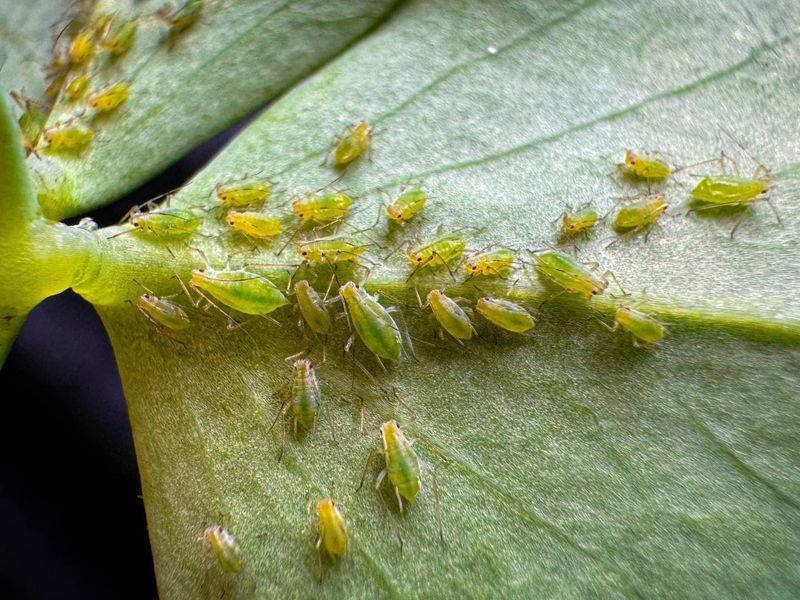
Knowing where to look makes all the difference when you suspect a pest problem on your petunias. Aphids tend to cluster on tender new growth, stem tips, and the undersides of leaves rather than sitting out in the open where they are easy to spot.
UC IPM’s aphid guide describes them as often pear-shaped and variable in color, ranging from green or yellow to black, brown, or even pinkish, so checking the undersides of several leaves rather than a quick glance at the top is essential.
Whiteflies behave quite differently. Adults are small, white-winged insects that flutter up in a small cloud when you disturb the foliage.
Their nymphs, however, are flat and scale-like and remain motionless on leaf undersides, making them easy to overlook if you only check the tops of leaves. UC IPM’s whitefly resource recommends checking lower leaves and sheltered spots where nymphs tend to concentrate.
Shed skins left behind by molting aphids look like pale, papery flecks and can signal an active colony even when live insects are hard to see. Ants on the stems and sooty mold on the leaves are additional clues to factor in, though neither is a definitive diagnosis on its own.
Completing this inspection before reaching for any spray matters because a contact product can only work if it actually reaches the pest, and insects hidden in tightly curled leaves or tucked into flower buds may survive treatment entirely.
Judge the Plant’s Condition Before Intervening
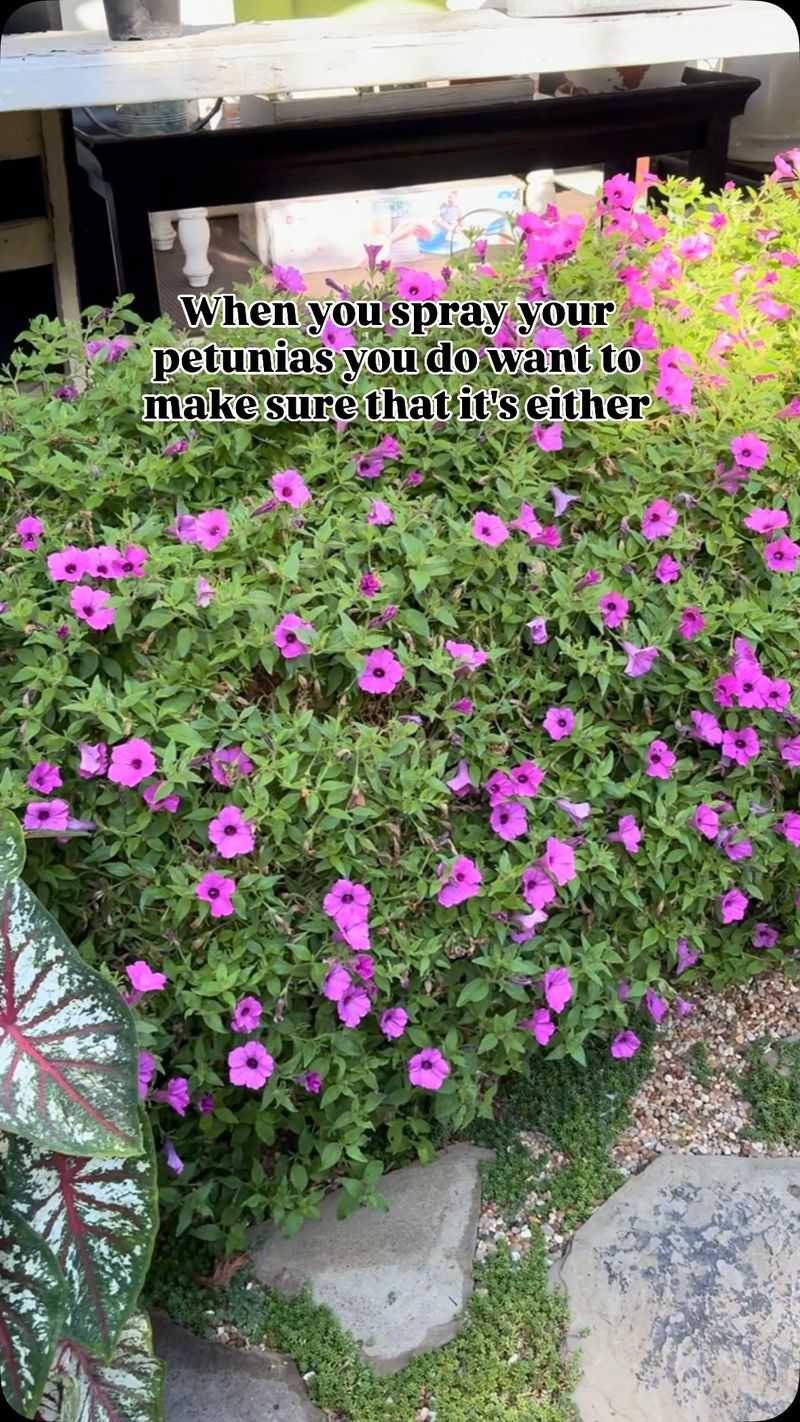
Not every pest sighting on a petunia calls for immediate action. Light aphid populations on a well-established plant often cause little visible harm, especially when natural predators are present and the infestation has not had time to build.
UC IPM explains that heavier populations are a different matter, capable of yellowing and distorting leaves, stunting new shoot growth, and producing enough honeydew to support a significant sooty mold buildup.
There is no single universal threshold that tells every gardener exactly when to act. UF/IFAS guidance on ornamental pest management notes that action levels depend on the specific pest, the plant’s condition, environmental factors, and the gardener’s own tolerance for cosmetic damage.
A few aphids on a vigorous plant in full bloom during a Florida summer is a different situation from a dense colony on a heat-stressed plant that is already declining.
Practical triggers that make sense for most home gardeners include visible leaf distortion or yellowing that is spreading, a persistent pest colony that is not shrinking on its own, heavy honeydew coating that is encouraging sooty mold, or an overall plant appearance that has become unacceptable. Treating before any of those conditions appear is rarely necessary and can disrupt the beneficial insects that might otherwise handle the problem naturally.
Watching the plant for several days after your initial inspection often tells you more than a single snapshot.
Begin With Water, Pruning, and Beneficial Insects
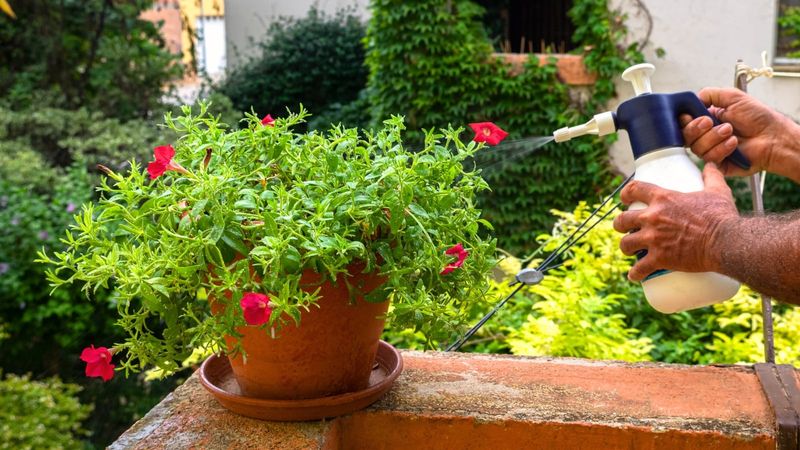
A strong spray of water directed at leaf undersides and growing tips is often the most practical first move when you find aphids or early whitefly activity on your petunias. UC IPM recommends this approach as a way to dislodge aphids, wash away honeydew, and knock back early whitefly populations without introducing any chemical product.
Water does not guarantee complete removal, and insects that survive will still need monitoring, but it can reduce a manageable infestation to a level where natural predators can finish the job.
When the problem is concentrated in a specific area rather than spread across the whole plant, pruning out the worst-affected leaves or stem tips and disposing of them away from the garden can remove a significant portion of the colony at once. Avoiding excessive nitrogen fertilizer also helps over the longer term because heavy nitrogen applications push out soft, fast-growing new shoots that aphids find especially attractive.
Ants are worth watching closely because they actively tend aphid and whitefly colonies, protecting them from predators in exchange for access to honeydew. Reducing ant access to the plant, for example by using a physical barrier or sticky product around the pot or container, can allow lady beetles, lacewings, syrphid fly larvae, and parasitoid wasps to move in and work more effectively.
Broad-spectrum insecticides used too early can eliminate these beneficial insects and sometimes leave the plant more vulnerable to future pest outbreaks than if you had waited and let natural controls operate.
Use Labeled Sprays Carefully in Warm Weather
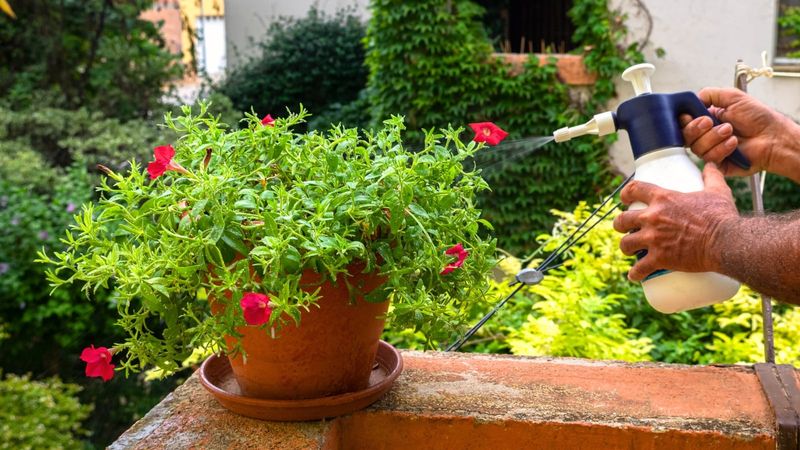
When water, pruning, and natural predators have not brought a pest problem under control, a commercially formulated insecticidal soap or horticultural oil labeled for use on petunias and the specific pest you have identified can be a reasonable next step. UC IPM’s whitefly guidance explains that these products work primarily through direct contact with the insect’s body, which means thorough coverage of leaf undersides, stem tips, and any other surfaces where pests are hiding is essential.
Missing those areas means the application may have little effect.
Repeat treatments directed by the product label are often necessary because whitefly eggs and immature stages can survive an initial spray, and aphids tucked inside tightly curled leaves may not be reached at all. UF/IFAS Gardening Solutions warns explicitly against substituting dish detergent, vinegar, rubbing alcohol, or any improvised household mixture, because these can burn foliage and their concentrations are inconsistent.
Only use a product sold and labeled specifically for garden pest control.
Warm-climate cautions are especially relevant for gardeners in Florida, Texas, and similar Southern states. University of Connecticut Extension’s insecticidal soap factsheet advises against applying soap sprays to drought-stressed plants or when temperatures are at or above approximately 90 degrees Fahrenheit, since heat and drought increase the risk of foliage injury.
Test a small area of the plant first and wait a day or two before treating the whole plant. Cornell Cooperative Extension advises avoiding open flowers and actively foraging pollinators when spraying, and the EPA notes that pesticide labels are legally enforceable, meaning the timing, protective equipment, reentry intervals, and application restrictions printed on the label are requirements, not suggestions.
These precautions reduce risk to the plant, to pollinators, and to the beneficial insects you want to keep, but they cannot guarantee that no harm will occur.
Use the Plant’s Pattern to Choose the Next Step
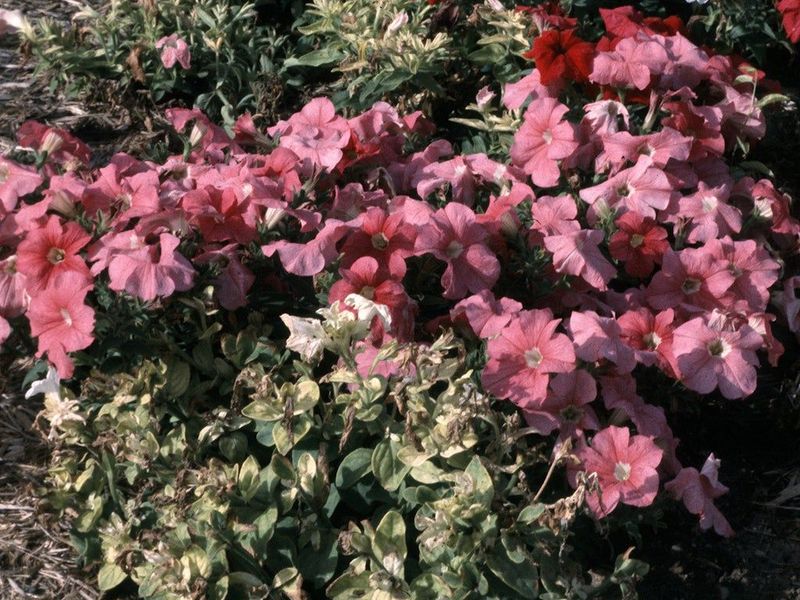
Reading your petunia’s pattern over time is the most reliable way to decide what to do next. UC IPM’s petunia overview reinforces that normal, relatively uniform tackiness without any pest evidence, plant decline, or unusual coating is generally a signal to observe rather than act.
A changed texture, one that is newly shiny or syrupy and accompanied by ants, sooty mold, visible insects, or yellowing growth, calls for the closer inspection described earlier and a proportionate response matched to what you actually find.
The goal is not to wash every sticky petunia or eliminate every insect in the garden. UC IPM’s aphid guidance and whitefly recommendations both point toward confirming the cause, protecting plant vigor, and selecting the least disruptive effective response rather than defaulting to the strongest available product.
Careful treatment can reduce risks to the plant, to pollinators, and to beneficial organisms, but it cannot guarantee that no injury or disruption will occur.
A petunia that feels sticky on a warm afternoon in July is often just being a petunia. One that suddenly feels different, looks worse, and has ants running its stems is telling you something worth hearing.