
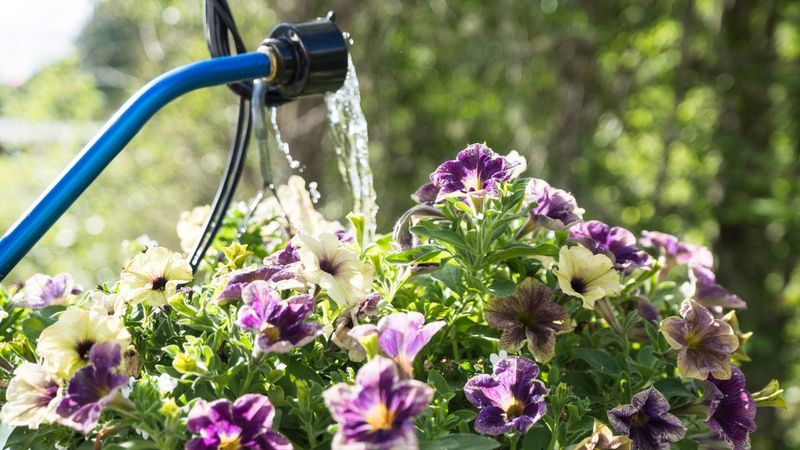
Hanging baskets can look perfectly watered from the outside and still have a bone-dry root ball on the inside. For Southern gardeners dealing with Florida summers or Texas heat, that gap between what you see and what the roots actually get is the real problem.
Watering more often is not always wrong, but watering too fast can let water slip right past the roots without helping them at all. Understanding what is actually happening inside the basket changes everything about how you fix it.
Frequent watering can still leave the root ball dry
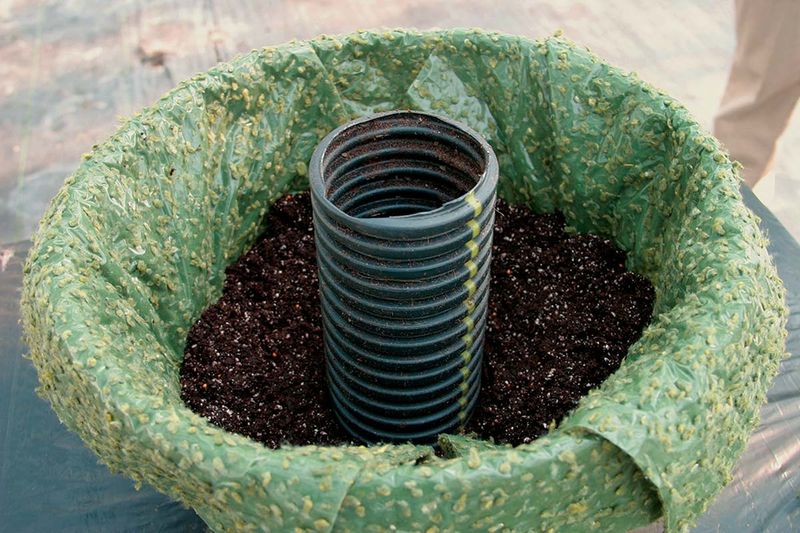
Hanging baskets in Southern heat genuinely may need daily watering, and that frequency is not the mistake. The mistake happens when water moves too fast through the basket, running down a gap between the shrunken root ball and the container wall and exiting through the drainage holes before the roots have absorbed much of anything.
The basket looks watered because water came out the bottom, but the center of the mix can remain nearly as dry as it was before.
Potting mix that has dried out severely tends to pull away from the sides of the container as it shrinks. That gap creates a shortcut for water, a path of least resistance that bypasses the root zone entirely.
Iowa State University Extension guidance on hanging basket watering specifically notes that water can run straight through a dried-out basket without fully rewetting the root ball, which is exactly why runoff at the bottom is not reliable proof that the roots have received enough moisture.
Severely dried potting mix can also become hydrophobic, meaning it resists absorbing water at all. UC Master Gardeners on hydrophobic soil explain how this water-shedding behavior develops and why fast overhead watering makes it worse.
The better diagnostic clues are basket weight and moisture several inches below the surface, not whether water appeared at the drainage holes.
Southern heat makes small baskets dry quickly
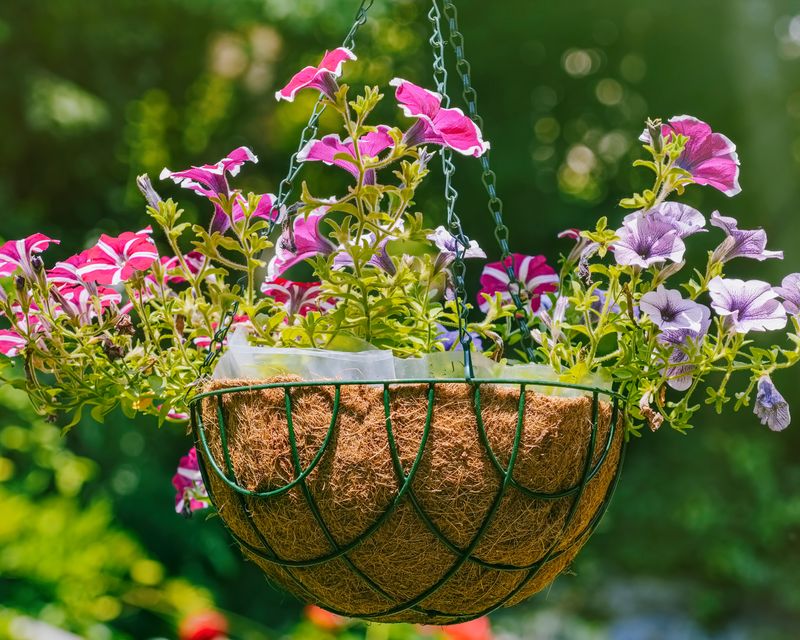
Small hanging baskets are working against several forces at once in Southern conditions. Limited soil volume means there is not much moisture stored to begin with, and porous liners like coir and sphagnum moss allow water to evaporate from the sides of the basket, not just from the top.
Wire baskets with natural liners lose moisture especially fast compared to sealed plastic containers.
University of Illinois Extension on hanging baskets notes that these containers require more frequent watering than most in-ground plantings precisely because of their limited soil volume and exposure on all sides. Texas A&M AgriLife Extension irrigation guidance adds that mature container plants in full sun typically need daily watering during peak heat, a frequency that reflects genuine plant demand rather than overwatering.
Wind accelerates moisture loss further, and strong afternoon sun in Florida and Texas can heat a small basket to the point where the root zone dries out within hours of watering. University of Minnesota Extension guidance on container plant watering reinforces the need to check moisture rather than follow a fixed calendar.
A larger basket in a shaded spot may hold moisture for two days or more, while a small moss-lined basket in full afternoon sun with a mature, root-filling plant may need a check every morning and sometimes again by evening.
Check the center before changing your watering routine
Before adding more water or cutting back, spend thirty seconds actually checking what the root zone contains. Push a finger or a wooden skewer several inches into the potting mix, not just the top half-inch.
A dry, crumbly center confirms that water has not been reaching the roots, even if the surface looked damp after your last watering session.
Iowa State University Extension on caring for container plants recommends lifting the container to judge its weight as another reliable clue. A basket that feels noticeably light, almost hollow, is likely dry throughout.
One that feels heavy but still has wilting plants is pointing toward a different problem entirely, possibly waterlogged media, root damage, or heat stress rather than drought.
Also look at the gap between the mix and the container wall. If you can see the potting mix pulling away from the sides, that physical shrinkage is a sign the media has dried enough to create a bypass channel.
University of Illinois Extension on watering hanging pots points to wilting combined with dry mix as a clearer indicator of underwatering than surface dryness alone. Surface wilting in the middle of a hot afternoon can happen even in a well-watered basket, so the combination of light weight, dry center, and mix pulling away from the sides is the strongest case for the bypass diagnosis.
Water slowly in stages so the mix can absorb it
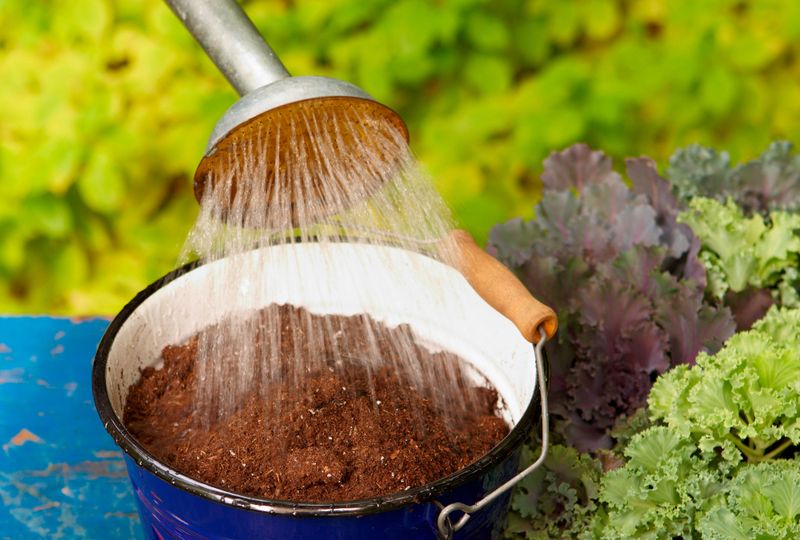
Once you have confirmed the root zone is dry, the fix is not to pour on more water faster. Direct water onto the potting mix, not the foliage, and apply it slowly enough that the surface has a moment to absorb before you continue.
When you first see a trickle of water appearing at the drainage holes, stop and wait. Give the mix two to three minutes to pull that moisture inward before you apply the next pass.
Iowa State University Extension care guidance for container plants describes this staged approach as the right method for rewetting dry media, because a single fast pass allows water to find the path of least resistance rather than saturating the root zone evenly. University of Illinois Extension on container watering cautions that media should be kept moist but never constantly saturated, since waterlogged roots are deprived of oxygen and become susceptible to rot.
Success is an evenly moist root ball, not the largest possible volume of drainage. Royal Horticultural Society research on hanging basket watering methods found that smaller, controlled applications can grow plants effectively while reducing runoff, and that very dry or very wet media both increased water waste.
Frequent large doses also leach nutrients from the mix, so slower, absorbed watering serves both the roots and the fertilizer already present in the container. UF/IFAS guidance on Florida-Friendly watering practices similarly recommends directing water at the root zone and minimizing unnecessary runoff.
Use a temporary bottom soak only for severe dryness
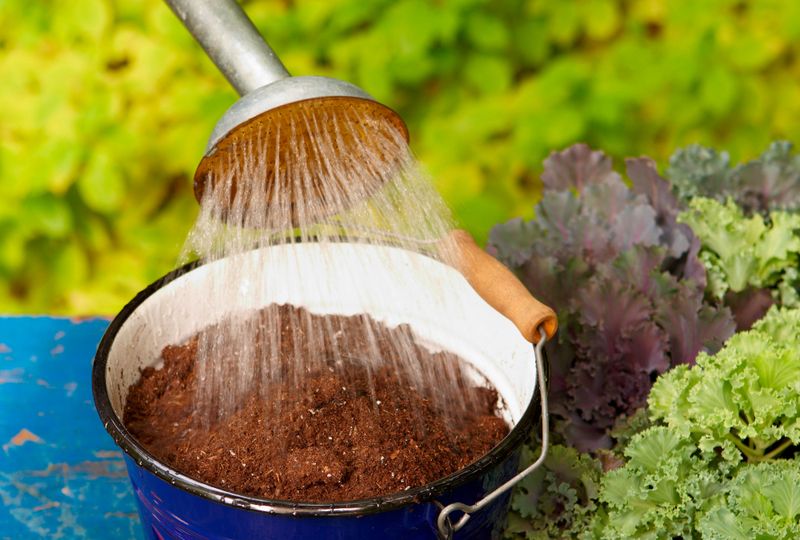
When a basket has become extremely dry, repeated slow applications from above may still shed water before the mix has time to rehydrate. At that point, a temporary bottom soak is the most effective rescue step.
Lower the basket into a tub or basin filled with a few inches of water and let the dry mix absorb moisture from below, where capillary action can pull water up into the root ball more reliably than gravity-fed top watering against a hydrophobic surface.
Iowa State University Extension hanging basket FAQ suggests soaking for roughly 20 to 30 minutes for most containers, with severely dried hanging baskets potentially benefiting from up to one to two hours depending on how thoroughly the mix has dried out. The right duration is long enough for the mix to feel evenly moist when you check the center, not a fixed timer regardless of conditions.
After soaking, remove the basket from the tub and let it drain completely before returning it to its hook. University of Illinois Extension on container drainage makes clear that roots left sitting in standing water lose access to oxygen, which can cause as much damage as drought over time.
Bottom-soaking is a rescue method for a basket that has dried past the point where top watering works efficiently, not a replacement for regular watering or a shortcut to skip checking moisture between sessions.
Match watering frequency to exposure and plant demand
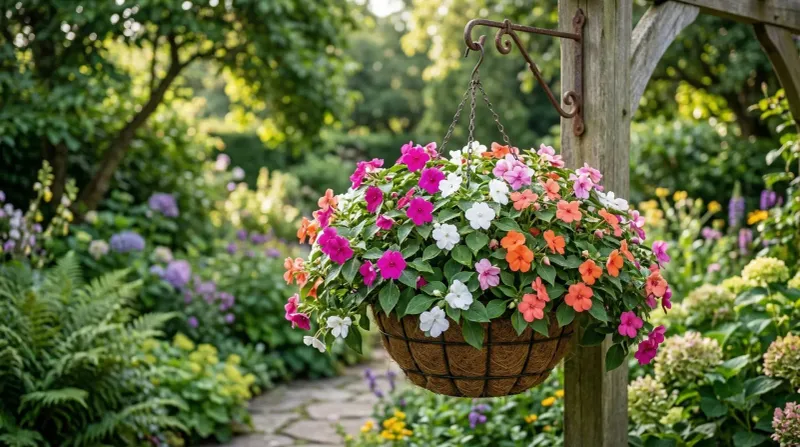
Preventing repeated cycles of extreme dryness starts with checking more often as conditions change. A basket that needed watering every other day in spring may need daily attention by July when foliage has expanded, roots have filled more of the available soil volume, and afternoon temperatures are consistently above 90 degrees.
Root demand rises with plant size, and a crowded root zone leaves less media to hold moisture between waterings.
University of Georgia Extension guidance on container gardening with tropical plants notes that containers in full sun and wind dry out much faster than sheltered ones, and that basket material and liner type directly affect how quickly moisture escapes. Dark-colored containers absorb more heat from direct sun, which accelerates root-zone warming and evaporation.
Pavement and walls nearby can radiate additional heat upward and outward, compounding the effect.
Moving a basket toward morning sun and afternoon shade can reduce water demand meaningfully without sacrificing blooms. UF/IFAS guidance on Florida landscape establishment recommends adjusting irrigation to local weather and conditions rather than applying a fixed schedule statewide, a principle that applies directly to basket placement.
Placement changes reduce the pressure on your watering routine, but they work alongside regular moisture checks rather than replacing them. University of Illinois Extension on container selection also points out that lighter-colored or insulated containers keep root zones cooler in direct sun, which is worth considering when replacing or upgrading baskets.
Persistent wilting may signal a different problem
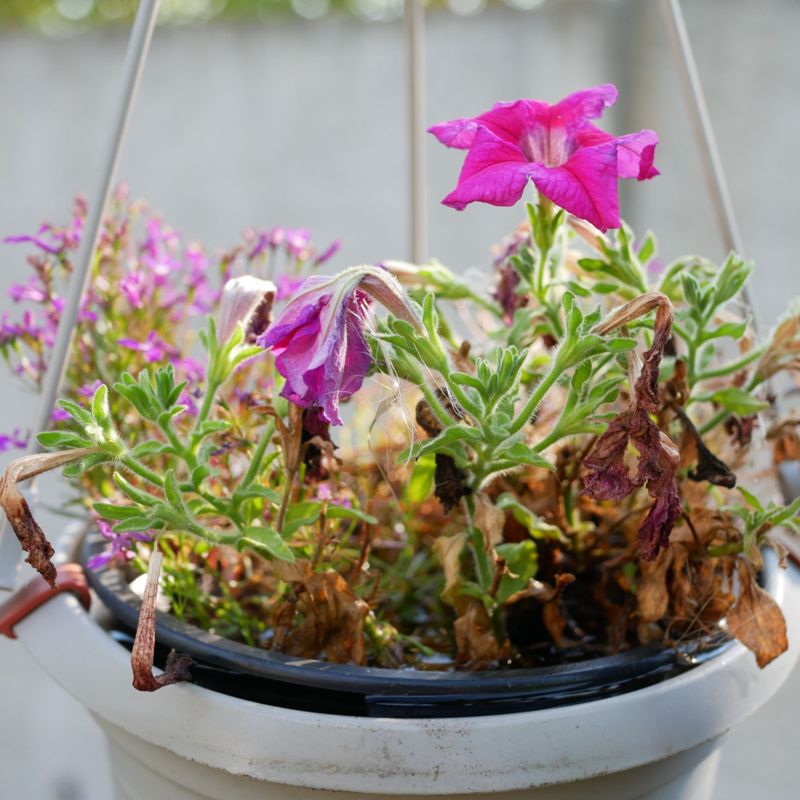
A basket that stays wilted even after thorough, staged watering is telling you something beyond drought. Lift it and notice the weight.
A basket that feels heavy and wet but still has drooping leaves is not suffering from too little water. Soggy media deprives roots of oxygen, and roots that have sat in waterlogged conditions can become damaged or begin to rot, producing the same wilting and leaf decline that underwatering causes.
University of Illinois Extension on container watering and their guidance on container drainage both identify poor drainage and overwatering as contributors to root stress that mimics drought symptoms. Root-bound conditions create a similar paradox: when roots have consumed most of the available soil volume, the basket dries out faster and the plant wilts more frequently even when watered correctly.
UGA Cooperative Extension on repotting basics explains that a root-bound plant may need to be moved to a larger container before watering adjustments alone can solve the problem.
Fertilizer salt buildup, disease, strong wind, extreme heat, and unsuitable light levels can all produce wilting or leaf decline that looks like underwatering. University of Minnesota Extension on fertilizing and watering container plants notes that frequent heavy watering can leach nutrients from the mix over time, but cautions against applying concentrated fertilizer to roots that are already dry, heat-stressed, or potentially damaged by salt accumulation.
Address root health and media conditions first before increasing fertilizer applications.
Aim for an evenly moist root zone
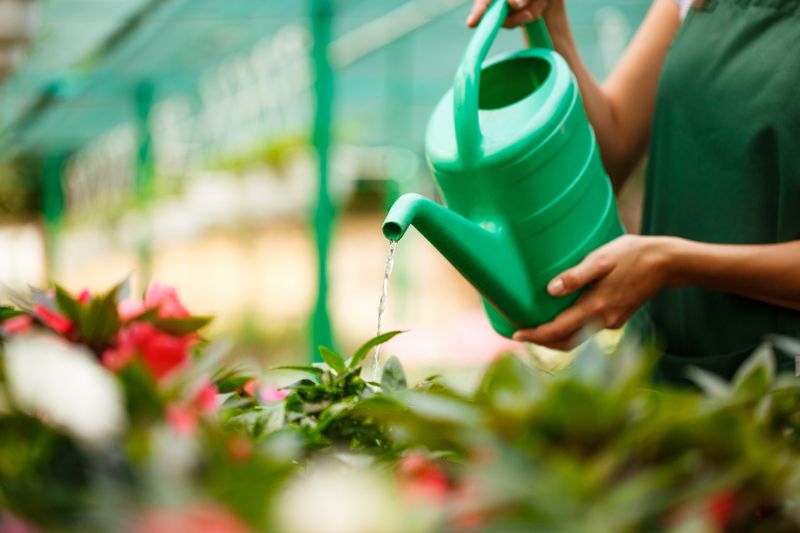
The practical sequence comes down to a few repeatable steps. Check deeper moisture and basket weight before reaching for the hose.
If the center is dry and the basket feels light, water slowly in stages, pausing when runoff first appears and repeating until the root ball holds even moisture throughout. Reserve the bottom-soak method for baskets that have dried severely enough that slow top watering keeps shedding off the surface.
Iowa State University Extension container plant care guidance and their hanging basket FAQ both point toward the same goal: media that is evenly moist and well drained, not swinging between dust-dry and waterlogged. Southern heat can make daily checks necessary, especially for small baskets in full sun, but fast watering that produces quick runoff can still leave roots dry no matter how often it happens.
UGA Extension guidance on container gardening reinforces that the goal is a consistent, absorbed moisture level tied to plant demand and local conditions. A basket that stays evenly moist between checks, drains freely, and never swings to either extreme is the real target, not a fixed schedule or a certain amount of drainage.