
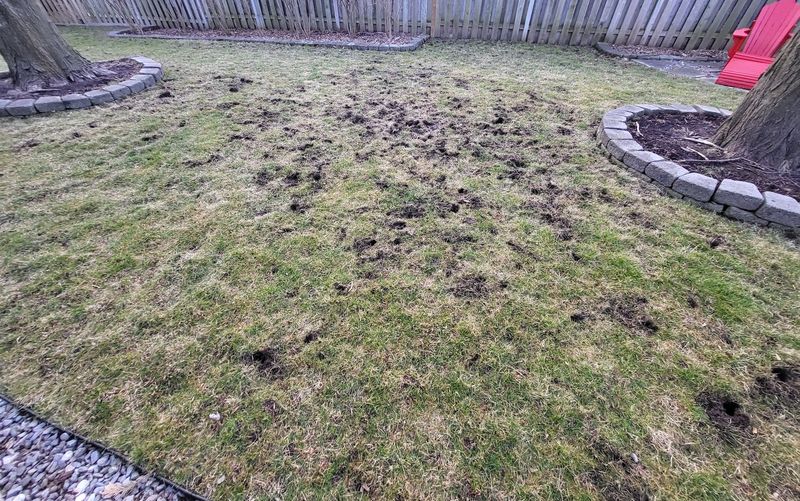
Waking up to find a cluster of small, cone-shaped holes scattered across your lawn overnight is genuinely puzzling, especially when you never saw or heard anything. Those depressions are a common sign that a nocturnal animal has been rooting through the soil in search of food, and skunks are one likely candidate worth considering.
Before you treat the lawn or try to chase anything away, it helps to understand what might be drawing wildlife in and whether the evidence actually points to a skunk at all.
The holes suggest skunk foraging, but they do not identify the animal
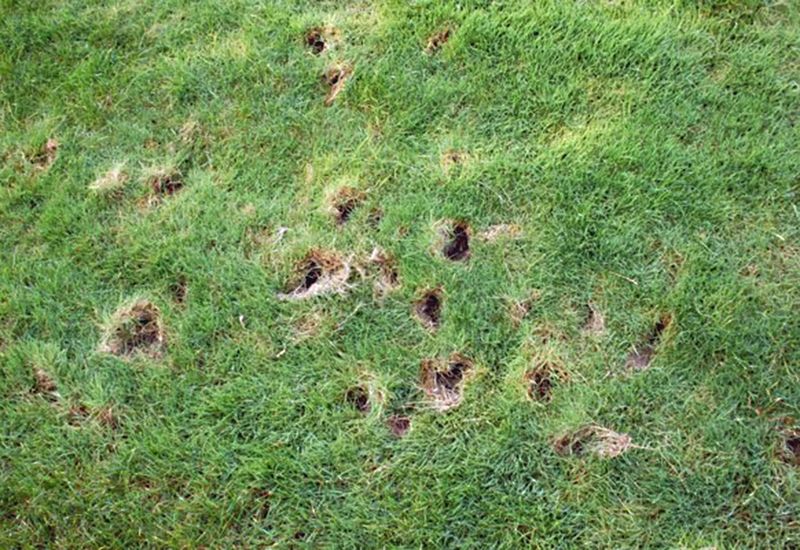
Overnight lawn holes that are shallow, scattered, and roughly cone-shaped are a pattern worth paying attention to, but the shape alone cannot tell you which animal made them. Skunks are a reasonable first suspect because they commonly dig small pits while searching for grubs and other soil-dwelling prey.
UC IPM’s skunk guidance describes these depressions as typically around 3 to 5 inches in diameter, often appearing in scattered clusters rather than in a straight line.
Other animals can create similar damage, and ruling them out matters before you decide how to respond. Raccoons tend to roll back sod or disturb wider sections of turf rather than leaving tidy conical pits.
Armadillos, squirrels, birds, and even dogs can also leave overnight disturbances that look similar at first glance. University of Minnesota Extension’s turf diagnostic tool lists several animals capable of producing overnight lawn holes, reinforcing that appearance alone rarely settles the question.
A night-vision camera aimed at the damaged area is the most practical way to confirm what is visiting. Fresh tracks pressed into soft soil near the holes, a faint musky odor lingering close to the ground, or a direct sighting after dark can all help narrow the field.
Think of this article less as an extermination guide and more as an attractant investigation: find out what is drawing the visitor in, then address those features one by one.
The animal may be searching for more than grubs
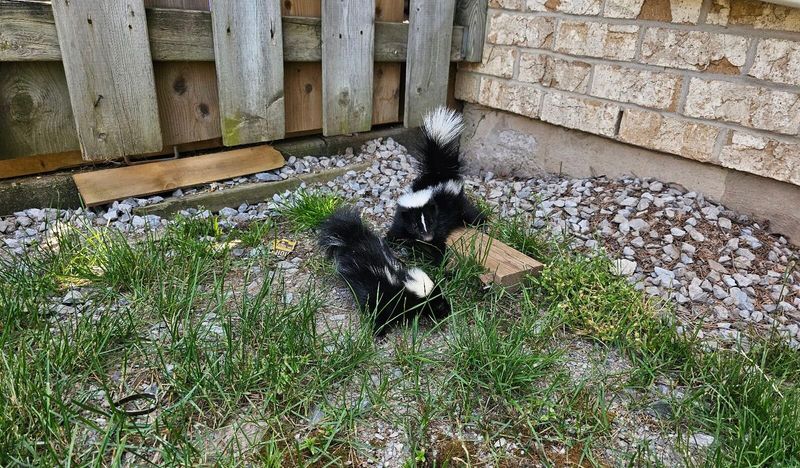
Lawn digging is often blamed on grubs, and grubs may well be part of the picture, but skunks eat a much broader range of foods than most homeowners realize. Their diet can include earthworms, beetles, caterpillars, rodents, amphibians, fallen fruit, pet food, garbage, and other opportunistic items depending on what is available in a given yard or season.
UC IPM notes that skunks are opportunistic feeders, which means the holes in your lawn may reflect a hunt for earthworms or other prey rather than a grub infestation specifically.
Digging activity can hint at soil-dwelling insects, but it cannot serve as a reliable grub count. An animal may return to a spot where it found food previously, even after the original prey is gone.
It may also be following earthworm activity that has nothing to do with lawn health or pest levels. UC IPM’s pest notes on skunks describe the connection between skunk digging and grub infestations as theoretical, not guaranteed.
Widening your focus beyond the holes themselves is the more productive approach. Walk the yard and look for fallen fruit under trees, spilled birdseed beneath feeders, accessible pet bowls, and unsecured garbage cans.
Any of those food sources can attract skunks and other wildlife independently of what is happening underground. Addressing the full range of available food gives you a better chance of reducing repeat visits than targeting grubs alone.
Check for live grubs before using lawn insecticide
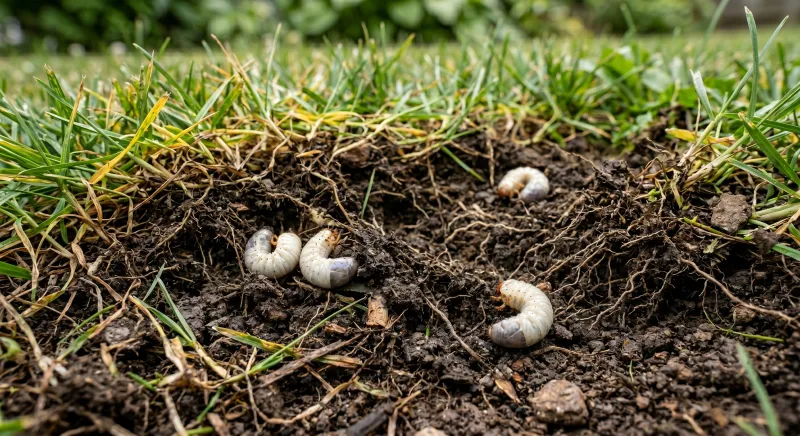
Reaching for a bag of grub killer as soon as you spot lawn holes is a common impulse, but applying insecticide before confirming a pest problem can do more harm than good. The right first step is a hands-on inspection.
Use a flat shovel or a knife to cut and lift several sections of turf, each roughly one square foot, focusing on the border between visibly damaged grass and healthy growth nearby. Check the roots, thatch layer, and the top few inches of soil for live, curled, white grubs, then replace and water the sod so the grass can recover.
Penn State Extension’s white grub guide recommends this targeted sampling approach as the most reliable way to assess whether a treatment is actually warranted. Treatment thresholds vary considerably by grub species, turf type, local climate, and the season you are sampling.
Some sources cite roughly 3 to 5 grubs per square foot as a concern threshold in Mississippi contexts, while other regions use different benchmarks entirely. Texas A&M AgriLife Extension’s white grub resources and UF/IFAS materials for Florida offer state-specific identification help that is far more reliable than a national rule of thumb.
UC IPM’s lawn insect guidance is clear that treatment should follow identification of the specific pest at a level that justifies the product’s use, not simply the presence of wildlife activity. If your inspection turns up few or no live grubs, the digging may have a different cause entirely, and a lawn insecticide will not reduce the visits.
When treatment is justified, choose a product labeled for your specific turf, pest, and application site, and follow all label directions for protective equipment, watering-in requirements, reentry intervals, and precautions for pets and pollinators.
Everyday food sources may contribute to repeat visits
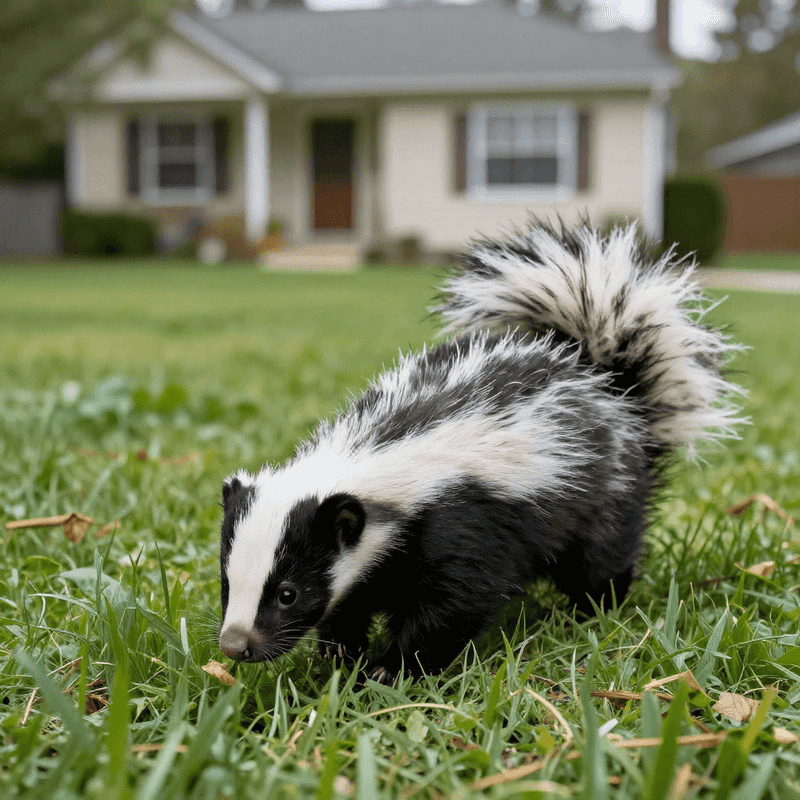
Once you have looked at what might be happening underground, shift your attention to the surface. Pet food left outside after dark is one of the most common and easily fixed attractants for skunks, raccoons, and other nocturnal visitors.
Feeding pets indoors whenever possible, or picking up outdoor bowls well before nightfall, removes a reliable food signal. UC IPM recommends this step alongside securing garbage cans with tight-fitting lids and keeping table scraps out of open or unmanaged compost piles.
Fruit trees and bird feeders deserve attention too. Fallen citrus, figs, berries, or other fruit left on the ground overnight can draw wildlife just as reliably as a full food bowl.
Picking up dropped fruit regularly and raking up spilled birdseed beneath feeders reduces that signal considerably. If a bird feeder sits close to the lawn where holes are appearing, moving it or switching to a tube-style feeder that contains seed more efficiently may help.
Rodents around sheds, garages, crawl spaces, and outbuildings add another layer to the problem. Skunks will pursue mice and voles, so a property with an unaddressed rodent issue can attract skunks for reasons that have nothing to do with your lawn at all.
Addressing rodent harborage near structures, combined with the food-removal steps above, can reduce the overall appeal of your yard to multiple wildlife species at once. Removing accessible food sources may lower the frequency of visits, though no single change can guarantee that all wildlife activity will stop.
Water and cover can provide attractants or shelter
Beyond food, two other yard features can make a property more appealing to skunks and other wildlife: accessible water and available cover. Birdbaths, decorative ponds, low-lying areas that collect standing water, and outdoor pet water bowls left overnight can all contribute to wildlife activity on a property.
Reducing or covering accessible water sources after dark is a simple step that costs nothing and removes one element from the overall picture.
Cover is equally worth reviewing. Brush piles, stacked boards, loose rocks, old equipment, and ground-level debris provide both hiding spots and habitat for insects that skunks may pursue.
Penn State Extension advises removing these materials or keeping woodpiles tightly stacked and elevated off the ground where practical. Dense vegetation close to the ground, especially near structures, can serve a similar function by giving a passing animal a place to rest or shelter temporarily.
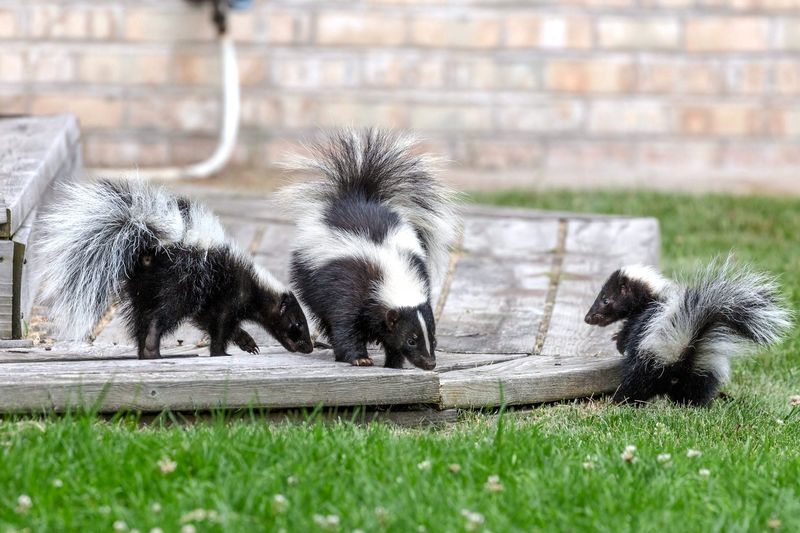
Openings beneath decks, porches, sheds, and foundations are a separate concern because they can become denning sites. Colorado State University Extension’s skunk resource emphasizes inspecting any potential opening carefully before attempting to block it.
Hardware cloth or buried fencing can be effective exclusion materials around structures, but only after you have confirmed that no animal is currently inside. An active den, particularly one that may contain young, requires a patient and legally appropriate response rather than an immediate seal.
Contact a qualified wildlife professional if you are unsure whether an opening is occupied.
Why improvised skunk repellents are not a reliable first step
Many homeowners reach for a repellent before they have confirmed what animal is visiting or addressed the features drawing it in. Repellents seem like a quick fix, but the evidence for most of them is weak or inconsistent, and some carry real risks.
Penn State Extension’s skunk guidance notes that there are no registered skunk repellents in its source context, and the same source describes repellent effects as temporary at best. Penn State Extension does not recommend repellents as a primary management strategy.
Mothballs come up frequently in online discussions, but they should not be used outdoors as a routine wildlife deterrent. The Internet Center for Wildlife Damage Management explains that mothballs are pesticides regulated by federal law, must be used only according to their labels, and are not legally or practically appropriate for repelling nuisance wildlife in open outdoor settings.
Ammonia, predator urine, cayenne pepper, and ultrasonic devices are similarly unreliable and can create hazards for children, pets, and the surrounding environment.
Fumigation and poison have no place in this situation either. There are no registered toxicants for skunk control in Penn State’s guidance, and fumigants are not appropriate near occupied structures.
The safer and more durable sequence is to confirm the animal, reduce food sources and cover, address structural access points carefully after verifying they are unoccupied, and use least-toxic pest management only when a verified lawn pest warrants it. Repellents are not a substitute for that process.
Keep children and pets away from a possible wildlife conflict
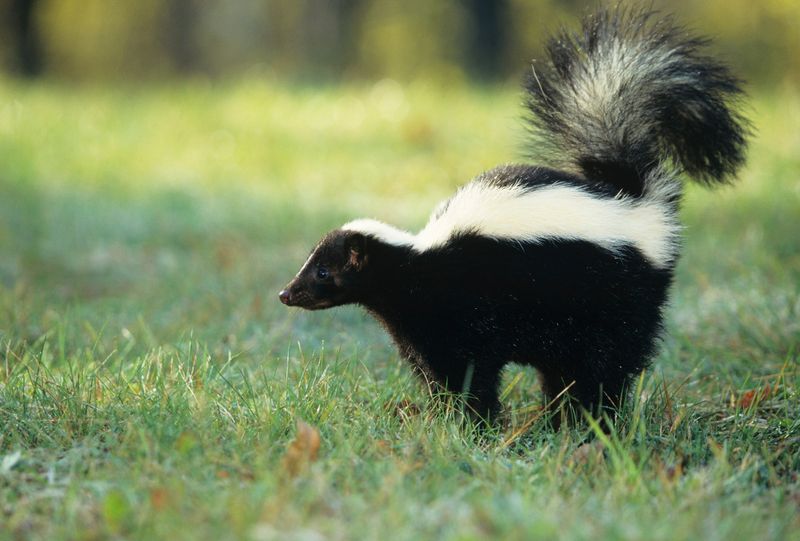
Any time wildlife is active near your home, the clearest priority is keeping people and pets at a safe distance. Skunks will spray when they feel cornered, and they are among the wildlife species associated with rabies in the United States.
Do not approach, corner, attempt to hand-feed, or try to handle a skunk under any circumstances. The same rule applies to trapping: wildlife-control, trapping, relocation, and handling regulations differ by state and locality, so check with your state wildlife agency or local animal control before taking any action that involves capturing or moving the animal.
Daytime activity alone is not proof of rabies. Skunks can move around during daylight hours, particularly in areas with heavy human activity.
Behavior that warrants real caution includes aggression toward people or pets, obvious confusion or disorientation, staggering, paralysis, or an animal that approaches without apparent reason. Oklahoma State University Extension notes that unusual behavior is more informative than timing alone, though no behavioral observation can diagnose rabies in the field.
Current rabies vaccinations for dogs and cats are a practical baseline that protects pets and reduces the stakes if a brief encounter occurs. If a person or pet is bitten, scratched, or has possible saliva contact with a skunk, wash the wound immediately and thoroughly with soap and water, then seek prompt medical or veterinary guidance.
CDC guidance on rabies prevention is the appropriate reference for post-exposure steps. When a den under a deck or porch may contain young, a one-way exclusion device or a qualified wildlife operator is the right response, not a sealed entrance that could trap animals inside.
Reduce the invitation without assuming every hole came from a skunk
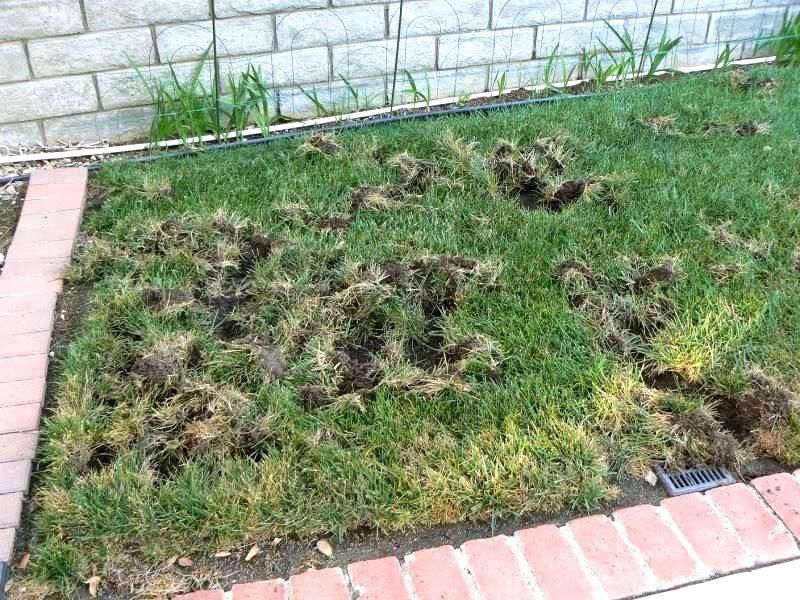
Pulling together a practical response starts with documenting what you are actually seeing. Photograph the holes, note their size and distribution, and set up a camera or check for tracks before assuming the visitor is a skunk.
Inspect for live grubs before applying any lawn chemical, and use Penn State Extension or your state’s land-grant university resources to guide any treatment decision.
On the attractant side, remove nighttime food sources, bring in or secure water, clear ground-level debris and brush, and check structural openings only after confirming they are unoccupied. For active dens, unusual animal behavior, or any situation involving a bite or scratch, contact animal control, your state wildlife agency, a health department, or a qualified wildlife professional.
UC IPM’s skunk page is a reliable starting point for additional identification and management detail.
Skunks do consume beetles, grubs, and rodents, and extension sources describe them as ecologically beneficial when they are not creating a direct conflict. Careful, step-by-step attractant reduction gives you the best chance of lowering repeat visits without treating every overnight hole as proof of an infestation that demands an immediate chemical response.