
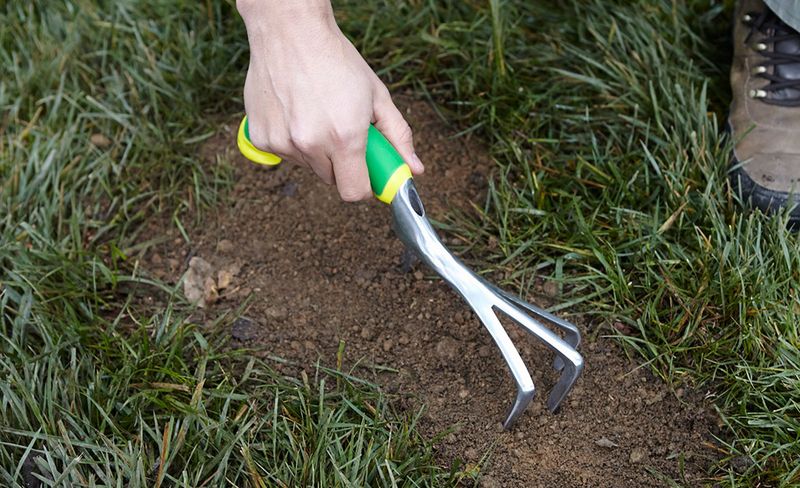
Bare patches showing up in your lawn right before fall can feel like a race against the clock. The good news is that a repair is often possible, but the right fix depends on what kind of grass you have and why the patch appeared in the first place.
Throwing down generic seed or hoping the lawn fills itself in rarely works, especially for the warm-season grasses common across Florida and Texas. Understanding your turf type and the cause of the damage puts you in the best position to get grass growing again before cold weather arrives.
A bare patch is a symptom, not the diagnosis
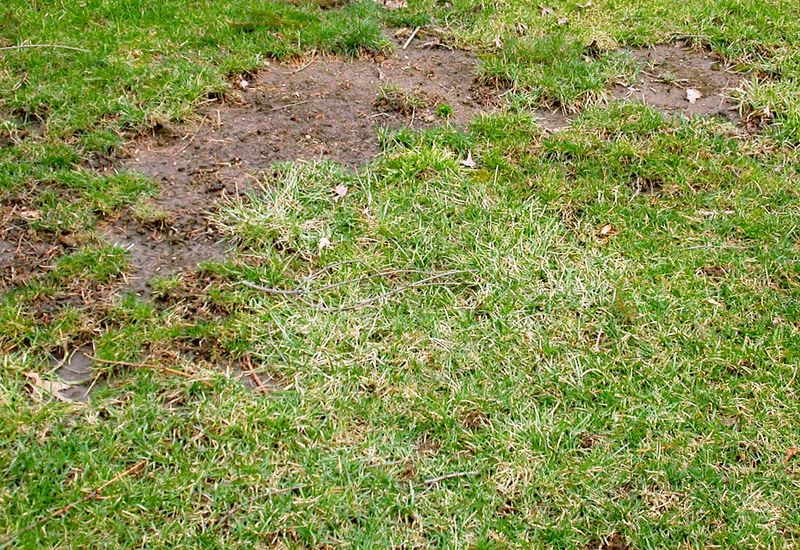
Before buying plugs, sod, or seed, crouch down and take a close look at that bare area. A bare patch tells you something went wrong, but it does not tell you what.
The list of possible causes is longer than most homeowners expect: shade from a tree that has grown taller over the years, compacted soil that water can no longer penetrate, drought stress, overwatering, foot traffic, pet urine, poor drainage, winter injury, disease, or insect damage can all produce the same dead or missing turf.
UGA Extension research on thinning and balding lawns specifically links bare spots to increasing shade and soil compaction, two problems that will keep killing new grass if you plant without addressing them first. Compare the bare area with healthy sections nearby.
Ask whether the soil feels hard underfoot, whether the spot gets less sun than it used to, or whether water pools there after rain.
Resist the urge to treat every brown patch with fungicide or insecticide right away. Visual symptoms alone are not enough to identify disease or insect damage reliably.
Texas A&M guidance on chinch bugs in St. Augustinegrass notes that chinch bug damage can be confused with drought or brown patch disease, and treating for the wrong problem wastes time and money while the real cause continues. Fix the cause first, then repair the turf.
The grass type determines the repair
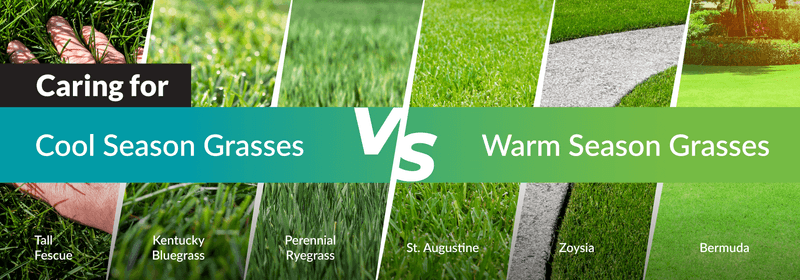
The single most important question to answer before buying anything is what kind of grass you actually have. Warm-season grasses, including St. Augustinegrass, zoysiagrass, centipedegrass, and bermudagrass, dominate Southern lawns from Florida across the Gulf Coast and into Texas.
Cool-season grasses such as tall fescue, Kentucky bluegrass, and perennial ryegrass appear in some transitional Southern areas but are not typical across most of Florida or the Texas coast.
That distinction controls everything about the repair. UF/IFAS guidance on establishing Florida lawns recommends plugs, sprigs, or sod for warm-season establishment because many improved cultivars do not produce viable seed or cannot be matched with an off-the-shelf seed blend.
Texas A&M turfgrass establishment guidance reinforces this point, noting that improved bermudagrass, zoysia, and St. Augustine cultivars are typically available only as sod, plugs, or sprigs.
For cool-season lawns, fall is generally the preferred seeding window because temperatures and moisture levels favor germination and early root growth, as confirmed by Penn State Extension’s seasonal lawn management guide. The calendar alone cannot tell you whether a repair will succeed before winter, especially in north Florida or north Texas where warm-season grass growth slows sharply by late October.
Grass type comes first; the calendar is secondary.
Warm-season patches usually need matching turf
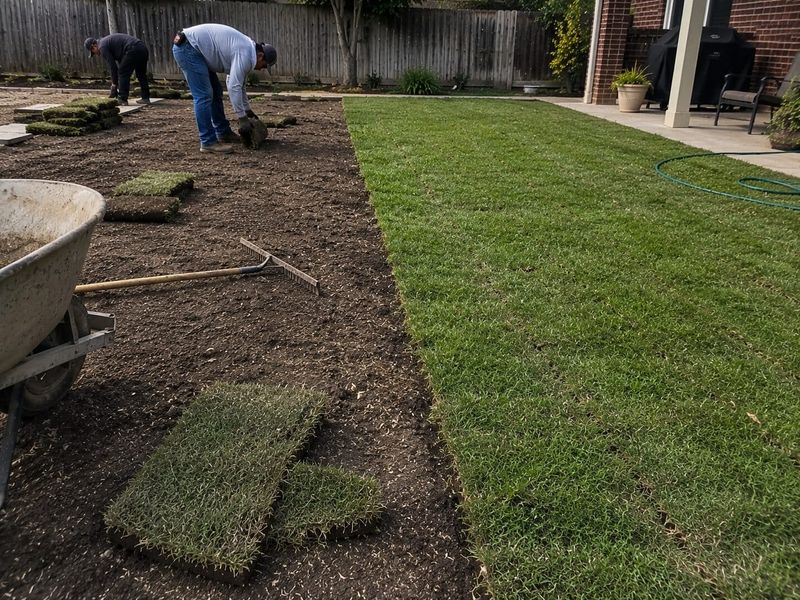
For most Southern homeowners with St. Augustinegrass, zoysiagrass, centipedegrass, or improved bermudagrass, the right repair material is matching vegetative turf, not a bag of seed from the hardware store shelf. The reason comes down to cultivar compatibility.
Many improved warm-season varieties were bred for specific color, leaf texture, and growth habits that generic seed blends cannot replicate, so a seeded patch often heals in looking noticeably different from the rest of the lawn.
Plugs and sod are the two most common options, and they serve different needs. UF/IFAS guidance on St. Augustinegrass describes 2-inch plugs planted at roughly 12-inch spacing as a practical repair for larger bare areas, with closer spacing producing faster coverage.
Plugs cost less upfront and spread gradually through stolons, while sod provides near-immediate visual coverage at a higher material cost. Both require matching the specific cultivar to the surrounding lawn as closely as possible.
Bermudagrass is a partial exception worth noting. UF/IFAS bermudagrass establishment guidance identifies common bermudagrass as a type that can be established from seed, but improved bermudagrass cultivars are normally established vegetatively through plugs, sprigs, or sod.
If you are unsure which type you have, check with a local extension office or lawn care supplier before buying seed.
Timing also matters. Warm-season grasses establish best during active spring and summer growth.
If local temperatures have already dropped and the grass has slowed, postponing the repair until spring may produce better results than rushing a patch that will struggle to root before frost.
Cool-season lawns can take the fall-seeding route
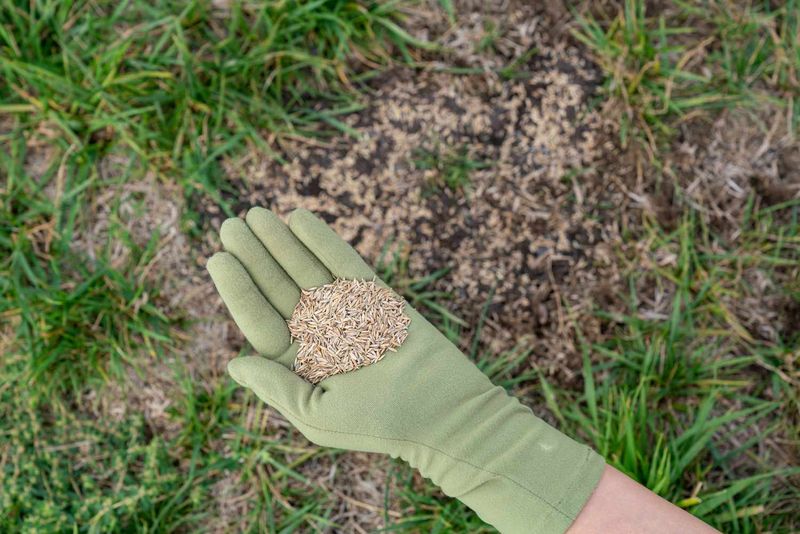
Fall seeding is the go-to repair for homeowners with an adapted cool-season lawn. Tall fescue, Kentucky bluegrass, and perennial ryegrass germinate and establish roots most reliably when daytime temperatures are moderate and soil moisture is easier to maintain, conditions that fall naturally provides in transitional Southern climates.
This is the window where cool-season seed has the best chance of developing enough root depth to survive its first winter.
The method is straightforward. Rake away dead or matted grass from the bare area so seed can reach mineral soil.
Spread the appropriate seed for your existing lawn type, then firm it into the surface so it makes direct contact with the soil rather than sitting on top of loose debris. Keep the area consistently moist until germination is complete and the new seedlings are visibly established.
Illinois Extension’s fall lawn care guidance recommends mixing seed with a topsoil-compost blend and firming the patch, which improves contact and moisture retention.
Aeration can support this process in compacted or thin turf by opening the soil surface and improving seed-to-soil contact. Illinois Extension’s overview of lawn aeration and overseeding explains how core aeration helps expose soil ahead of seeding.
Aeration alone, though, does not repair a bare patch. The seed is the repair; aeration is preparation that helps it work.
This entire approach applies to cool-season turf only and should not be used as the standard fix for St. Augustinegrass or zoysia lawns.
Prepare the site before putting down new turf
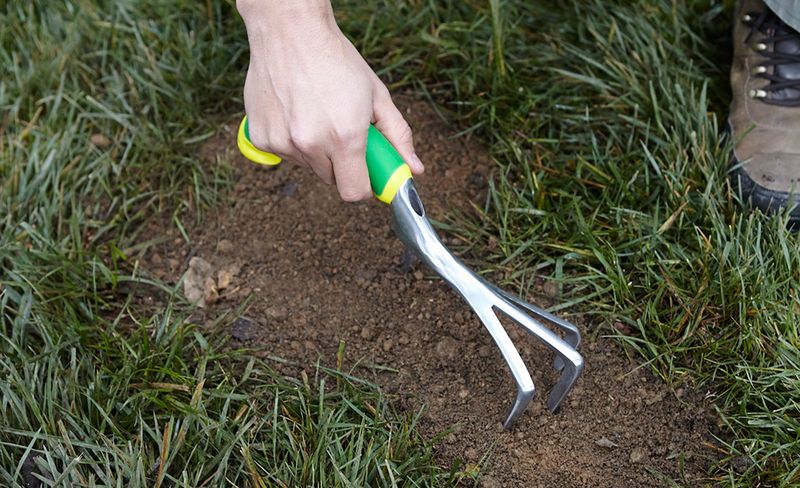
Good preparation is what separates a repair that takes from one that fails in the same spot again. Start by removing dead plant material from the bare area.
Thatch, dead stolons, and compacted debris prevent plugs or seed from making contact with the soil below, and that contact is essential for rooting.
UF/IFAS renovation guidance recommends asking two questions before planting: did improper management cause the decline, and is the existing grass actually suited to the site? If the answer to the first question is yes, correct the management problem.
If the answer to the second is no, repeated repairs with the same grass type will keep failing. Loosen the soil surface lightly with a rake or hand cultivator, and address any obvious drainage or compaction problems before laying new material.
Shade deserves special attention. UGA Extension’s thinning lawn resource points out that if a formerly sunny area has become shaded by tree growth, plugging or seeding repeatedly may not produce lasting results.
Pruning lower limbs to let in more light, switching to a more shade-tolerant grass variety, or replacing turf with a ground cover may be a more practical long-term answer than another round of repair.
For sod, lay it over moist, prepared soil and press the edges together tightly to prevent gaps from drying out. For plugs or seed, firm the material into the soil surface rather than leaving it loose on top.
Early care decides whether the repair takes
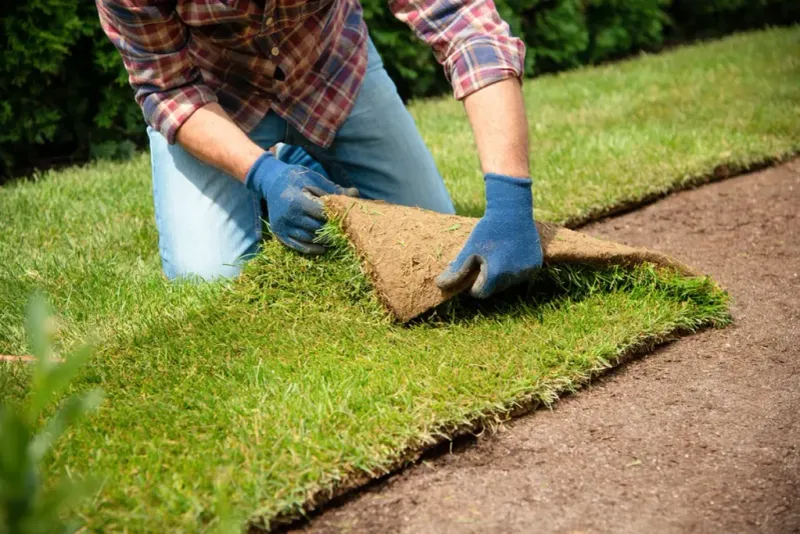
Planting the right material in a well-prepared spot is only half the job. What happens in the first few weeks after planting determines whether the repair roots and spreads or dries out and dies.
Water is the most critical variable early on. Newly planted sod, plugs, sprigs, and seeded areas all need consistent moisture while roots are forming, but consistent does not mean saturated.
UF/IFAS establishment guidance calls for frequent, light irrigation during the initial period, followed by a gradual shift toward less frequent and deeper watering as roots develop. Keeping soil waterlogged reduces oxygen in the root zone and can encourage disease or root rot, so the goal is moist, not soggy.
UGA Extension also flags overwatering as a contributing cause of thinning lawns, so it is worth correcting that habit at the same time you correct the bare spot.
Fertilizer should wait. Applying nutrients before new roots can take them up does not speed establishment and can stress or burn young turf.
UF/IFAS St. Augustinegrass guidance advises delaying fertilizer on newly sodded areas for at least 30 days. For seeded, plugged, or sprigged repairs, wait until uniform cover or sufficient root development is visible before feeding.
Patience at this stage protects the investment you just made in preparation and planting.
Several tempting fixes can waste the remaining window
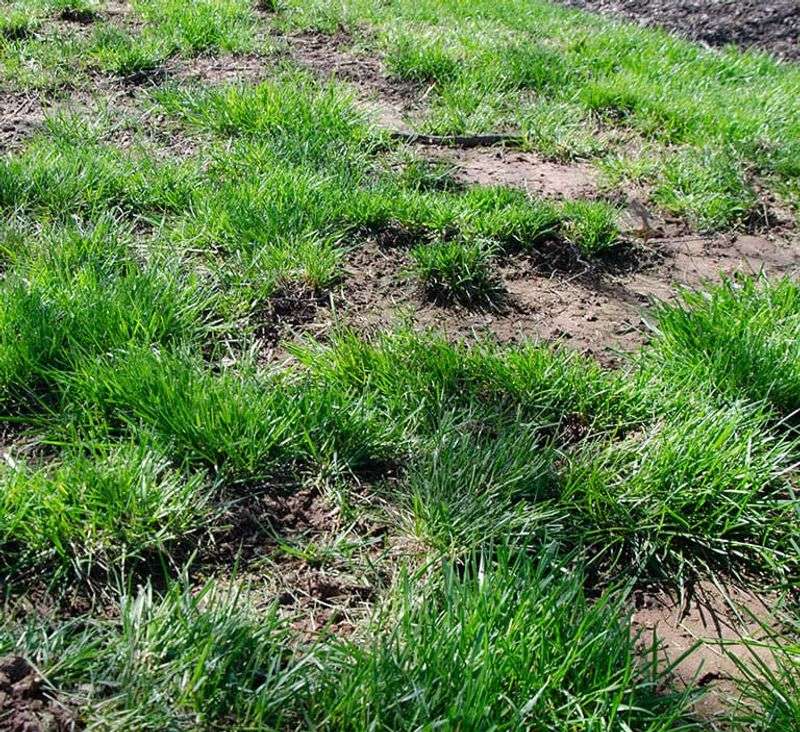
A few common shortcuts look reasonable but can cost you the remaining fall window or make the problem worse heading into winter.
Scattering generic seed onto a warm-season lawn is one of the most frequent mistakes. Many St. Augustinegrass, zoysiagrass, and improved bermudagrass cultivars cannot be matched with bagged seed, so the patch may fill in with a different color, texture, or growth habit that looks worse than the bare spot did.
Late-fall warm-season seeding carries an additional risk: UF/IFAS notes that seedlings planted too late in north Florida can suffer winter injury before they establish enough root depth to survive cold nights.
Ryegrass is another option that often gets misapplied. Texas A&M turfgrass guidance describes ryegrass overseeding as optional winter color, not a repair of the underlying warm-season lawn.
Perennial ryegrass in particular may persist into spring and delay bermudagrass recovery. If the goal is to fix the bare patch, ryegrass is not the answer.
Aeration alone also cannot close a bare area caused by dead turf, disease, insect damage, or severe shade. UGA Extension confirms that aeration may relieve compaction and encourage lateral spread, but it cannot replace turf that is gone.
Finally, check any herbicide applications carefully before seeding. Many pre-emergent products prevent turfgrass seed from germinating, and the required waiting period varies by product.
EPA pesticide label guidance is clear that the individual product label controls reseeding intervals, and Penn State Extension’s crabgrass management resource confirms that many pre-emergents are incompatible with new seed. Read the label before applying anything over a repair area.
Match the repair to the lawn you have
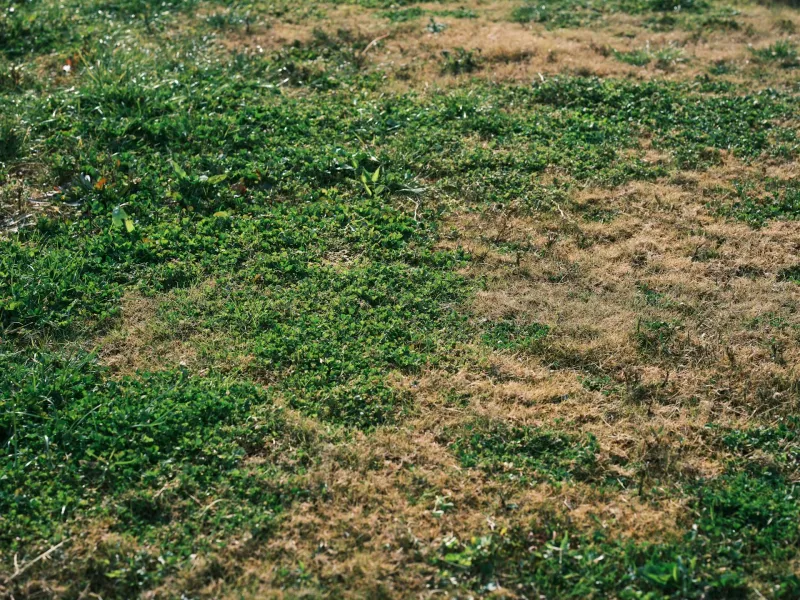
The reliable path forward is a short decision sequence rather than a single universal fix. Start by identifying the cause of the bare spot and correcting it.
Then identify your grass type.
For most Southern warm-season lawns, use matching plugs, sprigs, or sod when local conditions still support establishment, and consider waiting until spring if active growth has already slowed in your area. UF/IFAS and Texas A&M both support vegetative establishment as the standard for these cultivars.
For an adapted cool-season lawn, fall seeding during the favorable establishment window is the appropriate move, as outlined by Penn State Extension’s seasonal lawn guide. Protect either repair with correct moisture, patience on fertilizer, and attention to the site conditions that caused the problem.
There is no single move that fixes every Southern bare patch before winter. The grass type, the cause, the climate, and the time remaining in the growing season all shape the outcome.
A repair matched to those realities has a real chance of succeeding; one that ignores them is just filling in the same hole twice.