
September is a short but real window for Central Texas gardeners who want one more round of vegetables before cold weather shuts things down. Texas A&M AgriLife guidance for Region III points to early September as the approximate planting time for both cucumbers and summer squash, and the week of September 6-12, 2026 still falls within that window.
Summer squash is the stronger bet for reaching harvest before damaging cold arrives, though cucumbers are worth trying with realistic expectations. Plant promptly, choose fast varieties, and watch your local forecast closely.
A narrow September planting attempt remains possible
Austin, San Antonio, Waco, and Bryan all fall inside Texas A&M AgriLife’s Region III, and the regional fall planting guide lists approximate dates that make early September a legitimate, if narrow, sowing opportunity for both cucumbers and summer squash. According to the Texas A&M AgriLife fall vegetable gardening guide, Region III’s approximate dates are September 1 for cucumbers and September 10 for summer squash, placing the week of September 6-12, 2026 within reach for both crops.
Neither date should be read as a precise deadline that applies equally to every yard in the region. These are planning benchmarks drawn from a regional extension guide, not a current-season weather forecast, and local conditions including soil temperature, microclimate, and the timing of the first cold event will ultimately shape the outcome more than any calendar date.
Cucumber planting is already at or just past its approximate listed date, while summer squash hits its listed date during this week. That distinction matters less than the broader point: both crops are at the edge of what is reasonably possible, and waiting even a week or two longer will shrink the odds further.
Summer squash offers better harvest odds during this window because it matures faster, a point covered in detail in the next section. For now, the practical takeaway is straightforward.
If you are in one of these Region III cities or a nearby community with a similar climate, this week represents a reasonable attempt worth making, not a guaranteed outcome, but a real chance at fresh vegetables before the season closes.
Choose summer squash for the best chance at a late harvest
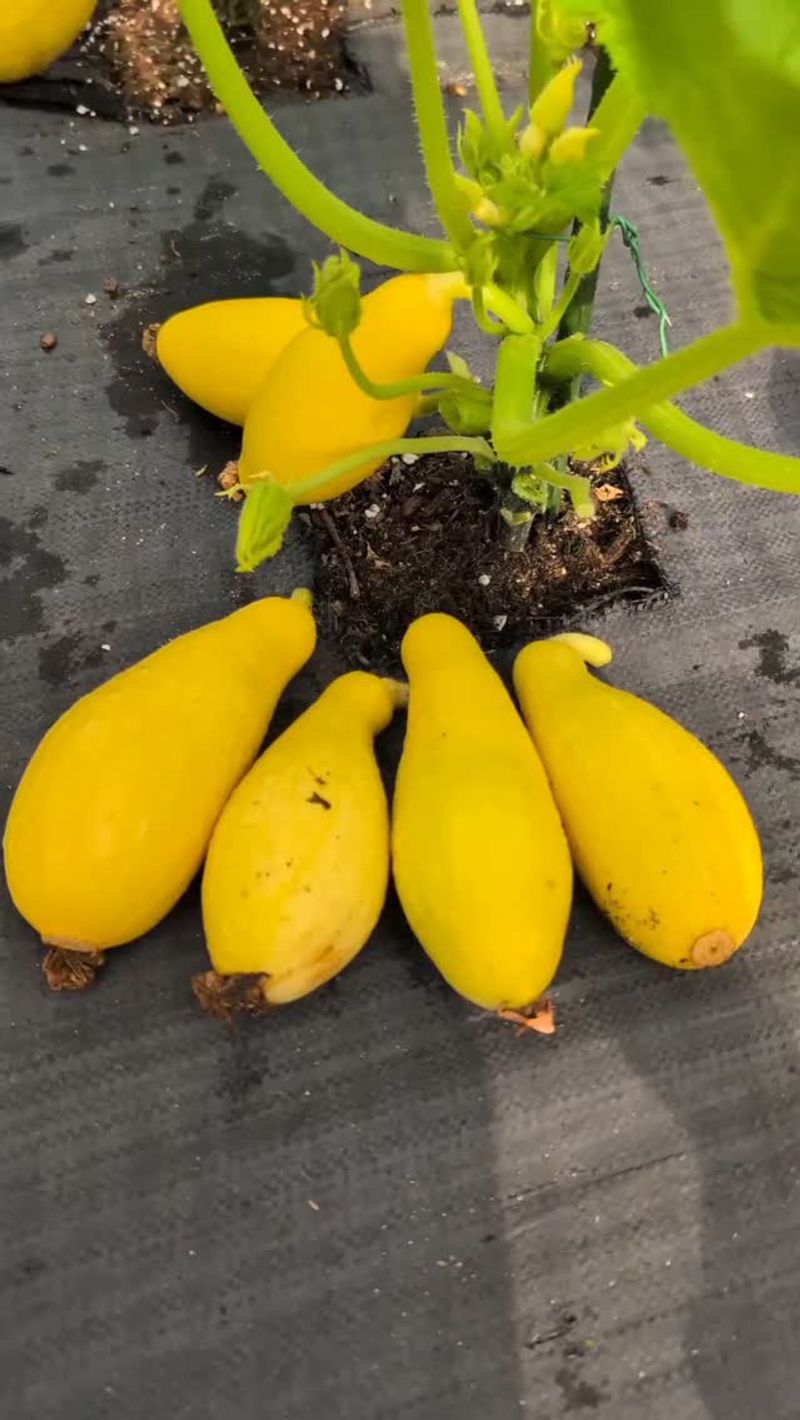
When the planting window is this tight, crop selection matters as much as timing. Summer squash, whether zucchini or yellow squash, is the right choice for a September sowing in Central Texas.
Winter squash belongs in a completely different category: the Texas A&M AgriLife guide classifies it as an 80-or-more-day crop, which makes a late-summer seed start an unrealistic bet for a pre-cold harvest. Stick with summer types.
The maturity ranges explain why summer squash earns the recommendation. Texas A&M places summer squash in a roughly 30-to-60-day window from planting to harvest, while cucumbers fall into a 60-to-80-day range.
Seeds sown September 6 could put summer squash on your kitchen counter somewhere between early October and early November, assuming good growing conditions throughout. Cucumbers started on the same day could theoretically reach harvest between early November and late November, which pushes closer to the period when damaging cold becomes a real risk in Central Texas.
Those ranges are broad on purpose. A seed packet’s days-to-maturity figure is a useful starting point, but it is not a calendar guarantee.
Cultivar differences, soil temperature at germination, heat stress during flowering, water availability, pest pressure, and whether the count begins at seeding or at transplanting can all shift the actual schedule by days or weeks.
Choosing the fastest-maturing cultivar you can find at a local garden center or through a seed supplier gives you the best shot at beating the cold. Look for summer squash varieties listed at 40 to 50 days or fewer, and read the packet carefully before you buy.
Cucumbers are still worth planting if you understand the odds: they are a possible experiment, not a safe bet, and slower-maturing varieties or any setback from heat, pests, or poor pollination could push harvest past the point where damaging cold arrives.
Treat frost risk as a moving deadline
Planting dates are only half the equation. The other half is understanding when damaging cold could arrive and what that actually means for tender cucurbit plants in the ground.
Frost and freeze are not interchangeable terms. National Weather Service guidance on frost and freeze defines frost using a 36 degrees F threshold and a freeze using 32 degrees F.
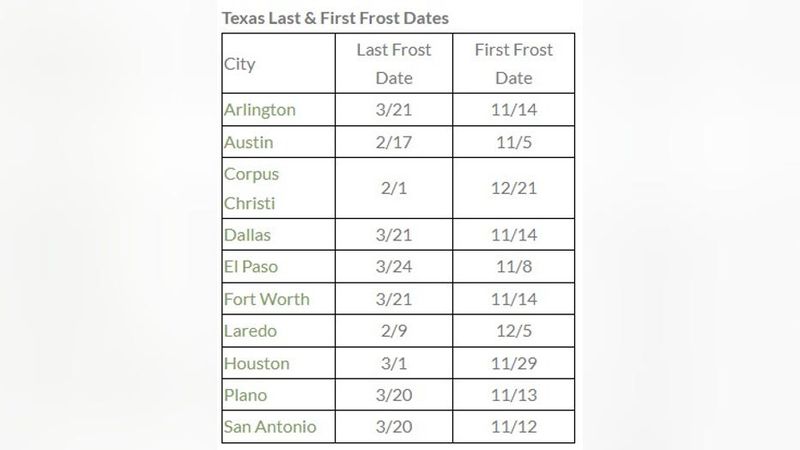
Cucumbers and squash are warm-season crops that can suffer tissue damage from frost conditions before temperatures ever hit the official freeze mark. Relying on the average first-freeze date as your planning deadline is more optimistic than the data supports.
Austin’s climate record illustrates the point clearly. The average first freeze for Austin falls around November 29 based on the full period of record, and around December 1 using the 1991-2020 normals.
Those averages might sound reassuring for a September planting, but the Austin climate summary from the National Weather Service shows that the earliest recorded first freeze in Austin occurred on October 26. A cold event that early would arrive before even summer squash is guaranteed to finish, let alone cucumbers.
Geography adds another layer of uncertainty. Central Texas is not climatically uniform.
Hill Country locations at higher elevations can experience damaging cold noticeably earlier than Austin or San Antonio. A gardener in Kerrville or Fredericksburg is working with a shorter window than one in the urban core, and should plan accordingly.
Monitor your local National Weather Service forecast as plants develop rather than marking a single date on the calendar. Watch for overnight lows trending toward the mid-30s and be ready to act.
Historical averages provide useful context, but your actual harvest window will be defined by what the weather does this specific fall, not what it has done on average.
Direct-sow fast varieties while the window is open
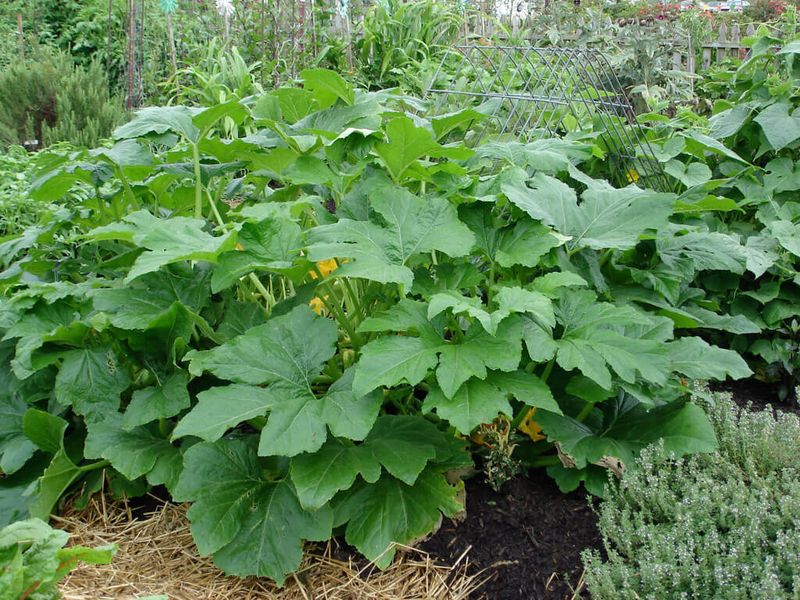
Speed is the priority right now. Every day spent waiting to plant is a day subtracted from the growing window, and this late in the season there is no room to recover from a delayed start.
Skip transplants for both crops: cucumbers and squash are direct-seeded crops that handle Texas conditions better when roots establish in place from germination.
For cucumbers, the Texas A&M Easy Gardening cucumber guide recommends planting seeds about 1 inch deep in groups of three or four, spaced 12 to 14 inches apart in the row. Once seedlings emerge and show their first true leaves, thin each cluster to the single strongest plant.
Crowding at this stage wastes water and nutrients that your fast-growing crop needs to move quickly.
Summer squash seeds go in a little deeper. Texas A&M’s Easy Gardening planting guide places large seeds like squash at about 1 to 1.5 inches deep.
Plant into loose, well-prepared soil so roots can push through quickly without hitting compacted layers that slow establishment.
Before you buy seeds, read the days-to-maturity figure on every packet and compare options. A zucchini listed at 45 days gives you meaningfully more margin than one listed at 58 days when you are starting in the first half of September.
The same logic applies to cucumbers: a slicing type listed at 55 days is a better gamble than one at 70 days given the narrow window remaining.
Spacing and depth figures help seeds germinate and roots establish well, but they do not guarantee any particular harvest date. Weather, water, and the health of your soil will shape how fast plants actually move from seedling to fruit.
Get the seeds in the ground correctly and promptly, then focus your attention on the management steps that follow.
Give late-sown plants sun, drainage, and reliable water
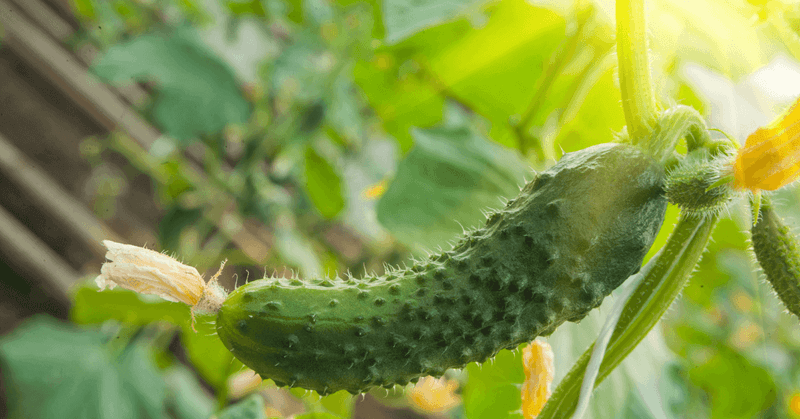
Getting seeds in the ground on time only matters if the plants that emerge can grow fast enough to reach harvest before cold arrives. Three conditions do most of the work: full sun, well-drained soil, and a dependable water supply.
Cucumbers and squash need at least six to eight hours of direct sunlight daily to develop and set fruit at a useful pace. A shaded or partly shaded spot will slow growth noticeably, which is a problem you cannot afford when the season is already short.
Choose the sunniest location available in your yard and prepare it before seeds go in.
Drainage matters just as much. Texas A&M’s cucumber crop guide identifies water management as a critical factor in Texas vegetable production, noting that rainfall is unreliable in timing and that irrigation is generally necessary.
Roots sitting in waterlogged soil lose oxygen quickly and can rot within days, while plants in dry, compacted ground stall out and never catch up.
Keep the seedbed consistently moist from the moment seeds go in until seedlings are well established, but avoid soaking the soil to saturation. A light, even moisture level encourages fast, even germination.
Once plants are up and growing, water deeply and regularly rather than in shallow, frequent doses that wet only the top inch of soil.
Heat stress, insect feeding, and disease can each delay harvest beyond what a seed packet suggests. September in Central Texas still brings warm afternoons, and squash and cucumber plants under heat or drought stress slow down or stop producing flowers.
Keeping irrigation consistent and monitoring plants every few days for pest damage or wilting gives you the best chance of keeping growth on track through the narrowing season.
Protect pollination and harvest fruit promptly
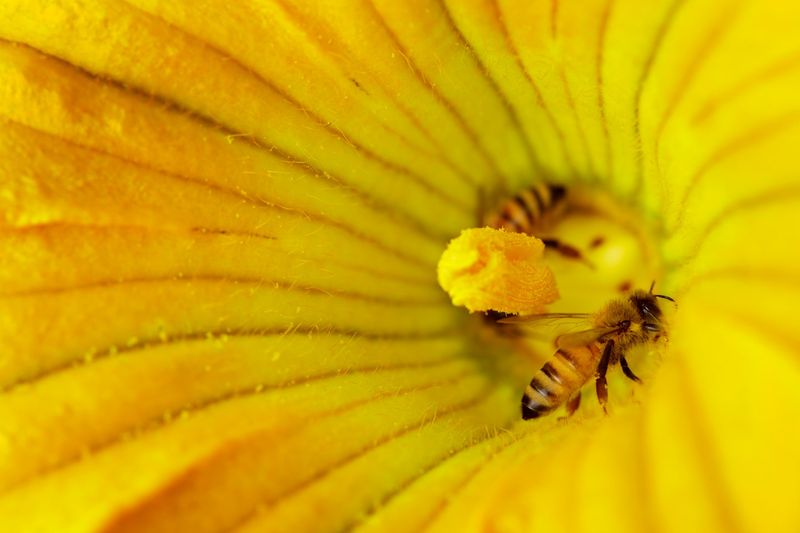
Flowers appearing on your plants are a milestone, but they do not automatically mean fruit is on the way. Cucumbers and squash produce separate male and female flowers on the same plant, and a bee or other insect must carry pollen from a male flower to a female flower for fruit to set.
Without that transfer, female flowers drop without producing anything.
Poor pollination is one of the most common reasons cucurbit plants bloom heavily but produce little fruit. Utah State University Extension’s pollination guide explains that small, misshapen, or aborted fruits are a reliable sign that pollination was incomplete.
In a late-season planting where every week counts, losing fruit to poor pollination is a setback you have little time to recover from.
Protect the pollinators working your garden during bloom. Avoid applying any insecticide while flowers are open whenever possible.
If a pest problem requires treatment, apply products in the early evening after bees have stopped foraging, and follow every instruction on the product label without exception. Label compliance is not optional, and the timing of any application can mean the difference between a productive plant and one that sets no fruit at all.
Once fruit does set, harvest frequently. Texas A&M’s squash crop guide identifies daily harvest as important for maintaining quality, because summer squash left on the vine past its prime quickly becomes tough and seedy, and the plant slows new fruit production.
For cucumbers, the Texas A&M cucumber crop guide advises harvesting while fruits are still green and before they begin to yellow. A cucumber that turns yellow on the vine signals overmaturity, reduces the plant’s incentive to produce more, and delivers noticeably lower eating quality.
In a short fall season, prompt picking keeps plants productive through the remaining weeks.
Use row covers only for limited overnight protection
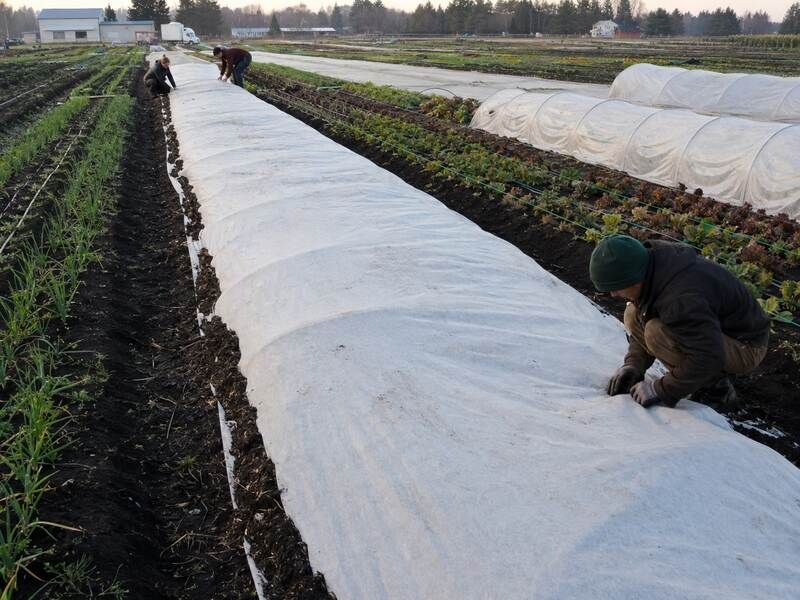
A floating row cover can buy your plants a few extra degrees on a cold night, which may matter when a surprise dip threatens plants that are close to harvest but not quite there. Lightweight fabric covers trap ground heat and slow the rate at which plant tissue cools, offering modest protection against a brief cold event.
What they cannot do is carry tender cucurbits safely through a hard freeze. Utah State University Extension’s guidance on row covers makes clear that covers provide limited temperature buffering, not freeze-proof insulation.
Treating a row cover as a reliable barrier against a sustained 28-degree night will likely result in lost plants.
Two management details matter most when using covers on flowering plants. First, open or remove the cover during daylight hours when flowers are present so bees and other pollinators can reach the blossoms.
A cover left on around the clock during bloom blocks pollination and stops fruit set entirely, defeating the purpose of protecting the plant. Second, monitor covered plants on warm days because fabric traps heat as well as cold, and plants under a cover on a sunny 85-degree afternoon can overheat quickly.
The clearest decision rule for this entire planting attempt comes down to a few practical choices. Plant promptly in a spot with full sun and reliable irrigation, prioritize summer squash for better harvest odds, try cucumbers with the understanding that results are less certain, and follow your local National Weather Service forecast rather than an average first-freeze date.
Average dates describe what has happened over many years; your crop will face whatever this specific fall delivers. A gardener who plants well, waters consistently, and stays alert to the forecast has done everything reasonable to earn a harvest before the cold closes the season.