
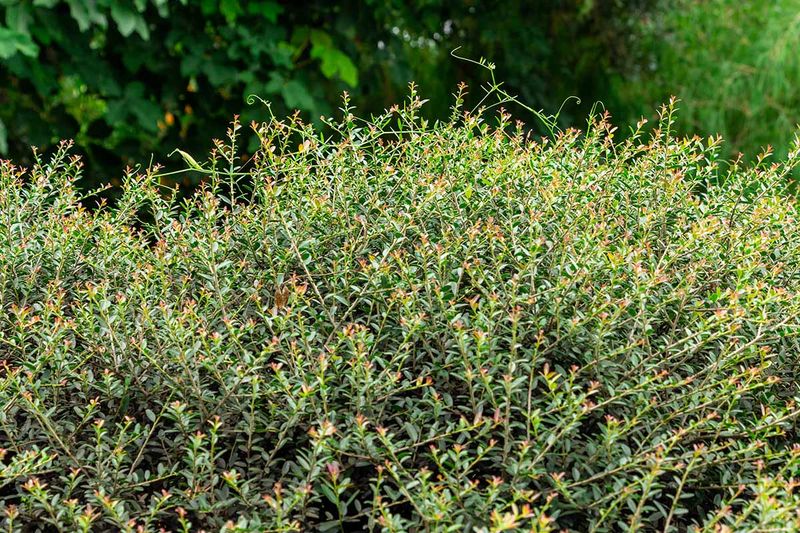
Some native shrubs just make sense for Texas yards, and yaupon holly is one of the strongest candidates on that list. Ilex vomitoria grows across much of the state, keeps its leaves through summer heat, winter cold, and everything in between, and asks for very little once it settles in.
Whether you need a hedge, a foundation planting, or a wildlife shelter, yaupon deserves a close look before this fall planting window closes.
Why yaupon earns a place on the shortlist
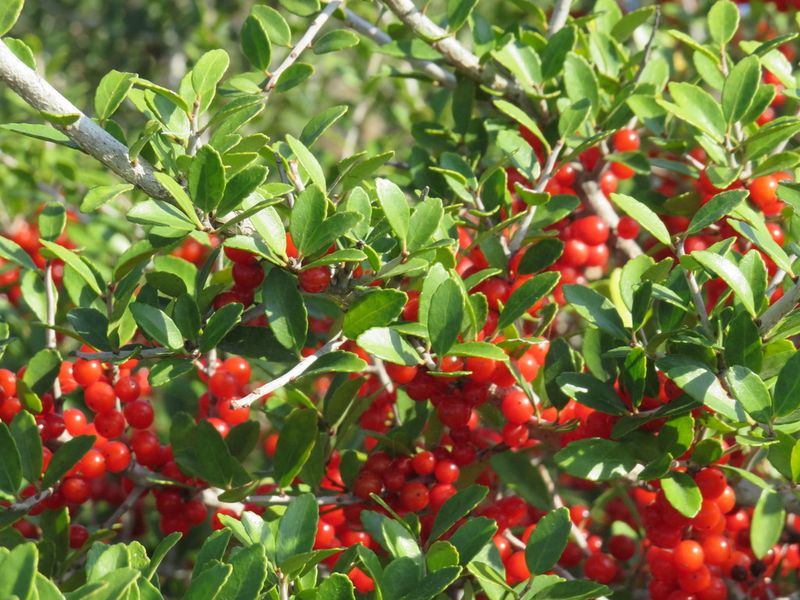
Yaupon holly, Ilex vomitoria, is one of those plants that earns its reputation quietly. Native to Texas and the broader southeastern United States, it is a broadleaf evergreen that holds its small, glossy leaves all year, giving your yard structure and greenery whether it is July or January.
That persistent foliage is the real payoff here, not occasional flowers or seasonal berries, but a dense, reliable framework that does not disappear when conditions get rough.
The traits that make yaupon so useful in Texas landscapes include genuine drought tolerance, adaptability to a wide range of soils, and the ability to grow in everything from full sun to deep shade. Those qualities let it serve as a hedge, a low screen, a foundation planting, a windbreak, or wildlife shelter depending on how you use it.
Texas Parks and Wildlife specifically lists yaupon among thick evergreen plants that can provide year-round wildlife shelter, and Texas A&M describes it as one of the toughest and most useful ornamentals for much of the state.
That said, calling yaupon objectively “the toughest” native shrub in Texas overstates the case. Texas stretches from the humid Piney Woods to the arid Trans-Pecos, and no single plant performs equally well in every corner of it.
Texas A&M’s Earth-Kind Plant Selector divides the state into multiple growing regions specifically because plant performance depends on local soil, rainfall, temperature, and humidity.
Yaupon is a strong practical candidate for many Texas yards, especially across eastern, central, and coastal regions. Matching the plant to your specific site still determines how well it performs, and that process starts before you ever pull it off the nursery shelf.
Match the yaupon form to the space
One of the most common yaupon mistakes is buying a plant without checking how large it can get. The straight species, Ilex vomitoria, is not a tidy little foundation shrub by default.
North Carolina Extension puts the mature size of standard yaupon at roughly 10 to 20 feet tall and 8 to 12 feet wide, and plants left unmanaged can develop into dense thickets. That scale is genuinely useful for a privacy screen or a naturalized back fence line, but it is a poor match for a three-foot foundation bed.
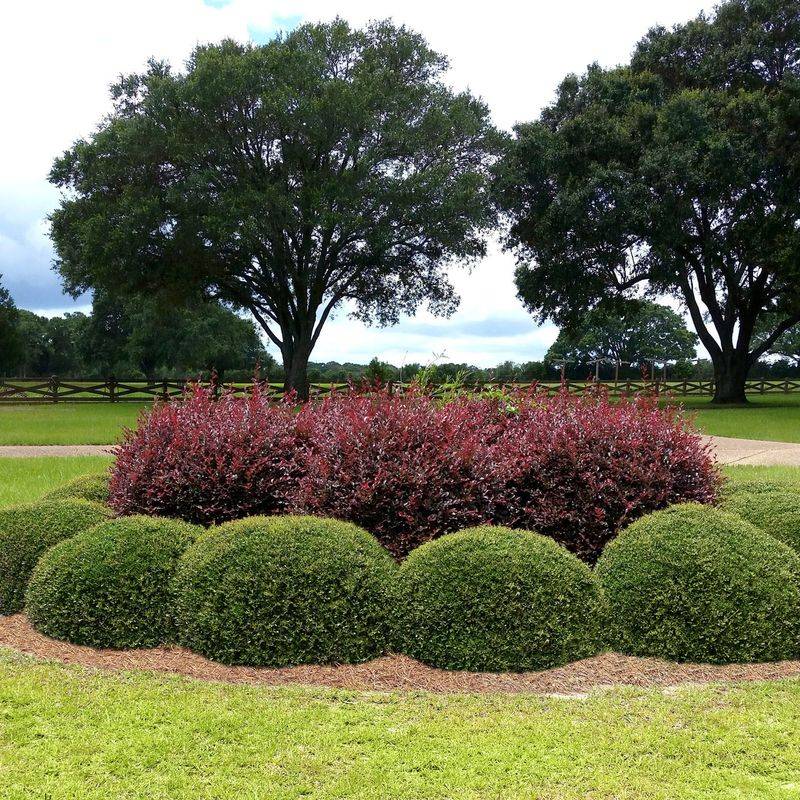
Dwarf and compact cultivars solve that problem. Texas A&M’s Earth-Kind plant selection guidance lists dwarf yaupon among outstanding Texas shrubs, and most dwarf forms top out around three to five feet tall depending on cultivar and growing conditions.
Cultivars such as ‘Schilling’s Dwarf’ (also sold as ‘Stokes Dwarf’) stay compact and dense with minimal shearing, making them practical for borders, edging, and low hedges where the straight species would eventually overwhelm the space.
Upright cultivars offer a different look entirely, growing tall and columnar rather than spreading. They work well as vertical accents or narrow screens where horizontal space is tight.
At the other end of the spectrum, the weeping form Ilex vomitoria ‘Folsom’s Weeping’ produces long, arching branches and a graceful silhouette suited to specimen plantings rather than dense hedging. Each form has a legitimate use, but they are not interchangeable.
The practical rule is simple: choose a cultivar whose mature size fits the space without requiring you to shear it repeatedly just to keep it in bounds. Pruning to remove deadwood or refine shape is reasonable maintenance.
Pruning every few months to prevent a large-growing yaupon from swallowing a narrow bed is not a long-term plan.
Check the site before you buy
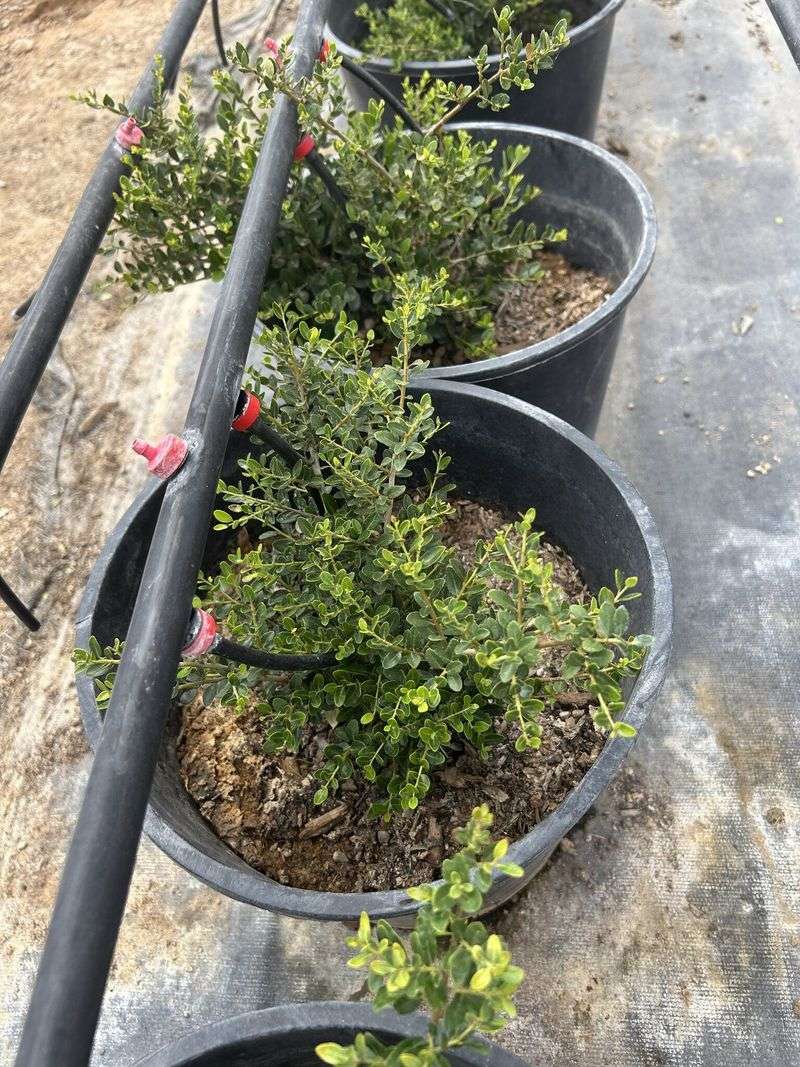
A good planting starts with an honest look at what the site actually offers. Yaupon tolerates a wider range of conditions than almost any other native Texas shrub, but “tolerates” is not the same as “thrives equally everywhere.” North Carolina Extension’s yaupon profile confirms that the plant handles full sun through deep shade, varied soil textures, drought, salt spray, and occasional flooding.
Fuller growth and heavier berry production generally come with more sun, though, so a shaded spot may produce a looser, less dense plant than the same cultivar in a sunny location.
Soil drainage deserves attention even though yaupon can survive brief wet periods. Occasional flooding after a heavy rain is one thing; a bed that stays soggy for days at a time is another.
Good drainage remains important for most landscape installations, and planting in persistently waterlogged soil can stress or kill even a tough native over time. If your site drains slowly, amend it or choose a raised planting area before you invest in the shrub.
Regional differences across Texas also matter more than any single plant profile can capture. Coastal sites deal with salt spray and Gulf humidity.
Central Texas soils run toward alkaline limestone. East Texas has acidic sandy loam.
West Texas brings extreme drought and low humidity. Texas SmartScape lists yaupon as native, evergreen, and wildlife-supporting for North Central Texas, but that regional rating is not a guarantee of equal performance across every part of the state.
Use the Texas A&M Earth-Kind Plant Selector to confirm yaupon’s fit for your specific growing region before buying.
For very dry, open sites in West or Central Texas with excellent drainage and intense sun, Texas sage (Leucophyllum frutescens) can be a better-suited evergreen option. It handles low humidity and lean, well-drained soils where yaupon may struggle.
That is a site-fit distinction worth knowing, not a general ranking of one plant over the other.
Use fall as a principle, not a statewide date
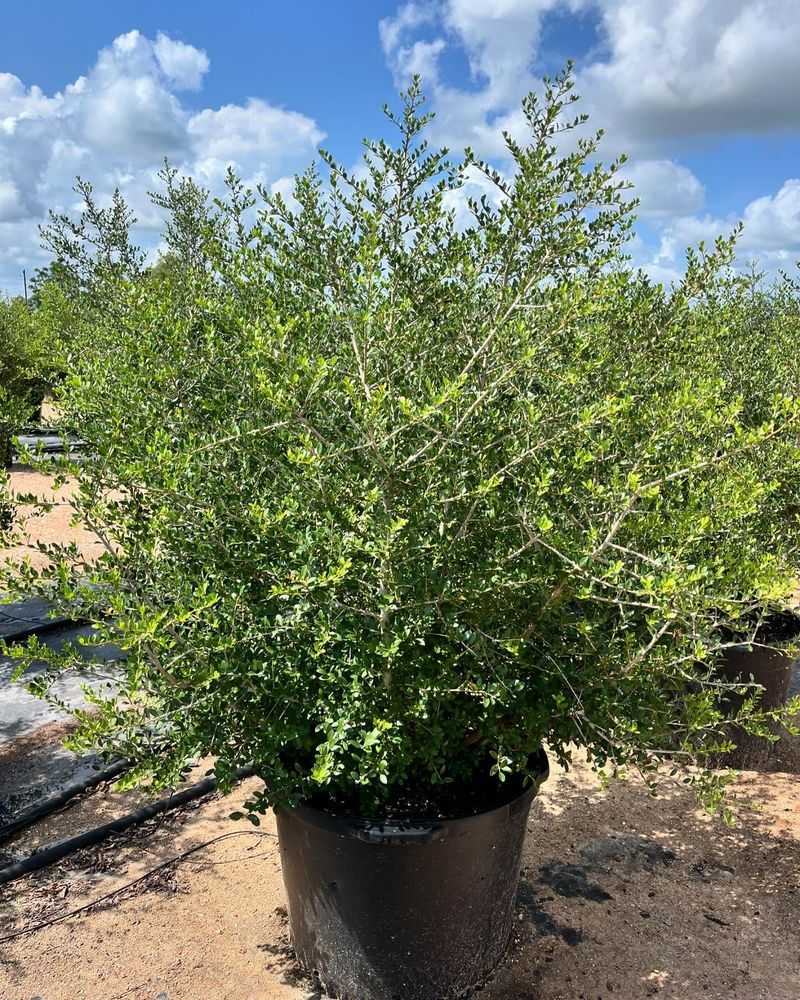
Fall planting has real logic behind it. Cooler air temperatures reduce the stress a newly transplanted shrub faces above ground, while soil temperatures stay warm enough to encourage root growth before winter arrives.
That combination lets the plant build a stronger root system before it has to survive its first Texas summer. Oklahoma State University Extension notes that early fall is generally favorable for container-grown woody plants, while also flagging that broadleaf evergreens like holly can sometimes do better planted in spring, particularly when bare-root.
That guidance illustrates a general seasonal principle, not a confirmed statewide Texas rule.
Texas is too large and climatically varied for a single planting calendar to apply everywhere. A September planting that works well in Dallas may be premature in the Panhandle if an early freeze is weeks away, and it may be unnecessary in South Texas where soil temperatures stay warm through November.
Before you plant, check local temperatures, freeze risk forecasts, current soil moisture, and whether your plant is container-grown or bare-root. Your county’s Texas A&M AgriLife Extension office can give you timing guidance specific to your region.
When you are ready to plant, follow a straightforward sequence. University of Georgia Cooperative Extension recommends digging a hole two to three times wider than the root ball but no deeper than the root ball’s height.
Set the shrub so its original soil line sits at or just slightly above the surrounding grade. Backfill with the native soil you removed unless a documented local soil problem requires correction.
Water thoroughly immediately after planting to settle the soil around the roots and eliminate air pockets.
Resist the urge to add fertilizer at planting time. Encouraging fast top growth before the root system is established puts the plant under more stress, not less.
Let the roots get a foothold first.
Establish it before calling it low-maintenance
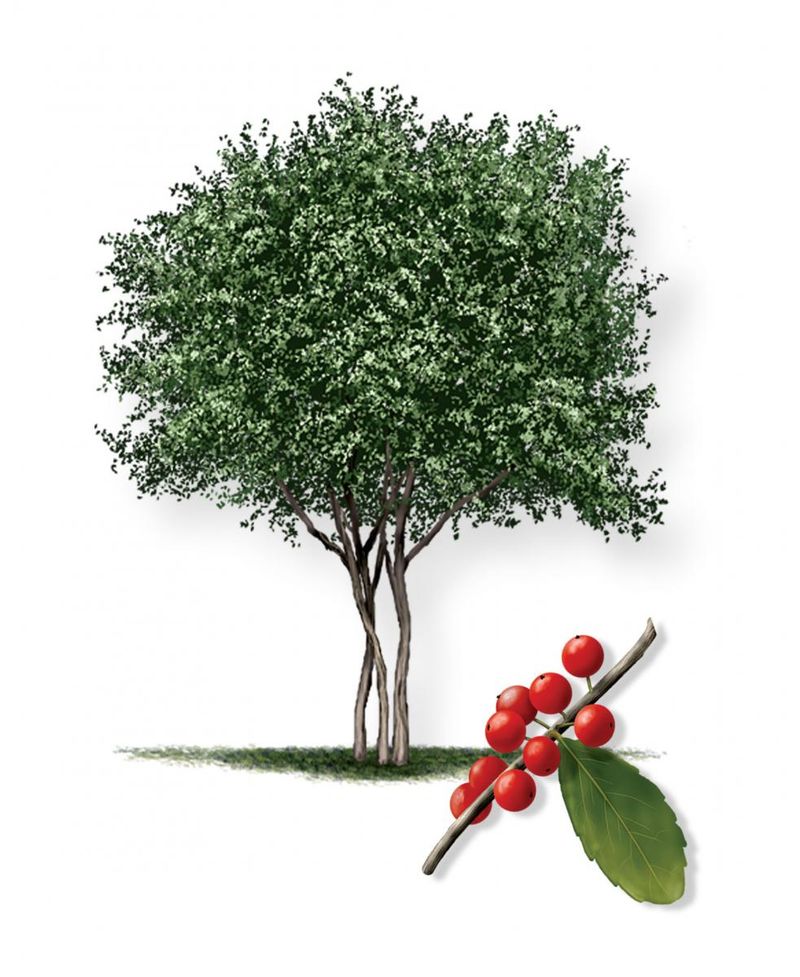
Yaupon’s reputation for toughness belongs to established plants, not freshly transplanted ones. A new shrub has a limited root system and cannot pull moisture from a wide area the way a mature plant can.
Calling it low-maintenance before it has settled in sets up unrealistic expectations and risks losing a plant that would have thrived with a little early attention.
University of Minnesota Extension guidance on watering newly planted shrubs recommends consistent, deep watering throughout the establishment period rather than relying on rainfall. In Texas, where rain can be erratic and summer heat arrives fast, that means actively checking soil moisture and irrigating when the root zone starts to dry out.
Shallow, frequent watering encourages shallow roots; slow, deep watering encourages roots to follow moisture downward, which builds long-term drought resilience.
Mulch is one of the most useful tools during establishment. Apply a two-to-three-inch layer of organic mulch over the root zone, keeping it a few inches away from the stem to prevent rot and pest problems.
Mulch slows moisture evaporation, moderates soil temperature, and suppresses weeds that would otherwise compete with the young plant for water and nutrients.
Weed control matters more than many gardeners expect during the first season. Weeds around a new shrub are not just cosmetic; they compete directly for water and soil nutrients that the yaupon needs to build its root system.
Pull or cut them regularly rather than letting them establish.
Yaupon tolerates pruning well, and removing deadwood or lightly shaping the plant is reasonable once it is growing actively. What to avoid is forcing a large-growing straight species into a confined space through repeated hard shearing.
That kind of maintenance becomes a chore and rarely produces the tidy result you are hoping for. Match the cultivar to the space from the start, and pruning stays a minor task rather than a seasonal obligation.
Evergreen shelter does not guarantee berries
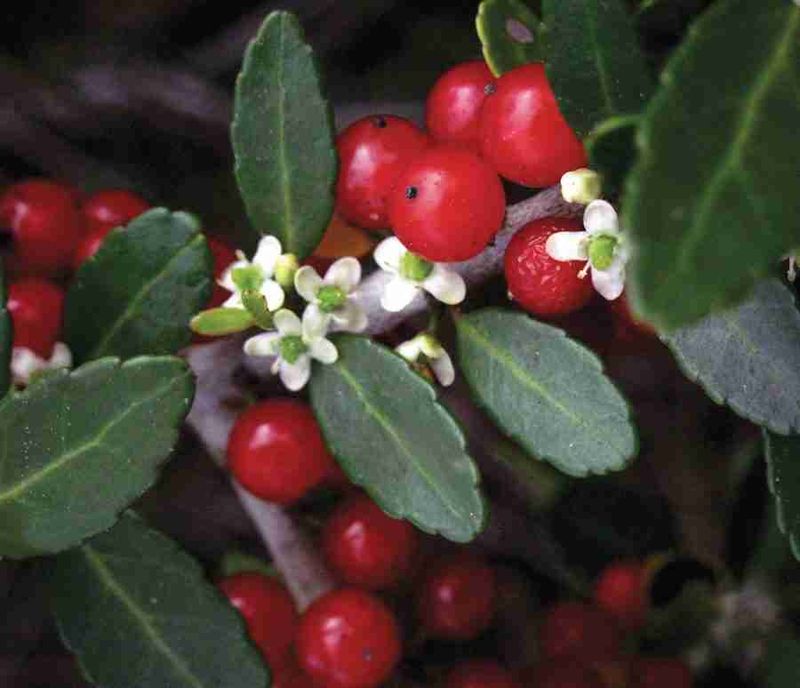
Yaupon’s wildlife value starts with its foliage, and that part does not depend on flowers, fruit, or any additional plants nearby. Dense evergreen branches provide reliable cover through every season, which is exactly what small birds and other wildlife need when temperatures drop or predators are active.
Texas Parks and Wildlife includes yaupon among the thick evergreen plants that can form winter shelter and dense habitat for wildlife.
Spring flowers add another layer of value. The small white blooms attract bees and butterflies, contributing to pollinators at a time when many other landscape shrubs are not yet flowering.
That seasonal benefit is easy to overlook because yaupon flowers are modest compared to showier ornamentals, but they are genuinely useful to pollinating insects.
Berries are where expectations need to be calibrated carefully. Yaupon is dioecious, meaning male and female flowers grow on separate plants.
A female plant generally needs a compatible male growing nearby to produce reliable fruit. North Carolina Extension confirms that the species requires cross-pollination between male and female plants for fruiting.
If you plant a single female with no male in the vicinity, berries will likely be sparse or absent.
That does not make a solo plant less useful. A single yaupon, male or female, still delivers year-round foliage, spring flowers, and dense structure for wildlife cover.
If reliable berry production matters to you, ask at the nursery whether the plant is male or female and whether a compatible male is available to plant nearby. Pairing them gives birds the best chance at a winter food source while also maximizing the visual appeal of those bright red clusters.
Keep berries and flammability claims in context
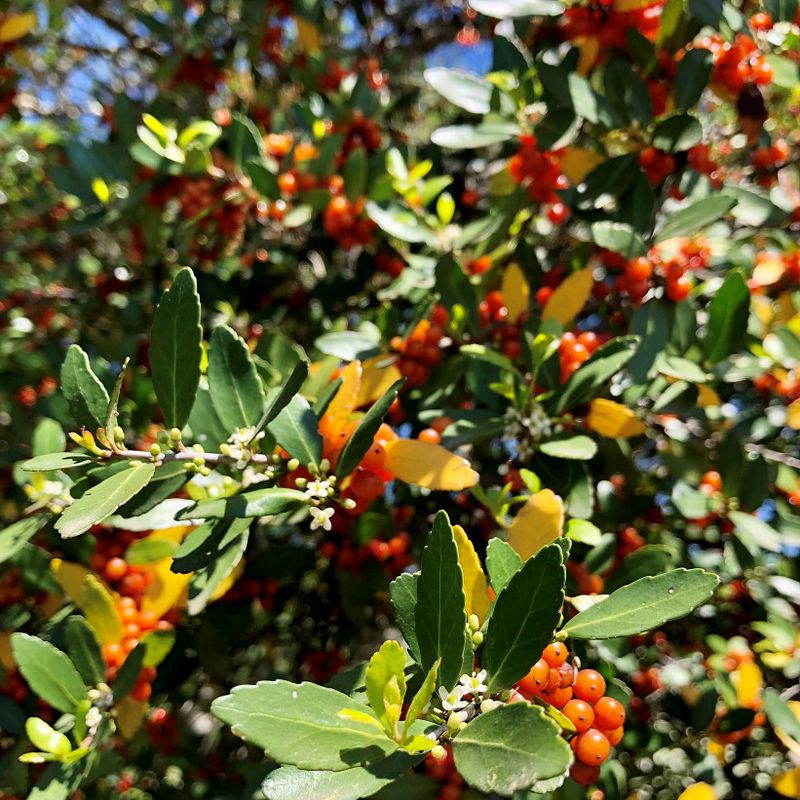
Yaupon berries attract birds, and that is genuinely useful in a wildlife-friendly yard. Children and pets are a different matter.
Poison Control’s guidance on holly berries notes that they can cause nausea, vomiting, and diarrhea in people and pets, and classifies them as low-severity poisonous to humans. The berries should not be treated as food, and young children who spend time near a fruiting yaupon should be supervised.
If you have curious pets who graze in the yard, the same caution applies.
Yaupon leaves do contain caffeine and have a documented history of traditional use as a beverage. Brewing yaupon tea at home is not something to approach casually without reliable preparation guidance and knowledge of sourcing.
The leaf chemistry is real, and the history is interesting, but a general gardening article is not the place to treat it as a straightforward DIY project.
On the topic of fire risk, one specific cultivar deserves a note. North Carolina Extension’s profile for Ilex vomitoria ‘Folsom’s Weeping’ gives that particular weeping cultivar a high flammability rating.
That rating applies to this named form specifically and should not be extended to every yaupon cultivar or to the straight species without additional evidence. Flammability varies by plant density, moisture content, and maintenance, not just by species.
If you live in a wildfire-prone area or a region with defensible-space requirements, check your local fire district or extension office for guidance on plant placement near structures. General rules about setbacks differ by jurisdiction, and no single source covers every Texas situation.
Applying local defensible-space guidance is more reliable than any blanket distance recommendation.
Make the practical choice
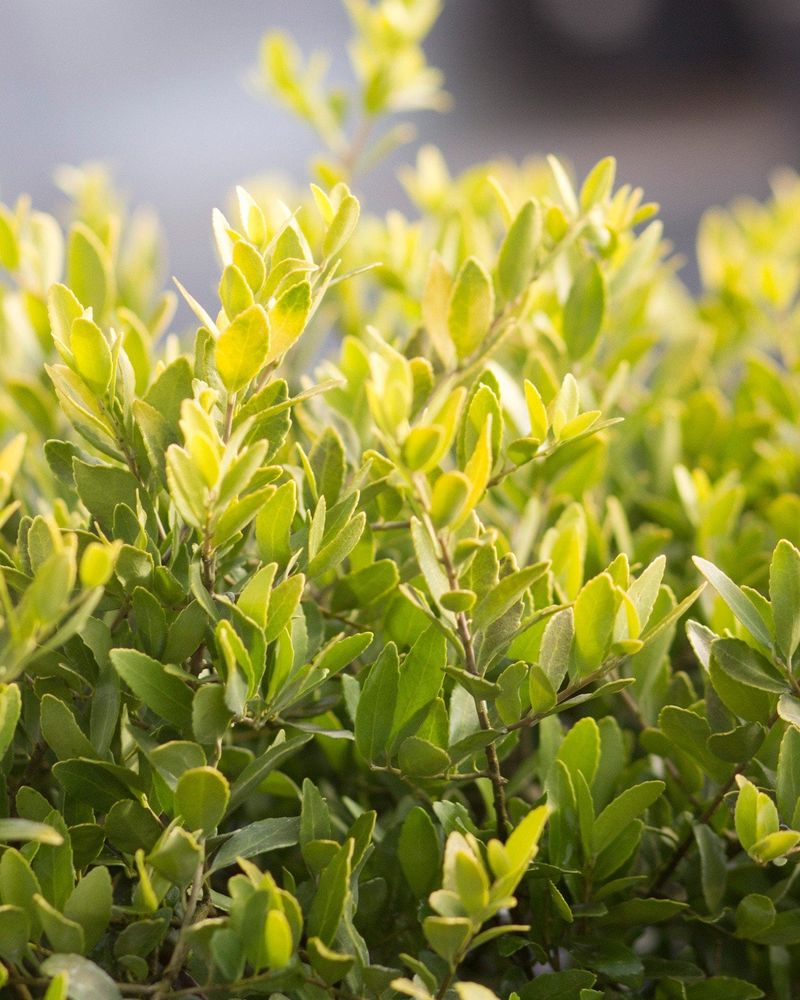
For most Texas homeowners looking for a low-maintenance, evergreen native shrub, a named dwarf or compact yaupon cultivar is a strong starting point. Forms like ‘Schilling’s Dwarf’ stay within a manageable size range, hold their foliage year-round, and require far less intervention than a standard-sized plant crammed into a tight bed.
Before you buy, confirm regional suitability using the Texas A&M Earth-Kind Plant Selector, check that your site drains reasonably well, and plan for consistent watering through the first growing season. Those steps are not optional extras; they are what separates a plant that thrives from one that struggles and never delivers on its potential.
Yaupon earns its recommendation through proven evergreen cover, broad site adaptability, and genuine habitat value once it is established and well-matched to the site. It is not the universally toughest shrub in Texas, and it does require real care during establishment.
What it offers, after that settling-in period, is a resilient, good-looking native that fits the Texas landscape far better than most alternatives.
That is a payoff worth the upfront effort.