
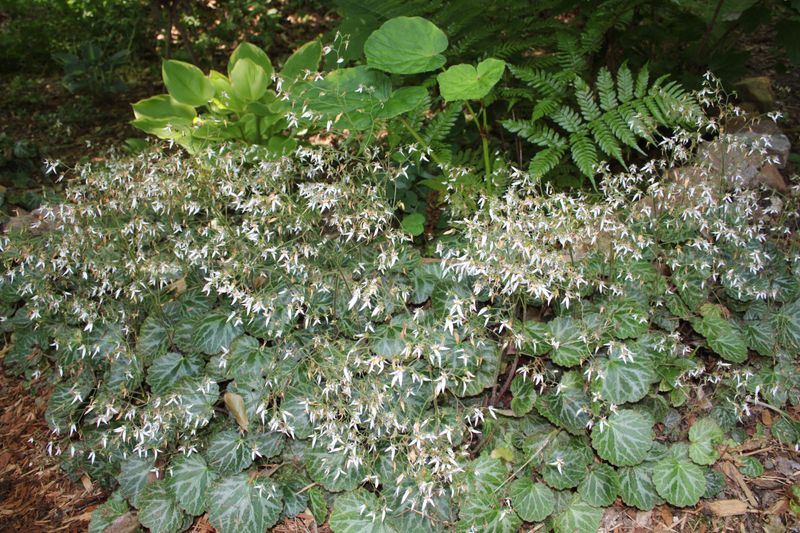
Every summer, North Carolina gardeners watch deer strip their hosta beds overnight, leaving nothing but ragged stems. Hostas are one of the most popular shade plants in the state, but they are also one of the most reliably eaten.
There is a native perennial that fills a similar shade-bed role, tolerates the state’s heat and humidity, and is generally left alone by deer far more often than hostas. Hairy alumroot, known botanically as Heuchera villosa, may not be a perfect hosta twin, but it could be the lower-risk plant your shady beds have been missing.
Why hostas may become a deer problem

Hostas are nonnative plants originally from East Asia, and they have become the default shade filler for millions of American yards. Their broad, smooth leaves and easy-going nature make them appealing, but that same lush foliage is exactly what draws deer in.
NC State Extension notes that deer eat hosta foliage, and anyone who has gone out on a summer morning to find their bed leveled can confirm that description.
The problem is not just one bad season. Deer are creatures of habit, and once they find a reliable food source in your yard, they return.
Compact varieties like Blue Mouse Ears are no safer – NC State’s profile for that cultivar carries the same deer-palatability concern as full-sized types.
The more useful question is not whether hostas attract deer, but whether a gardener can swap in a plant that deer favor less for the same shady spot. That is a meaningful risk-reduction move, not a guaranteed fix.
Extension guidance on protecting plants from deer makes clear that local deer density, season, and food availability all shape browsing behavior, so damage levels vary from yard to yard.
No direct controlled North Carolina trial has compared deer damage on hostas side by side with hairy alumroot. The recommendation for hairy alumroot as a potentially lower-risk alternative rests on separate authoritative horticultural resistance ratings and plant traits, not on a single head-to-head study.
That distinction matters when setting realistic expectations before you pull the hostas out.
Look for the native species *Heuchera villosa*
Walk into almost any garden center and you will see plants labeled coral bells. Some are true native species, some are hybrids bred for colorful foliage, and some are selections with parentage from multiple continents.
That broad retail label is where gardeners run into trouble when they want a specifically native plant.
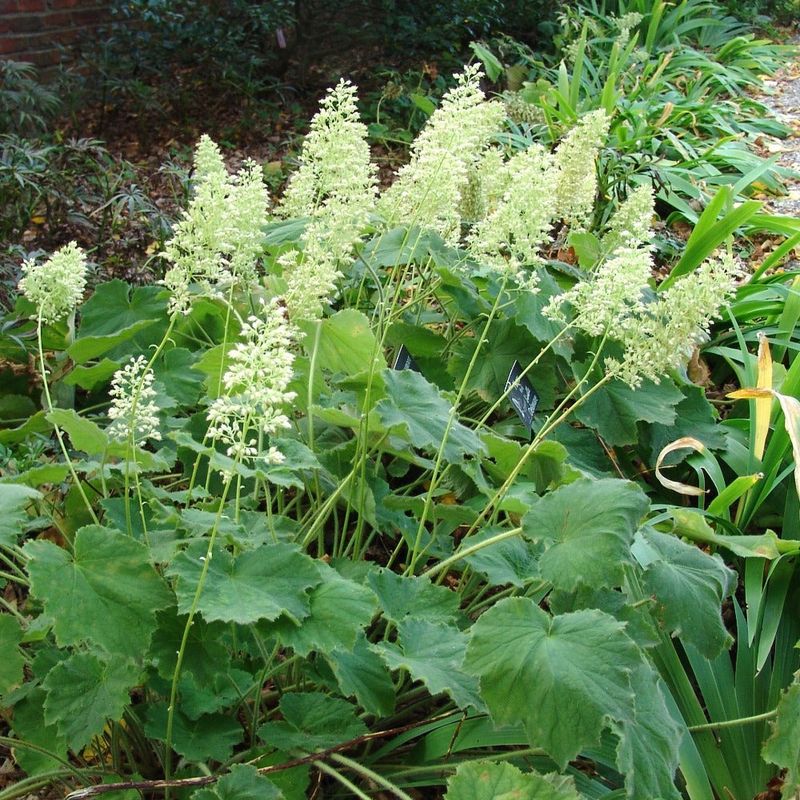
The native perennial behind this recommendation is hairy alumroot, also called hairy heuchera, with the botanical name Heuchera villosaH. villosa. NC State Extension identifies as native to the eastern United States, with its strongest natural distribution running through North Carolina, Virginia, West Virginia, Kentucky, and Tennessee.
That eastern U.S. origin is what makes it a genuinely native choice for North Carolina beds, not just a plant that happens to be sold at a local nursery.
NC State’s broader heuchera overview covers multiple species and cultivars under the coral bells umbrella, and not all of them share the same native status or the same deer-resistance profile. American alumroot (Heuchera americana) is another native species, but H. villosa is the one specifically noted for heat and humidity tolerance, which matters most in North Carolina’s long, muggy summers.
When you shop, flip the tag and look for the botanical name Heuchera villosa rather than trusting the common name coral bells alone. If the label shows only a cultivar name without a species name, ask the nursery staff or skip that plant.
Getting the species right is the first step toward a genuinely native, lower-risk shade bed.
Match hairy alumroot to partial or dappled shade
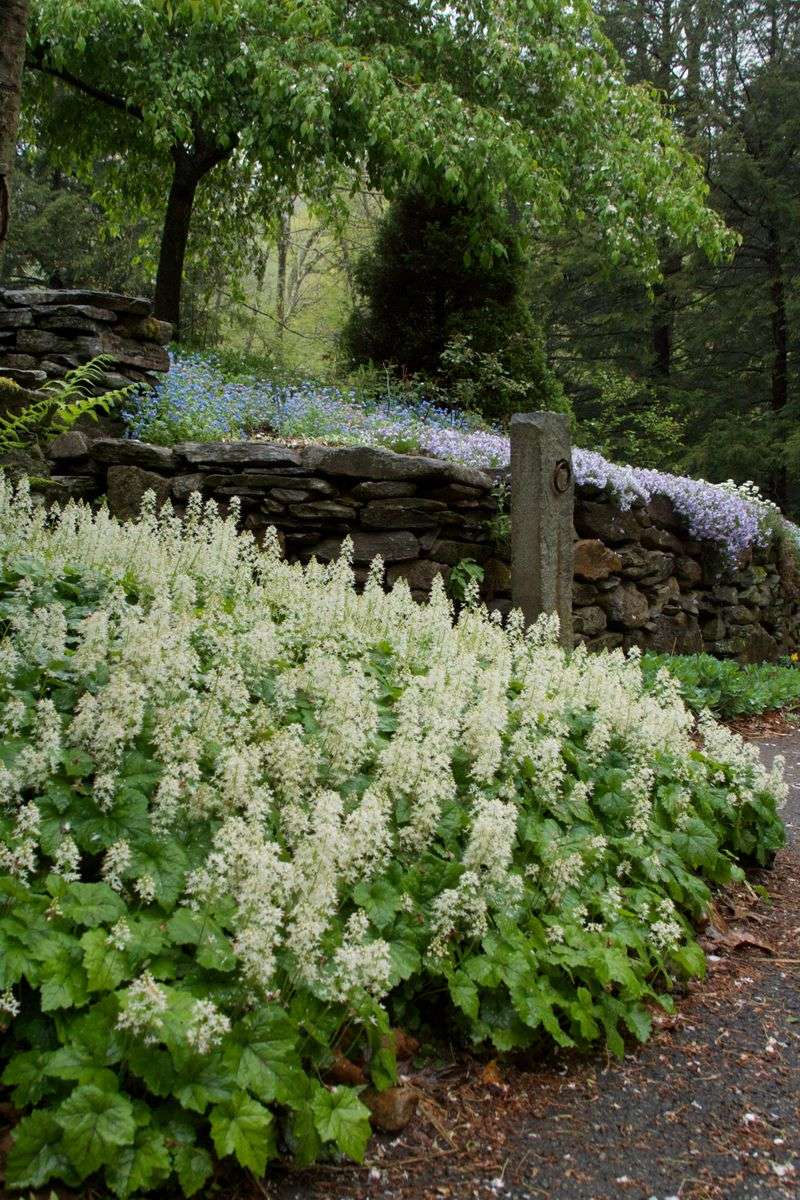
Partial shade and dappled sunlight are where hairy alumroot genuinely thrives. Think of a spot under a high canopy where light shifts through the leaves for several hours a day, or the east side of a house that gets bright morning sun and afternoon shade.
Those conditions suit H. villosa well, and NC State Extension specifically credits the species with heat and humidity tolerance, a critical trait for surviving a Piedmont or coastal plain summer.
Not every shady spot qualifies, and that distinction matters before you invest in plants. A bed tucked beneath a dense, low canopy of mature oaks or maples may look shady, but it often comes with two hidden problems: too little light and extremely dry soil.
NC Cooperative Extension’s guidance on shade gardening points out that tree roots actively compete for water and nutrients, meaning the soil beneath a dense canopy can dry out faster than open ground even when the sun never reaches it directly.
Hairy alumroot can handle moderate drought once it is established, but it is not a plant that thrives in bone-dry soil. If your shady bed stays consistently dry all summer because a large tree is pulling moisture away, alumroot will struggle just as hostas do in those conditions.
The better move is to improve drainage, add organic matter, and mulch well before planting, or to choose a different location with slightly better moisture retention.
Mountain gardeners in North Carolina will generally find moisture easier to manage, while coastal plain and Piedmont growers should pay closer attention to irrigation during dry stretches. Across all three regions, the light requirement stays the same: partial or dappled shade, not a lightless corner.
Expect a similar shade-bed role, not a hosta duplicate
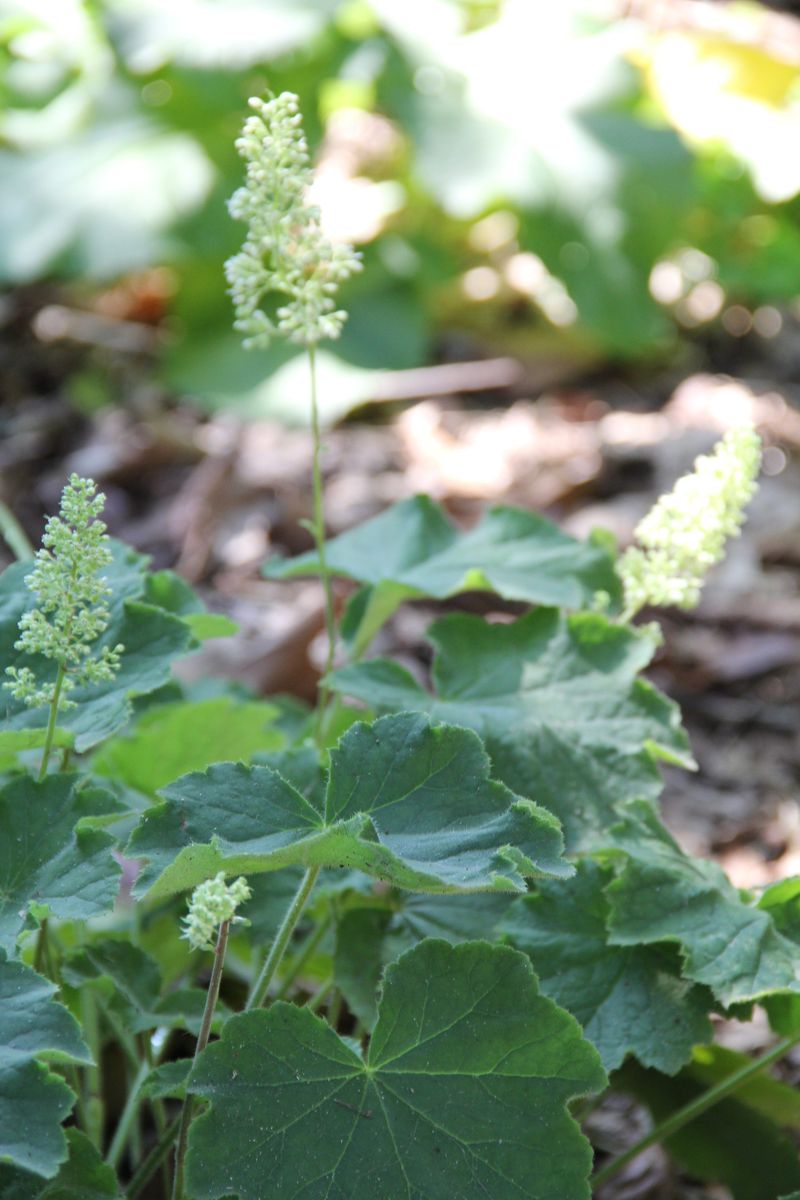
Hairy alumroot can fill the same general role as a hosta in a shaded bed, but the two plants do not look alike, and expecting an identical result will lead to disappointment. NC State Extension describes H. villosa as forming a low mound of lobed, finely textured foliage that reaches roughly 8 inches to 2 feet 8 inches tall depending on conditions and cultivar.
That size range overlaps with smaller hostas, but the leaf character is quite different.
Where hostas offer broad, smooth, often ribbed leaves that can span 6 to 12 inches or more, hairy alumroot produces smaller, lobed leaves with a slightly rough texture. NC State’s hosta profile highlights that broad foliage as part of the plant’s appeal, which is also part of what makes it so palatable to deer.
Alumroot’s finer texture gives a bed a different feel, one that reads as more naturalistic and woodland-like than the bold, architectural statement a large hosta clump makes.
The flowering season adds something hostas do not always provide at ground level. Small pink or white flowers appear on slender stalks from approximately June through October in North Carolina, providing a modest nectar and pollen resource for bees and other pollinators.
NC State identifies a specialized bee associated with the heuchera genus, so while hairy alumroot alone will not transform a yard into a pollinator sanctuary, it does contribute something useful beyond foliage.
For practical placement, consider using alumroot in mass plantings along a shaded walkway, at the front of a woodland border, or tucked into containers on a covered porch. Spacing plants 12 to 18 inches apart allows each mound to fill in without crowding, and grouping several plants together creates enough visual mass to hold a bed the way a row of hostas would.
Give the plant moisture and drainage it needs
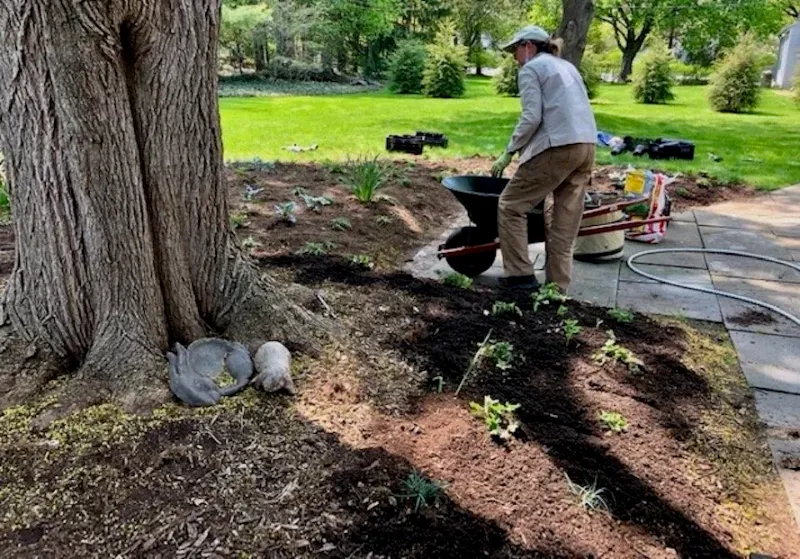
Getting hairy alumroot established starts with the soil, not the plant. NC State Extension recommends moist, well-drained soil with organic matter for H. villosa, and that combination matters more in North Carolina’s clay-heavy Piedmont soils than in looser mountain or coastal plain ground.
Work compost into the bed before planting to improve both drainage and moisture retention, two qualities that seem contradictory but are achievable with enough organic material.
Timing your planting thoughtfully gives roots the best chance to settle in before stress arrives. NC State’s alumroot guidance notes that late fall or early spring are generally favorable planting windows, allowing the plant to establish during cooler, wetter periods before summer heat arrives.
Water consistently for the first growing season, especially during dry spells, because even a moderately drought-tolerant plant can fail if it never gets a chance to develop a strong root system.
Once established, H. villosa handles dry stretches better than many shade perennials, but it is not immune to drought stress. NC Cooperative Extension’s shade gardening guidance emphasizes that tree roots actively compete for water and nutrients, so beds beneath large trees may need supplemental irrigation even when rainfall seems adequate.
Mulch is one of the most practical tools available for managing moisture in these conditions. NC State’s native plants handbook recommends maintaining roughly a 2- to 3-inch layer of organic mulch around native plantings to conserve moisture and suppress weeds.
Apply shredded bark, leaf mold, or pine straw in that range and refresh it each season as it breaks down.
Established alumroot clumps benefit from division every three to four years. Dividing keeps plants vigorous, prevents overcrowding, and gives you free starts to spread through other shaded spots in the yard.
Treat deer resistance as risk reduction, not a guarantee

Hairy alumroot earns its deer-resistant reputation from its foliage chemistry. NC State Extension describes the foliage as unpalatable to deer and rabbits because it contains tannins, the same bitter compounds that make certain plants less attractive to browsers.
That is a meaningful biological trait, and it is the core reason hairy alumroot comes up as a lower-risk alternative to hostas in browsed beds.
The word “resistant” is doing important work in that description, and it should not be read as “proof.” Extension guidance on deer and garden plants is consistent on this point: hungry deer, high population density, seasonal food scarcity, and local browsing habits can all override a plant’s normal resistance rating. A deer that has eaten everything else in a neighborhood is not going to skip a bed of alumroot because of tannins.
University of New Hampshire Extension research on deer browsing reinforces that plant palatability is a tendency, not a rule. Resistance ratings describe what deer prefer under normal conditions, not what they will do under pressure.
That is why the honest framing here is “often left alone” or “a lower-risk choice,” not “deer-proof.”
Planting hairy alumroot also does not create a protective zone around nearby hostas or other palatable plants. Deer-resistant plants are less appetizing themselves; they do not discourage deer from browsing adjacent beds.
If you keep hostas elsewhere in the yard, expect them to remain at risk regardless of what grows nearby.
For yards with severe, persistent deer pressure, physical exclusion through fencing or individual plant cages remains the most dependable protection available. Plant selection is a useful first layer of risk management, but it is not a substitute for a physical barrier when browsing is extreme.
Choose foamflower for moist, deeper shade
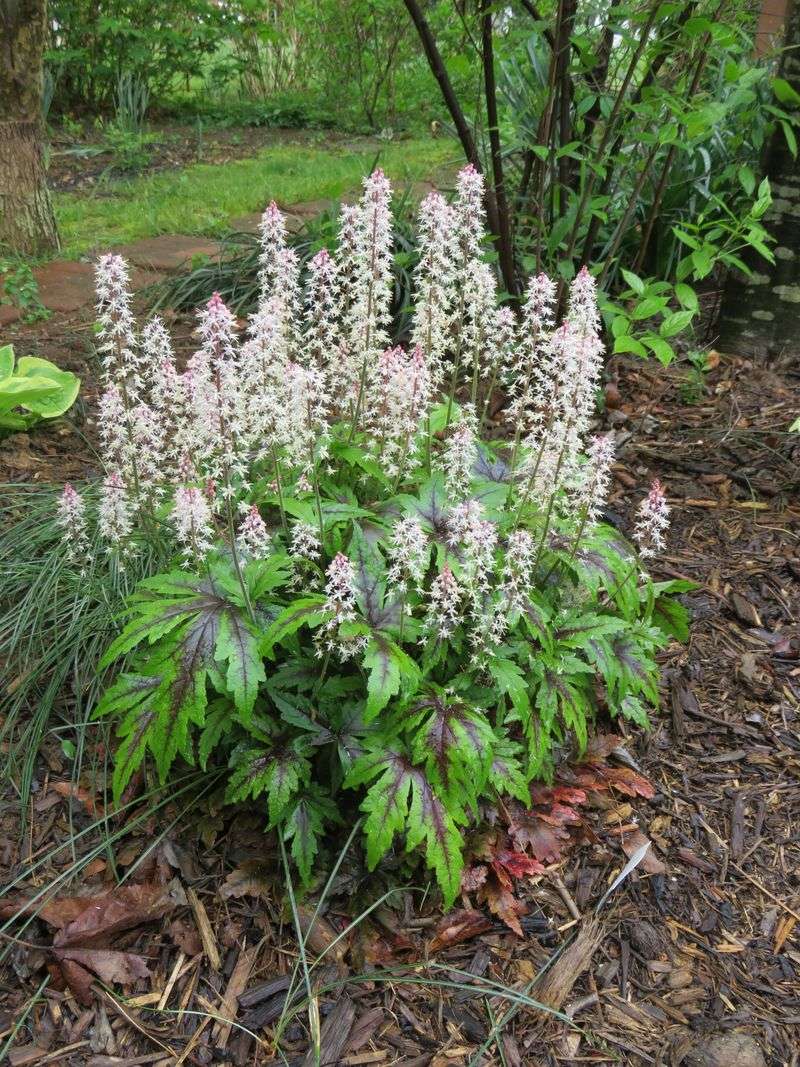
Some shaded beds in North Carolina stay consistently moist and receive very little direct light, the kind of spot under a north-facing slope or along a shaded stream edge where hairy alumroot would be working against its preferences. For those sites, foamflower offers a better fit.
Foamflower, known botanically as Tiarella cordifolia, is another North Carolina-native perennial with a deer-resistant profile. NC State Extension describes foamflower as suitable for dappled through full shade and well matched to consistently moist soil, making it a better choice for heavier shade than hairy alumroot typically handles.
It spreads as a low groundcover, reaching about 6 to 12 inches tall, and produces feathery white flower spikes in spring that give the plant its common name.
The critical difference between the two plants is drought tolerance. NC Wildflower Society groundcover guidance and NC DEQ’s recommended native plants list both support foamflower for moist, shaded sites.
Unlike hairy alumroot, foamflower is not drought-tolerant, and placing it in a dry bed beneath a thirsty tree will produce the same failure as putting any moisture-loving plant in the wrong location.
NC Cooperative Extension’s shade gardening guidance reinforces the point that shade is not a single condition. A gardener should assess both light level and soil moisture before choosing between these two natives.
Neither plant belongs in a dry, lightless corner just because it tolerates shade somewhere on the spectrum.
Make a site-specific, realistic plant choice
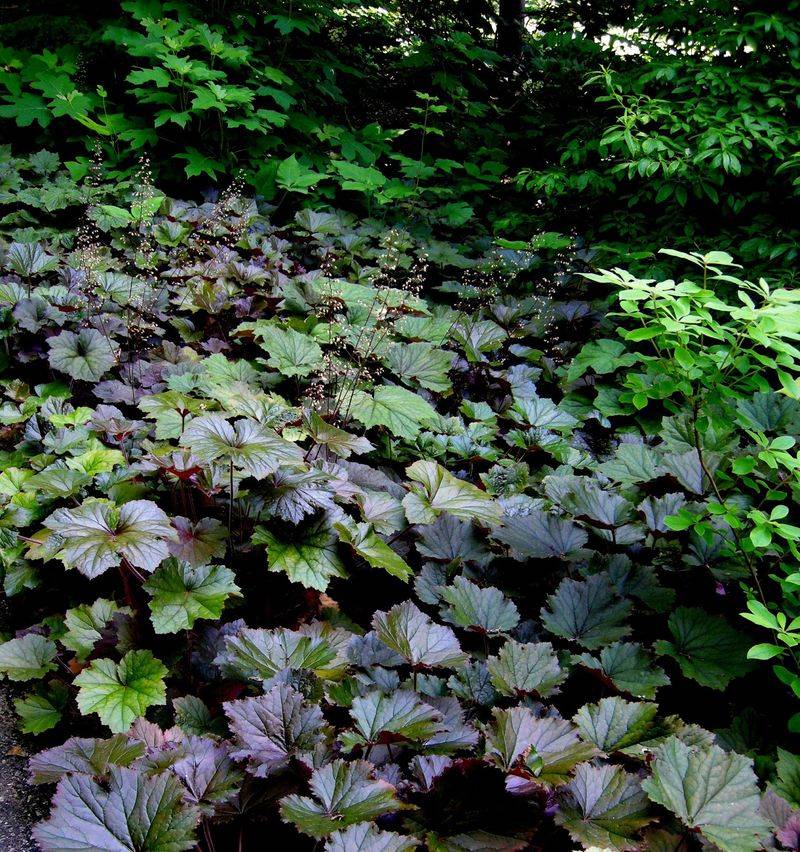
Before buying any plants, spend a few minutes reading the actual bed. Does the spot receive several hours of indirect or filtered light each day, or is it a lightless corner under a solid canopy?
Does the soil stay reasonably moist, or does it dry out within days of rain because tree roots pull the water away? Honest answers to those two questions will tell you more than any plant label.
If the site fits, look for Heuchera villosa by botanical name at the nursery, amend the soil with compost, water consistently through the first growing season, and apply a 2- to 3-inch organic mulch layer to hold moisture. Monitor the bed through summer and note whether deer show any interest.
In most yards with moderate browsing pressure, hairy alumroot will attract far less attention than hostas, but local conditions always have the final say.
For yards where deer pressure is severe and persistent, physical exclusion through fencing or individual cages is the most dependable protection, and extension guidance is consistent that plant selection alone cannot substitute for a physical barrier under extreme browsing pressure. Hairy alumroot is a native, heat- and humidity-tolerant option that deer often favor less than hostas, not a guaranteed replacement or an identical visual stand-in.
A yard that gives this plant the right light, soil, and water has a reasonable shot at a lower-maintenance, lower-risk shade bed. Sometimes the best gardening decision is simply choosing the plant the deer are least likely to find worth the trip.