
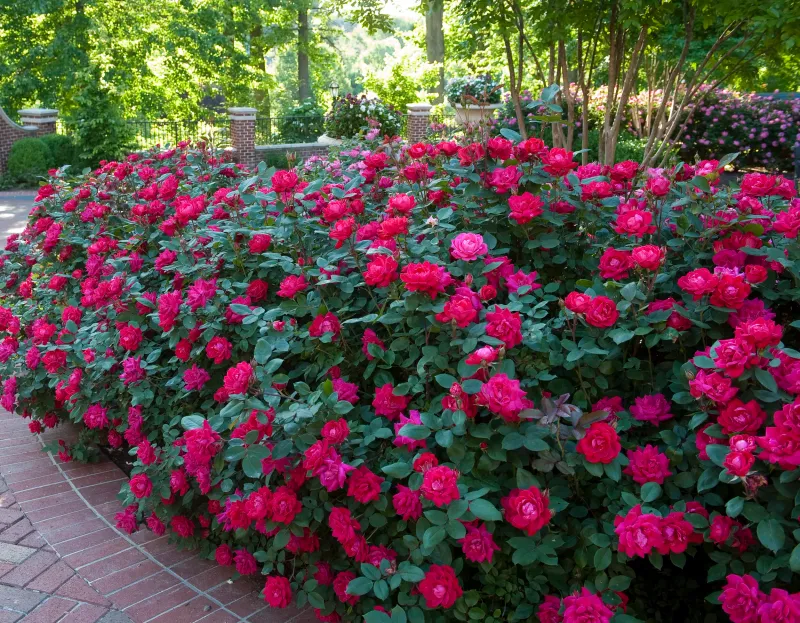
Central Texas gardeners know Knock Out roses as the tough, reliable shrubs that keep flowering when almost everything else has given up on summer. But heading into fall, a lot of homeowners wonder whether one good feeding is all it takes to unlock a big October show.
The honest answer is more useful than that simple promise. What your roses actually need right now is a clear-eyed check on stress, moisture, and overall plant health before you reach for any fertilizer bag.
Knock Out® roses have real fall-blooming potential
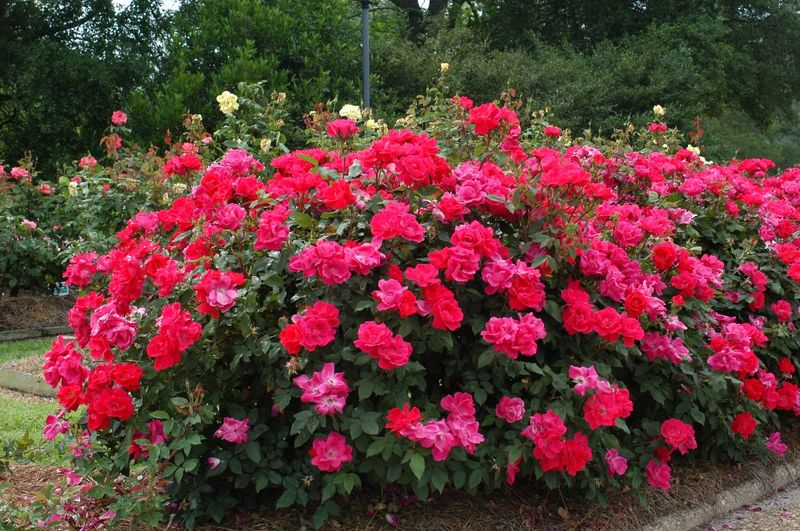
Knock Out ‘Radrazz’ earned its reputation honestly. Star Roses and Plants describes the original Knock Out as a repeat-blooming landscape shrub that flowers from spring to frost, making it one of the most reliably long-season roses available to Southern gardeners.
That is a genuine capability, not marketing language, and Central Texas homeowners with established plants have every reason to expect color well into autumn under the right conditions.
Texas A&M’s Earth-Kind rose program documents successive spring, summer, and fall bloom cycles for Knock Out in Texas conditions. The Earth-Kind cultivar notes confirm that Knock Out produces multiple flowering flushes across the warm season in Texas landscapes, which supports a reasonable expectation of October color for a healthy, established plant.
That said, “repeat-blooming potential” and “guaranteed wall of flowers” are two very different things.
The cultivar’s fall performance depends on a combination of factors working together: its repeat-blooming genetics, adequate moisture at the root zone, temperatures that have moderated from peak summer heat, good air circulation, and a plant that has not been worn down by drought stress, disease, or poor soil. Any one of those variables can limit what the rose actually produces, regardless of what you apply to the soil.
October flowering is plausible across much of Central Texas, from San Antonio north through Austin and into the Hill Country, but the timing of the first significant cold event, local rainfall patterns, and the specific cultivar in your yard all shape the final display. Understanding what the rose can do is the right place to start, because it keeps expectations honest and helps you focus on the conditions that genuinely support late-season flowering.
Check heat and drought stress before reaching for fertilizer
Sparse blooms on a Knock Out rose in late summer are not automatically a sign that the plant is hungry. More often in Central Texas, the culprit is heat.
University of Arizona Cooperative Extension notes that roses produce fewer and smaller flowers during periods of extreme heat, a pattern that applies directly to Central Texas summers where triple-digit temperatures can persist for weeks. Applying fertilizer to a rose that is already stressed by heat and dry soil does not fix the underlying problem and can make things worse.
Before you treat your rose as nutrient-deficient, work through a quick checklist. Look at the soil a few inches down: is it bone dry, or does it hold some moisture?
Check the foliage for yellowing, spotting, or distortion that might point to disease rather than hunger. Assess whether the plant is getting full sun without being cooked by reflected heat off a wall or pavement.
Look at how and how often you have been watering, because a rose receiving frequent shallow drinks may have a dry root zone even when the surface feels damp.
Texas A&M’s Earth-Kind growing tips emphasize that established roses managed with organic mulch and consistent moisture can perform well without commercial fertilizer in many Texas soils, which means a nutrient shortfall is often the last thing to consider, not the first. A stressed rose that gets fertilizer instead of water and root-zone protection may push out a flush of weak, tender growth that is more vulnerable to heat and pest pressure.
Stress reduction supports plant health and keeps the rose in a better position to flower when temperatures ease, but addressing the stress correctly means identifying what is actually wrong before choosing a response.
Water deeply when dry weather stresses the root zone
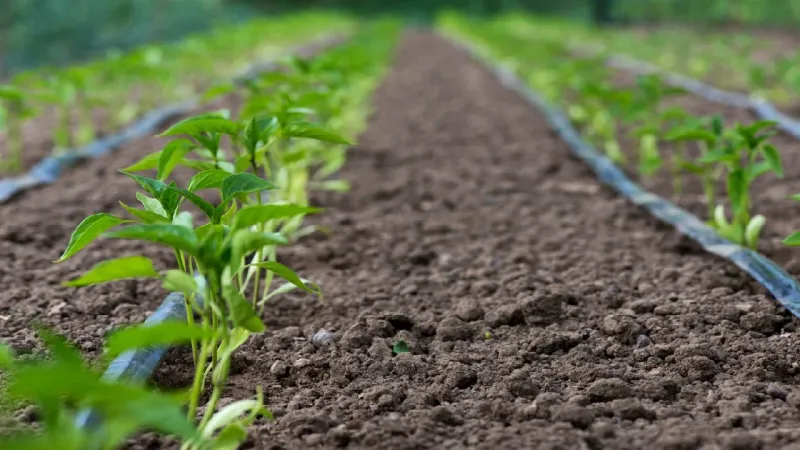
When conditions are dry, the most effective thing you can do for your Knock Out rose is deliver a thorough drink directly to the root zone. UGA Extension recommends about one inch of water per week for established roses during dry weather, applied in a way that encourages roots to follow moisture deeper into the soil profile.
Frequent, shallow watering does the opposite: it keeps roots near the surface, where they are more vulnerable to heat and drought.
Oklahoma State University advises soaking the root zone to roughly 18-24 inches and cautions that light, frequent watering produces shallow root systems that struggle during dry spells. For Central Texas yards, that guidance translates to longer, less frequent watering sessions rather than daily sprinkles.
How often you actually water should flex with your soil type, recent rainfall, drainage, the age of your plant, current temperatures, and any local watering restrictions in your municipality. Sandy soils drain faster and may need water sooner; heavier clay holds moisture longer but can become compacted and hydrophobic when extremely dry.
Delivery method matters too. Drip irrigation and soaker hoses direct water to the root zone without wetting the foliage, which is worth prioritizing because prolonged leaf wetness creates conditions that favor fungal diseases.
Texas A&M AgriLife Extension identifies leaf wetness as a key factor in black spot development on roses, and Oklahoma State’s rose disease guidance similarly links wet foliage to fungal disease pressure. If overhead irrigation is your only option, water in the morning so leaves have time to dry before evening.
Deep, targeted watering reduces heat and drought stress and supports the kind of root-zone stability that keeps an established Knock Out rose in good condition heading into fall, without promising a specific bloom outcome.
Use mulch to moderate the rose’s growing conditions
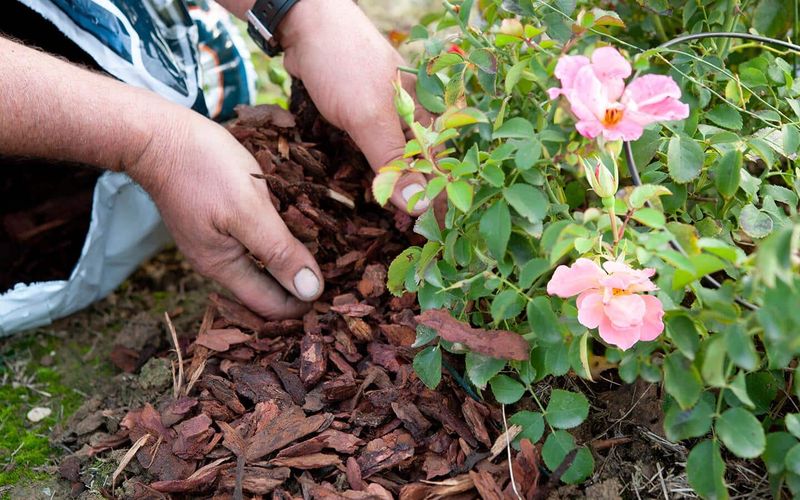
A maintained mulch layer is one of the most straightforward tools available to Central Texas rose growers, and it works quietly in the background to support more stable conditions at the root zone. Texas A&M’s Earth-Kind rose program specifically recommends year-round organic mulch as part of a low-input rose management approach, citing moisture conservation, soil temperature moderation, and weed suppression as the primary benefits.
In a region where summer soil temperatures can climb dramatically, that moderation matters.
Spread a 2-3 inch layer of organic mulch such as shredded hardwood, pine bark, or composted wood chips around the base of the plant, extending out to the drip line if possible. UGA Extension also recommends mulching roses to conserve soil moisture and reduce temperature extremes at the root zone, which aligns with what Central Texas gardeners face through a long, hot growing season.
The one firm rule: keep mulch away from the canes and crown of the plant. Piling material against the base traps moisture against the stem tissue, which can encourage rot and disease.
Leave a gap of a few inches around the base so air can circulate freely. A properly maintained mulch layer complements your irrigation rather than replacing it.
Mulch slows evaporation and helps the soil hold onto the water you apply, but a dry root zone under mulch is still a dry root zone. Check soil moisture periodically by pushing a finger or a probe a few inches into the soil beneath the mulch.
Think of mulch as a tool that supports more consistent growing conditions, not a substitute for attentive watering or a direct cause of flowering.
Make fertilizer a conditional decision, not a September reflex
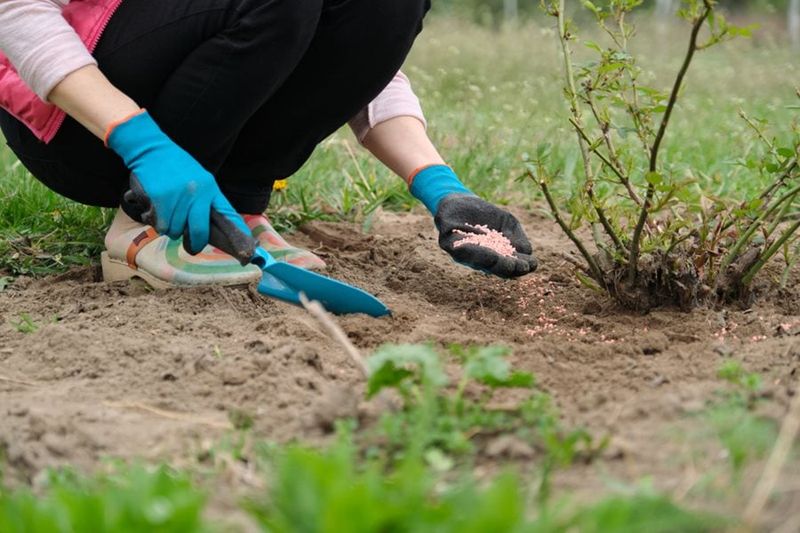
Fertilizer is not the automatic next step after summer for a Central Texas Knock Out rose. Texas A&M’s Earth-Kind program reports that established roses in many Texas soils can perform without synthetic fertilizer when managed with compost and mulch, which means skipping a fall application is a legitimate choice for a healthy, well-mulched plant in good soil.
Before you fertilize, consider whether there is an actual reason to do so: a soil test showing a deficiency, visible symptoms that point to a specific nutrient shortage, or a locally appropriate rose program that accounts for your soil and climate.
Mississippi State Extension notes that established landscape roses in fertile soil may need little or no additional fertilizer, and recommends ending regular applications by early September to avoid stimulating frost-vulnerable late growth. Star Roses similarly recommends stopping regular feeding by late summer.
Oklahoma State University cautions against high-nitrogen fertilizer after mid-July in its region, though it notes that some diluted liquid applications may continue later in the season. These differences across extension programs make it clear that no single September feeding date applies to every Central Texas yard.
If feeding is justified, a few non-negotiable practices apply. Only fertilize when the soil is moist and the plant is not under active stress from heat or drought.
Keep granular fertilizer off the canes and crown, and water it in thoroughly after application. University of Arizona Extension warns that foliar fertilizer applied during hot conditions can burn foliage, so skip the leaf spray during Central Texas heat.
Texas A&M’s ornamental plant care reference also notes that excess fertilizer can damage roots and encourage weak, vulnerable growth. High nitrogen late in the season is particularly problematic because it pushes soft vegetative growth rather than flowers, and that tender tissue is more susceptible to pest pressure and cold injury.
Follow the product label, match the application to your soil conditions, and treat fertilizer as one conditional tool rather than the primary path to fall blooms.
Keep fall cleanup light and purposeful
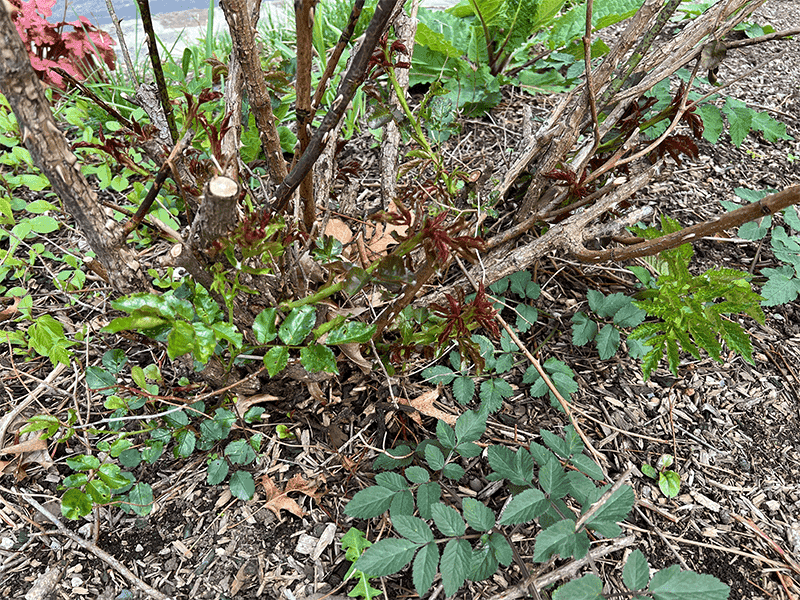
Early fall is not the time to reshape your Knock Out rose from the ground up. Star Roses recommends reserving hard pruning for late winter or early spring and limiting fall work to the removal of dead, broken, or diseased canes.
Hard pruning now can stimulate a flush of soft new growth that has no time to harden before cooler weather arrives, and it removes the stored energy the plant needs to sustain itself through late season.
What fall cleanup actually calls for is a targeted pass with sharp, clean tools. Remove any canes that are clearly dead or snapped, and cut out wood that shows obvious signs of disease.
UGA Extension recommends disinfecting pruning tools between plants, particularly when disease is suspected, to avoid spreading pathogens from one shrub to another. A quick wipe with a diluted bleach solution or a disinfectant spray between cuts is a small step that can prevent a bigger problem.
On the question of deadheading: Knock Out roses are self-cleaning, which means they drop spent blooms and cycle toward new buds without any help from you. Star Roses identifies deadheading as optional grooming for Knock Out cultivars rather than a requirement for rebloom.
If you want to tidy the plant’s appearance or remove a cluster of spent flowers that bothers you visually, go ahead. Just do not feel obligated to deadhead every bloom to keep the plant flowering.
Mississippi State Extension notes that light grooming can improve the overall appearance of landscape roses without requiring the systematic deadheading that some hybrid tea growers practice. Keep the work purposeful, keep the tools clean, and leave the healthy wood alone.
Rule out disease before treating a bloom problem
A rose that stops flowering well or looks generally off may be dealing with a disease condition rather than a nutrient shortage. Treating the wrong problem wastes time and can actually make things worse.
Black spot is the most common fungal disease affecting roses in Central Texas, and it spreads readily during periods of warm, humid weather with wet foliage. Texas A&M AgriLife Extension’s black spot resource explains how the pathogen spreads through water splash and persists on fallen leaves, making sanitation and dry-foliage watering practices important tools for management.
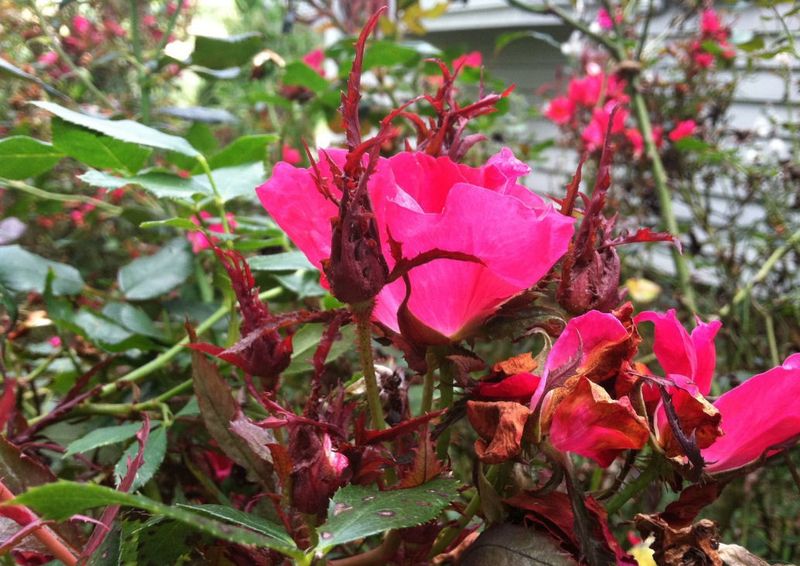
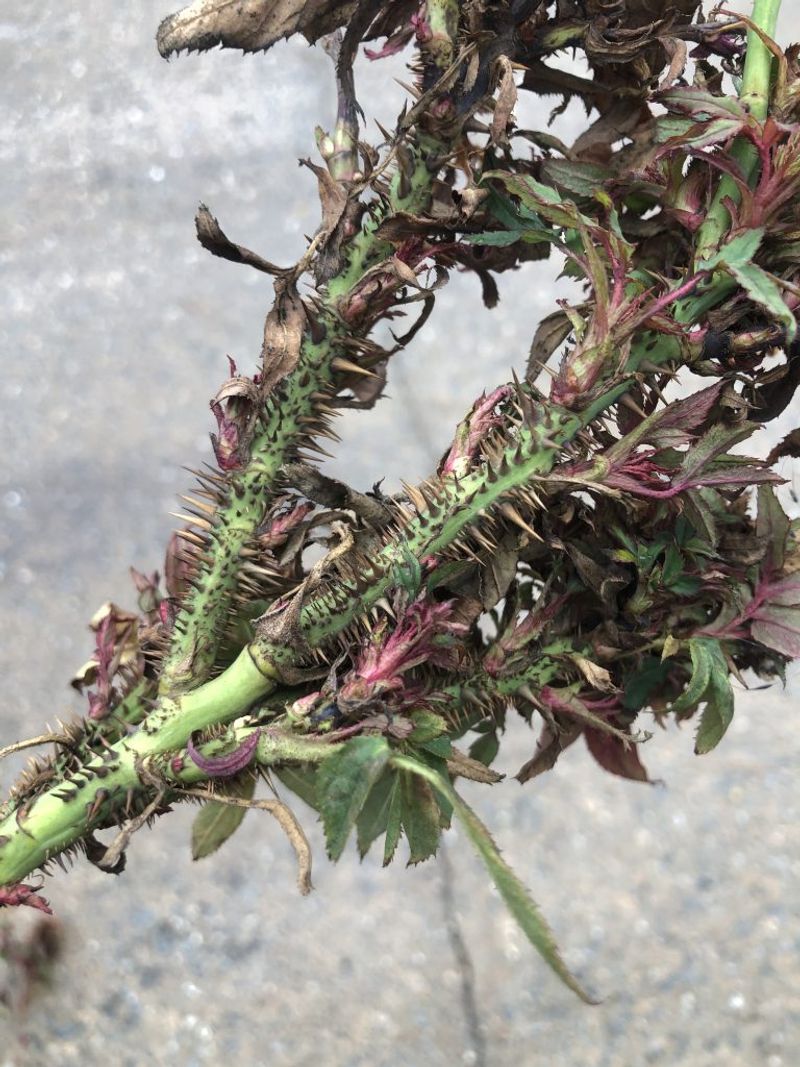
Rose Rosette Disease is a more serious concern and one that requires careful identification before drawing conclusions. A common mistake is treating any flush of red new growth as a warning sign, but that is not accurate.
Oklahoma State University’s Rose Rosette Disease fact sheet specifically notes that some rose cultivars naturally produce red new growth, and that diagnosis requires looking at the full symptom picture. The actual warning signs include abnormal thorniness well beyond what the plant normally produces, witches’-broom growth where multiple stems emerge in a tight, distorted cluster, misshapen or streaked flowers, and foliage that is twisted or otherwise malformed.
UGA Extension’s Rose Rosette Disease resource confirms that the disease is spread by eriophyid mites and that there is no cure for infected plants. If a plant shows the full symptom pattern, the recommended response is to remove and discard it according to your local extension guidance, bagging the plant material rather than composting it.
Oklahoma State’s broader rose disease guide also covers other fungal conditions worth monitoring. The practical takeaway: before adding fertilizer or adjusting your watering schedule, confirm that the plant’s problems are not rooted in disease.
Aim for a healthier fall display, not a guaranteed October wall
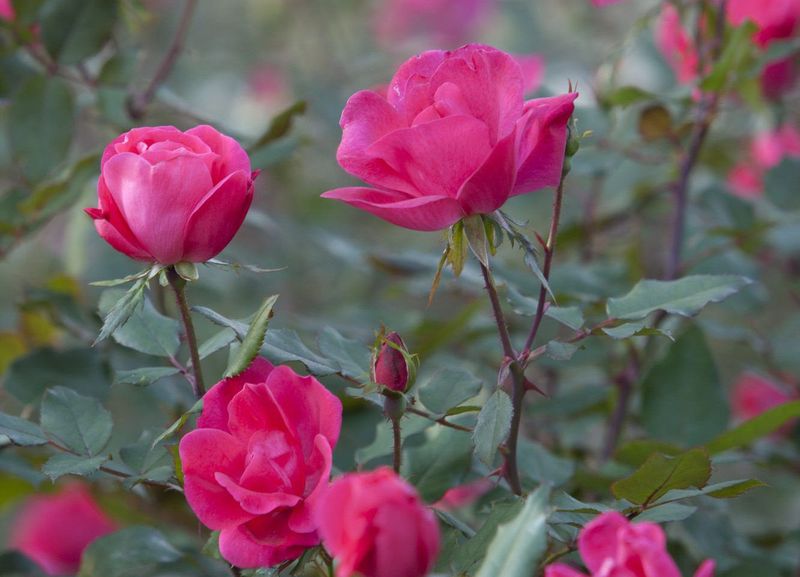
The practical action sequence for your Knock Out rose this fall is straightforward. Assess the plant for heat and drought stress first, then water deeply at the root zone if conditions are dry, maintain a 2-3 inch mulch layer kept away from the canes and crown, hold off on hard pruning, and monitor for disease.
Fertilize only when your soil conditions, a soil test, visible deficiency, or a locally appropriate program actually supports it, and follow the product label when you do.
Texas A&M’s Earth-Kind guidelines frame these practices as the foundation of low-input rose management, and they apply directly to the established Knock Out roses in Central Texas landscapes. A healthy plant with good moisture, stable root-zone conditions, and no active disease is in a much better position to flower as temperatures ease in September and October than one that received a heavy fertilizer application but was still struggling with dry soil or heat stress.
The repeat-blooming genetics of Knock Out roses give them genuine fall-flowering potential, but Central Texas weather, your specific cultivar, soil conditions, moisture levels, pest pressure, and the timing of the first significant cold event will shape what actually happens in your yard. These practices support the plant’s conditions for flowering.
A Knock Out rose that goes into fall well-watered, well-mulched, and free of disease stress is doing everything right on its end of the deal.