
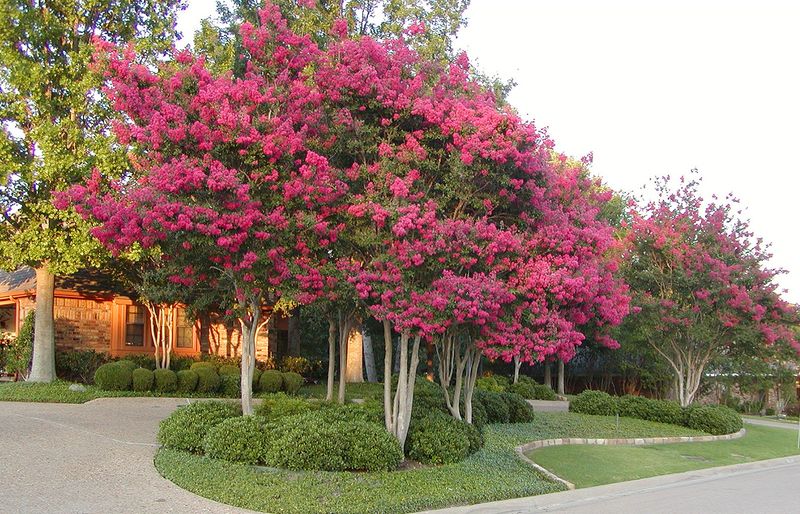
Crape myrtles are one of the hardest-working flowering trees in Central Texas yards, and a lot of homeowners want to do right by them every fall. The problem is that a popular piece of advice – cut them back hard now so they explode with blooms next summer – is not backed by sound regional guidance and can actually work against the tree.
Skipping the dramatic fall haircut and planning a careful late-winter pruning instead is the safer, smarter move for most Austin-area gardeners.
Do not make the big fall cut
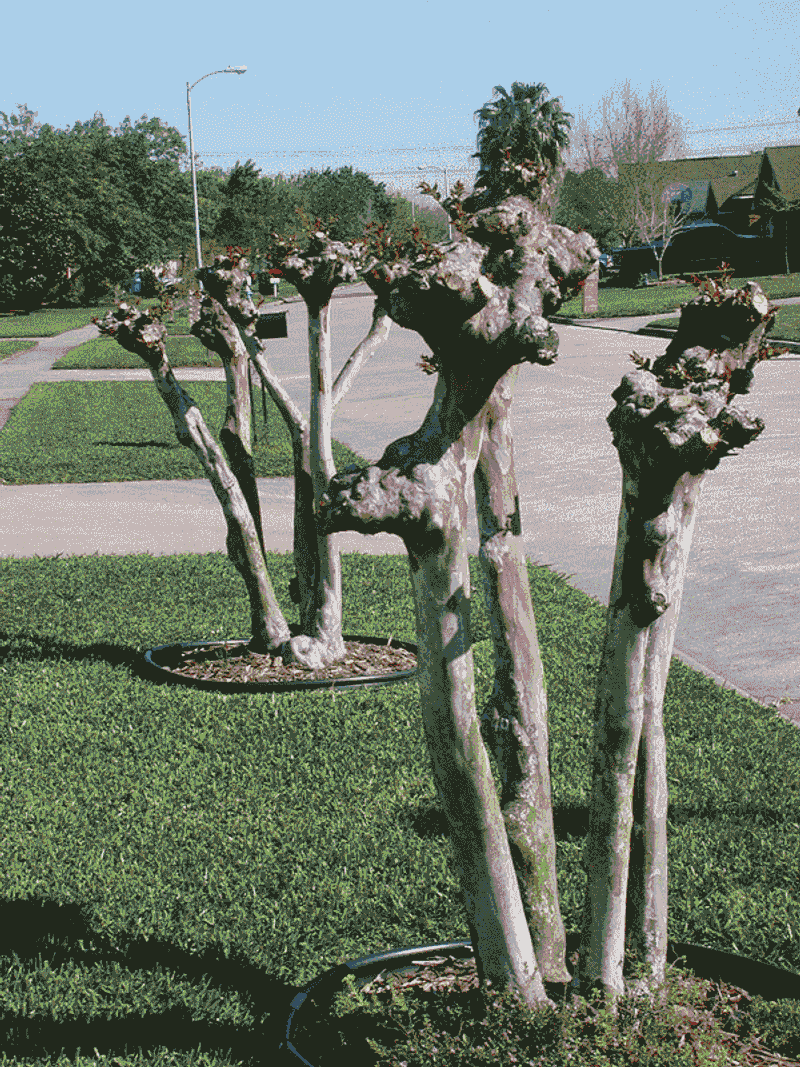
Reaching for the pruners every fall to give crape myrtles a heavy cutback is one of the most common mistakes Central Texas homeowners make. The idea that a dramatic fall trim will push the tree to produce more flowers next summer sounds logical, but it runs counter to what regional horticulture experts actually recommend.
Restraint right now is the right move, and a targeted late-winter approach is where the real work belongs.
Texas A&M’s Travis County pruning guidance lists crape myrtle among summer-flowering trees that should be pruned in January or February, not in early fall. That window applies specifically to the Austin and Travis County area, where the freeze calendar and spring bud-break timing shape the recommendation.
Gardeners in other parts of Central Texas – from Williamson County north to the Hill Country or south toward San Antonio – should check with their local county extension office and factor in their own freeze patterns before deciding on a date.
The conservative approach for fall is this: leave healthy branches alone. Major shaping, heading cuts, topping, and any reduction of the overall canopy height should wait until the appropriate late-winter window.
Mississippi State University Extension notes that crape myrtles are tough and adaptable, but that does not mean they are immune to poorly timed cuts that stimulate growth right before a freeze.
This article replaces the misleading fall-pruning promise with a plan that fits the Central Texas climate. The goal is a healthy, well-structured tree that flowers on its own terms – not a stressed plant that had its canopy stripped in October.
University of Georgia Cooperative Extension is clear that crape myrtles can flower with little or no pruning when they are properly sited and cared for, which is a useful reminder before anyone picks up a saw.
Current-season growth carries next summer’s flowers

Crape myrtles are what horticulturists call new-wood bloomers. Every summer’s flower clusters form on shoots that grew during that same season, which means the plant does not store next year’s flower buds on branches you can see right now in fall.
Texas A&M AgriLife’s pruning guidance confirms that pruning during dormancy – before spring growth begins – is compatible with the next flowering cycle precisely because the flowers will come from new growth that has not yet started.
That biology is also why fall pruning does not give the tree a head start. Cuts made in early fall can push the plant to produce tender new shoots while temperatures are still warm enough to support growth.
Those young shoots have not had time to harden off, and a sudden freeze can damage or kill them. University of Florida IFAS describes late-winter or early spring, before bud break, as the standard timing for any pruning that is needed.
A peer-reviewed study published in HortScience provides more specific evidence on the cold-hardiness question. Haynes, Lindstrom, and Dirr’s research on ‘Natchez’ crape myrtle found that late-summer, fall, and early-winter pruning treatments reduced cold hardiness compared with unpruned plants.
That finding applies to the specific cultivar and conditions studied, so it should not be read as a guarantee that every crape myrtle in every Austin yard will suffer identical damage. Still, the direction of the evidence points clearly toward caution in the fall.
Healthy, well-sited crape myrtles can flower abundantly without any pruning at all. Pruning is a tool for managing structure, not a requirement for flowering.
Keeping that distinction in mind helps homeowners avoid unnecessary cuts that put the tree at risk before winter arrives.
What you can remove this fall
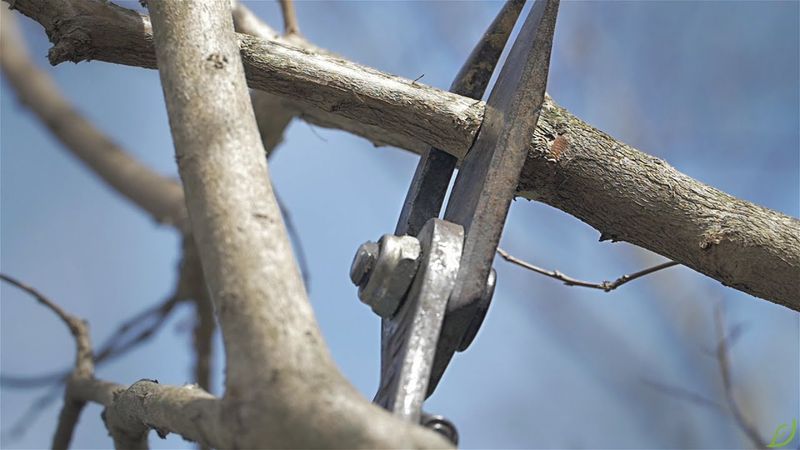
Fall is not a complete hands-off season for crape myrtles. There are specific situations where removing a branch now makes sense, and knowing the short list keeps homeowners from both over-pruning and ignoring a real problem.
Remove a branch this fall only if it is genuinely dead, visibly broken, clearly diseased, or poses a safety hazard – such as a limb hanging over a roof, a fence, or a walkway. Oklahoma State University Extension’s guidance on winter plant protection supports removing damaged or hazardous wood when leaving it in place creates a legitimate concern.
The key word is “genuinely” – a branch that looks a little sparse or has dropped its leaves early does not automatically qualify.
Mississippi State University Extension and UGA Cooperative Extension both draw a clear line between conservative cleanup and bloom-oriented shaping. Thinning the canopy to let in more light, shortening healthy branches to reduce height, cutting every trunk to a uniform level, or stripping off all the seedheads are not fall tasks.
Those actions may feel productive, but they belong to a different season and a different purpose.
Seedheads can stay on the tree through winter. They provide some visual interest, they do not harm the plant, and they naturally drop or fade as spring growth begins.
Removing them in fall does not improve next year’s flower count. Defer all bloom-oriented work, structural shaping, and any cut that changes the tree’s overall height or silhouette until the late-winter window described in the next section.
Use the local late-winter window

January and February form the standard pruning window for summer-flowering trees in the Austin and Travis County area. Texas A&M’s Travis County pruning chart places crape myrtle in that window specifically because the tree is dormant, the risk of stimulating frost-vulnerable new growth is low, and spring bud break has not yet begun.
That timing gives any pruning cuts the best chance to close properly before the growing season starts.
That January-February guideline is not a universal rule for all of Central Texas. Homeowners in Bastrop, Bell, Burnet, Lampasas, or other surrounding counties should check with their local Texas A&M AgriLife Extension office.
Freeze timing, soil temperature, and typical bud-break dates shift as you move north toward the Hill Country or east toward the Piney Woods. Adjusting to local conditions matters more than following a calendar date that was calibrated for one county.
Wherever you are in Central Texas, the principle stays the same: prune while the tree is still dormant and before you see spring buds swelling on the branches. UGA Cooperative Extension recommends completing pruning before active spring growth begins, and UGA’s crape murder guidance adds the practical caution that pruning immediately before a forecast freeze can expose fresh cut tissue to cold damage or push premature growth.
Watch the ten-day forecast and pick a stretch of mild, settled weather.
A well-sited, healthy crape myrtle may not need much pruning even in late winter. If the tree’s natural structure looks sound, the canopy is not crowded, and there are no crossing or rubbing branches causing problems, the most useful thing you can do is water it during prolonged dry spells and leave the pruners in the garage.
Pruning for its own sake is never required.
Make selective cuts that preserve natural form
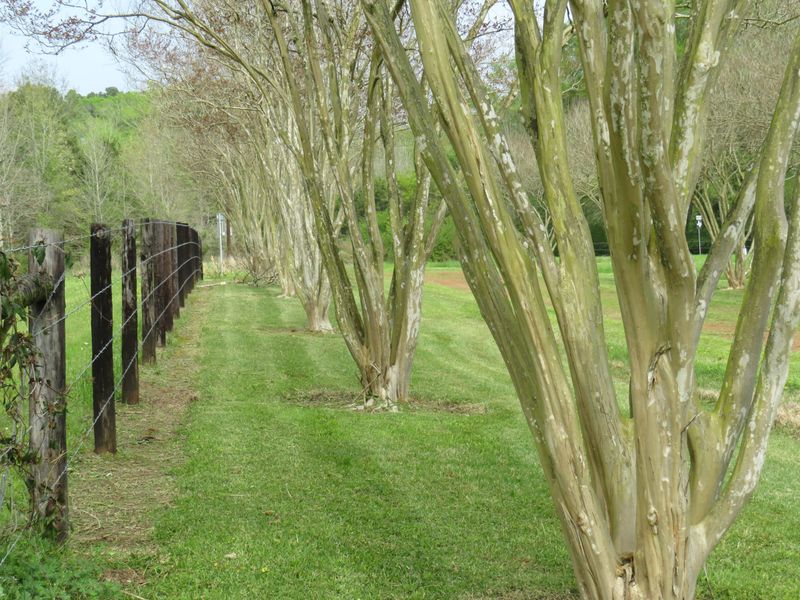
When the late-winter window arrives and pruning is warranted, working through a simple sequence keeps the job focused and protects the tree’s natural shape. Start at the base and move upward rather than starting at the top and working down.
First, clip off basal suckers – the thin shoots that sprout from the root zone or from the base of the trunks. They drain energy and clutter the base of the tree.
Next, remove any branches that are dead, diseased, broken, growing inward toward the center of the canopy, or rubbing and crossing against another branch. UGA Cooperative Extension’s crape myrtle culture publication and UGA’s ornamental pruning guide both describe this bottom-up approach as the foundation of selective structural work.
Finally, thin any areas where branches are genuinely crowded, cutting back to a main branch or the trunk rather than leaving a stub in the middle of nowhere.
Every cut should land just outside the branch collar – the slightly raised ring of tissue where the branch meets the trunk or a larger limb. Texas A&M AgriLife’s pruning technique guidance and UGA’s pruning basics resource both confirm that flush cuts damage the collar and that long stubs decay rather than heal.
Skip wound paint and sealants; research does not support their use on standard pruning cuts.
Topping – cutting every trunk or major branch to the same height – is not selective pruning. It is a different practice that produces a ring of weakly attached, fast-growing shoots from the cut ends, encourages sucker growth, and permanently damages the tree’s natural silhouette.
Mississippi State University Extension’s careful-pruning article addresses this directly: the goal is to enhance structure, not erase it.
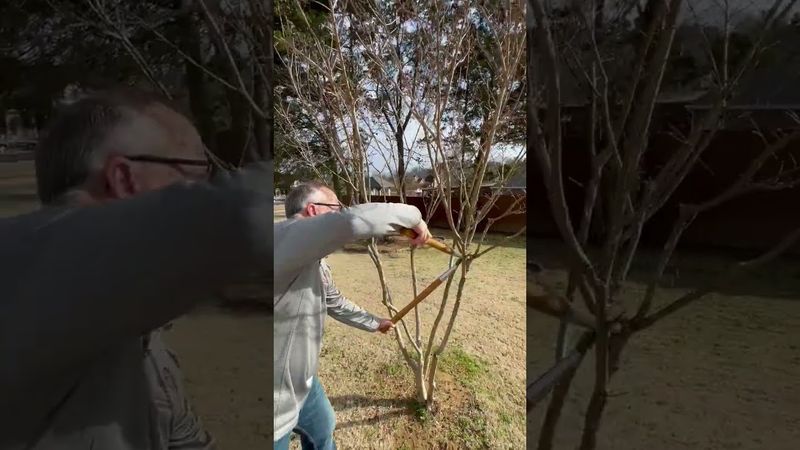
For tool selection, use hand pruners on small shoots up to about half an inch in diameter, loppers for medium branches, and a pruning saw for larger limbs. Texas A&M AgriLife Extension’s homeowner pruning newsletter recommends hiring a qualified arborist for large limbs, work near utility lines, any cut requiring a chainsaw, or any situation where ladder work creates a fall risk.
Those jobs are beyond the safe reach of most homeowners, and the cost of professional help is far less than the cost of a tree – or a hospital visit.
Diagnose poor flowering before pruning harder
When a crape myrtle produces fewer flowers than expected, the automatic response for many homeowners is to cut it back harder. That instinct is worth questioning, because pruning is rarely the root cause of poor flowering and almost never the complete fix.
Sun exposure is one of the first things to check. UGA’s crape myrtle culture guide and Mississippi State University Extension both identify full sun as a key factor in strong flowering.
A crape myrtle growing under the canopy of a live oak or in the shadow of a fence for half the day will bloom less vigorously than one that gets six or more hours of direct sun. No amount of pruning fixes a shade problem.
Water stress is another common culprit. Established crape myrtles tolerate drought reasonably well, but prolonged dry stretches during the growing season can reduce bloom size and quantity.
Excessive nitrogen fertilizer can push the plant to produce lush green growth at the expense of flowers – a common result of applying lawn fertilizer too close to the root zone. Both conditions call for a change in care practices, not a harder cut.
Cultivar choice matters more than many homeowners realize. NC State Extension’s plant toolbox notes that crape myrtles range from compact shrubs to trees exceeding 20 feet tall.
Planting a large-growing variety in a tight space and then repeatedly topping it to keep it small is a cycle that stresses the tree and produces weak, unattractive regrowth. Choosing a cultivar sized for the available space from the beginning avoids that problem entirely.
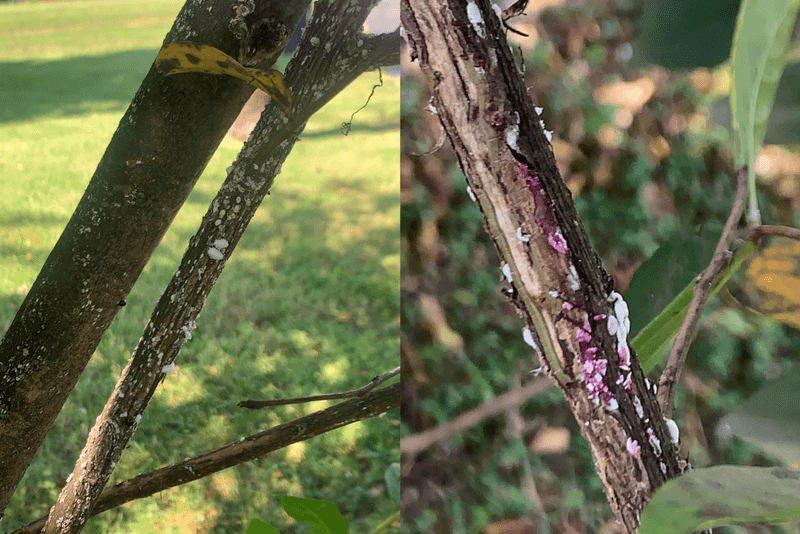
Central Texas homeowners should also check for crape myrtle bark scale, a relatively recent invasive pest that has spread across the region. It appears as white or gray crusty patches on bark, and infested trees can show delayed leafing, reduced flower cluster size, sooty mold on leaves and pavement, and general decline in vigor.
UGA Extension’s bark scale resource explains that the pest can remain active and visible after leaf drop, making fall a reasonable time to inspect the bark. Texas Forest Service guidance on crape myrtle bark scale describes management options that target the pest directly.
Responding to a bark scale infestation with more aggressive pruning is not appropriate – it can increase succulent regrowth that the pest finds attractive and does nothing to reduce the population.
Choose restraint now and structure later
The seasonal plan for Central Texas crape myrtles comes down to a two-part approach: do very little this fall, and do the right things at the right time in late winter. Healthy branches stay on the tree through the cold months.
The only wood that comes off now is wood that is genuinely dead, clearly broken, visibly diseased, or hanging in a way that creates a real hazard.
When the Austin and Travis County late-winter window opens in January or February – or when your local county’s conditions indicate dormancy without an imminent freeze – work through the selective sequence described earlier. Remove suckers, address structural problems, and thin crowded areas without reducing the tree’s overall height or cutting trunks to a uniform level.
Texas A&M’s Travis County pruning chart and UGA’s crape myrtle culture publication both support this restrained, structure-focused approach over aggressive seasonal cutting.
Strong flowering next summer depends on more than what happens with a pair of pruners. Adequate direct sun, supplemental water during extended dry periods, a cultivar matched to the available space, and a tree free of significant pest or disease pressure all contribute to a full bloom display.
Mississippi State University Extension makes the point plainly: no single pruning operation guarantees an outstanding canopy of flowers. A crape myrtle given the right site, the right care, and enough time to develop its natural form will do most of the work on its own.