
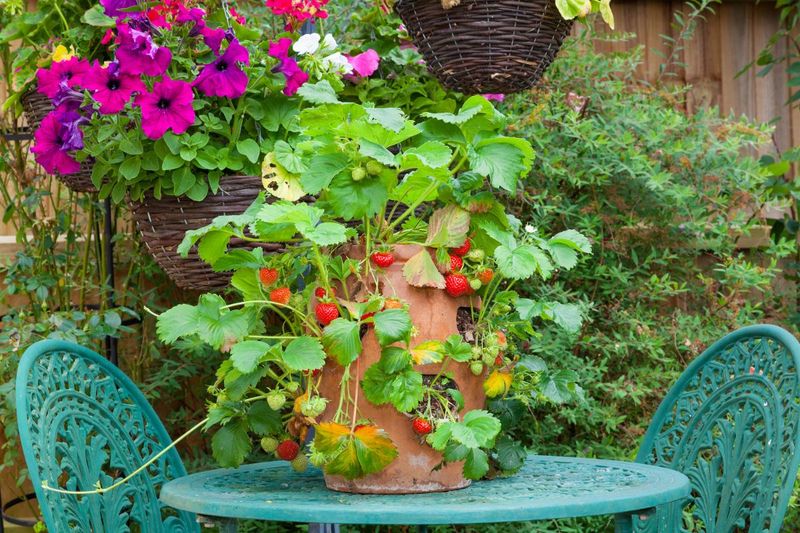
Growing berries in California can feel like a gamble when your soil is heavy clay, your summers run hot and dry, and water restrictions keep you counting every gallon. The good news is that some berries actually thrive better in containers, where you control the soil, the drainage, and how much water they sip.
Pots also let you move plants into shade during heat waves and protect roots from gophers and root rot. Here are the berries worth potting up, plus a couple you should leave out of your container plans entirely.
1. Blueberries (Southern Highbush)
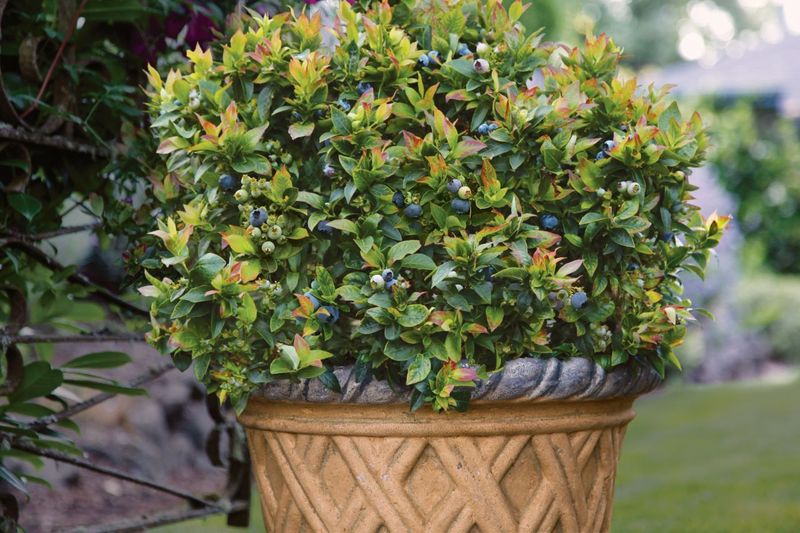
Ask any frustrated California gardener why their in-ground blueberries sulked, and the answer is almost always the soil. Blueberries crave acidic ground with a pH around 4.5 to 5.5, and most California yards run far too alkaline for them to feed properly.
A pot solves this instantly. You fill it with an acidic mix made for azaleas or rhododendrons, and suddenly your plant can absorb iron and stay green instead of turning yellow and starving.
Southern highbush varieties like Sunshine Blue, Misty, and O’Neal were bred for mild-winter regions and need very little chill, which makes them ideal for coastal and inland valley zones. Keep the container in full sun near the coast, or give it afternoon shade in hotter inland spots.
Water consistently, since pots dry faster, and mulch the surface with pine bark to hold moisture and keep the soil acidic. Do this and you can pull handfuls of fruit from a plant that would have limped along in the ground.
2. Strawberries (Everbearing and Day-Neutral)
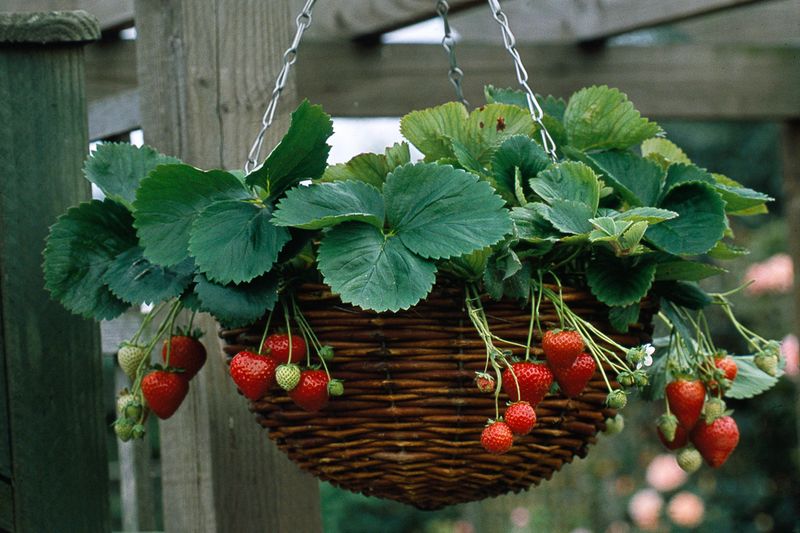
California practically invented the strawberry industry, so it feels strange that these little plants often do better on your porch than in your beds. The reason comes down to pests and rot: slugs, snails, and soggy clay soil ruin more home strawberry patches than any frost.
Lift them into pots, hanging baskets, or a strawberry tower, and the fruit dangles cleanly away from soil-dwelling troublemakers. Day-neutral types such as Seascape and Albion keep producing through the long warm season instead of quitting after one flush.
Containers also make it easy to refresh the plants every couple of years, which strawberries appreciate since older crowns fizzle out. Give them six hours of sun, steady water, and a splash of diluted fertilizer, and a single basket can flower and fruit for months.
Move baskets to a shadier spot during a heat spike and your berries won’t cook on the vine. Few crops reward container growing this cheerfully.
3. Raspberries (Dwarf and Primocane Types)
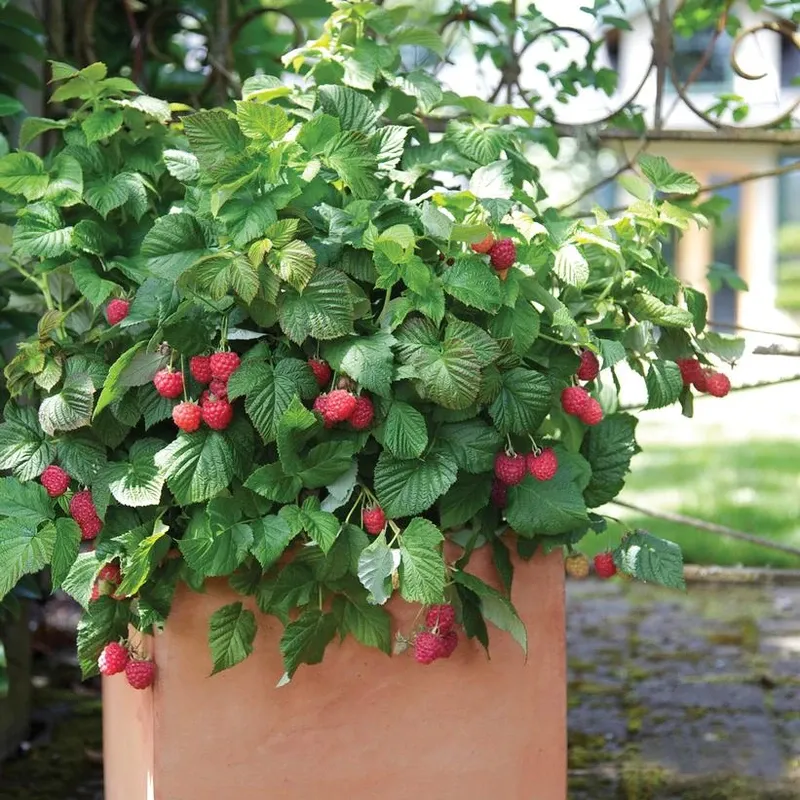
Traditional raspberries have a bad habit in California yards: they run. Their roots send up new canes wherever they please, and before long you’re battling a thorny thicket that also happens to hate our dry heat and alkaline dirt.
Growing them in a large pot or fabric grow bag fences in those wandering roots and lets you dial in the loose, slightly acidic soil they prefer. Primocane varieties like Heritage or the dwarf, thornless Raspberry Shortcake fruit on first-year canes, so pruning is simple and you still get a harvest.
Container life also helps you shield the roots from summer bake. A light-colored pot or a spot with afternoon shade keeps the soil cooler than blazing valley ground ever could.
Water deeply and often, because raspberries are thirsty and pots drain quickly. Feed in spring, cut spent canes to the ground, and you’ll get sweet berries without surrendering half your yard to spreading roots.
4. Blackberries (Thornless Compact Varieties)
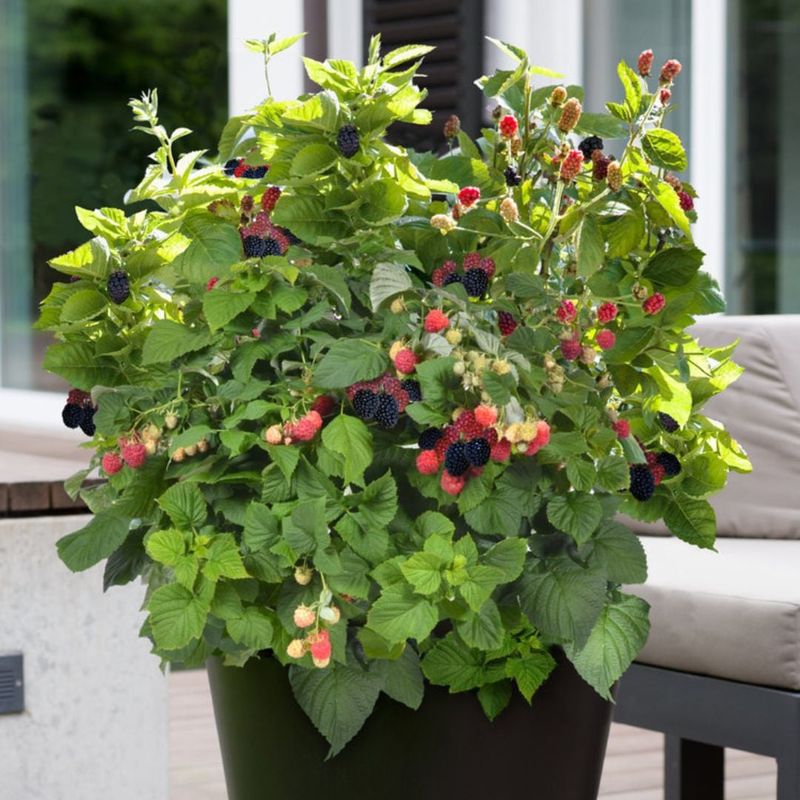
Wild blackberries are so aggressive in parts of California that some are treated as invasive weeds, choking creek banks and fence lines. That vigor is exactly why you want the well-behaved, thornless garden varieties confined to a container.
Compact selections like Baby Cakes stay tidy, skip the thorns, and often produce two flushes of fruit in our long growing season. In a big pot they can’t tunnel underground and pop up across the yard.
You also gain control over drainage, which matters since blackberries dislike sitting in the heavy, waterlogged clay common to many neighborhoods. A quality potting mix keeps roots happy and diseases at bay.
Place the pot in full sun, water consistently, and trim after fruiting to keep the plant compact. You get the sweet reward of homegrown blackberries without inviting a landscape takeover.
5. Goji Berries
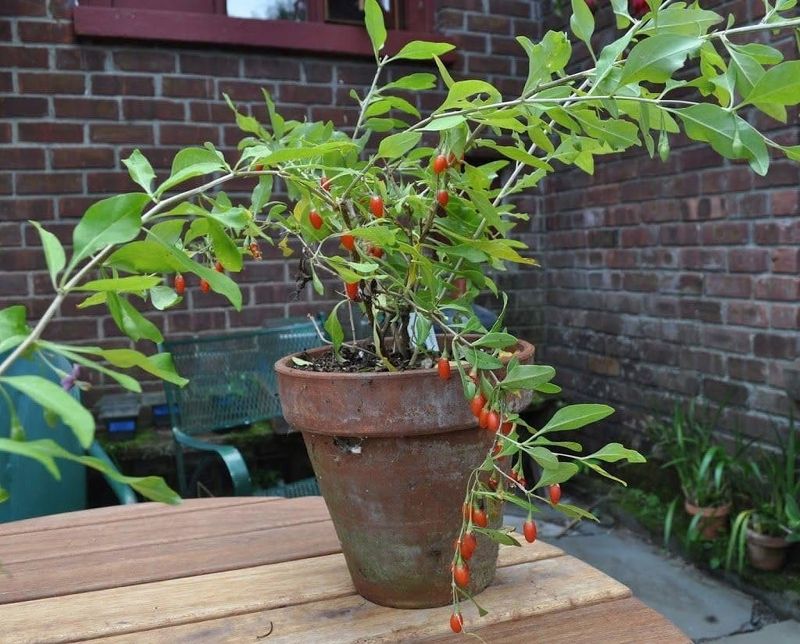
Goji berries have a reputation as a superfood, but in the ground they behave more like a super-spreader, suckering into a scrappy hedge you didn’t plan for. Keeping them potted tames that wild streak while still giving you those bright, tangy-sweet berries.
These plants are surprisingly tough and drought-tolerant once established, which suits California’s dry summers and water-conscious gardeners. A container lets you park them in full sun and simply water when the top inch of soil dries.
Goji tolerates a range of soils, so a standard potting mix works fine, and the confinement of a pot keeps the roots from marching off. The arching branches look almost willowy, adding a bit of texture to a patio corner.
Prune to shape in late winter and you’ll encourage more fruiting wood. It’s a low-fuss, curiosity-worthy berry that earns its spot on the deck.
6. Currants and Alpine Strawberries (Shade-Tolerant Picks)
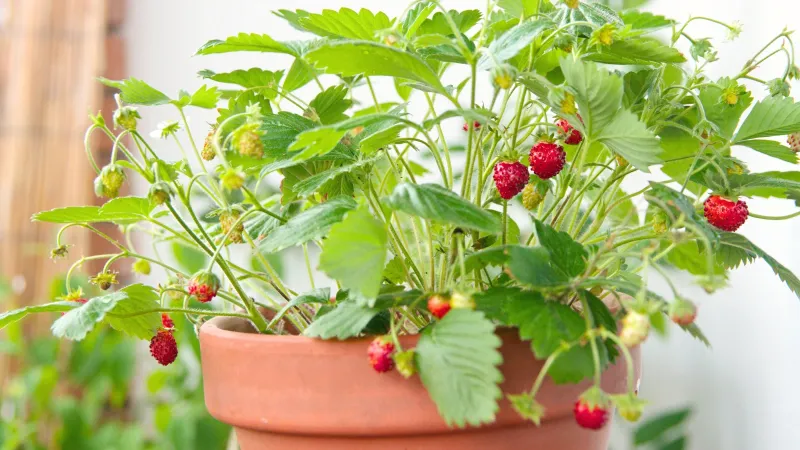
Not every California yard bakes in full sun, and that shady side patio is where currants and alpine strawberries quietly shine. Both handle partial shade far better than most berries, making them perfect for spots where sun-lovers would sulk.
Growing them in pots lets you tuck these smaller plants into cooler corners, near a north-facing wall or under a high tree canopy. Currants also appreciate the moisture control a container offers, since they dislike drying out completely during hot stretches.
Alpine strawberries produce tiny, intensely fragrant berries all season and stay neat enough for a windowbox or entry planter. They rarely send out runners, so they behave beautifully in containers.
Give both steady water and an occasional feeding, and they’ll reward the shadiest part of your yard with fruit you can’t easily buy at the store. It’s a smart way to turn an overlooked space into something delicious.
7. Skip These: Established Boysenberries and Sprawling Cane Berries
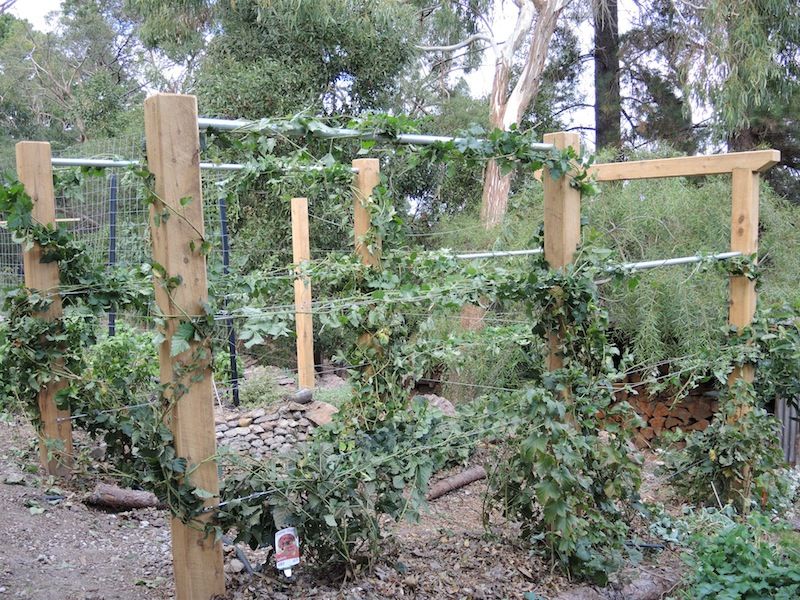
Here’s the honest part: some berries just aren’t worth cramming into a container, and boysenberries lead that list. These heritage California cane berries send out long, rambling canes that can stretch fifteen feet, and a pot simply can’t supply the root room or support they demand.
Confined to a container, they produce sparse fruit, dry out constantly, and quickly become root-bound and stressed. The same goes for large, vigorous trailing blackberries and old-fashioned marionberries bred to sprawl across trellises.
If you truly want these, give them a dedicated in-ground bed with a sturdy trellis and room to roam, plus amended soil to counter heavy clay. Trying to shrink them into pots usually ends in disappointment and a lot of wasted watering.
Save your containers for the compact, well-mannered berries above, and let the big sprawlers earn their keep in open ground where they belong. Matching the plant to the space is what keeps your harvest, and your patience, intact.