
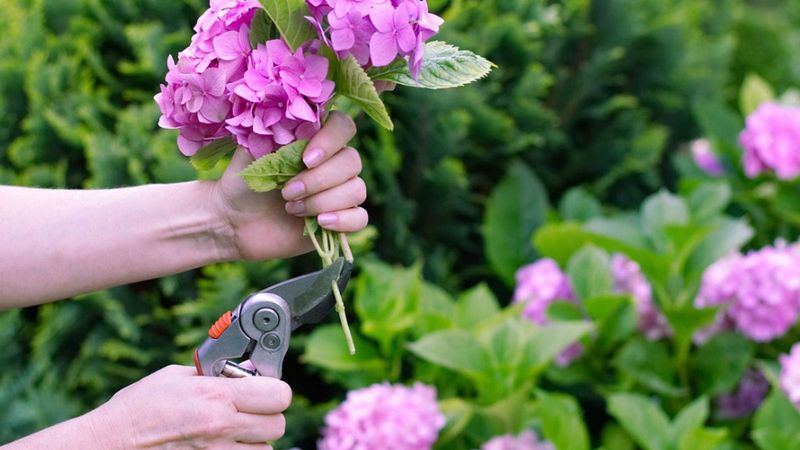
Every fall, well-meaning California gardeners pick up their pruning shears and tidy up their hydrangeas, not realizing that one type of cut can quietly erase next summer’s flower display. The problem is not fall pruning itself – it is hard-pruning the wrong type of hydrangea after it has already started forming next year’s buds.
Knowing which hydrangea you have, and what it needs in early fall, can mean the difference between a full bloom season and a green but flowerless shrub.
The risky cut depends on the hydrangea
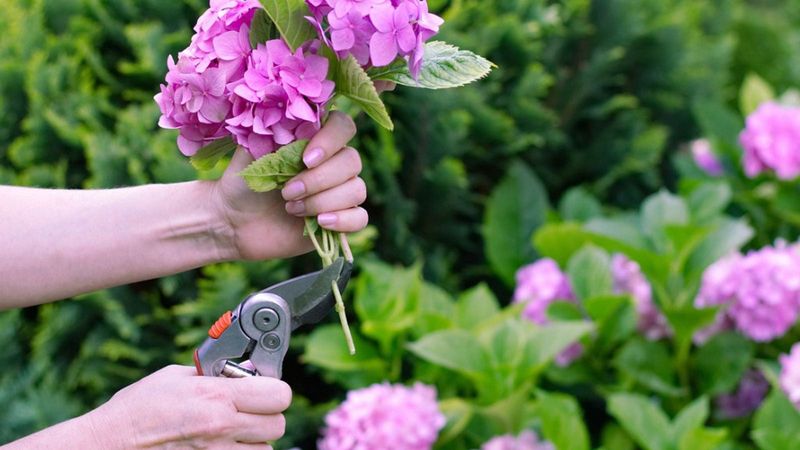
Hard-pruning a hydrangea in early fall is not automatically a mistake – but it becomes one when the plant in question forms its flowers on older stems. The real risk belongs to a specific group of hydrangeas, and the degree of cutting matters just as much as the timing.
Removing a few spent blooms is a very different action from cutting healthy branches back to a fraction of their length.
Old-wood hydrangeas, including the popular bigleaf types with their round mophead or flat lacecap flower clusters, set next season’s buds on stems that grew during the previous year. UC Master Gardener guidance from Contra Costa County identifies bigleaf hydrangeas (Hydrangea macrophylla) and oakleaf hydrangeas (H. quercifolia) as old-wood bloomers whose flower buds can be lost when those older stems are removed.
Making substantial cuts after bud formation has begun is what leads to a season with little or nothing to show.
By contrast, panicle hydrangeas such as ‘Limelight’ and smooth hydrangeas such as ‘Annabelle’ produce their flowers on new growth each year. For those plants, pruning in the dormant season causes far less harm, though many extension sources still prefer late winter or early spring for timing reasons.
University of Minnesota Extension’s hydrangea pruning guidance draws this distinction clearly, separating old-wood and new-wood types into different care schedules.
Plant type, pruning intensity, and timing all work together to determine the actual risk. A gardener who knows what kind of hydrangea grows in the yard is already most of the way toward protecting next year’s flowers.
The sections that follow explain how to identify old-wood types, what to do if early fall has already arrived, and how new-wood hydrangeas fit a completely different schedule.
How old wood carries the next season’s flowers
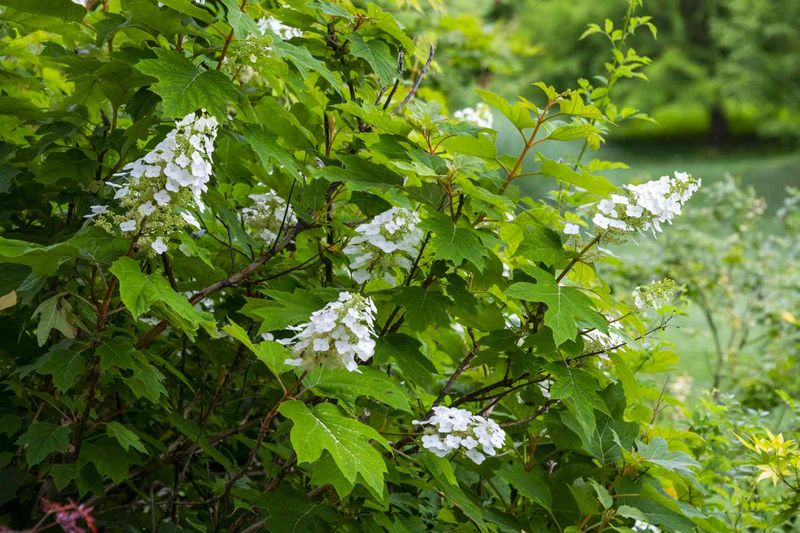
Old wood, in the context of hydrangeas, simply means stems that the plant produced during the previous growing season. Those stems are not just structural scaffolding – on certain hydrangea types, they carry the embryonic buds that will open into flowers the following summer.
Cutting them away removes the buds along with the branch, and the plant has no way to replace that potential display before the bloom window arrives.
Bigleaf hydrangeas (Hydrangea macrophylla) and oakleaf hydrangeas (H. quercifolia) are the most common old-wood bloomers in California gardens. NC State Extension’s overview of hydrangeas in the garden confirms that these species initiate flower buds on stems from the prior season, which is why timing a major cut incorrectly can leave a healthy-looking shrub with nothing to bloom.
UC guidance places the window for bud development around August and September, though cultivar, local growth rates, and California microclimate all affect the exact timing. A coastal garden in San Francisco Bay may run on a slightly different schedule than an inland valley garden in Sacramento or a sheltered urban courtyard in Los Angeles.
UC Marin Master Gardeners’ pruning guidance identifies mid-summer as the preferred window for old-wood types, precisely because waiting until fall risks intersecting with that bud-setting period.
A shrub that was cut back hard in early fall can look perfectly healthy through autumn and into winter. The leaves may drop normally, new growth may even emerge the following spring, and the plant may appear to have suffered no setback at all.
The absence of flowers in early summer is often the first visible sign that something went wrong months earlier, which makes this a particularly easy mistake to repeat without connecting the cause to the effect.
Identify the old-wood types before pruning
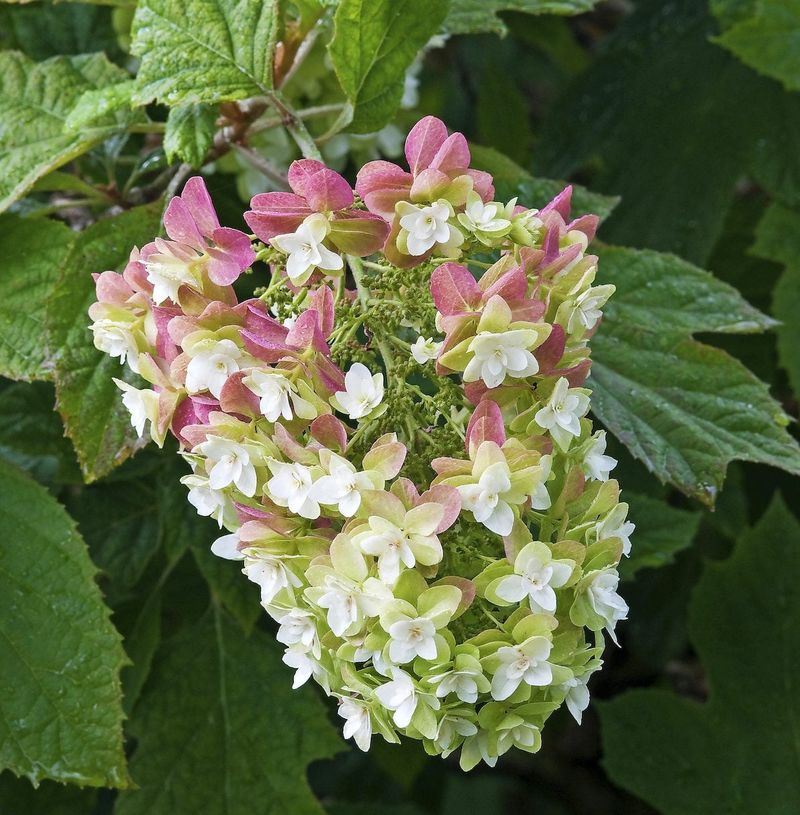
Recognizing which hydrangea you have before reaching for the shears is the most practical step a California gardener can take. The old-wood types most commonly found in California yards include bigleaf hydrangeas in their mophead and lacecap forms, mountain hydrangeas, and oakleaf hydrangeas.
Each of these carries next year’s flower buds on the stems it grew the previous season.
Bigleaf hydrangeas are the ones most people picture when they think of hydrangeas: large, rounded shrubs with flower heads that shift from pink to blue depending on soil pH. Mophead forms have dense, ball-shaped clusters; lacecap forms have a flat central cluster of tiny fertile flowers ringed by larger sterile florets.
Both are Hydrangea macrophylla, and both set their buds on old wood. UC Contra Costa County Master Gardener guidance lists bigleaf hydrangeas among the old-wood bloomers most likely to lose next year’s flowers after an ill-timed hard cut.
Oakleaf hydrangeas (Hydrangea quercifolia) are easy to spot by their foliage: the leaves are large and deeply lobed, resembling the outline of an oak leaf. The flower clusters are elongated and cone-shaped rather than round, and the plants put on striking fall color before they drop their leaves.
UC Master Gardener Program of Sonoma County’s oakleaf hydrangea profile notes that this species also blooms from old wood, making it equally vulnerable to major fall cuts.
Mountain hydrangeas (Hydrangea serrata) are smaller and less commonly sold, but they follow the same old-wood pattern. If you are not certain which type you have, check the plant tag, look up the cultivar name online, or contact your local UC Cooperative Extension office for help with identification.
Confirming the type before pruning takes a few minutes and can protect an entire season’s worth of flowers. University of Minnesota Extension’s pruning guide recommends identifying the species before deciding on a pruning schedule, a step that applies equally to California gardens.
What to do when early fall has arrived
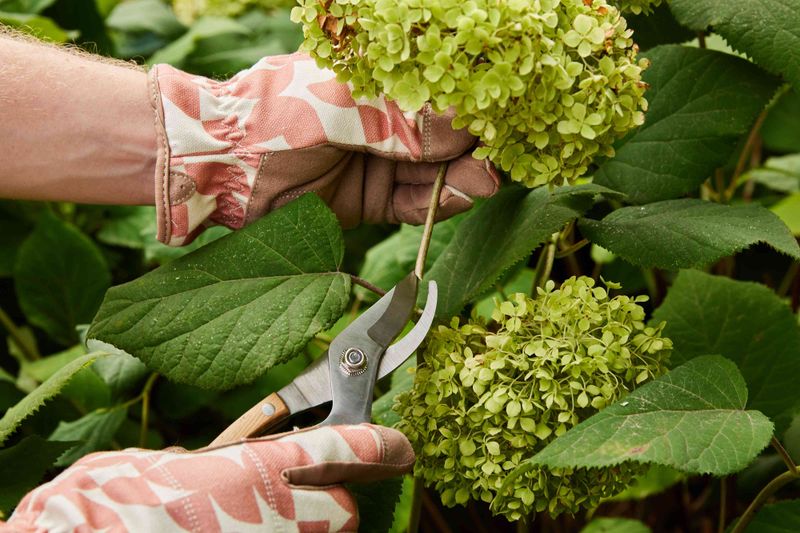
Early fall arrives and the hydrangea looks overgrown, the faded blooms are turning papery, and the urge to clean everything up is understandable. For an old-wood hydrangea, though, the conservative move at this point is to leave the healthy stems alone.
UC Marin Master Gardeners specifically advise waiting another year for major pruning when the preferred mid-summer window has already passed. That guidance reflects the reality that the buds for next spring’s flowers may already be sitting on those stems, invisible to the eye but present and vulnerable.
Waiting does not mean doing nothing. There are still cuts that carry much lower risk at this time of year.
Dead stems – ones that snap cleanly and show no green tissue inside – can be removed without harming next year’s flower buds, because those stems were not viable to begin with. The same applies to diseased canes, physically damaged branches, and stems that cross and rub against each other.
UC Contra Costa County’s pruning handout notes that removing dead, diseased, damaged, or crossing stems is appropriate annual maintenance and does not carry the same risk as cutting back into healthy old wood.
Deadheading is another area where the distinction matters. Snipping off a faded flower head is not the same as making a hard shaping cut.
UC Master Gardener Program guidance on deadheading recommends that after late summer, if deadheading is necessary, gardeners should remove only the spent flower head with a very short section of stem rather than cutting deeply into the branch below. That short cut avoids the nodes where developing buds are most likely to be sitting.
The practical takeaway for early fall is a short checklist: remove dead, damaged, diseased, or crossing stems; snip faded blooms with a minimal cut if tidiness matters; and leave the healthy green branches in place. Major reshaping can wait until after the plant blooms next summer, when the timing will actually work in your favor.
Use the post-flowering window for routine pruning
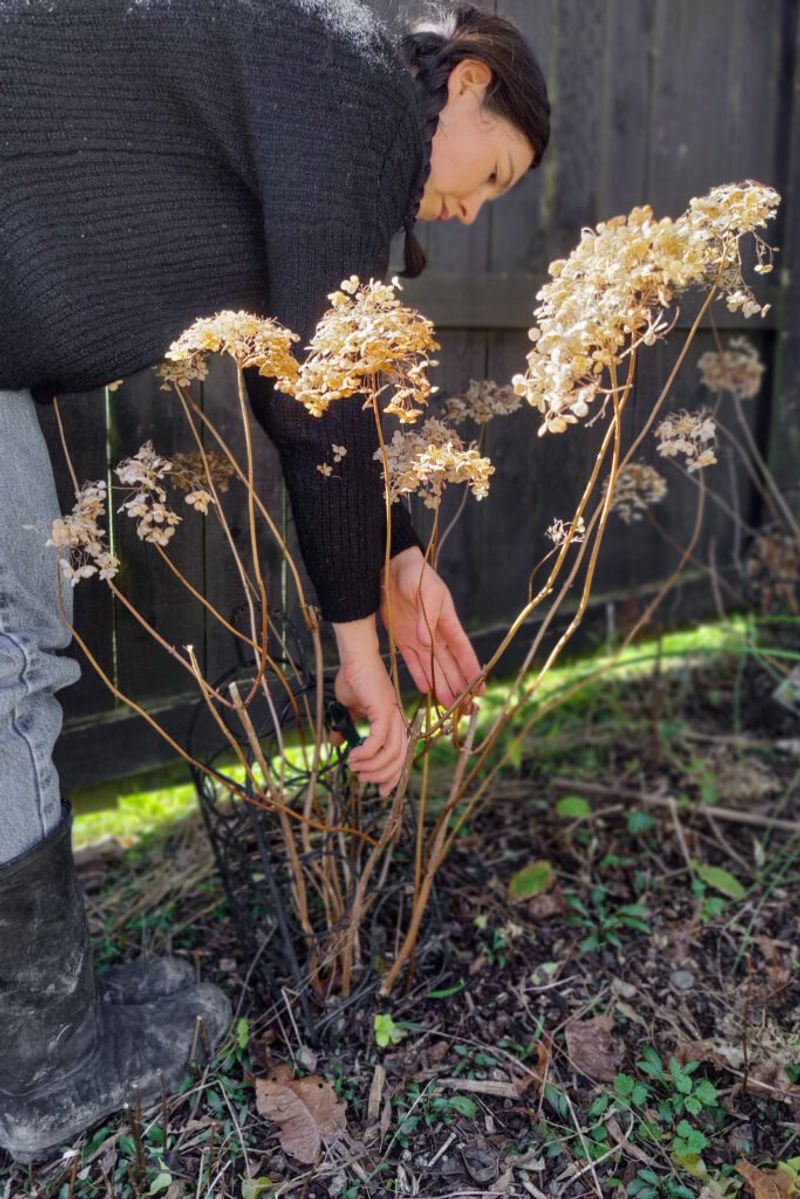
Protecting next year’s flowers starts with building a better habit for the season ahead. For old-wood hydrangeas, the window that works is the period shortly after the current year’s flowers finish and before the plant begins setting next season’s buds.
In much of California, that window falls in summer, roughly after the blooms fade and before late August or September, though coastal gardens and inland valley gardens can run on slightly different schedules. UC guidance explicitly notes that pruning needs depend on microclimate and plant growth, so watching the plant itself is more reliable than following a fixed calendar date.
UC Marin Master Gardeners identify mid-summer as the preferred pruning window for mophead, lacecap, and oakleaf hydrangeas, specifically because it falls after flowering and before the plant begins forming the following year’s buds. Pruning in that window gives the plant time to produce new growth that can carry buds into the next season, rather than cutting away stems that already hold them.
A sensible sequence for that summer session starts with the easiest and safest cuts first. Remove any dead, damaged, or diseased wood.
Then look at the overall shape: if the plant has grown too large or too dense, selective thinning is more protective than a uniform shearing. UC Contra Costa County guidance recommends limiting pruning to no more than approximately one-third of the oldest canes on an overgrown plant, rather than cutting the entire shrub down.
That one-third figure is a general guideline, not a guarantee of flowering – cultivar, plant age, weather, and bud condition all play a role – but it represents a restrained approach that preserves more of the stem material the plant needs for blooming.
Cutting an old-wood hydrangea to the ground in search of bigger blooms is one of the most counterproductive moves a gardener can make. The plant may recover and push new growth, but that new growth will not carry flower buds until the following year at the earliest, effectively costing two seasons instead of one.
New-wood hydrangeas follow a different schedule
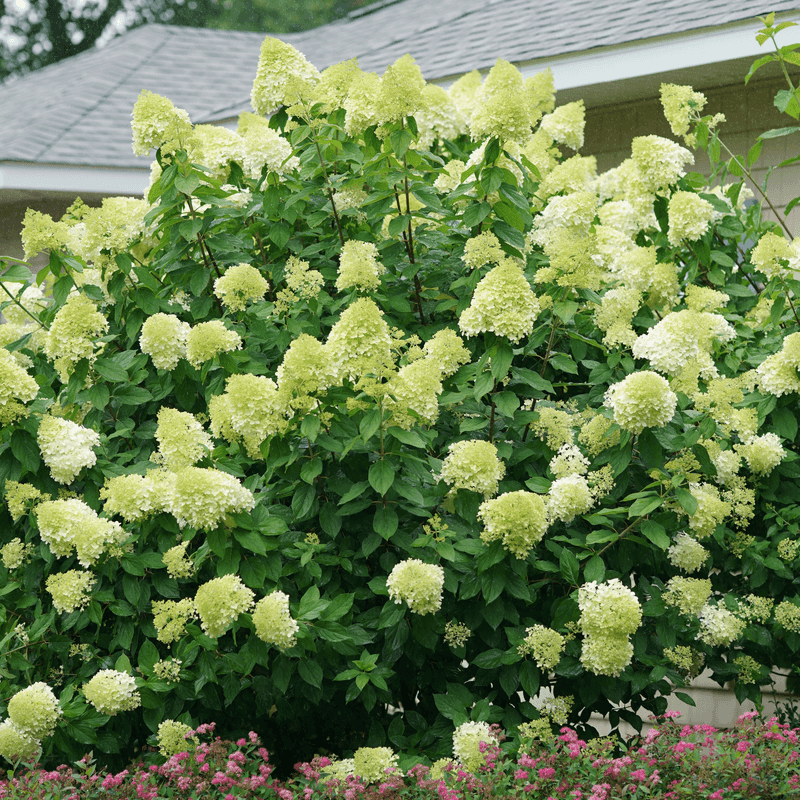
Not every hydrangea in a California yard belongs to the old-wood category, and applying the same cautious fall hands-off rule to every shrub in the garden would be an overcorrection. Panicle hydrangeas and smooth hydrangeas operate on a fundamentally different flowering schedule, and understanding that difference keeps the pruning calendar from becoming unnecessarily complicated.
Panicle hydrangeas, including the widely popular ‘Limelight’ cultivar, produce their flowers entirely on new growth that emerges each spring. NC State Extension’s profile of Hydrangea paniculata ‘Limelight’ confirms that this species blooms on current-season wood, which means dormant-season pruning does not remove next year’s flower buds.
Their tall, cone-shaped flower clusters – which shift from white to chartreuse to pink as the season progresses – are one of the easiest visual identifiers. Smooth hydrangeas, most famously ‘Annabelle,’ also bloom on new wood and respond well to pruning in late winter or early spring.
Both types are commonly pruned during the dormant season, though late winter or spring is the timing many extension sources prefer for appearance, stem strength, and winter interest.
University of Minnesota Extension notes a caution worth keeping in mind: very severe pruning of smooth hydrangeas can sometimes produce stems that are weaker and may need staking to support the large flower heads. Cutting them back to a reasonable height rather than all the way to the ground tends to produce sturdier results.
Reblooming bigleaf cultivars, including the Endless Summer series, occupy a middle ground. These plants can flower on both old and new wood, so even if some old wood is removed, they may still produce flowers from new growth.
That flexibility makes them more forgiving than traditional bigleaf types, but the specific cultivar still matters, and reducing old wood can reduce the overall display even when it does not eliminate it entirely. UC Contra Costa County guidance treats cultivar identification as a meaningful step before any pruning decision.
Check other causes when flowers disappear
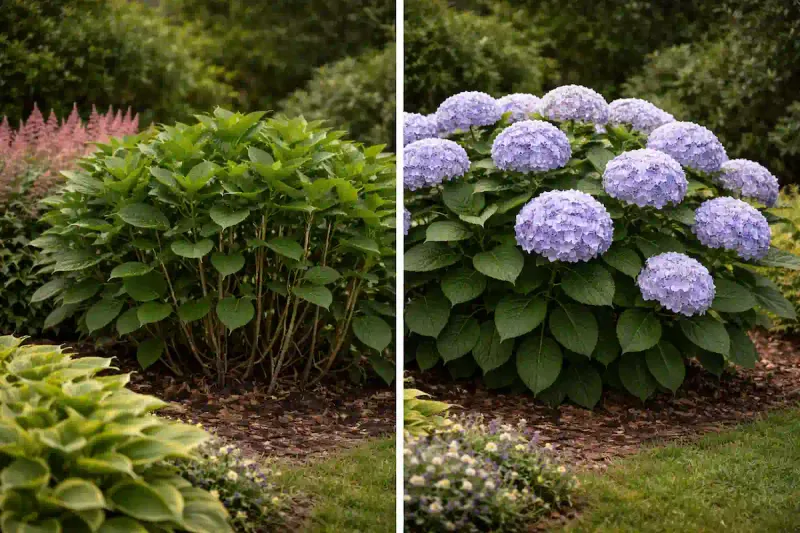
A hydrangea that produces no flowers in summer is frustrating, and the natural instinct is to blame the last pruning session. Pruning at the wrong time on the wrong type is certainly one cause of bloom failure, but it is far from the only explanation.
Jumping to that conclusion can send a gardener down the wrong troubleshooting path while the actual problem goes unaddressed.
Penn State Extension identifies both pruning and natural bud damage as separate causes of few or no blooms, and lists several non-pruning factors that can reduce or eliminate flowering. Frost or winter injury is near the top of that list, particularly for gardeners in California mountain communities or inland valleys where late freezes can damage flower buds even after a mild start to spring.
Deer browsing is another documented cause: deer will eat new growth and developing buds without leaving much evidence beyond missing stem tips. Insufficient light is a slower, less dramatic problem – hydrangeas in deep shade may leaf out well but simply lack the energy to flower reliably.
Drought stress and other environmental pressures can also suppress blooming, which is a real concern in California’s long dry summers. A plant that has been under-watered during bud development may have buds that abort before they open.
Disease is a less common but real factor as well. UC Cooperative Extension Ventura County notes that hydrangea viruses occur in California and can be transmitted through sap on cutting tools, which is why tool hygiene matters when working with potentially infected plants.
If you suspect disease, prune affected plants after you have finished with healthy hydrangeas, and disinfect shears before moving from one plant to the next.
Running through this short checklist – pruning timing, frost exposure, deer activity, light levels, water availability, and plant health – gives a more complete picture before deciding what to change for next season.
Protect future flowers with a type-first rule
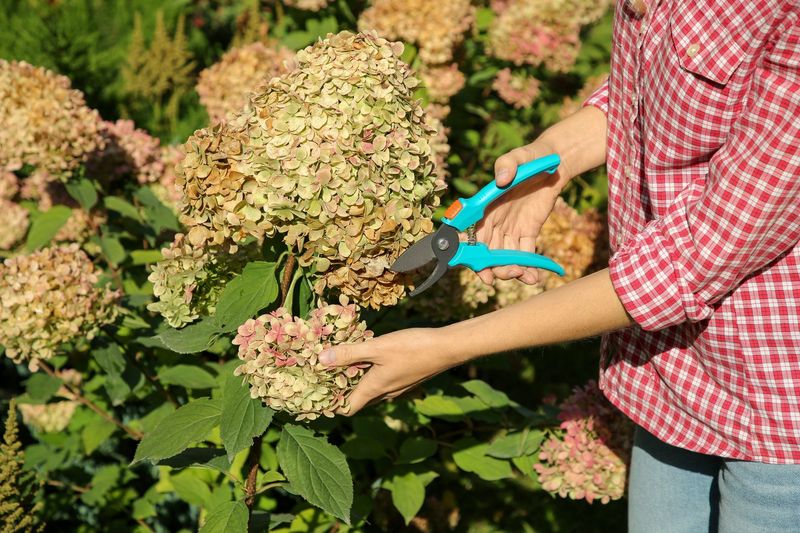
A single decision point can prevent most of the pruning trouble described in this article: identify the hydrangea before picking up the shears. Old-wood types – bigleaf, lacecap, mountain, and oakleaf – need to be pruned after flowering and before late-summer bud formation.
If that summer window has passed, UC Marin Master Gardeners recommend waiting rather than making a major shaping cut in early fall. New-wood types – panicle and smooth hydrangeas – follow a different schedule and tolerate dormant-season cuts more readily, with late winter or spring being the commonly preferred timing.
The type-first habit also prevents the frustrating cycle of pruning a plant every fall, wondering why it never blooms, and repeating the same cut the following year. Reblooming cultivars add some flexibility but do not eliminate the value of knowing what you have.
University of Minnesota Extension’s pruning guide reinforces that species identification is the starting point for any reliable hydrangea pruning plan.
When in doubt this fall, the safest move is to put the shears down and let the plant bloom next summer before making any major cuts. A season of patience is a small price for a full display of flowers.