
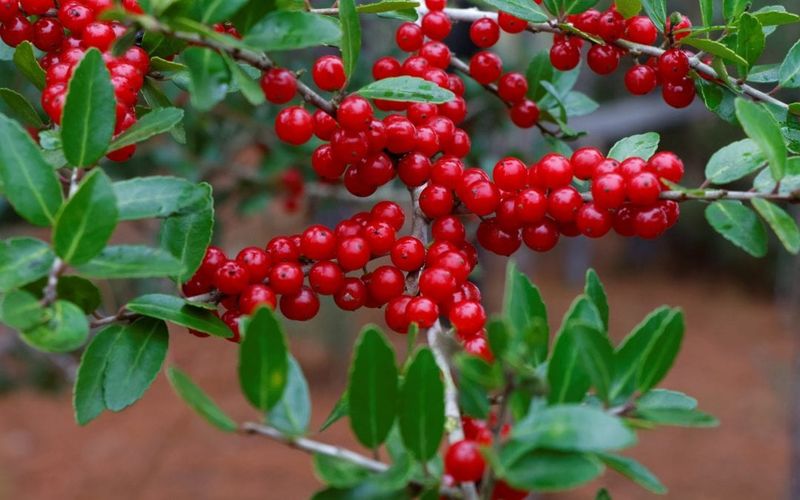
Red-tip photinia lines fences all over Texas, but it comes with a catch that trips up a lot of homeowners. A fungal disease called Entomosporium leaf spot can turn those glossy leaves into a spotty, thinning mess under the right conditions, and some plantings need repeated treatment just to stay presentable.
Yaupon holly is a native Texas alternative that holds its green foliage year-round, handles a wide range of Texas soils and weather, and generally sidesteps the disease headaches that make photinia a gamble for low-maintenance fence lines. Before you pull out the shovel, though, there are a few things worth knowing about where yaupon fits and where it does not.
Photinia’s real risk is recurring leaf spot—not guaranteed failure
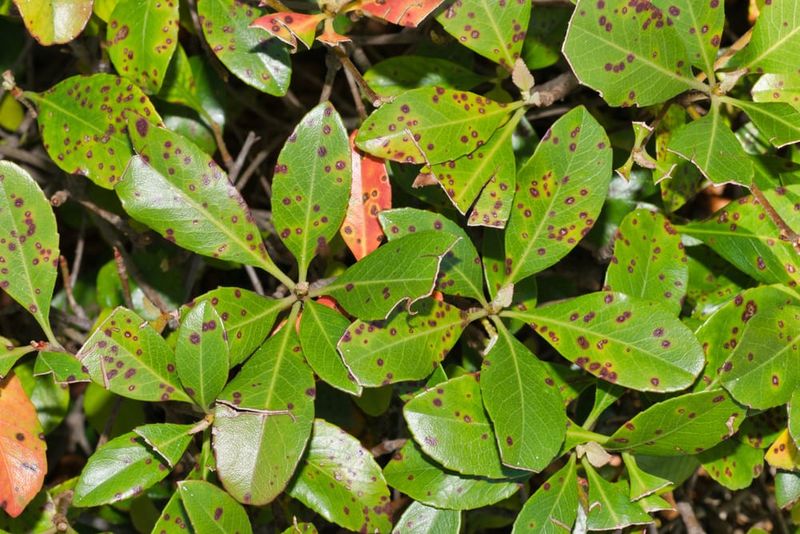
Red-tip photinia is not a plant that always fails. Plenty of Texas homeowners have a row of it along the fence that looks fine year after year.
The more accurate concern is that Photinia x fraseri carries a well-documented vulnerability to Entomosporium leaf spot, a fungal disease that can make a hedge go from attractive to struggling without much warning.
University of Maryland Extension guidance on Entomosporium leaf spot describes the disease as causing small red to purple spots on both upper and lower leaf surfaces. As infection progresses, those spots can enlarge, develop gray or white centers, and cause significant defoliation.
Severe and repeated infection can slow plant growth and, over time, push a planting into serious decline.
What determines whether your photinia stays acceptable or becomes a recurring problem? Site and management conditions matter a lot.
Oklahoma State Extension’s Entomosporium leaf spot documentation points to wet spring weather, poor air circulation, and overhead irrigation as factors that favor the pathogen. Dense, regularly sheared hedges are especially prone because shearing wounds the foliage repeatedly and keeps the canopy tight, which limits drying.
Virginia Cooperative Extension’s photinia disease overview notes that once a planting is seriously infected, fungicide applications can help slow the spread but will not undo existing damage. That means a hedge that falls behind on treatment often stays behind.
For homeowners who want a fence screen they can largely ignore, that disease liability is the core problem with photinia, not a minor footnote.
The upshot is that photinia is not destined to look rough, but its susceptibility to this particular disease makes it a higher-risk default for low-maintenance fence lines, especially in parts of Texas where spring moisture and humidity create favorable conditions for fungal spread.
Yaupon holly offers evergreen structure across many Texas sites
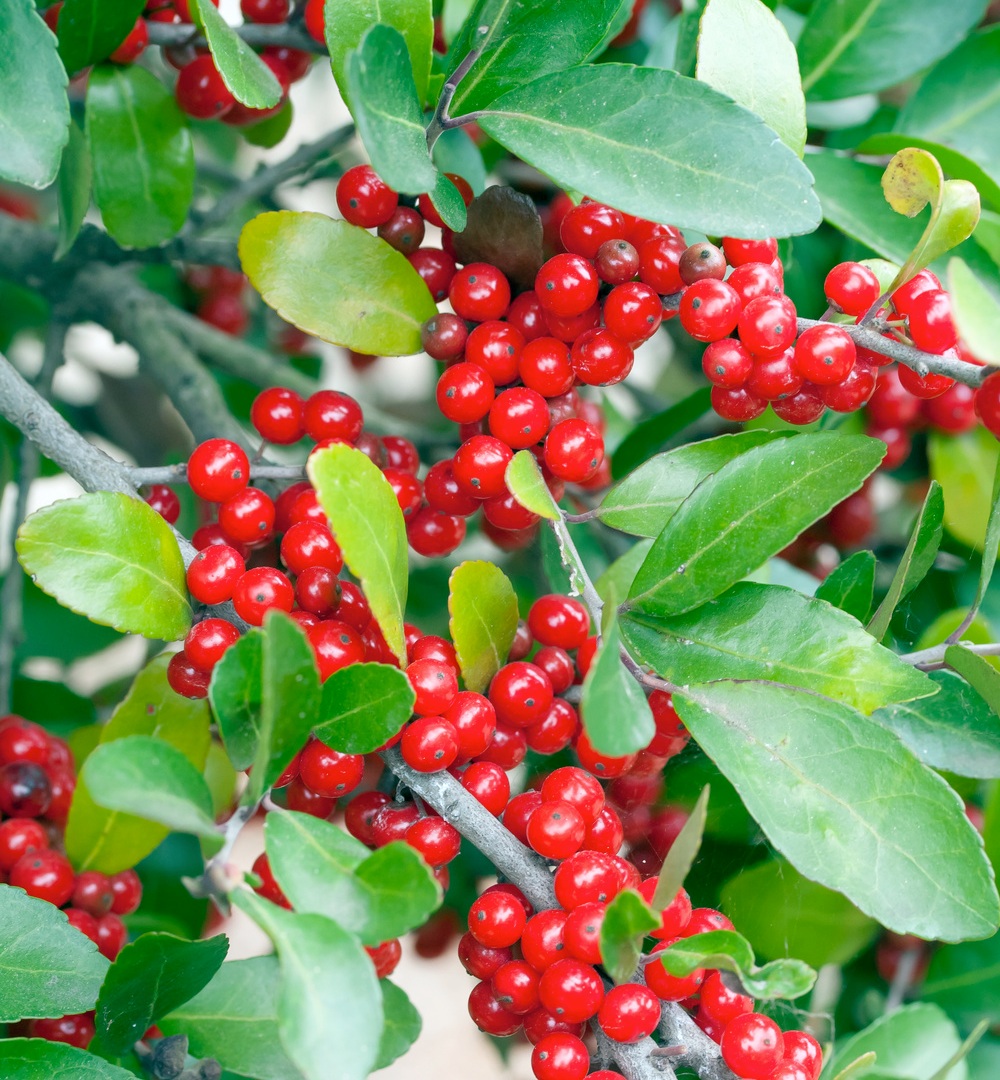
Yaupon holly (Ilex vomitoria) is the native Texas shrub most likely to deliver what homeowners want from a fence-line screen: green foliage twelve months a year, reasonable adaptability to Texas growing conditions, and a generally low disease profile. Texas A&M’s range plants profile for yaupon holly documents its presence across the Pineywoods, Gulf Prairies and Marshes, Post Oak Savannah, Blackland Prairies, Cross Timbers and Prairies, South Texas Plains, and Edwards Plateau.
That covers a large portion of the state where photinia is commonly planted.
The evergreen distinction matters for fence-line use. Yaupon stays leafy through winter, unlike possumhaw or other deciduous hollies that drop their leaves and leave a bare framework.
Foliage density, however, depends on the cultivar you choose, how much light the site receives, how consistently you prune, and how well the growing conditions suit the plant. A yaupon in deep shade will look different from one in full sun with consistent moisture during establishment.
The USDA plant factsheet for Ilex vomitoria describes yaupon as tolerant of a wide range of soil types, sun to shade exposure, and periodic flooding, as well as being drought-tolerant once established. Those are genuine strengths for Texas fence lines, where soils can range from heavy clay to sandy loam and sun exposure often has no relief.
The USDA Forest Service Fire Effects Information System review of Ilex vomitoria further confirms yaupon’s broad native range and its capacity to regenerate in disturbed conditions. That resilience is part of what makes it a practical long-term hedge candidate rather than a short-term ornamental choice.
One important qualification: “native Texas shrub” does not mean native to every corner of the state. Gardeners in far West Texas, the High Plains, or the Trans-Pecos should check local plant lists and consult their county extension office before treating yaupon as a default.
Outside its documented native range, site conditions and regional climate differences can affect how well it performs.
Expect a different look from photinia’s red new growth
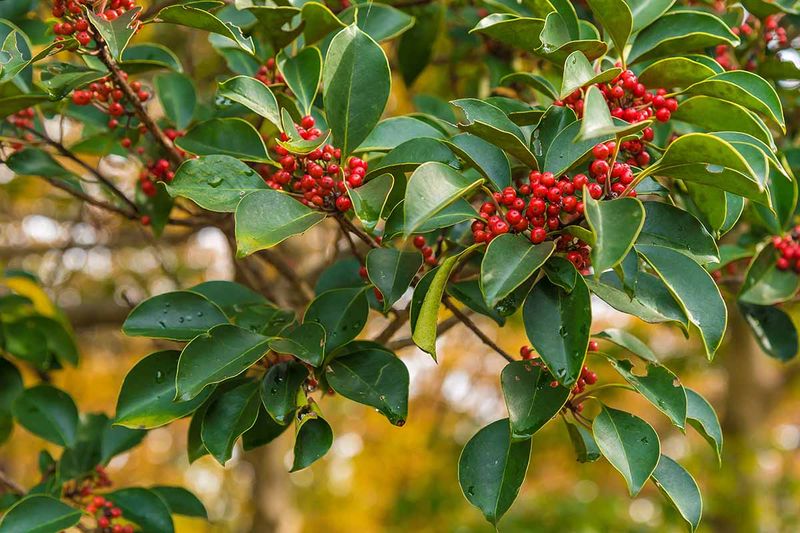
One honest thing to say upfront: yaupon holly will not reproduce the visual effect that makes red-tip photinia popular. Photinia’s appeal is largely built on those dramatic flushes of bright red new growth that appear in spring and sometimes again after shearing.
That color pop is real, and it is part of why so many Texas homeowners chose photinia in the first place.
Yaupon offers a different kind of year-round interest. Virginia Cooperative Extension’s photinia resource describes photinia’s foliage as a key ornamental feature, which makes the trade-off worth naming clearly.
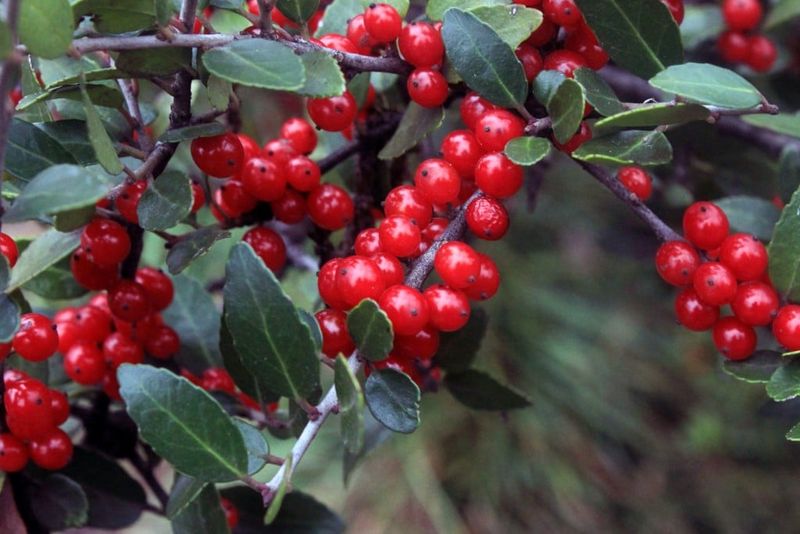
What yaupon brings instead is smaller, consistently dark-green leaves, attractive gray bark, and – on female plants that receive pollen from a compatible male nearby – clusters of bright red berries that persist through fall and into winter.
That persistent fruit can add genuine visual interest through the colder months when many other shrubs have gone bare or dull. Texas A&M’s yaupon profile notes the plant’s berry production and its value to wildlife.
The red fruit against dark-green foliage creates a different palette from photinia’s seasonal flush, but it is a palette that holds up longer through the year.
From a wildlife standpoint, Texas Parks and Wildlife’s urban wildscapes guidance and Bird City Texas habitat resources both identify native shrubs with persistent berries as sources of food and cover for birds and other wildlife. A yaupon screen can serve as habitat structure in addition to a visual barrier, though no specific species response can be guaranteed for any individual planting.
The realistic design expectation is durable, natural-looking evergreen structure rather than an identical color match. If the red new-growth effect is the primary reason you want photinia, yaupon is a different plant with different seasonal appeal.
If year-round screening with lower disease risk is the goal, yaupon is a strong fit.
Match the yaupon’s mature form to the fence line
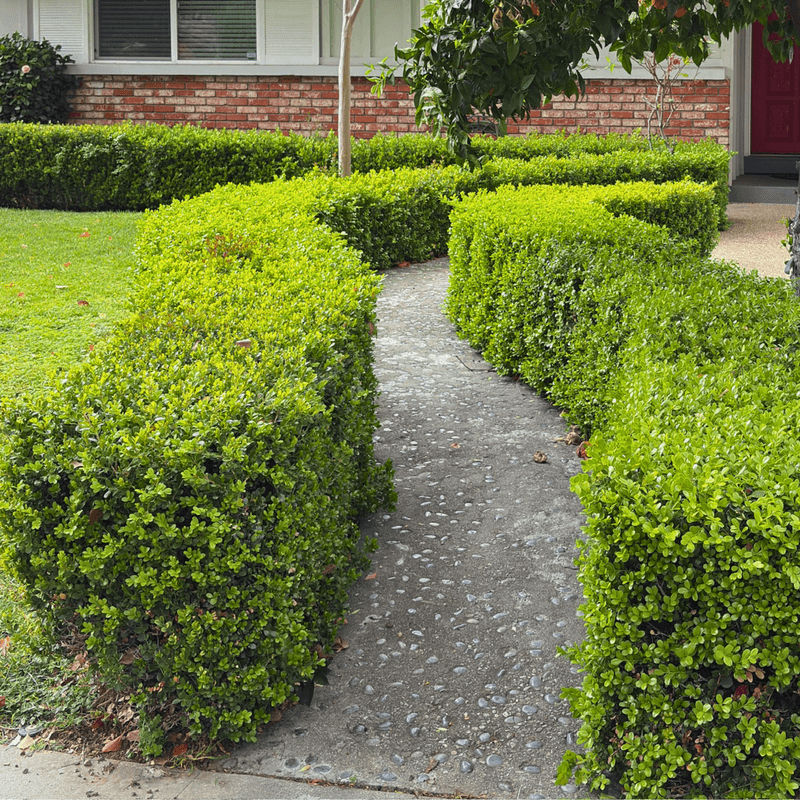
Yaupon holly is not a single-size plant, and choosing the wrong form for the space is one of the most common mistakes homeowners make with it. Standard yaupon can grow into a large multi-stemmed shrub or a small tree, sometimes reaching 15 to 20 feet or more under good conditions.
The USDA plant guide for Ilex vomitoria confirms that the species can send up basal suckers, which means a standard planting along a fence can gradually spread wider than the original bed if suckers are not removed.
Dwarf forms stay considerably smaller and work well where the goal is a lower, tighter border rather than a tall privacy screen. Upright or columnar cultivars are better suited to situations where the bed is narrow and the primary need is vertical screening without a lot of lateral spread.
Texas A&M AgriLife horticulture guidance reinforces the importance of matching cultivar selection to the actual space and intended use before planting.
Before buying, check the tag or ask the nursery for the mature height and spread of the exact cultivar you are considering. General descriptions of “yaupon holly” can apply to plants that top out at 3 feet or ones that push past 15 feet.
The difference matters a lot along a fence where bed width, neighbor clearance, and the height of the fence itself all create real constraints.
Texas Parks and Wildlife planting guidance notes that yaupon can become dense or thicket-forming, which is useful for privacy and wildlife cover but can be undesirable in a tightly controlled, narrow bed. For a formal clipped hedge, that density is manageable with regular pruning.
For a low-maintenance informal screen, a form that naturally fits the space without aggressive pruning will save considerable effort over time.
Match the form to the fence: standard or upright cultivars for tall screening, dwarf types for low borders, and check the specific mature dimensions of whatever cultivar you select rather than relying on a general size estimate for the species.
Build drought tolerance with careful establishment watering
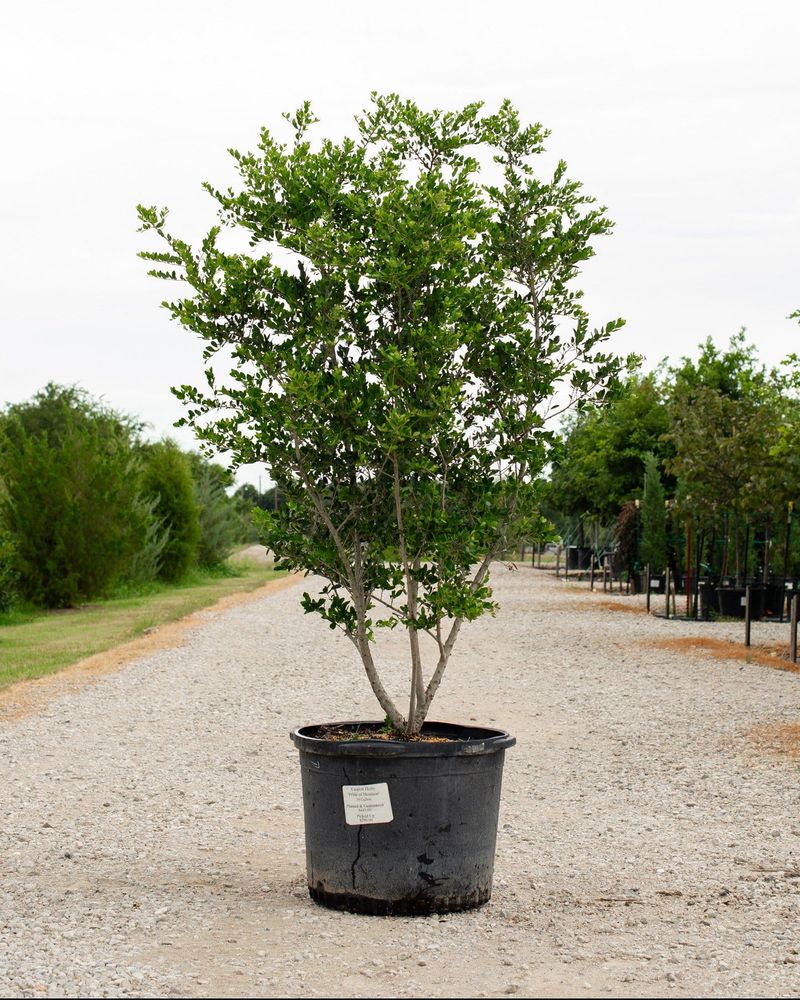
Yaupon holly’s reputation for drought tolerance is real, but it applies to established plants, not newly installed ones. Putting a yaupon in the ground and walking away because “it’s drought-tolerant” is a reliable way to lose it.
During the months after planting, the root system is still developing and cannot yet access the soil moisture that an established plant draws on during dry stretches.
Oklahoma State Extension’s evergreen selection and care guidance is clear that newly planted shrubs need regular, thorough irrigation while roots develop. Brief, frequent watering encourages shallow root systems that make the plant more vulnerable to drought and heat stress later.
The goal during establishment is to water deeply and less often, allowing the soil to dry somewhat between waterings so roots are encouraged to grow downward and outward in search of moisture.
Mulch helps considerably. Apply a 2-to-3-inch layer of organic mulch around the base of each plant, keeping it pulled back a few inches from the stems to avoid creating moisture and disease problems at the crown.
Mulch moderates soil temperature, slows evaporation, and reduces competition from weeds while roots are getting established.
OSU Horticulture Tips guidance on fall planting and establishment notes that even drought-adapted species benefit from consistent moisture in their first season. For Texas plantings, that first summer after installation is often the highest-risk period, when heat and dry spells arrive before roots have had time to fully establish.
Once established, the USDA plant guide for yaupon confirms its tolerance of varied soils, alkaline conditions, occasional flooding, and some salt exposure, making it genuinely flexible for the range of site conditions found along Texas fence lines. Texas A&M AgriLife horticulture notes caution that newly planted specimens can still suffer drought damage, and even well-established plants may need supplemental irrigation during extended extreme heat.
Tolerant does not mean invincible.
Prune the screen and handle berries responsibly
Calling yaupon holly maintenance-free would be misleading. It responds well to pruning and shearing, which is genuinely useful for fence-line use, but that responsiveness comes with the expectation that you will actually do the pruning.
A formal clipped hedge needs periodic shaping to stay neat, typically at least once or twice a year depending on how quickly the cultivar grows and how tight an appearance you want.
An informal screen is a different story. Allowed to grow in a looser, more natural form, yaupon requires less frequent intervention and can develop a fuller, more layered structure over time.
The USDA plant guide for Ilex vomitoria notes that the species can produce basal suckers, particularly on standard (non-dwarf) forms. If you want a clean single-trunk appearance or a tidy multi-stem hedge without outward spread, plan to remove those suckers when they appear.
Left alone, suckers can fill in gaps, which may be exactly what you want for a dense privacy screen, or may become a management issue in a tight bed.
OSU’s drought-tolerant plant selection guide confirms yaupon’s suitability for maintained hedges and notes its adaptability to shearing. The key is deciding early whether you are maintaining a formal hedge or an informal screen, because those two goals call for different pruning schedules and tolerances.
Berry production requires some planning. Texas A&M’s yaupon profile explains that the plant is dioecious, meaning male and female flowers occur on separate plants.
A female plant needs a compatible male nearby to produce the red berries that give the plant much of its winter visual appeal and wildlife value. If berry production matters to you, confirm that at least one male plant is within pollination range.
On the subject of those berries: the USDA plant factsheet for yaupon warns clearly that ingesting the berries causes nausea and vomiting in people. The fact that birds eat them without apparent harm does not make them safe for children or pets.
Keep that in mind when deciding where along the fence to place berry-producing female plants, and make sure anyone using the yard knows the berries are not for eating.
Choose yaupon when your region, space, and goals fit
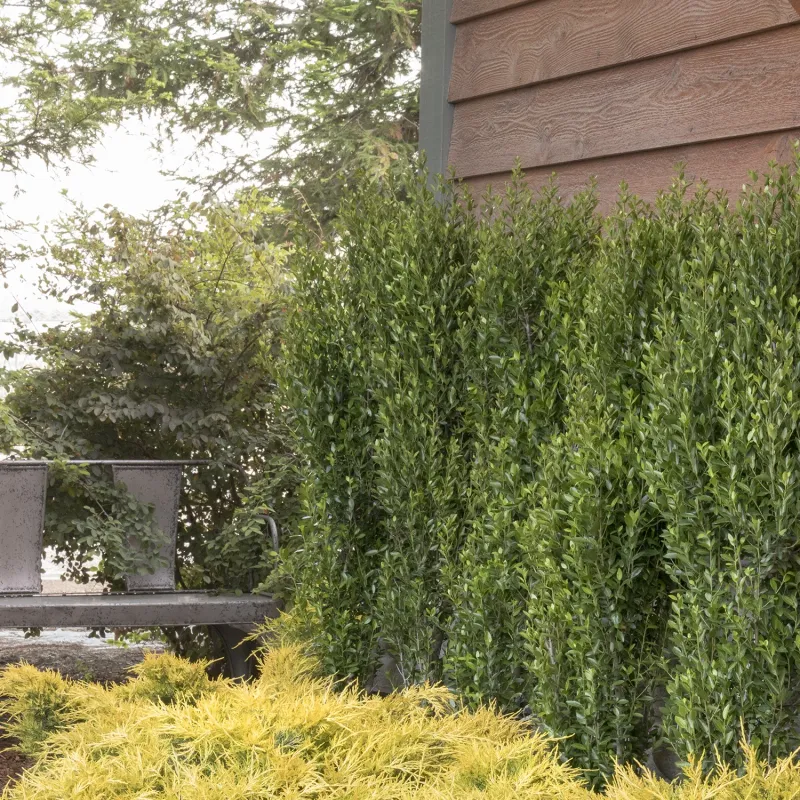
Yaupon holly is a strong fence-line swap for red-tip photinia when the site fits, and that conditional framing is the honest way to present it. Homeowners who want year-round evergreen screening, can commit to establishment watering, accept periodic pruning or sucker management, and are not expecting photinia’s bright-red new-growth effect will find yaupon a durable and generally lower-maintenance option for many Texas fence lines.
Texas A&M’s documented native range for yaupon covers a large portion of the state, but not all of it. Gardeners in far West Texas, the High Plains, and the Trans-Pecos should consult the Native Plant Society of Texas’s Ilex vomitoria entry and their local extension office before committing to yaupon as the default choice.
Outside its native range, regional climate and soil conditions can affect performance enough to make another native species a better fit.
Fence lines and foundation plantings are different situations, and the distinction matters in fire-prone areas. Texas Parks and Wildlife’s wildscape guidance cautions against placing yaupon and similar plants immediately around a home foundation in fire-prone settings.
A fence line farther from the structure is a different situation, but wildfire exposure and local defensible-space requirements still apply. Check your municipality’s or county’s firewise guidance before finalizing placement, especially if the fence backs up to open land or a fire-prone area.
OSU extension firewise planting notes reinforce that spacing and placement decisions should factor in fire risk, not just aesthetics.
The right cultivar and site matter more than any universal claim about which plant is better. A yaupon form that fits your fence height, bed width, and maintenance tolerance will outperform any plant chosen without those checks.
Pick the form that fits the space, water it through establishment, and the fence line you end up with will be built on a plant that belongs in Texas.