
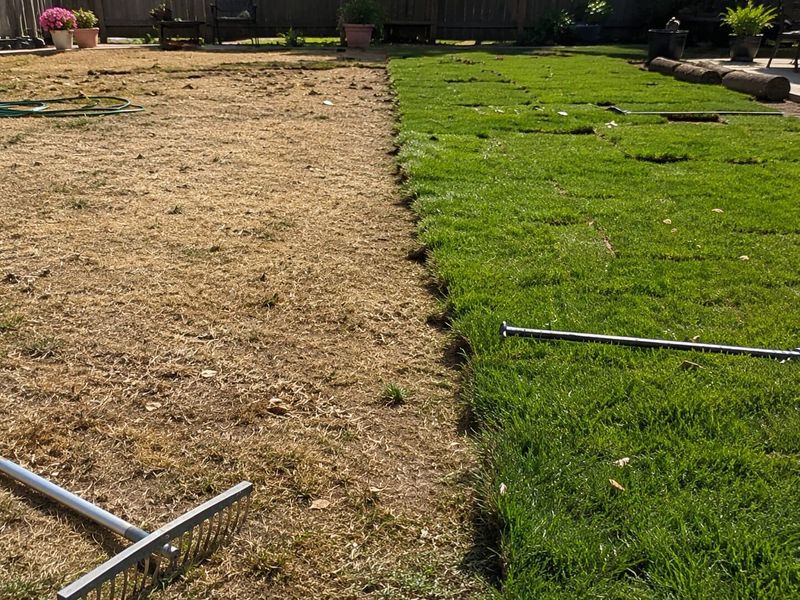
Buffalo grass has been quietly drawing attention from Central Texas homeowners who want a yard that asks less of them every summer. The appeal is real: it is a native warm-season grass that can thrive on modest water and fertilizer in the right conditions.
But the idea that a wave of Texans is tearing out Bermuda right now is more of an interesting premise than a verified fact, and the choice is not as simple as swapping one grass for another.
Buffalo grass is an option—not proof of a Bermuda-removal trend
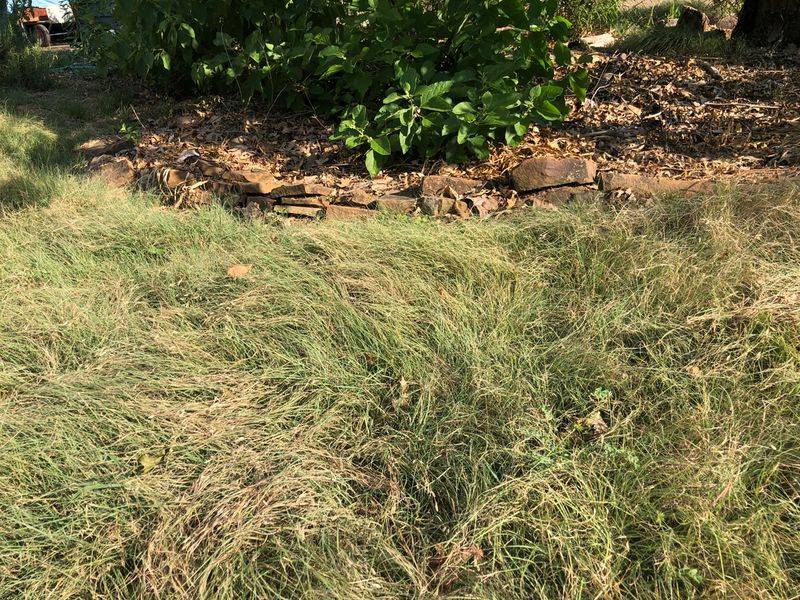
Buffalo grass draws genuine interest from Central Texas homeowners for straightforward reasons. It is a native warm-season turf that can support lower-input management in suitable sites, handles drought conditions that stress less-adapted grasses, and fits the preference many homeowners have for something that does not demand constant attention.
Texas A&M AggieTurf describes it as best adapted from Central to West Texas, which puts a large portion of the state within its potential range.
What the available evidence does not support is the claim that a measurable wave of Central Texas homeowners is currently removing Bermuda in favor of buffalo grass. No authoritative dataset or published survey documents that broad conversion trend.
The premise is worth treating as a question rather than a fact: could buffalo grass work better for your site? That framing is more useful than assuming everyone else has already made the switch.
Even the water-saving angle comes with an important qualifier. Austin Water cautions that switching between drought-tolerant grasses does not guarantee consistent water savings, because homeowners often continue watering dormant turf to keep it green.
What looks like a low-water lawn on paper can use just as much water as Bermuda if the sprinklers keep running through a brown spell.
This article is a site-selection guide, not a report on a documented mass conversion. The goal is to help you figure out whether buffalo grass fits your specific yard, soil, sun exposure, and lawn-use habits, and to be honest about what it cannot do.
Buffalo grass supports less intensive management under the right conditions
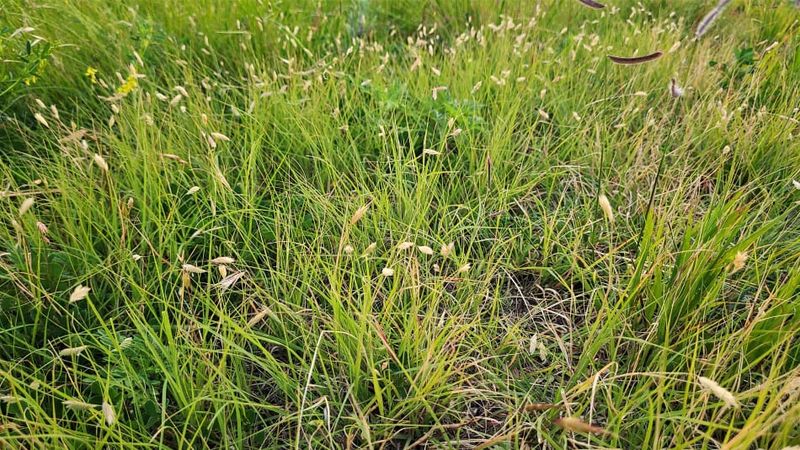
Buffalo grass is a warm-season, stolon-forming native that spreads across the ground by surface runners. Once established in a compatible site, it generally needs less nitrogen, less supplemental water, and fewer inputs than many turf options.
Those qualities are real, but they apply to a lawn that has been correctly sited and allowed to grow on its own terms, not to every yard that happens to be in Central Texas.
Fertility needs are modest by design. Texas A&M lists an annual range of 0 to 2 pounds of nitrogen per 1,000 square feet, applied during active summer growth, and identifies overfertilizing as one of the most common management mistakes.
Pushing too much nitrogen into buffalo grass encourages weed invasion and works against the lower-input benefit that attracted the homeowner in the first place.
Mowing is still part of the picture. Texas A&M recommends a mowing height of approximately 2.5 to 4 inches, with mowing roughly every 7 to 14 days during active growth as a practical guide.
That taller height is not optional: cutting buffalo grass too short weakens it and opens the stand to weeds. The benefit is not that you mow less often than with Bermuda on a fixed calendar, but that the grass does not demand the same tight, frequent clip that a closely managed Bermuda lawn requires.
The lower-input label also depends on a homeowner willing to accept a less intensively managed appearance. Buffalo grass at 3 inches looks different from a manicured Bermuda lawn at 1.5 inches.
If the goal is a dense, dark-green, closely cropped turf, buffalo grass will disappoint. If the goal is a lower-demand native lawn that holds its own through summer heat in the right conditions, it can deliver.
Screen the site before choosing buffalo grass
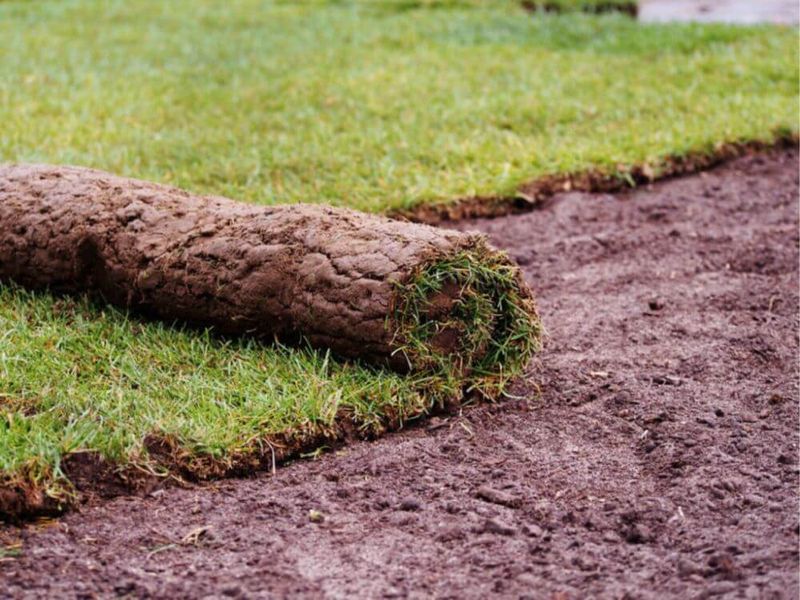
Before ordering sod or seed, run a quick site check. Buffalo grass performs best in open, sunny locations with full sun for most of the day.
Texas A&M identifies poor shade tolerance as one of its primary weaknesses, so yards shaded by mature oaks, tall fences, or buildings are poor candidates regardless of soil quality.
Soil type matters as much as sun. Heavy, well-drained clay with a slightly alkaline pH is the favorable profile.
Sandy or acidic soils, which are common in East Texas and parts of the Hill Country, are generally less suitable for traditional buffalo grass performance. Texas Parks and Wildlife notes that buffalo grass generally does well across North, Central, and South Texas but performs poorly in sandy or acidic East Texas soils and very wet coastal conditions.
Some modern cultivars have shown improved tolerance on sandier sites when managed carefully, but the safe default is to favor heavy clay.
Drainage is equally important. Constantly wet or poorly drained areas encourage weeds and root problems; buffalo grass does not tolerate standing water.
Rainfall compatibility also matters: the Texas Water Development Board places buffalo grass in areas receiving roughly 15 to 25 inches of annual rainfall annually, which broadly fits much of Central Texas but not every microsite within it.
Cultivar selection adds another layer of complexity. Improved turf-type varieties such as 609, Density, Prairie, Prestige, and Sundancer differ in density, color, establishment speed, and availability.
Some are vegetatively propagated female-only lines that produce no seed heads; others are seeded types that may vary in uniformity. Matching the cultivar to your site and maintenance expectations is part of the decision, not an afterthought.
When soil type, drainage, or cultivar suitability is uncertain, native-plant guidance from the Native Plant Society of Texas recommends starting with a smaller test patch rather than converting the entire lawn at once. A trial area of 200 to 400 square feet can reveal how the grass performs in your specific conditions before you commit to a full-yard conversion.
Bermuda remains the stronger choice for traffic and rapid recovery
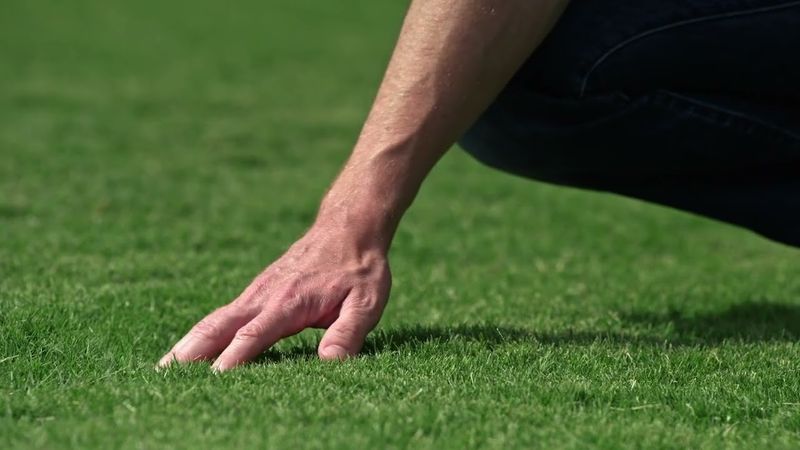
Bermuda grass earns its place in Central Texas yards for reasons that go beyond habit or familiarity. Texas A&M AgriLife describes Bermuda as one of the most heat- and drought-tolerant turfgrasses available for Texas, with strong traffic recovery and faster establishment than most alternatives.
Calling it water-hungry or implying it is an inferior choice misrepresents what it actually does well.
For lawns that see regular foot traffic, Bermuda is the more durable option. It handles concentrated wear from children, pets, and outdoor gatherings better than buffalo grass, and it fills in damaged areas more aggressively.
Texas A&M lists traffic tolerance as a weakness for buffalo grass, while Bermuda is described as durable with strong recovery capacity. Play areas, dog runs, and heavily used backyard paths are poor candidates for buffalo grass regardless of how well the soil and sun check out.
Bermuda also suits homeowners who want a dense, closely clipped, visually uniform lawn. It can be mowed short, stays relatively green through much of the warm season with adequate water, and produces a tightly knit surface that many homeowners associate with a well-kept yard.
Buffalo grass at its recommended taller height has a softer, more natural appearance that some people prefer and others find untidy.
The honest comparison looks like this: buffalo grass may fit a lower-use landscape where the owner accepts seasonal color change and a taller, less manicured look. Bermuda remains the better fit for demanding use, rapid establishment, concentrated foot traffic, and a closely maintained appearance.
Neither grass is universally superior; the right choice depends on what the yard needs to do.
Replacing Bermuda requires suppression, preparation, and establishment care
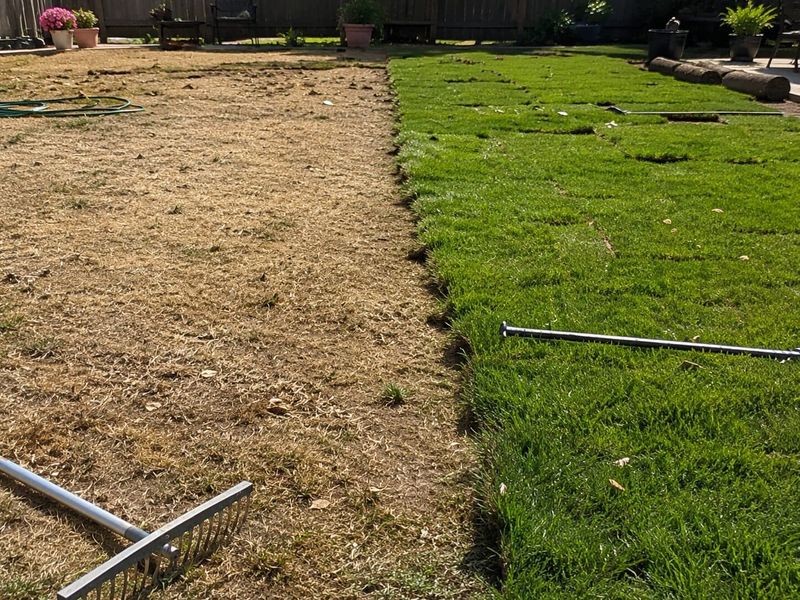
Seeding buffalo grass into an existing Bermuda lawn and expecting a smooth conversion is one of the most common mistakes in this process. Bermuda is a vigorous, aggressive grass that spreads by both stolons and rhizomes, and it will outcompete young buffalo grass seedlings without difficulty.
Texas native-grassland restoration guidance from Texas A&M is direct on this point: Bermuda must be controlled before native grasses are planted, and the process may require more than one treatment because established Bermuda can be extremely persistent.
Suppression typically involves repeated herbicide applications, solarization, or a combination of mechanical removal and chemical treatment. No single pass guarantees that Bermuda is gone.
Roots and rhizomes left in the soil can resprout through a new buffalo-grass stand, and Bermuda fragments spread easily from adjacent lawns or disturbed edges. Planning for at least two rounds of suppression before planting is a realistic starting point, not an unusual precaution.
Once the site is prepared, buffalo grass can be established from seed, sod, or plugs. Each method has trade-offs.
Sod provides the fastest coverage and the best early weed suppression, but it is perishable and must be installed promptly and watered immediately. Texas A&M’s turfgrass establishment guidance notes that warm-season grasses should be planted early enough in the growing season to develop roots before conditions turn unfavorable.
Seeded types of buffalo grass are best planted during the warm growing season when soil temperatures support germination and active growth. Plugs fall between the two options: slower to fill in than sod but easier to handle than broadcast seed on a large area.
Newly planted buffalo grass is not a low-water lawn yet. Native turf guidance from the Native Plant Society of Texas recommends being prepared to provide regular irrigation during establishment, especially during periods of unreliable rainfall.
The mature-lawn water advantage comes later, after roots are established and the grass has settled into its site.
Seasonal dormancy changes the water-saving equation
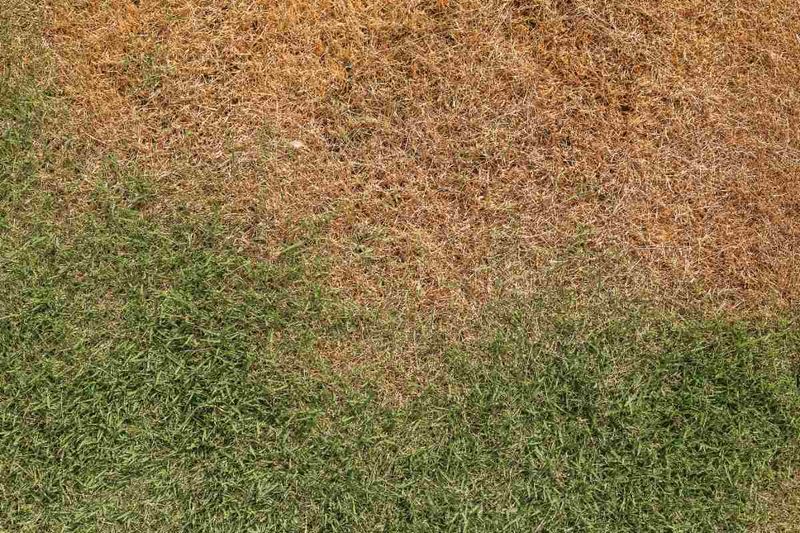
An established buffalo-grass lawn does not stay uniformly green all summer without irrigation. Research on buffalo grass performance in Texas conditions found that the grass greens up more quickly after rainfall than Bermuda but also goes dormant sooner as soil dries.
Browning during dry spells is part of how buffalo grass conserves water, not a sign that something has gone wrong.
Dormancy is where the water-saving math can get complicated. Texas Tech research on turfgrasses under watering restrictions documented that buffalo grass can perform well under rain-fed conditions, but the advantage shrinks when homeowners irrigate to preserve green color during dormancy.
Austin Water makes the same point: water savings from switching between drought-tolerant grass types can be inconsistent because dormant turf is often overwatered by homeowners who find the brown appearance unacceptable.
When watering is needed, the preferred approach is deep and infrequent rather than light and frequent. Extension guidance for buffalo grass consistently emphasizes that occasional deeper irrigation supports active growth better than frequent shallow watering, and that overwatering is one of the primary drivers of weed invasion in buffalo-grass stands.
Follow local watering restrictions and respond to actual soil conditions rather than a fixed weekly schedule.
Weed pressure is a real consideration during and after establishment. Texas A&M notes that buffalo grass is vulnerable to weeds when young, dormant, overwatered, overfertilized, or stressed.
A 2025 trial in Gillespie County found weed coverage stayed below 10 percent in most low-maintenance plots during peak summer, but results varied by cultivar and time of year. Vigilance during dormancy and establishment is part of the ongoing management commitment.
Herbicide use requires extra care with buffalo grass. Some broadleaf herbicide products, particularly those containing 2,4-D, can injure or discolor actively growing buffalo grass.
Use only products whose current label specifically permits application to your identified cultivar, and follow Texas regulations and label directions carefully.
Choose buffalo grass only when its limits fit your lawn
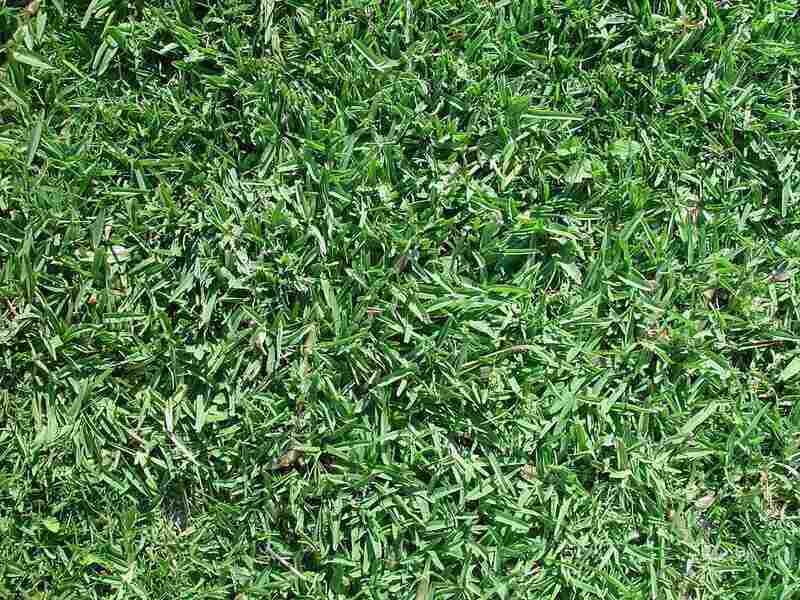
Buffalo grass is worth considering when several conditions line up: strong sun for most of the day, well-drained clay or slightly alkaline soil, manageable foot traffic, and rainfall broadly in the 15-to-25-inch annual range. Texas A&M’s buffalo grass profile supports it as a lower-input option for compatible Central Texas sites, not as a universal improvement over every other turf choice.
The owner’s expectations matter just as much as the soil. Accepting seasonal color change, occasional weed pressure, Bermuda suppression work before planting, and a taller mowing height is part of the deal.
Bermuda remains the better fit for households with children, dogs, or frequent outdoor entertaining where traffic tolerance and quick recovery matter more than reduced inputs.
For yards where the conditions are uncertain, a test patch is the lowest-risk path. The Native Plant Society of Texas recommends starting small, committing to weed removal while the turf fills in, and being ready to irrigate during dry spells.
A 200-to-400-square-foot trial area can answer most site questions before you invest in a full-yard conversion.
The evidence supports buffalo grass as a practical, lower-input option for compatible Central Texas sites, not as a verified trend or a guaranteed improvement over Bermuda. The right grass is the one that fits what your yard actually does, not the one that sounds best on paper.
A lawn that works quietly in the background of your summer is worth more than one that demands constant attention just to stay alive.