
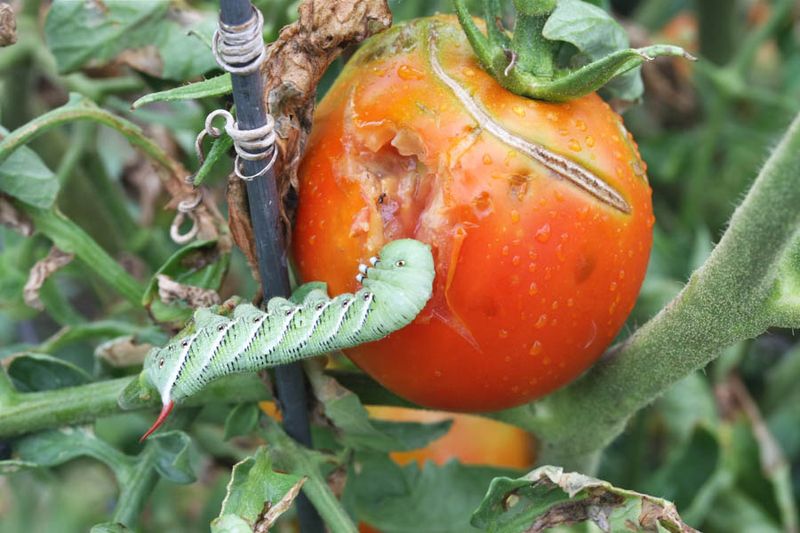
Hornworms are among the most destructive caterpillars a California tomato gardener can face, capable of consuming large amounts of foliage in a short stretch of time. These hefty green larvae blend into tomato plants so well that many gardeners do not notice them until the damage is already obvious.
Catching them early, knowing what to look for, and responding in the right order can mean the difference between a healthy harvest and a stripped plant.
Hornworms can strip foliage quickly—but not every plant will be ruined overnight
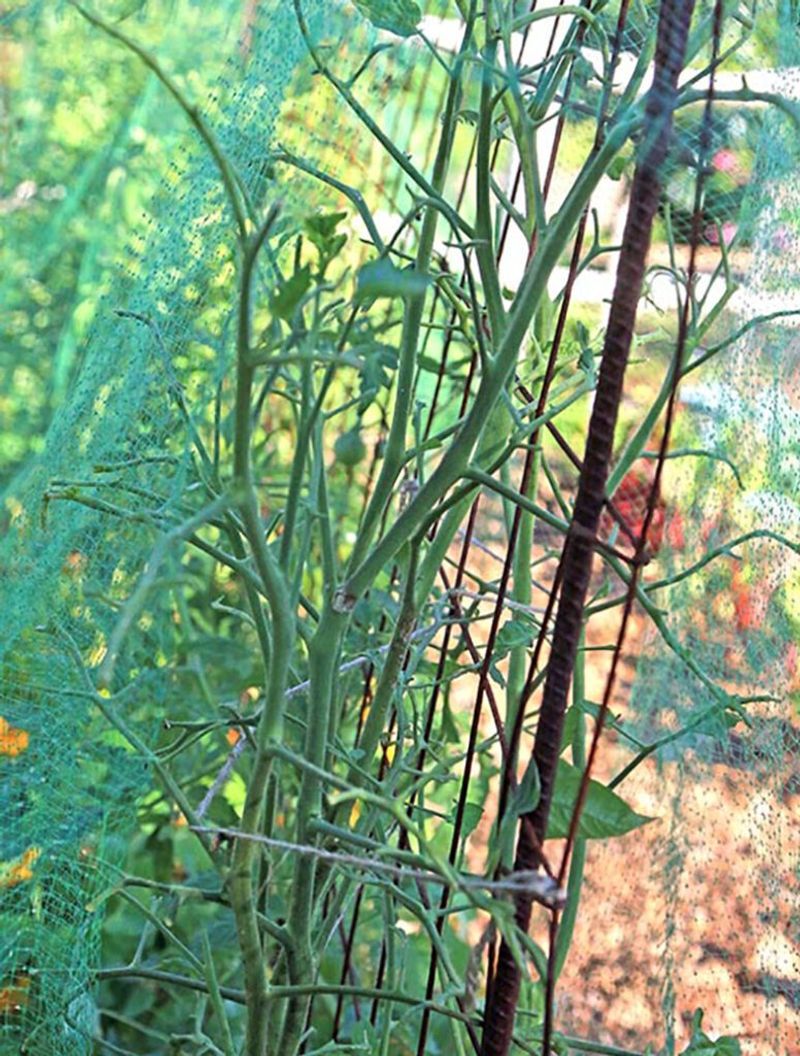
Waking up to a tomato plant that looks half-eaten is a jarring experience, and the culprit is often a hornworm that fed through the night without any sign it was there. Large larvae can consume substantial amounts of foliage quickly, and Texas A&M extension guidance on tomato growing notes that hornworms can strip leaves overnight.
That kind of speed is real, but it does not mean every plant with a single hornworm will be reduced to bare stems by morning.
Serious crop loss is more closely tied to high worm populations, prolonged feeding over multiple nights, or larvae that reach fruit. According to UC IPM’s hornworm guidance for California tomatoes, high populations can extensively defoliate plants and scar fruit, with infestations tending to be more severe in warm inland areas of the state.
A gardener in Fresno or the Central Valley faces different pressure than one growing tomatoes near the coast.
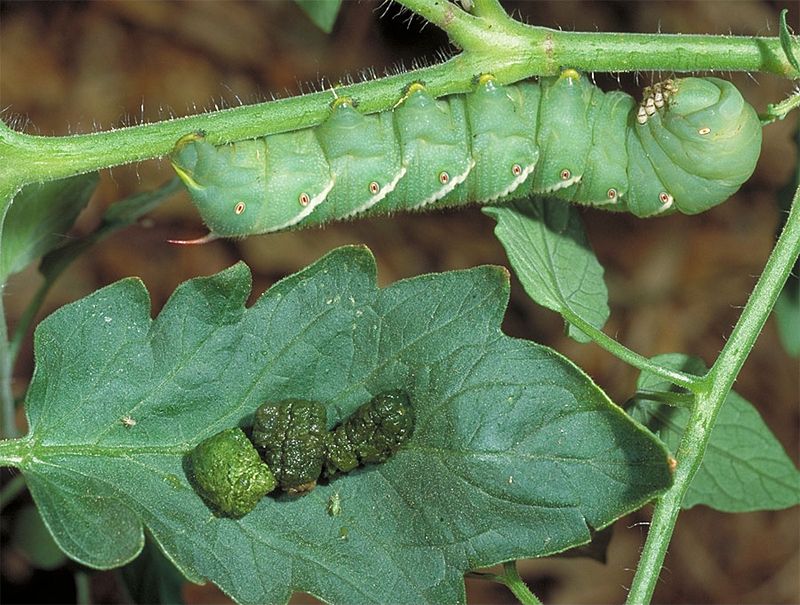
Knowing what to look for speeds up your response. Missing leaves or bare stems are the most obvious clue, but two other signs are just as useful: large, irregular holes or deep feeding cavities in the fruit itself, and dark green or black frass scattered on the soil or lower leaves beneath the plant.
UC Master Gardeners of Santa Clara County identify frass as a reliable indicator that a caterpillar is actively feeding somewhere above. Finding frass means a worm is present even if you cannot see it yet, and that is reason enough to start looking immediately rather than waiting to see how bad it gets.
California has two likely hornworm culprits
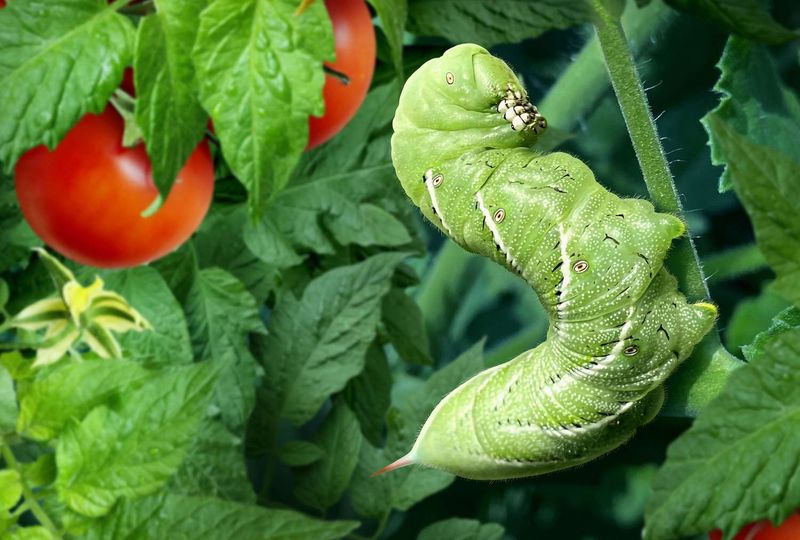
Not every large green caterpillar on a California tomato plant is the same species. Two closely related caterpillars show up in California gardens: the tomato hornworm (Manduca quinquemaculata) and the tobacco hornworm (Manduca sexta).
Both are large, green, and capable of serious feeding damage, and both target plants in the nightshade family, including tomatoes. UC IPM lists both species as tomato pests in California, so calling every hornworm a tomato hornworm without checking the markings can be misleading.
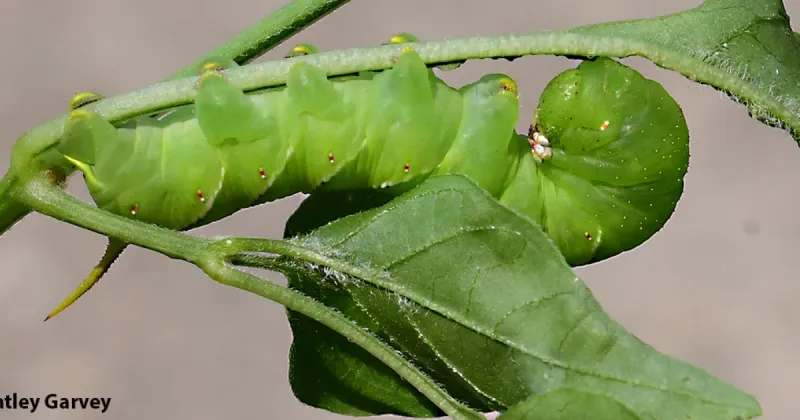
You can tell them apart by looking at the side markings. Tomato hornworms carry eight white, V-shaped markings along their body, while tobacco hornworms have seven diagonal white stripes.
The two species are similar enough in size and color that gardeners sometimes confuse them, especially when a caterpillar is partially hidden in foliage. University of Florida entomology resources confirm that tobacco hornworms are particularly associated with warm southern regions, which is relevant for California’s inland valleys and desert-adjacent growing areas.
One feature that trips up new gardeners is the rear horn. Both species have a pointed spine projecting from the tail end, and some people assume it means the caterpillar can sting.
Colorado State University Extension describes this as a flexible spine used for identification, not defense. Hornworms are caterpillars, not hornets or wasps, and the horn poses no threat to a gardener who picks one up.
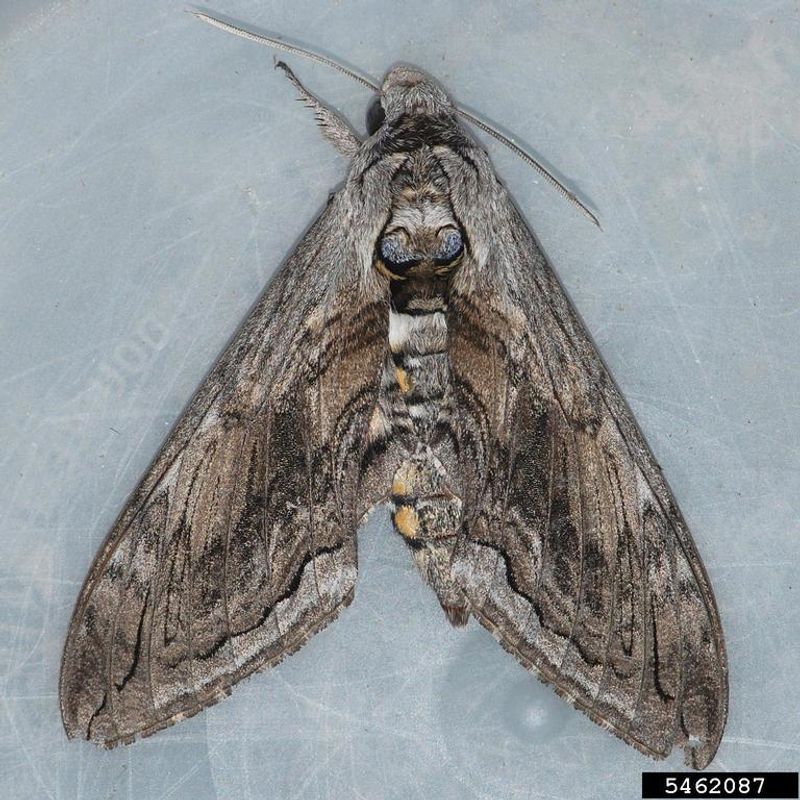
The adult stage of both species is a large sphinx moth, sometimes called a hawk moth, which has value as a nighttime pollinator. That ecological role is worth knowing, but it does not require tolerating heavy feeding damage on your tomatoes.
Search after dark and remove visible larvae
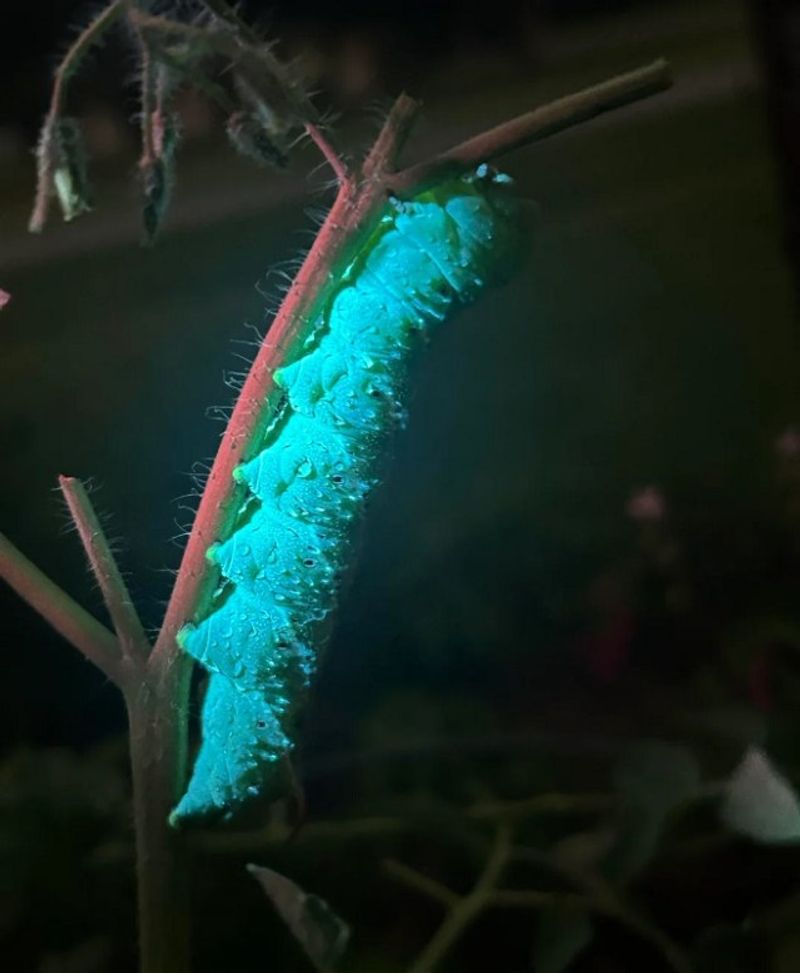
Hornworms are masters of camouflage. Their green coloring matches tomato foliage closely enough that a four-inch caterpillar can sit in plain sight during the day and go completely unnoticed.
The most reliable way to find them is to go out at dusk, dawn, or after dark with a flashlight and check each plant methodically, looking beneath leaves and along stems near any fresh frass you spotted earlier.
UC Cooperative Extension Master Gardeners of Orange County specifically recommend flashlight inspections after dusk or before sunrise because caterpillars are easier to detect when they are more active and when the light catches them at an angle against the foliage. Ventura County UC Cooperative Extension suggests checking daily, especially early morning or around sundown, until you stop finding new caterpillars or fresh damage.
Once you spot a hornworm, pick it off by hand and drop it into a container of soapy water to dispose of it. Physical removal is straightforward, does not require any product, and carries no risk to surrounding plants or beneficial insects.
University of Minnesota Extension identifies hand-picking as usually sufficient control for home gardens, where infestations are often limited to one or a handful of worms across the whole planting.
One thing to skip: aggressively stripping every leaf that shows bite marks. Damaged leaves can still photosynthesize, and a tomato plant that loses too much foliage at once faces additional stress.
Remove the caterpillar, not the leaf. Keep checking every day until a full inspection turns up no new frass and no fresh feeding damage, which is your clearest signal that the worms are gone.
White cocoons mean you should leave that hornworm alone
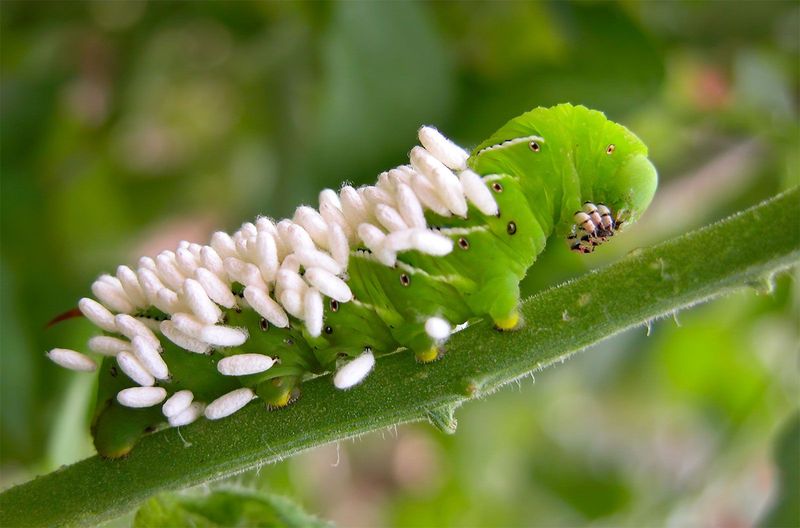
Finding a hornworm covered in tiny white projections that look like grains of rice is actually good news for your garden. Those structures are the cocoons of a braconid wasp, a parasitoid that lays its eggs inside the caterpillar.
The wasp larvae feed internally, then emerge and spin their cocoons on the outside of the host. Utah State University Extension’s hornworm research page explains that the wasp larvae will eventually kill the caterpillar after completing their development, making the cocooned worm a biological control agent in progress.
A parasitized hornworm should be left exactly where it is. Removing or killing it cuts the wasp life cycle short before the adults can emerge and go on to parasitize other hornworms in your garden.
University of Minnesota Extension confirms this approach, noting that leaving the parasitized caterpillar in place allows the wasps to complete their cycle and continue providing natural control.
This connects directly to integrated pest management thinking. UC IPM identifies naturally occurring parasitoids that attack both hornworm eggs and larvae and advises against using disruptive pesticides that would eliminate these natural controls.
Broad-spectrum spraying when parasitoids are active can do more harm than good by removing the very organisms that are already working on your behalf. The practical rule is simple: pick off hornworms that look clean and active, and leave any worm wearing white cocoons to finish what the wasps started.
Use Bt when hand-picking no longer keeps up
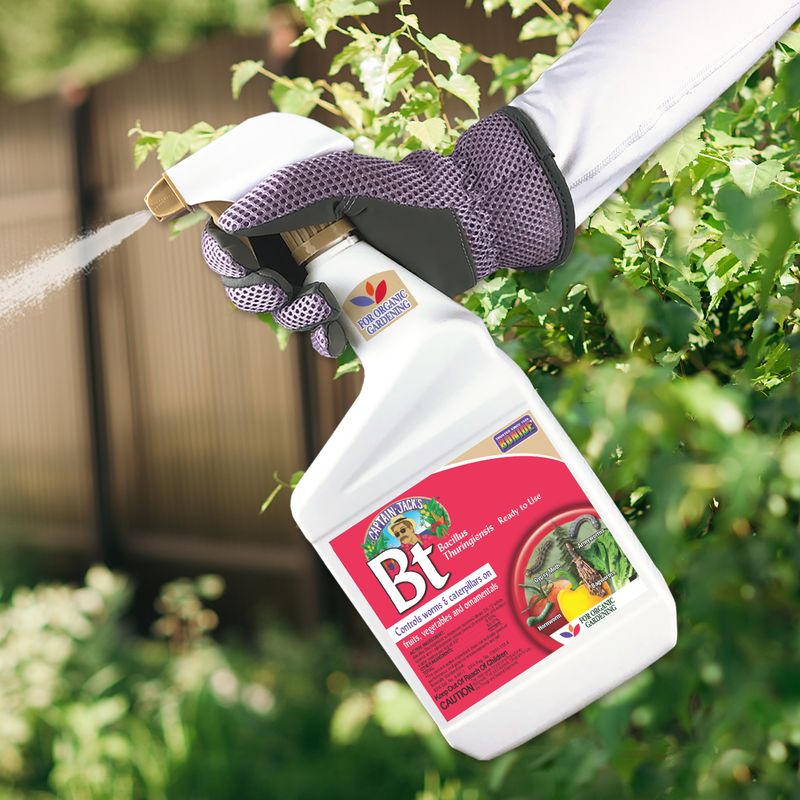
Hand-picking handles most home-garden hornworm problems, but some situations call for more. When larvae are numerous enough that you cannot remove them all, when they are feeding on fruit rather than just leaves, or when the defoliation is spreading faster than daily picking can control it, a labeled Bacillus thuringiensis var. kurstaki product is the appropriate next step.
UC IPM lists Bt sprays as acceptable for organically certified crops and recommends treatment when foliage damage is extensive or fruit feeding is occurring, not as a routine first response to any hornworm sighting.
Bt works differently from contact pesticides. The bacteria must be consumed by the caterpillar to be effective, and once ingested, the toxin disrupts the larva’s gut and stops feeding.
UC IPM’s oakworm management page notes that Bt is most effective against young, small larvae, and University of Minnesota Extension confirms that large hornworms are generally less susceptible. Do not expect a large, mature worm to drop off the plant immediately after a Bt application.
If the caterpillar is already big and causing significant damage, hand-picking it is faster and more reliable than waiting for Bt to work.
Apply Bt to the foliage of affected plants or sections, not across every tomato in the garden. Hornworm infestations are often spotty, meaning one or two plants may carry most of the worms while neighboring plants are untouched.
Treating only where the problem exists reduces the impact on parasitoids and other beneficial insects elsewhere in the garden. Follow the specific product label for mixing rate, timing, reapplication schedule, harvest interval, and any protective equipment requirements.
The label is the legal document governing how the product may be used, and conditions can vary by formulation.
Spot-treat the problem, not the whole garden
One of the most common mistakes gardeners make after discovering a pest is reaching for a sprayer and treating every plant in sight. With hornworms, that approach is rarely necessary and can actively set back your garden’s natural defenses.
UC IPM notes that hornworm infestations are often spotty, concentrated on one or a few plants rather than distributed evenly across a planting. Targeting only the affected plants or sections keeps parasitoids and other natural enemies active in the parts of your garden where they are not needed yet.
Before applying any pesticide, confirm that the product you have is currently registered for use on home-garden tomatoes in California. Registrations change, and a product that was legal to use last season may have been modified or relabeled.
The California Department of Pesticide Regulation’s product registration database is the authoritative source for checking current status. The CDPR backyard garden IPM resource also provides guidance tailored to California home gardeners.
Once you have confirmed registration, read the label completely before mixing or applying anything. EPA guidance on pesticide labels is clear that the label specifies legal use sites, target pests, application rates, timing, restrictions, and preharvest intervals.
EPA label review training reinforces that these details are legally binding, not optional suggestions. Pay attention to the harvest interval, which tells you how many days must pass between application and harvest.
Avoid applying during hot midday hours or when rain is forecast, and wear any protective equipment listed on the label.
Skip homemade sprays, dish soap solutions, vinegar mixtures, and other unregistered preparations. These are not supported by the primary extension sources reviewed for this article, and some formulations can injure foliage or create food-safety concerns.
Selective, label-compliant treatment of affected areas is both more effective and safer for the rest of your garden ecosystem.
Recheck the plants and judge control by fresh damage
Removing a hornworm or applying Bt is not the end of the job. Checking back daily after any control action tells you whether the problem is resolved or still developing.
The clearest signal that feeding has stopped is the absence of new frass and no additional missing foliage after two or three days of daily inspections. If fresh frass keeps appearing, at least one larva is still active and you have not found it yet.
Ventura County UC Cooperative Extension recommends daily checks specifically because hornworms can be easy to miss and because new eggs can hatch into fresh larvae over time. A single gardening session that turns up nothing is encouraging but not conclusive.
Continue checking for at least a few days after the last worm was removed.
Keep the California climate context in mind as you monitor. UC IPM reports that hornworm pressure tends to be more severe in warm inland areas of the state than in cooler coastal zones.
Gardeners in the Central Valley, Inland Empire, or Sacramento region may deal with higher populations or a longer active season than those growing tomatoes near the ocean. University of Minnesota Extension notes that home-garden infestations are often limited to one or a few worms per plant, which means a thorough search followed by daily rechecks is usually enough to stay ahead of the problem without escalating to additional treatment.
Extensive defoliation or recurring fruit feeding is the threshold that justifies stepping up your response.
The fastest responsible fix is selective action
The evidence-supported sequence for California tomato gardeners is straightforward. Inspect plants at dusk, dawn, or after dark using a flashlight.
Look for frass first, then trace it upward to find the larva on the foliage above. Once you locate the caterpillar, check whether it carries white, rice-shaped cocoons on its back.
A clean, active hornworm gets picked off and dropped into soapy water. A cocooned one stays put so the braconid wasps can finish their work and move on to the next generation of pests.
Escalate to a labeled Bacillus thuringiensis var. kurstaki product only when larvae are too numerous to remove by hand, when feeding has reached fruit, or when defoliation is advancing despite daily picking. Apply it to affected plants only, follow the current California product label precisely, and verify registration through the UC IPM hornworm guidance and the CDPR database before you treat.
Utah State University Extension reinforces that preserving parasitoids is central to sustainable hornworm management.
Protecting your harvest and protecting the insects working alongside you are not competing goals. Selective action achieves both, and in most California home gardens, a flashlight and a steady hand are the most powerful tools you own.