
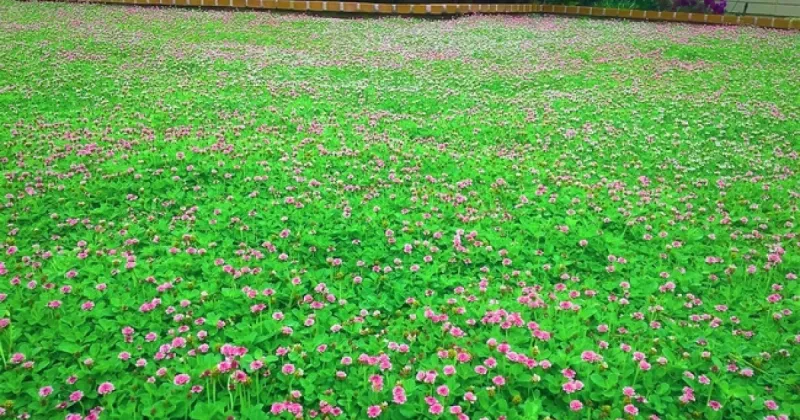
Water bills keep climbing, drought restrictions keep tightening, and a lot of California homeowners are quietly wondering whether a traditional lawn still makes sense for their yard. One plant that keeps coming up in that conversation is Kurapia, a low-growing ground cover that researchers at UC Davis and UC Riverside have been putting through its paces as a possible lawn substitute.
It spreads into a dense, green mat, needs far less mowing than most turf grasses, and can use substantially less water under the right conditions. Before you reach for the sod cutter, though, there are real tradeoffs worth understanding.
Kurapia Is One Promising Lawn Alternative, Not a Statewide Replacement
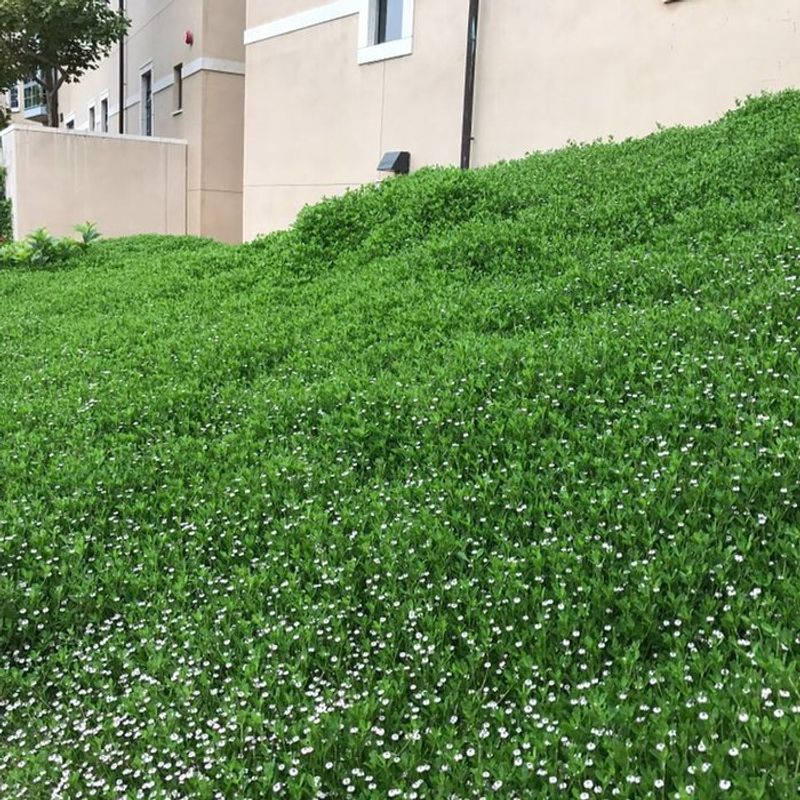
Kurapia® is a low-growing perennial ground cover in the verbena family, developed in Japan as a sterile cultivar of Phyla nodiflora, a species sometimes sold under the common names lippia or frogfruit. The “sterile” label matters: the marketed Kurapia cultivar is not expected to spread by unwanted seed the way a non-sterile relative might.
That distinction is worth keeping in mind when shopping, because not every plant sold as lippia, frogfruit, or Phyla nodiflora is the same sterile cultivar, and behavior can differ.
Kurapia spreads by stolons, the horizontal stems that creep along the soil surface and root as they go. Over time, those stolons knit into a dense mat that can look surprisingly lawn-like from a distance.
UC Davis California Center for Urban Horticulture describes it as a sterile variety suited to drought conditions, and UC Cooperative Extension lists it among the ground covers evaluated as turf alternatives for California landscapes. That documented research interest is what makes Kurapia worth knowing about.
What the evidence does not support is the idea that California homeowners are broadly swapping out lawns for Kurapia on a statewide scale. California’s own Department of Water Resources frames turf replacement as a choice among many options, including native plants, buffalo grass, sedges, yarrow, Dymondia, edible gardens, and mixed pollinator plantings.
Kurapia is one researched option in that lineup, not the dominant replacement trend statewide.
Its Lawn-Like Appeal Comes From Dense Growth and Limited Mowing
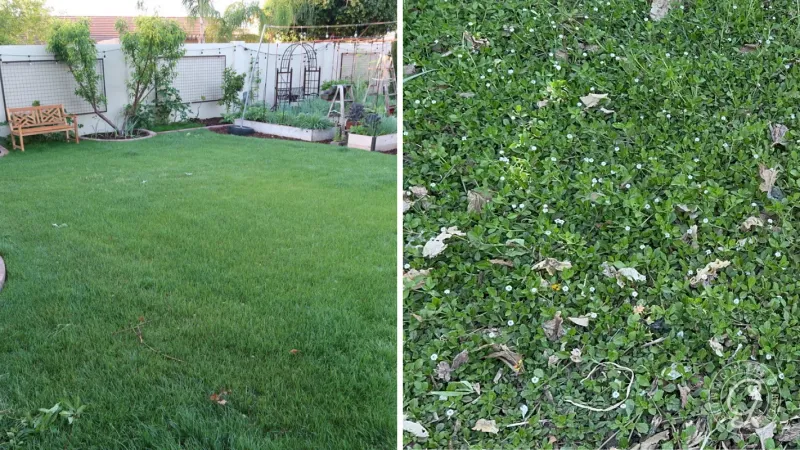
Part of what makes Kurapia appealing to homeowners who still want a tidy, green surface is how closely it mimics a lawn without demanding the same mowing schedule. The plant stays low, reaching roughly six inches in height, and spreads by stolons into a thick, even mat.
UC Cooperative Extension’s turf and turf alternatives guide rates Kurapia as tolerant of light foot traffic, which means it can hold up to casual walking but is not designed for the kind of repeated pressure a lawn takes from kids’ games or a large dog running the same path daily.
One practical advantage over conventional turf is mowing frequency. In UC Davis SmartLandscape testing, Kurapia planted with subsurface irrigation was mowed fewer than three times per year, and fewer than six times per year with surface irrigation.
A standard cool-season lawn in California might need mowing every one to two weeks during the growing season. That difference adds up in time and fuel costs over a full year.
Reduced mowing does not mean zero maintenance, and this is where some homeowners are caught off guard. Kurapia’s stolon-based growth is vigorous, and trial plants at UC Davis rapidly outgrew their designated spaces, requiring repeated cutting back.
UC Landscape Plant Irrigation Trials document this aggressive spread, and a string trimmer rather than a rotary mower is typically the tool of choice for keeping edges tidy. Weed management during establishment, occasional irrigation adjustments, and cleanup of dead plant material also belong on the maintenance list.
The Water Savings Depend on the Site and the Irrigation System
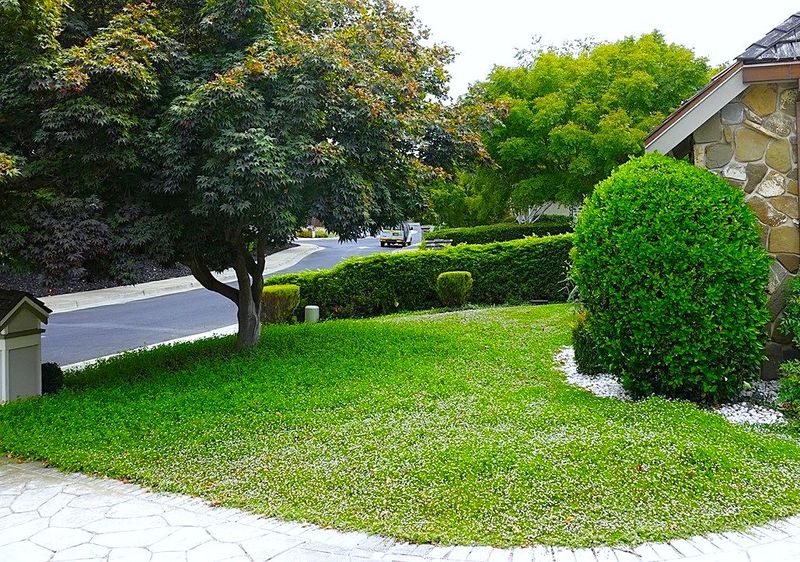
The water-savings figure most often attached to Kurapia comes from UC Davis SmartLandscape research, which found that Kurapia can use up to 60% less water than traditional cool-season turf blends. That “up to” qualifier carries real weight.
The figure reflects a plant factor range of 0.2 to 0.6 for Kurapia, meaning actual water demand varies considerably depending on climate, soil type, how the irrigation system is set up, how recently the plants were established, and what turf variety is being used for comparison. A homeowner replacing a tall fescue lawn in a hot inland valley will see different results than one replacing a Kentucky bluegrass mix near the coast.
A preliminary trial at UC Riverside tested Kurapia at three irrigation levels: 30%, 45%, and 60% of reference evapotranspiration (ET0), applied over July through September. The UC Riverside water use report found that the highest level, 60% ET0 split into two weekly irrigations, was the best-performing treatment, but it was not statistically different from the 30% or 45% treatments under the same irrigation frequency.
That result suggests Kurapia can survive on relatively modest summer water, but it also means the trial did not find a clear advantage to pushing irrigation higher within that tested range.
The same UC Riverside study noted that none of the tested irrigation levels sustained high flowering in Kurapia, which matters for homeowners interested in pollinator support. Irrigation method also shapes outcomes significantly.
In UC Davis SmartLandscape testing, Kurapia met the project’s water budget with subsurface irrigation, while a surface MP Rotator setup did not meet the budget in the same trial period. Copying a percentage from a research report without accounting for your own soil, system, and climate zone is likely to produce different results than the trial did.
Give Kurapia Time to Establish Before Expecting Low-Water Performance
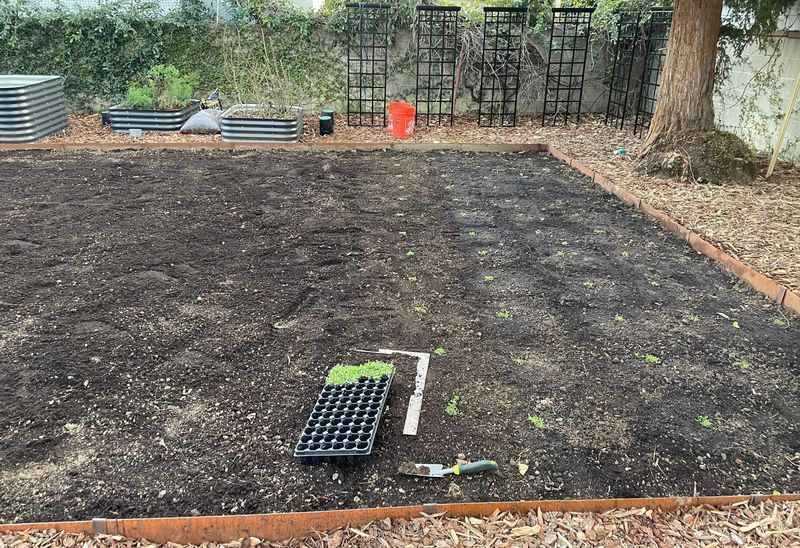
A common mistake with any drought-tolerant ground cover is treating “low water” as a day-one property rather than a mature-plant characteristic. Freshly planted Kurapia plugs need frequent irrigation to root in and spread across bare soil.
UC Cooperative Extension’s ongoing Kurapia field reporting makes clear that establishment requires consistent moisture and that plants can struggle or fail if irrigation is reduced too early. Budget for a genuine establishment period, measured in weeks to months depending on season, planting density, and soil, before scaling back water.
Once plants are established, irrigation can be reduced substantially, but the transition should be gradual and monitored. UC Davis and UC Cooperative Extension irrigation trial results recommended, after establishment, watering around 20% ET0 and no more than 40% ET0 under the specific drip-irrigated, clay-loam conditions of that trial.
The report specifically cautions that those numbers may not transfer to lighter soils or overhead irrigation systems. Homeowners with sandy soil or spray heads should not treat the trial’s post-establishment percentages as a universal prescription.
Irrigation design turns out to matter as much as irrigation volume. In the UC Davis SmartLandscape project, Kurapia planted with subsurface drip met the project’s water budget, while the same plant under a surface MP Rotator system did not meet that budget during the same trial period.
If your yard currently runs pop-up spray heads designed for turf, converting to Kurapia without updating the irrigation system may not deliver the savings the research suggests. California DWR recommends assessing your irrigation setup before removing turf, not after.
Match Kurapia to the Climate, Yard Use, and Growing Conditions
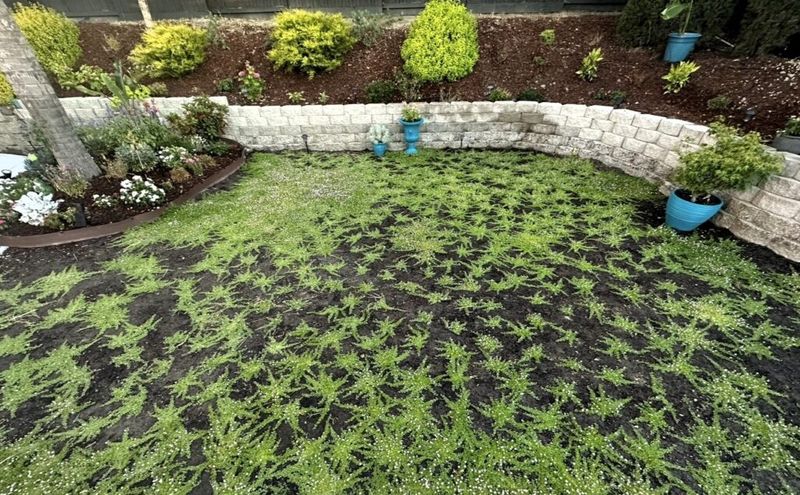
California is not one climate, and Kurapia does not perform the same way from San Diego to Redding to the Owens Valley. The plant generally stays evergreen in mild coastal and inland valley areas but can go semi-dormant or suffer frost damage in colder zones.
UC Master Gardeners of San Luis Obispo County note that performance varies by microclimate and that homeowners in colder areas should verify local suitability before committing to a full conversion.
Sun exposure, soil drainage, and slope also shape whether Kurapia will thrive or thin out. The plant prefers full sun and well-drained conditions.
Shaded areas under large trees or against north-facing walls are less likely to produce the dense, lawn-like coverage that makes Kurapia attractive. Poor drainage can cause root problems during the wet season, particularly in heavy clay soils that stay saturated.
Mapping your yard’s sun and shade patterns, drainage behavior after rain, and soil type before planting is more useful than choosing a plant based on a photo.
Yard use is where many homeowners need to make a realistic call. UC Cooperative Extension’s turf alternatives guide rates Kurapia for light foot traffic, not the heavy, repeated pressure of a play area, a dog run, or a backyard sports surface.
California DWR specifically advises homeowners to think carefully about whether they need to keep some lawn for children or pets before removing it entirely. A practical approach for many yards is partial conversion: replace the decorative strip along the street or a low-traffic side yard with Kurapia, while keeping a smaller, durable lawn surface in the area where activity actually happens.
Flowers, Vigorous Spread, and Fire Safety Require Tradeoffs
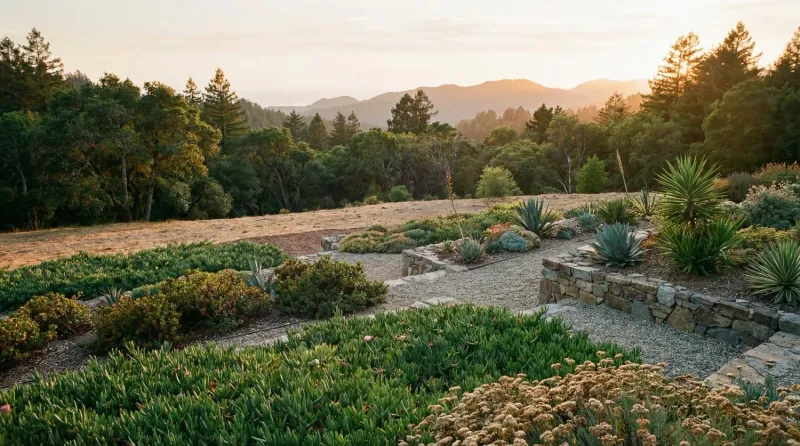
Kurapia does produce small flowers that attract bees and other pollinators, which is a genuine plus in a state where pollinator habitat has been shrinking alongside lawn conversion trends. UC Extension’s Lawnlessness workshop materials confirm that Kurapia flowers support pollinator visits.
The tradeoff is straightforward: mowing removes those flowers. A homeowner who mows for a tidy, lawn-like look will have a much less flower-rich surface than one who lets Kurapia grow and bloom between infrequent trimmings.
For maximum pollinator value, a diverse planting of regionally appropriate native plants will generally outperform any single ground-cover species, including Kurapia.
Vigorous stolon growth is both the feature and the management challenge. UC Landscape Plant Irrigation Trials data on Kurapia document plants rapidly outgrowing their designated areas.
Without a physical root barrier or regular edge trimming, Kurapia can creep into adjacent planting beds, paths, or neighbors’ yards. Installing a solid edging material at installation is far less work than chasing runners after the fact.
Fire safety deserves its own clear-eyed look. Some marketing around Kurapia implies that a living, low-growing ground cover is inherently safer than a dry lawn in fire-prone areas.
That framing overstates the case. CAL FIRE’s defensible space guidance makes clear that the first five feet around structures should prioritize non-combustible hardscape and be kept free of plant debris.
All vegetation can burn under the right conditions, and the factors that reduce fire risk are spacing, irrigation, removal of dead material, and home hardening, not the species label on the plant. Homeowners in wildland-interface areas should check with their local fire agency and follow current defensible-space zone requirements before treating any ground cover as a fire-safety solution.
The UC Statewide IPM Program’s guidance on minimizing fire hazards in landscapes reinforces that maintenance and placement matter more than species selection alone.
Plan the Conversion Before You Remove the Turf
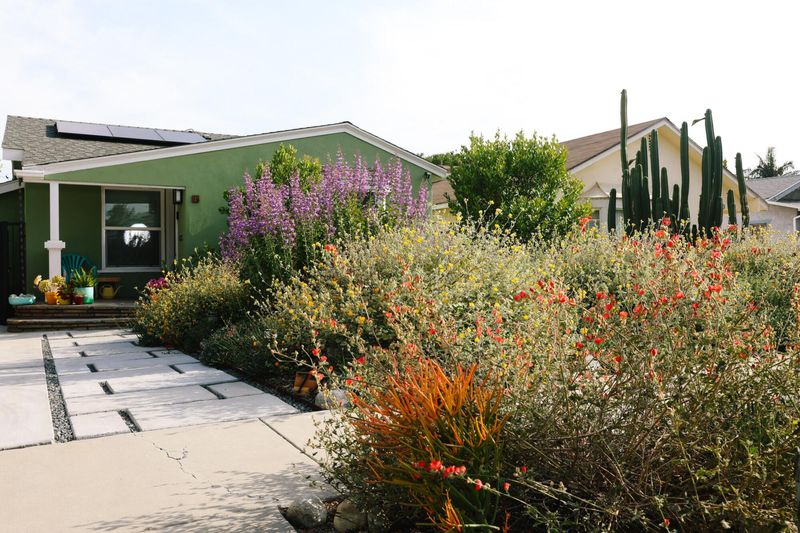
Removing a lawn is easier than undoing a poorly planned replacement, so the prep work matters more than most people expect. California DWR’s turf replacement guidance recommends mapping sun and shade patterns, checking soil and drainage conditions, identifying zones with heavy foot traffic, planning the irrigation system, and accounting for how large the replacement plants will grow at maturity before removing a single square foot of grass.
Calling 811 before any digging is also a required step, not an optional one, to locate underground utilities.
Rebate programs deserve careful attention before work begins, not after. Many local water suppliers in California offer turf replacement rebates, but the programs vary significantly in eligibility rules, approved plant lists, required documentation, and timing.
A number of programs require pre-approval before the lawn is removed. Submitting an application after the work is done can result in denial.
Contact your local water supplier directly, confirm the current requirements, and get written approval before starting the project if a rebate is part of your budget plan.
California’s statewide landscape rules do not mandate Kurapia or any specific ground cover. The Model Water Efficient Landscape Ordinance, updated with rules effective January 2, 2025, governs water use in certain new and rehabilitated landscapes, but local agencies may adopt stricter requirements on top of the state baseline.
The MWELO sets a framework for water budgets and irrigation efficiency, not a plant selection list. Always verify the current local requirements with your water supplier and city or county planning department before committing to a specific plant or design.
Choose Kurapia Selectively When Its Tradeoffs Fit the Yard
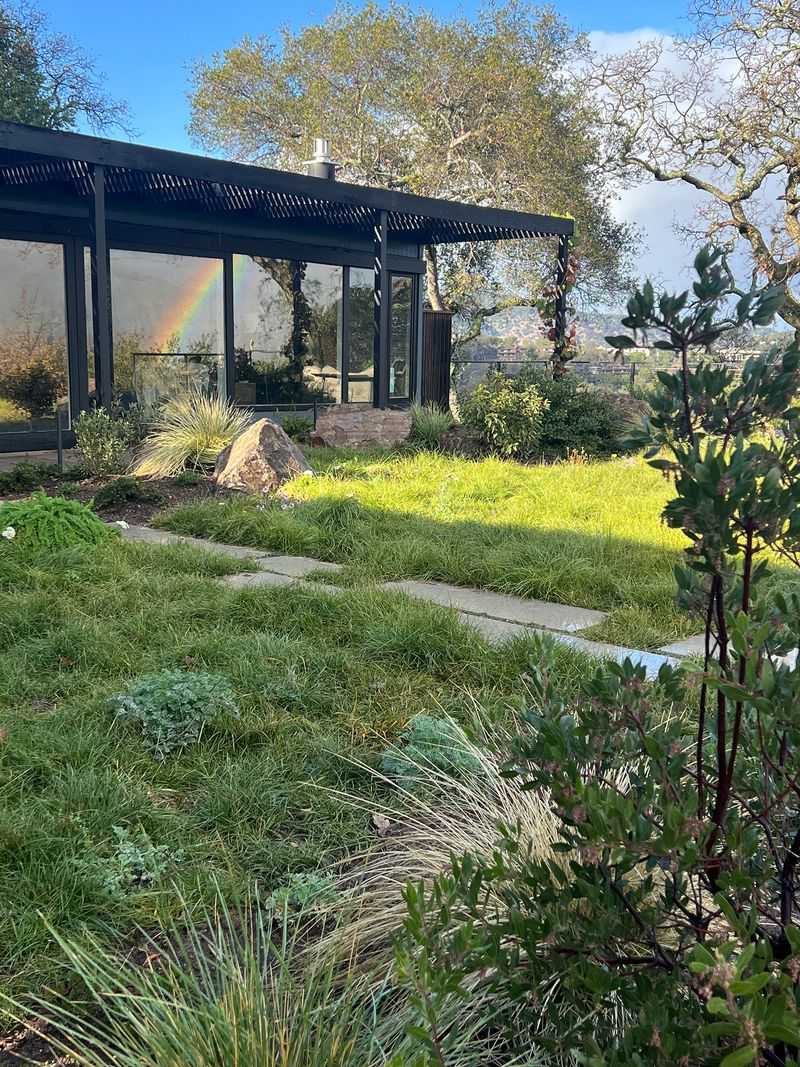
Kurapia earns a place on the shortlist for California homeowners who want a dense, green, low-mowing surface in a spot that gets full sun, sees only light foot traffic, and has an irrigation system that can be matched to the plant’s actual needs. UC Davis research supports it as a viable option in those conditions, and the documented water savings are real, though conditional on climate, soil, and irrigation design.
When the yard includes shaded areas, heavy-traffic play zones, fire-zone requirements that prioritize hardscape, or a desire for true native habitat diversity, Kurapia alone is not the complete answer. California DWR frames turf replacement as a site-by-site decision among many water-wise options, and a mixed approach, Kurapia in the right spots alongside native plants, decomposed granite, or a smaller retained lawn, often serves a yard better than a single-species conversion.
A yard that works well with less water, less mowing, and more habitat is built from honest site assessment, not from a trend. Kurapia is one useful tool for that job, and knowing exactly where it fits is what makes it worth planting.