
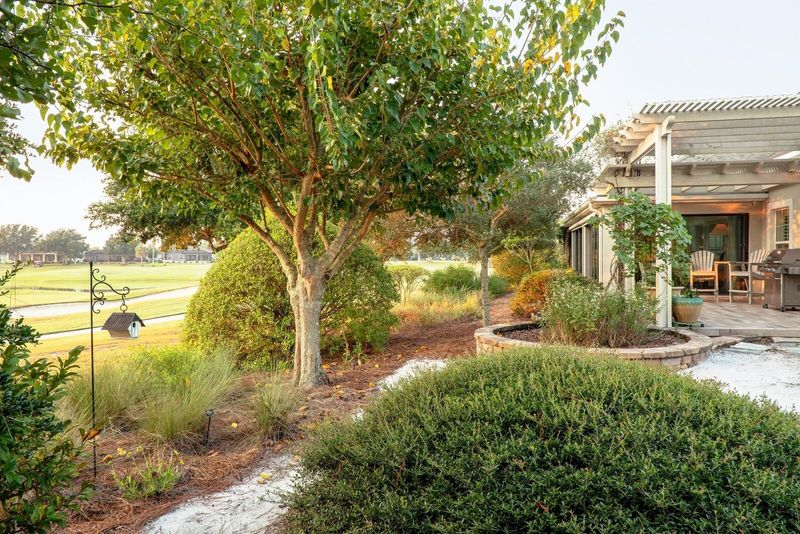
A front yard tree should do more than look nice. In Florida, it also needs to handle heat, sandy soil, sudden downpours, and long dry spells.
The native trees below stay reasonably sized for many home landscapes while giving shade, flowers, berries, or wildlife value. Pick the right one, and your entry can look better with less fuss.
1. Simpson’s Stopper
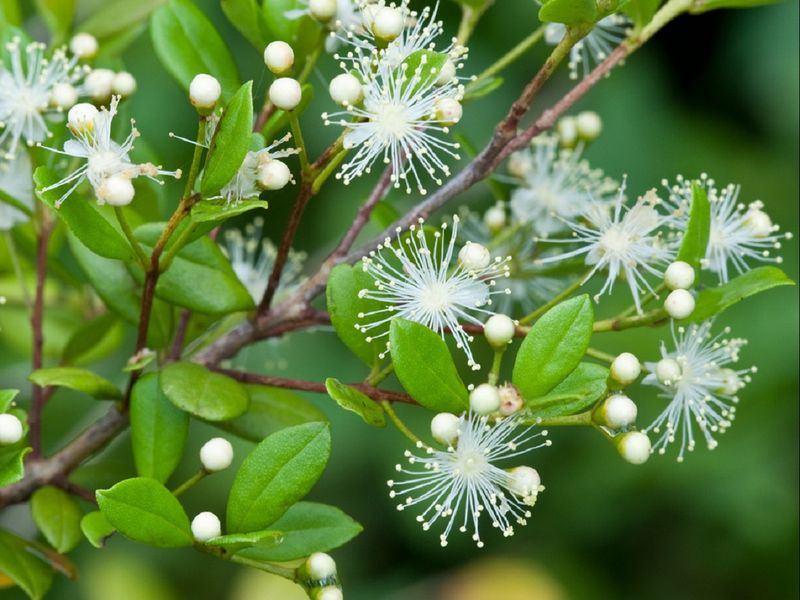
Neighbors may walk past Simpson’s stopper without knowing its name, but birds usually find it fast. Small white flowers appear like tiny bursts of confetti, followed by bright red to orange berries that help bring life to a front yard without making the tree feel messy or oversized.
For Florida homeowners, the big win is scale. Simpson’s stopper often fits where a live oak or magnolia would be far too much, and it can be trained as a small tree near a walkway, porch, or driveway edge.
Its evergreen leaves keep the front yard from looking bare, even when other plants take a seasonal break.
Once established, it handles heat, sun to part shade, and many well-drained Florida soils. In coastal areas, it is also valued for good salt tolerance, which makes it useful near breezy streets or barrier island neighborhoods.
Give it room for airflow, mulch lightly, and avoid burying the trunk flare.
What makes it different on this list is its polished, almost hedge-like look with real wildlife payoff. If you want a tidy native that can look formal without acting fussy, Simpson’s stopper earns its spot near the front door.
2. Walter’s Viburnum
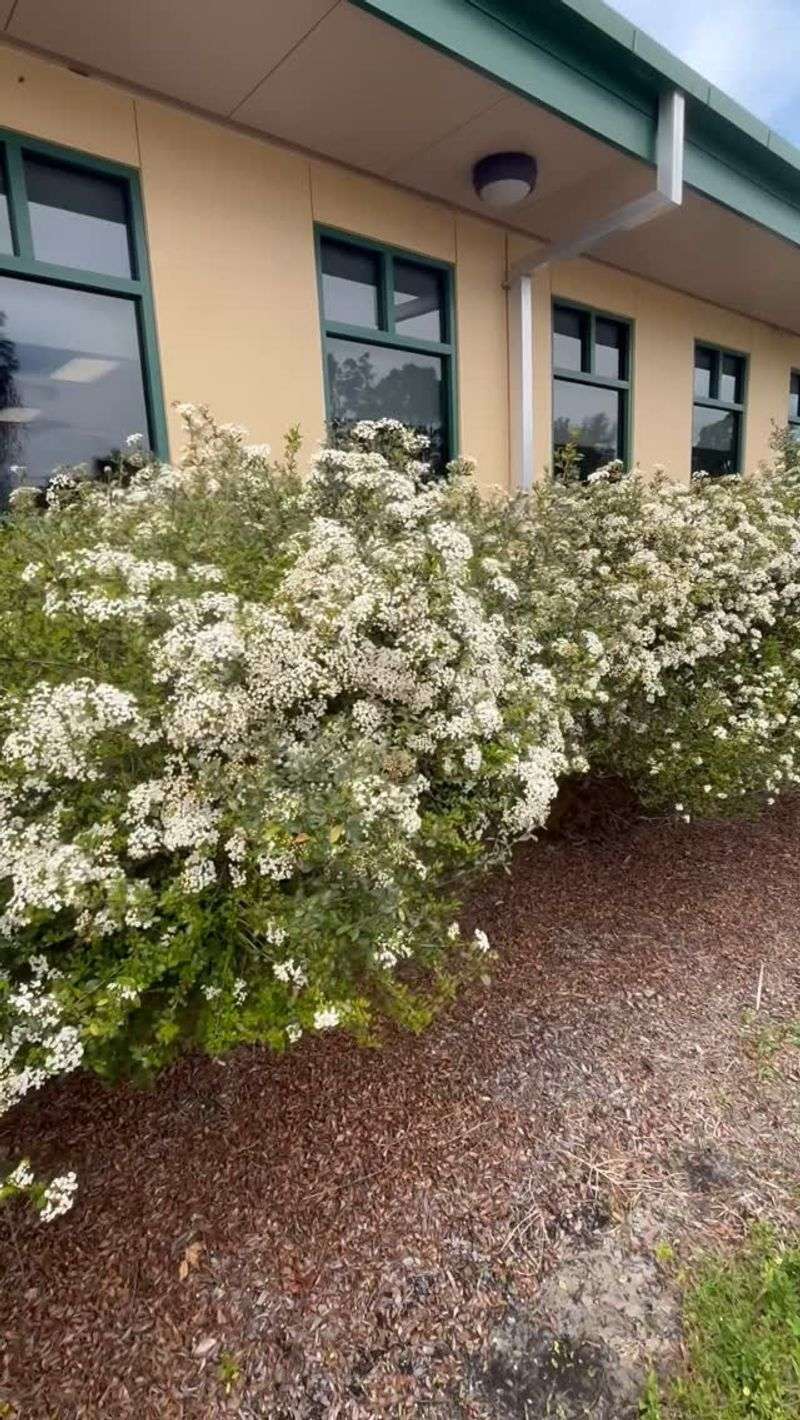
Few small trees clean up a foundation bed as neatly as Walter’s viburnum. It has the calm, finished look many homeowners want along the front of the house, but it is a Florida native with flowers, fruit, and habitat value hiding behind that well-behaved appearance.
In spring, clusters of small white blooms can cover the plant and draw pollinators. Later, berries may feed birds, especially when the tree is allowed to keep a more natural shape instead of being clipped too tightly.
Compact selections are common in the nursery trade, but the species can also be trained into a small multi-trunk tree.
Walter’s viburnum is especially handy for yards where space is tight but a little height is needed. Use it near a porch corner, along a driveway, or as a soft screen between neighboring front yards.
It prefers moist to average soil but can become fairly adaptable after it settles in, especially with mulch and smart watering during the first year.
Its special strength is structure. While some native trees bring drama, Walter’s viburnum brings order, privacy, and year-round green.
For a front yard that needs to look pulled together without constant trimming, it is one of Florida’s most useful underused choices.
3. Dahoon Holly
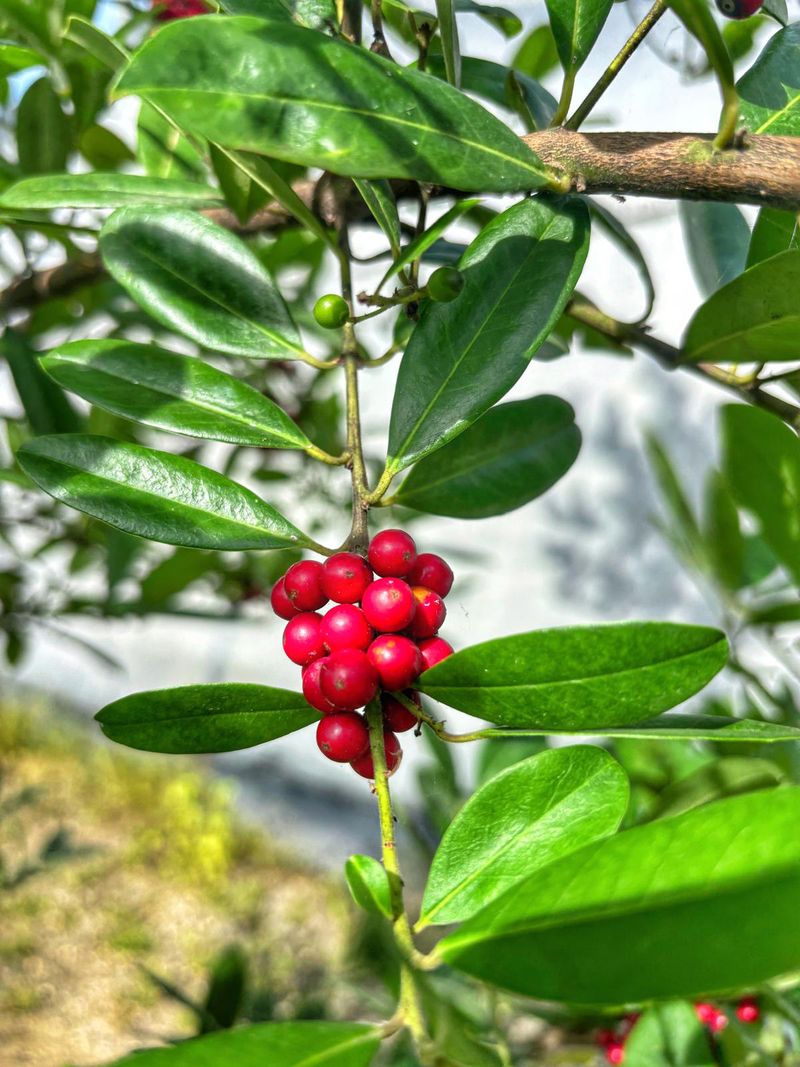
Bright red berries in winter can make a Florida yard feel decorated before anyone hangs a wreath. Dahoon holly brings that color naturally, with glossy leaves and an upright shape that works well where a broad shade tree would crowd the house.
Unlike many front yard trees, dahoon holly is comfortable in moist sites. That matters in parts of Florida where summer storms leave low spots soggy or where the soil stays damp after heavy rain.
It can also grow in ordinary landscape conditions if watered during establishment, making it more flexible than many homeowners expect.
Plant it where you can see the berries from a window, walkway, or street. Female trees produce the showy fruit when a compatible male holly is nearby, so ask a knowledgeable nursery about fruiting selections if berries are your main goal.
Birds appreciate the crop, and the evergreen canopy gives them cover.
Dahoon holly stands apart because it turns a drainage challenge into a design feature. In a front yard with a swale, rain garden edge, or damp corner, it can look intentional instead of like a compromise.
Give it enough space to grow upward, and it rewards you with color, screening, and a clean native look.
4. Satinleaf
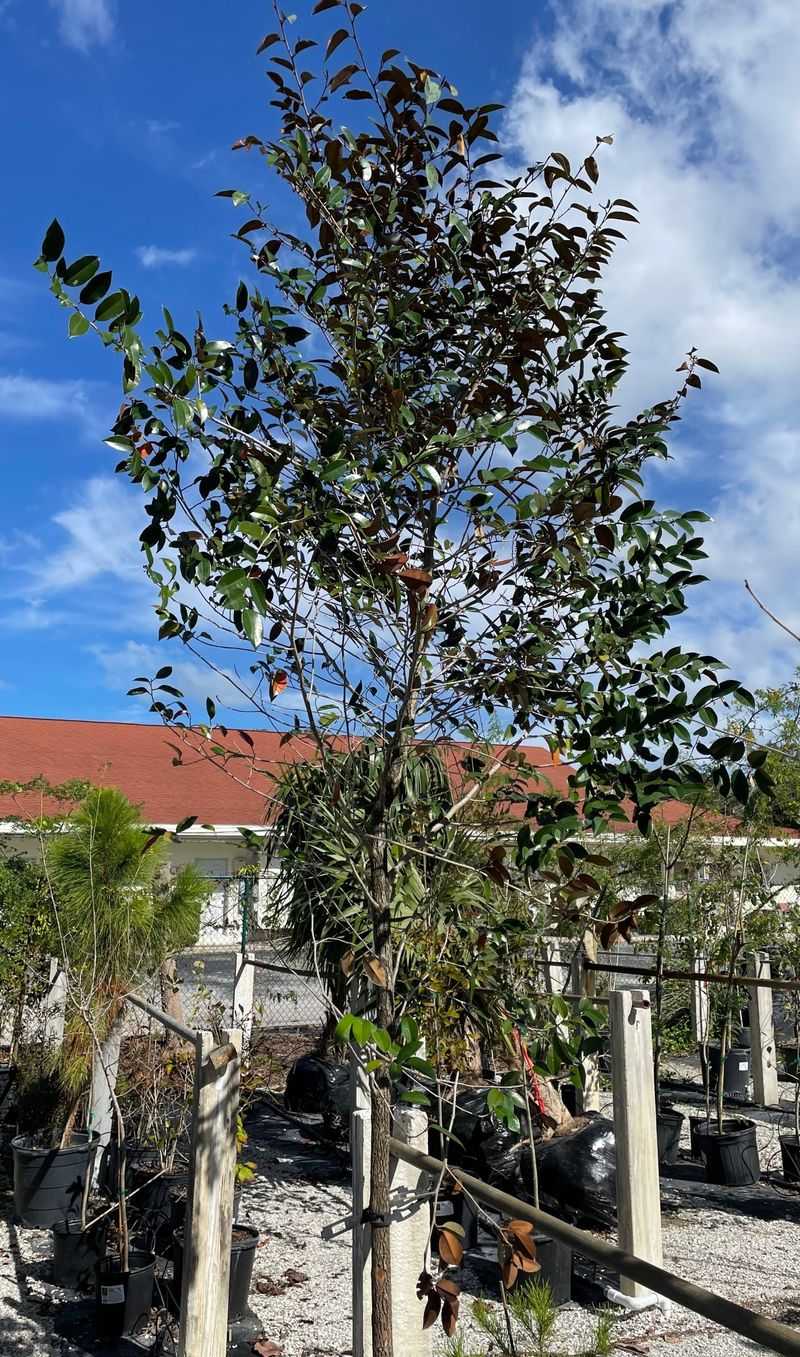
A breeze can turn satinleaf into a quiet light show. The top of each leaf is deep green and glossy, while the underside flashes bronze to copper when the wind moves through the canopy.
That shimmer gives a small front yard a tropical feel without relying on thirsty, high-maintenance ornamentals.
Satinleaf is best suited to warmer parts of Florida, especially South Florida and protected coastal landscapes. It likes well-drained soil and can handle heat once established, making it a strong match for sandy front yards that bake near sidewalks and driveways.
In the right site, it can be used as a small specimen tree where its foliage can be admired up close.
The tree’s beauty is mostly in its leaves, so it is a smart choice for gardeners who want curb appeal even when nothing is blooming. Pair it with simple native groundcovers or low shrubs so the reflective foliage remains the star.
Avoid planting it where cold snaps are common, since it is not the best fit for colder inland areas.
Its reason for being here is pure texture and shine. Many native tree lists focus on flowers or berries, but satinleaf proves foliage can carry the whole front yard.
For warm-zone Florida homes, it is an elegant native with a polished, resort-like mood.
5. Wild Lime
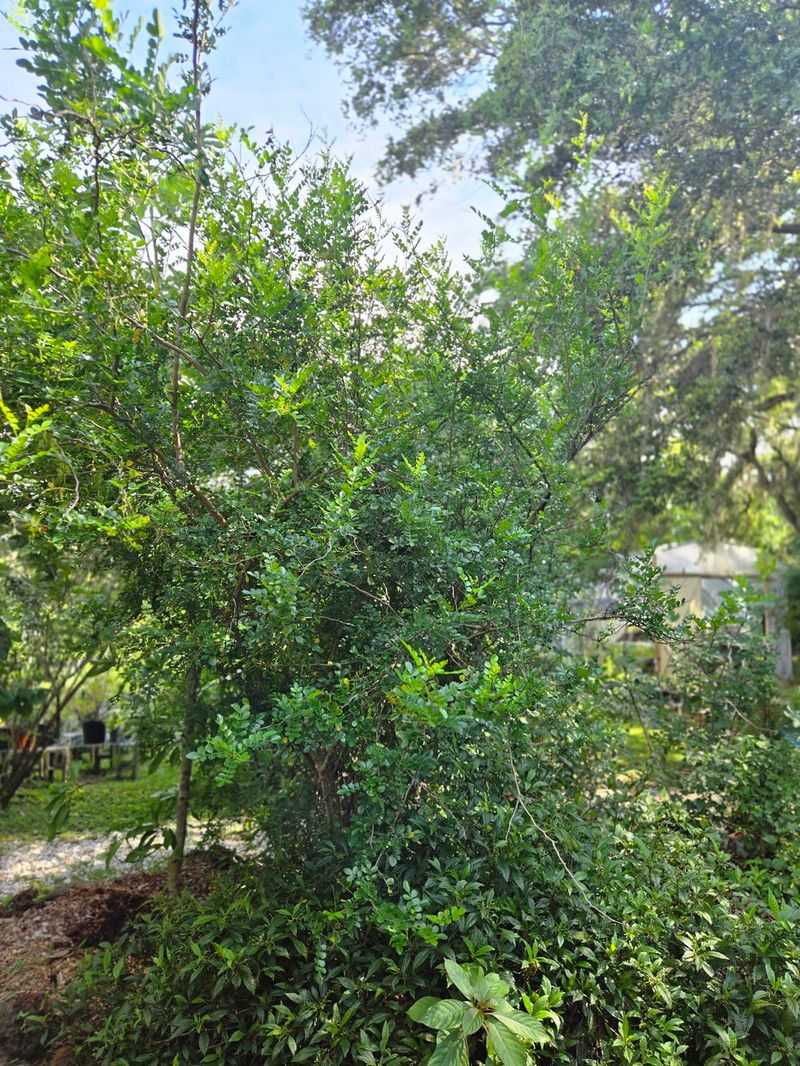
Butterfly gardeners know the secret: wild lime is not planted for a big fruit harvest. It is planted because giant swallowtail butterflies use it as a host plant, turning a small native tree into part of a living front yard habitat.
Wild lime has fine-textured leaves, an airy shape, and a naturally informal look. It can fit into a sunny front yard island, a side-of-driveway planting, or a mixed native border where it has room to be a little quirky.
The branches can be thorny, so keep it away from tight walkways, mailboxes, and places where kids run barefoot.
Heat and sandy soil are usually not deal breakers once the tree is established. Like many natives, it benefits from regular water while young, then becomes easier to manage as its roots settle in.
Small flowers can attract pollinators, and the foliage gives butterfly larvae something they actually need, not just nectar for adults.
Wild lime is different from the polished trees on this list because it feels more alive than formal. It is a conversation starter for gardeners who would rather see caterpillars and butterflies than a perfectly clipped green ball.
If your front yard has a sunny corner that can be both useful and a bit wild, this native deserves a look.
6. Red Buckeye
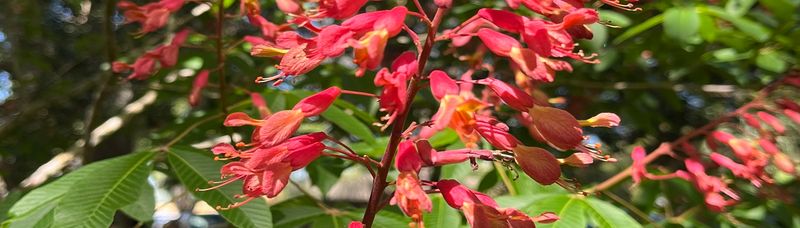
Red buckeye feels like a spring surprise tucked near the porch. Its red tubular flowers can draw hummingbirds, and the bloom arrives early enough to make the front yard feel awake before many summer plants hit their stride.
This is a good pick for gardeners who have bright shade or morning sun rather than a wide-open, blazing lawn. In North and parts of Central Florida, red buckeye can work nicely as an understory tree near pines, oaks, or the east side of a home.
It appreciates soil that does not stay bone dry all the time, so mulch and careful placement matter.
One thing to know upfront: red buckeye may go partly dormant or look tired later in the hot season, especially in dry spots. That is not failure, but it does mean the tree is best placed among other plants that can carry the show later in the year.
Think native grasses, coontie, beautyberry, or evergreen shrubs nearby.
Its standout quality is the hummingbird-friendly bloom in a compact package. Red buckeye is not trying to be a year-round screen or a formal entry tree.
It is for the homeowner who wants a seasonal spark, a more natural front yard, and a native tree that makes spring feel personal.
7. Marlberry
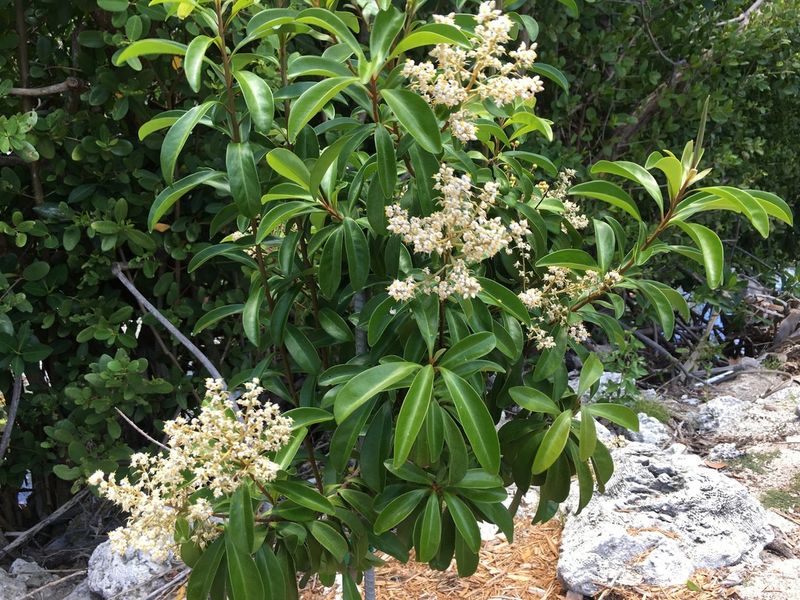
Shady front entries can be tricky, especially when the soil is sandy and the air feels heavy for months. Marlberry steps into that difficult spot with glossy evergreen leaves, fragrant white flower clusters, and dark berries that birds can use.
In warmer Florida landscapes, marlberry works well as a small tree or tall shrub under taller canopy trees or along the edge of a porch. It is especially useful where homeowners want a native plant with a lush, tropical look but do not have full sun.
The growth habit can be upright and layered, which helps it soften walls, fences, and blank corners.
Marlberry prefers some moisture but does not want to sit in poor drainage forever. A mulch ring helps protect roots, cool the soil, and reduce the need for constant watering during dry stretches.
Prune lightly to shape it as a small tree, removing lower growth over time instead of shearing it into a box.
The reason marlberry belongs on this list is shade performance. Many heat-tough natives want sun, while many shade plants stay too shrubby or plain for front yard impact.
Marlberry gives warmer Florida gardeners a refined understory option with flowers, berries, and year-round presence near the most visible part of the home.