
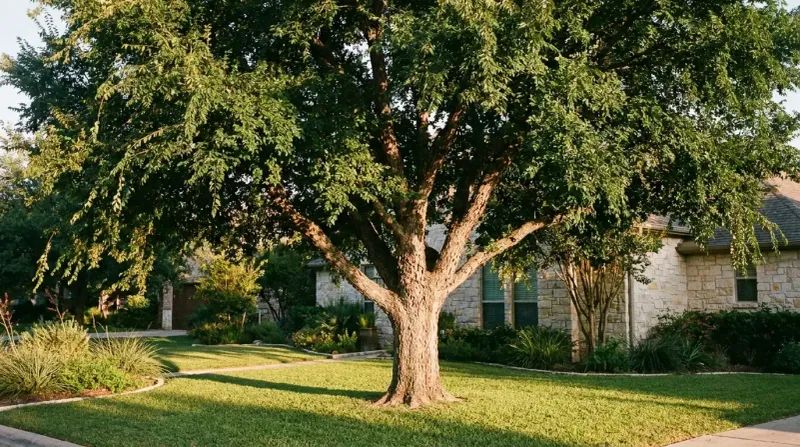
Summer afternoons in Texas can turn a west-facing wall into something that feels like a griddle, and that heat pours straight into your home while your AC works overtime. One native tree has earned a reputation for helping with exactly that problem when it is planted in the right spot with enough room to grow.
Cedar elm is a large, deciduous Texas native that handles tough soils and dry stretches better than most shade trees. If you have space on the west-facing side of your home, understanding what this tree can and cannot do may change how you think about landscaping for comfort.
Cedar Elm Offers a Strong Starting Point for Many Texas Yards
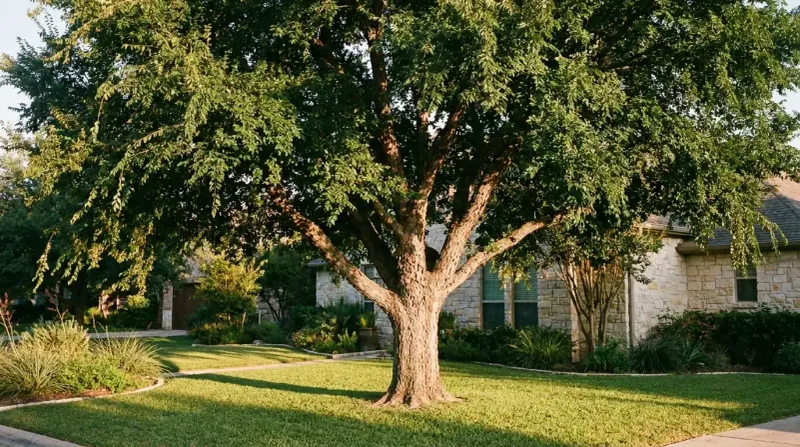
Cedar elm, known botanically as Ulmus crassifolia, earns its place on the short list of practical shade trees for Texas yards because of what it can handle. The Texas A&M Texas Tree Selector describes it as a large, deciduous tree with moderate growth, drought tolerance, and the ability to adapt to alkaline soils, poorly drained sites, salty conditions, and extended dry periods.
That combination of traits covers a wide range of Texas landscapes that would stress out less adaptable trees.
At maturity, cedar elm can reach 50 to 70 feet tall with a canopy spread that makes it genuinely useful for shading a building rather than just adding a patch of dappled light near the porch. The tree is deciduous, meaning it drops its leaves in fall and leafs out again in spring, which matters for seasonal light management.
Its moderate growth rate means patience is required, but the payoff is a substantial canopy that holds up in difficult conditions.
Texas A&M’s evaluation of Texas shade trees places cedar elm among the highest-performing trees in the state, alongside several other native and adapted species. That evaluation is an older selection reference rather than a freshly run performance trial, so it is best read as a useful guide for choosing among candidates rather than a current ranking with precise scores.
Cedar elm comes out of that work as a practical, broadly adaptable option for many Texas yards, not as the single definitive answer for every property across every region of the state.
Site conditions still matter. A tree that thrives in a Dallas yard with clay soil and occasional drought may not be the ideal pick for a High Plains property facing harsher winters and sandier ground, or a Gulf Coast lot with storm exposure and heavy drainage demands.
Cedar elm is a strong starting point for the conversation about west-side shade, but the final call depends on what the individual site actually offers.
West-Facing Walls and Windows Take the Hardest Afternoon Sun
Walk around your house at 4 p.m. on a July afternoon and pay attention to which wall is hottest to the touch. For most Texas homes, the answer is the west-facing side, and that is not a coincidence.
The sun tracks from east to west across the sky, and by mid-to-late afternoon it sits low enough on the horizon to drive solar radiation almost directly into west-facing windows and walls rather than glancing off the roof.
That low sun angle is the problem. When sunlight hits a vertical surface like a window or a stucco wall at a shallow angle, it transfers heat more efficiently than the high midday sun does.
West-facing windows are especially effective at letting that heat energy into the house, where it raises indoor temperatures and forces the air conditioner to run longer to compensate. Walls absorb the heat too, and some of it radiates inward for hours after the sun goes down.
The U.S. Department of Energy’s guide to home landscaping specifically recommends planting trees with lower branches on the west side of a home to block afternoon sun.
That guidance reflects a real physical priority: west-side shade addresses one of the most direct pathways for summer heat gain. U.S.
Forest Service energy-efficiency research reinforces the point, and modeling work by Forest Service researchers found that west-facing shade produced the largest cooling benefit among the orientations they tested.
Saying the west side matters is not the same as guaranteeing that any tree planted there will lower a specific home’s utility bill. Orientation is one factor among several, including window area, insulation quality, HVAC efficiency, and how well a mature canopy actually covers the building surfaces that are absorbing heat.
The west side is where to focus, and understanding why makes it easier to plan the placement that gives a shade tree the best chance to help.
Mature Building Shade Can Reduce Cooling Demand Without Guaranteeing Savings
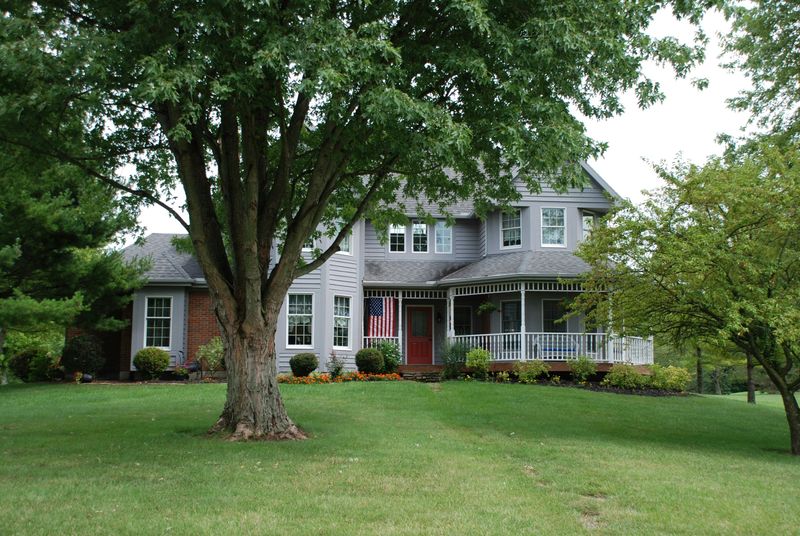
Shade from a mature tree works by intercepting solar radiation before it reaches walls and windows. When sunlight hits a leaf canopy instead of a west-facing window, less heat energy enters the house, and the air conditioner does not have to work as hard to maintain a comfortable temperature.
That mechanism is real and physically straightforward, but translating it into a predicted dollar amount on a utility bill is not straightforward at all.
A study of 113 homes in College Station, Texas found that homes with greater tree shade used less cooling electricity, and shade came out as the most significant variable the researchers tested. That result matters because it connects tree shade to cooling energy use in an actual Texas climate rather than relying entirely on computer models built for other states.
What the study does not do is prove that cedar elm specifically produces a particular bill reduction, or that every Texas homeowner who plants a shade tree will see measurable savings on the next summer’s statement.
The variables that shape the outcome include the tree’s mature canopy size and density, how far the tree is planted from the house, how much west-facing window area the home has, the quality of wall and attic insulation, the age and efficiency of the HVAC system, and the local climate. The Department of Energy frames landscape shade as one component of a broader approach that also includes insulation, efficient windows, air sealing, and HVAC maintenance.
A shade tree works alongside those measures rather than replacing them.
Timing adds another layer of honesty. Department of Energy guidance notes that a slow-growing deciduous tree can take up to 10 years to provide meaningful roof shade.
A cedar elm planted this spring will cast some shade on windows fairly early in its life, but the kind of broad canopy coverage that meaningfully reduces heat entering a home develops over years. Plan for the tree it will become, not the tree it is on the day it leaves the nursery.
Place the Tree for Its Future Canopy, Not Its Nursery Size
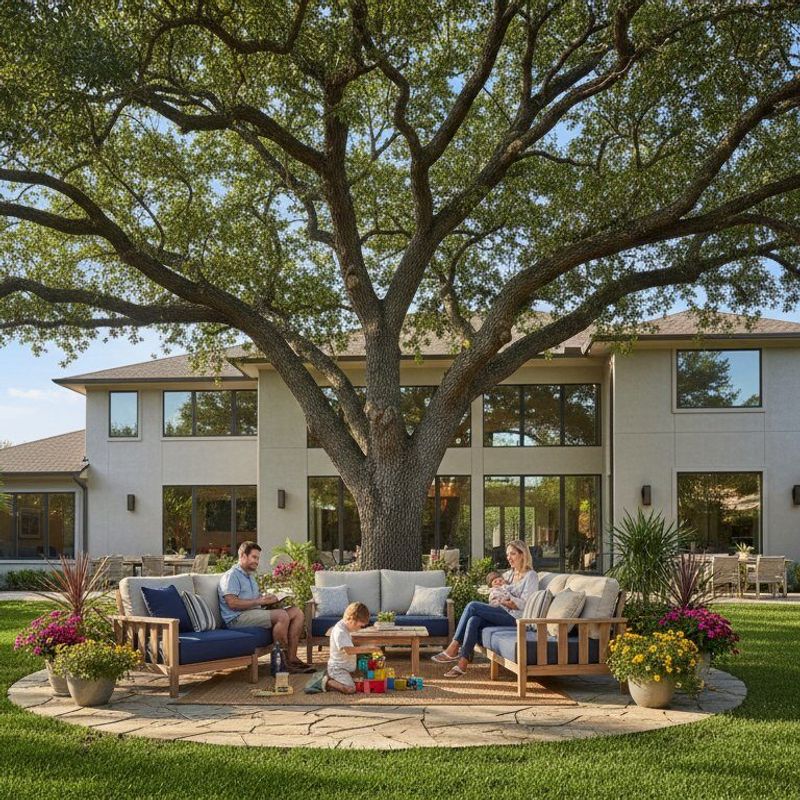
Placement decisions made at planting time determine whether a shade tree eventually does the job it was chosen for. A cedar elm that looks like a manageable 6-foot sapling at the nursery can reach 50 feet tall and spread its canopy 40 feet wide at maturity.
Planting it based on its current size rather than its future form is one of the most common mistakes homeowners make with shade trees.
Extension guidance on planting trees for energy conservation recommends large deciduous trees with mature heights of at least 25 feet for shading west-facing walls and windows, with a general planting range of roughly 10 to 20 feet from the house when site conditions allow. That range is a starting point, not a universal rule.
The actual number for a specific yard depends on the tree’s mature canopy width, the height of the roofline, the presence of overhead utility lines, pavement, sewer lines, and any local code requirements. A tree planted too far away may never shade the wall effectively; one planted too close creates a different set of problems covered in a later section.
The goal is to position the eventual canopy so it intercepts the low afternoon sun striking west-facing windows and walls during the hottest part of the day. Department of Energy landscaping guidance recommends trees with lower branches on the west side specifically because those branches begin shading windows and walls earlier in the tree’s life, before the canopy is large enough to shade the roof.
Cedar elm’s deciduous habit is an advantage here. The tree loses its leaves in fall, which allows more winter sunlight to reach the house than a dense evergreen planted in the same spot would allow.
That seasonal shift matters for passive solar warmth in winter, though bare branches still cast some shade even after leaf drop, so the benefit is partial rather than complete. For Texas homeowners who want summer shade without completely blocking winter sun, a deciduous tree like cedar elm offers a reasonable seasonal balance that an evergreen cannot match.
Establishment Water and Mulch Build the Canopy You Need
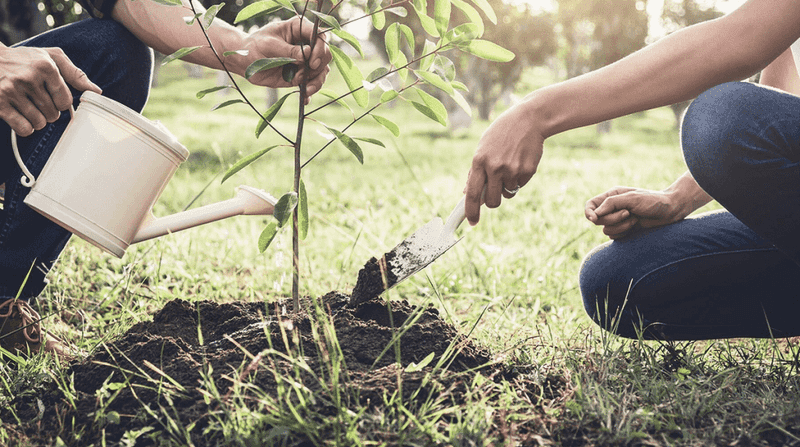
Getting a cedar elm established is where a lot of well-intentioned plantings go sideways. The tree is drought-tolerant once it has settled in, but a newly planted tree has a limited root system and cannot pull moisture from a wide area the way a mature tree can.
Skipping consistent establishment watering is one of the fastest ways to end up with a stressed or dead tree instead of the shade canopy you planned for.
University extension guidance on watering newly planted trees recommends deep, regular watering rather than brief surface watering. Deep watering encourages roots to grow downward and outward in search of moisture, which builds the kind of root structure that supports a large canopy and helps the tree handle dry spells later on.
Frequent shallow watering keeps roots near the surface, where they are more vulnerable to heat and drought stress. The right frequency depends on your soil type, how much rain has fallen, the current heat and wind conditions, and the size of the tree you planted, so check soil moisture a few inches down rather than watering on a fixed calendar schedule.
A mulch ring around the base of the tree helps in two important ways. It slows evaporation from the soil surface so the root zone stays moist longer between waterings, and it reduces competition from grass and weeds that would otherwise pull water and nutrients away from the young tree.
Apply mulch in a shallow, even layer and keep it a few inches away from the trunk. Piling mulch against the bark, sometimes called a mulch volcano, traps moisture against the trunk and can cause rot, bark damage, and oxygen stress to the roots over time.
The connection between establishment care and the cooling goal is direct. A cedar elm that struggles through its first few summers due to inadequate water grows more slowly, develops a thinner canopy, and may never reach the size needed to shade a significant portion of the west-facing building surface.
Investing in proper establishment watering is not separate from the shade strategy; it is part of it.
Protect Utilities, Structures, and HVAC Airflow Before You Dig
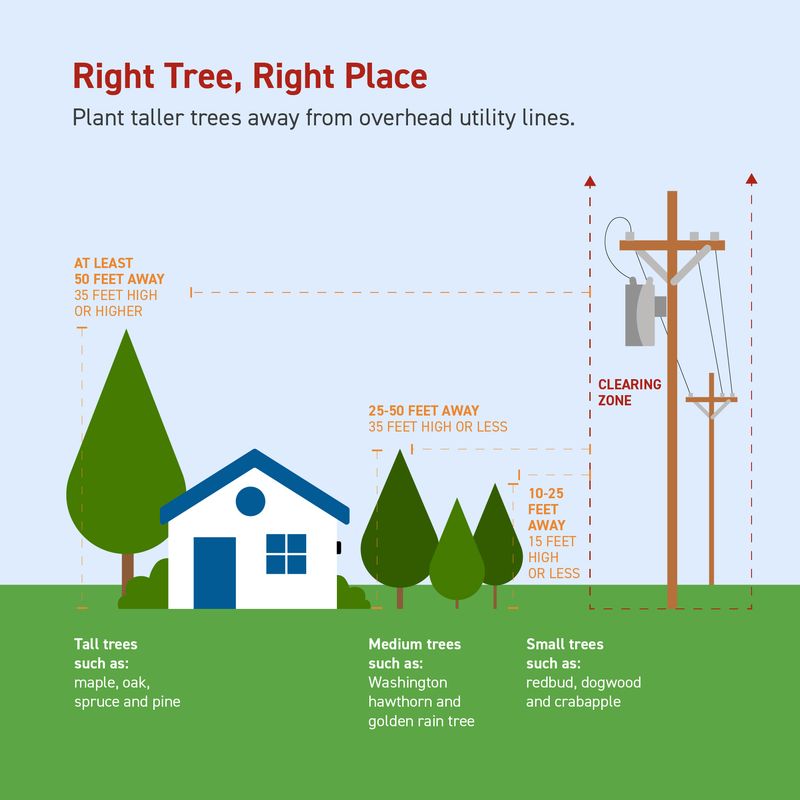
Before buying a cedar elm, spend time evaluating the planting site with the tree’s mature form in mind. A 50-foot tree with a wide canopy and an extensive root system is a different proposition from the sapling in the nursery pot, and the problems that come from planting too close to infrastructure tend to show up years after the tree is well established and expensive to move or remove.
Texas A&M AgriLife Extension’s tree planting guidance specifically warns that planting locations may be limited by overhead and underground utilities, property lines, sidewalks, driveways, and municipal ordinances. Call 811 before digging to locate buried lines, and look up to check for overhead power lines that a mature canopy would eventually reach.
Sewer lines and foundation proximity deserve the same attention, since large surface and lateral roots can stress pavement, crack foundations, or interfere with drainage over time.
Department of Energy guidance advises planting far enough from the house that mature roots and branches will not damage the foundation or roofline. That distance is not just a safety buffer; it is also what allows the tree to develop the full canopy spread that makes it useful for building shade.
A tree crammed against the house may never develop the form that justifies planting it there in the first place.
The outdoor AC condenser unit deserves separate attention. Extension guidance on energy-efficient planting recommends maintaining several feet of clearance around the condenser to preserve the airflow the equipment needs to operate efficiently.
Vegetation that crowds the unit can reduce its performance, and any small benefit from shading the condenser itself is easily offset by restricted airflow. Research from the Florida Solar Energy Center found that direct condenser shading produced average savings of roughly 0.1%, with results that were not statistically conclusive, and the researchers cautioned that nearby landscaping can reduce efficiency when airflow is impeded.
Shading the building’s walls and windows has much stronger support as a cooling strategy than trying to shade the condenser itself.
Cedar Elm Still Requires Regional Judgment and Maintenance
Cedar elm’s adaptability is genuine, but adaptability is not the same as working equally well everywhere in Texas or requiring no care once it is in the ground. Texas stretches across multiple climate zones, from the humid Gulf Coast to the semi-arid Trans-Pecos to the High Plains, and conditions that make cedar elm a natural fit in Dallas or Austin may not translate cleanly to every corner of the state.
Local soil type, drainage patterns, how long droughts last, how much supplemental irrigation is available, storm exposure, and the amount of space a site can offer all factor into whether cedar elm is the right call for a specific yard.
Native status is a useful starting point, but it is not a guarantee of site fit. A tree can be native to a broad region while still struggling in a particular microclimate, a poorly draining low spot, or a yard where mature size conflicts with overhead lines or neighboring property.
Texas A&M AgriLife’s tree planting guide emphasizes matching the tree to site conditions rather than choosing based on nativity alone.
Texas A&M’s tree selector profile for cedar elm calls the species drought-tolerant but lists its water needs as moderate. That distinction matters during a prolonged Texas drought, when even established cedar elms may benefit from supplemental watering.
The tree is not a plant-and-ignore option in every yard, especially during extended dry periods.
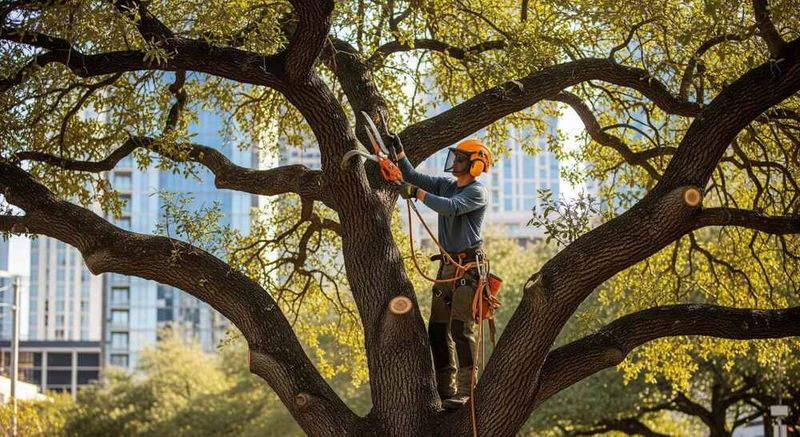
Maintenance is part of the long-term picture. Texas A&M notes that drooping branches may require periodic pruning to maintain clearance and a good structure, and the profile identifies aphids, powdery mildew, and mistletoe as notable problems to monitor for.
None of these issues make cedar elm a poor choice, but they do mean that owners should plan for occasional inspection and care rather than treating the tree as self-sufficient once it is established. A well-maintained cedar elm is a long-lived asset; a neglected one can become a liability.
The Practical Verdict for a West-Facing Texas Home
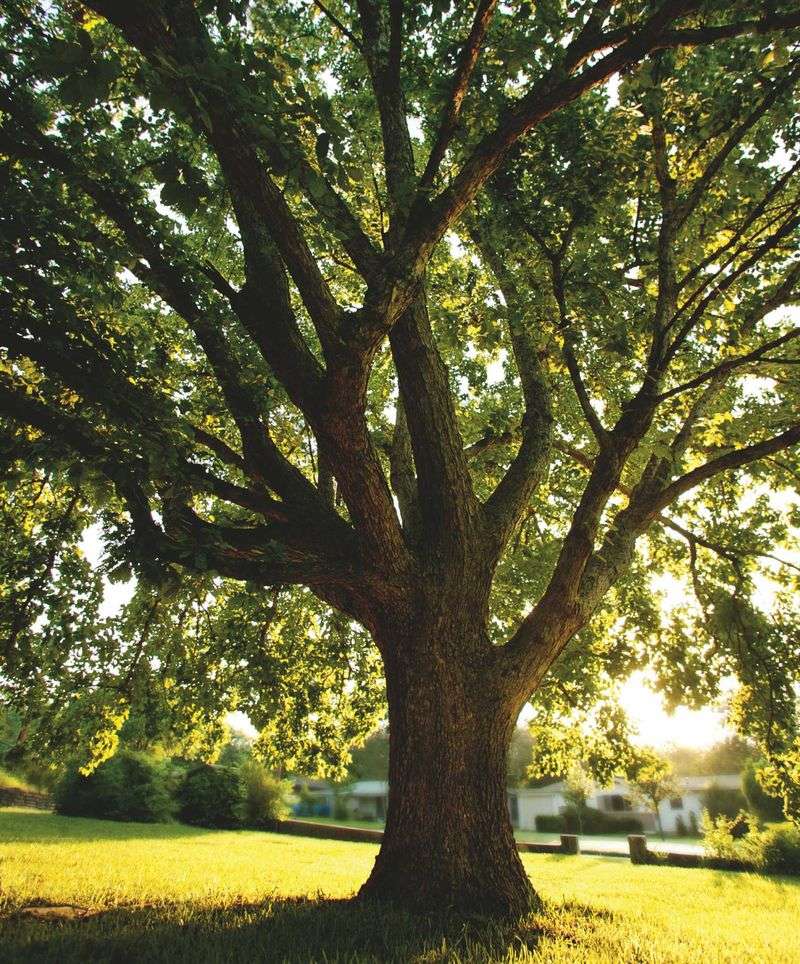
Cedar elm makes sense for a west-facing Texas yard when three conditions line up: enough space for its mature canopy without conflicting with utilities, structures, or property lines; the ability to provide consistent establishment water; and a planting position that will eventually shade west-facing windows and walls during the hottest part of the afternoon. When those conditions are present, this broadly adaptable Texas native is a practical and well-supported choice for many homeowners.
What cedar elm cannot do is guarantee a specific reduction in your AC bill. The tree may reduce solar heat gain and cooling demand over time as its canopy matures, but the actual effect on any individual home depends on too many variables to promise a particular outcome.
Planting trees for energy conservation is a long-term strategy, not a quick fix for next summer’s utility statement.
The next steps are practical: walk the west-facing side of your home in the late afternoon, note where the sun hits hardest, call 811 to locate underground utilities, check for overhead lines, measure the available space against the tree’s mature dimensions, and plan for the tree it will become rather than the small tree you bring home from the nursery. A cedar elm planted thoughtfully today can be one of the more useful things in your yard a decade from now.