
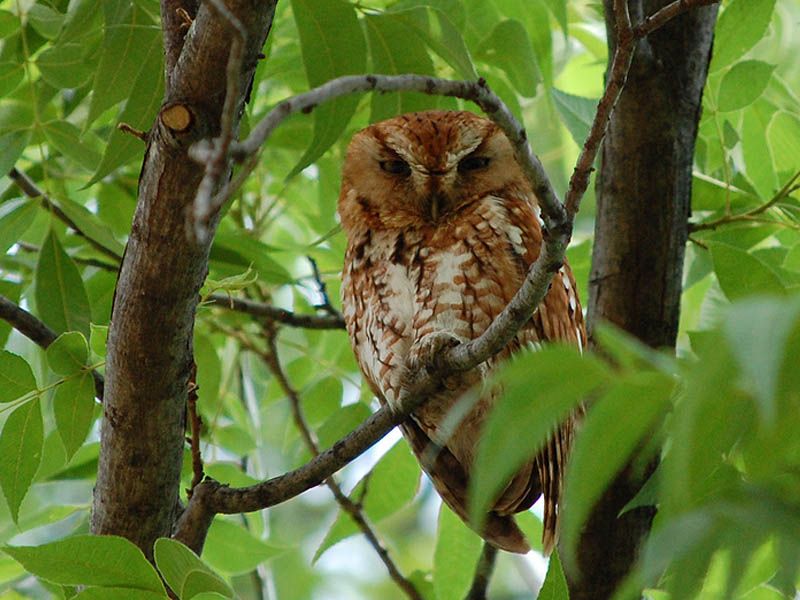
Eastern Screech-Owls are small, secretive birds that live in suburban Central Texas yards, often going unnoticed until you hear their soft, trembling whinny on a quiet night. Setting up the right habitat may give one of these native predators a place to nest or roost, and a yard that hosts a screech-owl could also see fewer mice and other small rodents as a side benefit.
That said, no single box or yard change can guarantee an owl will show up, stay, or make a measurable dent in your rodent population. What follows is a practical, honest guide to the habits and choices that give Eastern Screech-Owls the best possible reason to use your yard.
What a screech-owl box can—and cannot—do for a Central Texas yard
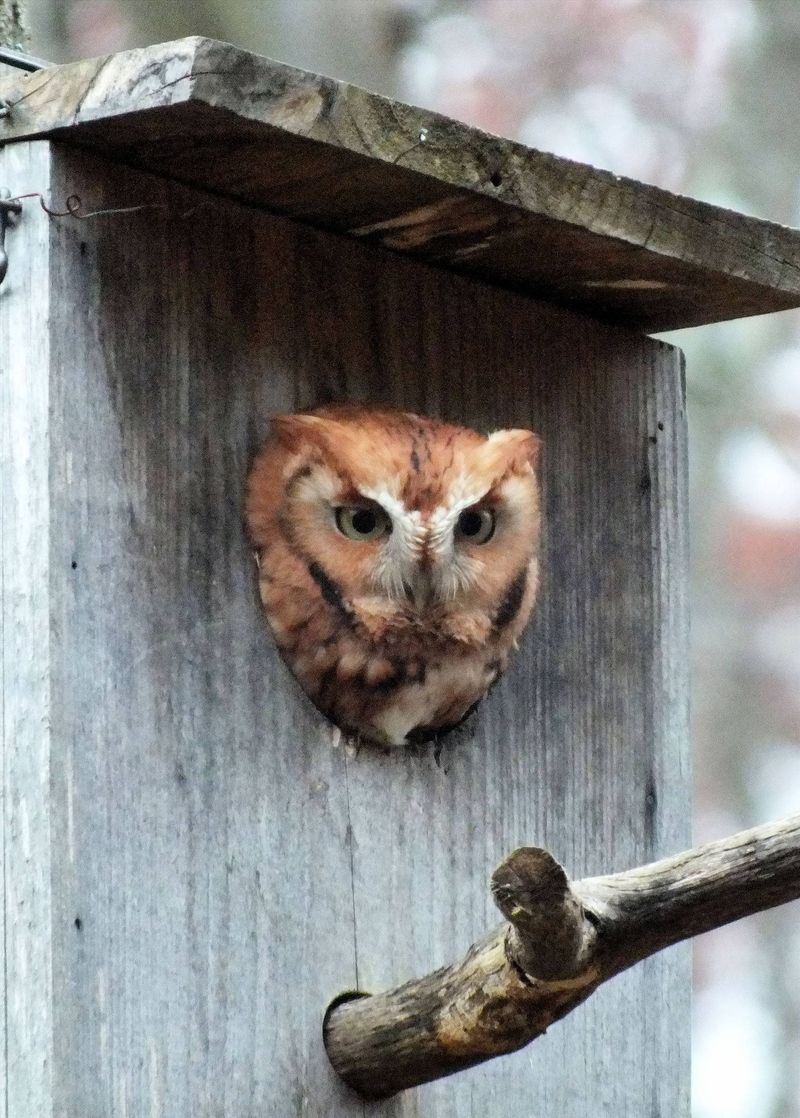
Eastern Screech-Owls are year-round residents of Central Texas, showing up in open woods, parks, and suburban neighborhoods from Austin to San Antonio and beyond. Texas Parks and Wildlife confirms they are common in eastern Texas woodlands and suburban areas, hunting primarily at night from low perches and often heard far more than they are seen.
Their call, a descending whinny or a long monotone trill, is one of the more distinctive sounds a Central Texas yard can offer after dark.
A nest box gives a local owl a ready-made cavity to investigate, but it does not summon one on demand. Whether a box gets used depends on whether owls are already present in the surrounding area, whether the habitat offers enough cover and prey, and whether the site is free of enough disturbance to feel safe.
A well-placed box may provide a nesting or roosting site and may bring a rodent-eating predator into the yard. Treat it as a wildlife-support measure, not a guaranteed pest-control system.
The diet of an Eastern Screech-Owl is far broader than most people expect. Cornell Lab of Ornithology research shows these owls eat insects, reptiles, amphibians, small birds, bats, crayfish, earthworms, mice, and occasionally rats.
They are generalist hunters, not rodent specialists, and any reduction in mice or other small mammals in your yard is an uncertain side benefit rather than a predictable outcome.
Central Texas research offers real encouragement on the recurring-use angle. A long-running study of suburban Eastern Screech-Owls in Central Texas found successful nesting in residential yards, with owls using both nest boxes and natural cavities across multiple seasons.
That evidence shows recurring seasonal use is possible in suitable habitat, not that every box installed in every yard will be occupied or will reduce household rodents. The primary payoff is supporting a native predator.
Any rodent benefit is secondary and should be managed separately.
Assess the yard before adding a box
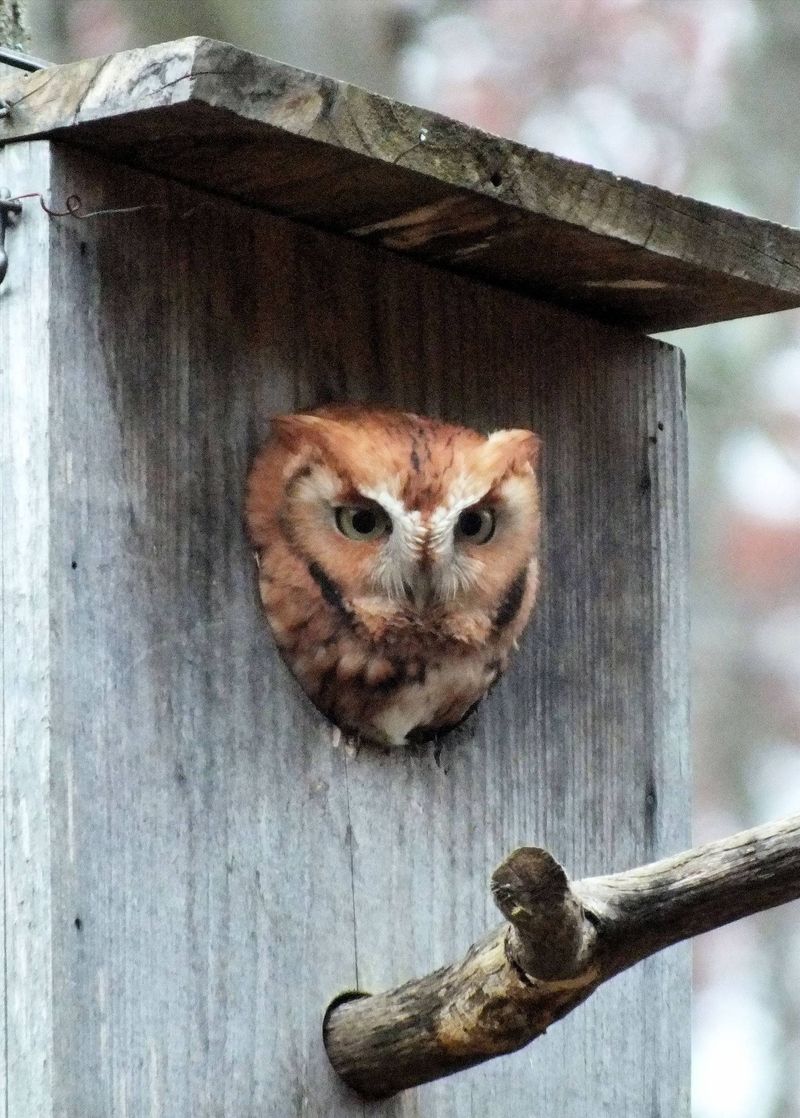
Before spending time and money on a nest box, walk your property and ask an honest question: does this yard offer what a screech-owl actually needs? The best candidate yards combine mature trees or existing cavities with open areas where an owl can hunt, plus brushy cover that shelters prey.
A lot with several large live oaks, cedar elms, or pecans near a creek corridor, a greenbelt edge, or even a neighbors wooded fence line is a far better prospect than a flat, treeless lawn with no structural cover.
Texas Parks and Wildlife habitat guidance emphasizes that trees, shrubs, and layered vegetation provide the shelter and prey base that cavity-nesting birds depend on. Natural cavities in old trees are the original screech-owl home, and Cornell NestWatch recommends siting a box near a woodland edge with adjacent fields or open areas, which mirrors what good Central Texas lots already offer when mature trees are present.
Dead trees, called snags, are worth keeping when they are safe to do so. A standing snag provides roosting spots, insect prey, and natural cavities that no box can fully replicate.
Keep a snag only when it does not threaten people, buildings, utilities, or vehicles. When a dead tree is too close to a structure or a power line, removing it is the right call, and a mounted box can partially fill the gap it leaves.
Certain site features make a box a poor investment regardless of design. Heavy nighttime lighting, intense human foot traffic, roads with fast-moving vehicles nearby, free-roaming cats, and yards with no trees or cover within reasonable distance all reduce the odds that an owl will investigate or stay.
TPWD owl stewardship guidance notes that reducing unnecessary nighttime lighting is one of the more practical safety steps a homeowner can take. A box placed in a poor site is not wasted effort, but it is likely to sit empty for years.
Choose a nest box built for Eastern Screech-Owls
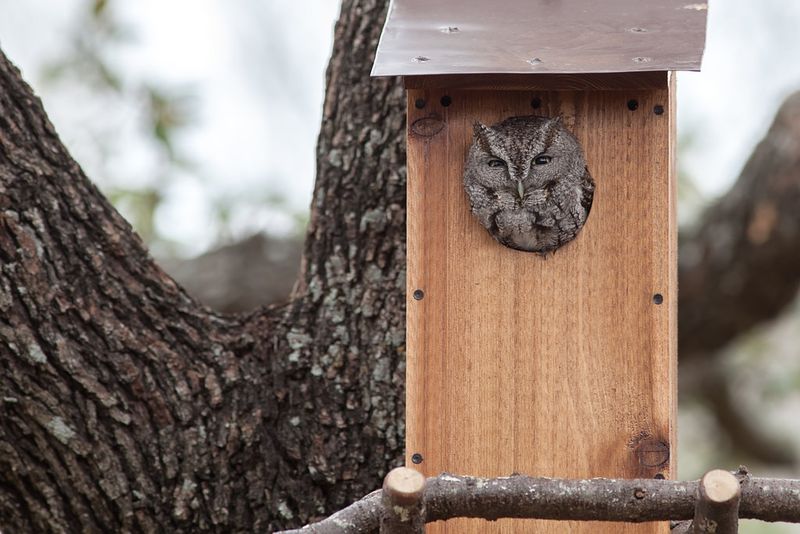
Not every product labeled an owl house will work for an Eastern Screech-Owl. Box dimensions, entrance size, and interior depth all matter, and a cavity that is too large, too small, or poorly constructed can be ignored or taken over by other species.
Texas Parks and Wildlife nest-box specifications call for an approximately 8-by-8-inch floor, an interior depth of 12 to 15 inches, a 3-inch entrance hole, and mounting at roughly 10 to 30 feet above the ground. Those numbers are a reliable starting point for Central Texas conditions.
Cornell NestWatch lists the same 3-inch entrance and 10-to-30-foot height range and recommends spacing boxes roughly 100 feet apart if you plan to install more than one. Dimensions vary somewhat across published plans, so the goal is to follow a species-specific design rather than assume that any commercially available owl box meets the right criteria.
Audubon provides a free build plan that many Central Texas birders have used successfully, and following a plan like that is a safer approach than buying a decorative product with no published specs.
Eastern Screech-Owls do not build conventional nests. Cornell Lab notes that they lay eggs directly on wood chips, leaves, or whatever debris has collected in the cavity.
Adding 2 to 3 inches of dry wood shavings, not cedar shavings, which can be irritating, to the bottom of the box before installation gives the owl a ready surface and is consistent with NestWatch guidance.
Construction quality matters as much as dimensions. The box should be made from untreated wood thick enough to insulate against Central Texas summer heat, with drainage holes or a recessed floor to prevent standing water, ventilation gaps near the top, and a secure latch or panel that allows annual cleaning when the box is unoccupied.
A box that warps, floods, or falls apart in one Texas summer is a wasted resource for owls and for you.
Place the box where an owl can reach it safely
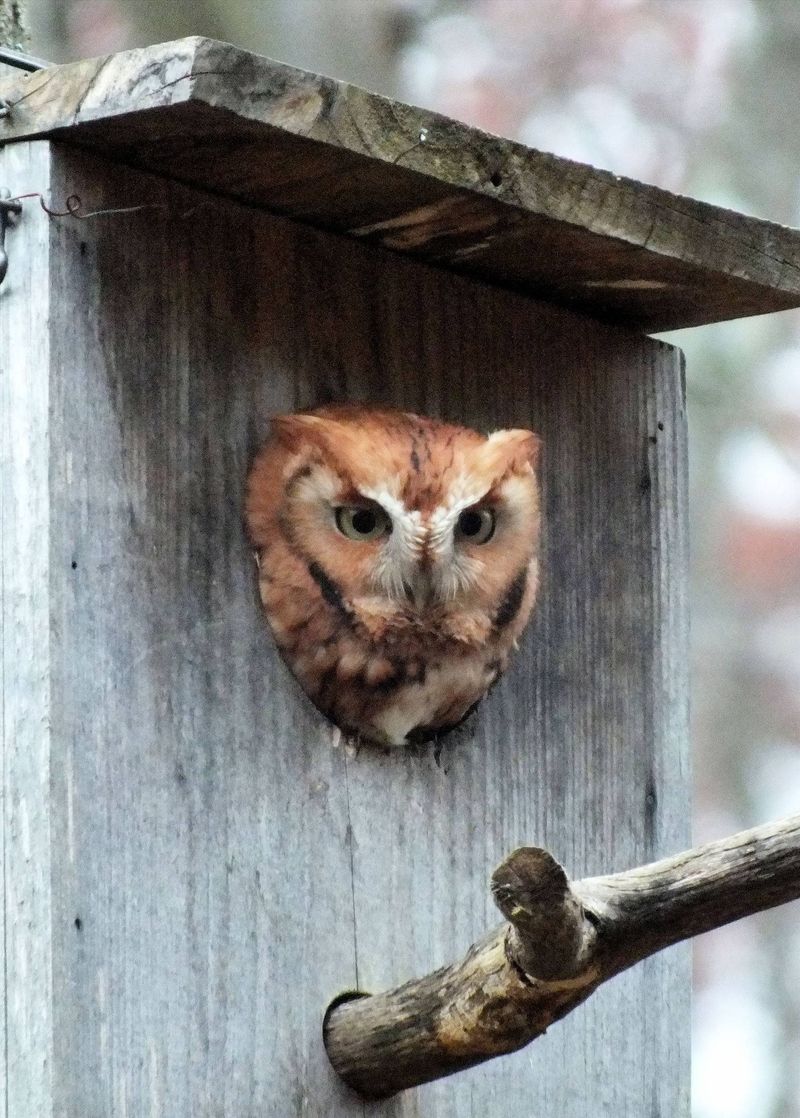
Choosing the right box matters, but where and how you mount it determines whether a passing owl will stop to investigate or move on. Mount the box securely on a sturdy tree, pole, or building at the TPWD-recommended height of 10 to 30 feet.
A box that wobbles in the wind, tilts over time, or is accessible from surrounding branches is a liability rather than an asset. A stable mount signals a stable cavity, which is exactly what a nesting owl needs.
NestWatch placement guidance recommends siting the box near a woodland edge, stream corridor, or open yard area that combines cover with hunting space. A nearby branch that does not block the entrance gives fledglings a safe first landing spot and gives the adult owl a convenient perch for watching the entrance before entering.
Position the box so that branch is accessible but does not form a ladder that raccoons, snakes, or squirrels can use to reach the entrance directly.
Pole mounting with a metal predator guard or baffle below the box is one of the most reliable ways to reduce access by the animals most likely to raid a screech-owl cavity in Central Texas: raccoons, rat snakes, and free-roaming cats. If you mount the box on a tree, be aware that adjacent branches can serve as easy routes for climbing predators.
Audubon recommends east- or south-facing entrances where weather and shade conditions allow, while NestWatch lists entrance orientation as flexible. Treat compass direction as a site-specific decision based on prevailing Texas afternoon heat and wind rather than a guaranteed attraction technique.
TPWD owl guidance also notes that reducing bright outdoor lighting near the box can make the site more hospitable for a nocturnal hunter. If you are considering two or more boxes, space them at least 100 feet apart to reduce competition between potential occupants.
One well-placed, well-protected box in a suitable yard is worth far more than three boxes in poor locations.
Support habitat without turning every feature into an owl lure
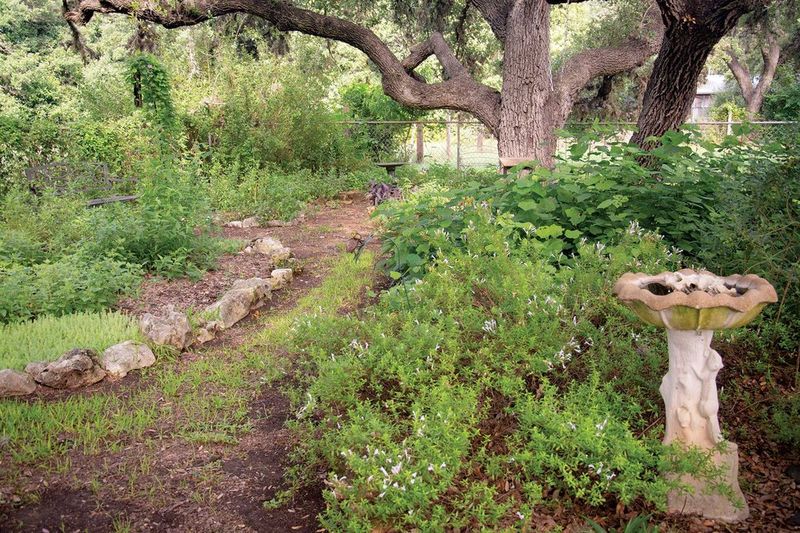
Yard habits that support Eastern Screech-Owls are mostly the same habits that support a healthy, diverse Central Texas yard in general. Keeping mature trees and safe snags, maintaining a mix of shrubs and ground cover alongside open hunting areas, and letting some leaf litter accumulate under trees all create the layered structure that shelters prey and provides perch options for a hunting owl.
None of these features will summon an owl on their own, but together they make a yard worth investigating.
Texas Parks and Wildlife habitat resources highlight native and well-adapted plants as the foundation of a functional wildlife yard because they support insects, reptiles, and other small animals that fill out the owl’s broad food web. Replacing a section of turf with native grasses, shrubs, or a pollinator bed does more for local wildlife than almost any single purchase.
Cornell Lab habitat guidance echoes this, noting that layered vegetation provides shelter and food resources that attract the prey species predators follow.
A shallow, regularly cleaned birdbath can provide drinking and bathing water for backyard wildlife and fits comfortably into a habitat-friendly yard. TPWD recommends scrubbing birdbaths frequently to limit algae and mosquitoes.
Keep the water shallow, no more than 2 inches deep, and refresh it every few days in summer. That said, a birdbath is a general wildlife amenity, not a demonstrated screech-owl lure, and you should not expect one to meaningfully increase the odds that an owl moves into your box.
Bird feeders are optional and come with a real trade-off. The Central Texas screech-owl study noted feeders as a feature present in suburban study yards, but poorly maintained feeders and spilled seed on the ground can attract mice and rats, which creates a different problem entirely.
If you use feeders, clean them weekly and sweep up spilled seed promptly. No single habitat feature reliably draws screech-owls, so focus on the overall yard structure rather than any one element.
Install before breeding season, then wait and monitor lightly
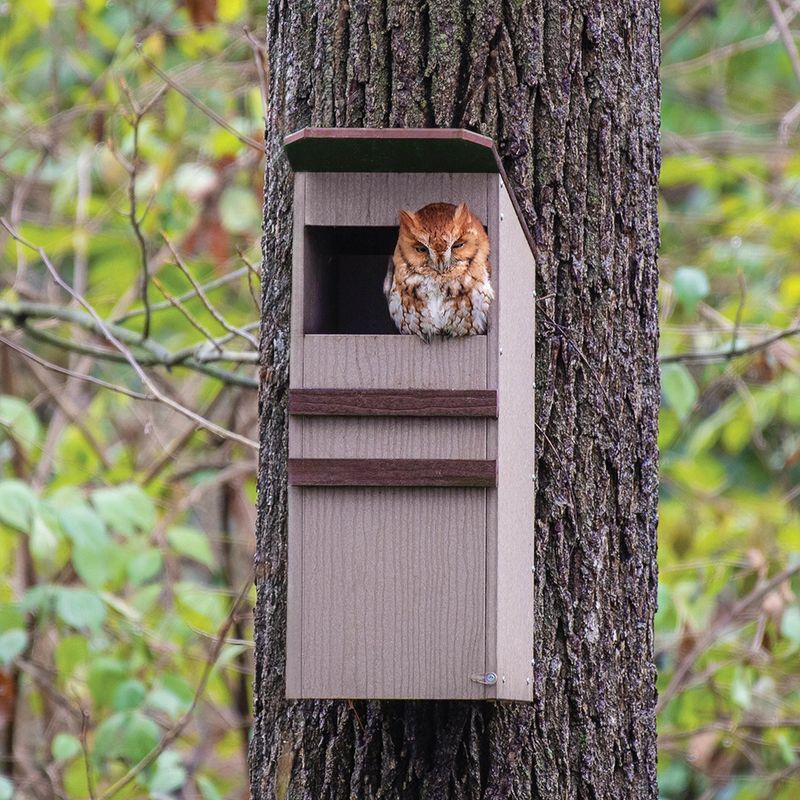
Timing your installation gives local owls the best chance to find the box before they commit to a nesting site. Texas Parks and Wildlife notes that Eastern Screech-Owl breeding in Texas generally begins in late winter or early spring, so having the box up and stable by January or February puts it in the right place at the right time.
Installing in fall works too, since owls may use cavities for roosting through winter before deciding whether to nest.
Occupancy is never guaranteed, and it may not happen in the first season. A box that sits empty for a year or two is not a failure.
Local owl presence, nearby cover, prey availability, and competition from squirrels and other cavity users all affect whether an owl investigates. Patience is the most important tool in screech-owl box management, and checking the box repeatedly or repositioning it after a few weeks is more likely to cause problems than to help.
NestWatch monitoring guidance is clear: do not open or clean an occupied box during nesting season. Disturbing a female during or shortly after egg-laying can cause abandonment, and NestWatch recommends waiting at least one to two weeks after discovering a nest before checking contents, if checking is necessary at all.
Quiet, distant observation with binoculars is the appropriate approach. Watch for an adult perching at the entrance around dusk, feathers or pellets below the box, or the sound of young owls begging for food in late spring.
Cornell Lab notes that screech-owls do not carry nesting material into the box, so do not expect to see that behavior as a sign of occupancy. Eggs, young, and any nesting material inside the box should not be handled by homeowners.
Clean and inspect the box only after the breeding season has clearly ended and the box is confirmed unoccupied, typically in late summer or early fall. Eastern Screech-Owls, their eggs, and their active nests are protected under the Migratory Bird Treaty Act, which prohibits removal, handling, or harm without proper authorization.
Manage rodents directly and keep owls out of harm’s way
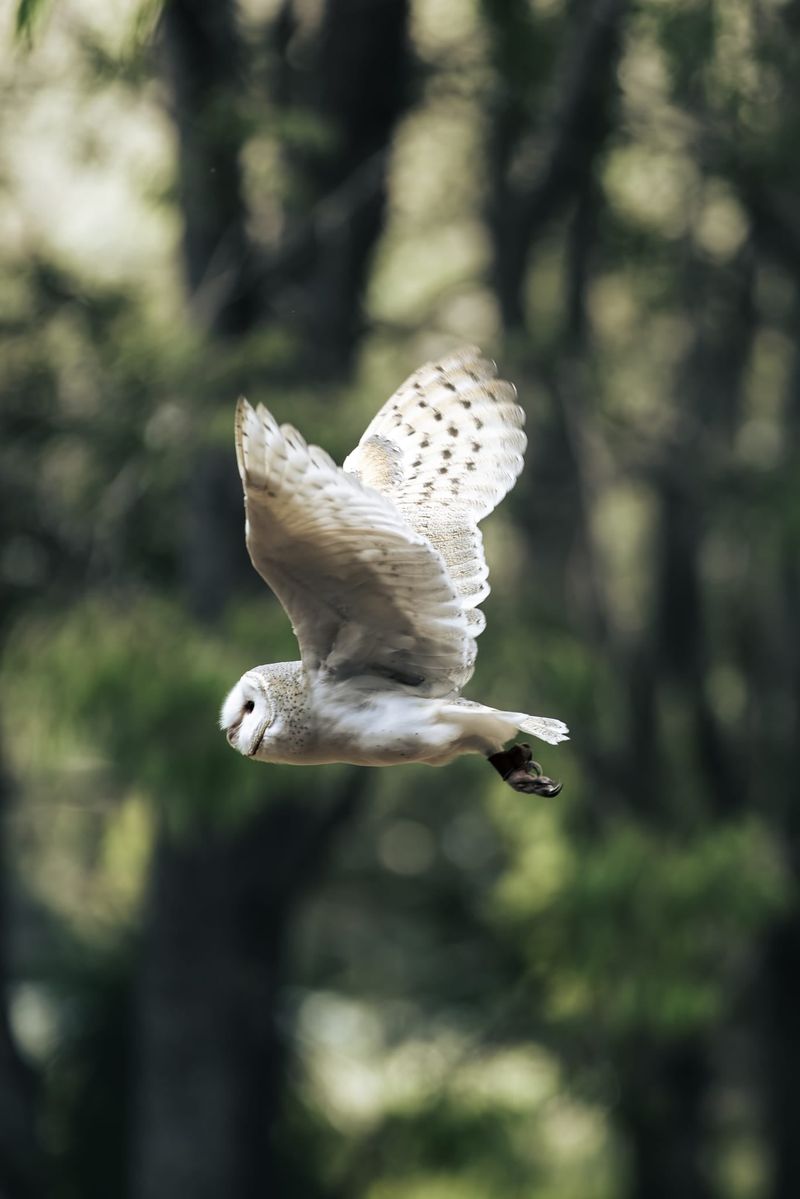
A screech-owl box is a wildlife-support tool, not a substitute for practical rodent management. Cornell Lab diet data confirms that Eastern Screech-Owls eat mice and occasionally rats, but they also take insects, reptiles, amphibians, birds, and bats.
You cannot direct a wild owl toward the rodents in your compost bin or garage, and expecting one bird to eliminate a rodent problem is not a realistic plan.
The most effective rodent-reduction steps are the same ones that work regardless of whether an owl lives nearby: remove food sources, secure garbage and compost in sealed containers, fix gaps in fences and foundations, and keep outdoor spaces tidy. TPWD habitat guidance specifically recommends regular feeder maintenance and prompt cleanup of spilled seed, because seed on the ground is one of the fastest ways to attract mice and rats to a yard.
Addressing those attractants does more measurable good than any nest box.
Never feed or bait owls with mice, meat, or live animals. Audubon explains that feeding wild owls habituates them to people and creates real risks: disease transmission, collision hazards, and dependence that harms the bird long-term.
Scattering live rodents near a nest box to attract or reward an owl is unsafe, ineffective, and likely to backfire.
Rodenticides are a serious hazard in any yard that supports owls or other predators. TPWD owl stewardship guidance advises using traps rather than poisons, and research evaluating nest-box rodent control programs documents secondary-poisoning hazards to owls and other predators that consume poisoned rodents.
A snap trap or a live trap is far safer for the broader food web. Reducing unnecessary nighttime lighting near the box and making fences visible to low-flying birds round out a safer yard without requiring major changes to your property.
Use the box to support wildlife, not to promise a rat-free yard
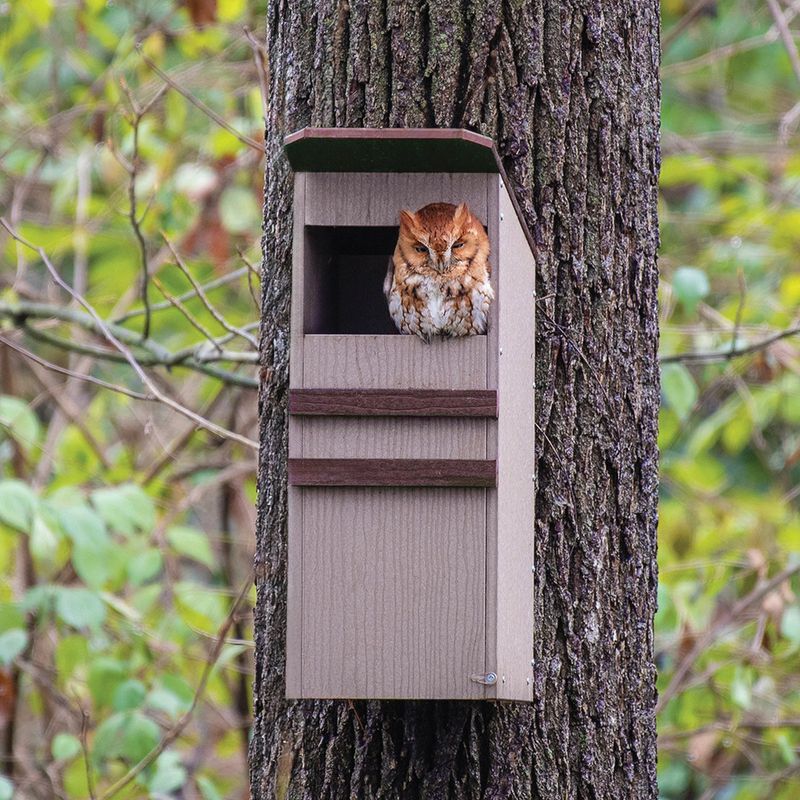
Here is the action sequence that gives a Central Texas yard the best realistic chance of hosting an Eastern Screech-Owl. Assess the site first: look for mature trees, safe snags, layered cover, and open hunting areas.
Preserve the habitat features that are already there. Choose a box built to species-specific dimensions, mount it securely with a predator guard at the right height, and add a few inches of dry wood shavings inside.
Keep a clean, shallow water source available for backyard wildlife. Manage feeders carefully to avoid attracting rodents, remove other food attractants, and use traps rather than rodenticides if rodents are already a problem.
NestWatch guidance and Central Texas suburban research both support the idea that suitable yards can see recurring seasonal use over multiple years. That is the real payoff: not a guaranteed owl every spring or a measurable drop in your rat count, but the genuine possibility of hosting a nesting or roosting Eastern Screech-Owl across successive seasons.
Once installed, leave the box alone during nesting, observe from a distance, and clean it only when it is confirmed empty.
Install the box because it can support a native predator and contribute to local wildlife habitat. If mice or other small rodents become less frequent over time, treat that as an uncertain side benefit of hosting a broad-diet hunter, not the primary goal.
A yard that earns a screech-owl is a yard that has done something genuinely good for Central Texas wildlife.