
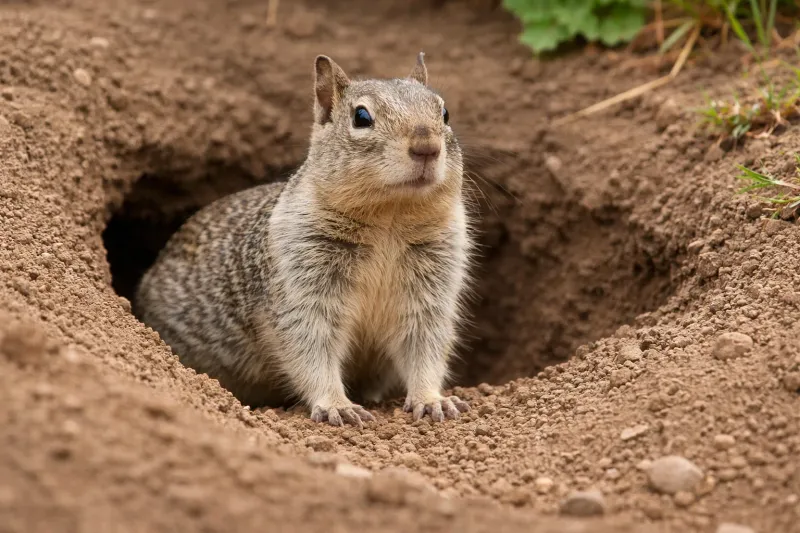
Open holes appearing across your California yard almost overnight can feel alarming, especially when fresh soil keeps piling up around the entrances. Most of the time, the culprit is the California ground squirrel, a native burrower that thrives in suburban yards with the right mix of food, soil, and open space.
Understanding what drives the digging is the fastest way to respond safely and effectively, without wasting time on fixes that do not work.
Those open holes most likely point to California ground squirrels
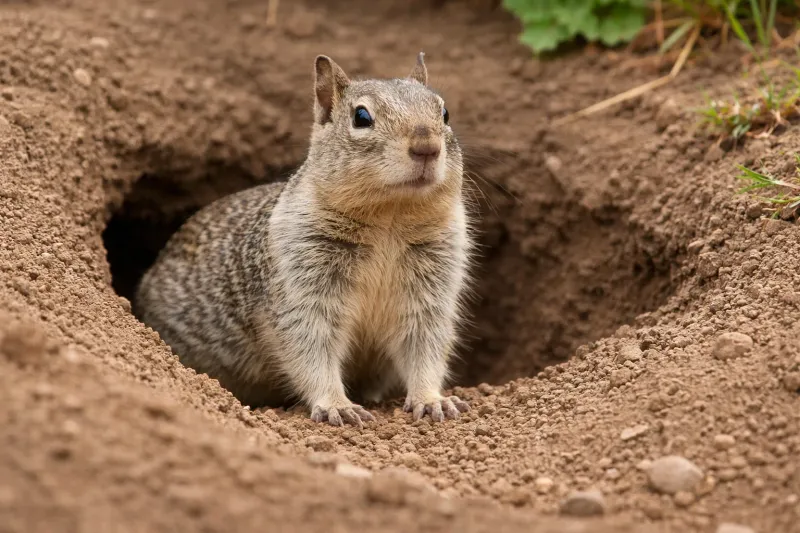
Open, roughly circular holes appearing in a California yard, often surrounded by loose soil, nutshells, or fruit rinds, are a recognizable sign of ground-squirrel activity. UC IPM’s ground-squirrel guidance describes typical burrow entrances as commonly about four inches wide, though older openings can be larger and soil type, erosion, or irrigation can change the appearance.
Combining the hole’s look with direct observation, fresh tracks, droppings, and feeding damage gives a much stronger identification than measuring the opening alone.
Watching how the animal responds when it feels threatened adds a useful clue. Ground squirrels retreat into a burrow when frightened, while tree squirrels generally climb a fence, tree, or structure instead.
Daytime activity, especially from midmorning through late afternoon, is also characteristic of California ground squirrels.
Pocket gophers create a very different surface sign worth knowing. UC IPM’s pocket-gopher page and the vertebrate pest sign guide both describe gopher mounds as typically crescent- or horseshoe-shaped, with the opening commonly plugged and offset from the mound rather than open and centered.
If the holes in your yard are clearly open and surrounded by scattered loose soil rather than a fan-shaped mound, ground squirrels are the more likely explanation.
Multiple nearby entrances add weight to that identification, but they do not confirm species on their own. California is home to several ground-squirrel species, and a small number of them carry protected status.
The Mohave ground squirrel, for example, is a threatened species found in desert and inland areas of southern California. Confirming which species you are dealing with before taking any lethal action is especially important if you live in a region where sensitive species may occur.
The yard is offering the conditions a burrowing animal needs
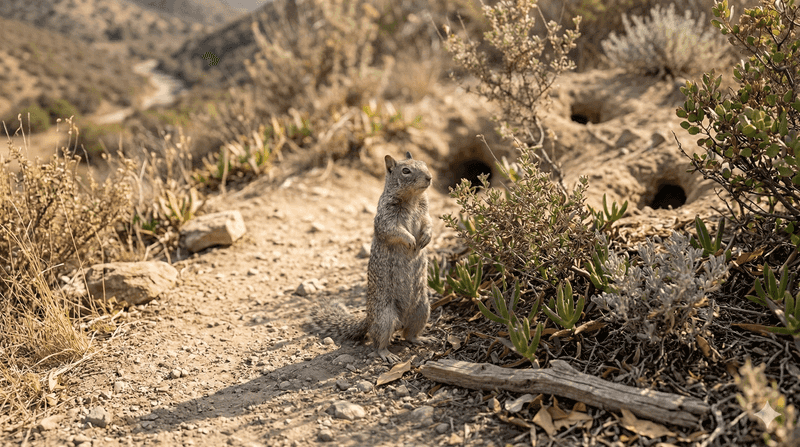
Ground squirrels do not tunnel randomly. When they show up in a yard, that yard is already providing at least three things the animals depend on: soil that is easy to dig through, food close enough to sustain daily activity, and enough open ground for the animals to watch for predators while foraging.
CDFW’s wildlife management guidance and UC IPM both describe California ground squirrels as preferring open or sparsely vegetated areas where visibility is high, which is exactly why suburban lawns, open hillsides, and mowed slopes are common sites of activity.
Friable, well-drained soil supports tunneling because it is easier to excavate and less likely to collapse on an active burrow. Food sources that commonly draw ground squirrels into residential yards include fallen fruit, spilled birdseed, pet food left outdoors, unsecured trash, vegetable gardens, and ornamental food-bearing plants.
CDFW’s human-wildlife conflict page on squirrels notes that these food attractants can sustain ground-squirrel populations even when natural food sources fluctuate.
Burrows serve more than one function. CDPR’s burrow assessment document explains that ground-squirrel burrow systems are used for shelter from weather and predators, resting, food storage, and raising young.
Nearby vegetation, rocks, logs, brush piles, and debris can serve as additional escape cover, making a yard with both open lawn and some structural clutter especially attractive.
More visible entrances may suggest an established or expanding burrow system, but the number of holes alone does not reveal how many squirrels are present or whether every opening is still in active use. Some entrances may be unused, while others serve as secondary exits for the same tunnel network.
Treating hole count as a direct squirrel count leads to both overreaction and underreaction.
Where the burrows are matters more than how dramatic they look
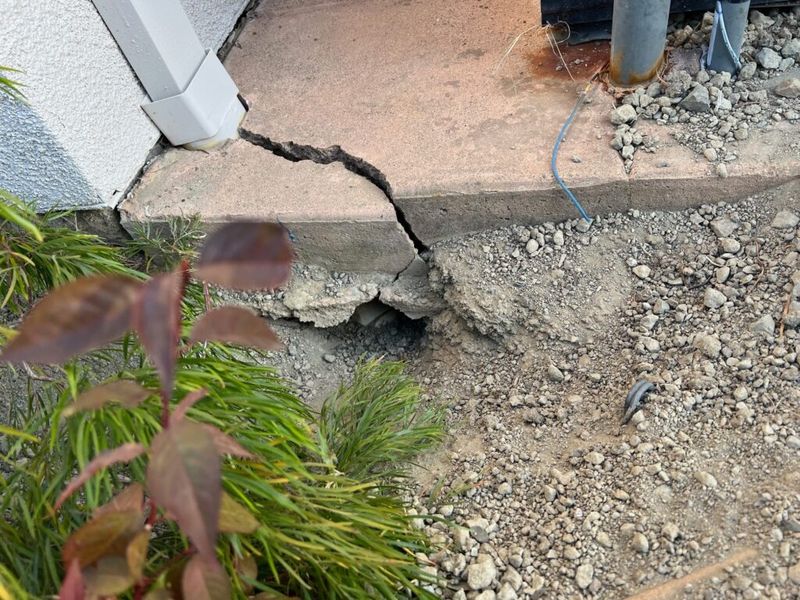
A handful of holes in the middle of an open lawn carries a very different risk profile than active digging beside a concrete foundation, a retaining wall, or a drainage swale. The location of a burrow system determines how urgently a homeowner needs to act, not the size of the holes or how many entrances are visible at once.
Keeping that distinction clear prevents both unnecessary panic and genuine problems being ignored.
UC IPM’s home-and-landscape guidance notes that ground-squirrel burrows can create trip hazards, undermine soil stability, expose or damage plant roots, breach irrigation lines, and contribute to erosion. In some settings, burrow activity near earthen berms, levees, or retaining structures can weaken those features over time.
The key phrase is “in some settings” – the risk is real but specific to where the digging is happening.
CDPR’s burrow assessment guidance specifically calls out proximity to foundations, retaining walls, drainage infrastructure, and utility lines as factors that elevate concern. If you can see fresh soil or open entrances within a few feet of any of these features, that warrants a closer inspection before the situation develops further.
During your initial walkthrough, pay attention to trees as well. Burrow activity near major root zones can stress established trees and create voids that destabilize them over time.
Frequently used paths and play areas also deserve a look since partially collapsed tunnels can create ankle-twisting depressions that are not obvious until someone steps into one. Isolated holes well away from structures, utilities, and high-traffic areas present a lower immediate risk, though they still deserve monitoring if activity is persistent.
Start with evidence, safety, and attractant removal today
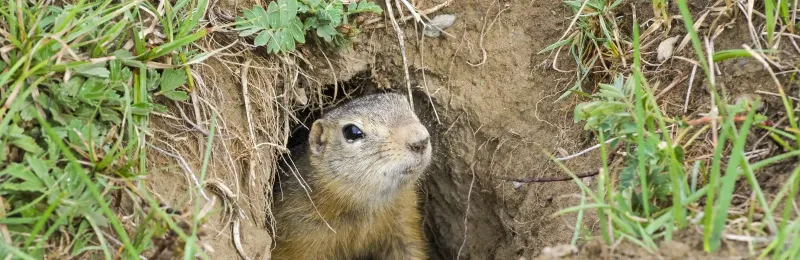
Before disturbing anything in the yard, take photographs. Document which holes are clearly open, where fresh soil is piled up, and what time of day you observe squirrel movement.
This record serves two purposes: it helps a pest professional assess activity later, and it gives you a baseline for judging whether conditions are improving or getting worse after you take action.
Keep children and pets away from active burrows. Reaching into or around holes is never a good idea, both because of physical hazard and because of the small but real wildlife-health concerns associated with rodents and their fleas.
Sick or dead animals should not be handled without gloves, and public-health guidance recommends leaving dead wildlife to professionals or animal control rather than picking them up bare-handed.
Attractant removal is the most immediate step any homeowner can take without specialized knowledge or equipment. Pick up fallen fruit daily, bring in pet food after feeding, secure trash cans with lids, and clear away brush piles, wood stacks, or debris that can serve as cover near active burrow areas.
UC IPM’s home-and-landscape guide describes habitat cleanup as a useful first step that can improve visibility and reduce what makes the property attractive, while also noting that ground squirrels are adaptable and can reinvade even after cleanup. This is not a standalone cure, but it is a legitimate starting point that costs nothing and does not create new problems.
While you are making the yard tidier, use the opportunity to inspect foundations, retaining walls, irrigation lines, and tree root zones for signs of undermining or exposed damage. Walk paths and lawn areas for soft spots or partial collapses.
Do not poke sticks into burrows or pour anything into them during this inspection phase. The goal right now is information, not intervention.
A lasting fix addresses the activity, not just the entrances
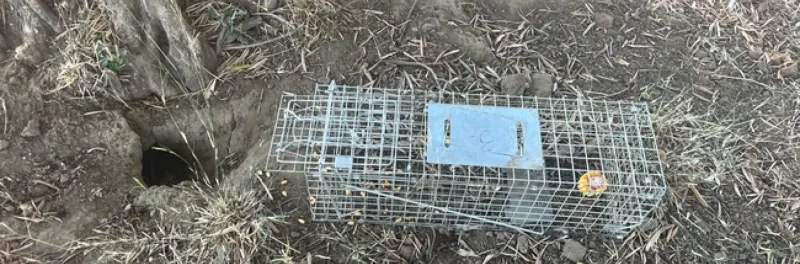
Shoveling loose soil back into a burrow opening feels like doing something, but it rarely accomplishes much. UC IPM specifically notes that ground squirrels can reopen old burrows and move into vacant systems left behind by other animals.
Patching entrances without addressing the activity underneath them is a repeating cycle, not a solution.
For low-to-moderate activity in areas away from structures and utilities, trapping is one option a homeowner might consider. Any trap placement needs to account for the safety of pets and non-target wildlife, including birds and other small mammals that could enter an unprotected trap.
Snap traps designed for ground squirrels are generally more practical than live traps in this context, because live trapping creates an immediate disposal problem. Off-property relocation of captured ground squirrels is illegal in California without a permit, as stated clearly in UC IPM’s agricultural ground-squirrel management guidance.
A captured animal cannot simply be driven to a park or open space and released.
When activity persists after cleanup and initial efforts, when burrows are located near a foundation, retaining wall, utility corridor, or sensitive habitat, or when visible damage is already occurring, the practical path is to contact a licensed California pest-control professional. A professional can confirm which species is present, assess which burrow entrances are actively used, and select a treatment that is both lawful and appropriate for the site conditions.
CDPR’s burrow management document underscores that treatment decisions should be based on active use, location, and evidence of damage rather than on hole count alone.
Getting professional evaluation early when burrows are near structures is not an overreaction. It is the step most likely to prevent a minor conflict from becoming a costly repair.
The fastest-looking DIY shortcuts can create a bigger problem
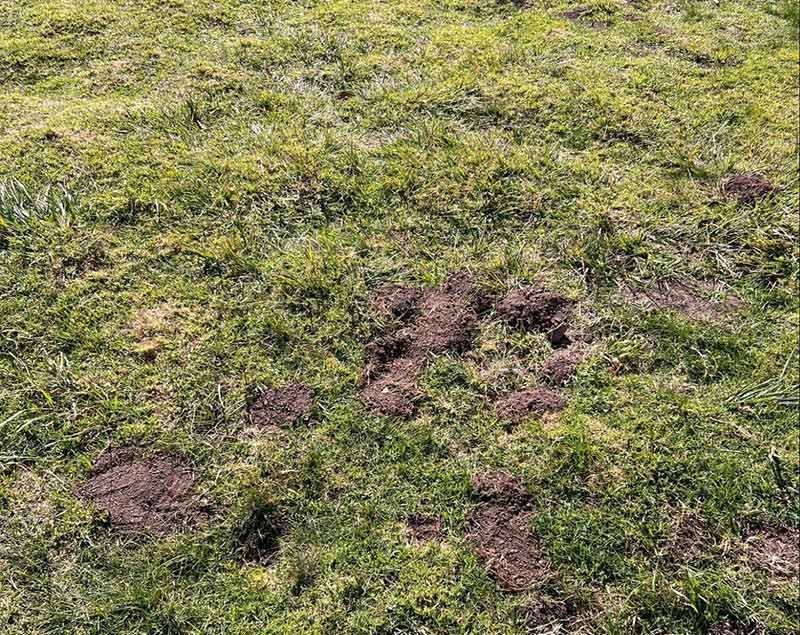
When holes keep reappearing, the temptation to reach for something fast and decisive is understandable. Several widely circulated DIY responses are either illegal for residential use in California, genuinely dangerous, or both.
Knowing what not to do protects your household, your yard, and your legal standing before you act.
Toxic baits are not a homeowner option for ground-squirrel control in California. UC IPM’s home-and-landscape guidance states that residential users do not have legally available toxic baits for ground squirrels under current regulations.
Products used in agricultural settings operate under different rules and different licensing requirements. Store-bought rodenticides labeled for other pests are not a legal substitute.
Off-property relocation is also not a homeowner option. Transporting a captured ground squirrel to another location and releasing it is illegal in California without a permit.
Beyond the legal issue, relocation spreads the conflict to a new area and can move disease or parasites along with the animal.
Flooding a burrow with a garden hose, pouring gasoline or bleach into an entrance, or using other improvised chemicals are unsafe approaches that are not supported by any credible pest-management authority. These methods can damage soil structure, harm non-target wildlife, contaminate groundwater, and create hazards for children and pets who use the yard.
Fumigation deserves special attention because it sounds professional but carries serious hazards when attempted without training. UC IPM’s agricultural fumigation guidance warns that gas cartridges can be a fire hazard in dry conditions, and that aluminum phosphide is restricted to trained or licensed applicators.
UC IPM also warns specifically against fumigating burrows adjacent to buildings. CDPR’s burrow assessment document reinforces that fumigation near structures, utilities, or sensitive habitat requires professional judgment.
Fumigants are also less effective when squirrels are in seasonal dormancy or estivation, making timing and species knowledge critical factors that a homeowner cannot reliably assess alone.
Confirm the animal, protect vulnerable spots, and stop repeated digging
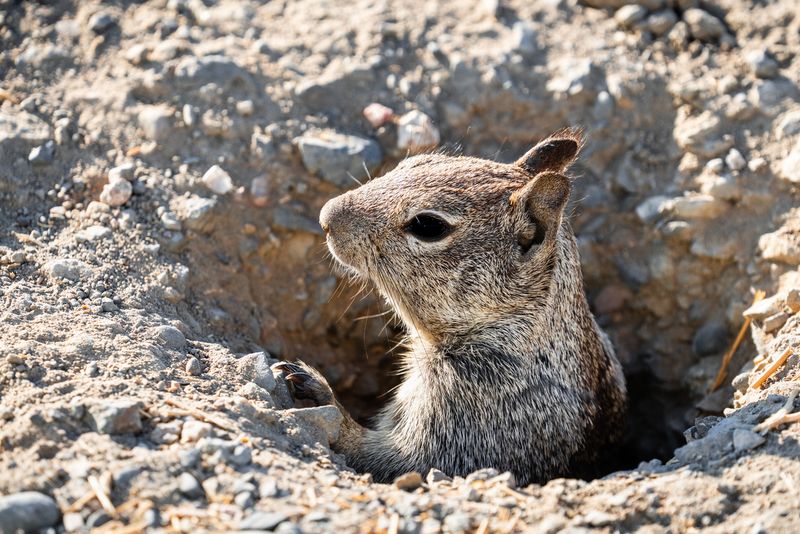
Stopping repeated digging starts with knowing what you are dealing with. Confirm the burrower through direct observation, hole characteristics, tracks, and droppings before taking any action beyond cleanup.
UC IPM’s home-and-landscape guide and CDFW’s squirrel conflict page both support species-level identification before lethal control, particularly in areas where protected species may be present.
Document active entrances, remove food and cover, and inspect foundations, retaining walls, drainage features, irrigation lines, and trees during your first pass. When activity persists, causes visible damage, or is occurring near sensitive structures, contact a licensed California pest professional.
CDPR’s guidance makes clear that site-specific evaluation – not hole count – is what drives a sound control decision.
Ground squirrels play a real ecological role, dispersing seeds and supporting predators higher in the food chain. That value does not make a burrow system beside your foundation any less of a legitimate conflict.
The homeowner who identifies the animal, removes what draws it in, protects the structures at risk, and calls for professional help when the situation warrants it is the one most likely to see lasting results. Visible holes alone never tell the full story of what is happening underground.