
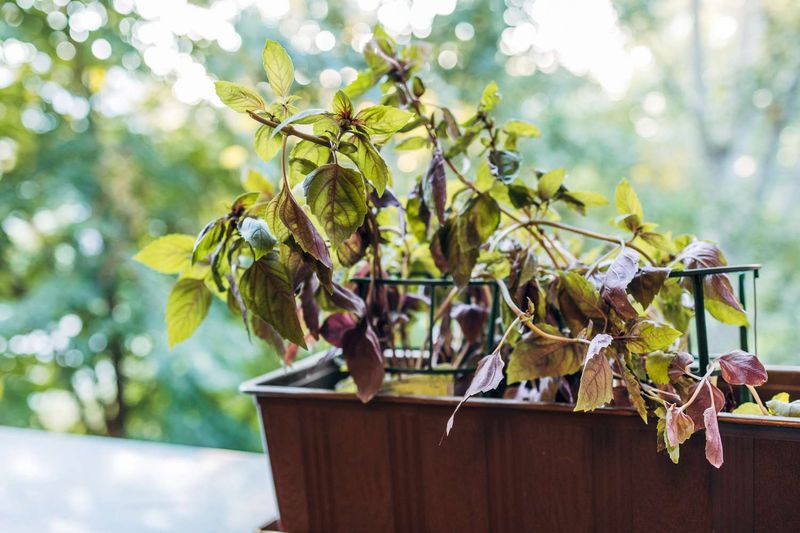
You just watered your basil, but an hour later it looks like it gave up completely. Before you reach for the hose again, know that North Carolina’s summer heat can make basil droop even when its roots are sitting in perfectly moist soil.
Watering a plant that doesn’t need it is one of the fastest ways to kill it, and basil is no exception. Learning to read the difference between heat stress and genuine thirst could be what keeps your plant alive through August.
After Watering, Afternoon Wilt May Still Mean Heat Stress
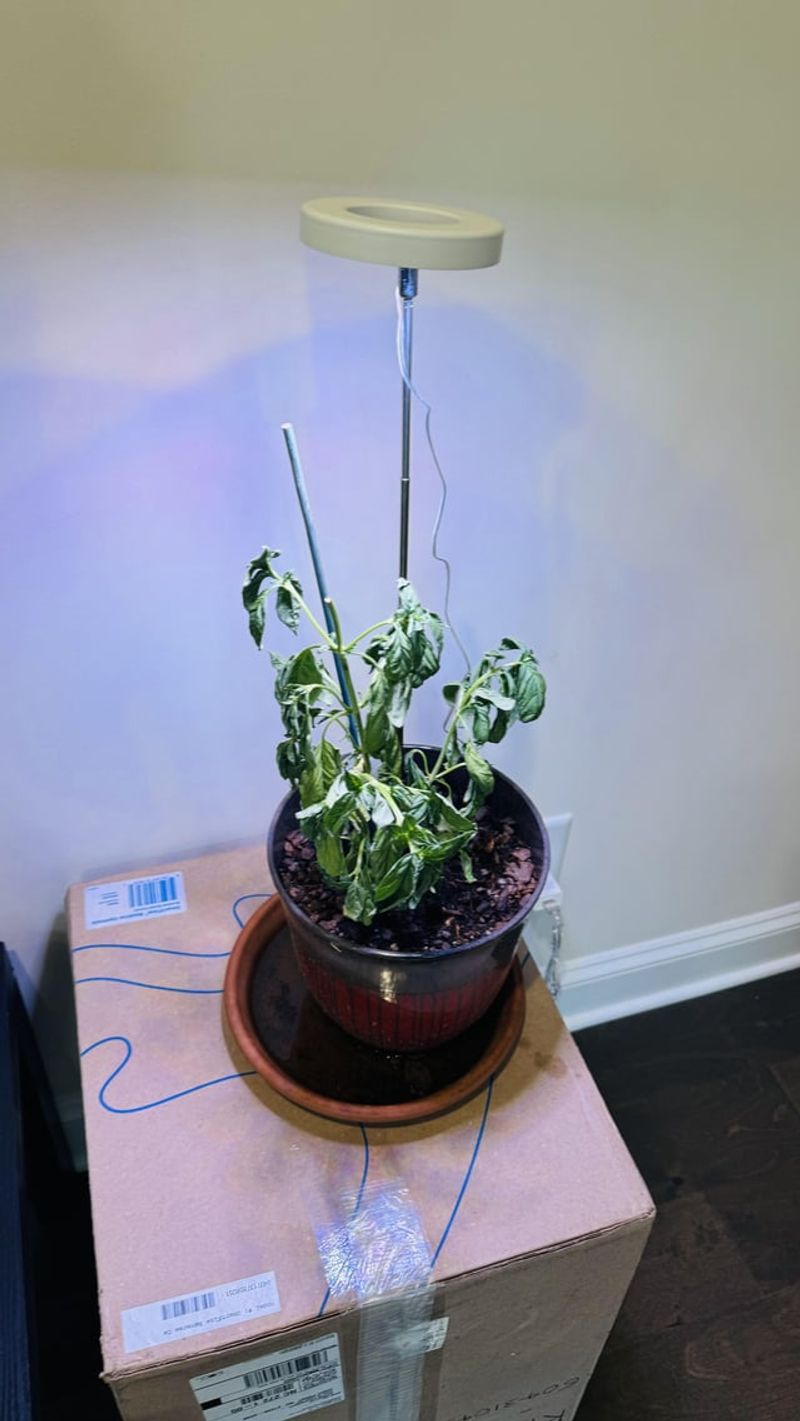
Basil has a well-known vulnerability during North Carolina’s hottest afternoons: its leaves can lose water through transpiration faster than its roots can pull moisture up from the soil. When that supply-and-demand gap opens up, the plant droops, and it does this even when the root zone is still adequately moist from a recent watering.
NC Cooperative Extension identifies midday wilting as a common temporary heat response in basil, not an automatic sign that the plant is thirsty.
The pattern that points toward heat stress rather than drought looks like this: the wilting starts during the hottest window of the day, roughly midday through mid-afternoon, and the leaves feel limp rather than dry or papery. By evening, when temperatures ease off, the plant stands back up on its own.
That recovery is an encouraging sign, but it is a clue, not a guarantee. Oregon State University Extension notes that prolonged heat stress can cause lasting damage, especially when a plant is also dealing with drought or a compromised root system, so repeated daily wilting still deserves attention even if the plant bounces back each evening.
The reflex most gardeners follow when they see a drooping plant is to water it. That reflex makes sense in many situations, but on a 95-degree afternoon in the Piedmont, it can backfire badly.
Adding water to soil that is already moist does not fix a heat problem, and it can quietly create a worse one. Before you water again, check the root zone.
The leaves will tell you the plant is stressed; the soil will tell you whether water is actually the answer.
Compare Timing, Leaf Texture, Recovery, and Root-Zone Moisture
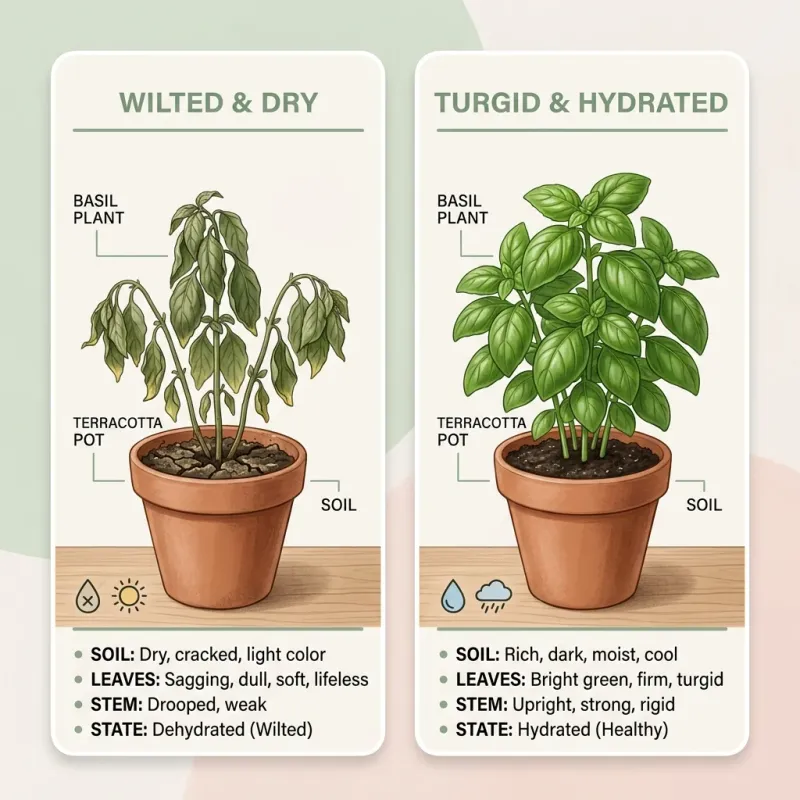
Sorting out heat wilt from genuine water stress comes down to reading four things together: when the wilt happens, what the leaves feel like, whether the plant recovers, and what the soil is actually doing a few inches down. No single clue is enough on its own, but the combination gives you a reliable picture.
Timing is your first filter. Basil that droops during the hottest part of the afternoon and then perks up once the sun angle drops is behaving like a heat-stressed plant.
Basil that is still limp at 8 p.m. or looks no better the following morning is more likely running short on water, or dealing with something more serious. Leaf texture adds another layer: heat-stressed leaves stay soft and limp, while drought-stressed leaves can progress toward feeling dry, crisp, or scorched at the edges.
That textural shift is a sign the plant has been without adequate moisture long enough to cause tissue damage.
Soil moisture is the check that makes the diagnosis actionable. NC State Extension recommends inserting a finger about 2-3 inches into the potting mix for container-grown plants before deciding whether to water.
If the mix at that depth feels moist, the plant likely does not need more water yet. Container growers should use that 2-3 inch check consistently because the surface of a pot can dry out and feel dusty while the root ball below remains adequately moist.
In-ground growers face a different situation: garden beds vary too much in soil type and root depth to rely on a fixed shallow number, so the goal is to assess moisture through the active root zone rather than stop at an arbitrary inch or two.
When dry soil pairs with wilt that does not ease by evening, that combination supports a decision to water thoroughly. When moist soil pairs with afternoon droop that clears up after dark, hold off and monitor the plant over the next day or two.
NC Cooperative Extension specifically advises against watering simply because leaves droop during the hottest part of the day – the soil check is what separates a useful response from a harmful one.
Water Dry Basil at the Roots, Not by Reflex
Once you have confirmed the soil is genuinely dry, the next question is how to water effectively rather than just repeatedly. Shallow sprinkles at the surface do not do the job.
Water applied in small amounts tends to wet only the top layer of the mix or soil, which encourages shallow root growth and leaves the lower root zone dry even when the surface feels damp. A thorough watering means applying water slowly enough that it moves down through the entire root zone rather than running off the top.
For container basil, NC State Extension advises watering until it flows freely from the drainage holes, which confirms the water has moved through the full root ball. After that, empty any saucer sitting under the pot.
A container without drainage or with a saucer that holds standing water can keep roots sitting in saturated mix for hours, reducing oxygen around them and raising the risk of root damage over time. Basil needs consistent moisture, but it also needs soil that drains well – those two requirements work together, not against each other.
When you water matters too. NC Cooperative Extension recommends morning watering because it gives plants time to absorb moisture before the heat peaks and allows any wet foliage to dry before evening.
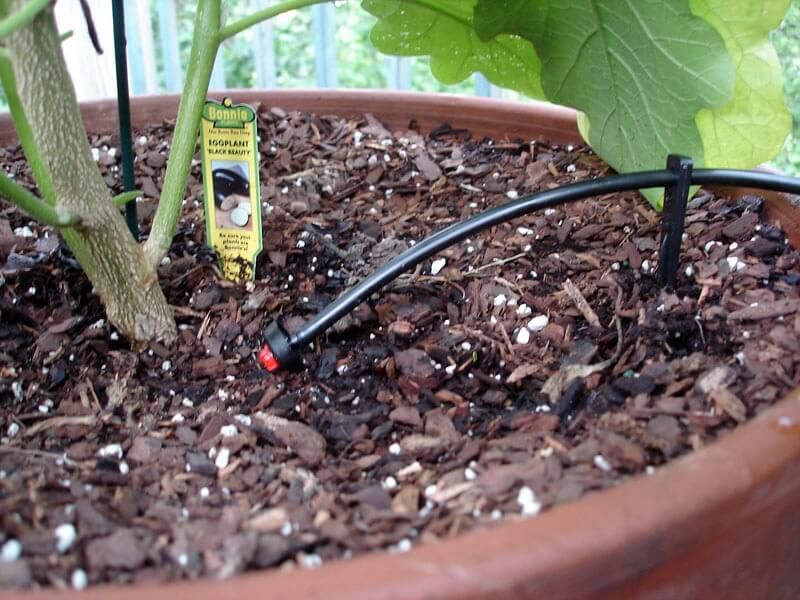
Drip irrigation or a soaker hose directed at the base of the plant reduces leaf wetness even further, which is worth considering for basil specifically.
Wetting basil foliage overhead may feel like it cools and refreshes the plant, but it does not reliably correct heat wilt or address root-zone dryness. More to the point, NC State Extension notes that prolonged leaf wetness increases the risk of basil downy mildew, a fungal-like disease that spreads rapidly in humid summer conditions.
Keeping water at the base of the plant and off the foliage is a simple habit that reduces that risk while delivering water where roots can actually use it.
Too Much Water Can Produce a Thirst-Like Wilt
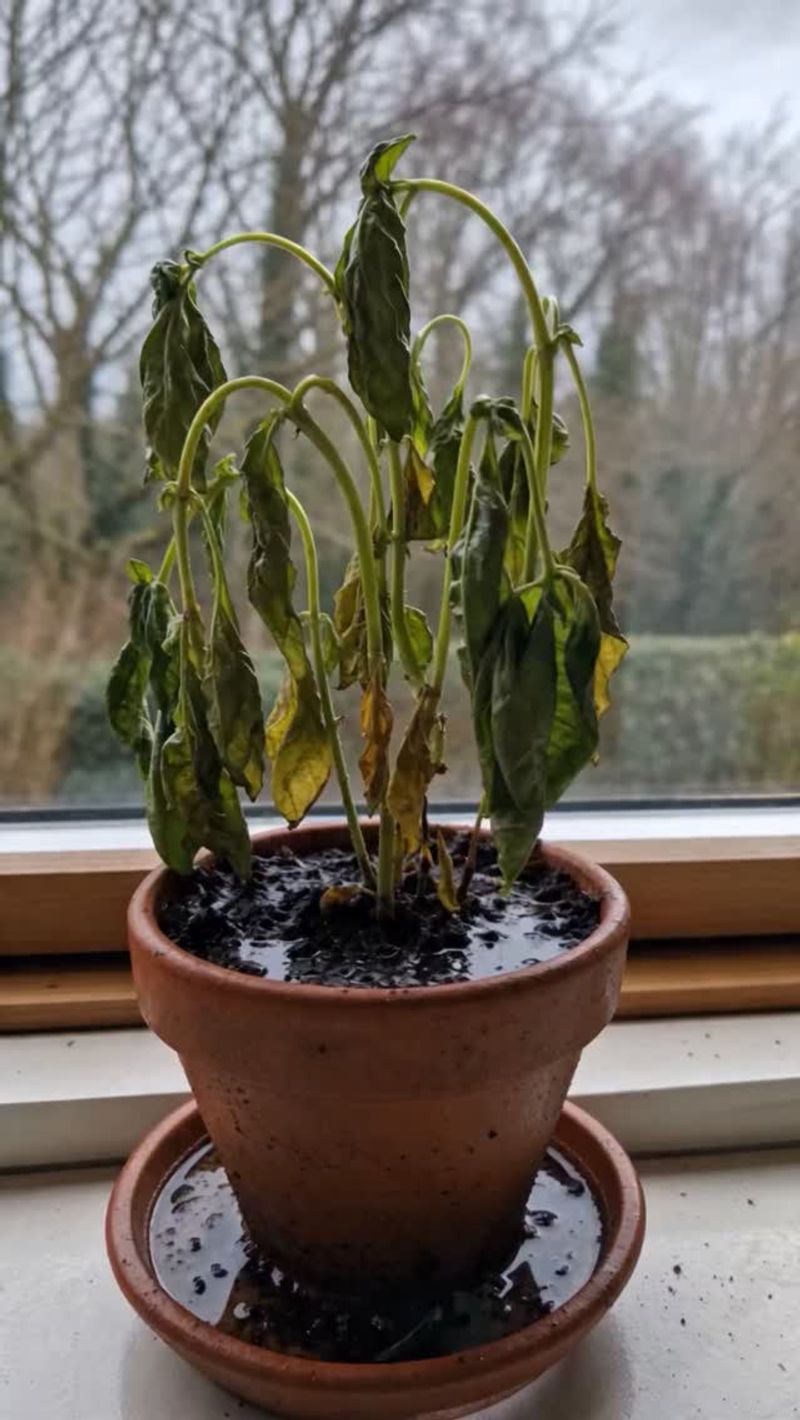
Here is where the misread becomes dangerous. A basil plant wilting in wet soil looks almost identical to one wilting in dry soil, but the cause is completely different and so is the correct response.
When soil stays saturated for too long, oxygen levels around the roots drop. Roots need oxygen to function, and when they are deprived of it, they begin to deteriorate.
University of Wisconsin Extension explains that damaged roots lose their ability to absorb and transport water, which means the plant experiences drought-like symptoms even when the soil around it is soaking wet. Watering more at that point accelerates the decline rather than reversing it.
This cycle is one of the most common ways well-meaning gardeners lose basil in summer. The plant droops, they water it, it stays droopy or gets worse, they water it again, and within a few days the plant collapses.
Iowa State University Extension notes that overwatering is a leading cause of wilting in container plants precisely because the symptom of too much water and too little water look the same from the outside. The soil check is what breaks that loop.
Container growers face an additional complication that is easy to miss. A root-bound plant, one that has outgrown its pot and filled it densely with roots, can develop a dry interior even when the surface looks moist or water appears to run through quickly.
University of Maryland Extension points out that water can channel down the sides of a tightly packed root ball and exit the drainage holes without ever penetrating the core. If your basil wilts repeatedly shortly after you water it and the soil seems consistently moist, pull the pot and look at the root ball.
Dense, circling, or compacted roots may mean the plant needs a larger container more urgently than it needs another watering.
Extension specialists advise inspecting roots for brown, black, soft, or mushy tissue when a plant wilts despite adequate soil moisture. Healthy roots are typically white or light tan and firm to the touch.
Any foul smell coming from the root zone is another indicator that root damage, not thirst, is the problem at hand.
Hot Containers and Patios Can Intensify Basil Stress
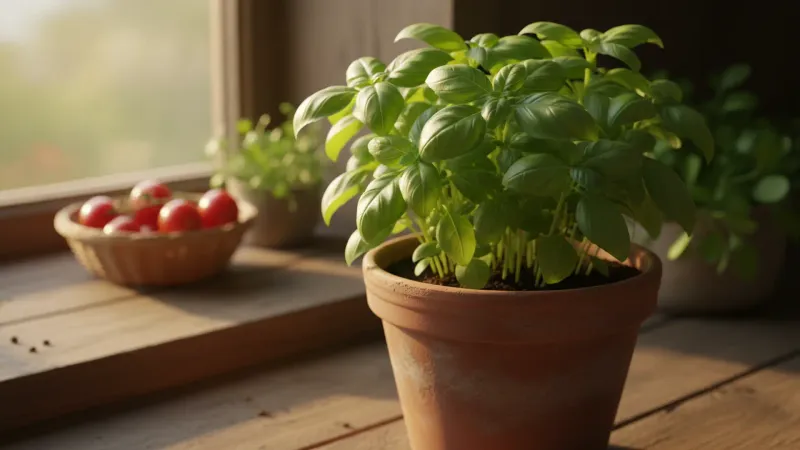
Where you grow basil in North Carolina matters almost as much as how you water it. The growing site changes both the intensity of the stress the plant experiences and the speed at which conditions shift.
A basil plant in a dark container sitting on a concrete patio in full western afternoon exposure is dealing with a very different heat load than the same variety planted in a garden bed with some surrounding soil mass to buffer temperature swings.
NC Cooperative Extension reports that dark containers in direct sun can heat the growing medium well above air temperature, stressing roots even when the foliage is not showing visible scorch. Light-colored or reflective surfaces nearby, such as white walls, pale concrete, or metal fencing, can bounce additional radiant heat onto containers and compound the problem.
These are heat factors specific to the container and its immediate environment, separate from air temperature alone.
Wind is a different variable and operates through a different mechanism. Moving air increases evaporation from both the soil surface and the leaf surface, which means containers on exposed, breezy sites can dry out faster than those in calmer spots.
Wind drying the root zone is a watering-frequency concern, not a root-heating concern, and the two should not be conflated when you are troubleshooting a stressed plant.
NC State Extension notes that containers can dry out significantly faster than in-ground beds, particularly when they are small, dark-colored, or exposed to afternoon sun. That faster drying rate means container gardeners may need to check moisture more often during heat waves, but more frequent checks should drive watering decisions, not an automatic daily schedule.
Moving a stressed pot away from reflected heat or shifting it out of harsh western afternoon exposure during extreme heat events is a practical intervention worth trying before assuming the plant needs more water.
NC State’s plant database lists basil as a full-sun plant that prefers 6 or more hours of direct light, so the goal is not to move it into shade permanently. Light afternoon protection makes sense for containers on reflective sites, western exposures, or during stretches of extreme heat – not as a general rule for every basil plant in every location.
In garden beds, NC State recommends about 2 inches of mulch to reduce evaporation and moderate soil temperature, keeping it pulled back from direct contact with the stem to avoid rot.
Persistent Wilt Requires a Broader Diagnosis
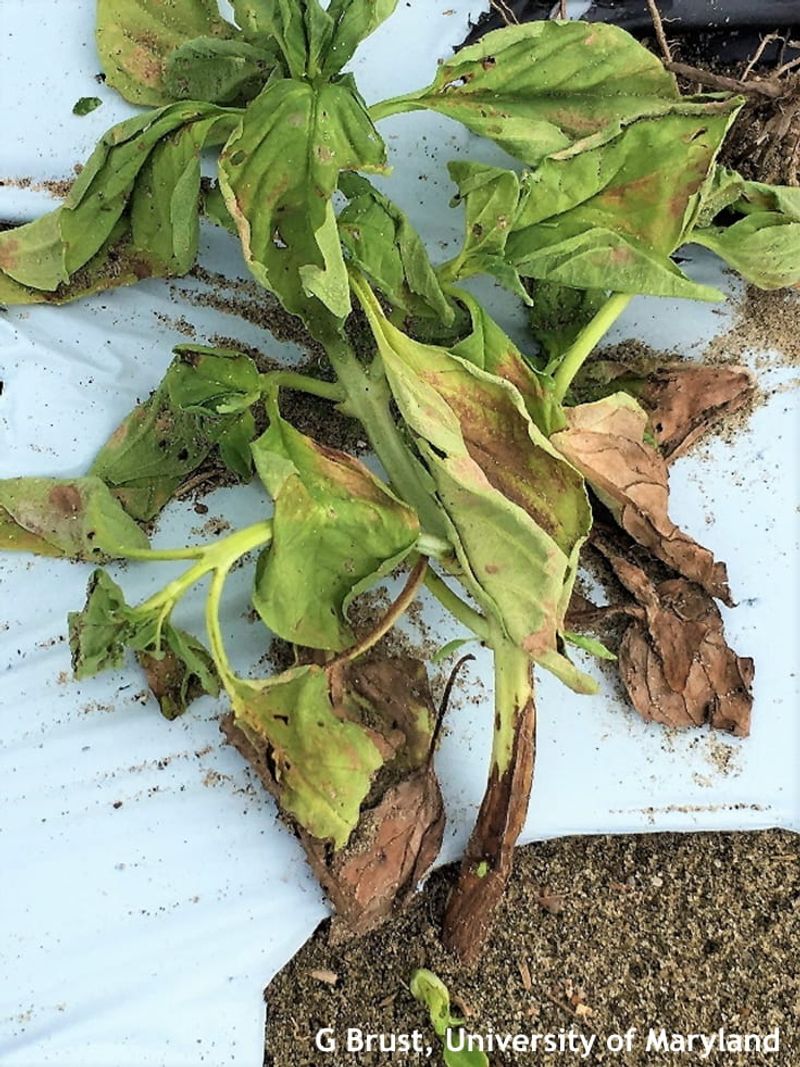
Heat wilt is a useful explanation for afternoon drooping that clears up by evening, but it has limits. When basil stays wilted despite moist soil, when the timing does not match the heat pattern, or when the plant looks worse each day rather than recovering, something else is likely going on.
Reaching for the watering can at that point is not just unhelpful – it can speed up whatever is actually wrong.
Start with the roots when moist-soil wilt persists. Extension specialists recommend inspecting root color, texture, and smell as part of any persistent wilt diagnosis.
Roots that are brown or black, soft or mushy to the touch, or carry a foul odor point toward root damage or root rot rather than simple heat stress. Root rot develops when soil drainage is poor or when repeated overwatering keeps the root zone saturated long enough to deprive roots of oxygen.
A plant in this condition cannot move water to its leaves no matter how much water surrounds its roots, and the wilt will not resolve until drainage improves and the damaged tissue is addressed.
Two diseases specific to basil are worth knowing by their actual symptoms rather than lumping them in with general wilt. Basil downy mildew tends to announce itself through yellowing or browning on older, lower leaves first, followed by a dark gray or purplish fuzzy growth on the undersides of those leaves.
NC State Extension describes downy mildew as a significant summer problem in North Carolina that spreads rapidly in humid conditions. Midday drooping alone does not diagnose it – you need to flip the leaves over and look for the characteristic spore growth.
Fusarium wilt is a separate vascular disease with its own set of markers. NC State Extension describes Fusarium wilt symptoms in basil as including brown streaking on the stem surface, internal stem discoloration visible when the stem is cut, a shepherd’s-crook curve at stem tips, sudden leaf drop, and eventual plant collapse.
These are not symptoms of heat stress or drought, and additional water will not slow the disease’s progress.
Penn State Extension emphasizes that wilt is a nonspecific symptom that requires supporting evidence – root condition, leaf markings, stem appearance, timing, and persistence – before a cause can be identified. Treating every wilted plant as a single problem with a single solution leads to the wrong intervention most of the time.
Use a Simple Decision Before You Water Again
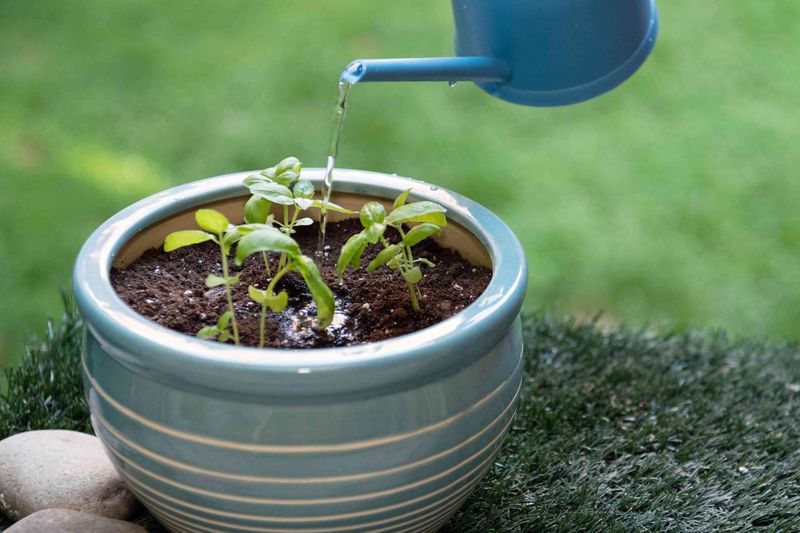
Before watering a wilted basil plant, run through a short check. For container basil, press a finger about 2-3 inches into the potting mix.
For basil in a garden bed, assess moisture through the active root zone rather than stopping at the surface. NC State Extension recommends this root-zone check as the basis for any container watering decision, not the appearance of the foliage alone.
If the soil is dry at that depth and the plant has not recovered by evening, water thoroughly at the base until drainage exits the pot, then empty the saucer. If the soil is still moist and the plant perked up after the afternoon heat passed, hold off on additional water and check again the following day.
NC Cooperative Extension is clear that watering when the root zone is already moist is unnecessary and can create worse problems than the droop you are trying to fix.
If wilt persists despite moist soil, or if you notice root discoloration, leaf spotting, stem streaking, or a pattern of decline that does not match simple heat stress, investigate site conditions, root health, and disease symptoms before doing anything else. The goal of this whole process is not to make you second-guess every drink of water you give your basil.
Basil does need consistent moisture, and genuinely dry soil should be watered promptly and thoroughly. The goal is to stop treating every afternoon droop as an automatic watering command, because in a North Carolina summer, that reflex is often the problem, not the solution.