
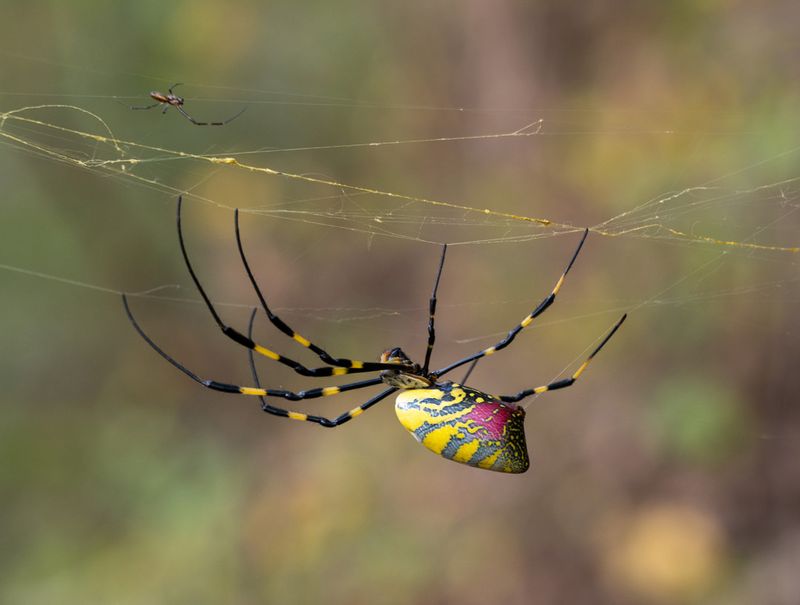
Around late summer and into fall, some North Carolina homeowners step outside to find large, golden webs stretched across their porches, garden paths, and doorways almost overnight. The spider sitting in the center is often bigger than anything they have seen before, and the urge to grab a can of spray is understandable.
Before reaching for it, though, it helps to understand what is actually going on, because the explanation is simpler and less alarming than it looks.
Fall is when Jorō spiders become impossible to miss
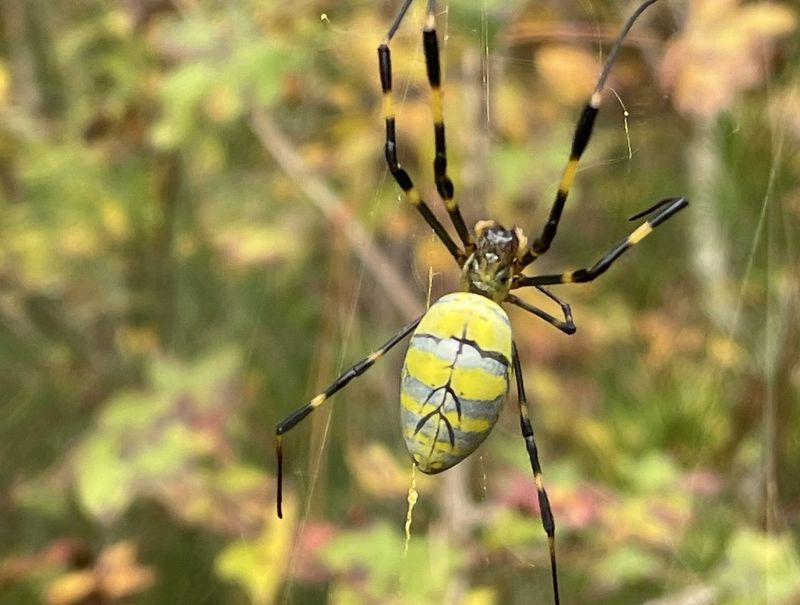
Joro spiders spend the warmer months growing quietly in the background, and by late summer the females have reached full size. Adult females can measure roughly an inch in body length, and their webs can span three feet or more, so a yard that seemed spider-free in July can look dramatically different by September.
UGA Cooperative Extension guidance on managing Joro spiders confirms that large adult females and their webs are especially noticeable in late summer and fall, that females lay egg masses before freezing weather arrives, and that eggs overwinter and hatch the following spring, producing one generation per year.
That timing is the key to understanding the fall surge. The webs are not multiplying because a new wave of spiders invaded your property.
The spiders that have been developing since spring have simply reached the stage where they are big enough to be seen and active enough to build the large, sticky orb webs they need to catch sufficient prey before laying eggs.
Trichonephila clavata, the Joro spider, is native to East Asia and was first confirmed in the United States in Georgia in 2014. NC State Extension documents the species’ first detection in western North Carolina in fall 2021 and notes its continued presence across parts of the state.
For most North Carolina homeowners, the fall appearance of these webs reflects a predictable life-cycle event, not a sudden household infestation that requires emergency action.
A web marks opportunity, not a healthy-yard score
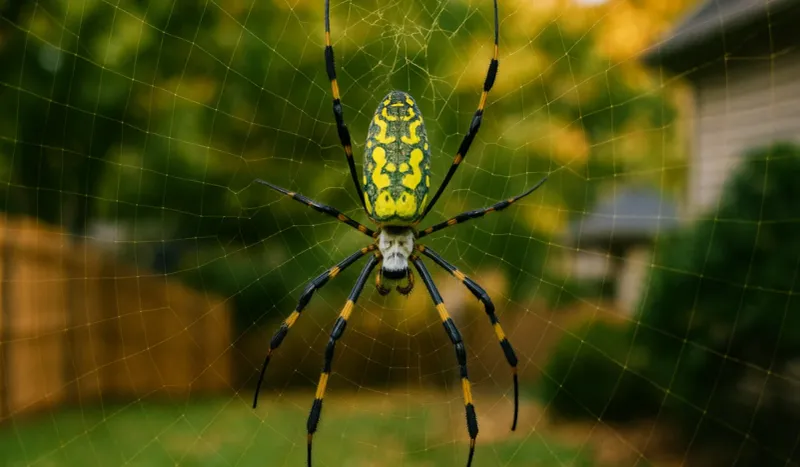
Spotting several Joro webs in your yard at once can feel like a verdict on the space, as if the spiders chose it for a reason worth knowing. There is a limited version of that idea worth taking seriously, but it comes with real caveats.
Research published in Biological Invasions points to prey availability and habitat or web-placement opportunities as factors likely influencing Joro presence, and studies of related web-building spiders associate density with food availability.
Put plainly: a Joro may find your property useful because it offers elevated anchor points like eaves, fence rails, and tall shrubs; open airspace between those supports; and enough flying arthropods moving through to make web-building worthwhile. Those are plausible ecological inferences, not a complete read of your yard’s condition.
Web abundance can reflect several variables at the same time. A Frontiers in Ecology and Evolution study on Joro trophic interactions underscores that spider density and web placement are shaped by the intersection of structural opportunity and prey access, not by a single yard quality you can easily measure or improve.
Weather, landscape structure, and nearby spider recruitment can all push web numbers up or down from one season to the next. A single yard observation cannot tell you which factor is doing the most work.
Seeing Joro webs does not prove healthy soil, high plant diversity, an abundant pollinator community, or a mosquito problem. The web tells you the spider found a workable spot, and that is about as far as the signal reliably goes.
Not every golden web belongs to a Jorō
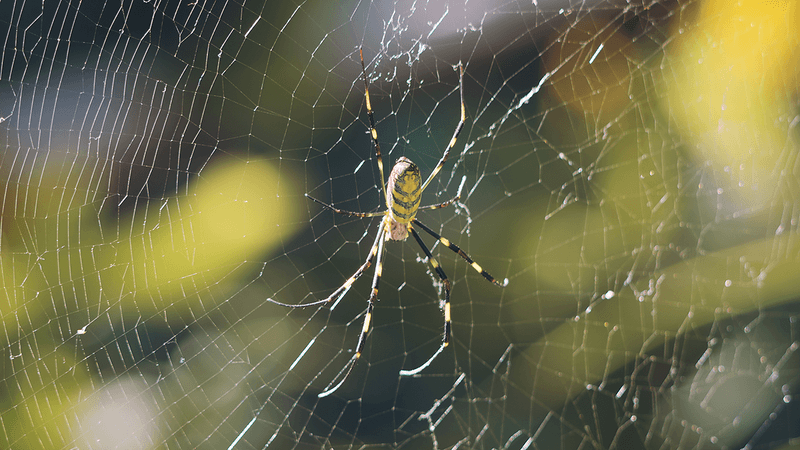
Before pulling down a web or reaching for a spray can, photograph what you are actually looking at. North Carolina yards host several native orb-weaving spiders, including the yellow garden spider, also called the writing spider, whose large yellow-and-black body and sizable orb web can look remarkably similar to a Joro at a quick glance.
Treating every large golden web as a Joro web risks removing spiders that have been part of the local landscape for a long time.
NC State Extension recommends photographing the spider and web and recording the date and location before drawing conclusions. A clear photo of the spider’s body markings, leg banding, and web structure gives you something to compare against published descriptions and helps extension offices track where the species is actually spreading.
Dispersal is another area where the details matter. Young Joro spiderlings can travel by ballooning, releasing a strand of silk and riding air currents to new locations.
The Biological Invasions research confirms that adults do not fly, though people can accidentally transport spiders or egg sacs on vehicles, outdoor furniture, or potted plants moved between properties.
That distinction matters for homeowners who worry about spread. The ballooning behavior is how young spiders establish in new yards each spring, not how full-grown adults arrive in fall.
If you are seeing large webs in October, those spiders grew up nearby, they were not carried in by wind as adults. Knowing that helps set realistic expectations about what removal will and will not accomplish.
The human-safety concern is limited, but the ecological question remains open
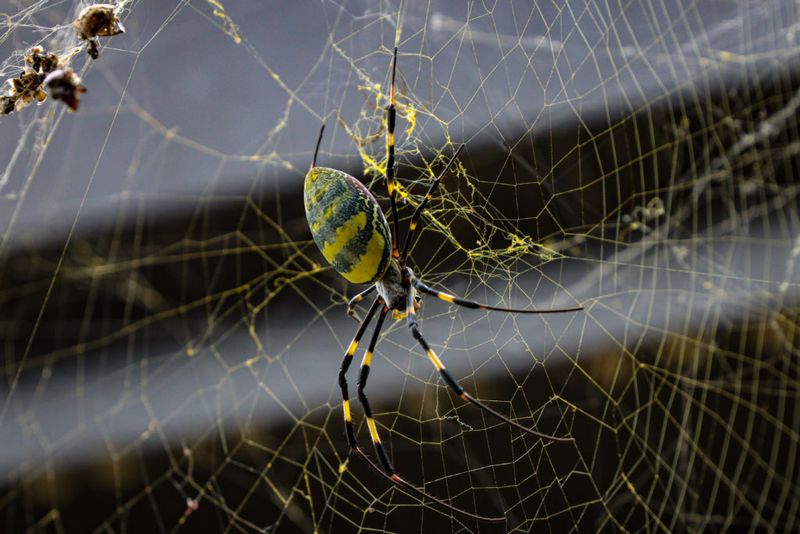
Joro spiders look striking enough that the safety question comes up immediately for most homeowners. UGA Extension and Penn State Extension both describe the species as generally shy and not inclined to bite.
Bites are uncommon, and they are not considered medically significant for most people, though any spider bite can produce a local reaction. If someone experiences unusual swelling, spreading redness, or signs of an allergic response after a bite, medical attention is appropriate.
The word “invasive” sometimes gets read as a synonym for dangerous, but the two ideas are separate. Biological Invasions research classifies Joro spiders as invasive in the biological sense, meaning they are nonnative and have established a reproducing population outside their native range.
That classification reflects ecological status, not a judgment about how hazardous they are to people or pets.
The ecological picture is genuinely more complicated. Joro spiders are generalist predators that catch a broad range of flying arthropods, including bees, wasps, and other beneficial insects alongside nuisance species.
A 2026 peer-reviewed diet study using DNA metabarcoding found 26 prey taxa detected in Joro spiders that were not detected in the three sampled native orb-weaver species, and native spider diets did not differ based on whether Joro spiders were present at collection sites. The authors describe this as initial evidence against strong food competition at those sites, not proof that Joro spiders are ecologically harmless.
A separate concern comes from population data. A 2026 Atlanta forest study observed rapid Joro population growth alongside declines in native orb-weavers, but the authors explicitly stated that the pattern does not prove Joro spiders caused the declines and that other explanations remain possible.
Both studies draw largely on Georgia and South Carolina sampling, so their findings are relevant context for North Carolina but are not statewide conclusions about what is happening in every NC yard.
Use the web’s location to decide whether it stays
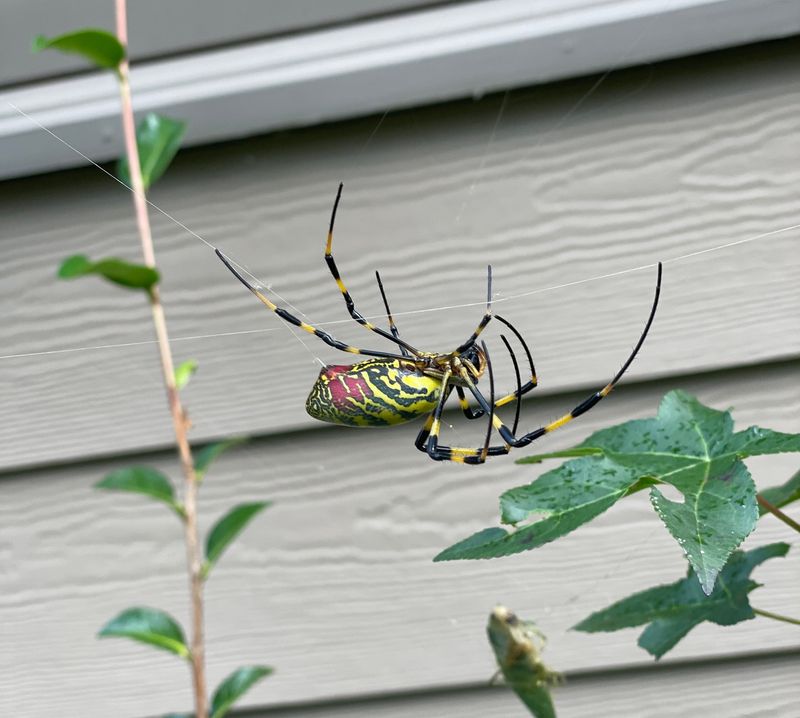
Location is the most practical filter for deciding how to respond to a Joro web. A web tucked high in a shrub border, along a back fence, or in a corner of the yard where no one regularly walks is not causing a household problem.
Leaving it alone means one less thing to manage, and the spider will typically complete its life cycle and die when hard freezes arrive.
UGA Cooperative Extension recommends manual removal for webs and spiders that are genuinely in the way, specifically those crossing doorways, walkways, play areas, seating areas, and other spots where people will contact them repeatedly. A long stick or broom handle is enough to knock down a web and relocate the spider to a nearby shrub.
Gloves add comfort for anyone who prefers not to handle spiders directly.
Targeted removal like this addresses the actual household problem without turning into a yard-wide campaign. The practical goal is not a spider-free property; that outcome is neither realistic nor necessary.
The goal is keeping high-traffic areas clear so family members and guests are not walking into webs unexpectedly.
One limitation worth knowing: destroying a web does not guarantee the spider moves on permanently. UGA Extension notes that a displaced Joro may rebuild in the same area if the location still offers good anchor points and prey access.
Repeated webs in the same doorway are not a sign that a dangerous infestation is growing; they are a sign that the spot is structurally appealing to the spider. Consistent removal from that specific location, rather than escalating to a broader response, remains the proportionate answer.
Why whole-yard spraying is a poor default

Broad insecticide applications feel like a decisive response, but for a web-building spider that can rebuild and recruit from nearby areas, they tend to create more collateral damage than lasting control. UGA Cooperative Extension guidance discourages routine broadcast spraying for Joro spiders, noting that such applications can kill pollinators, beneficial arthropods, and native spiders while offering little long-term reduction in a species that can simply rebuild its web or arrive from adjacent habitat.
The non-target risks are real and specific. Spraying around flowering plants exposes foraging bees and other pollinators directly.
Applications near ponds or water features can affect aquatic invertebrates. UGA research coverage on Joro and native spiders reinforces that the broader web of arthropod life in a yard, including species that predate pest insects naturally, can be disrupted by indiscriminate chemical use.
If a specific situation genuinely seems to call for a chemical option, the approach should be narrow and label-driven. Use only a product that is legally labeled for the intended site and the intended pest.
Read the entire label before opening the container, and follow it exactly, because the label is a legal document, not a suggestion. Avoid broadcast treatment around flowers, pollinator habitat, ponds, rain gardens, and any edible crops.
Even a targeted chemical application will not prevent new spiders from establishing if the structural conditions that attracted Joro spiders in the first place remain unchanged. For most homeowners dealing with fall webs near high-traffic areas, manual removal is faster, cheaper, and less likely to cause unintended harm to the yard’s other residents.
Read the signal, then let the low-conflict webs be
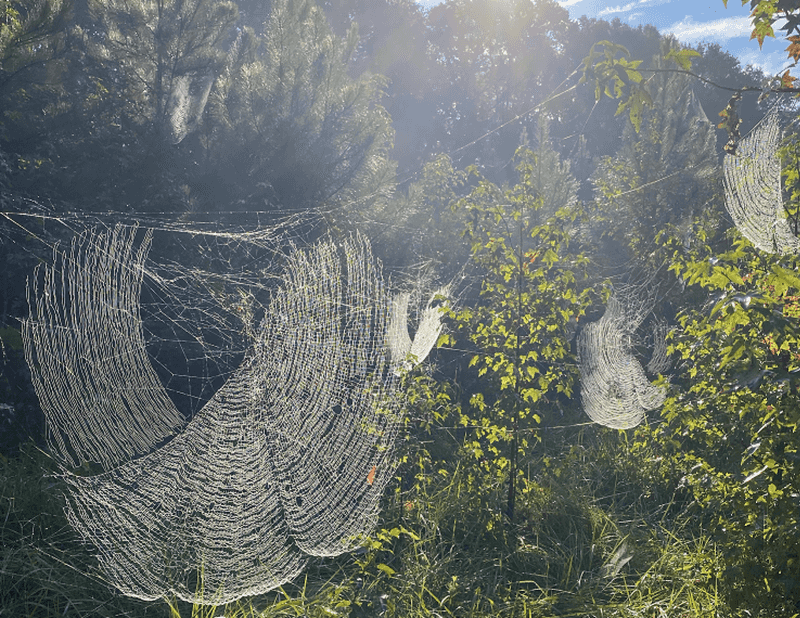
A practical decision rule for fall Joro webs comes down to three steps: photograph and identify before reacting, interpret the surge as seasonal maturation plus suitable web-building conditions rather than a new infestation, and remove only the webs that genuinely interfere with daily life. UGA Extension and NC State Extension both support observation and targeted removal as the proportionate response for most homeowners.
The sighting is neither confirmation of a thriving yard nor a reason for alarm. Webs in low-conflict spots cost nothing to leave alone, and the spider will not survive the winter as an adult.
Observation gives you more accurate information than indiscriminate clearing or spraying ever could, and that information, including photos, dates, and locations, is genuinely useful to extension researchers still mapping where the species is becoming established across North Carolina.
A yard full of fall webs is, above all, a seasonal event worth reading clearly rather than reacting to hastily.